
Specs are compiled from manufacturer listings and verified buyer reviews and can change over time — please confirm the key details on the product page before buying.
Spraying a weed killer near your petunias, roses, or vegetable bed always feels like a gamble. You want the crabgrass and dandelions gone, but you absolutely do not want your flowers to wilt, brown, or die alongside them. A selective herbicide targets specific weed types while leaving ornamentals, shrubs, and lawn grasses untouched.
I’m Rikta — the founder and writer behind Lawn Gear Lab. This guide is built by comparing the manufacturers’ published specifications and the patterns across verified customer reviews, so you get each pick’s real strengths and trade-offs instead of marketing spin.
You want to kill the weeds in your flower beds without harming your flowers. The key is using a selective herbicide — a chemical that targets only certain weed types — and picking the right one for the weeds you have. That is what makes a weed killer safe for flowers actually work.
Our Picks at a Glance


How To Choose The Best Weed Killer Safe For Flowers
Selectivity means a herbicide kills one plant type, like grassy weeds, while leaving broadleaf flowers, shrubs, and vegetables unharmed. Not every herbicide is safe around blooms, so check the formula’s target weeds first.
Selective vs non-selective: the flower-friendly divide
A selective herbicide targets a specific plant family. Fluazifop-P-butyl, found in several products on this list, hits grassy weeds (Bermuda, crabgrass, tall fescue) but does not harm broadleaf ornamentals such as roses, azaleas, or petunias. A non-selective product like glyphosate kills everything it touches — it has no place near your flowers unless you are spot-treating with extreme precision.
Concentrate vs ready-to-use: which fits your garden
Ready-to-use (RTU) bottles come pre-mixed and are ideal for small patches and precise spot treatments — you just pull the trigger. Concentrates require you to measure and mix with water in a sprayer, but they stretch much further and give you control over the dilution strength. If you have a large flower bed or multiple garden areas, a concentrate typically delivers better value per square foot.
Patience is part of the process
Selective herbicides work slowly compared to the scorched-earth approach of non-selective ones. Many take one to three weeks to fully kill the weed. You may see no change at all in the first week, then gradual wilting and yellowing as the chemical moves through the plant. The slower pace is the trade-off for protecting flowers — rushing with a harsher product often damages the plants you want to save.
Quick Comparison
| Model | Best For | Coverage | Form | Active Ingredient | Amazon |
|---|---|---|---|---|---|
| GORDON’S Trimec★ Best Overall | Broadleaf lawns | 64,000 sq ft | Liquid concentrate | 3-way herbicide blend | Amazon |
| Ortho Weed B GonTop Performer | Quick lawn spot treatment | — | RTU trigger spray | — | Amazon |
| Scotts TouchUpSmart Value | Dandelion & clover in lawn | — | RTU spray | — | Amazon |
| Fertilome Over The Top | Grass in flower beds | 2,000 sq ft per 8 oz | Liquid concentrate | Fluazifop-p-butyl | Amazon |
| Hi-Yield Grass Killer | Bermuda & crabgrass in ornamentals | 1,800 sq ft per gallon of solution | Liquid concentrate | Fluazifop-P-butyl | Amazon |
| Agrisel GrassOut Max | Grass in dense flower beds | 7,272 to 15,294 sq ft | Spray concentrate | — | Amazon |
| Fusilade II Syngenta | Bermuda in turf & ornamentals | 1,000 sq ft | Spray | Herbicide, surfactant | Amazon |
| Blindside WDG FMC | Stubborn Florida weeds | Over 50,000 sq ft | Spray (WDG) | Herbicide | Amazon |
In‑Depth Reviews
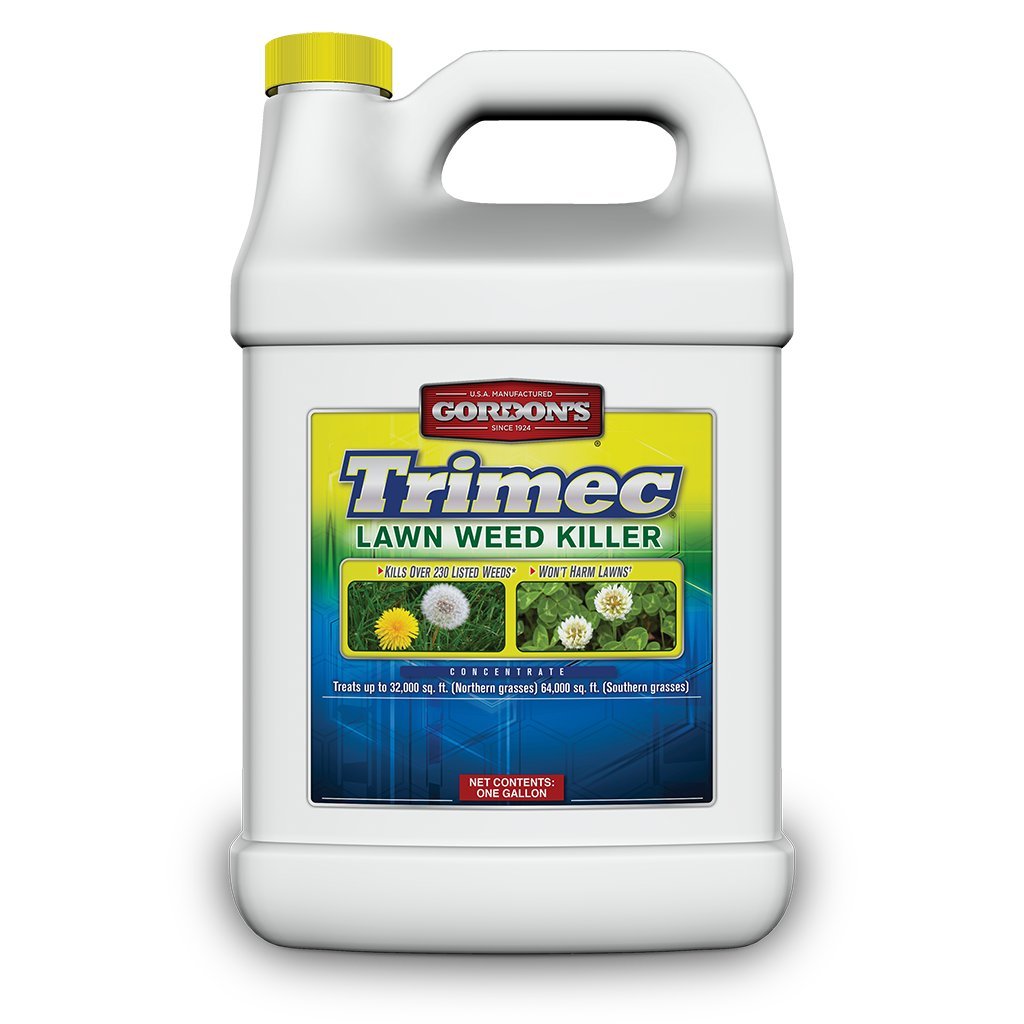
1. GORDON’S Trimec Lawn Weed Killer, 128 fl oz
Our pick — over 4.5★ from 200+ verified ratings; the strongest balance of quality and price.
A gallon of concentrate that treats a full acre without harming most lawn grasses when used as directed.
This is the heavy hitter for anyone with a whole yard to manage. The 128-fluid-ounce bottle mixes down to cover up to 64,000 square feet — that is roughly one and a half acres of northern lawn. The 3-way herbicide blend inside targets more than 230 listed broadleaf weeds without harming most lawn grasses when used as directed. You spot-spray crabgrass, thistle, and dandelion or blanket the whole lawn for season-long prevention. Buyers report that a spring application stops dandelions from coming back, and as one buyer put it: “i sprayed it on my lawn & you won’t get dandelions in the spring, great product.”
The crowd favorite carries a 4.6-star rating across hundreds of owners. Tough broadleaf weeds may need more than one application, as persistent species often require repeat treatments. If your garden is small or you only have a few rogue weeds, this much concentrate is overkill; the RTU trigger bottles below are a better match.
Why owners love it
- Covers enormous areas — up to 64,000 sq ft from one gallon
- Kills 230+ weed species without harming lawn grass
- Highly rated at 4.6 stars for reliable broadleaf control
The trade-off
- Stubborn weeds like thistle may need two or three applications
- Not the right choice for a small patch — you commit to mixing
Best for: Homeowners with a large lawn who want season-long broadleaf control from a single concentrated bottle.
skip it if: You are treating a tiny flower bed — this much concentrate is more than you need.
2. Ortho Weed B Gon Weed Killer, 24 oz, RTU Trigger
A trigger-spray killer that works in hours, not weeks.
Ortho Weed B Gon is the closest thing to instant gratification in this category. The 24-ounce ready-to-use bottle promises results in hours — not days or weeks — and kills more than 250 listed broadleaf weeds down to the root without harming your lawn when used as directed. It targets dandelions, clover, and the common broadleaf invaders you see creeping into the grass. One owner summed up the experience simply: “My husband loves thus stuff. Seeing great results killing clover and other weeds without killing the grass.”
Effectiveness gets mixed reviews — the product works fast for many but leaves some owners underwhelmed. If your particular weed variety is tougher than average, you may need a second pass. For the casual gardener who wants a grab-and-go solution for a few visible weeds in the lawn, this delivers speed and convenience that the bulk concentrates cannot match.
Why owners pick it
- Shows results in hours, not weeks — the fastest-acting option here
- Ready to use out of the bottle with a simple trigger spray
- Kills 250+ weed types down to the root
The honest catch
- Effectiveness is not universal — some owners mention it did not kill their weeds
- Small 24 oz bottle covers limited area compared to concentrates
Reach for this if: You want a fast, no-mix solution for spot-treating broadleaf weeds in the lawn.
Look elsewhere if: You need to treat a large area or are battling tough, deep-rooted species.
3. Scotts TouchUp Weed Control for Lawn, 24 fl oz
A trim spot-treatment that works slowly but completely.
Scotts TouchUp is designed for the gardener who wants to hit individual weeds without mixing or measuring. The 24-fluid-ounce ready-to-use spray specifically targets dandelion, clover, and crabgrass — the three most common lawn annoyances — and promises not to harm the grass around them. The catch is that it demands patience. One owner described the timeline exactly: “You will think it didn’t do anything for the entire first week, no change. However, in 3-4 weeks the clover and dandelion are all gone.” That three-to-four-week wait is the trade-off for a formula that kills the weed at the root, preventing regrowth the following year.
Given the slow pace, a few customers note frustration when no visible change appears after the first week. If you need immediate visible results, the Ortho Weed B Gon above acts much faster. But if you can be patient and want a product that genuinely eliminates the root so the weed does not return, this Scotts formula has a loyal following among those who stick with it.
What wins people over
- Kills dandelion and clover at the root for permanent removal
- Ready-to-use trigger spray — no mixing required
- Safe for lawn grass when used as directed
The patience requirement
- Takes 3-4 weeks to fully kill weeds — no visible change in week one
- Expensive per square foot compared to concentrates
Reach for this if: You are willing to wait a month for total root kill and do not mind paying a premium for convenience.
Think twice if: You want weeds gone this weekend — choose the faster-acting Ortho instead.
4. Fertilome Over The Top Grass Killer, 8 oz Concentrate

The go-to for killing Bermuda grass without harming your flowers.
If grassy weeds are invading your flower beds, this is the weapon to reach for. The 8-ounce concentrate mixes into 8 gallons of spray solution and covers 2,000 square feet per 8 oz — a meaningful area for most home gardens. Its active ingredient, Fluazifop-p-butyl, is a selective formula that targets annual and perennial grasses while leaving broadleaf ornamentals, vegetables, trees, and shrubs unharmed. The data backs that up: plant safety is the most-praised aspect among owners, a rare accolade in the herbicide world.
That said, effectiveness is the most-discussed topic and opinions are mixed. Some owners see grass die within days, while others report ground cover damage. The strongest advice from owners is patience — Bermuda grass can take around three weeks to fully die. As one owner described it: “Killed Bermuda grass in flower beds after 3 weeks; shrubs/roses unharmed. Requires patience.” If you want a product that truly protects your flowers while going after invasive grass, this is the most focused option. The 8-ounce concentrate is an 8-ounce size versus the 24-ounce Scotts bottle, so you get less concentrate but much more reach per ounce.
Why gardeners choose it
- Safe for flowers, shrubs, trees and vegetables — plant safety is the top praise
- Concentrate makes 8 gallons of spray, covering 2,000 sq ft per 8 oz
- Selective fluazifop-p-butyl formula hits grass only
What to know
- Results take 2-3 weeks; some reviewers point out inconsistent effectiveness
- Mixed reviews on value — some find it expensive for the concentration size
Best for: Gardeners fighting Bermuda or crabgrass inside flower beds and vegetable patches without harming ornamentals.
Be aware: This kills grass only — it does not target broadleaf weeds like dandelion; pick Trimec above for those.
5. Hi-Yield Grass Killer Postemergence Herbicide, 8 oz
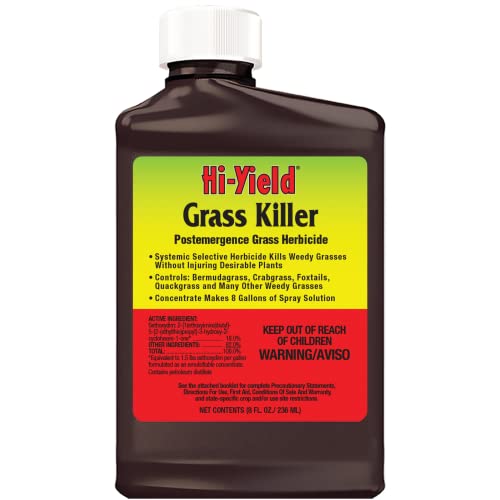
A concentrated grass killer that asks for a surfactant and some patience.
This 8-ounce liquid concentrate from Hi-Yield uses the same Fluazifop-P-butyl active ingredient as the Fertilome above, but covers a slightly different area — up to 1,800 square feet per gallon of solution, and you can make up to 8 gallons of solution from the single 8-ounce bottle. Like the Fertilome, it targets grassy weeds while staying safe around vegetables, gardens, trees, shrubs, and ornamentals. The key difference: many owners strongly recommend adding a crop oil surfactant (a spreader-sticker that helps the spray cling to leaves) — without it, the solution can evaporate too fast to work.
Results vary significantly by weed type. Bermuda grass responds faster (within days for some owners), while Japanese stilt grass may take three to four weeks. One owner noted it killed tall fescue in a garden within days while leaving vinca unharmed. The biggest risk is an occasional unit that seems to do nothing. If you do add the recommended surfactant and follow the label, this can be a very effective selective herbicide that protects your flowers.
The strengths
- Selective formula kills grass without harming flowers, shrubs, or vegetables
- Concentrate makes up to 8 gallons of spray solution from one 8 oz bottle
- Works fast on Bermuda grass — within days for some owners
The fine print
- Most owners recommend adding crop oil for it to work properly
- Some weed types take 3-4 weeks to fully die
Reach for this if: You have Bermuda or crabgrass in your ornamentals and are comfortable mixing your own surfactant.
Look elsewhere if: You want a grab-and-go formula without needing additional additives.
6. Agrisel GrassOut Max Weed Killer, 16 oz
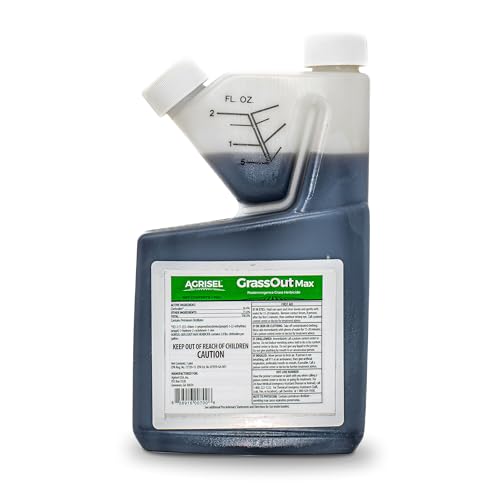
A pet-friendly concentrate for dense flower beds with grassy intruders.
Agrisel GrassOut Max is designed for flower beds and shrubs, targeting more than 50 types of grassy weeds without harming your broadleaf ornamentals. The 16-ounce concentrate covers between 7,272 and 15,294 square feet depending on your dilution — a solid range for a medium to large garden. The formula is EPA-approved, and the brand lists pet safety as a featured claim. The “Tip and Pour” bottle makes mixing straightforward.
Owner consensus is nuanced: the product works slowly, and effectiveness varies. One owner sprayed it on tall grass around okra and squash and saw results in 7 to 10 days, which allowed the vegetables to finally grow. Another noted that thick grass took three applications before dying, while the ground cover beneath was unharmed. Effectiveness is the most-discussed topic, with mixed opinions — some owners do not see expected results. If you have dense plantings where hand-weeding grass roots is impossible, this product gives you a flower-safe chemical option, but it requires patience and realistic expectations.
What stands out
- Pet safe label and EPA-approved for home garden use
- Targets 50+ grass types without harming flowers or shrubs
- Covers up to 15,294 sq ft from the 16 oz bottle
The honest note
- Effectiveness is mixed — some owners see no results
- Takes 7-10 days to begin working; thick grass may need multiple sprays
Best for: Gardeners with pets who need a selective grass killer for dense flower beds where hand-weeding is not possible.
Think twice if: You need fast, guaranteed results — this one works on a slower timetable.
7. Fusilade Selective Herbicide II Syngenta, 16 oz
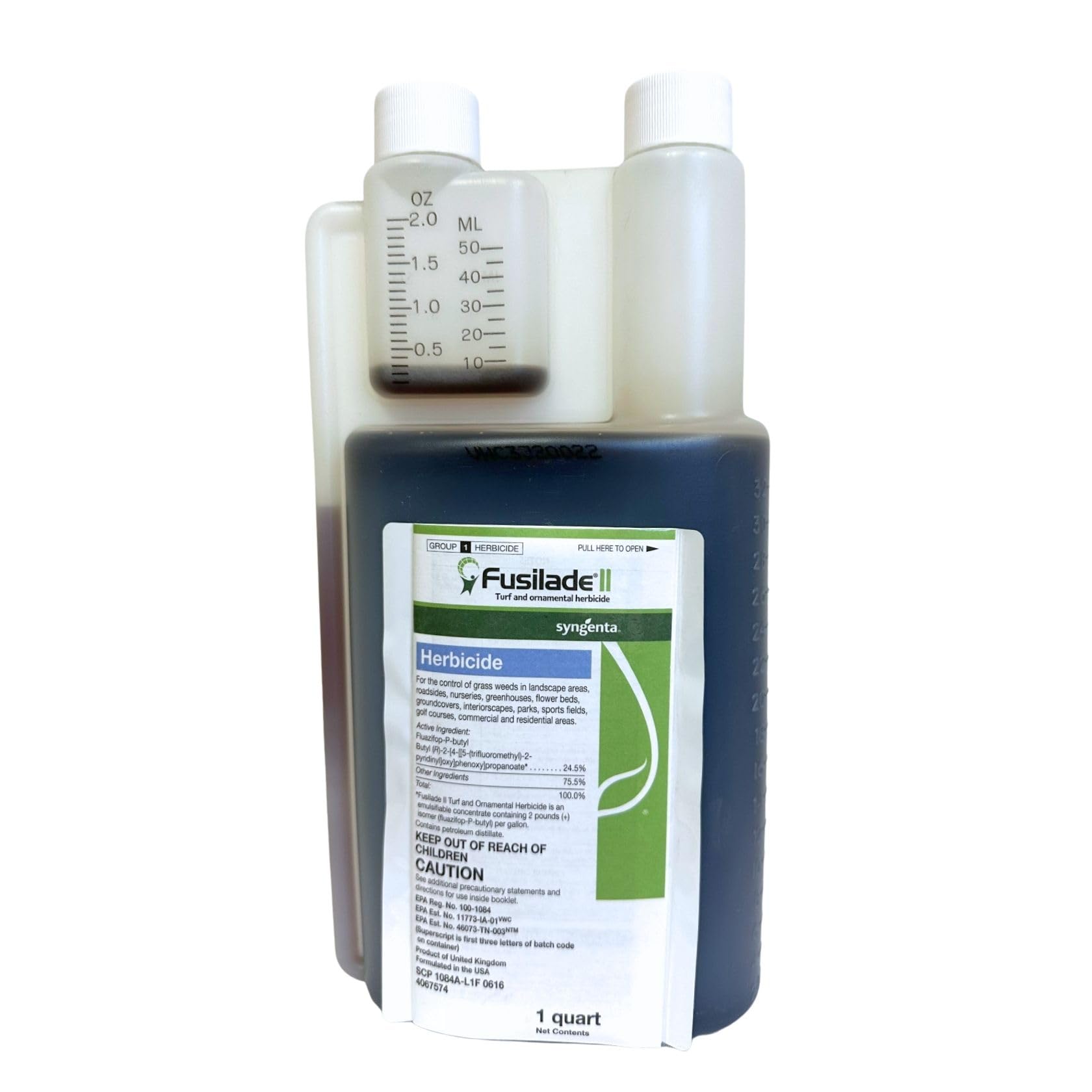
A precision herbicide for Bermuda grass that spares your Zoysia and ornamentals.
Fusilade II comes from Syngenta, a name known in professional turf management, and it shows in the specificity of its performance. The 16-ounce (1-quart) bottle is a spray concentrate that controls both perennial and annual grass weeds in turf and landscaped areas without damaging ornamental plants when used as directed. It can be applied as a spot treatment or an over-the-top application on flower beds and shrubs.
This product has a near-cult following among Zoysia lawn owners who need to eliminate encroaching Bermuda grass. Shoppers say that mixing 0.2 ounces per gallon with a non-ionic surfactant (a wetting agent that helps the spray spread evenly) delivers the balance — killing roughly 90% of Bermuda within a month while causing minimal stunting to Zoysia. The active ingredient is a selective herbicide plus surfactant blend. Effectiveness is the top praised aspect, and the rating sits strong at 4.4 stars. The trade-off: finding the right dose for your lawn may require some trial and error — hotter climates may need a slightly lower rate to avoid stressing desirable grasses.
Why owners swear by it
- Focused on Bermuda — kills it in Zoysia and fescue lawns with minimal damage
- Can be sprayed over ornamentals without harming them
- Highlighted for effectiveness — the most-praised aspect by owners
The precision needed
- Dose matters — too strong and it stunts desirable turf grasses
- Multiple treatments required for stubborn Bermuda regrowth
Best for: Zoysia and fescue lawn owners who need to selectively remove Bermuda grass without killing their turf or flower beds.
Not for: Casual spot-treaters who do not want to measure exact ounces per gallon or test rates.
8. Blindside Herbicide WDG FMC, 8 oz Bottle

A professional-grade WDG that tackles Florida weeds nothing else could.
Blindside is a water-dispersible granular (WDG) herbicide from FMC with a huge coverage claim — over 50,000 square feet from the single 8-ounce bottle. This is not a product for the casual weekend gardener; it is a specialist’s tool for stubborn, hard-to-kill weeds that have survived everything else. The review data is full of owners who spent years and fortunes on other products before Blindside solved their problem. One Florida owner described it simply: “After 3 years of fighting the Foxtail weed in Florida, and spending a fortune on products that didn’t work Blindside did the job!!!! It Works.”
Owners particularly praise its effectiveness against nutsedge, crabgrass, and onion weeds. One reviewer noted it eliminated 95% of crabgrass and 98% of nutsedge in two weeks on St. Augustine grass in Florida. The downsides are real: the price point is the steepest in this lineup, and it is not available for sale in many states (including AZ, CA, CO, NY, and over 20 others — verify your state before ordering). If you are battling a weed that has resisted every other selective herbicide, this is the nuclear option — but only if your state allows it and your budget stretches.
What makes it special
- Kills extremely stubborn weeds like foxtail, nutsedge, and onions
- Covers over 50,000 square feet — enormous reach per 8 oz bottle
- Praised most for effectiveness; top-praised aspect by owners
The restrictions
- Not available in over 20 states — check your location before buying
- Premium price tier; value for money receives mixed feedback
Reach for this if: You live in a permitted state and have a persistent weed problem that beats everything else you have tried.
Look elsewhere if: You have a simple dandelion or clover issue — a cheaper, widely-available product will do the job.
Understanding the Specs
Selective vs non-selective herbicide
A selective herbicide targets a specific plant type — typically either broadleaf weeds or grassy weeds — without harming other plants. That is the crucial difference for flower safety. Non-selective herbicides like glyphosate kill every plant they touch, so they have no place near your ornamentals unless you are spot-treating with a shielded sprayer. Every product in this guide is selective.
Fluazifop-P-butyl — the flower-friendly active
This active ingredient appears in several picks here (Fertilome, Hi-Yield). It works by interrupting grass growth at the cellular level, but it cannot harm broadleaf plants because they do not metabolize the chemical the same way grasses do. That selectivity makes it the safest bet for spraying over the top of flower beds, shrubs, and vegetables to kill intruding Bermuda, crabgrass, or fescue.
Concentrate vs ready-to-use (RTU)
RTU bottles are pre-mixed and ready to spray — you pull the trigger and go. They are convenient for small patches but cost more per ounce of active ingredient. Concentrates require you to mix the liquid with water in a tank sprayer, but they stretch much further and let you adjust the strength. If you have a large garden or plan to treat multiple times per season, a concentrate gives you far more coverage per dollar.
Post-emergent vs pre-emergent timing
All products in this guide are post-emergent — they kill weeds that are already growing and visible above the soil. Pre-emergent herbicides prevent weed seeds from germinating in the first place, but they do not touch existing weeds and can interfere with flower seed germination if applied too broadly. For established flower beds, a post-emergent selective spray is the right approach.
FAQ
Will these weed killers harm my petunias or roses?
Which weed killer works fastest?
Can I spray these products over vegetables?
How long does it take to see results?
What is the difference between Trimec and Fluazifop formulas?
Do I need to add surfactant to these products?
Is Blindside available in my state?
How much area can I treat with an 8 oz bottle of concentrate?
Does grass really die in hours with Ortho Weed B Gon?
Can I use these products on St. Augustine grass?
Final Thoughts: The Verdict
For most homeowners, the weed killer safe for flowers winner is the GORDON’S Trimec because its 64,000-square-foot coverage and 4.6-star rating make it the most versatile broadleaf option for large lawns. If you want to kill Bermuda grass inside flower beds without harming your blooms, grab the Fertilome Over The Top. And for stubborn Florida weeds that beat every other product, the Blindside Herbicide is the specialist tool to reach for — if your state allows it.
How We Picked
We do not accept paid placement. Every pick is matched to a real buyer and a real use-case; we do not hands-on test units.
Sources & Methodology
Specifications: manufacturer listings and product documentation. Review insights: verified customer reviews, as of July 2026. Pricing: not shown on this page (it changes often); check the current price via the retailer link.
As an Amazon Associate, Lawn Gear Lab earns from qualifying purchases. This does not affect which products we feature.