
Specs are compiled from manufacturer listings and verified buyer reviews and can change over time — please confirm the key details on the product page before buying.
Spotting aphids huddled on a new monstera leaf or fungus gnats rising from the soil can ruin the calm of a plant-filled room. You want the bugs gone, but the last thing you need is a harsh chemical fog inside your home. The best solutions work by targeting the pest directly — smothering, drying, or blocking it — while leaving your leaves, your kids, and your pets unharmed. This guide cuts through the shelf of bottles to find the sprays that actually deliver on that promise.
I’m Rikta — the founder and writer behind Lawn Gear Lab. This guide is built by comparing the manufacturers’ published specifications and the patterns across verified customer reviews, so you get each pick’s real strengths and trade-offs instead of marketing spin.
The crowd has already done the hard work: thousands of owners have tested these formulas on their own plants, and their real-world verdict shapes every pick below. The right best home plant insecticide depends on if you need a gentler daily guard or a fast-acting knockout for a stubborn infestation.
Our Picks at a Glance

How To Choose The Best Home Plant Insecticide
Picking the wrong spray can burn your leaves, fill your living room with an unwelcome smell, or simply waste your time while the bugs keep multiplying. A few clear decisions will steer you straight.
Match the spray to the pest
Not every insecticide works on every bug. Soft-bodied insects like aphids, mealybugs, spider mites, and whiteflies are easiest to kill with contact sprays that smother or dehydrate them. Thrips and scale have tougher exteriors and may need a formula with a physical mode of action. For fungus gnats, a soil drench or a spray that hits the eggs and larvae is essential — surface spraying adults alone won’t break the cycle.
Check the active ingredient, not just the label
The real story is on the back of the bottle. Neem oil is a classic broad-spectrum option that smothers insects and works as a fungicide. Botanical oils like peppermint, rosemary, clove, and thyme oil kill by disrupting the pest’s outer layer or respiration. Soybean oil works by dehydration. Clarified hydrophobic extract of neem oil is a more refined version that still kills eggs, larvae, and adults. If the active ingredient is a synthetic pesticide, it is often faster but carries more risk for plants, pets, and beneficial pollinators.
Read before you spray: plant safety and application rules
Delicate plants — ferns, succulents, calatheas, and newly sprouted seedlings — can react badly to oils or strong botanicals. Most sprays advise a patch test on a single leaf first. Wait 24 hours. If you see brown spots or wilting, dilute the spray further or choose a different formula. Also time the application: spraying under direct sun or during peak heat can cause sunburn on leaves. Apply early morning or in the evening for best results and least stress on the plant.
Ready-to-use vs. concentrate: which fits your life
Ready-to-use (RTU) sprays come in a bottle with a trigger; you pump and spray. They are convenient for a few plants or a quick response. Concentrates require mixing with water in a garden sprayer. They cost less per treatment and let you adjust strength, but they need storage space and a bit of measuring. For a casual houseplant owner with five to fifteen plants, an RTU bottle is the smarter choice. For a large collection or a vegetable garden, go concentrate.
Quick Comparison
| Model | Best For | Active Ingredient | Size | Plant Safety | Amazon |
|---|---|---|---|---|---|
| Neem Oil w/ Peppermint★ Best Overall | General prevention & gentle care | Neem Oil | 16 oz | High — gentle formula | Amazon |
| Miracle-Gro Leaf Protect & ShineShine + Shield | Pest protection + leaf polish | Insecticidal soap blend | 2 x 8 oz | Not for succulents | Amazon |
| Earth’s Ally 3-in-1Top Performer | Broad indoor & outdoor control | Thyme, Rosemary, Clove & Peppermint Oil | 32 oz | High — bee safe | Amazon |
| Dr. Killigan’s Doom & Bloom | Small-bodied pests & thrips | Soybean Oil | 16 oz | High — non-toxic | Amazon |
| Trifecta Crop Control | Serious indoor/outdoor infestations | Plant-based essential oil blend | 32 oz | High — organic, biodegradable | Amazon |
| Garden Safe Fungicide3 | Large gardens & orchids | Clarified hydrophobic neem oil | 128 oz | Use less than recommended dose | Amazon |
| EcoVenger Garden Insect Control | Fast aphid & mealybug kill | Citronella, Geraniol & Cedarwood Oil | 16 oz | May burn delicate plants | Amazon |
| NatroZing Garden Insect Killer | Budget-friendly all-stage kill | Plant extract blend | 32 oz | Safe for kids & pets | Amazon |
| Eco Defense Gnat Spray | Fungus gnat control | High-quality essential oils | 16 oz | Mixed — reports of plant damage | Amazon |
In‑Depth Reviews
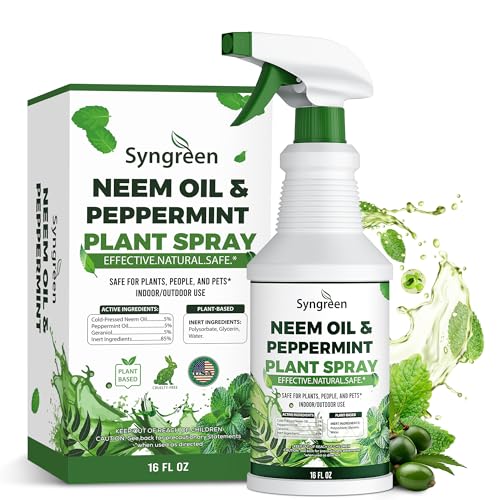
1. Syngreen Neem Oil Spray with Peppermint Oil, 16 oz
Our pick — over 4.5★ from 250+ verified ratings; the strongest balance of quality and price.
A gentle, plant-based shield that keeps bugs away without shocking your greenery.
This is the spray for the plant parent who wants a regular preventative routine rather than a desperate emergency fix. The formula pairs cold-pressed neem oil with peppermint oil, so the smell is far more pleasant than standard neem — a fresh, minty note rather than the funky, earthy waft most neem users know. The sprayer delivers a fine, even mist that coats the leaf surfaces without drenching them, and the 16 oz bottle lasts through several full-plant treatments.
What wins people over is the sheer frequency of positive feedback on effectiveness — it is the most praised aspect by a wide margin. Buyers report richer green leaves, fewer small insects, and visible plant health improvement after consistent use. The scent gets the next highest praise, which matters because a bad smell is the reason many people stop using natural sprays. Buyers sum it up with one clear-line: “the 16 oz bottle lasts; even spray.” It is designed to be safe around children, pets, and pollinators when used as directed, and the instruction to spray every two weeks makes it easy to build into a habit.
Peppermint neem shield
- Plant-based, no harsh synthetic additives — feels safe inside the home.
- Peppermint cuts the strong neem odor, making regular use tolerable.
- Even-spray nozzle covers leaves and stems without pooling.
Strong scent lingers
- Meant for prevention — not a heavy-duty scorched-earth killer for a full-blown infestation.
- Must avoid direct sunlight during or right after application.
Quick pest fix: you have a healthy plant collection and want a gentle, routine spray that smells fine and keeps most soft-bodied bugs at bay.
Sensitive noses: you already have a serious infestation of scale, thrips, or fungus gnats that needs a stronger, more direct hit.
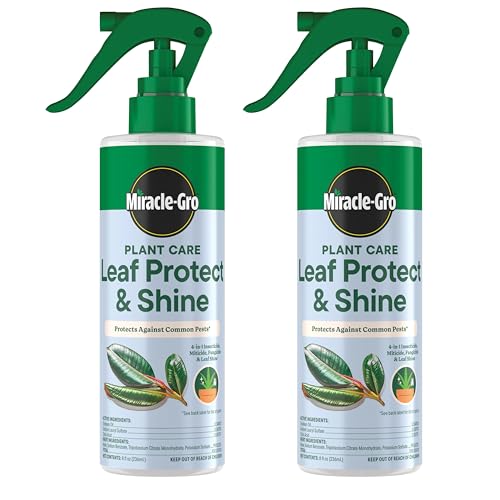
2. Miracle-Gro Plant Care Leaf Protect & Shine, 2-Pack
An all-in-one bottle that fights mites, mildew, and dust in one spray.
This two-pack bundles an insecticide, a miticide (a spray that kills mites), a fungicide, and a leaf shine into one ready-to-use spray. It targets mites, thrips, aphids, and whiteflies while also protecting against powdery mildew. The leaf-shine aspect draws mixed reactions — some owners mention a beautiful natural-looking gloss, while others find it doesn’t produce the shine they expected. One buyer gave the review boards a direct quote: “My plants look radiant and healthy after two days of using these products.”
A significant caveat: leaf shedding is the aspect mentioned most, and it comes up as a mixed response. Many plants shed their leaves as a stress reaction to the treatment, so expect a drop after the first application. The product is explicitly not for succulents — a reviewer who treated roughly 70 out of 100 plants noted it works well on most but caused issues on that specific type. The two 8 oz bottles are small; for a large collection you will finish one quickly. However, for a modest collection of hard-leaved houseplants like fiddle leaf figs and monsteras, this is a remarkably convenient all-rounder.
Shine without residue: Combines pest, fungal, and dust control into one step, which saves time and shelf space. The trade-off is that the leaf-shine effect is less dramatic than some expect, and leaf-shedding is a common reaction.
Leaf polish: you want one product to handle the basics — pests, fungus, and a clean leaf finish — without multiple bottles.
Edible gardens: monsteras, rubber plants, pothos, and fiddle leaf figs. Skip it for succulents and ferns.
3. Earth’s Ally 3-in-1 Plant Spray, 32 oz
The big bottle with a proven track record against spider mites and aphids.
With effectiveness cited more than any other aspect — over 130 owners singling it out — this spray has the strongest consensus of any product on this list. It uses a synergistic blend of thyme oil, rosemary oil, clove oil, and peppermint oil to kill and repel soft-bodied insects. It also acts as a fungicide, which makes it valuable for preventing powdery mildew and other leaf-level diseases. The 32 oz bottle is twice the size of many competitors at a similar cost, and the ready-to-use format means you don’t have to mix anything.
The honest trade-off: about a third of reviews mention plant damage or negative plant health outcomes. Some customers note that their plants died within hours of application, while others say it is safe and effective. This split suggests that formulation may react poorly on certain plant species or under hot light. The guide’s advice: always test on a single leaf first. For indoor use, the scent is described as pleasant — “like flowers and herbs” — and a buyer noted that “one application usually does the job” for pest control. It is independently tested as safe for bees, so outdoor garden use won’t harm pollinators.
All-in-one: a large indoor collection or an outdoor garden where you want a single, effective, bee-safe spray that covers both bugs and fungus.
Large infestations: sensitive or newly sprouted plants — spot-test before a full spray.
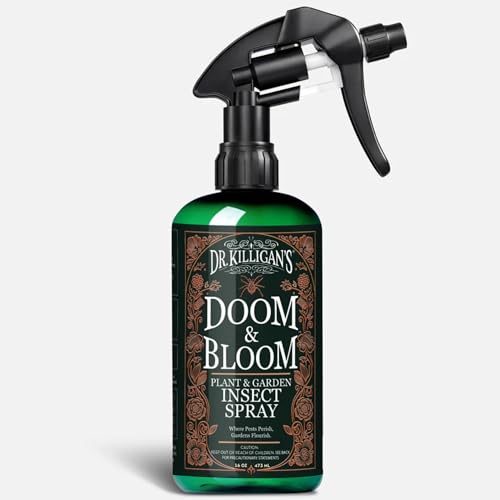
4. Dr. Killigan’s Doom & Bloom House Plant Pest Spray, 16 oz
Soybean oil that physically breaks down the bug’s body rather than poisoning it.
The mode of action here is different from neem or essential oil sprays. Doom & Bloom uses soybean oil to break down the pest’s protective outer layer, leading to dehydration and disrupted respiration. The manufacturer says pests cannot build resistance to this mechanical action the way they can to nerve-targeting chemicals. This makes it a strong choice if you have previously used a different spray and felt it stopped working. It works best on small-bodied insects like aphids and thrips, and it can also kill fungus gnats if sprayed directly on the bugs.
However, effectiveness here gets a mixed response in the review data. Some owners halved a severe gnat infestation within weeks, while others felt it was mostly soybean oil with water and soap — not a true pesticide. The spray nozzle is a genuinely nice feature: it adjusts from a mist to a stream so you can target the undersides of leaves without drenching the whole plant. The scent is rated as pleasant by those who mention it. A word of caution: it caused peace lily blooms to wilt irreversibly in one case, so test on flowering plants before a full spray.
Spot treatment: you are dealing with thrips, spider mites, or aphids and want a physical-mode spray that bugs won’t become immune to.
Big gardens: flowering or delicate plants without a careful spot test first.
5. Trifecta Crop Control Ready to Use, 32 oz

The heavy-hitter with thousands of owners who swear by it for spider mites and mildew.
This spray is the most-reviewed product in this guide by a wide margin, with thousands of owners sharing their results. The crowd consensus: it works. Made from a plant-based essential oil formula, Trifecta acts as a pesticide, fungicide, and miticide in one. It suffocates and dehydrates soft-bodied pests — spider mites, aphids, whiteflies, fungus gnats — while remaining biodegradable and eco-friendly. Gardeners who grow indoors and out call it a go-to, particularly for keeping edible crops chemical-free.
A few honest notes: the formula does not kill eggs, so it requires repeated applications every few days to break the pest life cycle. The 32 oz bottle goes quickly if you are treating multiple plants, and some owners point out that the cost per treatment is higher than some concentrates. The scent is described as a bit off-putting right after spraying, but it fades fast. The biggest strength here is versatility — it works on indoor houseplants, vegetable gardens, roses, and even commercial grows. The reviews pages sum it up: “The Gold Standard in My Grow Room—Nothing Else Comes Close.”
Versatile spray: you have a serious, ongoing pest problem (especially spider mites or powdery mildew) and want a commercial-grade, natural solution that plants bounce back from.
Budget buyers: indoor grow rooms, vegetable gardens, and butterfly bushes. Expect to spray every 3 days during an active infestation.
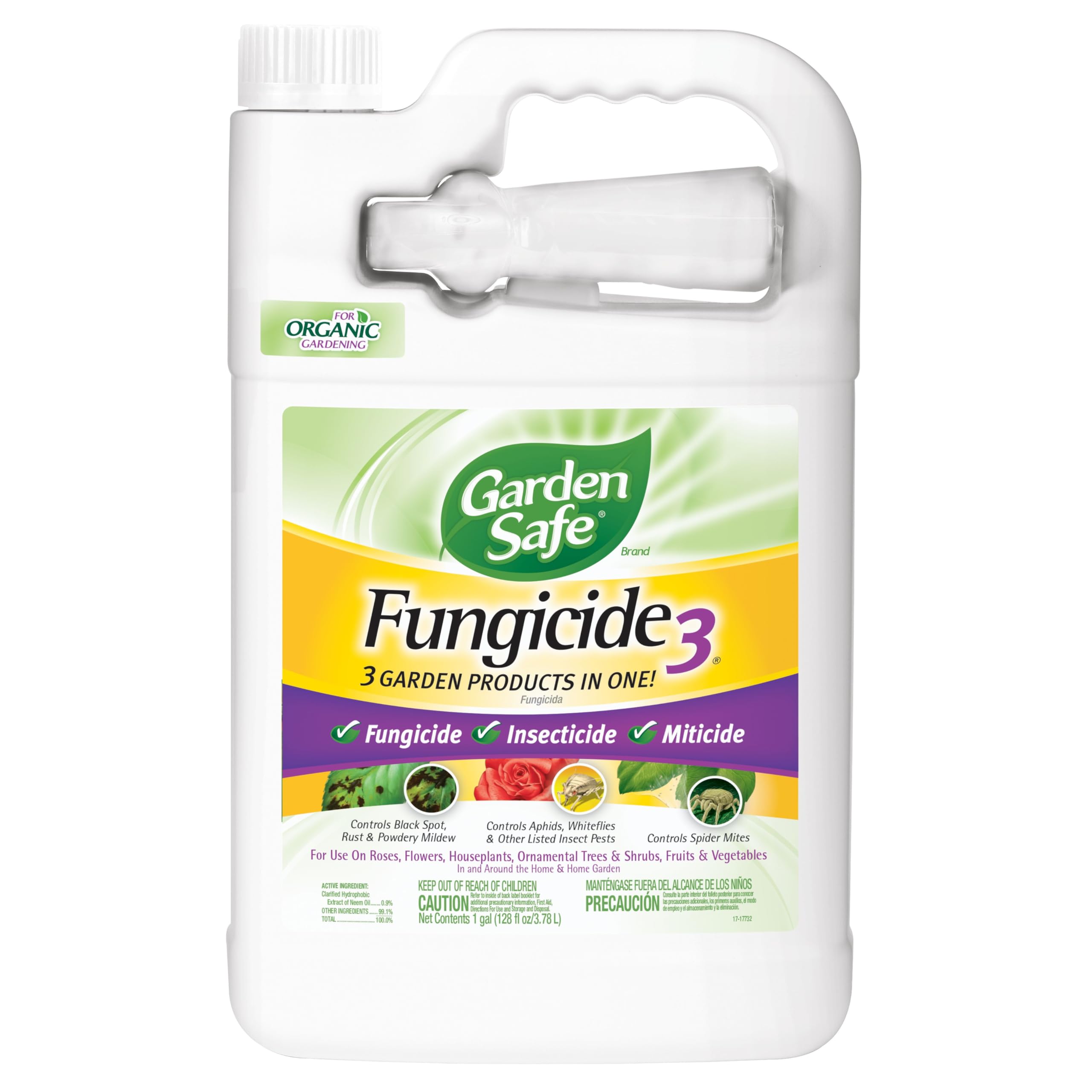
6. Garden Safe Fungicide3 with Neem Oil, 1 Gal
One gallon of clarified neem oil that goes the distance on roses, veggies, and orchids.
Reviewers point out that it works wonders on orchids, black spot on roses, and mildew on zucchinis and hibiscus. One long-term user noted that weekly use prevents mildew from returning after clearing dead leaves, and the plants produced greener foliage, more blossoms, and fruit. The catch: the included sprayer is poor — a short, coiled hose that is frustrating to use. Many owners replace it with a better sprayer immediately. A common tip from the data: use less than half the recommended dose to avoid burning plants, especially if applied during the daytime heat.
Garden staple: you have a large garden, a lot of houseplants, or need a versatile neem-oil fungicide that works on edibles and ornamentals.
Small spaces: replacing the stock sprayer and diluting more than the label says until you see how your plants react.
7. EcoVenger Garden Insect Control, 16 oz
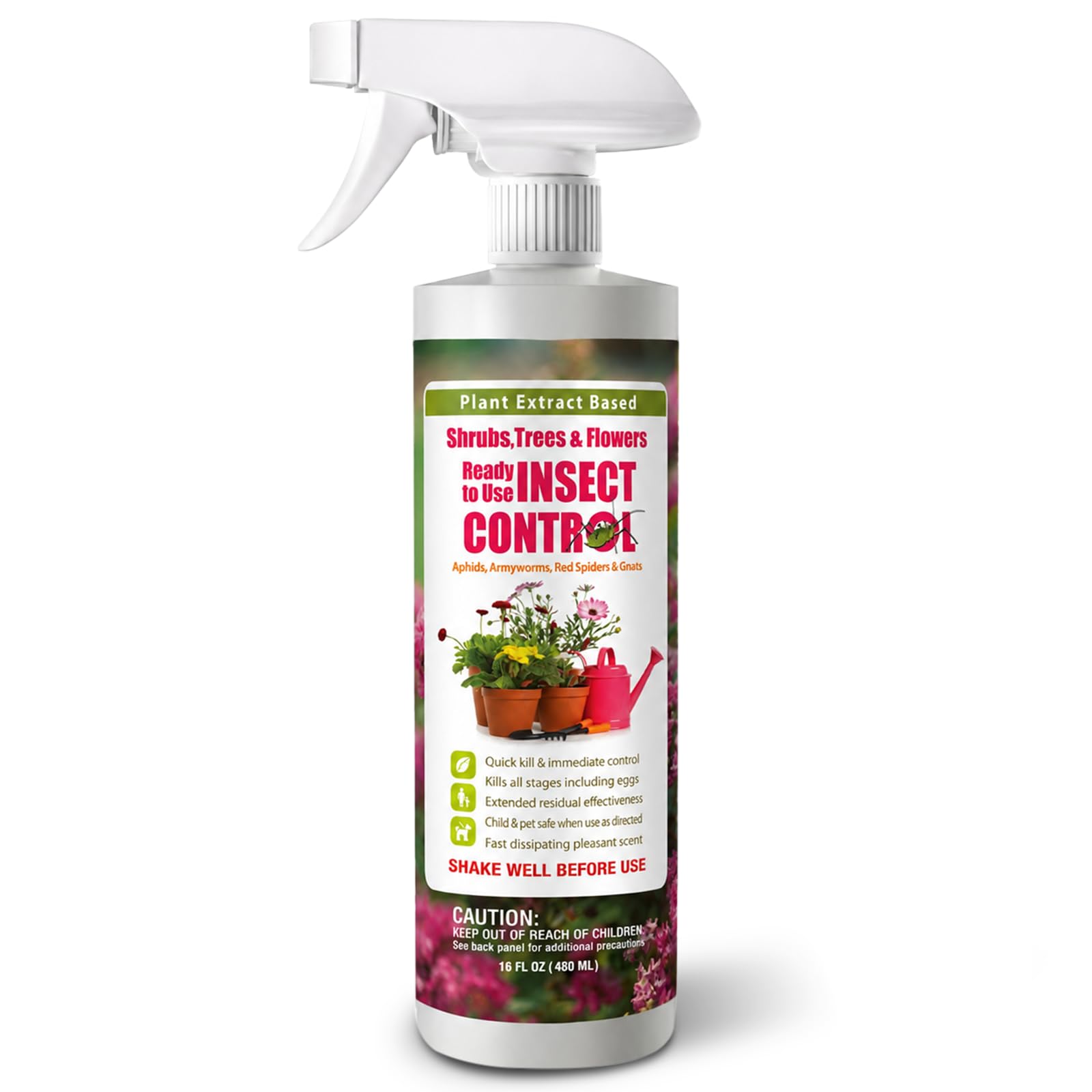
A citronella-based spray that turns mealybugs black and dry within half an hour.
The biggest complaint by a wide margin is the spray bottle. Multiple owners describe the trigger as defective — it sticks after each squeeze, requiring you to open the bottle to reset the handle. This pattern continues across different bottles, suggesting a consistent quality issue. The scent is also quite strong; owners advise spraying plants outside and letting them dry before bringing them back indoors if you have pets. The product gets mixed reviews on effectiveness overall, meaning that while it works brilliantly on some pests, it may underwhelm on others, particularly fungus gnats. If you are targeting mealybugs or aphids and don’t mind swapping the spray cap, the formula itself delivers.
Green choice: you need fast results on mealybugs or aphids and are willing to replace the sprayer bottle.
Immediate results: you want one spray that works broadly on all pests, or you prefer a trigger that works flawlessly from the first squeeze.
8. NatroZing Garden Insect Killer, 32 oz

A plant-extract formula that promises to hit every life stage — nymph, larva, egg, and adult.
The key differentiator here is the claim of effectiveness across all stages of the pest’s life cycle. Many insect sprays kill only the adults, meaning the eggs hatch and the problem returns. NatroZing targets the entire chain: nymphs, larvae, eggs, and adults. The active ingredients are plant-derived extracts that block specific neuron receptors in invertebrates while remaining harmless to humans, pets, birds, and fish. It covers a wide range of pests, including aphids, armyworms, beetles, fungus gnats, leafhoppers, spider mites, thrips, and whiteflies.
What owners consistently praise is safety — they feel comfortable spraying this around kids and pets. Several buyers mention that it cleared aphids from lilies and fungus gnats from indoor plants after a few treatments. The downside: effectiveness is a mixed bag in the data, and the spray’s actual dependability seems to vary by pest type. One owner noted it did not help with worms or beetles at all. The maker advises shaking the bottle well before each use, as the plant extracts can settle. For the price per ounce, it is competitive, but treat it as a medium-power option rather than a guaranteed cure-all.
Value buy: you want a spray that feels safe enough for daily indoor use and covers a broad pest spectrum, including eggs.
Broad control: you need a proven heavy-hitter for beetles, worms, or any pest that has resisted other treatments.
9. Eco Defense Gnat Spray for Indoor Plants, 16 oz
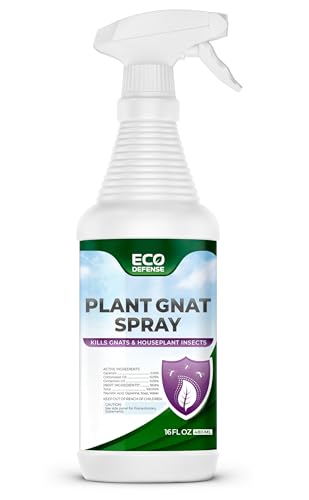
A gnat-focused spray that some owners swear by and others blame for plant damage.
This spray is formulated specifically for fungus gnats, fruit flies, and spider mites. It uses high-quality essential oils and is lab-tested for performance. The company claims the upgraded bottle mists evenly without clogs or leaks, which addresses a common complaint in the spray category overall. The scent is described as fresh — not harsh — which matters when you are spraying indoors around the kitchen or living room.
The honest picture, however, is the most divided of any product here. About half the buyers report that gnats “are 95% gone within days” and that the spray works well on contact. The other half report severe plant damage: “Every plant that I sprayed the dirt around it with this spray died.” This split makes the spray a high-risk choice. Additionally, the value for money is a common complaint — the 16 oz bottle is priced at a premium compared to other sprays, and some found the bottle itself flimsy, with the sprayer separating from the bottle during use. If you try this, spray only a tiny corner of a single plant first and wait a full day.
Targeted: you are battling a persistent gnat problem and are prepared to test on one plant before treating the rest.
General pests: you have sensitive or flowering plants, or if you prefer a spray with a stronger safety track record in the review data.
Understanding the Specs
Mode of Action
This describes how the spray kills. Suffocation means the oil coats the insect’s breathing pores (spiracles). Dehydration means the spray breaks down the bug’s waxy outer layer so it dries out. Physical breakdown means the spray dissolves the pest’s protective cuticle. Nerve disruption means the spray attacks the insect’s nervous system. The first three are generally safe for plants and pets. Nerve-disrupting sprays tend to be faster but carry higher risk for beneficial insects and may have stricter safety windows. Check the label for the specific mode before choosing.
Active Ingredient vs. Inert Ingredients
The active ingredient is the one that does the killing — neem oil, soybean oil, or an essential oil. The inert ingredients (water, soap, emulsifiers) help the spray spread, stick, and stay mixed. A product with a high percentage of inert ingredients (like 97% inerts) is mostly water and soap; the actual killing power is lower per spray. A concentrated formula will have a higher ratio of active ingredients. If you need to cover a large area or a stubborn infestation, look for a lower proportion of inerts, or buy a concentrate you can mix stronger yourself.
Fungicide + Insecticide Combo
Many plant sprays now combine a fungicide with an insecticide. This is useful because plants stressed by pests often become vulnerable to fungal diseases like powdery mildew or black spot. A 3-in-1 or 4-in-1 spray handles both problems in one pass. However, the fungicide component is typically preventative rather than curative — meaning it works best when applied before the fungus appears. If you already see white, powdery patches on your leaves, you may need a dedicated fungicide that is stronger than what a combo spray can deliver.
Application Schedule
No single spray kills every pest in one go. Most products recommend an application every 7 to 14 days for prevention. During an active infestation, you need to spray more frequently — as often as every 3 days — to break the pest’s life cycle (since eggs hatch after the first spray was applied). Always read the label’s recommended interval. Also rotate between different modes of action if a pest returns after two treatments, because bugs can develop resistance to a single active ingredient when overused.