
Specs are compiled from manufacturer listings and verified buyer reviews and can change over time — please confirm the key details on the product page before buying.
Yellow leaves on a hydrangea — veins still green, but the rest gone pale — is a classic cry for iron. It is called chlorosis, and it is the number one sign your plant cannot pull enough iron from the soil. The fix is an iron chelate, a form of iron your hydrangea can actually absorb, and the right one turns those pale leaves deep green again within weeks, not months.
I’m Rikta — the founder and writer behind Lawn Gear Lab. This guide is built by comparing the manufacturers’ published specifications and the patterns across verified customer reviews, so you get each pick’s real strengths and trade-offs instead of marketing spin.
After digging through the specs and real owner experiences, these four picks stand above the rest for anyone shopping for the best iron chelate for hydrangeas.
Our Picks at a Glance

How To Choose The Best Iron Chelate For Hydrangeas
Not all iron products work the same way in soil. An iron chelate is iron wrapped in an organic molecule that keeps the iron available for root uptake, even in alkaline or challenging soil. Here is what to check before you buy.
EDDHA vs EDTA Chelation
The chelate molecule determines how stable the iron stays in the soil. EDDHA is more stable than EDTA across a wider pH range — it keeps iron available even in high-pH or limestone-heavy soil where standard iron products lock up. If your hydrangeas are planted in clay or you have hard water, an EDDHA-based formula is typically the better choice.
N-P-K Ratios Matter
A fertilizer’s N-P-K numbers (nitrogen, phosphorus, potassium) tell you what else you are feeding. A low or zero middle number (phosphorus) is usually best for hydrangeas — high phosphorus can actually interfere with iron uptake and work against getting blue flowers. Look for a formula where the first number (nitrogen) is highest.
Quick Comparison
| Model | Best For | Form | N-P-K Analysis | Key Feature | Amazon |
|---|---|---|---|---|---|
| Espoma Iron-Tone★ Best Overall | Organic, slow feeding | Granular | 3-0-3 | 6% iron + Bio-tone | Amazon |
| Gardenera 8-4-8 | Acid-loving plants | Granules | 8-4-8 | Feeds up to 3 months | Amazon |
| EZ-GRO 21-7-7 | Turning hydrangeas blue | Liquid | 21-7-7 | Aluminum sulfate added | Amazon |
| Happy Hydrangeas | Targeted, precise feeding | Powder | 7-3-3 | Chelated minerals + humic | Amazon |
In‑Depth Reviews
1. Espoma Organic Iron-Tone 3-0-3
Our pick — over 4.5★ from 200+ verified ratings; the strongest balance of quality and price.
The granular slow-release that saves plants without the burn risk.
This is the crowd favorite — the most trusted pick by a wide margin. It comes as a 5-pound bag of dry granules, ready to use straight from the bag with zero mixing. You simply sprinkle it around the base of your hydrangea at the first sign of yellowing leaves, and the slow-release formula delivers iron gradually without overwhelming the roots. The 3-0-3 analysis is deliberately low in phosphorus, which is exactly what you want to avoid interfering with iron uptake.
Buyers consistently report seeing results fast. The review pages sum it up: “our laurels needed this badly — we saw immediate improvement within our yard within the following two weeks.” Another owner saw their 5ft Acuba plant bounce back from yellow, dropping leaves to large, dark green new growth. Because it is organic, it will not stain patios or walkways, and it is approved for organic gardening. The formula includes 6% iron plus 17% sulfur, which also helps acidify the soil over time. At 5 pounds, a single bag covers a lot of ground — think shrubs, trees, and flower beds, not just one pot.
The catch is pace. This is a slow-release granular, so it does not produce the overnight color shift a liquid drench can. For a hydrangea with severe chlorosis on heavy clay soil, you may need to apply it early in the season and wait a couple of weeks before the deep green fully returns. That trade-off buys you safety — the non-burning formula means you can use it around tender plants without fear.
Why Gardeners Love It
- Organic and won’t burn roots even in dry soil
- Ready to use — no measuring, mixing, or liquid storage
- Non-staining formula safe for patios and walkways
The One Caveat
- Slower to show results than a liquid iron chelate
- Granular form less precise for container plants
Reach for this if: you want a low-maintenance organic granular that feeds gently over weeks without burning — ideal for in-ground hydrangeas, shrubs, and beds where you have time to let the soil biology do the work.
Look elsewhere if: your hydrangea is in a pot and needs an immediate iron boost this season — a liquid or powder mixes faster into container soil.
2. Happy Hydrangeas Fertilizer 7-3-3
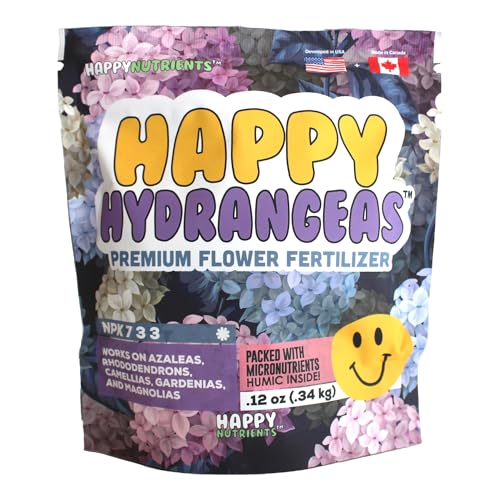
A precision powder with chelated iron and humic acids for maximum uptake.
This 12-ounce pouch is for the gardener who wants to mix exactly what their hydrangea needs — nothing more, nothing less. It is a powder, not a granular, so you dissolve 4 grams per liter of water (about 1 tablespoon per gallon) and apply it as a drench every 14 days for the first month, then every 4 weeks for the rest of the growing season. The 7-3-3 ratio keeps the middle number low to support iron absorption, and it includes humic acid to improve root health and overall soil structure.
What sets this product apart is the ingredient quality: ammonium sulfate, potassium sulfate, and chelated minerals for direct plant absorption. A buyer who used it last year came back for a second bag because the hydrangea blooms “were huge.” The formula is versatile enough for azaleas, rhododendrons, camellias, gardenias, and magnolias, so one bag can feed an entire acid-loving garden. It is developed by a team with over 50 years of industry experience, which shows in the precise feeding schedule.
The straightforward flip side is the extra effort. You have to mix it yourself, and the pouch is small — 12 ounces. Some owners found the initial application schedule (every 14 days) more demanding than a slow-release granular. A few noted their plants did not produce blossoms after the first use, though the majority saw strong growth and bigger flowers. It also takes some storage care: keep the powder dry between uses.
Best for the precise feeder: This is the one to pick if you enjoy mixing your own nutrient solution and want a formula you can adjust for each watering. The chelated minerals mean the iron stays available even in less-than-ideal soil, giving you a fast, targeted fix.
Who it suits: experienced gardeners who want to dial in exactly what their hydrangea gets, and who value bloom size over convenience.
Who should skip it: anyone who wants a simple sprinkle-and-walk-away solution — the mixing schedule and small pouch size demand attention.
3. EZ-GRO Hydrangea Fertilizer 21-7-7
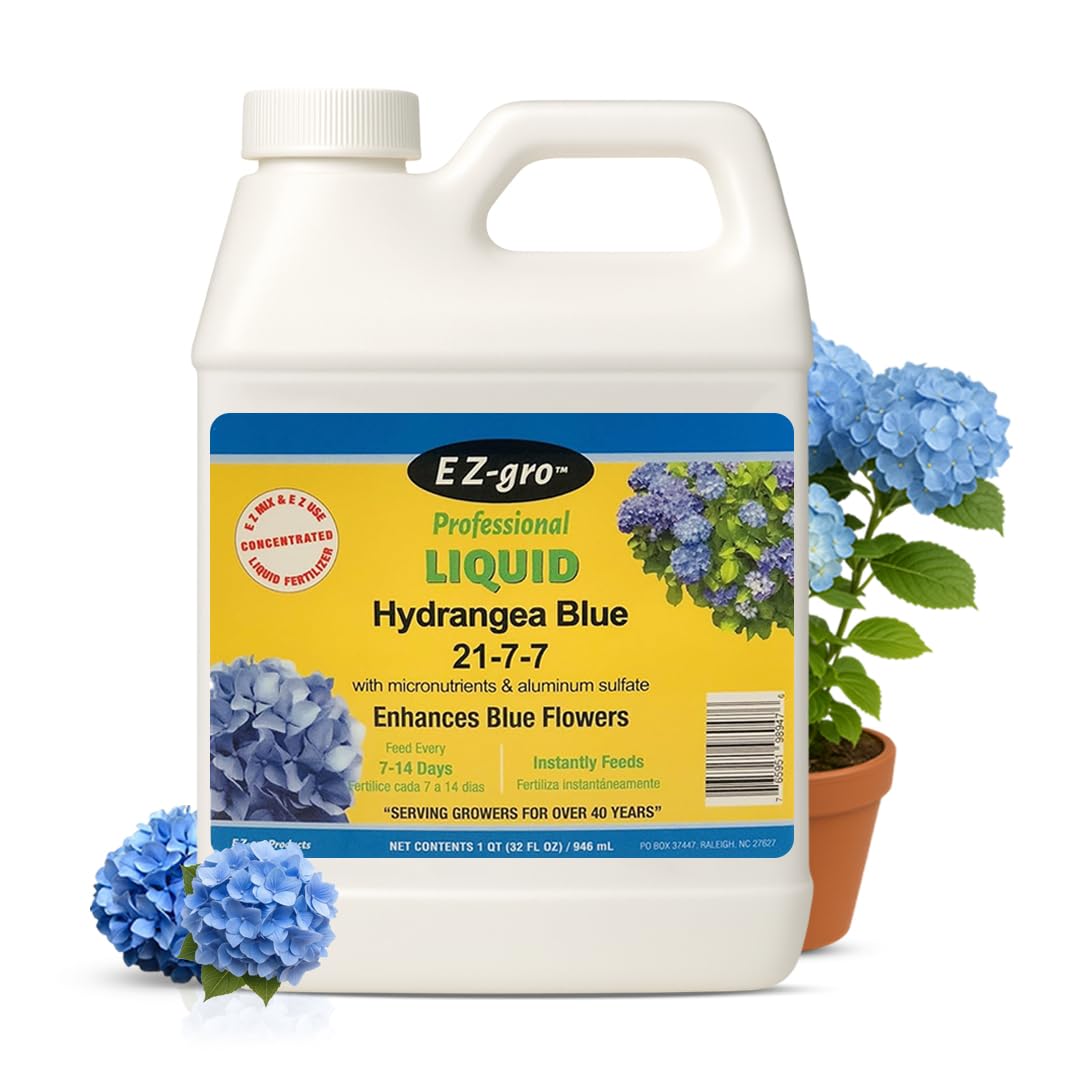
The liquid powerhouse that turns pink hydrangeas blue — fast.
This 1-quart liquid concentrate is the product owners reach for when they want to change flower color, not just fix yellow leaves. It has a high 21-7-7 ratio (strong in nitrogen) and comes with added aluminum sulfate, the key ingredient that makes hydrangeas bloom blue. You mix just 2.5 ounces per application and water it in. A buyer who had tried other acidifiers for a full decade without success said two applications of this product “turned hydrangea blue.”
Unlike the slow-release granulars, this is a fast-acting drench. Buyers report aggressive results when feeding every 7 days, with vibrant blue centers and violet glows appearing on flowers. The formula also works on rhododendrons, azaleas, camellias, and gardenias, so it is a versatile tool for any acid-loving garden. It is developed by an agronomist and horticulturist with a background in commercial greenhouse systems, which gives the formula a professional-grade pedigree.
The one real issue here is the packaging. Multiple buyers reported the same problem: the plastic jug arrives in a bubble bag rather than a box, and it can puncture during shipping, leaking most of the liquid out. Replacement units also leaked from the seam in some cases. If you buy this, you may want to open it over a sink. The other practical note is that maintaining the blue color requires frequent pH monitoring — this product works best when paired with ongoing soil management.
The Big Win
- Proven to shift flower color from pink to blue
- Concentrated liquid — a little goes a long way
- Works for a wide range of acid-loving plants
The Honest Trade-Offs
- Fragile bottle can leak in transit — handle over a sink
- Needs weekly feeding and pH monitoring for sustained blue color
Reach for this if: your mission is blue hydrangea blooms and you are willing to test soil pH and feed weekly for those vibrant results.
Think twice if: you want a single-season fix with no packaging risk — the shipping fragility and ongoing maintenance make this a commitment, not a set-and-forget product.
4. Gardenera Premium 8-4-8 Acidic Fertilizer
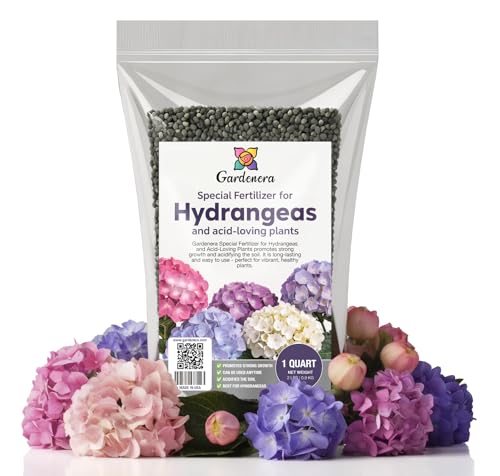
A budget-friendly granular with a feeding window that lasts a full season.
This is the entry-level option that still does the job — an 8-4-8 granular formula designed for acid-loving plants like hydrangeas, azaleas, camellias, and rhododendrons. The slow-release technology feeds continuously for up to 3 months, which means fewer trips to the garden with a bag or watering can. You simply sprinkle it around the base of the plant and water it in. It is listed as safe for both indoor and outdoor containers and flower beds.
The formula uses a mix of sulfur-coated urea, ammonium sulfate, and potash to enhance soil acidity and improve nutrient uptake. It also includes iron and sulfur, which are the two elements most hydrangeas in alkaline soil are starving for. The maker recommends wearing gloves and a dust mask when handling, which is standard for any granular fertilizer.
The honest knock against this product is the quantity. Multiple buyers flagged the package size as very small for the price — the 32-ounce bag is a single quart. One buyer described it as “tiny quantity” and another as “very small package.” A few owners also noted that the bag arrived without clear usage instructions, which matters if you are new to granular fertilizers. It is best seen as a targeted test or a spot-feed for a single plant rather than a solution for a bed of shrubs.
Best for the experimental gardener: If you are still figuring out whether your soil responds to iron chelate and you want to start small without a big investment, this quart-sized bag fits that need. The 3-month feed window means less work after application.
Who this works for: budget-conscious owners with one or two hydrangeas in containers who want a no-mix granular that lasts the season.
Who should pass: anyone with a large garden bed or multiple shrubs — you will need several bags, and the value proposition weakens fast at that point.
Understanding the Specs
N-P-K Fertilizer Ratio
These three numbers tell you the percentage of nitrogen (N), phosphorus (P), and potassium (K) in the bag. For iron chelate, you want the phosphorus (the middle number) to be low — ideally the smallest of the three. High phosphorus blocks iron uptake in soil, making chlorosis worse even as you add iron. The Espoma 3-0-3 has zero phosphorus for exactly this reason.
Iron Content and Form
The percentage of actual iron in the formulation matters. The Espoma Iron-Tone delivers 6% iron, which is a strong concentration compared to general-purpose fertilizers. The “chelate” part tells you the iron is bound to an organic molecule so plant roots can absorb it. A chelated iron product is always preferable to plain iron sulfate for alkaline or clay soil.
FAQ
What is iron chlorosis in hydrangeas?
How quickly does an iron chelate work on hydrangeas?
Can I use iron chelate on hydrangeas that are already green?
Will iron chelate turn my hydrangeas blue?
How do I apply granular iron chelate to my hydrangeas?
Can I use iron chelate on potted hydrangeas?
Is there a risk of overfeeding iron to hydrangeas?
Should I use iron chelate or a general acid-loving fertilizer?
Final Thoughts: The Verdict
For most gardeners, the iron chelate for hydrangeas winner is the Espoma Organic Iron-Tone because it delivers slow-release organic iron without burn risk, and the 5-pound bag covers a whole bed of shrubs. If your goal is blue blooms, grab the EZ-GRO 21-7-7. And for precise, mix-it-yourself feeding with chelated minerals, the Happy Hydrangeas 7-3-3 is the one to reach for.
How We Picked
We do not accept paid placement. Every pick is matched to a real buyer and a real use-case; we do not hands-on test units.
Sources & Methodology
Specifications: manufacturer listings and product documentation. Review insights: verified customer reviews, as of July 2026. Pricing: not shown on this page (it changes often); check the current price via the retailer link.
As an Amazon Associate, Lawn Gear Lab earns from qualifying purchases. This does not affect which products we feature.