
Specs are compiled from manufacturer listings and verified buyer reviews and can change over time — please confirm the key details on the product page before buying.
If your lawn feels spongy to walk on or water just pools on the surface, compaction is choking your grass roots. An aerator fixes that by punching holes so air, water, and nutrients can reach the root zone. But the right tool for your yard depends on one key choice: do you want to just poke holes, or actually pull out plugs of soil and thatch? The difference is the difference between a quick fix and real soil relief — and on a budget, that line can be blurry.
I’m Rikta — the founder and writer behind Lawn Gear Lab. This guide is built by comparing the manufacturers’ published specifications and the patterns across verified customer reviews, so you get each pick’s real strengths and trade-offs instead of marketing spin.
Whether your soil is dry clay, sandy loam, or just tired from foot traffic, this breakdown of the best inexpensive lawn aerator options will help you choose between spike, core, and rolling styles for the actual yard you have.
Our Picks at a Glance

How To Choose The Best Inexpensive Lawn Aerator
Every aerator on this list will improve your lawn, but the wrong type for your soil and yard size makes the job harder than it needs to be. Here is what to look for.
Core (Plug) vs. Spike Aeration
A core aerator uses hollow tines to physically remove a 3- to 4-inch plug of soil and thatch from the ground. This physically reduces compaction by creating space for roots to expand. A spike aerator, by contrast, simply pushes a solid rod into the soil, which can actually compact the soil around the hole in heavy clay. For lawns with significant compaction or clay-heavy soil, a core aerator delivers noticeably better results. Spike styles work best for light, routine maintenance on sandy or loamy soil.
Tine Count, Length, and Material
The number of tines determines how much ground you cover per step — 3 or 4 tines is the standard for manual core tools. Longer tines, around 3 to 3.5 inches, reach deeper into the root zone. Material matters more than you might think: heat-treated steel or stainless steel resists bending when you hit a rock or dry patch. Some budget models use softer metal that can bend on the first use, so check for replaceable tines as a safety net.
Handle Height and Foot Bar Design
Manual aeration is a squat-and-push motion repeated hundreds of times. A tool with an ergonomic T-handle around 36 to 38 inches tall saves your lower back from constant bending. A wide, non-slip foot bar lets you drive the tines in with your full body weight rather than relying on arm strength alone. The best designs distribute force evenly so you aren’t fighting the tool while it fights the soil.
Quick Comparison
| Model | Best For | Type | Tine Length | Weight | Amazon |
|---|---|---|---|---|---|
| Manual Core Aerator Lawn Tool★ Best Overall | Small/medium lawns with compacted soil | Core (3 hollow tines) | ~3 inches | 3.52 lbs | Amazon |
| seasky Lawn AeratorBudget Champion | Quick surface aeration on small patches | Spike (15 spikes) | 3 inches | 5.35 lbs | Amazon |
| Colwelt Grass Spike AeratorDeep Spike Pick | Heavily compacted small lawns | Spike (4 spikes) | 3.5 inches | 4.31 lbs | Amazon |
| Jardineer Lawn Aerator | Residential lawn care & seeding prep | Spike (12 spikes) | 2.75 inches | 5.02 lbs | Amazon |
| Dolibest Lawn Coring Aerator | Small projects needing deep plugs | Core (4 hollow tines) | 3.5 inches | 5.54 lbs | Amazon |
| EEIEER Manual Lawn Aerator | Up to 3000 sq ft lawns with soft soil | Core (3 hollow tines) | ~2.6 inches | — | Amazon |
| MEIIOFS Lawn Aerator | Targeting dead spots and dog damage | Core (3 hollow tines) | — | 6.4 lbs | Amazon |
| Colwelt Spike Lawn Aerator (Rolling) | Mildly compacted lawns, no bending | Spike (rolling drum) | 1.4 inches | 8.2 lbs | Amazon |
| Yard Butler Spike Aerator | Small gardens with clay soil | Spike (4 spikes) | 3 inches | 2.25 lbs | Amazon |
In‑Depth Reviews
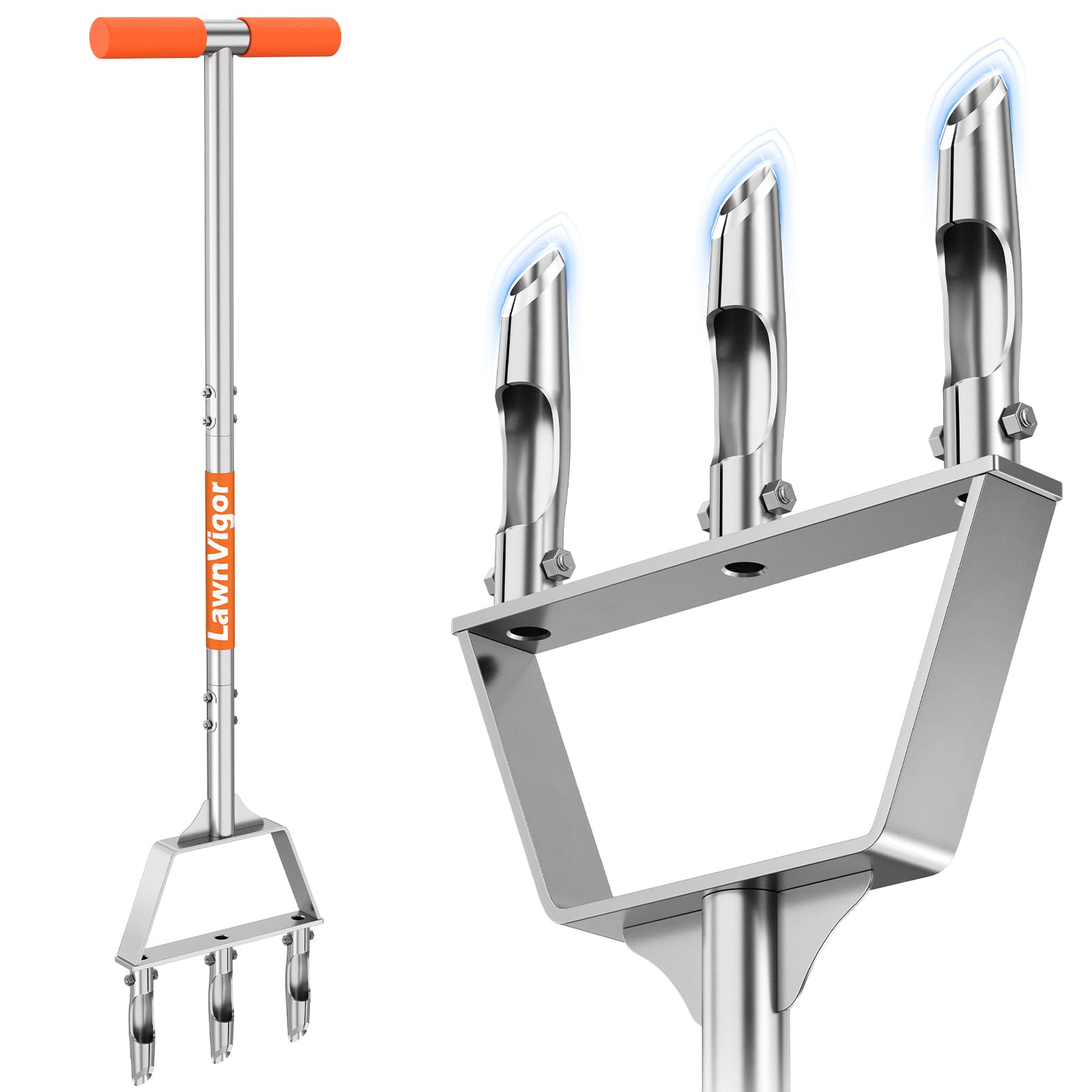
1. Manual Core Aerator Lawn Tool with 3 Hollow Tines
Our pick — 4.5★ from 250+ verified ratings; the strongest balance of quality and price.
The lightweight plug puller that outperforms cheap spike tools on compacted soil.
This is the rare budget core aerator that actually pulls plugs instead of just poking holes. The three heat-treated hollow tines extract soil cores about 3 inches long from moist soil, and the wide release holes on the tines let the plugs fall out by themselves instead of needing you to shake or pry them loose. Buyers report that the reliable ejection is a major time-saver over older designs where you have to stop and clear each tine by hand.
At 3.52 pounds, it is the lightest core aerator on this list — at 3.52 pounds compared to the seasky spike model at 5.35 pounds — but the heavy-duty powder-coated steel build gives it a stable, sturdy feel during use. The ergonomic T-handle height reduces back strain, and the foot bar provides solid leverage for pushing into dry patches. A small-area hero: owners say it handles compacted Bermuda grass and small to medium lawns with zero clogging, though the occasional buyer notes that grass and roots can get stuck in the tine gaps during cleanup.
What wins people over
- Excellent core extraction on moist soil with reliable plug ejection
- Lightweight at 3.52 lbs but feels very sturdy during use
- Easy to assemble and intuitive to use right from the start
A couple of honest trade-offs
- Grass and roots snag in tine gaps during cleanup — tap or hose them out
- Handle covers can spin on the shaft; a dab of adhesive holds them still
Reach for it if: you have a small to medium lawn with compacted soil and want real core aeration without spending on a power tool.
Look elsewhere if: you need to aerate a massive area or want a spike tool for lighter maintenance — this is built for targeted plug pulling, not wide-open running.
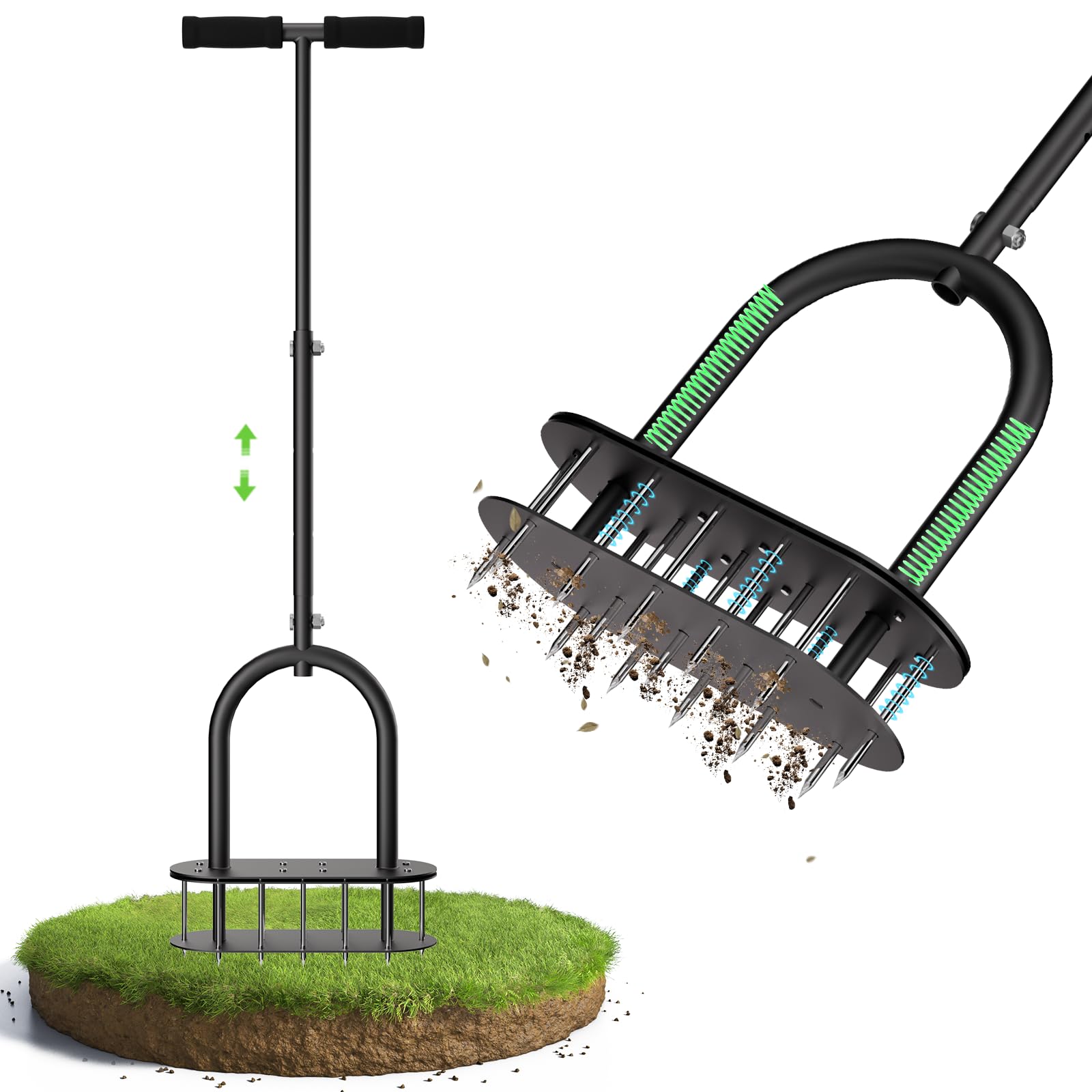
2. seasky Manual Lawn Aerator Tool with Padded T-Handle
The spring-loaded spike tool that keeps soil from sticking to your tines.
The standout feature here is the built-in dual-layer spring design. When you step on the wide foot plate, the 15 solid steel spikes (each 3 inches long) push into the soil, and the spring mechanism helps eject any dirt or dry leaves that cling to the spikes as you lift up. The review pages confirm that “the spring part works great” — but buyers also note that this is not a core aerator, so it is better suited for loosening surface compaction than pulling deep plugs.
The padded T-handle is adjustable from 28 to 38 inches, which helps taller users avoid hunching over. At 5.35 pounds, it is heavier than the plug-pulling champ above, but the added weight comes from the dual-layer foot plate and spring assembly. The mixed durability feedback mentions that the handle can feel a bit wobbly during aggressive use, so treat it as a tool for small patchwork rather than full-lawn marathons.
What owners appreciate
- Dual-layer spring design ejects soil and debris from spikes automatically
- Adjustable handle height (28–38 in.) fits different user heights
- Wide foot plate provides stability and accommodates any shoe size
The honest caveat
- Not a core aerator — it pushes holes rather than pulling plugs, so compaction relief is limited
- Handle build feels slightly lacking; not for heavy repeated use on large areas
Best suited for: quick surface aeration on small patches, overseeding prep, or softening a hard spot before planting.
Think twice if: your lawn has heavy clay soil or deep compaction that needs actual core extraction — this tool will not deliver the plug removal you need.
3. Colwelt Lawn Aerator Tool 38inch
The beefiest spikes in the budget aisle — 3.5 inches long and 2/5 inch thick.
While most spike aerators use thin tines about 2.3 inches long, the Colwelt tool uses four rugged metal spikes that are 3.5 inches in length and 2/5 inch in diameter. That extra length and thickness mean each plunge creates a noticeably bigger hole, which makes it effective not just on lightly compacted soil but also on the stubborn, heavily compacted kind. The owner reports consistently praise the sturdiness: the solid steel construction and anti-slip foot plate handle repeated stepping-in without flexing.
The cushioned T-handle and overall height of 38 inches help reduce back strain, and the wide foot plate is 6 inches wide and 5.5 inches high to accommodate larger boots. Owners mention they completed a 1000-square-foot lawn in about 90 minutes, which gives you a realistic sense of the pace. The recurring tip: water the lawn for about 15 minutes before you start, especially if the ground is hard and dry, to let the spikes sink in without extra effort.
What stands out
- Larger spikes (3.5″ long, 2/5″ dia.) penetrate heavily compacted soil better than standard spike tools
- Solid steel construction feels heavy-duty and rust-resistant
- Quick assembly with all necessary hardware included
One thing to keep in mind
- Still a spike aerator, not a core aerator — it pushes soil aside rather than removing cores, so compaction relief is moderate
A great match for: small to medium lawns with heavy compaction where you want the deepest spike penetration available in a manual tool.
Not the best choice if: you need true core extraction (pulling plugs) or if your lawn is mostly sandy loam that does not need the extra spike aggression.
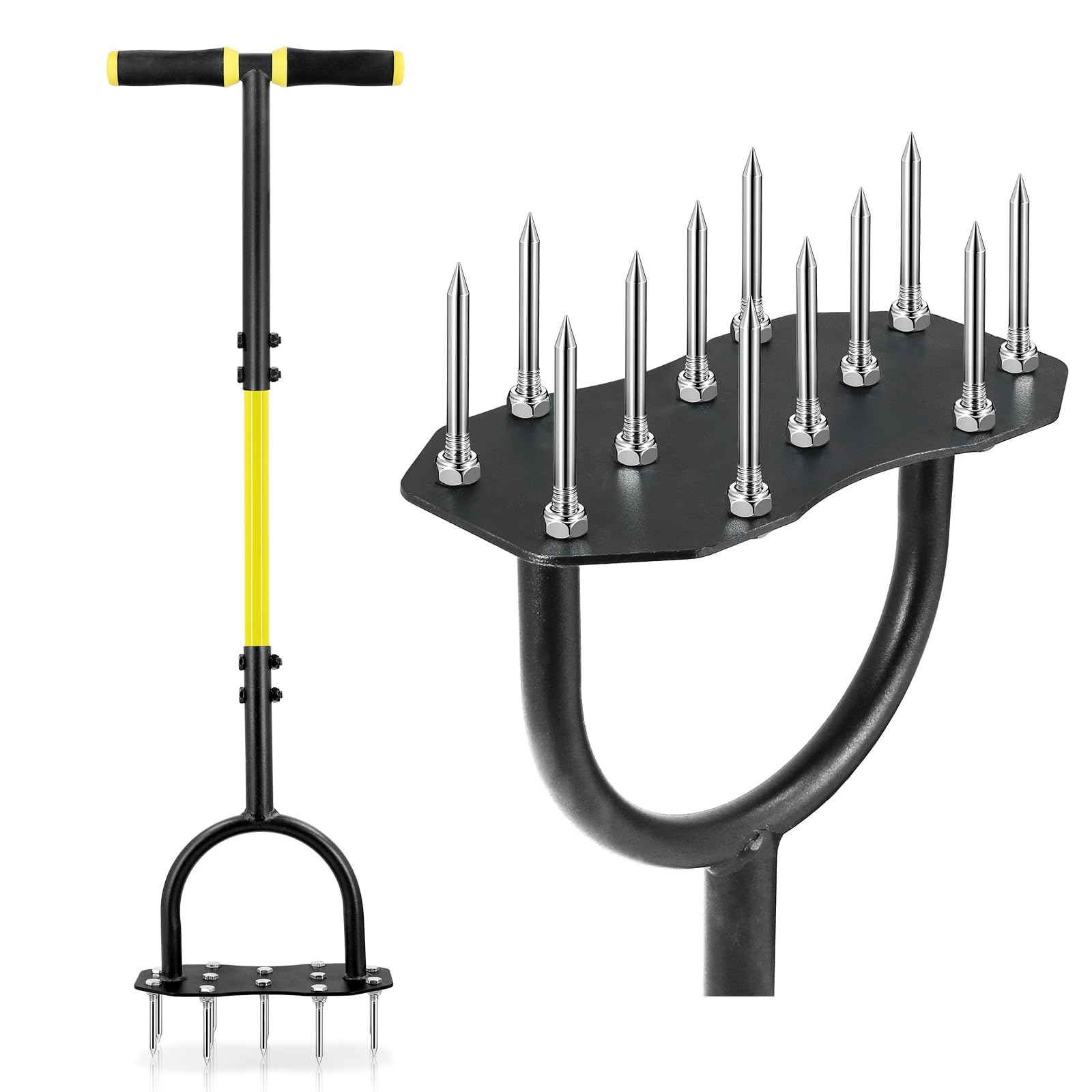
4. Jardineer Lawn Aerator Tool 36 Inch
Twelve spikes working at once — the fastest step-for-step coverage in this range.
The Jardineer aerator uses 12 heat-treated steel spikes (2.75 inches long) that all hit the ground simultaneously, which means each step covers more than triple the holes of a 3- or 4-spike tool. That speed makes it a good fit for residential lawn care on loam, sand, or clay, and the pre-assembled design (just a few minutes with the included wrench) gets you started immediately.
The thick steel foot plate bears your full weight without flexing, and the 36-inch tall handle with a rubber grip reduces hand fatigue during longer sessions. The durability feedback is split: plenty of owners use it weekly with no issues, but some report spikes bending when they hit rocks or tree roots. The tool comes with a few replacement spikes, so that risk is partly covered. For best results, owners advise twisting the handle slightly as you push to help the spikes find their way through tougher soil.
Why owners choose it
- 12 spikes per step cover more ground quickly — good for spot seeding prep
- Pre-assembled with tools included; sets up in minutes
- Comfortable rubber grip and solid foot plate for good force transfer
The trade-off to know
- Spikes can bend if you hit rocks or hard objects; replacements are included
- Some owners wish the spikes were a bit thicker for heavy clay
Go for it if: you want fast surface aeration for seeding or routine maintenance and you appreciate a tool that is ready to use right after unpacking.
skip it if: your soil is rocky or full of tree roots — the thinner spikes may bend on impact.
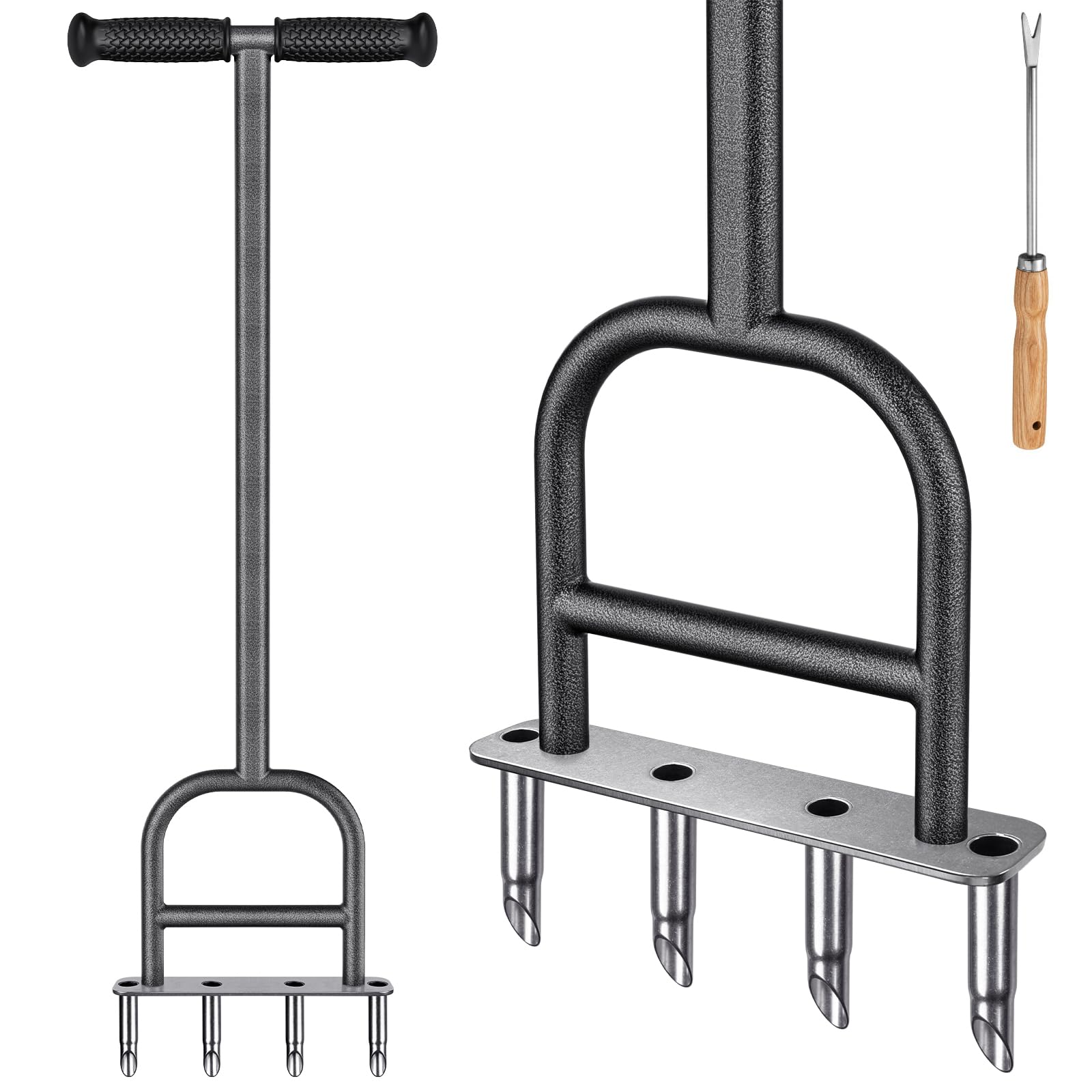
5. Dolibest Lawn Coring Aerator
Four stainless steel corers that pull deep, narrow plugs without rusting.
Unlike painted steel tines that can rust after a season of wet use, the Dolibest aerator uses stainless steel for the bottom section and corer plugs, so you can leave it in a damp shed without worrying about corrosion. Each of the four hollow tines is 3.5 inches long and 0.5 inches in diameter, pulling deep, narrow cores that leave room for roots to spread. The soft rubber grip prevents blisters during extended sessions, and the foot bar is positioned to keep your shoes clear of the core ejection path.
The trade-off is that the step area is a rounded tube rather than a flat plate, which reduces leverage compared to the flatter designs. Some customers note only achieving about 2 inches of depth in harder soil, and they recommend rolling your foot side-to-side rather than trying to push all four tines straight down at once. In wet clay soil, clogging happens — one barrel in particular seems prone to it — so keeping the tines dry between uses is important.
What owners praise
- Stainless steel bottom resists rust and bending better than painted alternatives
- Single welded construction feels very sturdy in hand
- Comes with a 12-inch weeder/cleaning hand tool
The honest adjustment
- Rounded foot plate reduces downward force transfer — requires rocking motion for full depth
- Wet soil clogs the tines frequently; best used when soil is moist but not wet
Who this suits: owners who want a rust-proof core aerator for small to medium projects and do not mind a slight technique adjustment to reach full depth.
Not for: large, compacted lawns where you need to drive 4 tines straight down with minimal effort.
6. EEIEER Manual Lawn Aerator Tool with Soil Storage Basket

A built-in soil basket catches cores so they don’t scatter across your lawn.
Most core aerators leave a trail of soil plugs all over the grass that you later have to rake up or mow over. The EEIEER tool solves that with a soil storage box mounted behind the three tines: as you push down and lift, the extracted cores drop into the basket instead of littering the lawn. This keeps the yard clean and saves you an extra step after aeration. The tool also includes a cleaning stick for when the tines do clog, which doubles as a small weeder.
The build quality stands out here — the bottom uses a patented one-piece structure rather than welded joints, and the tine walls are thickened from the standard 1.2mm to 2mm for added durability. The 38-inch ergonomic handle reduces back strain, and the foot plate is 4.3 inches tall for comfortable stepping. Owners say it works well on moist, soft soil for lawns up to about 3000 square feet, but wet soil triggers frequent clogging and the foam grip handles may wear over time.
What makes it unique
- Soil storage basket catches cores — no raking up plugs afterward
- Patented one-piece bottom is stronger than welded designs
- Thickened tine walls (2mm) reduce breakage risk
The catch
- Clogs badly in wet or sandy soil; the cleaning stick helps but slows pacing
- Foam handles may not hold up to years of heavy use
Best for: homeowners who want a tidy aeration session without post-job cleanup — ideal for small, soft-soil lawns.
Not for: clay-heavy or consistently wet soil where clogging becomes a constant interruption.
7. MEIIOFS Lawn Aerator with Soil Core Storage Tray

Compact core tool that keeps plugs in the tray instead of on your shoes.
Like the EEIEER above, this MEIIOFS model uses a soil core storage tray that catches the extracted plugs so you are not tracking dirt across the yard. It is a simple, effective design for targeted work — owners love using it for “dead spots” in the yard, especially areas where dog urine has damaged the grass. The high-density alloy material is rust-proof and durable, and the T-handle with a padded grip adds comfort during repeated steps.
At 6.4 pounds, it is the heaviest manual core tool here, which gives it a solid feel but also makes it more tiring over long sessions. The compact size means it takes longer to cover a full yard — one owner reports spending about 3 days on a 2,000-square-foot lawn. The smaller-than-expected size surprised some buyers, so check the dimensions if you were expecting a full-size tool. It works best after pre-watering, pulling good-sized plugs that help fertilizer and water reach the roots faster.
What buyers like
- Catch tray collects cores — less mess than standard plug aerators
- Solid, durable feel with rust-proof alloy construction
- Easy to assemble with included tools
What to consider
- Smaller than it appears in photos — better for spot fixing than full lawn coverage
- At 6.4 lbs it is noticeably heavier than other manual core tools
Pick this if: you need to plug specific problem areas (dead spots, dog patches) and want a tidy tool that collects the cores.
Look elsewhere if: you plan to aerate a whole lawn in one afternoon — the compact size and heavier weight make it slower going.
8. Colwelt Spike Lawn Aerator, Heavy Duty Rolling Push Aerator

A rolling drum you push, not step on — saves your back but needs weight.
If bending and stepping are not your thing, this rolling spike aerator lets you walk upright while the drum does the work. The 49-inch steel handle (total tool height is 57 inches) means no hunching, and the 18-inch-wide drum covers more ground per pass than a single-foot tool. The spikes are 1.4 inches long — shorter than the manual tools above — so it is designed for mild compaction relief rather than deep aeration.
The catch is that the tool is lightweight at 8.2 pounds, which sounds like an advantage but actually works against it: owners consistently report that you have to push down hard to get the short spikes to bite into the soil, especially on hard or dry ground. On compacted lawns, the drum can just roll over the top without sinking in. A few buyers found the assembly fiddly, and the mixed feedback on durability suggests it is fine for occasional use on soft, mildly compacted lawns but not a heavy-duty solution for tough soil.
Why some prefer it
- No bending — long handle lets you aerate while walking upright
- 18-inch width covers ground faster than step tools on soft soil
- Galvanized steel construction resists rust
Where it struggles
- Too lightweight to sink spikes into compacted soil without heavy downward pressure
- Short 1.4-inch spikes provide only shallow surface aeration
Who it works for: owners with soft, healthy lawns who want a quick rolling pass for mild maintenance without bending over.
Who should skip it: anyone with compacted clay, hard soil, or a lawn that actually needs deep core extraction — this tool will frustrate you.
9. Yard Butler Spike Aerator IM-7C
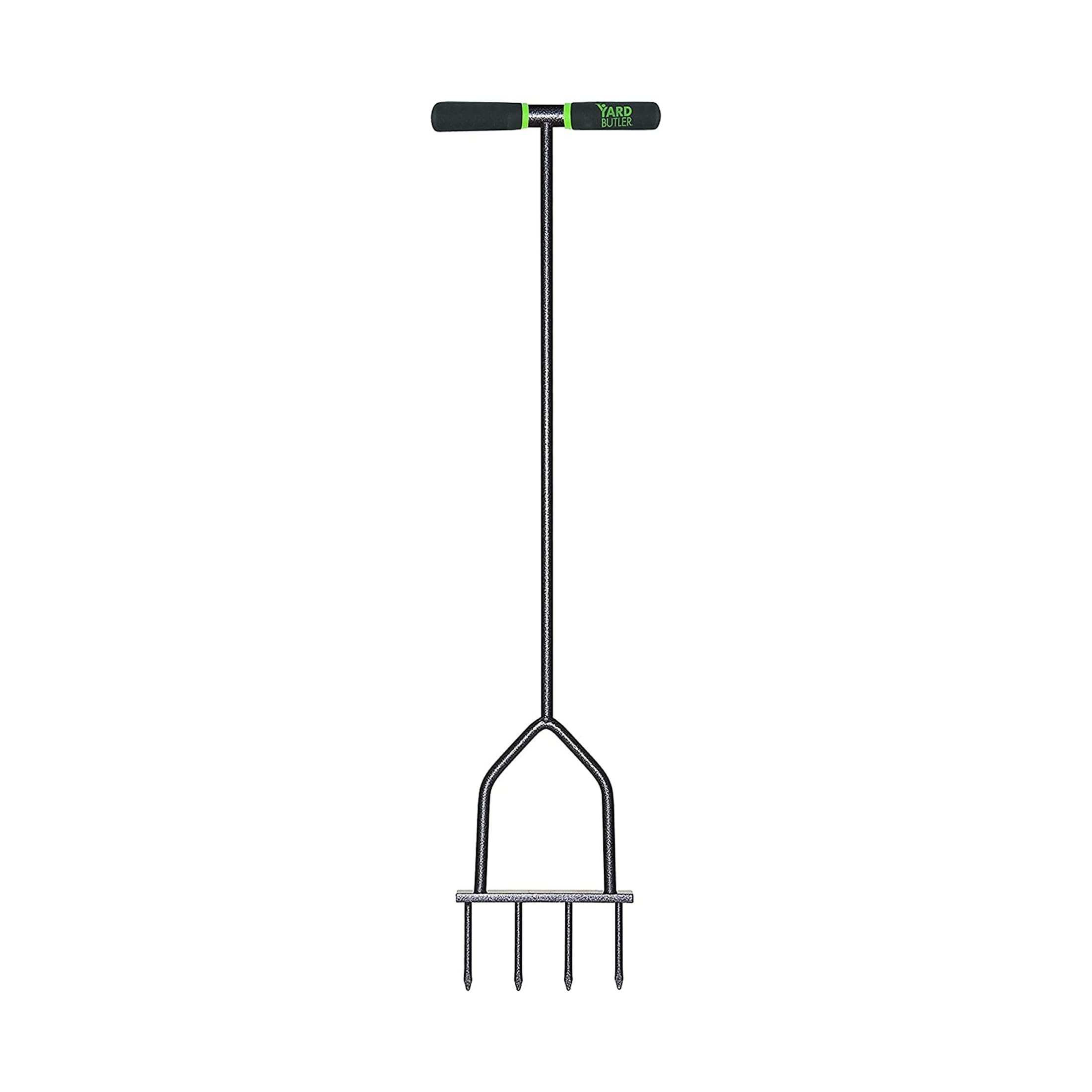
The time-tested four-spike design that still works after a light rain.
Yard Butler has been making this tool for years, and the core formula has not changed: four powder-coated steel spikes (3 inches long) on a 37-inch handle with a welded, all-steel frame. The long handle provides good leverage, and the tool weighs only 2.25 pounds, making it the lightest aerator on this list by a wide margin. That light weight is a blessing for carrying and a curse for penetrating hard ground — owners say it works great in moist clay soil with steady foot pressure but struggles in dry, compacted patches.
The consensus among owners is that this tool is best used after a light rain or thorough watering. A few recent reviews note that the steel tines seem softer than in previous years, with some bending on rocky ground. The 36-inch handle can cause back strain for taller users. At its core, this is a solid entry-level spike tool for small gardens and flower beds where you want light aeration without a huge investment of money or storage space.
What keeps it popular
- Very light at 2.25 lbs — easy to carry and store
- All-welded steel construction feels solid for the weight
- Proven track record for perking up small lawns after rain
The honest limitations
- Light weight means it lacks penetration in hard or dry soil
- Some recent units have softer tines that bend on impact
- 36-inch handle may cause back fatigue for users 5’10” and taller
A sensible pick for: small gardens, flower beds, or tiny lawns where the soil stays moist and you want a lightweight, low-maintenance spike tool.
Not ideal if: you have deep compaction, rocky soil, or a yard larger than 1,000 square feet — the light frame works against you in those conditions.
Understanding the Specs
Core (Plug) vs. Spike Aerator
A core aerator uses hollow metal tubes to cut and lift a plug of soil out of the ground, physically removing mass so the remaining soil has room to expand and roots can grow deeper. A spike aerator simply pushes a solid rod into the ground, creating a hole but pressing the soil tighter around it — which can actually worsen compaction in heavy clay over time. For real compaction relief, choose core aeration. For light, routine maintenance on sandy or loamy soil, spike aeration is fine.
Tine Length and Diameter
Longer tines reach deeper into the root zone. Budget manual aerators typically offer tines between 2.5 and 3.5 inches long. For most lawns, 3 inches is the balance: deep enough to relieve compaction without requiring excessive force to push in. Tine diameter matters too — thicker spikes (around 2/5 inch) create larger holes that stay open longer and let more air and water reach the roots, but they also require more downward force.
Foot Plate and Handle Design
A wide, non-slip foot plate lets you transfer your full body weight into the tines instead of relying on arm strength. Look for a plate at least 5 inches wide that accommodates the sole of your boot or shoe. Handle height matters for your back: a T-handle around 36 to 38 inches lets most users stand upright while working, while shorter handles force you to bend and can cause lower back fatigue within 30 minutes.
Weight and Build Material
Heavier tools (5 pounds or more) have an easier time penetrating hard soil because gravity does some of the work for you. Lighter tools (under 3 pounds) are easier to carry and store but require more downward force. Material makes a difference: powder-coated steel resists rust better than basic painted steel, and stainless steel components eliminate rust worries entirely. Heat-treated tines resist bending on rocks and roots far better than untreated metal.
FAQ
Will a spike aerator work on clay soil?
How deep should the tines penetrate for effective aeration?
How often should I aerate my lawn with a manual tool?
Should I water my lawn before using a manual aerator?
Why does my core aerator keep clogging?
Can I use a manual aerator on a lawn larger than 5,000 square feet?
Are replaceable tines important on an inexpensive aerator?
Should I remove the plastic inserts in the hollow tines?
Is a rolling push aerator better than a stepping aerator?
What does “heat-treated” mean on a tine description?
Final Thoughts: The Verdict
For most buyers looking for the best inexpensive lawn aerator, the Manual Core Aerator Lawn Tool with 3 Hollow Tines is the clear standout — it pulls real plugs from compacted soil at a weight that won’t wear you out. If you want faster surface aeration and do not need core extraction, the Jardineer Lawn Aerator covers more ground per step with its 12-spike array. And for targeting specific dead spots with a tidy catch tray, the EEIEER Manual Lawn Aerator with Soil Storage Basket keeps your cleanup to a minimum — just be ready to work within its ideal soil moisture window.
How We Picked
We do not accept paid placement. Every pick is matched to a real buyer and a real use-case; we do not hands-on test units.
Sources & Methodology
Specifications: manufacturer listings and product documentation. Review insights: verified customer reviews, as of July 2026. Pricing: not shown on this page (it changes often); check the current price via the retailer link.
As an Amazon Associate, Lawn Gear Lab earns from qualifying purchases. This does not affect which products we feature.