
Specs are compiled from manufacturer listings and verified buyer reviews and can change over time — please confirm the key details on the product page before buying.
Compacted soil chokes your lawn’s roots, blocking the air, water, and fertilizer they need to stay green. A hand soil aerator solves that without the noise, fumes, or cost of a gas-powered machine — you simply push, step, or twist and let steel tines do the work. The trick is picking the right style for your soil and your back, and that is exactly what this guide cuts through.
I’m Rikta — the founder and writer behind Lawn Gear Lab. This guide is built by comparing the manufacturers’ published specifications and the patterns across verified customer reviews, so you get each pick’s real strengths and trade-offs instead of marketing spin.
if you need a spike aerator for a quick weekly punch or a core aerator to pull actual plugs from heavy clay, these are the best hand soil aerator options worth your time and money this season.
Our Picks at a Glance

How To Choose The Best Hand Soil Aerator
A hand aerator looks simple, but a few wrong choices can turn a quick chore into a frustrating workout. Here are the specs that actually separate the good from the great.
Spike vs. Core (Plug) Aeration
Spike aerators push solid tines into the ground to create holes. They are fast and fine for light aeration on loamy or sandy soil. Core aerators have hollow tines that pull a plug of soil out of the ground. This actually removes compaction rather than just pushing soil aside, making it the better choice for clay-heavy lawns and high-traffic areas. If you are serious about lawn health, a core aerator is the standard — spike aerators are better for maintenance between deeper treatments.
Tine Length and Thickness
Deeper holes reach deeper roots. Look for tines at least 2.5 inches long for meaningful aeration on most lawns. Thicker tines create bigger holes that stay open longer, allowing more air and water to penetrate. A 3.5-inch spike makes a much bigger impact than a 2.3-inch one, especially when soil is heavily compacted. Thinner spikes may bend on rocky ground, so check the steel thickness if your soil has stones.
Handle Height and Your Own Height
A handle that is too short forces you to bend, turning a 30-minute job into a backache. Measure your height against the tool’s handle — a 38-inch handle is comfortable for most people, while taller users (over 6 feet) benefit from a 44-inch handle or longer. Adjustable handles are a great solution when multiple people in the household will use the tool. Comfort grips matter too: rubber or foam padding reduces hand fatigue on repetitive motions.
Quick Comparison
| Model | Best For | Type | Handle Height | Tine Length | Weight | Amazon |
|---|---|---|---|---|---|---|
| Altdorff Hand Tiller★ Best Overall | General tilling & aeration | Twist cultivator | 37 inches | 4 arrow tines | 3.5 pounds | Amazon |
| GSBLUNIE Hand TillerTop Performer | Tall users & clay soil | Twist cultivator | 44.3 inches | 5.5 inch max depth | 1.5 pounds | Amazon |
| CKLT Rotary CultivatorPremium Pick | Stubborn clay & rocky soil | Rotary cultivator | 66 inches (adjustable) | Serrated star wheels | 3.9 pounds | Amazon |
| BARAYSTUS Rotary Cultivator | Adjustable reach | Rotary cultivator | 29.7-57 inches | Star wheel tines | 2.2 pounds | Amazon |
| Colwelt Lawn Aerator | Heavy compaction | Step spike | 38 inches | 3.5 inches | 4.31 pounds | Amazon |
| Jardineer Spike Aerator | Small lawns & spot fixes | Step spike | 36 inches | 2.75 inches | 5.02 pounds | Amazon |
| Onadak Spring-Assist Aerator | Effort-saving on hard ground | Step spike | 38 inches | 3 inches (15 spikes) | 5 pounds | Amazon |
| LawnVigor Core Aerator | True plug aeration | Step core (3 tines) | Semi-assembled | 3 inch plugs | 3.52 pounds | Amazon |
| Dolibest Coring Aerator | Stainless durability | Step core (4 tines) | Rubber grip | 3.5 inches | 5.54 pounds | Amazon |
In‑Depth Reviews
1. Altdorff Hand Tiller for Gardening
Our pick — 4.5★ from 650+ verified ratings; the strongest balance of quality and price.
The crowd favorite that turns your body weight into easy soil penetration.
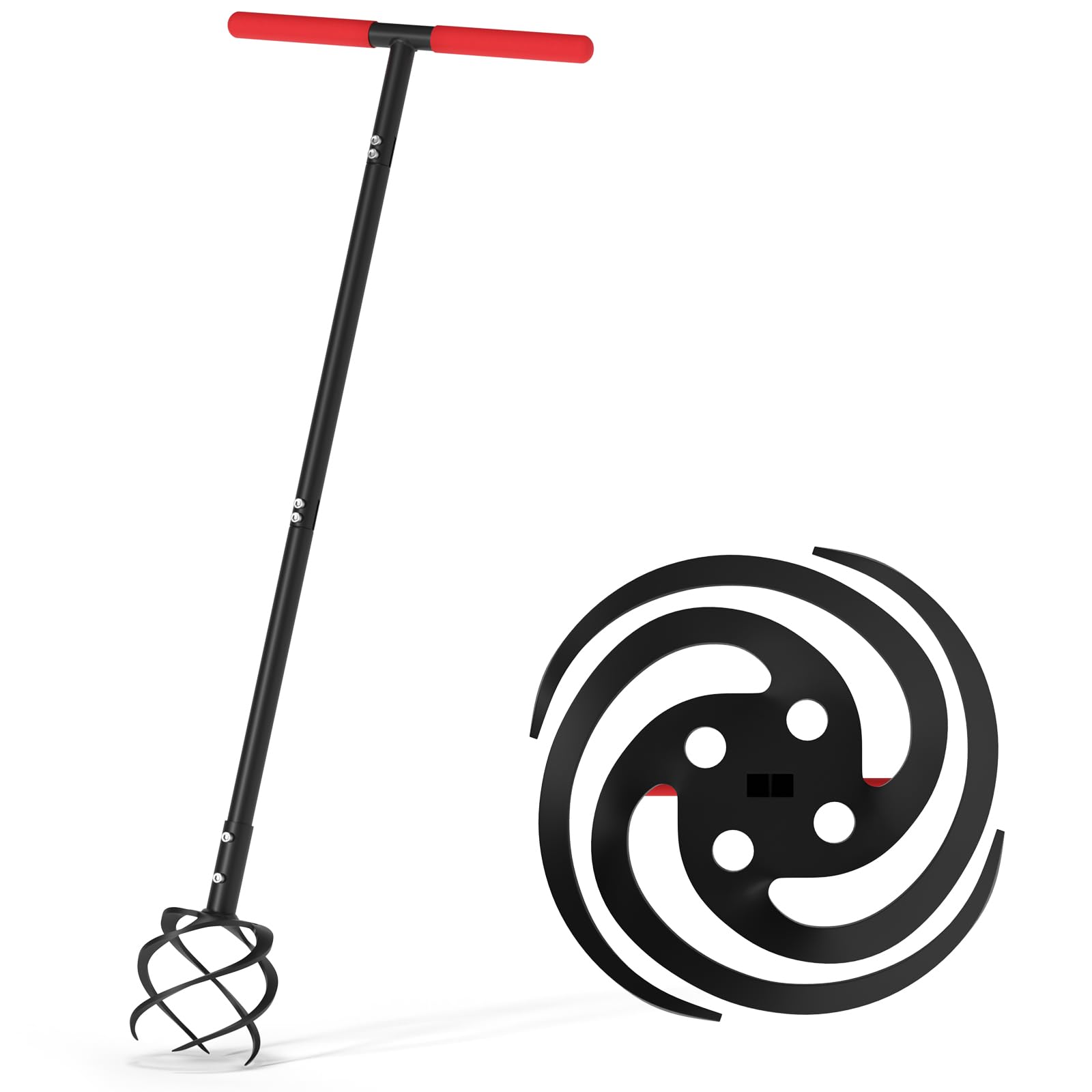
This four-tined twist tiller uses a 17.7-inch arc handle to turn your push and twist into leverage, making it noticeably easier to break into compacted earth than a straight-handle tool. The arrow-tipped tines are made of alloy steel and the whole unit weighs 3.5 pounds — light enough to move quickly across a raised bed but substantial enough to feel durable. What wins people over most is its effectiveness: buyers report it cuts through sandy soil and pulls weeds without the strain of a shovel or hoe.
The handle width is 17.5 inches, which provides good two-handed control without feeling too wide for tight spaces. Assembly takes a few minutes with four bolts and butterfly nuts. The recurring note of caution is about durability under extreme stress — it feels sturdy but a few buyers mention it is a little flimsier than expected for heavy compost turning. For routine flower bed maintenance and raised bed aeration, the trade-off is fair.
What owners love
- Effectiveness is the most praised aspect — 59 owners single it out for working well in dense soil
- Ease of use is a close second, with 41 owners noting it is much easier than shoveling or hoeing
- The arc handle design reduces the effort of twisting, letting your body weight do the work
What to watch for
- A minority report it feels a little flimsier than expected, especially when turning compost
- Not designed for rocky or cement-like ground — the tines can be damaged
Reach for this if: You want a straightforward, well-reviewed twist tiller that makes light work of sandy soil and raised beds without breaking your back.
Look elsewhere if: You need to break seriously hard-packed clay or rocky soil — the tines are not built for that level of abuse.
2. GSBLUNIE Hand Tiller Garden Tool
Tall enough for a 6’3″ gardener to use without hunching.
At 44.3 inches, this is the tallest standard-handle tiller on the list — and that matters when you have 200 square feet of clay soil to turn. The twisted claw design uses sharp, angled tines to reach a max depth of 5.5 inches, which is deeper than most twist tillers. The whole tool weighs only 1.5 pounds, compared to the Altdorff tiller’s 3.5 pounds. That weight difference means you can swing and twist for longer without your arms giving out.
Owners are emphatic about how well it cuts through clay. The phrase “excellent for clay soil, loosens and pulls up dirt effectively” appears across multiple reviews. An 11-year-old and a 6’3″ adult can both use it comfortably, which tells you the ergonomics work across a wide height range. At just under 60 ratings, it has a perfect positive score on effectiveness and ease of use — every single mention is positive.
Why it stands out
- 44.3-inch handle is the tallest standard option, ideal for taller gardeners
- Reaches 5.5 inches deep into soil — deeper than most twist tillers manage
- Weighs just 1.5 pounds, so fatigue is minimal even during long sessions
The honest caveat
- Thin shaft may feel less sturdy than heavier steel alternatives
- Not ideal for heavy rock-laden soil where leverage matters most
Best suited for: Taller users and anyone dealing with clay-heavy soil who wants a lightweight tool that goes deep.
Consider something else if: You prefer a heavier, more solid feel or need to break up very rocky ground where a sturdier tine is necessary.
3. CKLT Rotary Cultivator Garden Tool
Tempered spring steel tines that bite into clay without bending.
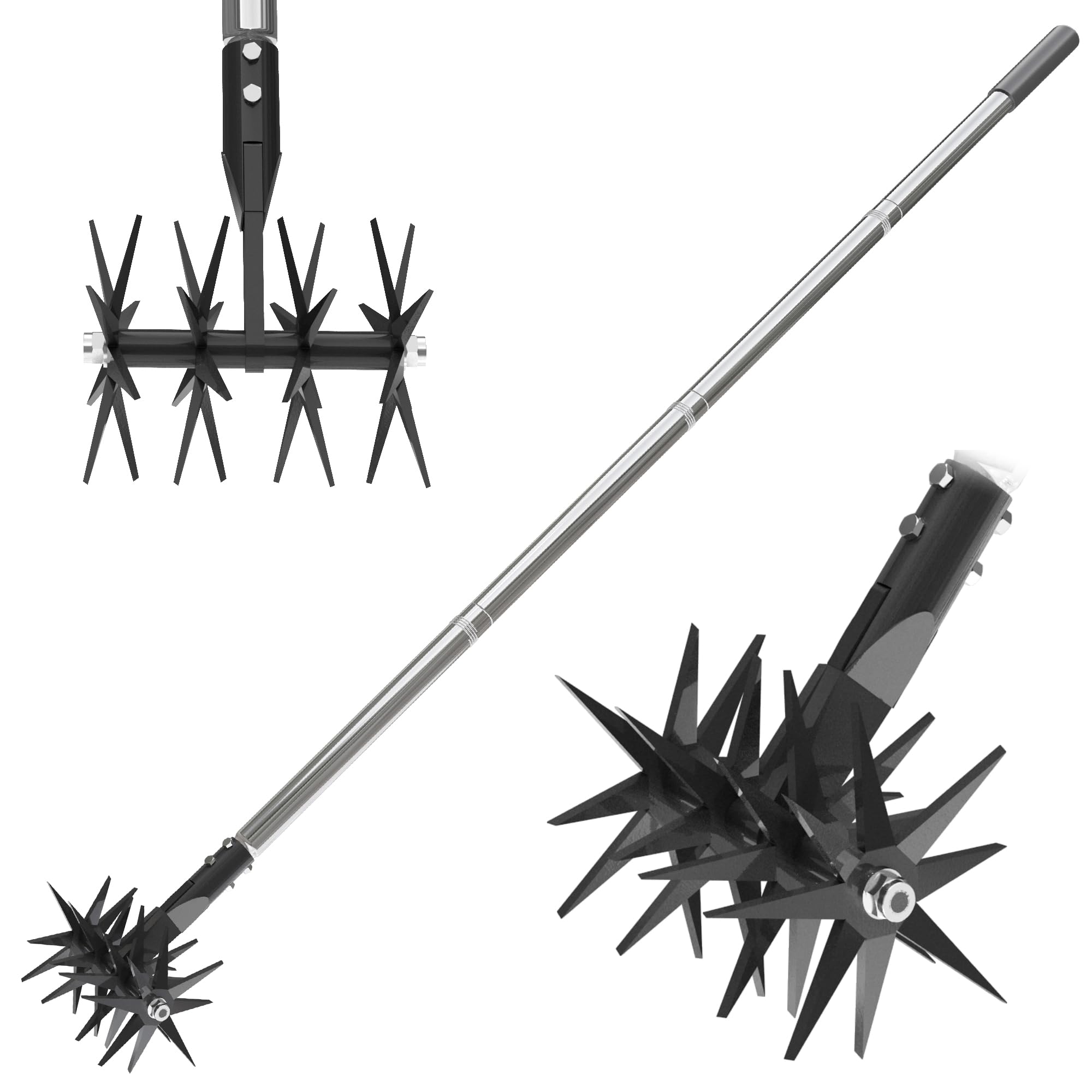
The star-shaped tines here are made from tempered spring steel, which is a material choice that matters when the soil turns tough. It resists bending and deformation under heavy pressure, unlike the aluminum spikes found on some cheaper rotary cultivators. The handle extends to 66 inches and is made of stainless steel with a 4-section detachable design, so you can shorten it for a 5’4″ user or keep it full-length for tall gardeners. It weighs 3.9 pounds, which gives it a solid, grounded feel without being exhausting to push.
What owners consistently praise is its performance on clay-like soil — multiple reviews call out how it breaks up crabgrass and dandelions before seeding. The serrated star wheels create a fine crumb texture in the soil, which is ideal for seedbed preparation. The trade-off is that it works best on soft to medium soil; firm ground may require a few extra passes. The rust-resistant powder coating and 304 stainless steel screws mean this should last many seasons with basic care.
What makes it different
- Tempered spring steel tines resist bending under heavy pressure better than standard steel
- Adjustable 66-inch handle accommodates users from 5’4″ to over 6 feet
- Serrated star wheels pulverize soil into a fine, seed-ready crumb
What to keep in mind
- Requires softer soil or multiple passes for heavily compacted ground
- Aluminum extension sections may squeak over time (easily fixed with WD-40)
Ideal for: Gardeners who need a versatile, long-handled cultivator that can handle clay and prepare fine seedbeds without a power tool.
skip it if: You only have small flower boxes and do not need the extended reach or the heavy-duty tine material.
4. Colwelt Lawn Aerator Tool

Longer and thicker spikes than the competition for the same money.
Where most spike aerators use 2.3-inch tines at 1/5 inch diameter, the Colwelt uses 3.5-inch tines at 2/5 inch diameter. That difference means you create bigger holes with each step, which matters for heavily compacted soil where skinny spikes barely scratch the surface. The 38-inch total height keeps you upright, and the wide foot plate measures 6 inches across and 5.5 inches high — roomy enough for any shoe size to plant your weight comfortably.
At 4.31 pounds, it is heavy enough to drive the spikes deep without feeling like a clumsy sledgehammer. Owners consistently note it is easy to use and built sturdily, with functionality being the most-discussed positive feature. The manufacturer’s tip — water the lawn for about 15 minutes before use — is worth following. Dry soil makes any spike aerator much harder to push in. Assembly is quick, and the cushioned T-handle gives you extra grip when pulling the tool back out.
What stands out
- 3.5-inch spikes at 2/5-inch diameter are longer and thicker than typical 2.3-inch options
- Wide 6-inch foot plate distributes weight and works with any shoe type
- Functionality is the top praised aspect — 21 owners call out how well it aerates
A fair note
- Spike aerators push soil aside rather than removing plugs, so they are less effective for heavy clay than a core aerator
- Best results require moist soil — hard, dry ground can be a struggle
Good for: Small to medium lawns where you want spike aeration with real penetration depth, especially if you are tired of cheap tools with skinny tines.
Not the best fit if: You need true core aeration for a clay-heavy lawn — this is a spike tool and compacts soil around the hole rather than removing a plug.
5. Jardineer Lawn Aerator Tool
Twelve spikes that punch 2.75 inches deep in one step.
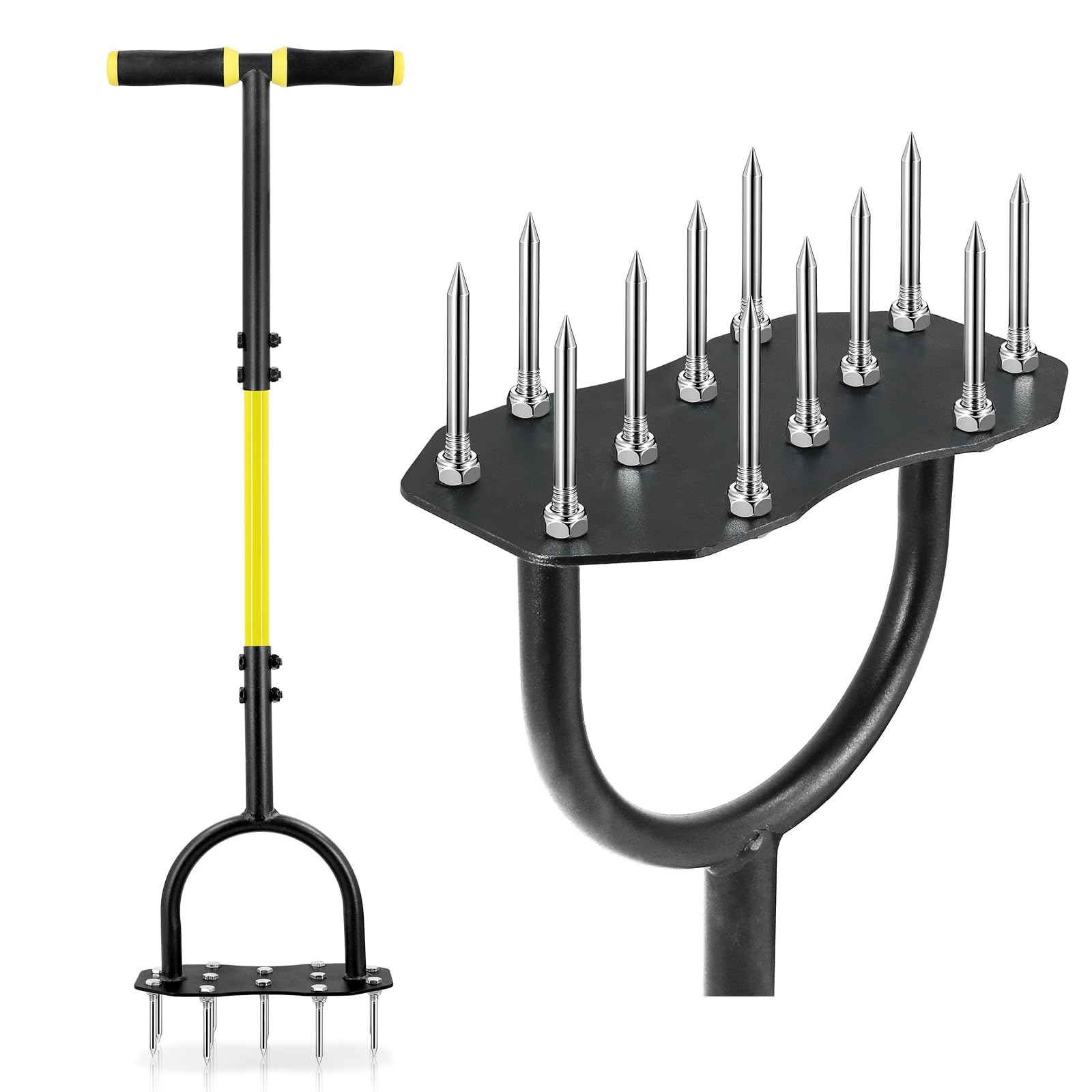
This step aerator uses 12 heat-treated steel spikes that each reach 2.75 inches into the soil, hitting a good depth for most residential lawns. It comes pre-assembled with a wrench and manual included, so you are not fighting with hardware before your first use. At 36 inches tall with a rubber grip handle, it is a comfortable height for anyone around average height, though very tall users might want extra length. The solid steel foot plate is wide and flat, so you can put your full weight down without the tool tipping.
Owners call out functionality most often — 39 buyers mention how well it works for yard maintenance and spot seeding. The tool is especially praised for compacted clay, where the 12 spikes can punch through with a bit of a wiggle. The main durability concern is that the spikes can bend if they hit rocks or underground pipes. The manufacturer includes replacement spikes in the box, which is a practical nod to that reality. For small lawns and targeted aeration before seeding, this is a solid workhorse.
What works
- 12 heat-treated steel spikes create 12 holes per step, covering ground efficiently
- Pre-assembled design saves time — no complex setup required
- Comes with replacement spikes, acknowledging the risk of bending on rocks
What to be aware of
- Spikes can bend if they hit rocks or plumbing; replacements are provided
- Durability ratings are mixed — some owners mention bending on first use
Best for: Homeowners with small lawns who want a fast, straightforward spike aeration tool with good coverage per step.
Consider an alternative if: You have rocky soil or need to aerate large areas (over 1,000 square feet) where a heavier-duty option would be less tiring.
6. BARAYSTUS Rotary Cultivator Garden Tool
A rotary head that crushes soil fine, with a handle that extends from 29 to 57 inches.
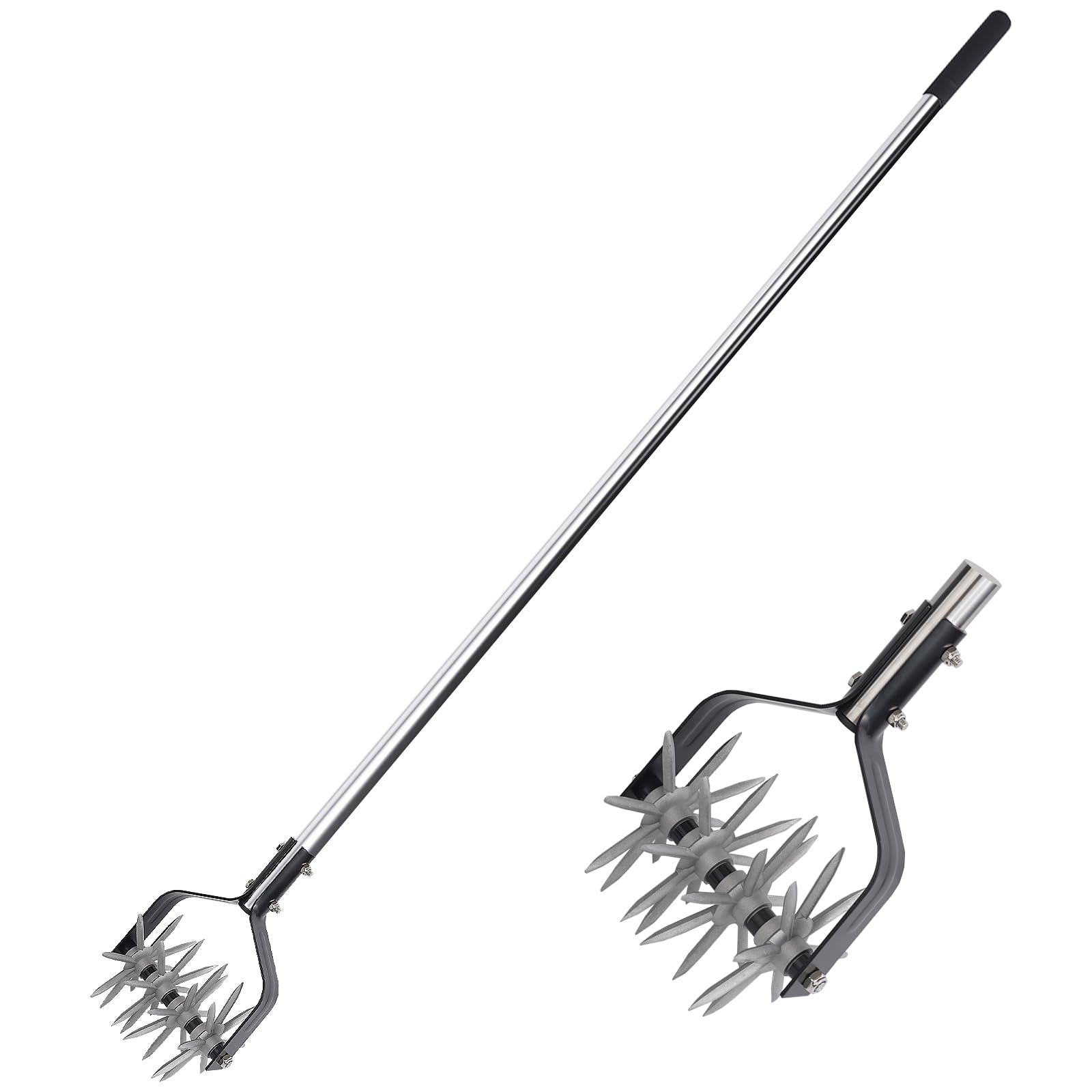
This is the only cultivator here with a fully adjustable handle that goes from 29.7 inches (short enough for a small child) up to 57 inches (tall enough for a 6-foot adult without stooping). The unique star-shaped rotary head uses four aluminum wheels that roll and crush the soil rather than just piercing it. That rolling action makes it easier to achieve a very fine soil texture, perfect for reseeding bare patches or mixing in fertilizer.
One owner worried it would not penetrate their soil, but was surprised to find it did “without any issue.” The tool weighs 2.2 pounds and is made of stainless steel and aluminum — light enough to maneuver easily but with a trade-off. The aluminum spikes are the main durability concern. A few owners note that aluminum is a disappointing material for spikes under hard use, and they would prefer hardened steel. For soft to medium soil, it works great. For rocky or extremely compact ground, the spikes may struggle or crack over time.
What makes it useful
- Adjustable handle from 29.7 to 57 inches fits every family member
- Star-shaped rotary head crushes soil into fine particles for seeding
- Lightweight at 2.2 pounds — easy to use for extended periods
An honest limitation
- Aluminum spikes are softer than steel and may crack under heavy use on hard ground
- Not as effective on very firm clay without multiple passes
This is the pick when: You need a single tool that works for multiple users of different heights and you primarily work with soft to medium soil.
Pass on it if: You regularly deal with rocky, compacted clay — the aluminum spikes are not built for that abuse.
7. Onadak Spring-Assist Lawn Aerator
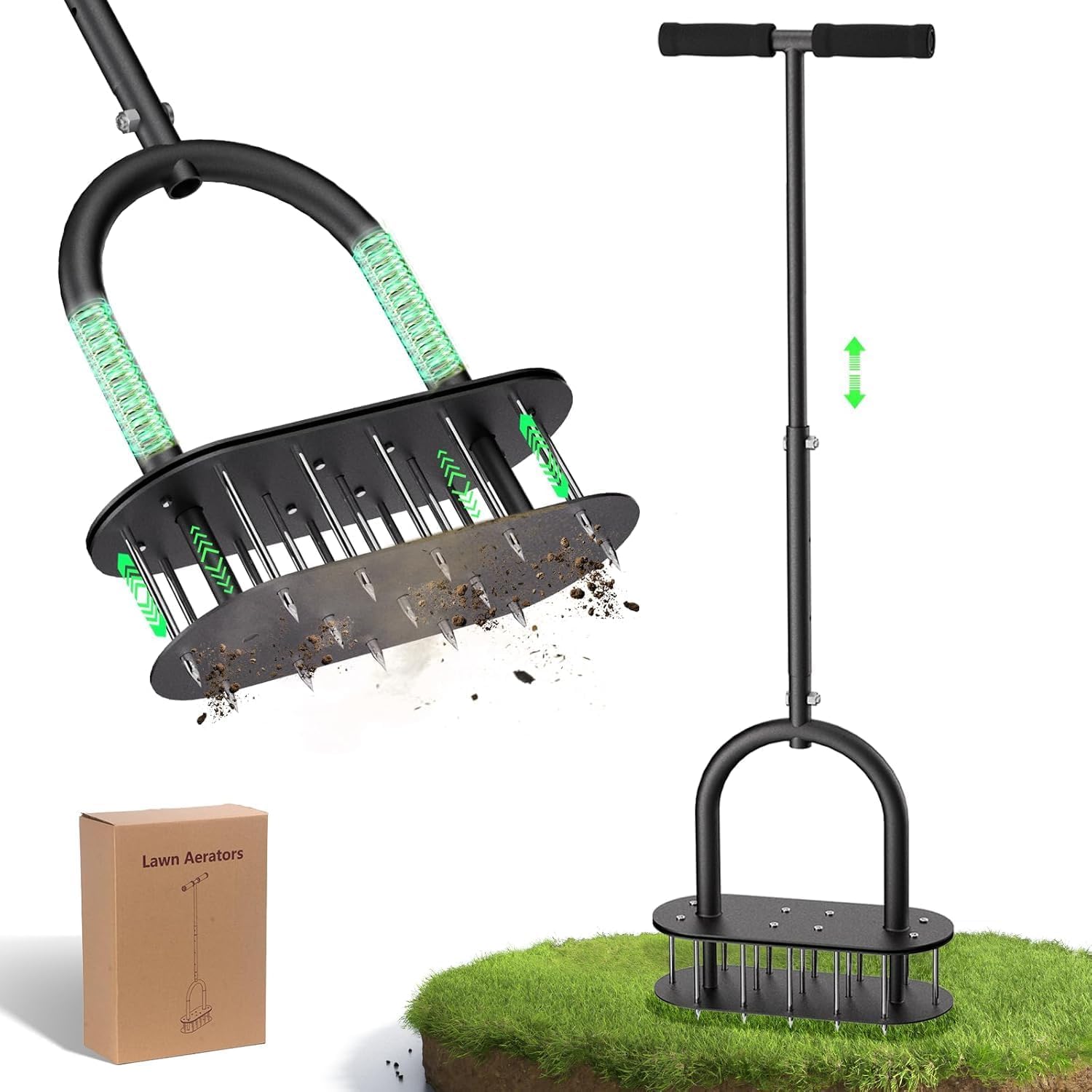
Fifteen spikes and a spring that helps you push down on the hardest soil.
This is the most mechanically clever pick on the list. A spring inside the shaft applies downward force when you step on the foot plate, so even very hard soil requires less effort to penetrate. The 15 steel spikes are each 3 inches long, and you press all of them into the ground at once. Compare that to 4-spike aerators which create only 4 holes per step. The baked enamel finish resists rust, and the 10.6-inch wide foot plate is 0.8 inches thick — thick enough to support your full weight without flexing.
Assembly takes about two minutes, and the spring also helps retract the spikes, which cleans some soil off them on the way up. Owners highlight the spring assist as a real time-saver, especially for older gardeners or anyone with limited knee strength. The 38-inch padded T-handle keeps you upright. At 5 pounds, it is heavy enough for good penetration but light enough to carry around the yard. The honest trade-off is that the spikes could be thicker and longer for truly heavy clay, but for the average lawn this is a fast, low-effort tool.
What is unique
- Spring-assist mechanism reduces the force needed to push spikes into hard soil
- 15 spikes per step — much more efficient than 4-spike alternatives
- Baked enamel finish provides good rust resistance for outdoor storage
The trade-off
- Spikes are not the thickest or longest — may not suit heavy clay
- Tube connection can be tricky if installed incorrectly; follow the manual order
Who it is for: Gardeners with compacted soil who want a physically easier aeration experience, especially if you have joint concerns or limited strength.
Think twice if: You need very deep core aeration for a heavily clay lawn — this is a spike tool and does not remove soil plugs.
8. LawnVigor Manual Core Aerator
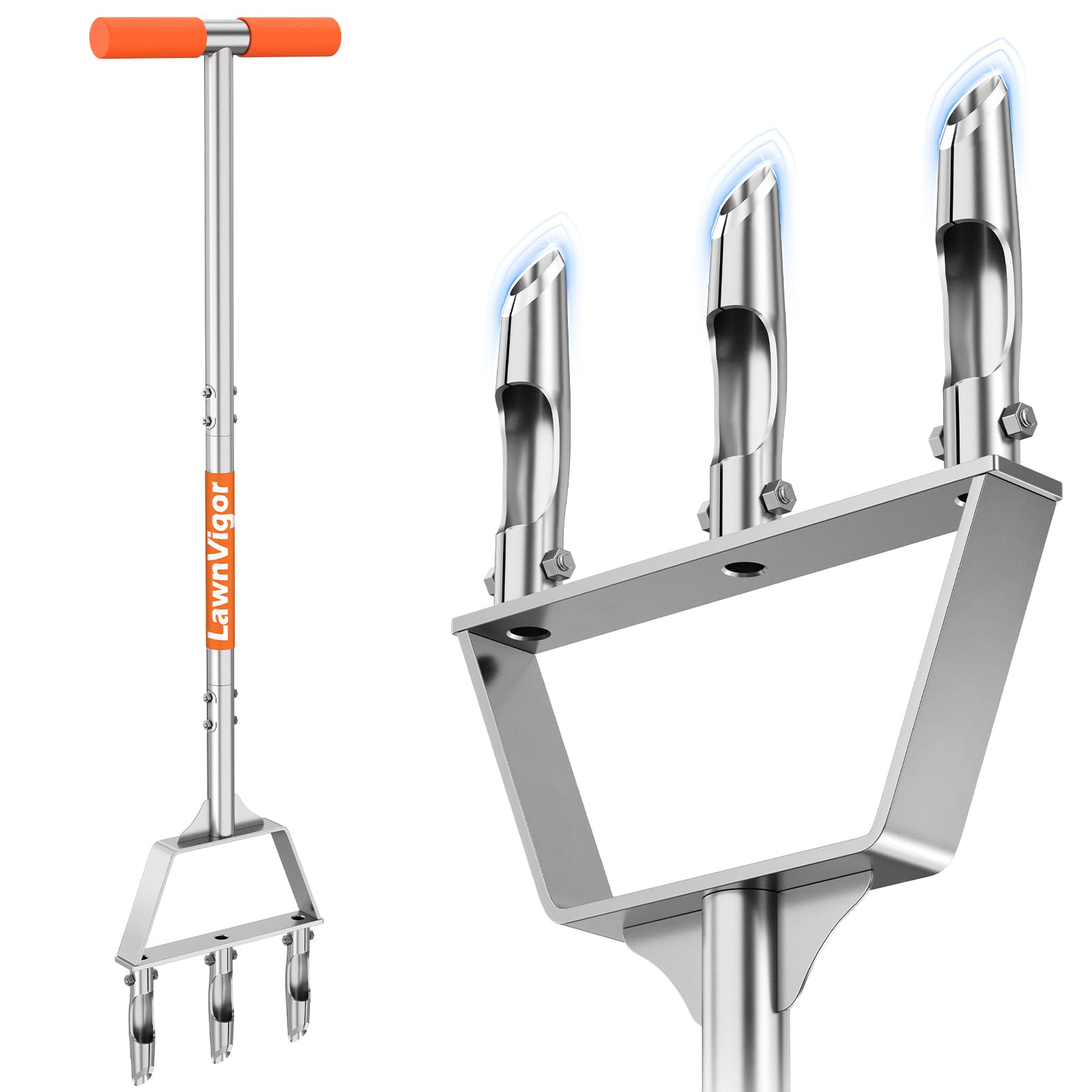
The only manual core aerator here that actually pulls plugs without constant clogging.
Spike aerators push soil to the side, which can actually increase compaction in heavy clay. This LawnVigor tool uses three hollow tines that cut a 3-inch deep plug and lift it out of the ground — the gold standard for true soil aeration. The tines are heat-treated for hardness, and the design includes white plastic inserts that help the soil plugs eject cleanly rather than jamming inside the barrel. The semi-assembled frame uses heavy-duty powder-coated steel and weighs 3.52 pounds, which is manageable for carrying around but heavy enough to drive the tines in with a firm step.
Functionality is the most mentioned positive feature, with 54 owners calling it out. The ability to pull deep plugs without clogging beats cheaper core aerators by a wide margin. The manufacturer stresses an important tip: do not rock or twist the tool side-to-side when it is in the ground, as that can damage the tines or bend the frame. Use a straight up-and-down motion instead. For small to medium lawns, this is the real deal for relieving compaction.
Why it wins
- Hollow tines pull 3-inch soil plugs rather than just poking holes — true aeration
- Non-clogging design with white plastic inserts and large dirt-release holes
- Heat-treated tines stay sharp and resist wear on tough soil
What to remember
- Do not rock or twist while tines are in the ground — use straight up-and-down motion
- Hard work on large areas; best suited for small to medium lawns
This is the pick for: Anyone with clay-heavy soil who wants to actually remove compaction, not just spike it. The core aeration is far more effective for lawn health.
This is not for: Large lawns over 2,000 square feet where a tow-behind or rental machine would save significant time and effort.
9. Dolibest Lawn Coring Aerator
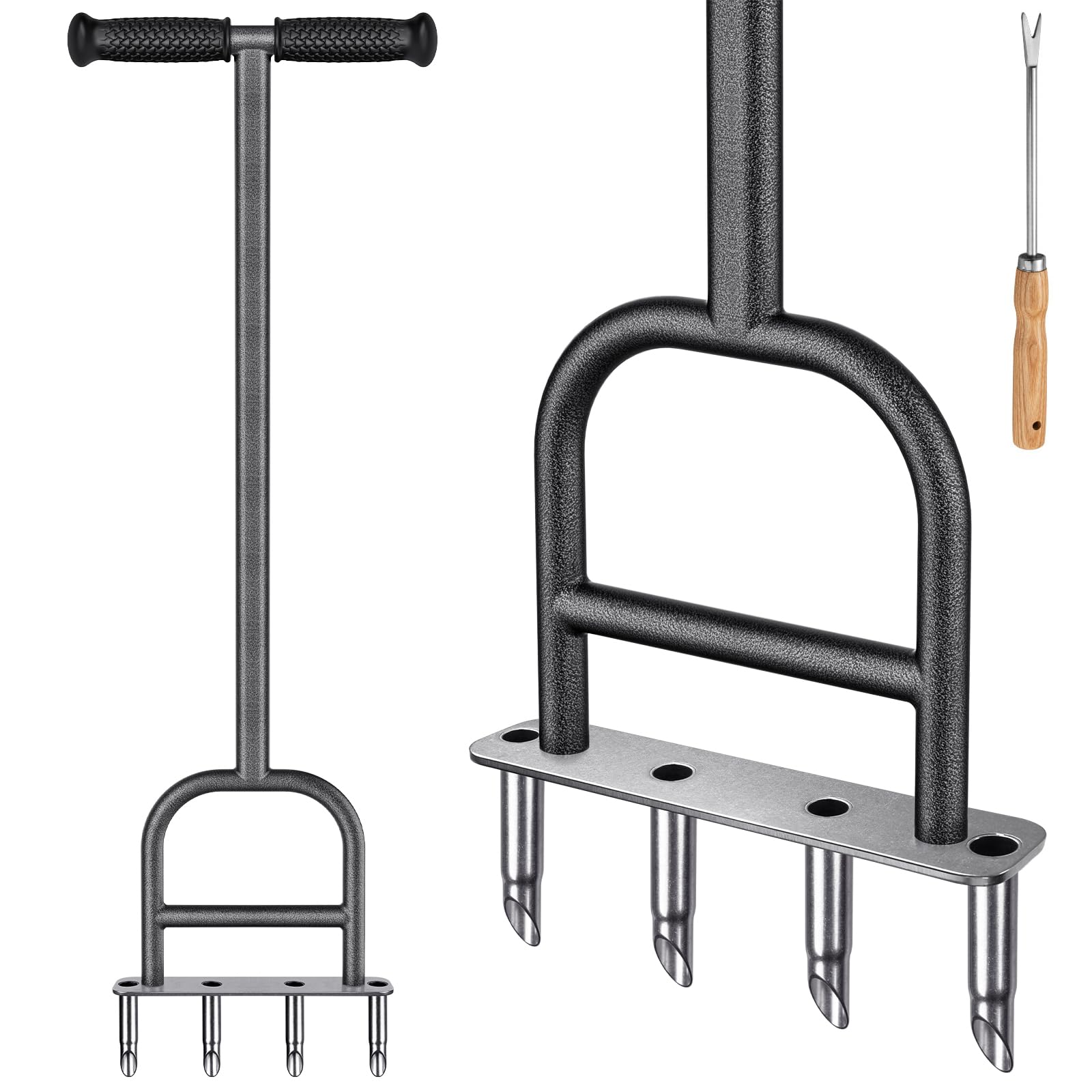
Four stainless steel corers that fight rust while you fight compaction.
This is the only core aerator on the list with four hollow tines instead of three, and the bottom section plus the corer plugs are made of stainless steel. That means they will not rust or bend over time, which is a real advantage if you live in a humid climate or tend to leave tools outside. Each of the four tines is 3.5 inches long and 0.5 inches in diameter, creating deep, narrow plugs that let air and water reach the root zone efficiently. The foot bar is positioned so your shoes do not interfere with the core ejection — a detail that matters more after the first few plugs.
Functionality is the top praised aspect, with 46 owners confirming it works even in heavy clay. The single welded construction adds to the sturdiness feel. The biggest recurring issue is clogging, especially with dry clay soil. Moisture is critical — if the soil is too dry, the plugs stick inside the tines and require manual clearing. The included 12-inch weeder handle helps with that cleanup. The soft rubber grip does prevent blisters, which is a common complaint with bare metal handles on long jobs.
what separates it
- Stainless steel corer plugs resist rust and bending — built for wet climates
- Four tines instead of three create more holes per step
- Soft rubber grip prevents hand fatigue and blisters during extended use
A real limitation
- Clogging is the most-discussed negative — dry clay soil causes plugs to stick inside the tines
- Requires correctly moist soil for best results; too wet and it clogs, too dry and it struggles
Best for: Homeowners who want a rust-resistant, four-tine core aerator for small to medium projects, especially if you already know to water your lawn before aerating.
Consider an alternative if: You have very dry clay soil and do not want to deal with frequent clog clearing — the LawnVigor above has a more clog-resistant design.
Understanding the Specs
Spike vs. Core (Plug) Aeration
The basic difference is what happens underground. A spike aerator pushes solid metal tines into the soil, creating a hole by shoving dirt sideways. This is fast and fine for light maintenance on loamy soil. A core aerator uses hollow tines that cut a cylinder of soil and lift it out of the ground. That removal actually relieves compaction rather than making it worse around the hole edges. For heavy clay soil or lawns that get a lot of foot traffic, core aeration is the more effective long-term choice.
Tine Length and Material
Deeper tines reach the root zone where air and water do the most good. A tine that is at least 2.75 to 3 inches long will make a meaningful difference for most lawns. Material matters too: heat-treated steel or tempered spring steel resists bending on rocky ground, while aluminum or standard steel can crack or deform under heavy pressure. Stainless steel is rust-resistant but can be more brittle. If your soil has hidden rocks, go for the toughest steel you can find.
Handle Height and Ergonomics
A handle that is too short forces you to bend at the waist, which turns a quick task into a backache. A 36- to 38-inch handle works for most people of average height. Taller users (over 6 feet) should look for handles around 44 inches or adjustable models that extend further. Comfort grips — rubber or foam padded — reduce hand fatigue, especially on twist-style cultivators where you apply torque repeatedly. A wide foot plate with anti-slip texture helps you keep your balance on step-style aerators.
Soil Moisture and Preparation
Every aerator works better when the soil is slightly moist. Hard, dry soil resists penetration and can bend spikes or clog core tines. The standard advice is to water your lawn for about 15 minutes before aerating, or do the job a day after a good rain. Soil that is too wet, however, will clump and clog core tines, creating a sticky mess. the balance is soil that is damp enough to form a loose ball in your hand but not dripping water. A few minutes of prep saves a lot of frustration.
FAQ
How often should I hand aerate my lawn?
Is a spike aerator or a core aerator better for clay soil?
Can I use a hand soil aerator on wet soil?
Will a hand aerator damage underground sprinkler pipes or cables?
How long does it take to aerate a small lawn by hand?
What is the difference between a hand tiller and a hand soil aerator?
Do I need to remove the soil plugs from a core aerator?
What should I do after aerating my lawn?
How do I clean and store a manual aerator?
Can a child use a hand soil aerator?
Final Thoughts: The Verdict
Across the board, the hand soil aerator winner is the Altdorff Hand Tiller because it balances effective aeration, ease of use, and a price that makes it a no-brainer for any gardener. If you have tall family members or need to tackle clay soil, grab the GSBLUNIE Hand Tiller with its 44.3-inch handle and deeper 5.5-inch reach. And for true plug aeration that relieves compaction rather than just poking holes, the LawnVigor Manual Core Aerator is the one to reach for — it pulls actual 3-inch soil plugs without the constant clogging that plagues cheaper core tools.
How We Picked
We do not accept paid placement. Every pick is matched to a real buyer and a real use-case; we do not hands-on test units.
Sources & Methodology
Specifications: manufacturer listings and product documentation. Review insights: verified customer reviews, as of July 2026. Pricing: not shown on this page (it changes often); check the current price via the retailer link.
As an Amazon Associate, Lawn Gear Lab earns from qualifying purchases. This does not affect which products we feature.