
Specs are compiled from manufacturer listings and verified buyer reviews and can change over time — please confirm the key details on the product page before buying.
If you are tired of wood mulch that washes away with every storm and needs replacing each season, volcanic stone offers a permanent solution. Lava rock mulch locks in soil moisture, suppresses weeds without chemicals, and adds a sharp, natural contrast to your garden beds that actually looks better over time as it gathers a bit of patina.
I’m Rikta — the founder and writer behind Lawn Gear Lab. This guide is built by comparing the manufacturers’ published specifications and the patterns across verified customer reviews, so you get each pick’s real strengths and trade-offs instead of marketing spin.
The key is matching the rock size to the job: smaller grades hug the soil and work for pots and top dressing, while larger chunks create a bold landscape statement. Here is everything you need to know before picking the perfect best lava rock mulch for your yard.
Our Picks at a Glance

How To Choose The Best Lava Rock Mulch
Lava rock is porous volcanic stone that weighs a fraction of river pebbles, so you get more coverage per bag for your back. But the right size and purpose make all the difference between a tidy garden and a frustrating mess.
Match the Rock Size to the Job
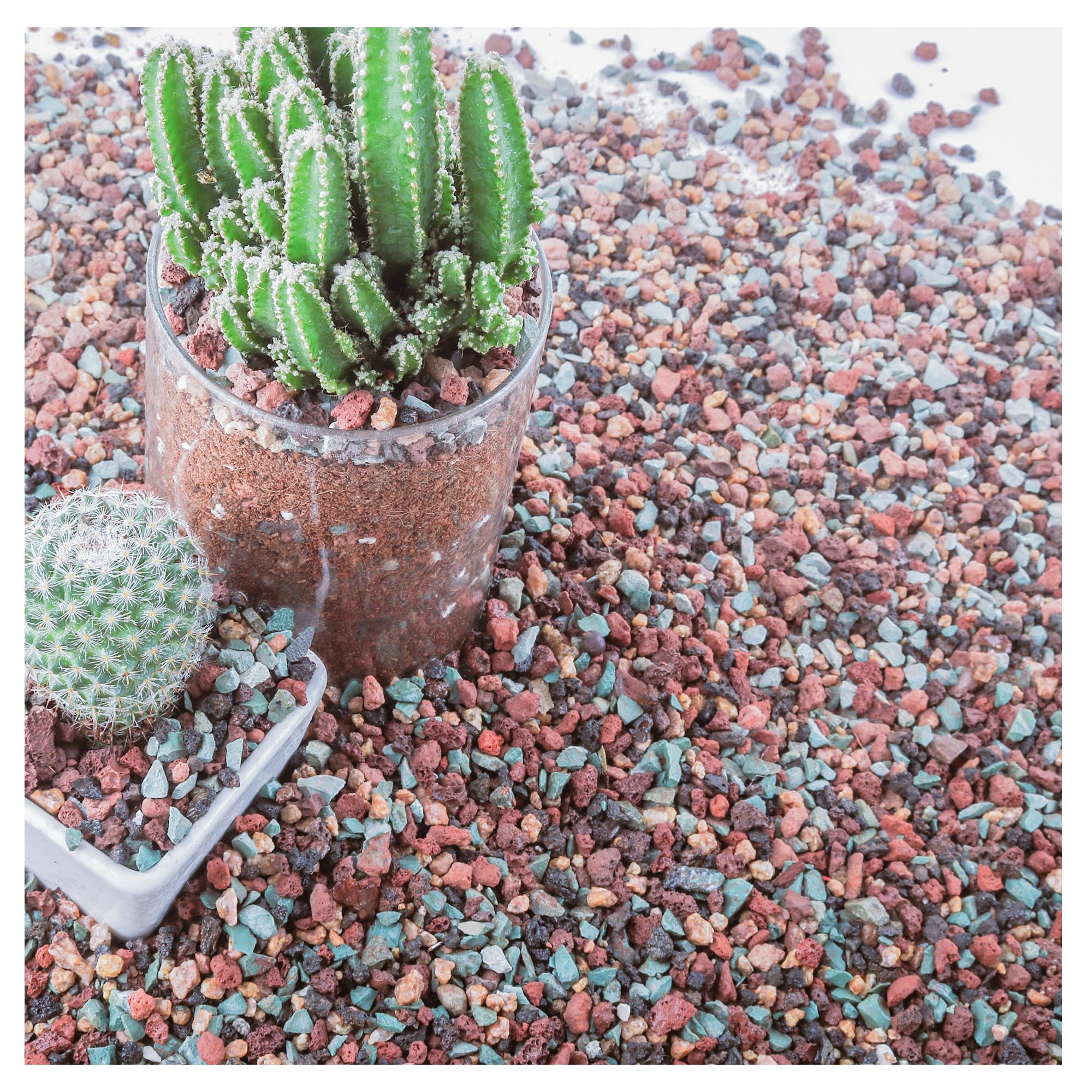
Small rocks around 1/2-inch work beautifully as a top dressing for potted plants and succulent arrangements; they settle into the soil and hold moisture against the roots. Larger pieces from 1 to 3 inches are better for open garden beds because they stay on top of the soil and create a weed barrier that does not blow away in the wind.
Know Whether It Is for Plants or Fire
Many lava rock bags are sold for both landscaping and fire pits, but the safety rules are different. Rocks used in a gas fire pit must be kept completely dry — trapped moisture can turn to steam and cause popping. For a garden bed, that same porosity is a benefit because the stone soaks up rain and releases it slowly to plant roots.
Quick Comparison
| Model | Best For | Weight | Size Range | Primary Use | Amazon |
|---|---|---|---|---|---|
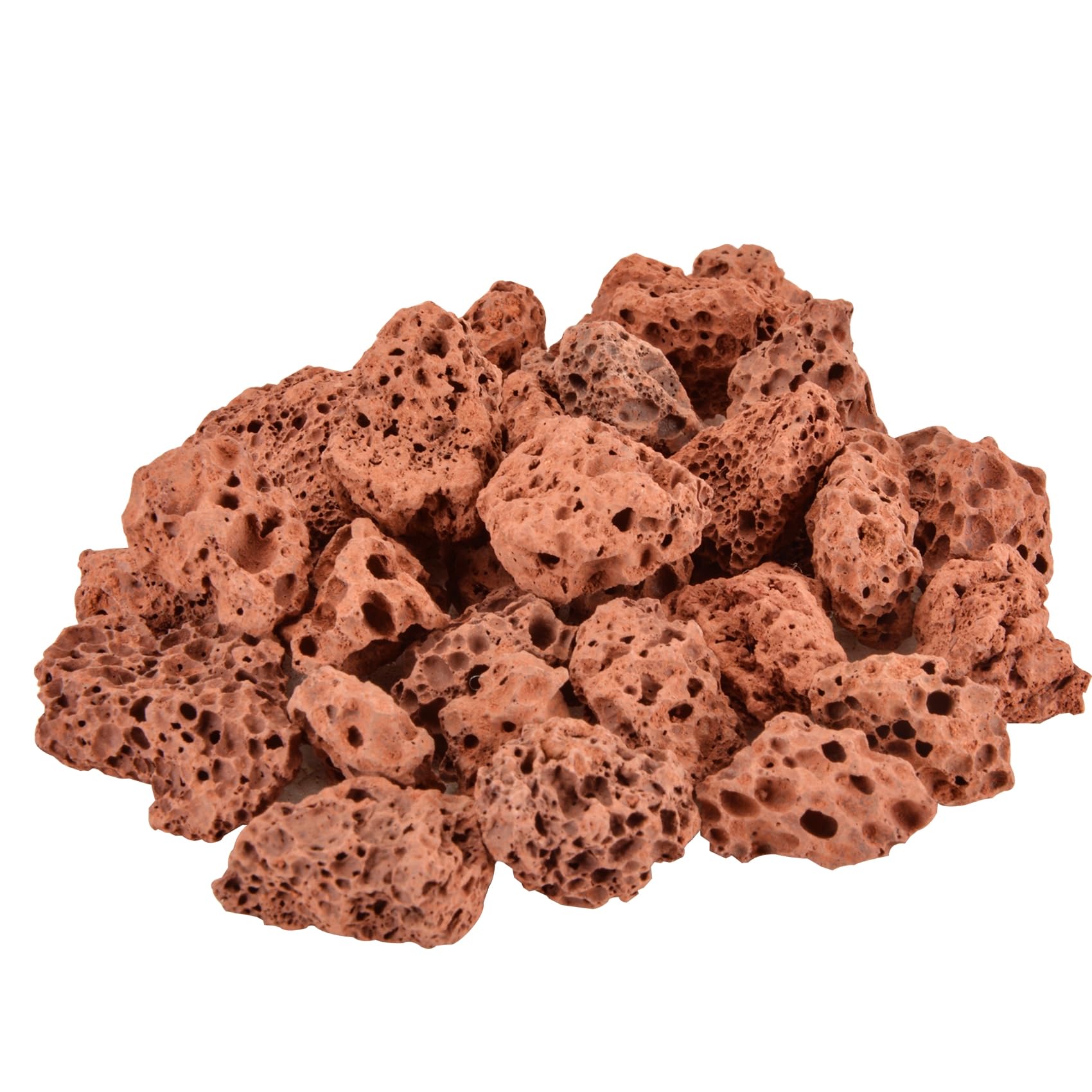
| 14lb Red Lava Rock for Plant★ Best Overall | Plant top dressing & drainage | 14 lb | 1/2″ | Gardening & Landscaping | Amazon |
| Avalution 15lb Mix Lava RockBest for Plants | Succulent & cactus soil mix | 15 lb | Mixed (small) | Gardening (Potting Mix) | Amazon |
| Mr. Fireglass 10 lb Red LavaVersatile Pick | Fire pit fill & garden decor | 10 lb | 0.3″ – 0.6″ | Fire & Landscape | Amazon |
| Midwest Hearth Red Lava 1/2″-2″ | Fire pits & large garden beds | 10 lb | 1/2″ – 2″ | Fire & Landscaping | Amazon |
| Onlyfire 10Lbs Red Lava Rock | Fire tables & aquariums | 10 lb | 0.2″ – 0.3″ | Fire & Decorative | Amazon |
| Premium Pebbles Red Lava 1/5″ | Small planters & aquariums | 10 lb | 1/5″ | Gardening (Top Dressing) | Amazon |
| Stanbroil Tumbled Lava 2″-3″ | Modern fire pits & landscape accent | 10 lb | 2″ – 3″ | Fire & Landscape | Amazon |
| Midwest Hearth Tumbled 3″-5″ | Large fire pits & bold decor | 10 lb | 3″ – 5″ | Fire & Statement Decor | Amazon |
In‑Depth Reviews
1. 14lb Red Lava Rock for Plant, Horticultural Volcanic Rock Soil
Our pick — over 4.5★ from 450+ verified ratings; the strongest balance of quality and price.
The gardener’s pick that balances weight, size, and price better than anything else here.
At 14 pounds of 1/2-inch red lava rock, this bag goes further than most — at 14 pounds versus the standard 10-pound bags on this list, so you cover more ground without buying another bag. The pieces are uniform in size, which makes them ideal for a clean top dressing over potting soil or a thin layer across a succulent bed. Buyers report the rocks arrive clean with almost no dust, saving you the hassle of rinsing before use. Use this as a decorative finish or a drainage layer for potted plants, not as a deep ground cover for a full garden bed.
Volume surprise: The 14-pound bag weighs more than standard, but expect it to cover a modest area — about right for a few large planters or a targeted bed.
Reach for this if: you want a clean, uniform top dressing for succulents, bonsai, or potted plants and prefer a heavier bag that saves you a second purchase.
Look elsewhere if: you are trying to fill a large fire pit or cover an entire garden bed — the half-inch size and 14-pound volume run out fast.
2. Avalution 15lb Mix Horticultural Lava Rock Pebbles
A gritty mix formulated specifically for succulents and cacti, not a leftover from fire-pit stock.
This is not just crushed lava — it is a professional-grade formulation designed to speed up drainage and prevent overwatering, the single biggest killer of succulents and cacti. At 15 pounds, this bag weighs 15 pounds, and the mix of small pebbles creates a porous layer that keeps roots aerated. The crowd favorite feature here is drainage — owners consistently praise how their plants respond after switching to this mix. The trade-off is dustiness: a good rinse before use is necessary, and some buyers feel the bag is slightly pricey for what you get. Use it as a standalone potting amendment or a decorative top dressing in clear jars where the colorful stone shows through.
Why plants love it
- Professional-grade drainage mix stops root rot before it starts
- Heaviest bag at 15 pounds for more coverage per dollar
- Colorful stones look attractive in clear containers
One thing to know
- Needs thorough rinsing — the bag contains noticeable dust
- Some owners find the price a bit steep for the quantity
Grab this for: indoor succulents, cacti, and anyone building a custom potting mix who wants proven drainage.
Think twice if: you just need a cheap ground cover for a large outdoor bed — the smaller size is better suited to containers.
3. Mr. Fireglass 10 Pounds Red Lava Rocks
Does double duty — dress your garden beds and feed your fire pit from the same bag.
These natural volcanic stones resist extreme heat without crumbling, so they work equally well as a gas fire pit filler and a decorative garden topper. The 0.3-to-0.6-inch size is small enough to blend into soil but large enough to stay put on a windy day. One owner notes it took two bags to fill a standard fireplace, so plan your quantities accordingly. The color gets mixed reactions — some owners say the black rocks read more as brownish-black, which might matter if you are aiming for a specific shade. Still, the price is low enough that you can afford two bags and still come under budget compared to premium landscaping rock.
Honest take: No artificial dyes, no fillers, and the same bag works for plants and fire — but the color is not pure black, and you will likely need two for a full fire pit.
Best if: you want one bag that covers both landscaping and fire pit needs without spending extra.
Skip if: exact color matching is critical for your decor — the black-red variation may not suit you.
4. Midwest Hearth Red Lava Rocks for Fire Pit, 1/2″ to 2″

Big, bold red stones with real volcanic variation — no two look alike.
These rocks range from half an inch to two inches, giving your fire pit or garden bed a rugged, natural texture that uniform crushed rock cannot match. The color is inherent to the volcanic material, so it will never fade, wash off, or bleed into your soil. Owners use them for everything from fire pit fill to planter drainage to weed deterrent around shrubs. The catch is size inconsistency — a buyer points out that some pieces measure smaller than the stated 1/2-inch minimum, and a few rocks look like shale rather than true lava. Safety is also a real concern if you use these in a fire pit: the product warning and several reviews stress that lava rocks must be bone-dry before lighting, as trapped moisture can cause popping or cracking.
What wins people over
- Authentic red color with natural earthy variation — no artificial dye
- Versatile enough for fire pits, planters, and landscaping beds
- Quality feel that owners consistently praise
What to watch for
- Size can be inconsistent; some rocks run smaller than advertised
- Must be completely dry before fire use to avoid popping
Choose this for: an earthy, varied look in your fire pit or garden, and if you like the idea of stones that are truly natural.
Consider another if: you need perfectly uniform rock sizes or prefer not to deal with wet-stone safety precautions.
5. Stanbroil Tumbled Lava Rock Pebbles 2″–3″
Rounded, creek-rock feel without the sharp edges — a modern upgrade for your fire pit.
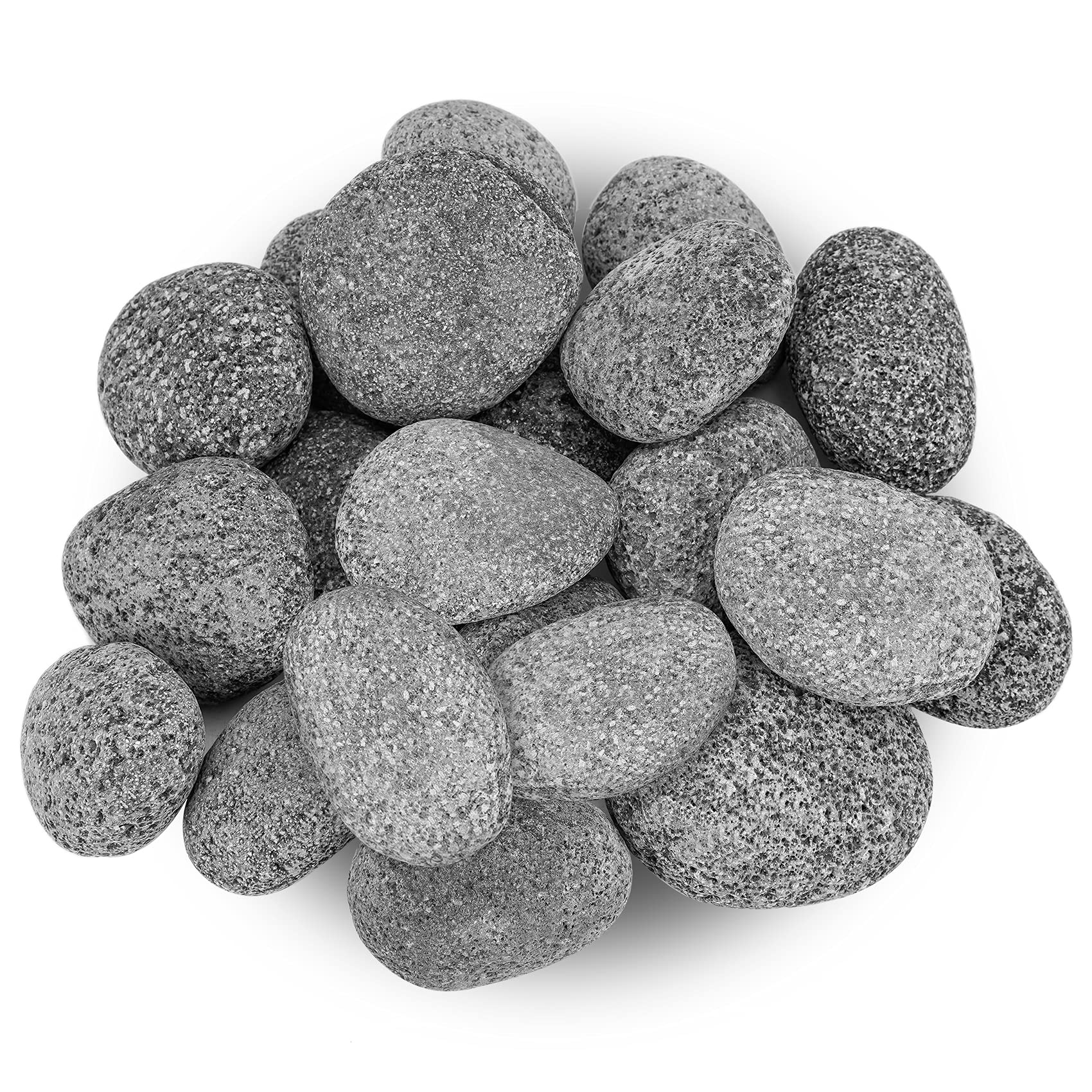
Unlike standard crushed lava, these pebbles are tumbled smooth so they look more like river stones than jagged volcanic chunks. The 2-to-3-inch size makes a strong visual statement in a rectangular fire pit or a modern landscape bed. Owners who swapped out standard red lava for these grey-toned pebbles say the look is “sooo much nicer” and that the stones conduct heat better. The downside is that some pebbles blacken quickly where the flame hits, and the price adds up if you need three bags to fill a large pit. For a small fire table or a contained planter accent, one bag goes a long way.
The verdict: Beautiful, smooth stones that upgrade a fire pit instantly — but expect some flame-blackening and budget for multiple bags on larger pits.
Ideal for: modern fire pits and anyone who prefers a smooth, uniform stone over jagged lava.
Not for: budget-minded shoppers filling a large pit — the per-bag cost and multi-bag need add up.
6. Midwest Hearth Natural Tumbled Lava Stones 3″–5″

Oversized tumbled stones that turn a fire feature into a centerpiece.
At 3 to 5 inches, these are the largest stones on the list — each one is hand-tumbled to a smooth, rounded shape with no sharp edges. The size makes them impractical as a soil mulch but unbeatable as a sculptural element in a gas fire pit or a modern planter. Owners say the stones “immediately made our fireplace look more expensive and modern.” The drawbacks are worth noting: the rocks tend to blacken where the flame contacts them, they arrive dusty inside the bag, and some owners mention a burning smell during the first few uses. One 10-pound box covers about a 12-by-12-inch area, so plan on 2 to 3 boxes for a full fire pit bed.
Why they stand out
- Smooth, rounded finish that looks premium and modern
- Large size creates a dramatic, upscale fire feature
- Quality and appearance get the highest praise from owners
Reality check
- Stones blacken with flame contact over time
- Dusty out of the bag and can emit a smell on first burn
- Many owners consider the price high for what you get
Reach for these if: you want a designer look for a gas fire pit and do not mind the higher cost and multi-box purchase.
Pass if: you need a ground-covering mulch for plants — these are too large and heavy for soil work.
7. Onlyfire 10Lbs Red Lava Rock 0.2″–0.3″

The smallest particle size on the list — perfect for tight spaces and aquariums.
These tiny 0.2-to-0.3-inch granules are closer to coarse sand than standard mulch rock, which makes them ideal for covering the soil in small pots, filling gaps in a fire table where the lid must sit flush, or layering in an aquarium substrate. Owners use them as a dark, uniform base that does not shift around — one buyer says a single bag was enough to fill their fire table completely. The main gripe is cost: a few owners feel the price is steep for what is basically crushed stone. The rocks also kick up dust during installation, so wear gloves and plan to wipe down the area afterward.
Bottom line: Great for detail work like aquariums, small planters, and fire tables where larger rocks would not fit — but do not expect a bargain.
Perfect for: small fire tables, aquariums, and potted plants where fine texture matters.
Not for: covering large garden beds or fire pits — the tiny pieces are too small for those jobs.
8. Premium Pebbles Red Lava Horticultural Rock 1/5″

Tiny pebbles with a big personality — perfect for topping containers and stopping squirrels.
At just 1/5 of an inch, these are the smallest lava pebbles available, and they excel at one specific job: creating a barrier on top of potted plants that critters cannot dig through. One owner says these little stones “not only look good they have stopped the digging” from squirrels in a planter box. The rock is naturally soft and porous, so it breaks down a bit over time and dust is normal. The color range is described as nice, and each bag comes double-wrapped with a thank-you card — a small touch that buyers appreciate. Use these for small touch-ups, craft projects, or as a soil cover in containers where larger rocks look out of proportion.
What you get: A thoughtful, well-packaged product that works great as a container topper or aquarium gravel — but the rock is soft and dusty by nature.
Reach for these if: you need a fine pebble for small planters, terrariums, or keeping squirrels out of your potted plants.
Look elsewhere if: you need larger rocks for landscaping beds, outdoor fire pits, or heavy weed suppression.
Understanding the Specs
Rock Size (Inches)
Rock size determines how the mulch behaves in your garden. Small pieces around 1/5 to 1/2 inch sink into the soil surface and work best as a top dressing for pots and small beds. Larger rocks from 1 to 3 inches stay on top of the ground and create a thick weed barrier that wind cannot blow away. Extra-large stones from 3 to 5 inches are purely decorative — they work as a fire pit filler or a sculptural accent but do not function as soil mulch.
Bag Weight (Pounds)
Lava rock is lighter than standard gravel because of its porous volcanic structure, so a 10-pound bag covers more area than 10 pounds of river pebbles. Heavier bags from 14 to 15 pounds give you better value per square foot, but they can be tough to carry from the car to the backyard. For a single large planter or a small fire pit, a 10-pound bag is usually enough; for a full garden bed or a large fireplace, plan on two to three bags.
Natural vs. Dyed Color
Natural lava rock gets its red and black tones from the minerals in the volcanic material itself — these colors will not fade, bleed, or wash off over time. Dyed rock is cheaper but can lose its color after a season of rain and sun. If the product description says “natural” or “no artificial dyes,” the shade is permanent. If the color is described as “black” and reviews call it “brownish-black,” you are seeing the natural variation of real stone.
Fire Safety & Moisture
Lava rock is porous, meaning it soaks up water like a sponge. When used in a gas fire pit, that trapped moisture turns to steam under high heat and can cause rocks to pop or crack. Always allow lava rocks to dry completely before lighting your fire pit. In the garden, that same porosity is a benefit — the rocks absorb rainwater and release it slowly to plant roots, helping soil stay moist longer between waterings.
FAQ
Can I use lava rock mulch around vegetables?
How much lava rock do I need for a garden bed?
Will lava rock bleach out in the sun?
Is lava rock safe for aquarium use?
Can I mix lava rock with regular soil?
How do I clean dusty lava rock before use?
Does lava rock attract pests?
How deep should I lay lava rock for weed control?
Can I use lava rock in a wood-burning fire pit?
Is lava rock better than river rock for mulch?
Final Thoughts: The Verdict
For the majority of shoppers, the best lava rock mulch winner is the 14lb Red Lava Rock because it combines the heaviest weight with a practical 1/2-inch size that suits both potted plants and small garden beds. If you want a professional-grade mix specifically formulated for succulents and drainage, grab the Avalution 15lb Mix. And for a dual-purpose purchase that works in both the garden and the fire pit, the Mr. Fireglass 10 Pounds is the one to reach for.
How We Picked
We do not accept paid placement. Every pick is matched to a real buyer and a real use-case; we do not hands-on test units.
Sources & Methodology
Specifications: manufacturer listings and product documentation. Review insights: verified customer reviews, as of July 2026. Pricing: not shown on this page (it changes often); check the current price via the retailer link.
As an Amazon Associate, Lawn Gear Lab earns from qualifying purchases. This does not affect which products we feature.