
Specs are compiled from manufacturer listings and verified buyer reviews and can change over time — please confirm the key details on the product page before buying.
You want clean garden borders without a weekend of back-breaking trench work. The trick is picking the right style for your soil, curves, and patience — not all easy edging is equally easy for every yard.
I’m Rikta — the founder and writer behind Lawn Gear Lab. This guide is built by comparing the manufacturers’ published specifications and the patterns across verified customer reviews, so you get each pick’s real strengths and trade-offs instead of marketing spin.
You want a clean border between your lawn and flower beds without spending a weekend digging. This roundup of the best easy garden edging covers eight distinct options that deliver crisp, lasting borders with minimal sweat.
Our Picks at a Glance
How To Choose The Best Easy Garden Edging
Easy garden edging falls into two broad camps: continuous flexible coils that you unroll and stake down, or interlocking pieces that snap together like puzzle bricks. Your choice depends on the shape of your beds, the time you want to spend installing, and how much visual bulk you want at the border.
No-Dig vs. Trench-Required
True no-dig edging uses anchoring spikes that you hammer directly into the ground — perfect for soft, loamy soil. Some products recommend digging a shallow trench (about 1.5 inches deep) for a straighter, more stable line; this still counts as easy but adds a short step with a shovel. Check the product instructions: if your ground is hard-packed clay, no-dig can be frustrating.
Material and Thickness
High-density polyethylene (HDPE) and recycled plastic are the most common materials. Thicker edging (around 2.5 mm or 5/32 inch) resists cracking and holds up to string trimmers better. Thinner edging is more flexible for tight curves but can become brittle over multiple seasons in direct sun. Some products also use resin-based materials that mimic cut stone for a decorative look.
Height and Visibility
Shorter edging (2 to 2.5 inches tall) sits low enough that a lawn mower can ride right over it — great for keeping grass out of beds without a visible fence. Taller edging (4 to 6 inches) provides a more pronounced barrier for mulch retention and weed suppression, but requires the mower to avoid hit it. For steep slopes or highly visible front yards, taller edging creates a cleaner line from the street.
Quick Comparison
| Model | Best For | Length | Height | Material | Amazon |
|---|---|---|---|---|---|
| Beuta Polyrock Bricks★ Best Overall | Decorative stone look | 48 in. per section | 2.25 in. | Resin | Amazon |
| EasyFlex Tall Wall No-DigPremium Pick | No-dig straight lines | 40 ft | 2.5 in. | Recycled plastic | Amazon |
| Master Mark Terrace Board (4 in.)Best Value | Budget coil for long runs | 40 ft | 4 in. | HDPE plastic | Amazon |
| Vashly No-Dig | White, visible border | 20.3 ft | 6 in. | Plastic | Amazon |
| Master Mark Terrace Board (5 in.) | Taller weed barrier | 40 ft | 5 in. | HDPE plastic | Amazon |
| shsyue Landscape Edging 33FT | Extra stakes included | 33 ft | 4 in. | High Density Polyethylene (HDPE) | Amazon |
| Anleolife 40ft Coil | Thick, sturdy barrier | 40 ft | 5 in. | Plastic | Amazon |
| MIXC 100FT Kit | Long runs with many stakes | 100 ft | 2 in. | Plastic | Amazon |
In‑Depth Reviews
1. Beuta Polyrock Bricks
Our pick — over 4.5★ from 900+ verified ratings; the strongest balance of quality and price.
The brick look without hauling actual stone — this resin edging snaps together fast and fools the eye.
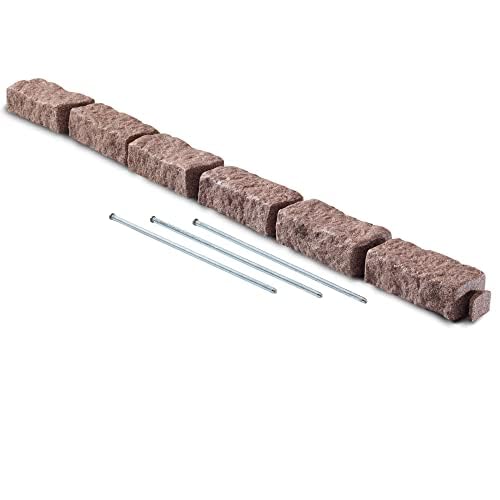
What wins owners over is the appearance: 174 people single out the realistic stone texture. Each section holds six bricks, measures 48 inches long by 4 inches wide by 2.25 inches tall, and includes three securing spikes. Buyers report it looks “better in person” and has a “granite-like texture” that could pass for expensive pavers. At 4 pounds per section, lifting and positioning is genuinely one-person work.
The interlocking system means curves after removing the metal pins, and if you need a custom length a hand hacksaw trims it cleanly. The resin holds its shape through all seasons — it stays in place and won’t degrade from weather. The crowd favorite (it holds a top rating across nearly a thousand owners) proves consistency: one install turned “worst to best in neighborhood.”
The trade-off is the cost per foot compared to a simple roll of plastic coil. Buyers frequently mention it is expensive, though they add the result is worth it. The 2.25-inch height is noticeably shorter than a 4-inch coil — from a distance the bricks are less prominent, which suits shallow beds but may not define a deep border wall.
Real-stone deception: The resin is thick, durable, and mimics granite texture so closely that neighbors may ask where you bought the stone.
The catch: The per-section price adds up for a large yard; budget for extra sections if your border runs longer than 48 feet.
Reach for this if: you want a decorative front-yard border that looks like natural stone without mixing mortar.
Look elsewhere if: you need edging for a long, strictly functional vegetable bed — a coil is cheaper and faster.
2. EasyFlex Tall Wall No-Dig
True no-dig installation — drive the spiral spikes right into the ground with a rubber mallet, no trench needed.
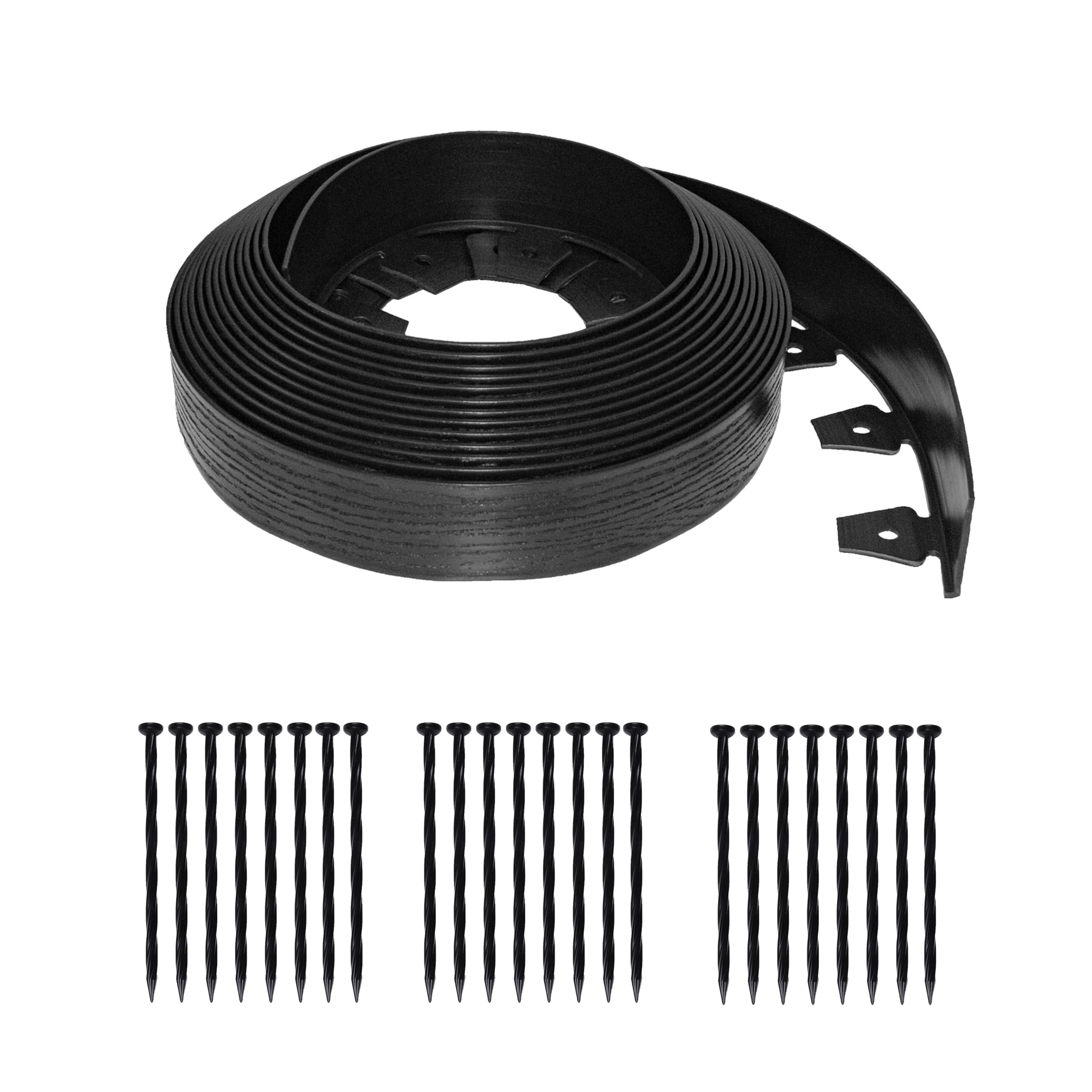
The kit includes a 40-foot coil of flexible recycled plastic and 24 anchoring spikes that are each 8 inches long. Owners consistently report it is easy to install and makes the yard look “more put together.” The 2.5-inch tall wall sits low enough that a lawn mower rides over it without scraping, yet provides a clear separation between grass and flower beds.
The recycled plastic is described as “sturdy, rubbery, flexible” and easy to cut to length. It withstands string trimmers and temperature swings — it won’t rot, chip, or peel. One owner who installed 200 total feet calls it a “once and done” solution. Because the design is no-dig, you simply shape the coil to your desired curve, set it in a shallow 2-inch trough, and pound the spikes though the built-in tabs.
The honest caveat is the number of stakes: most owners say you need extra spikes to keep the edging from curling in hot sun — the kit includes 24, but experienced buyers recommend one stake every foot for a straight line. The 2.5-inch height also means it won’t hold back thick layers of mulch the way a 5-inch barrier does.
Dig-free route: The spiral stakes drive into rocky soil more reliably than flat plastic stakes, and the recycled plastic resists frost heave.
Plan for more stakes: Budget an extra pack if you run a long straight line — the included 24 are fine for curves but sparse for straight runs.
Ideal for: anyone who wants a crisp, low-profile border without breaking out a shovel — the no-dig claim holds up in practice.
Not ideal for: thick mulch retention or very tall borders — at 2.5 inches it is a grass barrier, not a retaining wall.
3. Master Mark Terrace Board (4 in. x 40 ft)
A 40-foot coil with a realistic woodgrain texture that warms up in the sun and bends into smooth curves.
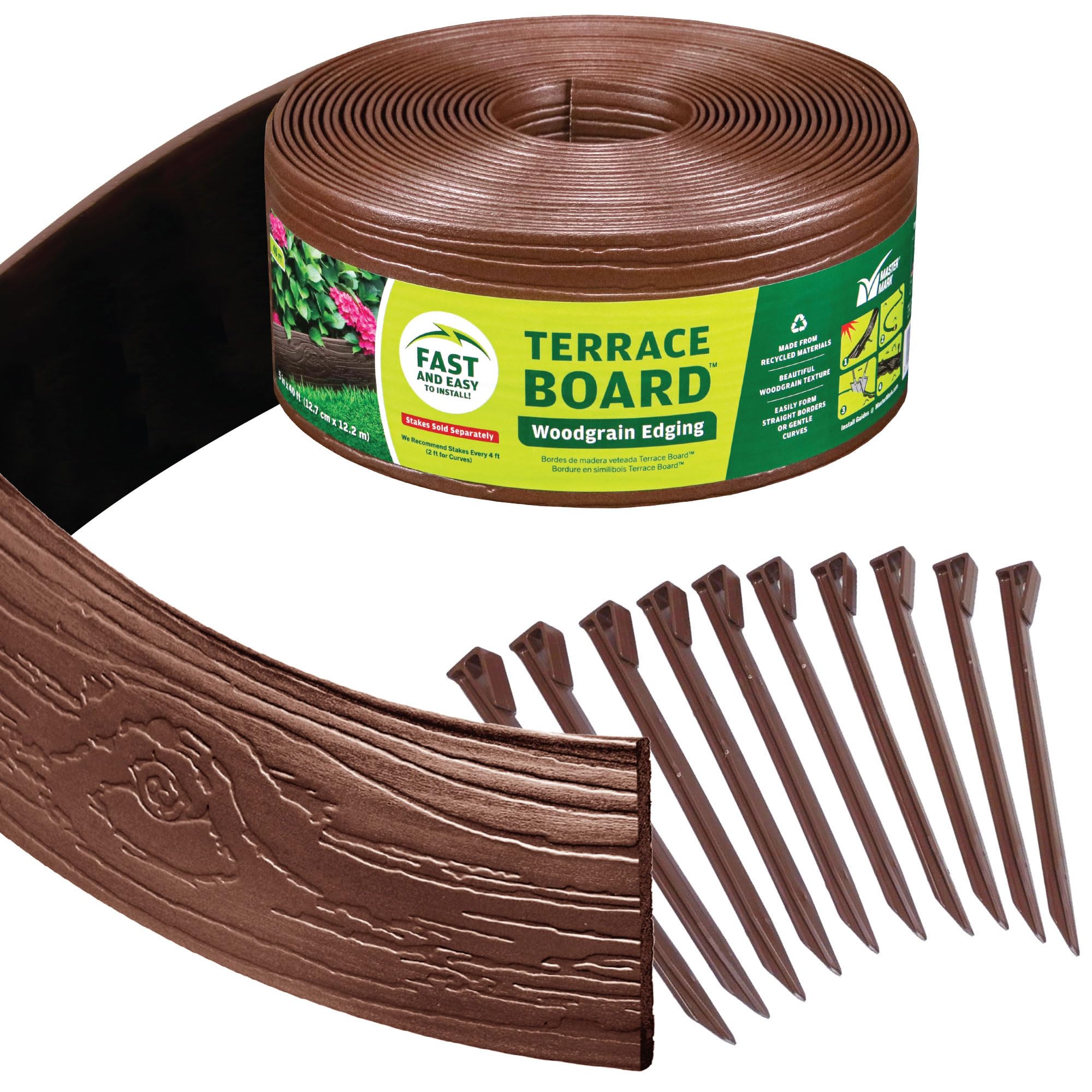
This is the workhorse of budget garden edging — it sells for less than many shorter coils and covers 40 feet of border at 4 inches tall. The material is HDPE plastic with a textured brown woodgrain finish that blends into natural landscapes. At 7 pounds for the whole coil, it is noticeably more substantial than the 4-pound Beuta sections, giving it heft that helps it stay put once buried.
The installation trick owners swear by: lay the coil flat in the sun for about an hour — it becomes flexible enough to shape into curves without kinking. The included 10 stakes are sufficient for basic runs, though buyers of curved beds often pick up extra stakes separately. A claw hammer or rubber mallet drives the stakes easily, and hedge clippers trim the plastic cleanly. One owner is on their third roll and calls it a “great solution.”
Several owners note the color shade can vary between rolls — two out of six rolls in one order were a lighter brown, noticeable in a continuous run. The “wavy” look is another occasional gripe if the edging is not buried with enough tension. The 10 stakes are widely considered insufficient for a full 40-foot run; plan to buy more if you want the edge to remain straight.
Best cost per foot: For under twenty-five dollars you get 40 feet of solid HDPE edging that looks like wood — the same coverage from interlocking bricks would cost significantly more.
Watch the stakes: Ten stakes for 40 feet is sparse; budget for an extra pack if you want a taut, straight line.
Best for: large flower beds or long driveway borders where every dollar per foot counts.
skip it if: you want a perfectly uniform color across a very long border — order all rolls at once to minimize shade variance.
4. MASTER MARK Terrace Board (5 in. x 40 ft)

The 5-inch height gets below root level to block creeping weeds and grass — a taller sibling to the classic 4-inch coil.
This black Terrace Board offers an extra inch of height over the standard 4-inch version, and that inch makes a real difference for weed suppression. The manufacturer recommends digging the edging in about 1.5 inches deep so the exposed portion still stands tall enough to contain mulch and block rhizomes. The HDPE plastic is rated for outdoor elements — owners say it doesn’t chip, fade, rot, or peel through multiple seasons.
Installation is straightforward: unroll the coil, let it warm in the sun to relax the coil memory, then set it in a shallow trench. The included stakes are easy to pound in, though the 10 stakes provided are not enough for a full 40-foot run — most buyers order extra. One owner who has used this border for seven years notes the material has become thinner in recent batches, but still considers it a good product that “stays put.”
The wavy appearance is the most common owner caveat — when installed quickly without warming and tensioning, the edging can look wavy from a short distance. Laying it flat in the sun for a couple of days before installation is the fix owners recommend.
Extra inch, extra barrier: At 5 inches, this edging buries 1.5 inches and still stands tall enough to hold back aggressive Bermuda grass or creeping Charlie.
Straight-line tip: Sun-warm for two days, pull taut, and stake every 2-3 feet to avoid the wavy look that some owners mention.
Choose this when: your main goal is keeping grass and weeds out of established beds — the extra height is a real deterrent.
Pass if: you need a very straight, formal border — the flexible coil can be wavy; interlocking bricks are straighter.
5. Vashly No-Dig 20Ft Landscape Edging (6 in. Tall)
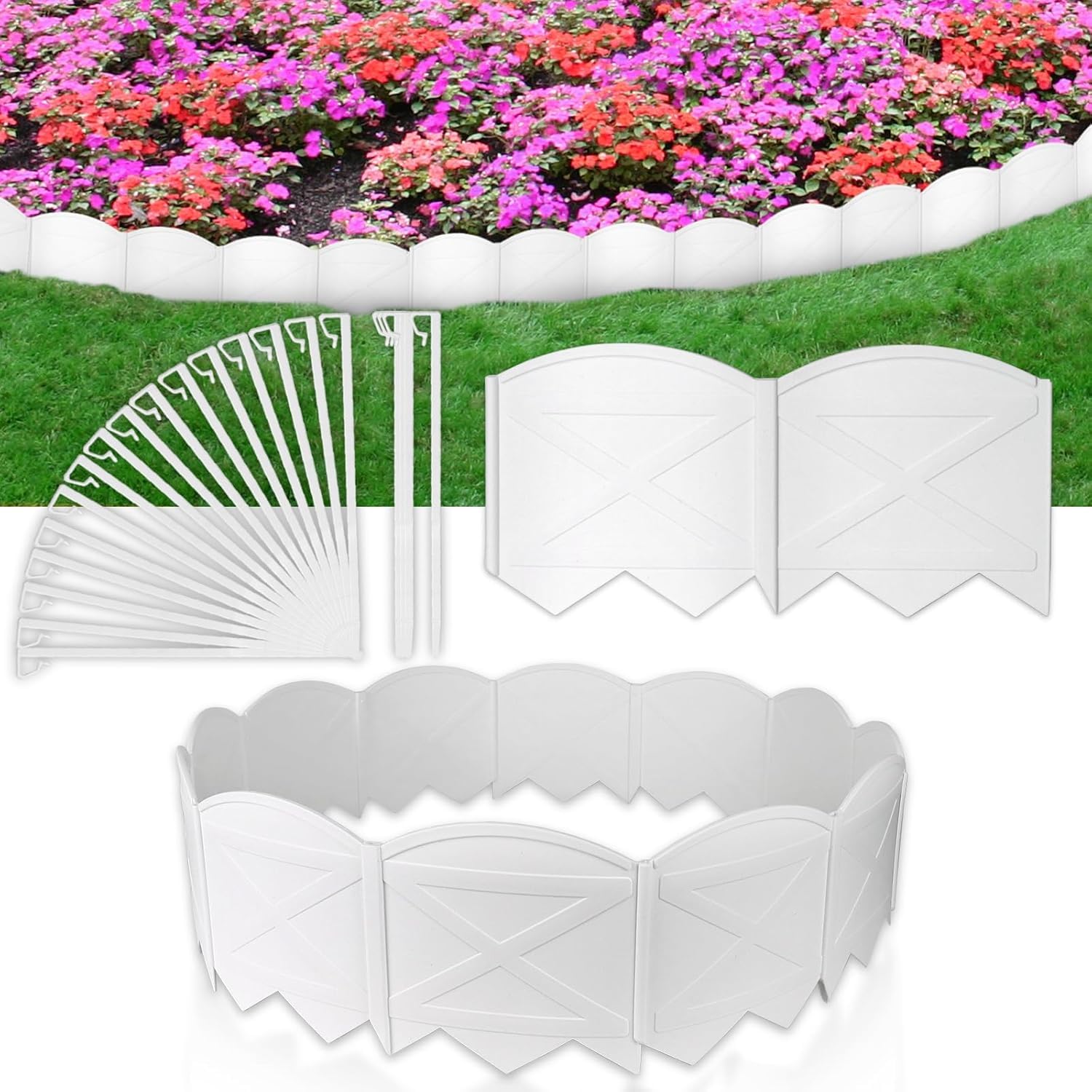
White interlocking panels that stand 6 inches tall — a visible, crisp fence for flower beds.
This set includes 20 individual pieces, each measuring 12.2 inches long by 6 inches tall, plus 20 anchoring stakes for a total coverage of 20.3 linear feet. The white color makes flowers and green foliage “stand out,” as owners frequently note. Installation is genuinely no-dig for soft ground — you tap each interlocking piece into position with a mallet and push the 7.8-inch stakes through the pre-formed slots.
Owners praise how easy it is to snap the pieces together and how well the edging holds up to heavy rain — one buyer in Florida says it withstood downpours without shifting. The top of each panel has space to hang small string lights, a detail that gardeners appreciate for evening ambiance. The 6-inch height creates a more substantial visual barrier than shorter coils, and the white finish keeps the border looking clean even from a distance.
The durability concern is real: a few owners mention the plastic becomes brittle and breaks after several months in direct sun. One buyer put it plainly: “they deteriorate, become brittle and break easy after only a few months.” This appears to be a sun-UV issue rather than a temperature issue, so shaded or partly shaded beds should fare much better. The white color also shows dirt more readily than brown or black edging.
Bright border: The white color creates a clean, formal line that makes flower colors pop — owners consistently mention how the flowers stand out against it.
Sun sensitivity: Plan this for a partly shaded garden; full afternoon sun may cause the plastic to become brittle within a season.
Great for: a decorative white border around a flower bed that receives shade for part of the day.
Avoid if: the edging will face full sun all day in a hot climate — the plastic aging is faster in direct UV exposure.
6. MIXC 100FT Garden Edging Kit
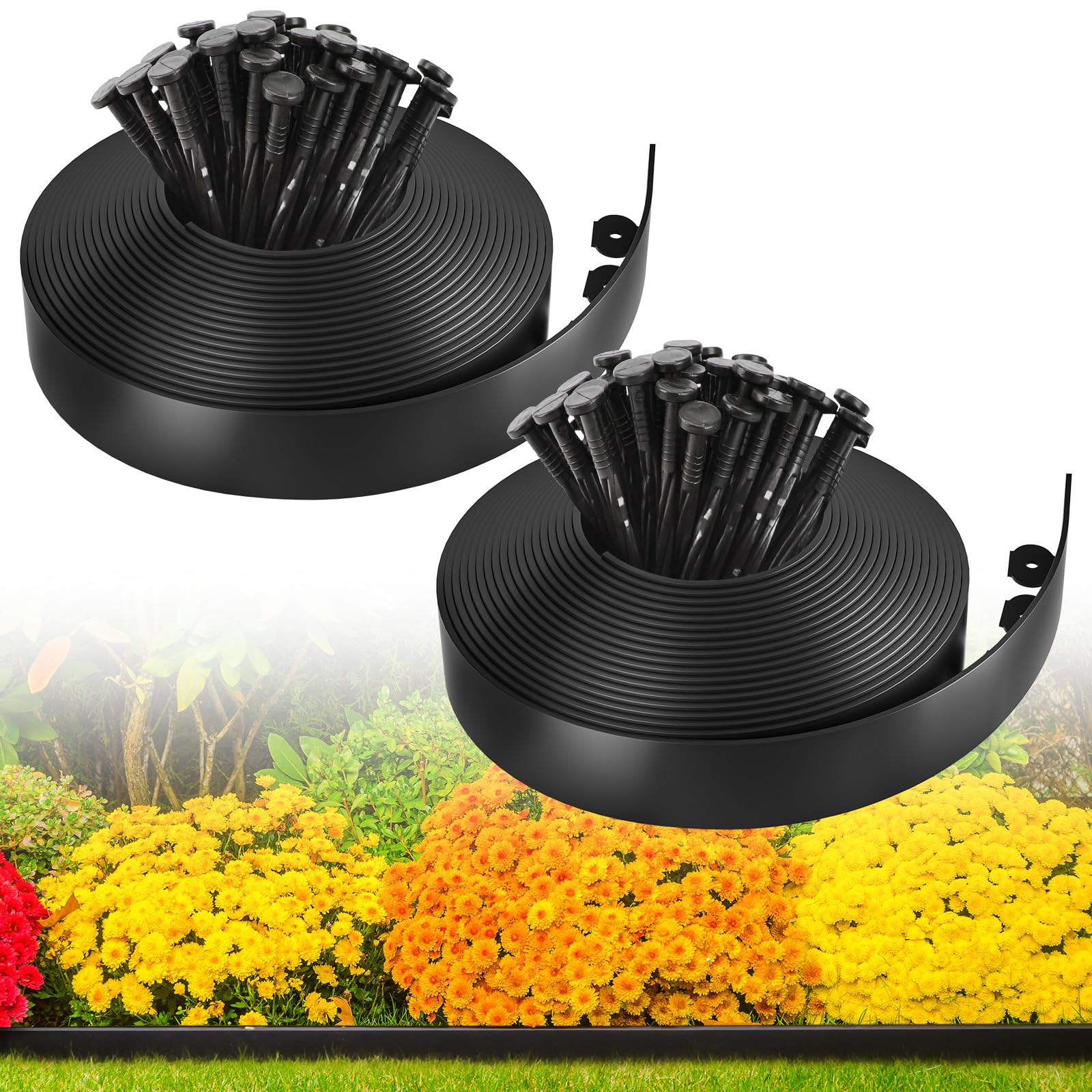
100 feet of low-profile black edging with 150 spiral stakes — the most anchor points of any kit here.
The 2-inch height of this kit keeps the border subtle — lawn mowers ride right over it without contact. The black color hides against dark soil and mulch, creating a clean separation line without a visible fence. The standout feature is the sheer number of stakes: 150 anchoring spikes, each 6 inches long, mean you can stake every 8 inches for maximum security in uneven or loose soil. For soft ground, the instructions suggest watering the soil first to soften it, then driving the stakes.
Owners consistently say the edging is flexible enough to handle slopes and curves, and it gives a “very professional and tidy finish” to the yard. The 100-foot length covers large perimeter projects without needing to join multiple coils. The material is durable plastic that resists rust and weather, though a small number of owners mention that some of the plastic stake tops break off during installation — a risk with hard-packed soil.
The 2-inch height is fine for separating grass from mulch but won’t hold back a deep layer of decorative stone or thick rubber mulch. Owners looking for a more prominent border wall may find the edging “disappears” into the landscape. The kit is also among the most expensive here due to the long length and stake count, though on a per-foot basis it is competitive.
Stake density class-leading: With 150 stakes in the box, you can stake every few inches and still have spares — none of the other kits come close to this count.
Low profile: The 2-inch height is perfect for mower clearance, but it will not contain thick mulch or create a visible border from the street.
Best for: large perimeter edging where you want a mower-friendly, invisible line that keeps grass from creeping into beds.
Not for: visible decorative borders or tall mulch retention — the 2-inch height is functional, not statement-making.
7. shsyue 33FT Landscape Edging
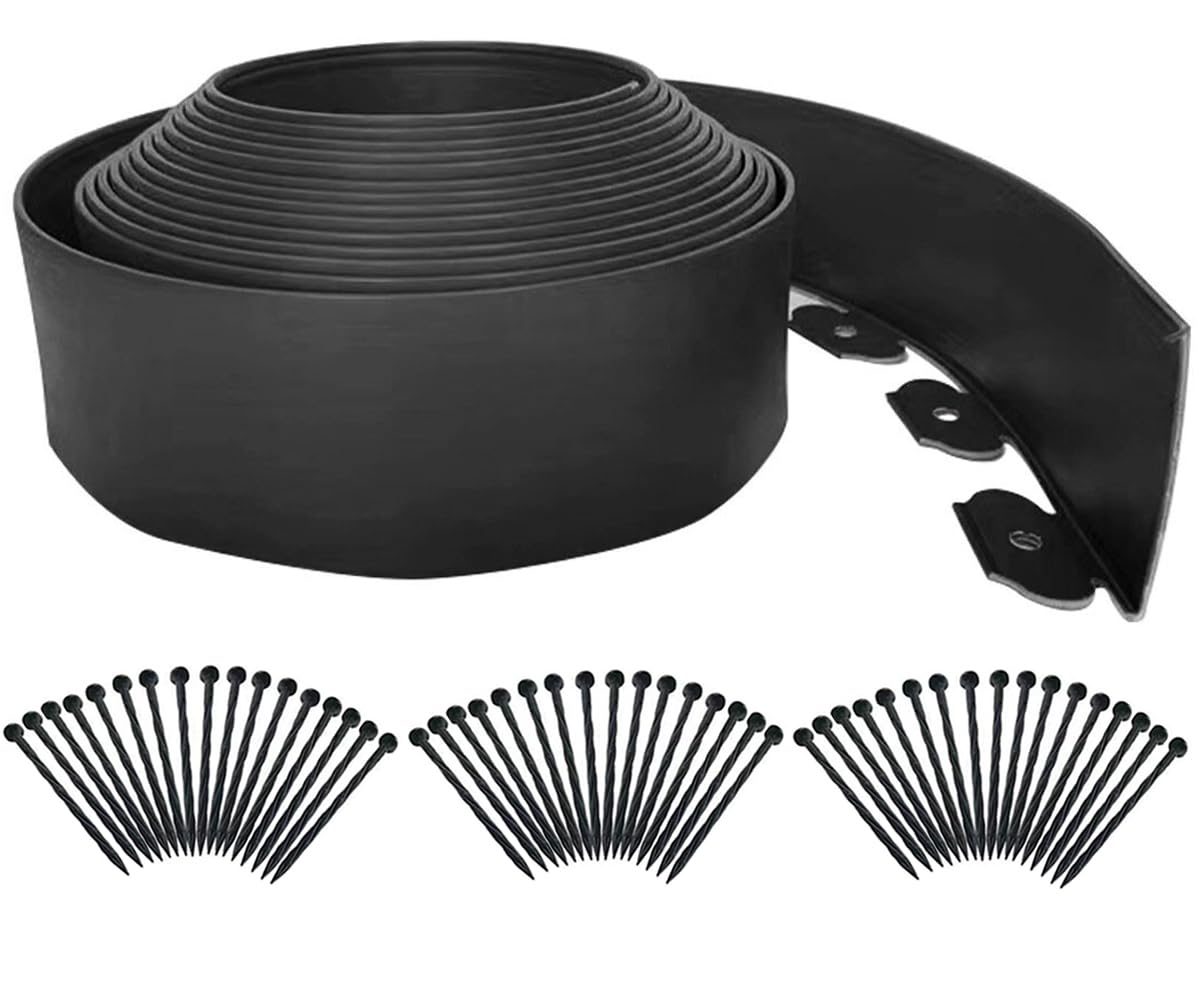
A 33-foot coil with 50 spiral spikes — generous stake supply for a medium run.
This 33-foot edging is 4 inches tall and made from HDPE plastic that bends smoothly around tree rings, flower beds, and pathways. The kit includes 50 spiral spikes that are 8 inches long — enough to stake every 8 inches without buying extras. Owners describe it as easy to roll out, shape, and secure with a rubber mallet. The black color blends into the landscape without drawing attention.
The material is flexible enough for tight curves around trees, and the spiral stakes hold well in most soil types once installed. Owners note it helps keep mulch and soil contained, and it reduces maintenance by preventing grass from encroaching. The 33-foot length works well for medium projects — a standard circular flower bed or two straight runs along a driveway.
The plastic stakes can break if you hammer them directly into hard, dry ground. Owners recommend pre-drilling a pilot hole with a smaller metal stake or watering the soil first. The HDPE (high-density polyethylene) material has mixed reviews on long-term UV (ultraviolet) resistance — some owners find it durable while others call it “cheap plastic.” The spiral stake design is reusable, so even if a few break during installation, you have spares.
Great stake-to-length ratio: 50 spikes for 33 feet means you can space them tightly for a secure hold — far better than the 10 stakes included with the Master Mark 40-foot coil.
Handle the stakes carefully: The spiral spikes can snap if driven into bone-dry clay without a pilot hole; pre-wetting the soil helps.
Solid pick for: a medium bed or pathway edging project where you want simple roll-out installation with plenty of stakes included.
Not for: heavy-duty or high-visibility borders — the thinner HDPE is functional but not as sturdy as thicker recycled plastic options.
8. Anleolife 40ft Flexible Coil
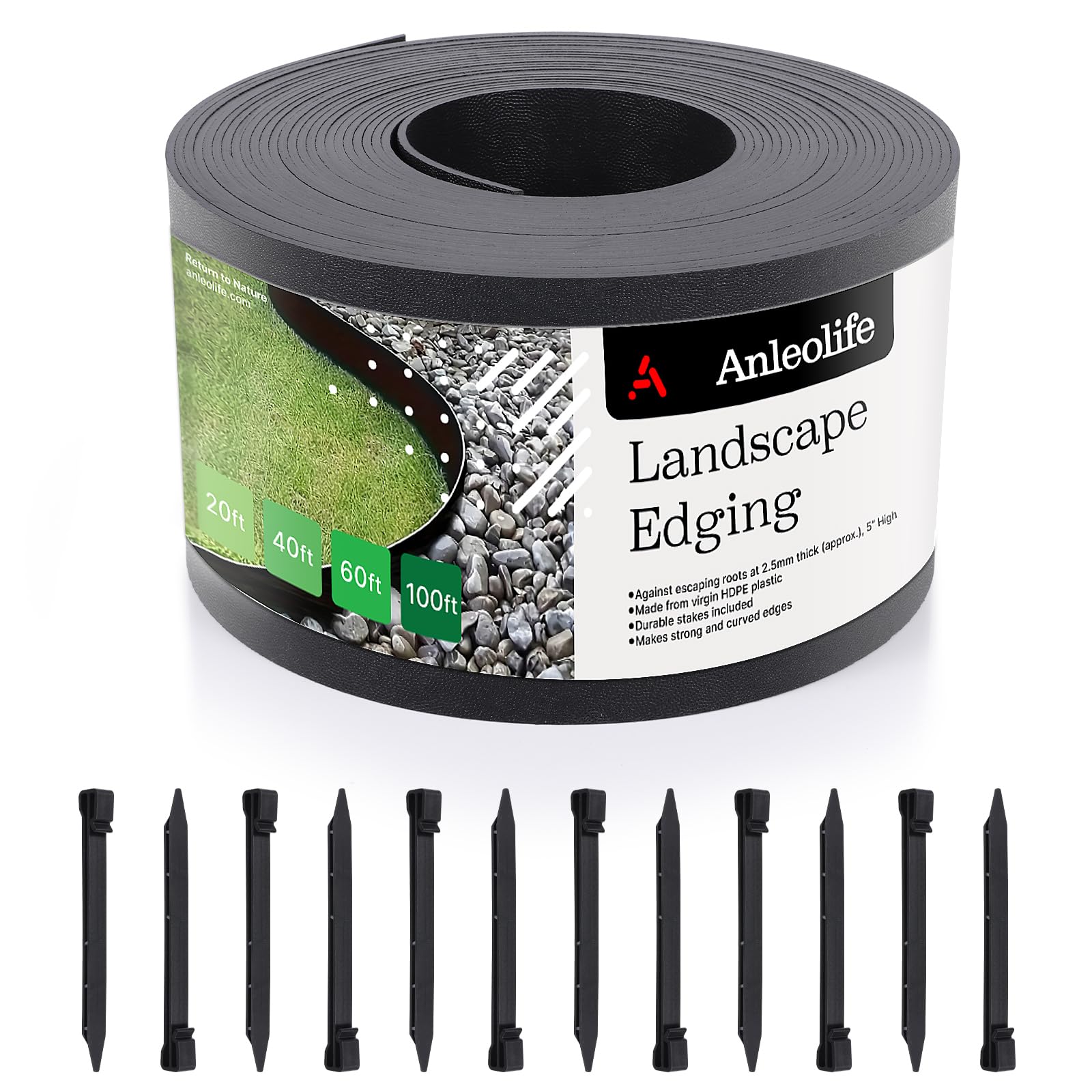
A 5-inch-tall coil with a sturdy 2.5 mm thickness — noticeably stiffer and sturdier than standard edging.
This 40-foot coil from Anleolife stands out for its heft: the edging is 2.5 mm thick, which owners describe as “very sturdy.” At 5 inches tall, it provides a substantial barrier against grass and weeds, and the black finish stays subtle in the landscape. The kit includes 12 stakes, but owners consistently note that more stakes are needed for curved shapes where the coil needs to hold its position. The installation requires digging a narrow trench, placing the edging, backfilling, and compacting the soil.
The anti-UV claim is supported by owner reports that the edging has held up well through multiple seasons without fading or becoming brittle. The 2.5 mm thickness means it resists bending from string trimmers and won’t warp as easily as thinner edging in hot sun. The manufacturer gives a clear pre-installation tip: uncoil the edging and let it warm in the sun for about a day before installation to increase flexibility and reduce kinks.
The 12 provided stakes are not enough for a 40-foot run, especially on curves — owners recommend buying additional stakes separately. A few customers note that some stakes broke when hammered with a plastic mallet. The stiffness of the 2.5 mm material can make tight-radius curves difficult to hold in place without frequent staking. The overlap guide in the instructions (overlap ends by 25 mm to allow for thermal expansion) is a detail that buyers of other edging brands won’t find — it’s a smart addition for preventing buckling.
Built to last: At 2.5 mm thick, this is the thickest edging in the roundup — it won’t flex when a string trimmer bumps it.
Stake shortage: 12 stakes for 40 feet forces you to buy more; budget an extra pack before you start installation.
Pick this for: high-traffic areas or where the edging will take occasional hits from mowers and trimmers — the extra thickness absorbs abuse.
Avoid if: you want a no-dig solution — this edging requires trenching and backfilling for best results.
Understanding the Specs
Material — HDPE vs. Resin vs. Recycled Plastic
HDPE (high-density polyethylene) is the most common material for flexible coil edging — it bends without breaking and resists moisture. Resin is used for decorative interlocking bricks like the Beuta Polyrock, offering a rigid stone-like finish. Recycled plastic edging (like the EasyFlex) is typically thicker and more resistant to UV light, but may cost more. All three outlast wood, which rots, and metal, which rusts.
Stakes and Anchoring
Spiral spikes (also called auger stakes) hold better in loose soil than flat plastic stakes because they grip like a screw. Flat stakes are lighter and easier to drive but can pull out in heavy rain. The number of stakes in the kit directly affects how straight the edging stays — a good rule is one stake every 1 to 2 feet for straight runs, and every 6 to 12 inches for tight curves. Most kits include fewer stakes than you’ll want for a taut, professional-looking line.
FAQ
Do I need to dig a trench for easy garden edging?
What is the best height for garden edging?
Will plastic garden edging become brittle in the sun?
How many stakes do I really need?
Can I curve flexible coil edging around a tree?
Is interlocking brick edging better than a flexible coil?
How long does plastic garden edging last?
Can I cut plastic edging to a custom length?
Final Thoughts: The Verdict
For most people, the best easy garden edging winner is the Beuta Polyrock Bricks because it combines the fastest interlocking installation with a realistic stone appearance that owners consistently praise. If you want a longer, invisible, no-fuss border for a large yard, grab the EasyFlex Tall Wall No-Dig for the best no-dig system with spiral stakes that hold in varied soil. And for the best cost-per-foot on a classic coil with a woodgrain finish, the Master Mark Terrace Board (4 in.) is the one to reach for.
How We Picked
We do not accept paid placement. Every pick is matched to a real buyer and a real use-case; we do not hands-on test units.
Sources & Methodology
Specifications: manufacturer listings and product documentation. Review insights: verified customer reviews, as of July 2026. Pricing: not shown on this page (it changes often); check the current price via the retailer link.
As an Amazon Associate, Lawn Gear Lab earns from qualifying purchases. This does not affect which products we feature.