
Specs are compiled from manufacturer listings and verified buyer reviews and can change over time — please confirm the key details on the product page before buying.
You feed your plants, but something deeper feeds your soil: dried molasses. This is a concentrated carbohydrate source (a food for soil microbes) that wakes up beneficial bacteria and fungi, helping them break down organic matter and make nutrients available to your plant roots. It comes dry instead of sticky, so you skip the mess of liquid molasses. This guide covers a selection of products — from a tiny 2-ounce pouch for precision feeding to a 50-pound bag for large garden operations — so you can match the size and type to your garden.
I’m Rikta — the founder and writer behind Lawn Gear Lab. This guide is built by comparing the manufacturers’ published specifications and the patterns across verified customer reviews, so you get each pick’s real strengths and trade-offs instead of marketing spin.
The section below helps you find the best dried molasses for garden use, with an honest look at four products that consistently earn high marks from home growers.
Our Picks at a Glance

How To Choose The Best Dried Molasses For Garden
Dried molasses is not a traditional fertilizer — it does not have high NPK (nitrogen-phosphorus-potassium) numbers. Instead, it is a carbohydrate source that feeds beneficial soil bacteria and fungi. Those microbes then break down organic matter and make nutrients available to plant roots. Knowing a few key specs helps you match the right product to your growing style.
Cane Molasses vs. Blackstrap: What Your Plants Need
Standard dried cane molasses is rich in sucrose and carbohydrates, making it ideal for a quick microbial feast during active growth and flowering. Blackstrap molasses retains more minerals like potassium, calcium, and iron after multiple boilings, which makes it better suited for late-season soil building and compost teas. If you are mixing a weekly feed for vegetables or cannabis, cane molasses is the go-to. For rebuilding depleted soil or brewing a diverse compost tea, blackstrap delivers more mineral depth.
Particle Size and Mixing Ease
Dried molasses needs to dissolve in water to reach the root zone effectively. Finer powders dissolve almost instantly in cold water; coarser granules or prills may need warm water or a few extra stirs. A product labeled “water soluble” guarantees easy mixing. If you are applying dry as a top-dress, slightly larger particles are fine — rain and watering break them down over time. For hydroponic (soilless growing using water and nutrients) or drip irrigation (a system that waters slowly at the root zone) setups, only a fully soluble fine powder will prevent clogs.
Unsulphured vs. Sulphured: A Straight Choice
Sulphur dioxide is sometimes used as a preservative in molasses processing, but it can harm beneficial soil bacteria. Organic growers and compost tea brewers should specifically seek unsulphured dried molasses, as noted in the product specs. The absence of sulphur means the carbohydrate energy reaches your soil biology intact.
Quick Comparison
| Model | Best For | Weight | Type | Solubility | Amazon |
|---|---|---|---|---|---|
| RAW Cane Molasses★ Best Overall | Concentrated Precision Feed | 2 ounces | Cane Molasses | Fully water soluble | Amazon |
| Soil Sunrise Dry Horticultural Molasses Powder | Best Overall Value | 4 pounds | Cane Molasses | Water soluble | Amazon |
| VivaStrap! Dry Powdered Blackstrap Molasses | Mineral-Rich Blackstrap | 1.5 pounds | Blackstrap Molasses | Water soluble in cold water | Amazon |
| Ridley Dried Molasses | Large-Scale Gardening | 50 pounds | Dried Molasses | Prill form | Amazon |
In‑Depth Reviews
1. RAW Cane Molasses 2 oz
Our pick — over 4.5★ from 300+ verified ratings; the strongest balance of quality and price.
RAW Cane Molasses is a highly concentrated, fully soluble powder packed into a compact 2-ounce pouch. At just 2.08 ounces total, it is the smallest product here by a wide margin, but the recommended mixing ratio of 1:512 (one part molasses to 512 parts water) means a little goes a long way. This makes it a favorite among growers who run precise feeding schedules and want a clean, mess-free carbohydrate source that disappears completely into water without leaving sediment.
The product is designed for horticultural use specifically, and the reviews reflect a dedicated audience. As one owner describes: “I make my own flush for last two weeks before harvest.” The ultra-fine powder delivers carbohydrates and micronutrients quickly into the soil. This is not a bag you buy for a season of general feeding — it is a targeted tool for the final stretch of a grow cycle when you want to flush synthetic nutrients and feed soil microbes for one last push.
Compared to the 4-pound bags above, the RAW pouch is clearly for a different kind of gardener. The per-ounce cost is higher, but the convenience of a light, resealable pouch that fits in a drawer and delivers exactly the right dose for a finishing flush is valuable for growers who do not want to store half a bag for months between uses.
Why it works
- Fully dissolves in water with no stirring needed — just shake and pour
- Ultra-fine powder means the exact mixing ratio is easy to hit
- Small pouch stays fresh without taking up shelf space
The size caveat
- 2 ounces is not enough for a season of weekly feedings across a large garden
- Higher cost per ounce than bulk bags — you pay for the precision and purity
Reach for this if: You are in the final weeks before harvest and want a clean carbohydrate flush without leftover sediment or mess.
Look elsewhere if: You need molasses as a general soil amendment for a full season — a larger bag will give you more feedings for the same money.
2. Soil Sunrise Dry Horticultural Molasses Powder (4 Pounds)

Soil Sunrise packs a full 4 pounds of dry powdered molasses into one resealable bag, giving you enough for multiple seasons of container plants, raised beds, or a large vegetable patch. The recommended dose is just one to two tablespoons per gallon of water in a monthly watering solution — that 4-pound bag (which at 4 pounds versus the VivaStrap blackstrap option at 1.5 pounds) stretches further than any smaller container here. It works as a multi-use soil amendment (a substance added to soil to improve its physical or biological properties): you can mix it into compost piles as an accelerator (a substance that speeds up decomposition), brew it into a foliar spray (a liquid applied to leaves), or top-dress it around bulbs for an extra carbohydrate boost.
Gardeners report visible new growth and improved plant health after a few applications. The suggested amount of 1-2 tablespoons per monthly watering matches the low-dose approach experienced growers prefer — it gives soil microbes just enough energy without overwhelming the root zone with sugar that could attract pests. The powder is fine enough to dissolve easily, but some owners note it benefits from being screened (poured through a strainer) before adding to a watering can to avoid small clumps.
What really sells gardeners on this bag is the value. At 4 pounds versus the VivaGrow blackstrap option at 1.5 pounds, it is the most economical choice per feeding for anyone tending multiple beds or a full vegetable garden. Growers appreciate that it works both as a dry top-dress and as a liquid feed, giving them flexibility depending on the season and the crop.
What wins people over: Its size, solubility, and versatility let it replace a liquid molasses bottle, compost starter, and root stimulant for a full season.
The honest trade-off: The powder is not quite as fine as some premium brands, so a quick strain before mixing keeps your sprayer nozzle clear.
Reach for this if: You have a medium-to-large garden and want one bag that handles everything from seed germination to flowering top-dress.
Look elsewhere if: You need a fully instant-dissolving powder for hydroponic drip lines — a finer grind will save you the screening step.
3. VivaStrap! Dry Powdered Blackstrap Molasses Unsulphured Water Soluble 24oz (1.5lb)
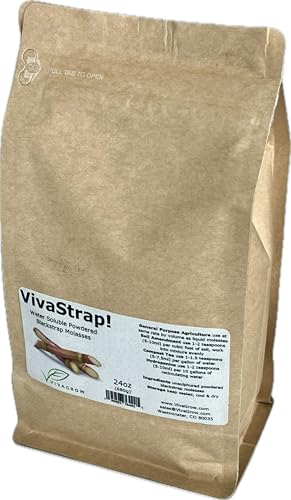
VivaStrap takes the mineral-dense profile of blackstrap molasses and turns it into a fine dry powder that dissolves even in cold water. Each 24-ounce tub contains roughly 144 teaspoons, which means one container covers a long stretch of weekly feedings for a modest garden. The unsulphured formulation means the carbohydrates and phosphorus reach your soil biology intact, which matters for organic growers and anyone brewing probiotic compost teas (aerated water infusions of compost that increase beneficial microorganisms).
Owners repeatedly note how much easier this is than liquid molasses. No sticky measuring spoons, no gooey residue in the pantry, and no thick syrup that clogs sprayers. As buyers put it: “I no longer have the mess from the liquid version.” The fine powder dissolves readily in a watering can, so you can mix up exactly what you need for a single feeding without waste. It is also popular with small-scale livestock owners who mix a spoonful into bitter herbal dewormers for goats and sheep — the sweetness masks the taste completely.
The mineral profile of blackstrap makes this a particularly smart choice for rebuilding tired soil or supporting heavy-feeding plants like tomatoes, peppers, and cannabis during late flowering. While the bag is smaller than the Soil Sunrise option at 1.5 pounds (4 pounds vs 1.5 pounds), the blackstrap delivers a different nutrient profile that some growers prefer for specific stages of growth.
The standout feature: True cold-water solubility — no hot water needed, no clumps left in the bottom of the can.
Where it comes up short: A few owners wish it came in a larger size; the tub runs out faster than expected if you are feeding a large vegetable patch every week.
Best for: Organic growers who brew compost teas and want the mineral boost of blackstrap without the mess of liquid molasses.
Think twice if: You have a large garden with many beds — the 1.5-pound tub means more frequent reordering than the 4-pound bags.
4. Ridley Dried Molasses, 50 lb

Ridley Dried Molasses is a 50-pound bag of prilled (pelletized) molasses originally formulated as a livestock feed sweetener that gardeners quickly adopted as a soil builder. The label says “For Use In Mixing With Feeds For Cattle, Horses, Sheep, Swine & Poultry,” but the reviews tell a different story: gardeners buy this bag to increase microbial activity in the soil, feed lawns, keep fire ants away from picnic tables, and add carbohydrates to cannabis plants right through flowering. As one owner warns: “Beware… This package is HUGE!” At 50 pounds, it is literally a different weight class than every other product here — at 50 pounds versus the 4-pound Soil Sunrise bag.
The prill form means it does not dissolve instantly like the fine powders above. Instead, it releases carbohydrates slowly as it breaks down with moisture. This makes it ideal for top-dressing lawns, mixing into garden beds before planting, or sprinkling around the drip line of fruit trees. The low cost per pound makes it the most economical choice by far if you have enough ground to cover — a single bag can treat an entire vegetable plot, a lawn, and a compost pile for a full year. The smell is notably pleasant: owners describe it as smelling divine, and a “cheap way to add gluten to a wide variety of garden plants.”
The trade-off is handling. You need strong arms to move a 50-pound bag, and you need dry storage space to keep it from clumping. The prills are larger than powder, so this is not a product for brewing a quick compost tea or mixing a precise weekly feed in a watering can. It is a bulk soil amendment for the grower who thinks in terms of wheelbarrows, not teaspoons.
The crowd favorite trait: The sheer value — at 50 pounds, the cost per feeding drops so low that you stop worrying about measuring precisely.
The honest limit: The prill size is not water-soluble like the powdered options, so it is not suitable for hydroponic systems or foliar sprays.
Reach for this if: You have a large vegetable garden, a lawn, fruit trees, or a compost operation — this bag feeds the whole property.
skip it if: You garden in containers on a balcony or need a precise soluble feed for weekly watering — the big prills are too coarse for that.
Understanding the Specs
Mixing Ratio
This tells you how much powder to use per volume of water. A ratio like 1:512 means one part molasses powder to 512 parts water — roughly one tablespoon per gallon. Stick to the recommended ratio to avoid overfeeding carbohydrates, which can attract ants and other pests. A lower ratio (more diluted) is safer for weekly use; higher concentrations are typically used only for specific flush periods before harvest.
Water Solubility
Powdered molasses labeled “water soluble” dissolves completely in water, making it suitable for compost teas, foliar sprays, and drip irrigation. Products that are not fully soluble (like prilled or granular forms) are better used as a dry top-dress or mixed into soil before planting. If you are running hydroponics or a sprayer system, always choose a fine powder that dissolves in cold water to prevent clogs.
Unsulphured vs. Sulphured
Prill vs. Powder Form
Prills are small, hard pellets that break down slowly in the soil. They are ideal for broad-acre application, lawn top-dressing, and mixing into garden beds weeks before planting. Fine powder dissolves instantly and is best for weekly liquid feeds, compost teas, and precise dosing in containers. Your choice depends on how you plan to apply the molasses — fast release (powder) or slow release (prill).
FAQ
Can I use dried molasses in hydroponics?
How often should I apply dried molasses to my garden?
Will dried molasses attract ants or pests?
What is the difference between cane molasses and blackstrap molasses for plants?
How do I mix dried molasses for a compost tea?
Is dried molasses safe for all plants?
Can I use livestock-grade dried molasses in my garden?
How should I store dried molasses powder?
Final Thoughts: The Verdict
The best dried molasses for garden use depends entirely on the size of your operation. For most home gardeners with a vegetable patch, a few raised beds, or a collection of container plants, the Soil Sunrise Dry Horticultural Molasses Powder hits the balance — 4 pounds of fine, water-soluble powder at a price that makes weekly feedings economical. If you need the mineral depth of blackstrap for compost teas or soil rebuilding, the VivaStrap Dry Powdered Blackstrap Molasses dissolves instantly in cold water and delivers potassium, calcium, and iron. And if you are managing a large property with lawns, fruit trees, and extensive beds, the Ridley Dried Molasses 50-pound bag gives you the lowest cost per pound and enough material to feed your entire garden for a full season.
How We Picked
We do not accept paid placement. Every pick is matched to a real buyer and a real use-case; we do not hands-on test units.
Sources & Methodology
Specifications: manufacturer listings and product documentation. Review insights: verified customer reviews, as of July 2026. Pricing: not shown on this page (it changes often); check the current price via the retailer link.
As an Amazon Associate, Lawn Gear Lab earns from qualifying purchases. This does not affect which products we feature.