
Specs are compiled from manufacturer listings and verified buyer reviews and can change over time — please confirm the key details on the product page before buying.
You want to feed your plants without loading your soil — or your local water table — with synthetic chemicals. The real question is not whether it works (all seven picks here do), but which natural ingredient matches the crop you are growing and the hands-on effort you want to give. Worm castings release nutrients slowly every time you water. Kelp meal adds trace minerals that sandy soil often lacks. And a premixed all-purpose granule lets you sprinkle and move on.
I’m Rikta — the founder and writer behind Lawn Gear Lab. This guide is built by comparing the manufacturers’ published specifications and the patterns across verified customer reviews, so you get each pick’s real strengths and trade-offs instead of marketing spin.
Every option below skips synthetic fillers, cuts out toxic runoff, and gives your garden a natural boost. Here are the best picks for the environmentally safe fertilizer category.
Our Picks at a Glance

How To Choose The Best Environmentally Safe Fertilizer
Environmentally safe fertilizers rely on natural ingredients — worm castings, kelp, bone meal, or plant-based blends — instead of synthetic nitrogen salts that can burn roots and wash into storm drains. Here are the three things to check before you buy.
N‑P‑K Ratio: What the Three Numbers Mean
The numbers on the bag (like 4-4-4 or 3-4-4) stand for nitrogen, phosphorus, and potassium. Nitrogen pushes leafy growth. Phosphorus supports roots and blooms. Potassium builds overall plant health. A balanced ratio like 4-4-4 is safe for almost everything, while a high-phosphorus blend (4-12-0) is best for bulbs and flowering plants. Natural fertilizers have lower numbers than synthetic ones, but the nutrients release slower and stay in the soil longer.
Form: Granules vs. Powder vs. Castings
Granules are the easiest to sprinkle and measure — you work them into the top few inches of soil and water. Powders (like bone meal) mix into the planting hole and dissolve gradually. Worm castings look like dark, crumbly soil and improve the texture of your dirt while feeding it. Pick a form that matches how much time you want to spend and whether you are amending a whole garden bed or a single container.
Certifications: OMRI and Organic Input Material
The Organic Materials Review Institute (OMRI) logo means an independent lab has verified that the product meets USDA organic standards. Some brands also say “registered Organic Input Material,” which is a similar stamp for organic production. Either certification tells you the fertilizer contains no synthetic chemicals, sewage sludge, or prohibited additives.
Quick Comparison
| Model | Best For | N‑P‑K Ratio | Weight | Form | Amazon |
|---|---|---|---|---|---|
| Worm Bliss (1 Gal)★ Best Overall | All‑purpose soil amendment | Organic (not listed) | 80 oz | Castings | Amazon |
| Espoma Bone Meal 10 lbPremium Pick | Bulbs & flowering plants | 4-12-0 | 10 lb | Powder | Amazon |
| Back to the Roots 5 lb | Organic gardening, monarch gardens | Organic (not listed) | 5 lb | Castings | Amazon |
| Kelp Bliss 2 lb | Trace minerals & soil pH | Organic (not listed) | 2 lb | Meal | Amazon |
| Espoma Garden-tone (2‑pk) | Tomatoes, peppers & herbs | 3-4-4 | 4 lb bag | Granules | Amazon |
| Down To Earth 5 lb | General veggie & container gardens | 4-6-2 | 5 lb | Granules | Amazon |
| Jobe’s Organics 16 lb | High‑volume beds & shrubs | 4-4-4 | 16 lb | Granules | Amazon |
In‑Depth Reviews
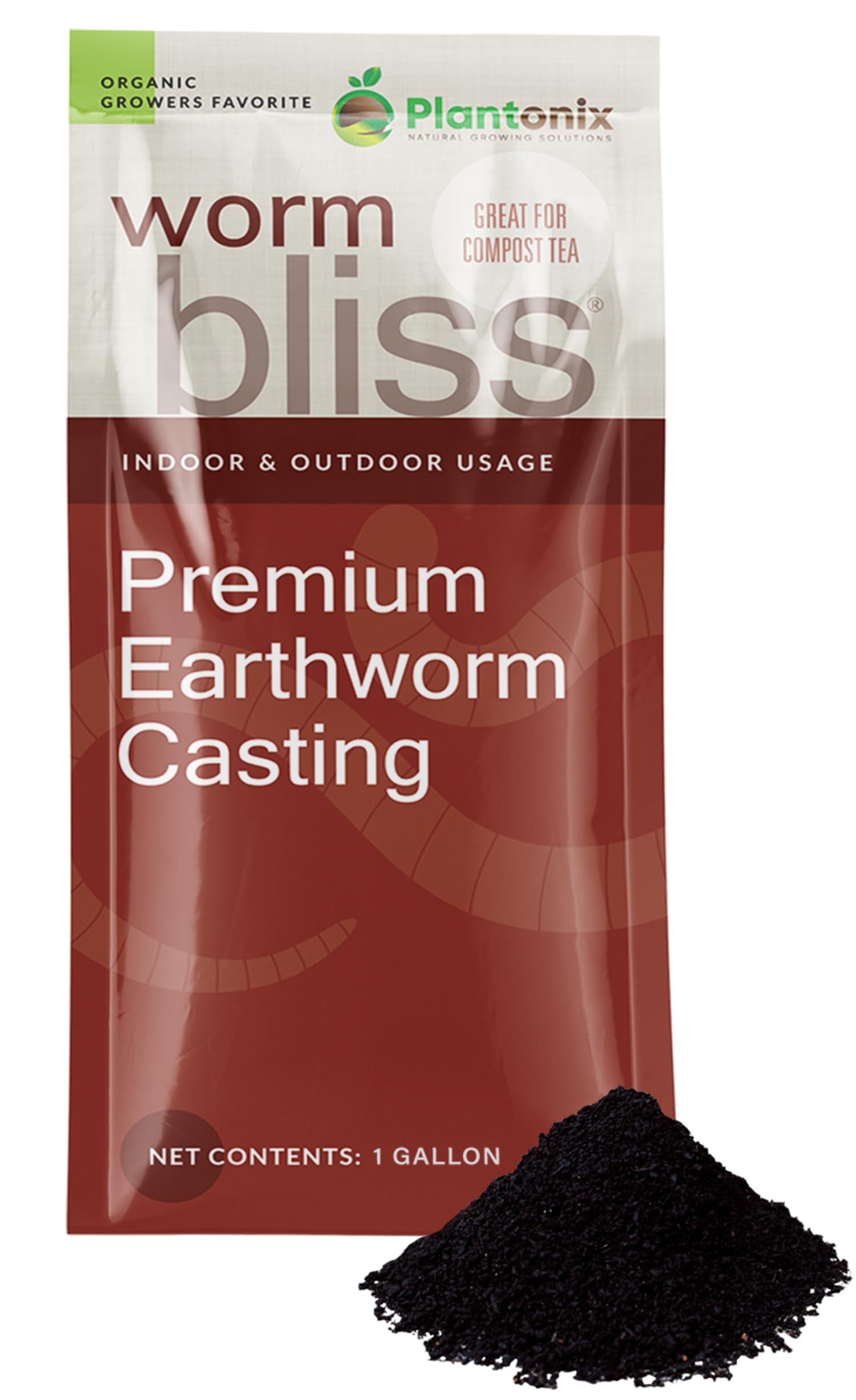
1. Worm Bliss (1 Gallon) – Organic Worm Castings
Our pick — over 4.5★ from 800+ verified ratings; the strongest balance of quality and price.
The gold standard for soil that stays alive and keeps feeding.
Worm castings are not really a “fertilizer” in the quick-fix sense — they are a complete soil conditioner. This 1-gallon bag (80 ounces) of pure, sifted worm manure adds humus that holds moisture like a sponge. The humus in these castings improves the soil’s ability to retain moisture, so you water less often. Buyers report that the 100% vegan, manure-free diet the worms are fed means no gnats appear — “I’ve also got gnats from other castings but not with this one,” one owner put it, which is a relief if you grow indoors.
What wins people over is the consistent quality. The castings are screened to remove dirt and rocks, leaving a fine, dark texture that mixes easily into potting soil for indoor plants, garden containers, and seed-starting flats. The high nitrogen-phosphorus-potassium content from the worms enriches the soil without ever burning roots — even for tender seedlings. It is also 100% organic, so it meets organic production standards.
Why owners trust it
- Quality earns the most praise — 24 owners single it out as the best they have tried.
- Nutrition draw is strong: 16 mentions for how it boosts plant health.
- Odorless and easy to use — just mix into potting soil and water.
The honest limitation
- At 80 ounces, it covers a decent number of pots but a large raised bed needs multiple bags.
- Not a fast-acting liquid feed; results come gradually as the worms’ work continues in the soil.
Reach for this if: you want a single soil amendment that feeds, aerates, and holds water — safe for every plant you own, from succulents to tomatoes.
Look elsewhere if: you need a targeted N‑P‑K boost for heavy fruiting or a water-soluble formula for weekly feeding.
2. Espoma Bone Meal Fertilizer 4-12-0, 10 lb
The phosphorus punch that turns bulbs into bloom machines.
You would buy bone meal for one reason: phosphorus. With a 4-12-0 ratio, this Espoma bag delivers a big dose of the middle number — exactly what bulbs, roses, and flowering shrubs need to push out vivid blooms. It is 100% all natural domestic bone meal with no fillers, so the nitrogen and calcium also strengthen stems and roots. The powder form mixes straight into the soil at planting time — the data says use 1 teaspoon per bulb.
What owners come back for, year after year, is the proven results. “It made a huge difference in my veggie garden! My plants were very happy, grew better and looked so healthy!” one buyer wrote. Another mentioned that even their dahlias love it. Effectiveness is the #1 talked-about aspect (38 owners highlight it), and quality runs a close second (30). The 10-pound bag is a solid value for anyone with multiple beds, and the registered Organic Input Material status means it qualifies for certified organic production.
Standout spec: The 4-12-0 ratio is the highest phosphorus concentration in this lineup — ideal for kickstarting bulbs and fruiting crops.
Fit note: Works best when mixed into the soil at planting rather than sprinkled on top; surface application delays the phosphorus release.
Best for: gardeners who grow tulips, dahlias, tomatoes, or any bloom-heavy plant and want a single-ingredient phosphorus source.
skip it if: you need a balanced all-purpose feed; the high phosphorus can build up in soil that already has enough.
3. Down To Earth All Natural Fertilizers 4-6-2, 5 lb

One box that replaces half the shelf in your garden shed.
This 5-pound box blends fish bone meal, blood meal, feather meal, rock phosphate, langbeinite, greensand, humates, and kelp meal into a single 4-6-2 granule. It is designed for vegetables, herbs, flowers, and container plants. Because it combines so many natural sources, it delivers a steady supply of essential nutrients while also feeding the soil microbes — a bonus that keeps your dirt healthy beyond the current season. It is OMRI-listed for organic production.
What owners appreciate most is the sheer versatility. Growing in the data: the all-purpose mix simplifies organic gardening by replacing multiple amendments. One gardener noted that a 15-pound bag (the larger size) lasted nearly a year, and plants grew “very healthy.” Effectiveness is the #2 talked-about aspect (28 mentions), right behind quality (46). True to the natural ingredients, it does carry a mild fishy smell when first applied, but owners mention it dissipates within days after watering it in.
The honest trade-off: The odor, while temporary, can attract curious dogs or raccoons if the granules sit on top of the soil — work them in or water thoroughly.
How to use: Sprinkle around the drip line of established plants or mix into the soil at planting time.
Ideal for: the gardener who wants one bag for everything — tomatoes, peppers, eggplants, flowers, and container plants — without buying separate formulas.
Consider another pick if: your soil already tests high in phosphorus; the 4-6-2 ratio may push it higher over time.
4. Espoma Organic Garden-tone 3-4-4, 4 lb (Pack of 2)

The Bio-tone advantage — healthy roots from day one.
Garden-tone is tailored specifically for cool and warm season vegetables (think lettuce, kale, tomatoes, peppers, squash) and herbs. Each 4-pound bag carries a 3-4-4 analysis plus 5% calcium, which helps prevent blossom-end rot in tomatoes. The Bio-tone formula is Espoma’s proprietary blend of beneficial microbes that colonize the root zone and improve nutrient uptake. You apply it monthly throughout the growing season — just sprinkle around the drip line and water in. No mixing required.
Owning this fertilizer means the effectiveness is the single most-discussed aspect (66 mentions), and plant growth follows at 20. One gardener in zone 10b reported that annuals survived late July heat and vegetables thrived into September after switching to Espoma products. The pack-of-two format gives you 8 total pounds of granules, which covers a sturdy vegetable garden for a full season. It is also a registered Organic Input Material, meeting organic production requirements.
Who it shines for: Tomato and pepper growers who want a monthly granular feed that also strengthens soil biology without any mixing.
Downside worth knowing: The natural ingredients produce a noticeable earthy smell for a day or two after application — nothing offensive, but note if you garden near an open window.
Best for: vegetable gardeners who want a dedicated, balanced feed with calcium built in and a microbial boost for the roots.
pass on it if: you grow only flowers or ornamentals; a general-purpose formula might be more cost-effective.
5. Back to the Roots Organic Worm Castings, 5 lb

Pure vermicompost that even monarch caterpillars can safely eat.
Back to the Roots offers a 5-pound bag of worm castings that works exactly the same way as the Worm Bliss product above — slow-release nutrients, beneficial microbes, no burn, no odor — but the source is domestic vermicompost from the USA. The data points to a real-world use case: customers note it is “a great fertilizer for milkweed, safe for monarchs,” which makes it a standout for butterfly gardeners who need absolute zero-toxicity assurance. The resealable bag keeps it fresh between uses.
Quality is the #1 aspect (43 mentions), and plant health follows at 31. Owners note that it blends easily into chunky soil mixes (coco chips, perlite, charcoal) without compacting, so it suits the houseplant crowd who use non-standard substrates. At 5 pounds versus the Kelp Bliss 2-pound bag below, you get more material for the same mid-range investment — a good value if you are amending several containers or a small raised bed.
What owners love
- 43 buyers highlight the quality — consistent, clean, and free of debris.
- Plant health gets 31 mentions; the microbial activity in the castings visibly perks up droopy plants.
- Odor is mild and soil-like — no strong barnyard smell.
The honest caveat
- An occasional small steel cable fragment has appeared in some bags (buyers advise checking before use).
- For large garden beds, 5 pounds goes fast; look at Jobe’s 16 lb bag below for bulk feeding.
Reach for this if: you need worm castings from a trusted US brand with a resealable bag and the assurance of no synthetic additives near sensitive plants.
Look elsewhere if: you prefer a screened, gnat-free guarantee — the Worm Bliss product above is the tighter-sifted alternative.
6. Jobe’s Organics Granular All Purpose Fertilizer, 16 lb

The bulk bag that keeps your entire garden fed for months.
At 16 pounds, this Jobe’s Organics bag is the heavyweight of the lineup — formulated with a balanced 4-4-4 N‑P‑K that works on vegetables, flowers, shrubs, and trees. It is OMRI-listed for organic gardening by the USDA, meaning it contains no synthetic chemicals. The granules are designed to break down into humus over about a week when watered in, feeding the soil food web as they go. Application is simple: sprinkle every 2 to 3 weeks during the growing season.
What owners love most is the fast visual response. One reviewer noted that after making a liquid tea from the granules (1 cup fertilizer to 1 gallon dechlorinated water), budded flowers appeared on squash within 48 hours. Another owner said the results were so good that “neighbors kept asking us how we did it.” Effectiveness is the #1 aspect (32 mentions), and quality ties closely at 30. The bag has a resealable closure to keep moisture out. The 16-pound weight versus the Down To Earth 5-pound box means you get more material, making it the economical choice for large beds.
Best use scenario: A gardener with a medium-to-large vegetable patch and shrub borders who wants one bag to cover everything, applied monthly.
Honest trade-off: The pungent smell (like a chicken coop) lingers for a couple of days after application — work the granules into the soil to cut the odor.
Best for: cost-conscious organic gardeners who value volume, simplicity, and proven results across a wide range of plants.
it’s not for you if: you have a very small balcony garden — a 16-pound bag will take years to use up and the smell may be too strong for a tight indoor space.
7. Kelp Bliss (2lb) – Kelp Meal Organic Fertilizer

Seaweed minerals that sandy and tired soil craves.
Kelp meal is not your standard N‑P‑K fertilizer — it is a soil amendment that provides essential trace minerals, vitamins, and growth hormones that granular blends often lack. This 2-pound bag of Kelp Bliss is 100% natural Norwegian kelp, sustainably harvested and dried into a meal you can sprinkle on lawns, flower beds, vegetable gardens, or indoor pots. The data says to apply 1 to 2 pounds per 100 square feet, then mix it into the top 3 inches of soil. It helps maintain soil pH within an optimal range and improves water-holding capacity, so you water less often.
The owners who buy it year after year swear by its effect on container gardens. One buyer repurchases “the same bag every year to help with amending soil for my container garden.” Quality is the #1 aspect (44 mentions), and effectiveness follows at 30. Sweet pea growers report noticeably better performance. Because it is a straight kelp meal (no synthetic ingredients), it fits perfectly into a fully organic system. At 2 pounds versus the Back to the Roots 5-pound bag, it is a trade-off in volume, but it is also more concentrated per ounce for trace-mineral value.
Standout spec: The rich mineral content from Norwegian kelp — you are adding things like iodine, zinc, and iron that most granular fertilizers skip.
Fit note: Works best as a supplement to worm castings or a balanced granular fertilizer rather than a standalone full-season feed for heavy feeders like tomatoes.
Ideal for: gardeners who grow in sandy or depleted soil and want to restore micronutrients without adding nitrogen-heavy synthetic blends.
Consider another pick if: you need a complete fertilizer for a large vegetable garden — pair this with an all-purpose granule for best results.
Understanding the Specs
N‑P‑K Ratio
The three-number code on the bag stands for nitrogen (N), phosphorus (P), and potassium (K). Nitrogen drives leafy green growth. Phosphorus helps roots, flowers, and fruit develop. Potassium supports overall plant health and disease resistance. A balanced 4-4-4 is safe for almost everything. A ratio like 4-12-0 is heavy on phosphorus — ideal for bulbs and flowering plants, but you do not want to use it on every bed every time because phosphorus can accumulate in the soil. Environmentally safe fertilizers tend to have lower N‑P‑K numbers than synthetic ones, but the nutrients release slowly and stay in the root zone longer.
OMRI Listing
The Organic Materials Review Institute (OMRI) evaluates products against USDA organic standards. Seeing the OMRI seal on a bag means the fertilizer has been independently verified to contain no synthetic chemicals, sewage sludge, or prohibited additives. It is the clearest shortcut for buyers who want an environmentally safe fertilizer without reading the full ingredient list. Some brands also say “registered Organic Input Material,” which is a similar certification for organic production. Both stamps mean the product is safe for organic gardening
FAQ
Is worm castings or kelp meal stronger as a fertilizer?
Can I use a 4-12-0 bone meal on all my vegetables?
How often should I apply an organic granular fertilizer?
Will worm castings attract flies or pests?
Can I mix worm castings and kelp meal together?
What does OMRI‑listed mean on a fertilizer bag?
Is organic fertilizer safe for pets and children?
How long does it take for organic fertilizer to work?
Can I use a 4-6-2 fertilizer on houseplants?
What is the difference between granular and powdered organic fertilizer?
Final Thoughts: The Verdict
For most gardeners, the best overall environmentally safe fertilizer is the Worm Bliss Organic Worm Castings because it is the most complete single product — it feeds the soil, holds water, and never burns roots, all in one organic 80-ounce bag. If you prefer a granular all-purpose with proven results on tomatoes and peppers, grab the Espoma Garden-tone (2-pack). And for the largest coverage at the best cost per pound, the Jobe’s Organics 16 lb bag is the one to reach for.
How We Picked
We do not accept paid placement. Every pick is matched to a real buyer and a real use-case; we do not hands-on test units.
Sources & Methodology
Specifications: manufacturer listings and product documentation. Review insights: verified customer reviews, as of July 2026. Pricing: not shown on this page (it changes often); check the current price via the retailer link.
As an Amazon Associate, Lawn Gear Lab earns from qualifying purchases. This does not affect which products we feature.