
Specs are compiled from manufacturer listings and verified buyer reviews and can change over time — please confirm the key details on the product page before buying.
Every gardener knows the feeling—you reach for your favorite pruners or the loppers, and instead of a clean snip, they crush the stem. A dull tool makes every cut harder, tires your hands faster, and leaves ragged wounds that invite disease. The fix is a sharpener built for the job, but the options range from simple stones to multi-angle guided systems, and picking the wrong one means wasted time or worse—a damaged blade.
I’m Rikta — the founder and writer behind Lawn Gear Lab. This guide is built by comparing the manufacturers’ published specifications and the patterns across verified customer reviews, so you get each pick’s real strengths and trade-offs instead of marketing spin.
if you need to restore a mower blade, touch up a pocket knife, or refresh a pair of shears, the right gardening tool sharpener will save you money and keep your gear cutting like new for years to come.
Our Picks at a Glance


How To Choose The Best Gardening Tool Sharpener
Choosing a sharpener depends on three things: what you are sharpening, how much effort you want to put in, and where you will do it. A dedicated mower-blade tool is useless for a pruning hook, and a pocket-sized ceramic rod cannot reshape a heavily nicked axe. Match the sharpener to your most-used tool first.
Abrasive Type: Diamond, Carbide, or Ceramic
Diamond abrasives cut fastest and last the longest—they are ideal for reshaping dull edges and working with hard steel. Carbide is a very aggressive material that removes metal quickly but leaves a rougher finish; it works well for mower blades and axes where a razor edge is not the goal. Ceramic and natural stones are finer and used for honing—refining an already sharp edge to a polished, smooth finish. Many of the best sharpeners combine two or all three in one tool.
Angle Guides vs. Freehand
Sharpening at the wrong angle ruins a blade’s geometry and makes it dull faster. A guide—usually preset at 20 degrees—takes the guesswork out. If you are new to sharpening, a tool with a built-in angle guide is a safer bet. Experienced users can freehand with a stone or file, but the consistency of a guided system is tough to top for everyday garden tools where a perfect edge is more important than speed.
Portability and Storage
Some sharpeners live in a workshop drawer; others need to ride in a pocket or backpack. If you trim on the go or maintain tools at a community garden plot, a compact folding model or a small stone with a sheath makes sense. For mower blades and larger shears that you sharpen at home, a bigger, more stable tool with a handle is easier to control and safer to use.
Quick Comparison
| Model | Best For | Abrasive Type | Weight | Angle Guide | Amazon |
|---|---|---|---|---|---|
| Work Sharp Guided Field Sharpener★ Best Overall | All-around guided sharpening | Diamond & Ceramic | 135 g | 20-25° preset | Amazon |
| SHARPAL 103NVersatile Workhorse | Versatile garden & mower blade | Tungsten Carbide & Ceramic | 176 g | Multiple preset slots | Amazon |
| Camillus GLIDEPocket Powerhouse | Multi-tool & EDC sharpening | Carbide & Ceramic | 68 g | 20, 30, 45° | Amazon |
| Smith’s 50603 | Lawn mower blades only | Carbide | 6.08 oz | Preset carbide blade | Amazon |
| Norton 87938 | Large hand tools & scythes | Silicone Carbide Stone | 4.96 oz | Included guide | Amazon |
| Work Sharp Folding Field Sharpener | Ultra-portable pocket carry | Diamond & Ceramic | 2.08 oz | 20° & 25° preset | Amazon |
| SHARPAL 127N | Stone-file hybrid for home & field | Monocrystalline Diamond | 160 g | Freehand | Amazon |
| FELCO 905 | Pruners & secateurs | Carbide | 1.55″L | 22° fixed | Amazon |
In‑Depth Reviews
1. Work Sharp Guided Field Sharpener
Our pick — over 4.5★ from 12,500+ verified ratings; the strongest balance of quality and price.
The all-in-one kit that takes the guesswork out of a perfect edge.
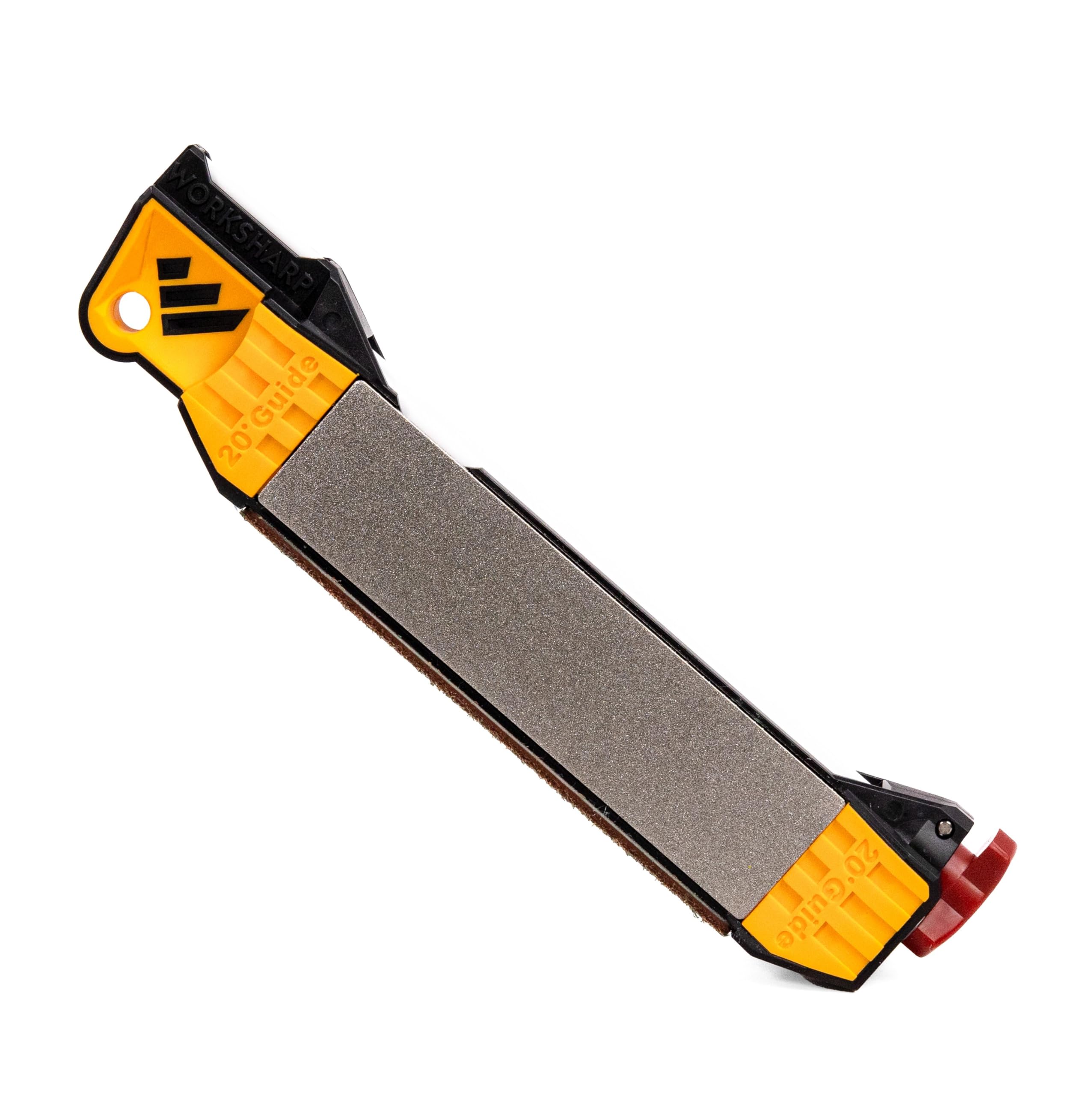
This is the sharpener that owners call the best they have ever owned, and the numbers back it up. The guided system uses a 20-25-degree angle so you don’t have to hold a steady freehand—just draw the blade across and the tool maintains the geometry. You get diamond plates for fast material removal, ceramic rods for honing, and a leather strop for that final polish. Buyers report that they achieved razor sharpness after 100 strokes, which is remarkably fast for a field kit. At 9.53 inches long and 135 g, it is heavier than the compact Camillus at 68 g, but the trade-off is a more stable platform and far more abrasive options.
The five abrasives cover coarse shaping through fine finishing, and everything stores inside the self-contained unit—no loose parts to lose in a toolbox. It works on knives, pruners, axes, and even fish hooks thanks to a grooved ceramic rod. The only limitation is the fixed 20-degree guide: if you need a different angle for a specific blade, you have to adjust by feel. But for the vast majority of garden tools and pocket knives, 20 degrees is exactly where you want to be.
The Guided Advantage
- Five abrasives (diamond, ceramic, strop) in one compact kit.
- Built-in 20° and 25° guides remove the skill barrier.
- Self-contained with no assembly—opens and works.
One Trade-Off
- No adjustable angle—you are locked into 20° or 25°.
- At 135 g, it is heavier than pocket-sized alternatives.
The crowd favorite: If you want one tool that does everything from axes to kitchen knives and does it consistently, this is the pick. It is the highest-rated and most-reviewed option for a reason.
Think twice if: You only sharpen mower blades and want a dedicated, faster tool—the Smith’s 50603 is purpose-built for that single job.
2. SHARPAL 103N All-in-1 Sharpener
A sturdy, feature-packed tool that tackles every garden blade in your shed.
Where the Work Sharp excels at precision, the SHARPAL 103N is built for brute versatility. It handles both single and double-bevel edges—think mower blades, pruners, loppers, axes, machetes, and even scissors—and it does so with five sharpening parts packed into a single tool. You get three different preset-angle slots, a tungsten carbide bar for aggressive sharpening, and a ceramic bar for honing. The design is deliberate: each slot is shaped for a specific blade type, so you do not have to guess which angle to use.
The oversized handle and hand guard make it safe to use with gloves, and owners praise how quickly it restores a mower blade—one reviewer noted it avoids the two- to four-week wait at the hardware store. The abrasive material is rated to pass a 10,000-times field use test, which strongly suggests it will outlast the tool you are sharpening. At 176 g it is a touch heavier than the Work Sharp, but the added heft comes from a rubber over-molded grip that feels secure even with wet or gloved hands.
Best for the shed: This is the tool you grab when you have a pile of dull garden tools and you want them all sharp in one session. The 3-year warranty adds confidence that the Work Sharp, with its limited lifetime warranty excluding abrasives, does not quite match.
One caveat: Some owners found the mower-blade sharpening slot a bit short for very large deck blades—those with deep nicks may still need a file first.
3. CAMILLUS GLIDE Compact Sharpener
A featherlight multi-tool that sharpens almost anything you can carry.
The Camillus GLIDE is the sharpener you can forget you are carrying—until one of your tools goes dull. At just 68 g and measuring 7.5 inches long but only 0.75 inches wide, it is a slim stick that slides into a gear bag or pack pocket without adding bulk. It is not just for knives either: the GLIDE includes V-notch carbide and ceramic sharpeners, shear sharpeners at 20, 30, and 45 degrees, and a fish hook groove. It even packs T6, T8, T9, and T10 drivers along with a flat head screwdriver, making it a true survival-style tool.
Reviewers consistently mention its durability—the glass-filled nylon body shows no wear even after heavy use. One owner reported it restored a Leatherman Surge to a razor edge, and the preset angles consistently produce sharper edges than competing pocket sharpeners. The only missing piece is a diamond rod, so you are limited to carbide and ceramic abrasives. That means it is excellent for touch-ups but less suited for reshaping a heavily damaged edge or a full mower-blade re-beveling.
Reach for this if: You are an outdoors person, a camper, or someone who maintains a grab-and-go kit. The integrated drivers give it a utility edge that no other garden sharpener here matches.
Look elsewhere if: Your primary need is mower blades or heavily nicked axes—the carbide and ceramic combo is for maintenance, not heavy reshaping.
4. Smith’s 50603 Handheld Mower Blade Sharpener

The no-fuss, few-pulls solution for a single job done fast.
This is the most focused tool on the list—it sharpens lawn mower blades and nothing else. And for that one job, it is remarkably efficient. The preset carbide blade bites into the steel aggressively, and a few passes are enough to restore a working edge. The large safety guard keeps your fingers away from the blade, and the oversized handle works well with thick garden gloves. It also includes a wire-bristled cleaning brush that stores in the handle, a nice touch for clearing grass buildup before you sharpen.
The catch is that the carbide does wear, and some owners found it dulled noticeably before finishing a second mower blade, especially if the angle of the mower blade didn’t perfectly match the tool’s preset. The consensus advice is to pre-file any deep nicks before using the Smith’s, treating it as a finishing tool rather than a full reshaping solution. For regular seasonal maintenance—keeping a decent edge on blades that are already in fair shape—it works faster than a file and produces a consistent bevel with minimal effort.
Why It Works
- Designed specifically for single-bevel mower blades—no guesswork.
- Integrated cleaning brush keeps the tool ready to use.
- Large finger guard makes it safer than a file for this job.
Know Before You Buy
- Carbide wears fastest on very dull or nicked blades—file first.
- Not designed for pruners, shears, or knives.
Perfect for: The homeowner who wants to touch up push-mower or tractor blades twice a season without removing them from the lawn tractor or buying a bench grinder.
Not for: Anyone looking for a multi-purpose tool or who needs to reshape heavily damaged mower blades.
5. Norton 87938 Garden Tool Sharpener
A classic, long stone for the traditional sharpener who works by feel.
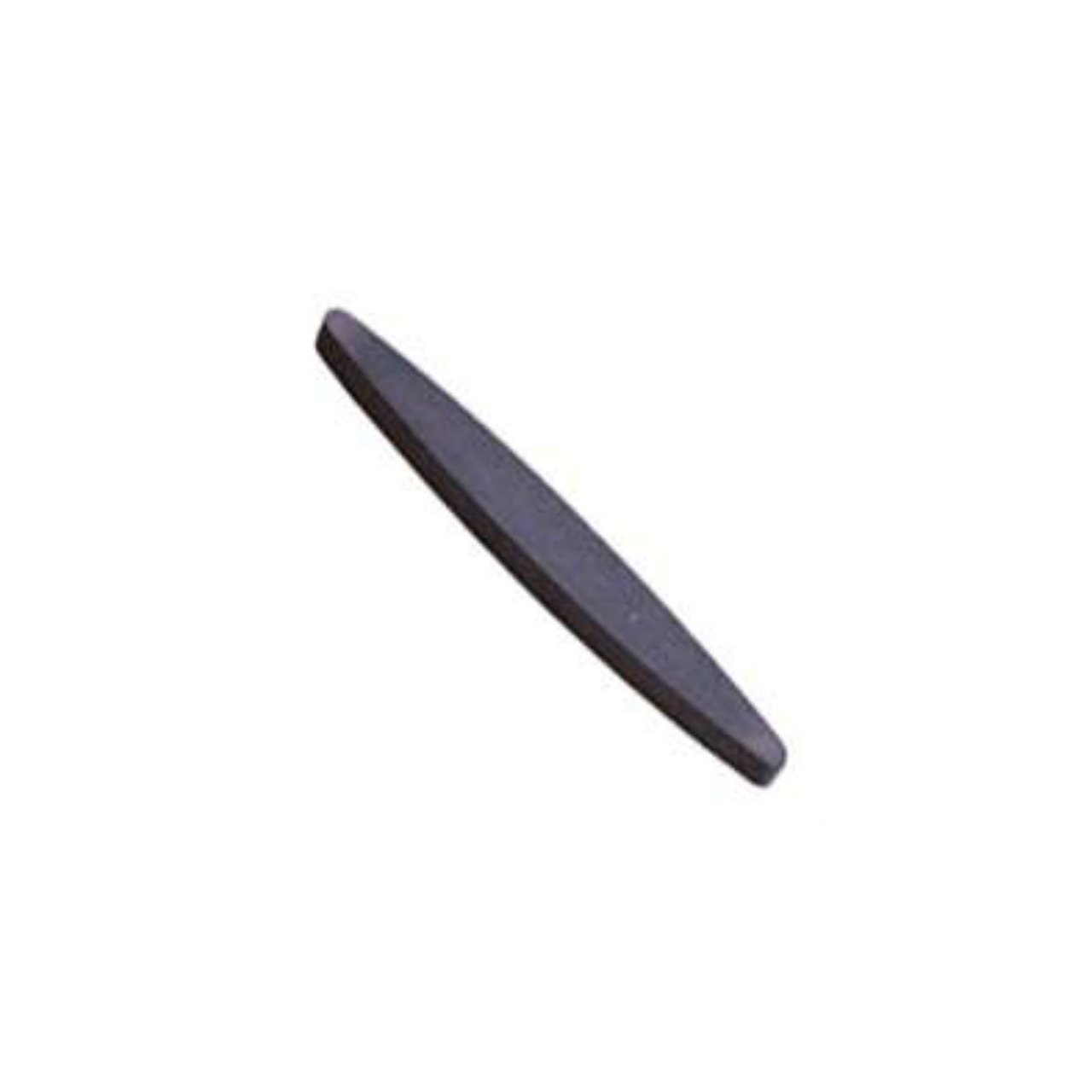
The Norton 87938 is a throwback to the simplest sharpening method: a stone and a guide. At 9.5 inches long, it is a substantial piece of silicone carbide abrasive that gives you plenty of surface area for long blades like scythes, machetes, and hand sickles. The medium/coarse grit is aggressive enough to remove material quickly, and the included sharpening guide helps beginners maintain a consistent angle. It is a favorite among owners of battery mowers and field tools who just need a quick touch-up without any moving parts.
The honest trade-off is the stone itself: it wears down fast. One owner reported significant wear after just 25 minutes of use, and the consensus is that it is best for rough edging and shaping rather than putting on a fine final edge. It leaves a rougher finish than a ceramic rod or a diamond plate would. For the price, though, it is a perfectly functional stone for large garden tools where a mirror polish is not the goal—getting the blade sharp enough to cut cleanly is what matters, and this stone does that.
Best for traditionalists: If you like the feel of a stone and need something long enough for a scythe or a full-size machete, this is a solid budget pick. The 9-inch length is a real advantage over shorter pocket stones.
skip it if: You are looking for a durable, long-term tool—the soft stone requires replacement more often than a diamond or carbide option.
6. Work Sharp Folding Field Sharpener
A folding, double-sided sharpener that disappears into a pocket until needed.
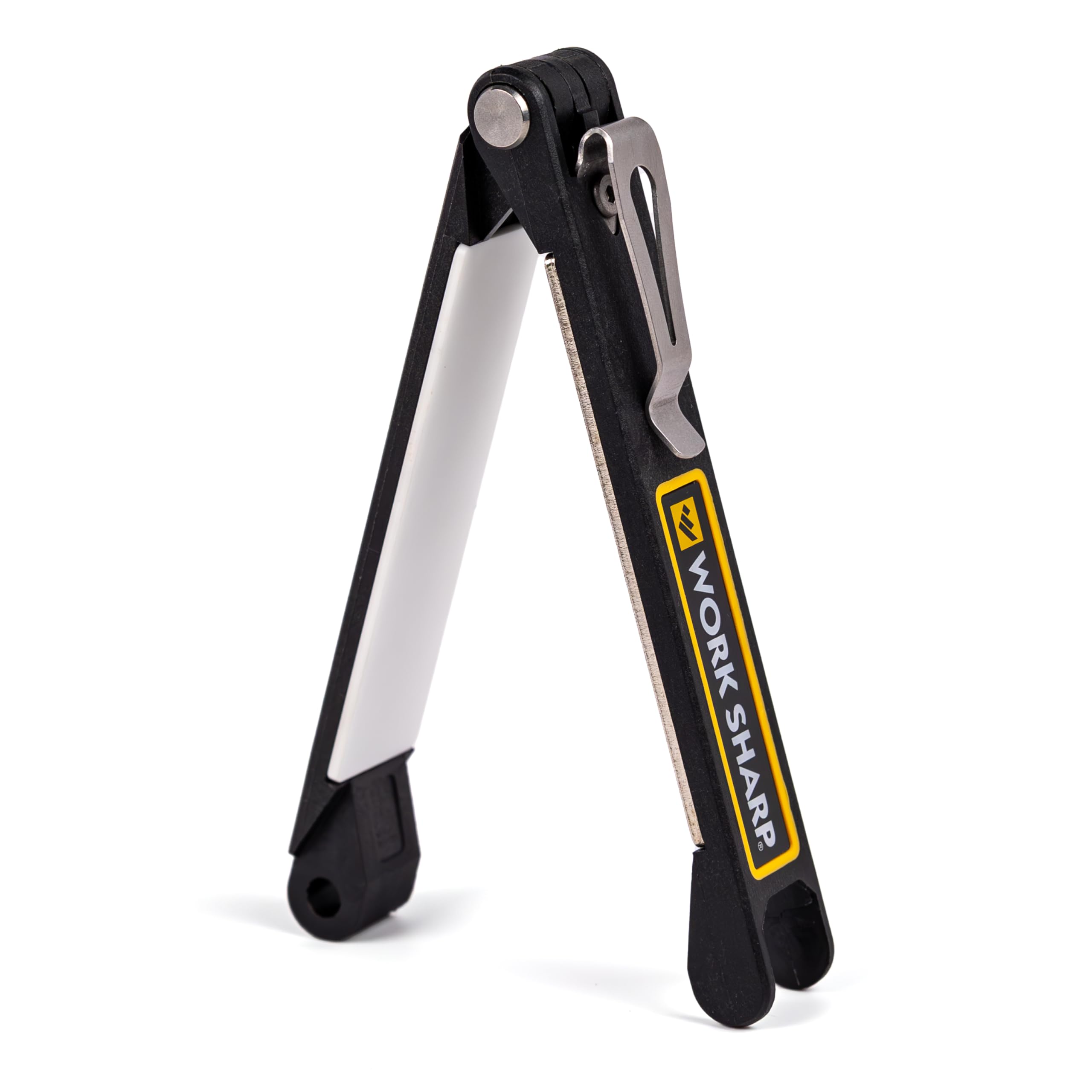
The Work Sharp Folding Field Sharpener is the guided system from the top pick, shrunk down to a truly pocket-friendly size. It folds to just 5.25 inches by 1.5 inches by 0.7 inches and weighs only 2.08 ounces—that is roughly 59 g, making it even lighter than the Camillus. It has a 400-grit diamond plate with a 20-degree guide for quick edge setting, and a fine-grit ceramic plate with a 25-degree guide for honing. The 400-grit diamond side is coarse enough to sharpen fast, while the fine-grit ceramic side refines the edge to a smoother finish.
The folding design and pocket clip mean it rides securely in a shirt or pants pocket without poking through. Owners who carry it daily praise its convenience for quick touch-ups on pocket knives and hunting tools. The main drawback some note is that it feels a little awkward to grip securely while maintaining a steady angle—the compact size requires a bit more finger dexterity than the full-size Work Sharp. The ceramic side also loads up with metal particles after two or three sharpenings, but a rinse with dish soap and water cleans it right out.
Your EDC sharpener: If you want one tool that lives in your pocket for on-the-go maintenance of knives and small tools, this is the best carry option. It is the lightest guided system available.
The trade-off: The small size makes two-handed sharpening less stable than a larger bench tool—it is best for quick field fixes, not a full sharpening session.
7. SHARPAL 127N Dual-Grit Diamond Stone

A monocrystalline diamond file that cuts fast and finishes fine.
This is a premium take on the classic sharpening stone, and the diamond coating makes all the difference. The SHARPAL 127N uses monocrystalline diamonds bonded to a full-tang stainless steel body—this is not a coated plate that will wear through. The coarse 325-grit (45 micron) side sets a new edge quickly, while the extra-fine 1200-grit (12 micron) side hones it to a polished finish. No oil is needed—you sharpen dry and the diamonds do the work.
The included genuine cowhide leather sheath doubles as a strop. After you sharpen on the diamond sides, a few passes on the leather remove the burr and give you that final razor edge. Owners love this for scissors (including hard-to-sharpen Gingher embroidery scissors) and camp tools, and the ergonomic grip makes it comfortable for long sessions. The main difference from the guided sharpeners above is that you have to hold a consistent angle yourself—there is no guide. For experienced sharpener users that is a feature, not a bug, because you can dial in any angle you need. For beginners, it takes more practice.
The Diamond Difference
- Monocrystalline diamond cuts faster and lasts longer than standard stones.
- Dual grit (325 / 1200) covers both shaping and honing in one tool.
- Leather sheath doubles as a strop for a polished finish.
The Skill Factor
- No angle guide—you must maintain the angle freehand.
- Coarse side is initially rough before it smooths into use.
A step up for enthusiasts: If you already know how to sharpen by hand and want a premium, portable diamond stone that will last for years, this is an excellent upgrade from a basic file or stone. The 3-year warranty backs it.
Pass if: You want a guided system—the Work Sharp or SHARPAL 103N are far safer for beginners.
8. FELCO 905 Carbide Sharpener
The precise, pocket-sized sharpener made for one thing: perfect pruners.
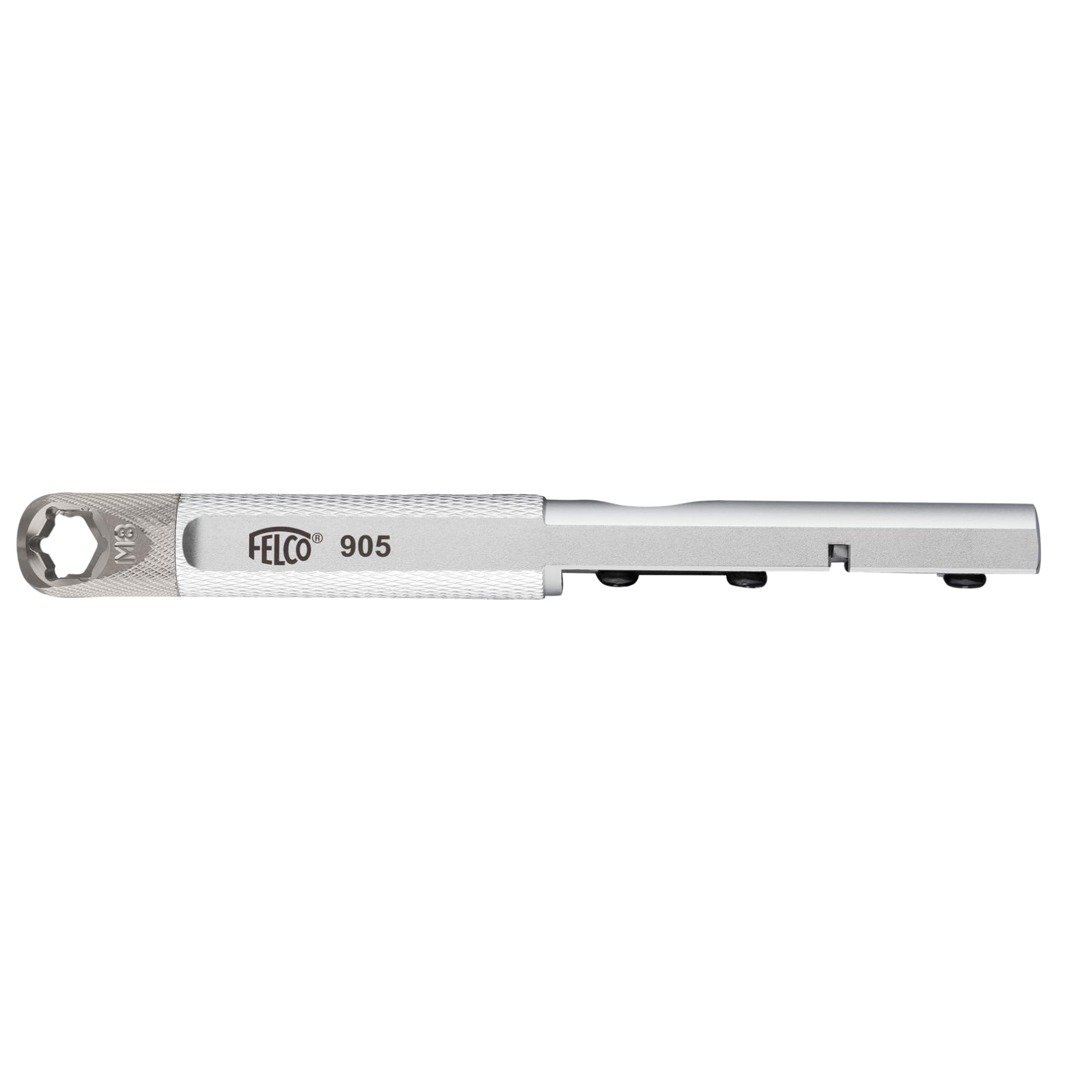
The FELCO 905 is a specialized tool, and it does not pretend otherwise. It is built specifically for sharpening pruners and secateurs, particularly the Felco No. 2 model that is a staple among professional arborists and gardeners. The carbide cutting edge is set to a precise 22 degrees—the ideal angle for bypass pruners—so there is no guesswork and no angle to hold. You draw the blade across the carbide a few times, and the edge is restored. It is incredibly fast and effective for its intended purpose: owners call it “the best pocket pruner sharpener on the market.”
Floral designers and wedding florists love it because it is small enough to keep in an apron and can refresh snippers on-site during events. The tool itself is tiny—just 2.95 inches long—making it the most portable option here if you only need pruner maintenance. The limitation is the scope: it only sharpens pruners and does not fit all bolts on every model for disassembly. If your tool collection includes Felco pruners, this sharpener is a no-brainer. If you need to also sharpen mower blades, axes, or shears, you will need a second, more versatile tool.
For the Felco owner: If you have Felco No. 2 secateurs or similar pruners, this is the best possible dedicated sharpener. Quick, precise, and travel-ready.
Not a general tool: This does one job superbly. Your mower blade, axe, and shears will need something else—the SHARPAL 103N or Work Sharp are the all-rounders to pair with it.
Understanding the Specs
Abrasive Materials
The three main types are diamond, carbide, and ceramic. Diamond is the hardest and fastest—it cuts through steel quickly and lasts a long time, but it is also the most expensive. Carbide is also very aggressive and good for rapid material removal on dull tools like mower blades, but it leaves a rougher edge. Ceramic is finer and used for honing—it refines the edge after a coarse sharpening to make it smooth and sharp. Many all-in-one sharpeners combine two or all three so you can progress from reshaping to polishing without switching tools.
Grit and Grain Size
Grit numbers tell you how coarse or fine the abrasive is. A lower number (like 325 grit) is coarser—it removes metal fast and is good for setting a new edge on a dull blade. A higher number (like 1200 grit) is very fine and used for honing and polishing. Some tools are sold with only one grit, while others have two sided (coarse/fine) or multiple interchangeable plates. For a beginner, a dual-grit sharpener that offers both a coarse and a fine side gives you the most flexibility in one tool.
FAQ
What is the best angle to sharpen garden tools?
Can I use a knife sharpener on my lawn mower blade?
How often should I sharpen my gardening tools?
Do I need to use oil with a sharpening stone?
What is a strop and why do I need one?
What is the difference between carbide and diamond sharpening?
Are handheld sharpeners safe to use?
Can I sharpen a serrated blade with these tools?
How long does a diamond sharpening stone last?
Do I need to remove the blade to sharpen it?
Final Thoughts: The Verdict
For most buyers, the gardening tool sharpener winner is the Work Sharp Guided Field Sharpener because it combines five different abrasives, built-in angle guides, and a self-contained design in a package that beginners and pros alike can trust. If you want a tool that specifically handles mower blades alongside everything else in your shed, grab the SHARPAL 103N. And for the pruner specialist with a Felco in their pocket, the FELCO 905 is the one to reach for.
How We Picked
We do not accept paid placement. Every pick is matched to a real buyer and a real use-case; we do not hands-on test units.
Sources & Methodology
Specifications: manufacturer listings and product documentation. Review insights: verified customer reviews, as of July 2026. Pricing: not shown on this page (it changes often); check the current price via the retailer link.
As an Amazon Associate, Lawn Gear Lab earns from qualifying purchases. This does not affect which products we feature.