
Specs are compiled from manufacturer listings and verified buyer reviews and can change over time — please confirm the key details on the product page before buying.
Spotting a web under a leaf or a gnat circling the soil means your indoor jungle is under attack. You need a pesticide that works, is safe for indoor air, and won’t harm a cat that nibbles plants. The best indoor plant pesticide kills bugs, keeps your family safe, and leaves plants looking better than before the infestation.
I’m Rikta — the founder and writer behind Lawn Gear Lab. This guide is built by comparing the manufacturers’ published specifications and the patterns across verified customer reviews, so you get each pick’s real strengths and trade-offs instead of marketing spin.
I sorted through the top contenders to find formulas that stop aphids, spider mites, and fungus gnats. — from budget-friendly ready-to-use sprays to potent concentrates — to present the clearest look at today’s best indoor plant pesticide options available.
Our Picks at a Glance

How To Choose The Best Indoor Plant Pesticide
The wrong spray can do more harm than the bugs. Some formulas burn leaves, others leave a greasy film, and a few simply don’t work.
Formula Type: Contact vs. Systemic
Most sprays you find work on contact — you must directly hit the insect for it to die. That means spraying the undersides of every leaf thoroughly. A few products use oils (like neem or peppermint) that suffocate eggs and larvae, providing a residual effect. None of the products here are systemic (absorbed into the plant), so thorough coverage is always on you.
Safety Profile: People, Pets, and Pollinators
Every product on this shortlist is plant-based and labeled safe around children and pets when used as directed. But “safe” has a range — some essential oil blends are heavily scented and can irritate sensitive noses, while others are nearly odorless. If you have cats, note that pure neem oil and certain essential oil blends can be toxic to felines; always check the label for your specific pet type.
Concentrate vs. Ready-to-Use
A ready-to-use spray is easiest — shake and squirt. But it runs out fast. A concentrate (like a neem oil concentrate) requires you to mix a small amount with water and soap, but it gives you gallons of spray from a tiny bottle. The trade-off is convenience versus economy. If you have many plants or frequent outbreaks, a concentrate saves money. For a single houseplant, a ready-to-use bottle is smarter.
Quick Comparison
| Model | Best For | Type | Volume | Key Target | Amazon |
|---|---|---|---|---|---|
| Lost Coast Plant Therapy★ Best Overall | General Infestations | Concentrate | 12 fl oz | Spider Mites | Amazon |
| Miracle-Gro Leaf Protect & ShineBest for Looks | Looks & Pest Control | Ready-to-Use | 8 fl oz (2-Pack) | Mites, Thrips | Amazon |
| Diaut Neem & Peppermint SprayBudget Champion | Leaf Shine & Control | Ready-to-Use | 16 fl oz | General Pests | Amazon |
| NatroZing Garden Insect Killer | Fungus Gnats | Ready-to-Use | 11 oz | Gnats, Aphids | Amazon |
| EcoVenger Garden Insect Control | Mealybugs | Ready-to-Use | 16 fl oz | Aphids, Spider Mites | Amazon |
| Earth’s Ally 3-in-1 | Disease & Pests | Ready-to-Use | 32 fl oz | Spider Mites, Fungus | Amazon |
| Botanical Tradesman Neem Oil | Value / Volume | Concentrate | 3.4 fl oz | Leaf Miners, Beetles | Amazon |
| Eco Defense Gnat Spray | Fungus Gnats | Ready-to-Use | 16 fl oz | Fungus Gnats | Amazon |
| Arber Organic Insecticide & Fungicide | Dual-Action Protection | Concentrate (2-Pack) | 8 fl oz each | Aphids, Mildew | Amazon |
In‑Depth Reviews
1. Plant Therapy Lost Coast Organic Natural Plant Protection Concentrate
Our pick — over 4.5★ from 800+ verified ratings; the strongest balance of quality and price.
The 12-ounce bottle that turns into 12 gallons of leaf-saving spray.
This concentrate is the crowd favorite for a reason. It works by suffocating and dehydrating insects on contact — no harmful residue left behind. Buyers report it took out a case of spider mites “in no time,” and owners of flowering cannabis plants use it weekly as a foliar preventative, finding only dead whitefly exoskeletons that flake off. The scent is a light essential-oil smell that dissipates fast, which everyone appreciates over the heavy odor of neem.
What wins people over is its sheer effectiveness — the top aspect by a wide margin. It is also safe for bees, ladybugs, and praying mantis, so you are not wiping out the good guys. The only honest caveat is that the cost per bottle is higher than some ready-to-use sprays, but because one 12-ounce container mixes with water to create 12 gallons of application spray, a single bottle goes a very long way.
What Owners Celebrate
- Eliminates spider mites and whiteflies rapidly — often after a single spray
- Safe to use right up to harvest on edible plants
- No sticky or oily residue left on leaves after drying
The Trade-Off
- A higher upfront cost per bottle compared to some ready-to-use options
Your best bet: Reach for this concentrate if you have a large collection of plants or a persistent infestation that needs serious firepower. The value per gallon is unbeatable.
Not for you if: You only have one small houseplant and want a grab-and-go spray — a ready-to-use bottle would be simpler.
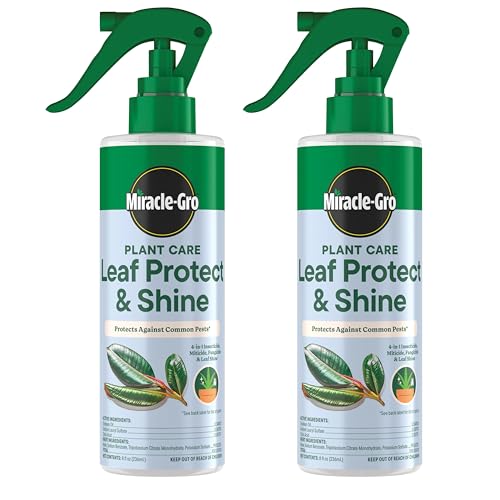
2. Miracle-Gro Plant Care Leaf Protect & Shine, 8 fl. oz. (2-Pack)
Insecticide, miticide, fungicide, and leaf shine in one squirt.
This is the multi-tasker you grab when you want pests gone and a glossy leaf finish without any extra step. It kills mites, thrips, aphids, and whiteflies while also fighting powdery mildew. The “shine” aspect has mixed results — some owners say leaves develop a natural-looking glow while others report it is not as glossy as expected. But the consensus is clear on one thing: effectiveness. Owners mention their plants look “radiant and healthy after two days of using these products.”
One important fit note: the leaf shedding aspect is the most-discussed topic, and the feedback is mixed. Some leaves may drop after application, especially on succulents (owners warn it does not work well on succulents). Apply every 7 to 14 days as a preventative routine. At 8 ounces per bottle (you get a 2-pack), this is a mid-range option that delivers good value for the multi-function convenience.
Why It Stands Out
- Combines pest control, disease protection, and a leaf shine in one easy spray
- No smell — customers note it is odorless and pleasant to use indoors
- Works well as a preventative treatment on most hard-leaved houseplants
Before You Buy
- The leaf shine does not deliver a high-gloss finish on every plant type
- Can cause leaf shedding on succulents and some sensitive plants
Grab it for: The person who wants a quick all-in-one solution that protects and polishes their favorite fiddle leaf fig or monstera.
skip it if: You have succulents or cacti — this spray may not be gentle enough for them.
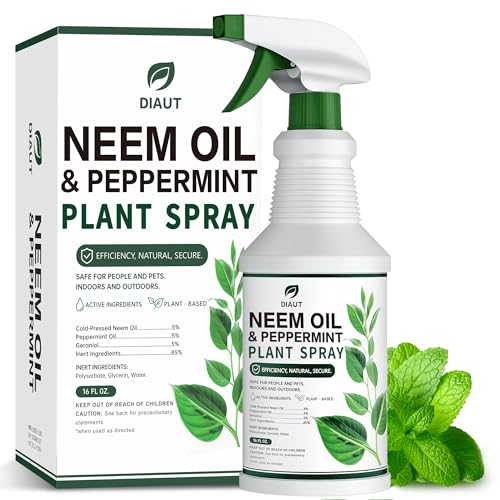
3. Diaut Neem Oil Spray for Plants with Peppermint Oil, 16 oz
A ready-to-use neem spray that smells like a garden mint tea.
This is for the plant parent who wants something simple — no measuring, no mixing, no mess. The formula combines cold-pressed neem oil with peppermint oil to clean leaves while providing gentle pest protection. Owners say it helped reduce gnats and made their ivies look “shiny, healthy” with a soft peppermint scent that lingers lightly in the room. It is designed to be safe around pets and family when used as directed, and the fine mist nozzle provides even coverage across leaf tops and undersides.
The main draw is the convenience. You do not need an emulsifier or a second bottle of soap — just shake and spray. The 16-ounce bottle is a good starter size for a moderate plant collection. Owners note significant improvement within days of first use. The trade-off is that neem oil is generally milder than synthetic or essential-oil-based concentrates, so a heavy infestation of spider mites may need a reapplication every few days.
What Works
- Pre-mixed and ready to use — zero dilution steps needed
- Pleasant peppermint scent that does not smell harsh or chemical
- Restores a glossy, clean look to dusty leaves
The Catch
- Neem oil is milder; heavy pest loads may require frequent re-spraying
Choose this if: You want a gentle, enjoyable daily spray that keeps leaves clean and helps ward off pests as part of a regular care routine.
Look elsewhere for: An acute severe infestation — you may need a stronger concentrate like the first pick.
4. Earth’s Ally 3-in-1 Plant Spray for Pests & Disease, 32 Oz

A 32-ounce jug of thyme, rosemary, clove, and peppermint power.
Earth’s Ally uses a blend of essential oils — thyme oil, rosemary oil, clove oil, and peppermint oil — to kill and repel soft-bodied insects like spider mites, aphids, whiteflies, and mealybugs, while also targeting fungus. Owners who have bought it repeatedly say it “works very well at controlling pests and keeping them at bay,” and note that a single application usually does the job. It is also independently tested and proven safe for bees, which is a major plus for anyone with outdoor plants.
The big volume is the standout feature here: 32 fluid ounces gives you more ready-to-use spray than most competitors without moving into concentrate territory. The scent is described as floral and herbal — pleasant, not overpowering. A recurring note from reviews is that the product may need multiple treatments in humid climates (like Florida) where rain washes it off. A small number of owners also report plant damage on very sensitive foliage, so a test spray on a single leaf is wise.
Why It’s a Top Contender
- Large 32 oz bottle means fewer repurchases for a multi-plant household
- Four essential oils provide broad-spectrum insect and fungal control
- Proven safe for bee populations when used as directed
Keep in Mind
- Some sensitive plant species may show leaf damage; always test first
- Outdoor use in rainy areas requires more frequent reapplication
Best for: The serious plant collector who needs a large volume of effective, eco-friendly spray for a variety of indoor and outdoor plants.
Not ideal if: You have a single small houseplant and don’t want to work through 32 ounces before it expires.
5. Arber Organic Insecticide & Fungicide for Plants, 16oz (2-Pack)

A two-bottle system that drops bugs dead within seconds on contact.
This is a concentrate 2-pack that separates insecticide and fungicide into two 8-ounce bottles, giving you roughly 8 gallons of spray each. Owners who tested it say 10 drops of the insecticide in 32 ounces of water made floor bugs “shrivel and die within 5-10 seconds after spraying.” The formula is bio-based and plant-safe, and it targets mites, aphids, whiteflies, thrips, and fungus gnats while suppressing powdery mildew. It mixes easily and has no strong smell.
The practicality here is strong: you can use them together or separately, depending on whether you have a pest problem, a fungal issue, or both. One owner reported nightly application significantly reduced aphids, caterpillars, and gnats on raised beds without any leaf burn. The key trade-off is that it does not kill Japanese beetles (per owner feedback). It also costs more upfront than a single spray, but the value comes from the dual-action approach and the large amount of spray you can mix.
What Makes It Special
- Two separate concentrates for targeted pest and disease control
- Insecticide works fast — visible kill within seconds on contact
- Odorless formula that is safe for kids and pets when used as directed
Before You Commit
- Ineffective against Japanese beetles — you will need a different solution for those
- Requires mixing with water and measuring out the concentrate each time
Reach for this: If you want a serious, fast-acting organic arsenal for a medium to large plant collection and prefer a non-smelly spray.
Pass on it if: You just want a grab-and-spray bottle without measuring spoons.
6. Botanical Tradesman Neem Oil Spray for Plants (Makes 320 Fl Oz)

A tiny 3.4-ounce bottle that stretches into over 300 ounces of spray.
If you want the absolute lowest cost per spray and do not mind a little mixing, this is the pick. The kit includes a 16-ounce trigger spray bottle and a 3.4-ounce bottle of 100% cold-pressed organic neem oil concentrate. When diluted according to instructions, it makes approximately 338 fluid ounces of neem spray — and the concentrate bottle is refillable up to 20 times. Owners battling citrus leaf miners say it works great, though you must reapply frequently. One owner treating whiteflies on an herb garden noted the oil is very thick and not easily mixed with water, but once blended, it reduces pest numbers steadily.
The economy here is tough to top. A single tiny bottle gives you enough spray to treat a large garden for a whole season. The trade-off is the work: you need to blend the neem oil with water and a mild liquid soap, and you must shake thoroughly before each use to keep the solution from separating. Also, because it is pure neem, it has that characteristic earthy smell that some people dislike.
Why It Wins on Value
- Incredible yield — one small concentrate bottle makes over 300 fluid ounces of spray
- Certified organic, 100% cold-pressed neem oil with no fillers
- Includes a refillable spray bottle with adjustable nozzle settings
The Effort Required
- Requires mixing with water and soap — not grab-and-go ready
- Thick oil can be tricky to mix; must be shaken well each time
Ideal for: The budget-conscious gardener with many plants who is happy to do a quick mix for massive long-term savings.
Avoid if: You despise the smell of neem oil or never want to mix anything.
7. EcoVenger Garden Insect Control 16 oz
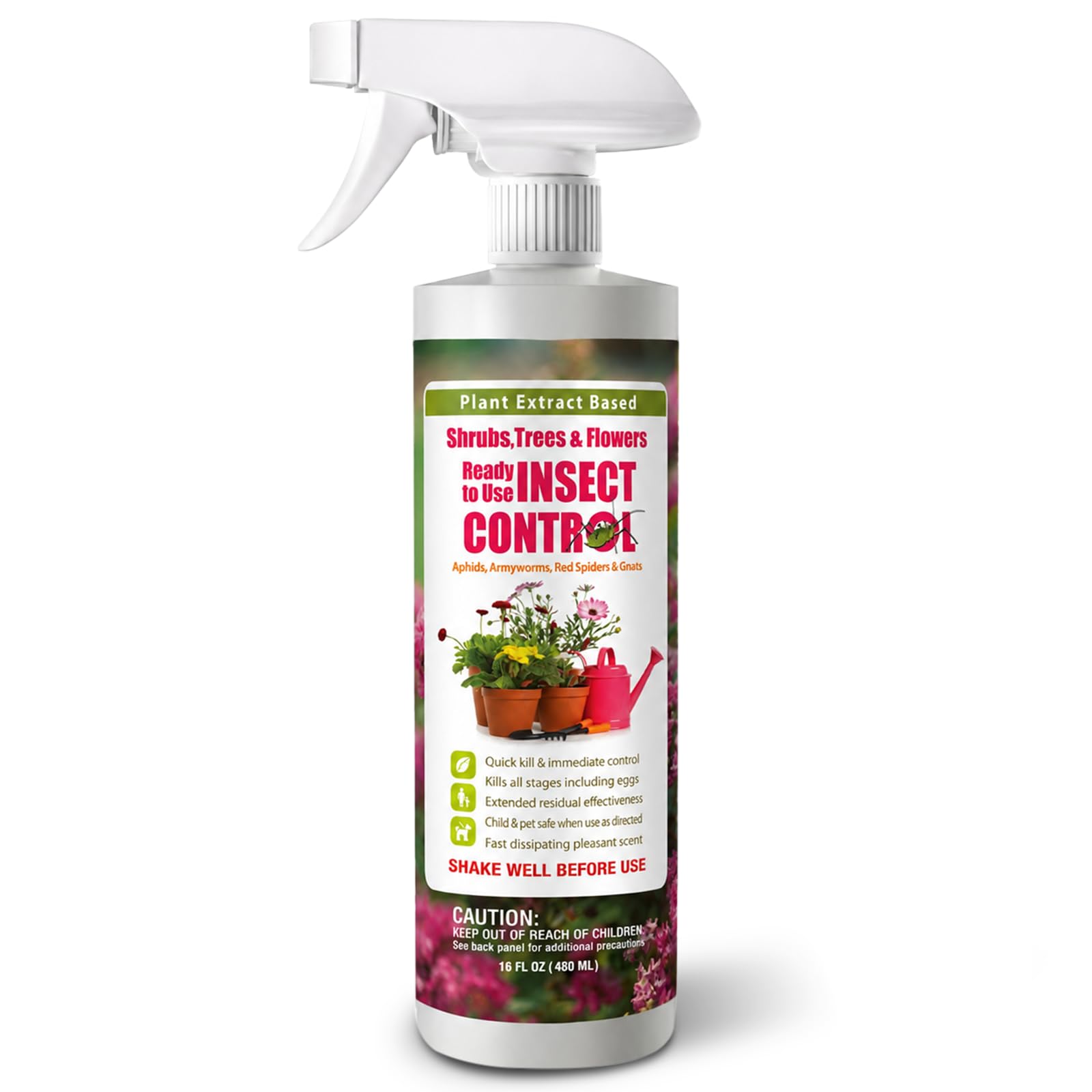
One spray that works on leaves and pours into soil to kill hidden eggs.
The honest reality is that effectiveness is a mixed bag. While some owners get incredible results, others report it does not work. The scent is strong — owners suggest spraying outside and letting it dry before bringing plants back indoors if you have pets. A common gripe is the spray nozzle: the trigger handle can stick after each squeeze, requiring you to open the bottle to reset it. EcoVenger offers a free replacement nozzle, but it is an inconvenience to account for.
Where It Shines
- Dual use as a foliar spray and a soil drench for fungus gnat larvae
- Kills mealybugs visibly fast — bugs darken and dry within 30 minutes
The Reality Check
- Strong essential oil scent requires outdoor application before bringing plants inside
- Spray nozzle quality is inconsistent across bottles
Yes, if: You have a dual problem — visible pests on leaves and gnats in the soil — and appreciate a single product that treats both.
No, if: You are sensitive to strong herbal smells or want a simple to use spray nozzle straight from the start.
8. NatroZing Garden Insect Killer 11 OZ

A plant-extract spray that targets bugs from egg to adult.
NatroZing claims to eliminate insects at every life stage — nymphs, larvae, eggs, and adults — using a plant-derived formula made without synthetic pesticides. It is designed to be safe around kids and pets, a claim that owners back up: they say it is effective on aphids and fungus gnats without any chemical smell and no need for ventilation. One owner reported it killed fungus gnats on contact and found it best when used alongside soil treatments and sticky traps for full control.
The catch is that effectiveness is the most-discussed aspect, and feedback is mixed. Some owners say it did not help with worms or beetles, which came back immediately. The label itself warns you to test on a small area of delicate plants first. For a beginner with a mild aphid problem, this is a safe starting point. For a serious beetle infestation, a stronger product will serve you better.
The Upside
- Plant-based, non-toxic formula is safe around children and pets
- Can be sprayed directly on leaves, stems, and soil for full coverage
The Downside
- Mixed reports on effectiveness — works well for aphids, not so much for beetles
- May require dilution for delicate or newly sprouted plants
Choose for: A gentle, safe option for light aphid issues or as a maintenance spray in a home with small children.
Skip for: Known beetle or worm infestations — you will need something with more punch.
9. Eco Defense Gnat Spray for Indoor Plants – Fungus Gnat Killer, 16 oz
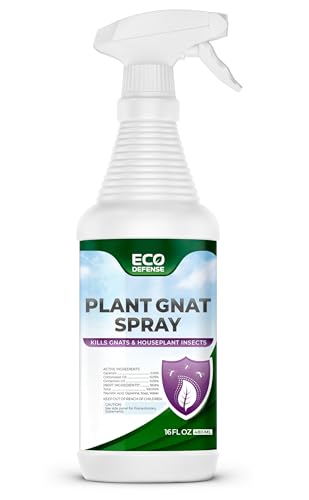
A lab-tested spray designed specifically to demolish the fungus gnat life cycle.
If gnats are your sole enemy, this spray targets them with a high-quality essential oil formula that smells fresh rather than chemical. The bottle is engineered for consistent, clog-free misting that covers soil and leaf surfaces evenly. Owners who had “poor plants with so many gnats” report they are “95% gone within days.” The formula is designed for daily use and is safe around pets and kids when used as directed.
However, this product has the most polarized feedback on the list. The most-discussed aspect — effectiveness — is rated mixed by the review base. A concerning number of shoppers say severe plant damage, with one stating, “Every plant that I sprayed the dirt around it with this spray died.” Another owner noted the spray bottle itself is flimsy and broke apart from the bottle. The value-for-money score is negative, with owners calling it expensive. If you try this, apply it very sparingly at first and monitor the plant for 24 hours before full use.
What It Does Well
- Fast-acting against fungus gnats — owners saw 95% reduction in days
- Pleasant fresh scent from essential oils, not harsh chemicals
Proceed with Caution
- Reports of plant death after application on some species
- Spray bottle quality is unreliable and can break during use
Try it if: You are battling a persistent gnat infestation and have already tried sticky traps and soil drying without success.
Proceed carefully: Test on one plant first. If you have a collection of rare or sentimental houseplants, the risk of damage may outweigh the benefit.
Understanding the Specs
Concentrate vs. Ready-to-Use (RTU)
The biggest upfront decision you make. A concentrate, like the 12-ounce Lost Coast bottle, requires you to mix a small amount with water (and sometimes soap) to create gallons of spray. It takes a bit of measuring but usually delivers the lowest cost per ounce and the strongest formulation. A ready-to-use spray is exactly what it sounds like: shake, aim, and spray. This is convenient for a few plants or for beginners, but you pay more for the water you are shipping and you run out faster. If you have a large collection, a concentrate is almost always the smarter long-term buy. For one or two houseplants, an RTU bottle saves you the hassle.
Mode of Action: Contact vs. Suffocation
Most natural plant pesticides work by smothering the insect rather than poisoning it. Oils (neem, peppermint, thyme, rosemary) coat the bug’s body and block its breathing pores, effectively suffocating it. This means you must hit the insect directly — spraying the top of a leaf does nothing to the mite hiding underneath. It also means the spray has no lingering toxic effect; once it dries, a new bug can land without being harmed. That is why reapplying every few days is often necessary. Some products add a fungicidal action to kill powdery mildew, which is a separate benefit for humid indoor environments.
FAQ
Can I use outdoor pesticide on my indoor houseplants?
How often should I spray my indoor plants with pesticide?
Will these sprays harm my cat or dog?
What is the difference between a miticide and an insecticide?
Why do my plants still have bugs after spraying?
Can I mix two different sprays together for stronger effect?
How does a neem oil concentrate compare to a ready-to-use bottle?
What should I do if my plant shows leaf burn after spraying?
Is neem oil effective for killing fungus gnats?
Can I use these sprays on edible herbs and vegetables indoors?
Final Thoughts: The Verdict
For the majority of shoppers, the best indoor plant pesticide winner is the Lost Coast Plant Therapy concentrate because it combines brutal effectiveness against spider mites and whiteflies with a safe, residue-free formula that yields 12 gallons from a single 12-ounce bottle. If you want a simple spray that also shines your leaves, grab the Miracle-Gro Leaf Protect & Shine 2-pack. And for the budget-conscious gardener with many plants, the Botanical Tradesman Neem Oil concentrate is the one to reach for — it makes over 300 ounces of spray from a tiny bottle, offering the lowest cost per application on the list.
How We Picked
We do not accept paid placement. Every pick is matched to a real buyer and a real use-case; we do not hands-on test units.
Sources & Methodology
Specifications: manufacturer listings and product documentation. Review insights: verified customer reviews, as of July 2026. Pricing: not shown on this page (it changes often); check the current price via the retailer link.
As an Amazon Associate, Lawn Gear Lab earns from qualifying purchases. This does not affect which products we feature.