
Specs are compiled from manufacturer listings and verified buyer reviews and can change over time — please confirm the key details on the product page before buying.
Every gardener knows the feeling: you pay good money for a bag of soil, dump it into your raised bed, and hope for the best. But that hope is fragile when the mix is full of wood chips, smells like a swamp, or turns into concrete after one rain. The right soil makes the difference between a tomato plant that limps along and one that explodes with fruit. This guide cuts through the marketing to find the bags that actually deliver.
I’m Rikta — the founder and writer behind Lawn Gear Lab. This guide is built by comparing the manufacturers’ published specifications and the patterns across verified customer reviews, so you get each pick’s real strengths and trade-offs instead of marketing spin.
Whether you’re filling a raised bed, topping off containers, or amending tired garden soil, finding the right garden and vegetable soil depends on ingredients, texture, and how well it feeds your plants over time — and these picks are the ones worth your money.
Our Picks at a Glance

How To Choose The Best Garden And Vegetable Soil
The right soil is the single most important investment you make in your garden. The wrong bag can stunt growth, invite pests, or even kill your plants. Here is what to look for every time you buy.
Check the Ingredient List, Not Just the Label
A bag labeled “organic” may still be mostly cheap peat moss with a sprinkle of fertilizer. The best soils list real ingredients — compost, worm castings, lobster or crab meal, kelp meal, and perlite. Those components feed the soil food web, not just the plant. If the first ingredient is “forest products” or “aged bark,” it is likely filler that will break down slowly and tie up nitrogen in the process.
Texture Matters More Than You Think
Good garden soil feels crumbly and light in your hand, not heavy and wet. It should hold its shape when squeezed but fall apart when you poke it. Too much sand and water runs right through. Too much clay and roots suffocate. Perlite (those little white rocks) and compost create the air pockets that roots need to breathe and expand.
Know the Nutrient Story
Some soils feed plants immediately with synthetic fertilizers, which gives a quick green-up but fades fast. Others rely on slow-release organic sources like bone meal, kelp, and worm castings that feed over months. If you want to avoid reapplying fertilizer every few weeks, go with a mix that includes composted manure or meals — the type of ingredients you see in the top picks here.
Quick Comparison
| Model | Best For | Weight | Volume | Key Ingredient | Amazon |
|---|---|---|---|---|---|
| Coast of Maine Bar Harbor★ Best Overall | Containers & raised beds | 14 lbs | 16 qt | Lobster & crab shell meal | Amazon |
| Espoma Organic Vegetable & FlowerBest Value | In-ground gardens | — | 1 cu ft | Earthworm castings | Amazon |
| R&M Organics CompostRescue Pick | Soil amendment & revival | 10 lbs | 0.31 cu ft | Dairy cow manure | Amazon |
| Espoma Land & Sea Gourmet Compost | Heavy feeders & nutrient boost | 24 lbs | 1 cu ft | Lobster & crab meal | Amazon |
| Michigan Peat General Purpose | Budget bulk for big projects | 50 lbs | — | Reed sedge peat & perlite | Amazon |
| Brut Organic Potting Soil | Indoor & outdoor containers | — | 21 qt | Worm castings & Azomite | Amazon |
| Coast of Maine Tomato & Veggie | Tomatoes & heavy feeders | 21 lbs | 20 qt | Composted manure | Amazon |
| Miracle-Gro Potting Mix | Quick growth with fertilizer | — | 8 qt (3-pack) | Slow-release fertilizer | Amazon |
| Ribbon Organics Compost | Premium amendment & containers | 32-35 lbs | 7.9 gal | OMRI Certified compost | Amazon |
In‑Depth Reviews
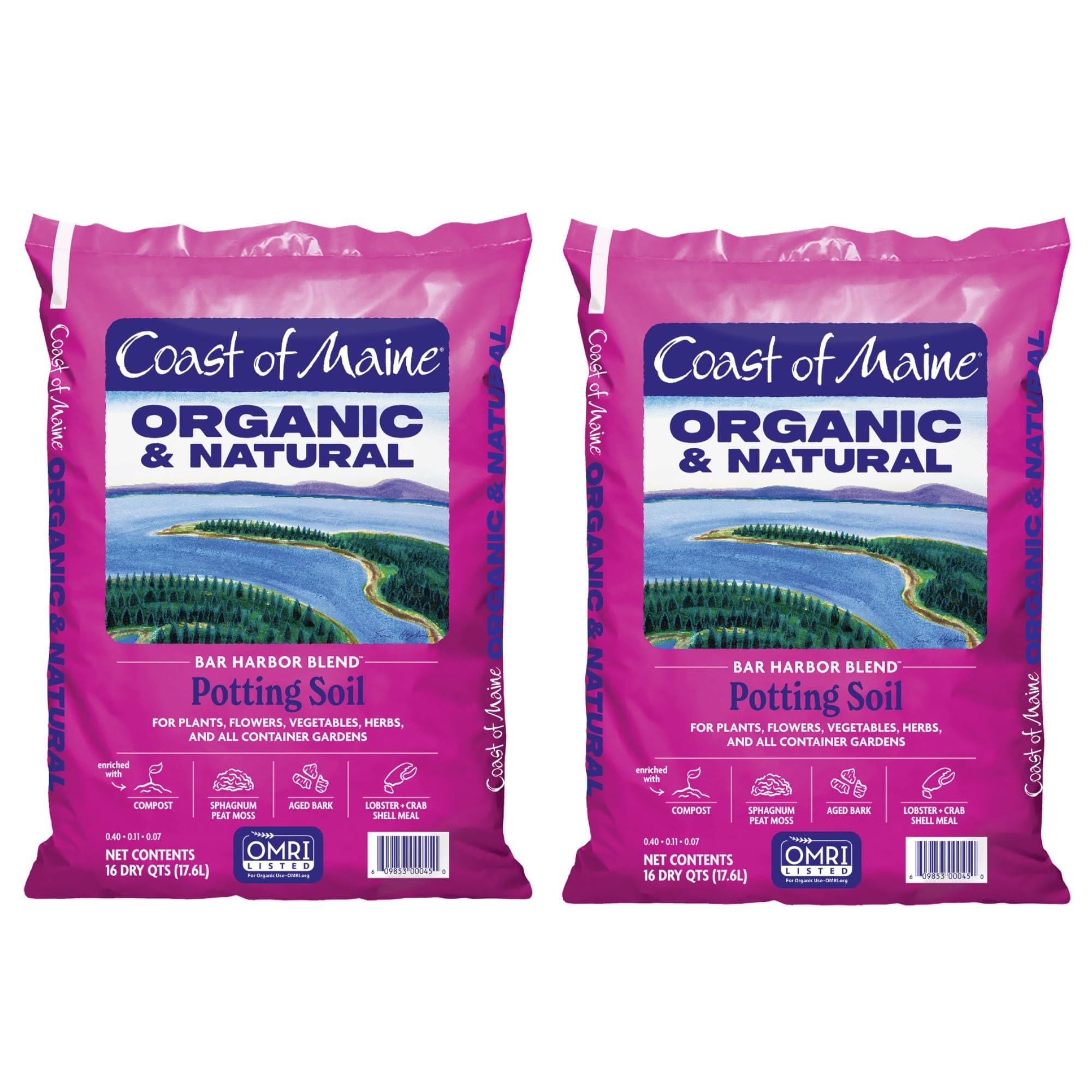
1. Coast of Maine Organic & Natural Bar Harbor Blend Potting Soil
Our pick — over 4.5★ from 500+ verified ratings; the strongest balance of quality and price.
The crowd favorite that makes vegetables genuinely thrive, not just survive.
This is the bag gardeners keep coming back to. The ingredient list reads like a gourmet meal for your soil — sphagnum peat moss, compost, perlite, lobster and crab shell meal, and kelp meal. That combination gives a slow-release nitrogen source (from the shellfish meal) and enough perlite to keep containers from turning into mud. At 14 pounds for a 16-quart bag, it is dense with nutrients, not filler. Buyers report that two bags were enough to mound up 8 potato plants and still have extra for two more planters — proof of how far a little goes.
The texture is one of the things owners rave about: dark, crumbly, and free of the sticks and bark chunks that plague cheaper brands. It is approved for organic gardening and works in raised beds, hanging baskets, window boxes, and indoor pots. The consensus is that plants grown in this soil simply look better — greener leaves, stronger stems, more flowers and fruit.
The honest trade-off here is the price per bag — it sits higher than basic potting mixes. And while most owners see spectacular results, a small number experienced complete plant death. That makes watering discipline worth mentioning: a rich organic mix this dense holds moisture well, so you have to adjust your watering habits to avoid root rot.
What wins people over
- Premium ingredients — lobster, crab, and kelp meal — that feed plants for months
- No filler; no sticks, bark, or synthetic chemicals
- Versatile in raised beds, containers, and indoor pots
- Darker, compost-rich color signals high organic matter
The one thing to watch
- Rich moisture retention requires careful watering; overwatering can stress plants
- Costs more per bag than standard potting soil
Reach for this if: you want a complete, high-quality organic mix for containers and raised beds where you expect strong growth without needing to add fertilizer.
Look elsewhere if: you need to fill a large in-ground plot on a tight budget — the premium price adds up fast over many bags.
2. Espoma Organic Vegetable & Flower Garden Soil
In-ground garden soil that quietly outperforms pricier blends.
Espoma has been a trusted name in organic gardening for decades, and this mix shows why. It is designed to be blended directly with your native soil when planting or transplanting — making it an amendment as much as a standalone soil. The key differentiator is Myco-Tone, a proprietary blend of endo and ecto mycorrhizae (beneficial fungi that attach to roots and help them absorb water and nutrients far more efficiently than roots alone). Packed in a full 1-cubic-foot bag, it is a practical amount for a decent-sized vegetable bed.
The reviews paint a clear picture: tomatoes and marigolds planted in Espoma visibly outperformed the same plants in a store-brand organic mix. The soil is rich, well-structured, and retains moisture without getting soggy. Owners particularly like that it stops gnat problems — likely because the beneficial biology in the mix outcompetes pests. And unlike some organic soils, it arrives free of fungus gnats for most buyers.
The thing you need to know: this is designed as an in-ground planting mix, not a standalone potting soil for containers. If you use it in pots, you may notice drainage isn’t as sharp as a dedicated potting mix. And while the majority get clean bags, a subset of owners mention encountering fungus gnats — likely a storage or handling issue rather than the formula itself.
Smart buy if: you are planting into the ground and want to give your vegetables and flowers a rich, organic head start with beneficial mycorrhizae for around for a full cubic foot.
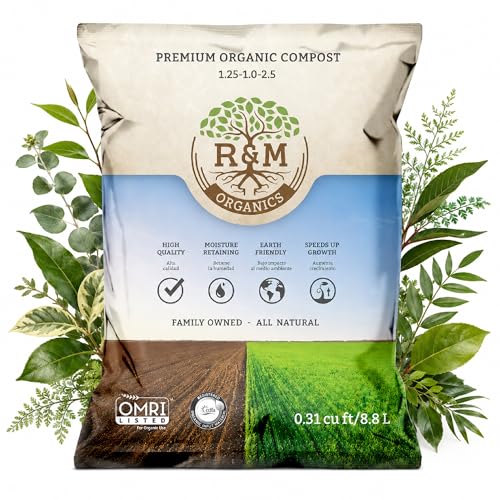
3. R&M Organics Compost Soil Amendment
The compost that brought struggling plants back from the brink.
This is not a complete potting soil — it is a concentrated compost amendment meant to be mixed into existing soil or used as a top dressing. Made from fully composted dairy cow manure, it comes in a 10-pound bag that is compact enough to carry easily. The composting process uses continuous aeration to break down the manure into a clean, earthy material with very little smell — a huge plus for anyone who has ever gagged opening a bag of raw manure. It has a mixing ratio of 5:1 (soil to compost), meaning a little goes a long way.
The stories from buyers make this one stand out. One owner’s azaleas were in serious trouble after a roof cleaning chemical damaged them — a master gardener recommended this compost, and it rescued the plants. Another had a tomato plant that had stalled for six weeks with yellow leaves and spindly stems; after just one week in a planter with this compost, the leaves greened up and new growth appeared. The moisture retention is also improved, which means you can water less often while giving roots more consistent hydration.
The catch is simple: this is a 10-pound bag (lighter than the 14-pound Coast of Maine bag at 16 quarts), so if you are amending a large garden, you will need multiple bags. The material is fine and soil-like, which makes it easy to work in but also means it can stain patios and carpets if you spill — a common note from owners.
Why it earns its place
- Revives stressed and struggling plants, as confirmed by multiple owner stories
- Low-odor, fully composted texture is pleasant to work with
- Improves moisture retention and soil structure for in-ground and containers
Fit note
- Small 10-pound bag means you need several for large garden beds
- Can stain surfaces if spilled — handle over the garden bed itself
Best for: reviving sick plants, amending poor soil, or giving a nutrient boost to vegetables, flowers, and trees in small-to-medium gardens.
4. Espoma Organic Land and Sea Gourmet Compost

A heavier, richer compost that gives hostas and vegetables a visible jump.
Think of this as the concentrated nutrient bomb in the Espoma lineup. It blends natural organic ingredients with lobster and crab meal — a premium source of chitin and calcium that strengthens plant cell walls and deters certain soil pests — plus the same Myco-Tone mycorrhizae found in the Vegetable & Flower mix. At 24 pounds for a 1-cubic-foot bag, it is noticeably heavier than standard potting soil, which tells you it is packed with dense organic matter rather than fluffy peat. Use it to improve native soil when planting or transplanting, or mix it into planters and window boxes to invigorate tired container mixes.
The owners who love this stuff really love it. Hostas in particular get a special mention — one long-time user reports their plants growing “extremely well” after switching. An indoor gardener who grows most of their vegetables and herbs in a two-room basement garden uses it to amend a custom mix of coco coir, perlite, and vermiculite and reports excellent results. The granular texture makes it easy to blend evenly, and there are no synthetic chemicals involved.
The honest note here is value perception: at around per bag, it is pricier than standard compost, and some owners find it steep for the volume. However, the same buyers also acknowledge that a bag of this quality outperforms cheaper alternatives, so the cost-per-result calculation often works out.
Who it hits hardest: gardeners growing heavy feeders like tomatoes, squash, and hostas who want a single bag that can transform poor soil into a productive bed without multiple amendments.
5. Michigan Peat General Purpose Premium Potting Soil

A 50-pound workhorse for gardeners who fill a lot of pots.
At 50 pounds, this is the heavy lifter of the list — literally. Made by Michigan Peat (the BACCTO brand), it blends reed sedge peat, perlite, and sand into a ready-to-use mix that needs no additional blending. The formula includes both starter and slow-release fertilizers, so your plants get an immediate nutrient boost and a steady supply over time. This makes it a true all-purpose option for vegetables, flowers, bulbs, and general container gardening. The bag size alone tells you this is meant for serious projects rather than a single window box.
The owner base is remarkably loyal — some have used it for over 50 years and report it is the best potting soil they have found. One couple who plants more than 200 dozen flowers each year switched back to BACCTO after their local greenhouse stopped carrying it and were thrilled to find it on Amazon. The moisture retention is a defining trait: the soil feels wet and heavy after watering and compacts more than modern fluffy mixes, but plants consistently do well in it. Owners say it keeps plants moist without becoming waterlogged.
The trade-off is texture. This is not a light, airy potting mix. It is dense and retains moisture heavily, which means you have to be careful not to overwater, especially in pots without drainage holes. Some owners find it harder to check soil dryness because the top stays wet-looking longer. If you prefer a fast-draining mix for succulents or indoor plants, this is not it. For outdoor containers and raised beds where regular watering is the norm, it is an absolute bargain per pound.
The big pluses
- Massive 50-pound bag for projects that need volume
- Proven track record — decades of loyal customers
- Starter and slow-release fertilizers already blended in
- Excellent for outdoor containers and raised beds
The one catch
- Heavy, dense texture compacts more than premium mixes; requires careful watering
- Not ideal for indoor pots or plants that need fast drainage
Grab this for: filling dozens of outdoor pots or a large raised bed on a budget where proven results matter more than fancy ingredients.
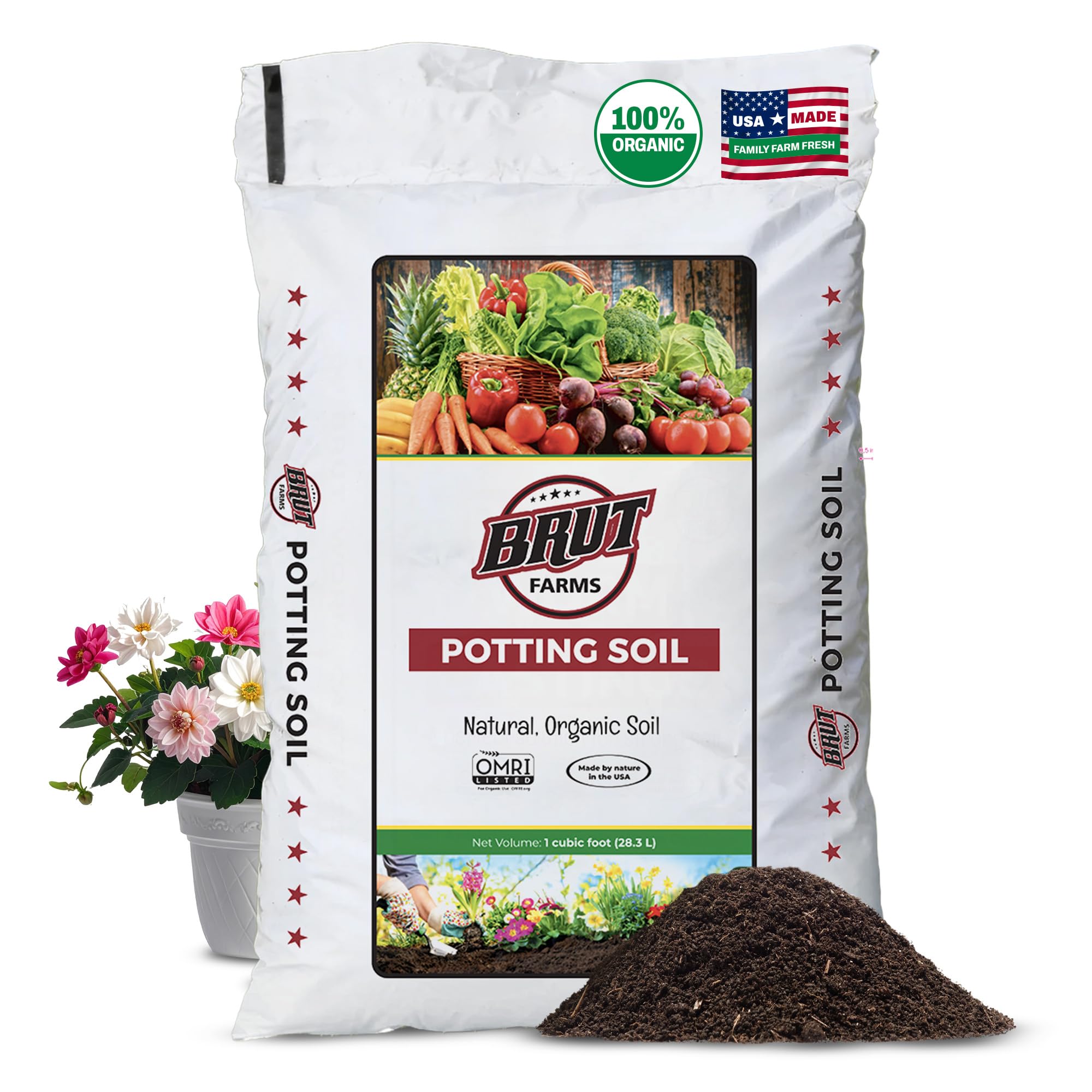
6. Brut Organic Potting Soil
Potting soil so alive it turned leaves dark green in two days.
Brut Worm Farms makes a potting soil that is almost more compost than soil. It is packed with microbe-rich worm castings, trace minerals from Azomite (a volcanic rock dust that provides over 70 minerals), and kelp meal. The result is a pH naturally balanced between 6.3 and 6.5 — right in the balance for most vegetables, herbs, and flowers. It is OMRI listed (certified for organic use) and the company promises a filler-free formula with no sticks, wood chips, or synthetic additives. The 21-quart bag covers a meaningful amount of container space.
The reaction from owners is immediate. One reported that their citrus and cherry trees showed “rapid deep greening and new growth in 2 days” after potting with Brut. Multiple people describe the soil as “black gold” and say they have never used anything better. The lack of wood pieces is a consistent praise point — it is pure, dark, crumbly material that looks and feels alive. Indoor and outdoor gardeners alike report strong results with vegetables, herbs, and ornamentals.
The catch is twofold. First, the high fish and bone meal content can attract flies and maggots if the bag is left open outdoors — owners recommend a top layer of sand or gravel to prevent this. Second, the cost per bag is premium, and a subset of owners find it too expensive for large-scale use. A small number also reported pest infestations, though this varies by batch and handling.
The real trade-off: this soil is powerful — almost too powerful for its own good. The intense organic content can attract pests if left exposed, so plan to cover outdoor pots or use it in containers where you can manage the surface layer.
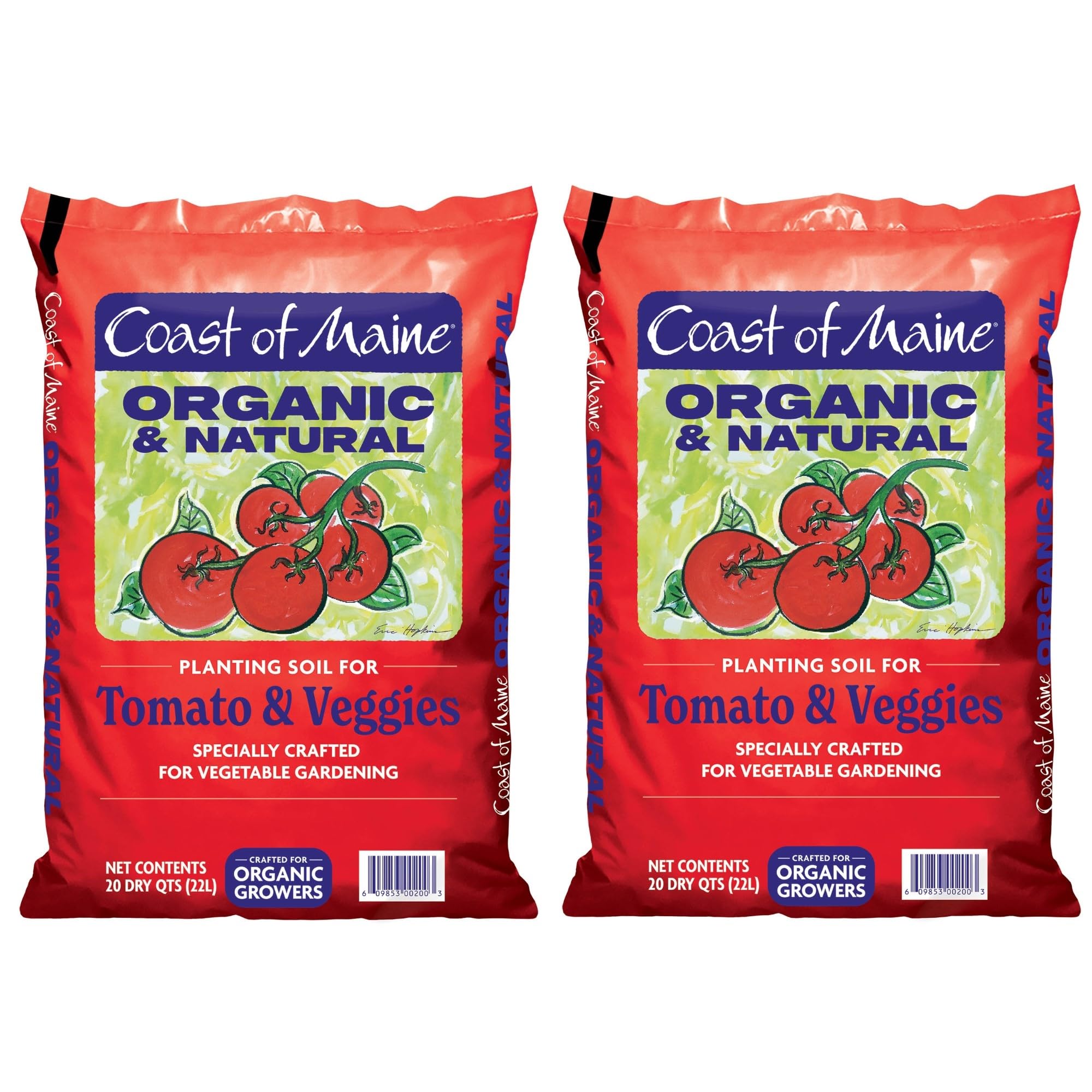
7. Coast of Maine Organic Planting Soil for Vegetables & Tomatoes
Lightweight, rich, and purpose-built for tomatoes and heavy feeders.
Coast of Maine expands on its Bar Harbor formula with a blend specifically tuned for tomatoes and vegetables. It uses composted manure and sphagnum peat moss to create a lightweight mix that balances moisture retention with drainage — exactly what container tomatoes need to avoid blossom-end rot. At 21 pounds for a 20-quart bag (a two-pack), it is lighter than the Espoma Land & Sea by weight but covers more volume. It is OMRI listed for organic use and designed for in-ground gardens, raised beds, and containers alike.
Customers note that plants show visible growth within days of transplanting. The mix drains well enough for heirloom tomatoes (which are notoriously sensitive to wet feet) while holding enough moisture to reduce watering frequency. One gardener noted their tomatoes and zucchini in 5-gallon buckets “thrive with no stress.” The texture is consistent and light, with a pleasant earthy aroma and aromatic wood elements that seem to deter insects naturally.
A few owners note the mix can contain undecomposed twigs, which is normal for compost-based blends but worth knowing if you are growing root crops like carrots that need fine, stone-free soil. Also, a notable number of reviews mention fungus gnat infestations — this is a recurring challenge with rich organic mixes stored in warm conditions. If you are prone to overwatering, pair this with careful moisture management.
what separates it
- Tailored blend for tomatoes and vegetables with excellent drainage and moisture balance
- Lightweight bags are easy to carry and work with
- Plants show rapid visible growth after transplanting
- Aromatic wood content naturally helps deter insects
Heads up
- May contain small twigs; not ideal for root vegetables without sifting
- Fungus gnat reports in some bags — store in a cool, dry place
Best for: dedicated tomato and vegetable growers who want a species-specific blend with proven results for container and raised-bed growing.
8. Miracle-Gro Potting Mix (3-Pack)

The name everyone knows, now in a convenient three-pack for smaller projects.
Miracle-Gro needs little introduction — it is the most recognized potting mix in American gardening. This 3-pack gives you three 8-quart bags, which together fill about six 8-inch containers (one bag fills two 8-inch pots). The mix is formulated to feed plants for up to 6 months with its slow-release fertilizer, and the company claims it “Grows Plants Twice As Big” compared to unfed plants. For container gardeners who want a no-fuss solution for flowers, vegetables, herbs, and shrubs, this is a straightforward choice.
Owners consistently praise the mix for its reliable performance. It drains well without packing down hard, keeping the soil loose enough for water to reach roots easily. The smaller bag size is actually a feature for many — one reviewer specifically likes that they don’t have to lug around huge 50-pound bags. The versatility is real: it works for both outdoor and indoor plants, and the slow-release feeding means you don’t have to remember to fertilize every week.
The main criticism is value perception. At this price tier, some owners find the 8-quart bags small for the cost, and opinions split between “decent value” and “very pricey.” The mix also contains synthetic fertilizers, so if you are committed to strict organic gardening, this won’t fit. For everyday container gardening where convenience and reliable growth are the priorities, it gets the job done with minimal effort.
Who this works for: casual gardeners and container growers who want the convenience of a long-feeding mix without measuring or mixing fertilizers — just plant and water.
9. Ribbon Organics OMRI Certified Organic Compost

The “black gold” of composts that earns every penny of its premium price.
Ribbon Organics delivers a 7.9-gallon bag (weighing 32-35 pounds) of OMRI Certified organic compost that is about as pure as bagged compost gets. It is fully composted, which means it improves soil structure and aeration while promoting water retention — a trifecta of benefits for any garden. The certification means it meets strict organic standards, and the manufacturer states it is safe to use at any concentration. That last point is important: you can fill a pot with 100% Ribbon compost without worrying about burning roots, unlike raw manure or some hot composts.
The owner enthusiasm is intense. One gardener calls it “hands down the BEST compost I’ve ever used,” noting that it came out of the bag looking black and rich with an earthy smell and zero contaminants — no sticks, plastic, glass, or metal fragments. Another grower who tested it against Miracle-Gro and acid mixes reported that Ribbon outperformed both for container plants like Clivias, Orchids, and Epiphyllums when mixed half-and-half with perlite and orchid bark. The texture is fine but not dusty, and it rehydrates easily even after storage.
The price is the story here. At around for a 7.9-gallon bag, it is the most expensive option per volume in this lineup. Owners openly acknowledge this — one says “it gets pricey for me” and buys bulk from the local yard for the main garden but still keeps Ribbon for the raised beds because the quality is noticeable. The other practical note is the bag size: at up to 35 pounds, it is heavy to move around the garden. If you need to amend a large area, the cost adds up quickly.
The quality you pay for
- Pure, dark, contaminant-free compost with no sticks or trash
- OMRI Certified for strict organic use
- Safe to use at full concentration — cannot burn plants
- Improves soil structure, aeration, and water retention simultaneously
The practical limits
- Premium price per bag; expensive for large gardens
- Heavy bag (up to 35 lbs) requires some muscle to handle
Reach for this when: you are growing high-value plants in containers or small raised beds and want uncompromised quality. Use it as a base for custom potting mixes or to give your soil a concentrated nutrient shot.
Understanding the Specs
Organic Matter & Compost Content
This is the engine of your soil. The more compost, worm castings, and meals (like lobster, crab, or kelp) in the bag, the more food your plants get without synthetic fertilizer. Dark, crumbly soil with a rich earthy smell is a good sign. Pale, fluffy soil that looks like mostly peat moss will need regular feeding to keep plants strong.
Perlite & Drainage
Perlite is the small white volcanic rock you see in potting mixes. It creates air pockets in the soil so roots can breathe and water can drain instead of pooling. Good mixes have visible perlite throughout. If a bag feels heavy and dense with no perlite, it will likely hold too much water and suffocate your plants in containers.
FAQ
Can I use potting soil directly in the ground for my vegetable garden?
What is the difference between potting soil and compost?
How much soil do I need to fill a 4×8 raised bed?
Why does some bagged soil have fungus gnats?
Does organic soil really make vegetables taste better?
Can I reuse potting soil from last year for my new vegetable plants?
What is mycorrhizae and why should I care about it in soil?
How do I know if my soil is too acidic or alkaline for vegetables?
Which is better for tomato plants — a vegetable-specific soil or an all-purpose potting mix?
Is it worth paying more for OMRI certified organic soil?
Final Thoughts: The Verdict
For most gardeners, the Garden And Vegetable Soil to grab first is the Coast of Maine Bar Harbor Blend because it delivers premium organic ingredients — lobster, crab, and kelp meal — in a versatile mix that works in containers, raised beds, and indoor pots with minimal effort. If you want a nutrient-dense boost for in-ground planting or transplanting, the Espoma Land & Sea Gourmet Compost is the one to reach for. And if you are on a tight budget with a lot of pots to fill, the Michigan Peat General Purpose at 50 pounds gives you volume without sacrificing results.
How We Picked
We do not accept paid placement. Every pick is matched to a real buyer and a real use-case; we do not hands-on test units.
Sources & Methodology
Specifications: manufacturer listings and product documentation. Review insights: verified customer reviews, as of July 2026. Pricing: not shown on this page (it changes often); check the current price via the retailer link.
As an Amazon Associate, Lawn Gear Lab earns from qualifying purchases. This does not affect which products we feature.