
Specs are compiled from manufacturer listings and verified buyer reviews and can change over time — please confirm the key details on the product page before buying.
Those tiny flies hovering around your houseplants aren’t just annoying — they’re a sign of a larger problem happening in the soil. Adult fungus gnats are just the surface issue; the real damage comes from their larvae, which feed on your plant’s roots and can stunt growth or even kill young plants. Most treatments only address the adult gnats you see flying around, but lasting control means stopping the larvae in the soil where they live and feed.
I’m Rikta — the founder and writer behind Lawn Gear Lab. This guide is built by comparing the manufacturers’ published specifications and the patterns across verified customer reviews, so you get each pick’s real strengths and trade-offs instead of marketing spin.
Our Picks at a Glance


How To Choose The Best Fungus Gnat Larvae Control
You’re not fighting the flies you see — you’re fighting the tiny white worms with black heads that you don’t. Fungus gnat larvae live in the top few inches of moist potting soil, where they feed on organic matter and plant roots. The right approach depends on how many plants you have, if you want a chemical or biological solution, and how severe the infestation is.
BTI – The bacteria that targets larvae
Bacillus thuringiensis subspecies israelensis (BTI) is a naturally occurring soil bacterium that produces a protein toxic to the larvae of fungus gnats and mosquitoes. When you add it to your plant’s water — either as a dunk or as granulated bits — the larvae ingest it and stop feeding within hours. BTI is specific to these pests; it won’t harm your plants, pets, or people.
Beneficial nematodes – Living hunters in the soil
Steinernema feltiae nematodes are microscopic, non-segmented roundworms that actively seek out and enter fungus gnat larvae. Once inside, they release a symbiotic bacteria that kills the host within 48 hours. These are a living product, so proper application timing (evening, moist soil) and storage (refrigeration) are important for success. They also work against other soil-dwelling pests.
Systemic granules and chemical drenches
Systemic insecticide granules, like those containing imidacloprid, are mixed into the top layer of soil and watered in. The plant absorbs the chemical through its roots, making every part of the plant toxic to chewing and sucking insects, including gnat larvae in the root zone. This method provides long-lasting protection, often for weeks, but it’s chemical — not a choice for organic growers or edible plants.
Quick Comparison
| Model | Best For | Active Ingredient | Form | Coverage | Amazon |
|---|---|---|---|---|---|
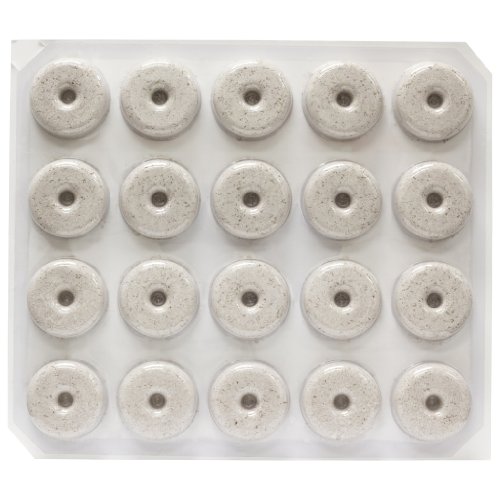
| Mosquito Control Dunks | Standing water / rain barrels | BTI (10.31%) | Donut / Dunk | 100 sq ft per dunk | Amazon |
| NaturesGoodGuys Nematodes Sf | Severe indoor infestations | Steinernema feltiae | Powder | — | Amazon |
| Summit Mosquito Bits 30 oz | Indoor plants & soil drench | BTI | Granules (corn cob) | 30 oz container | Amazon |
| Root Cleaner | Root zone flush | All-natural concentrate | Liquid | 8 fl oz concentrate | Amazon |
| NemaKnights Nematodes | Slow-release convenience | Steinernema feltiae | Granules | Up to 50 planters | Amazon |
| NatroZing Garden Spray | Contact kill all stages | Plant extract | Liquid spray | 32 oz | Amazon |
| 10M Nematodes Sf | Large area / big infestations | Steinernema feltiae | Powder | Up to 600 sq ft | Amazon |
| Bonide Systemic Granules | Long-term prevention indoors | Imidacloprid | Granules | 8 oz (4-pack) | Amazon |
| Summit Mosquito Bits 20 lb | Large properties / bulk users | BTI | Granules (corn cob) | 320 oz | Amazon |
In-Depth Reviews
1. Mosquito Control Dunks
Our pick — over 4.5★ from 500+ verified ratings; the strongest balance of quality and price.
The floating donut that keeps standing water gnat-free for weeks.
If you have rain barrels, bird baths, or any outdoor standing water that breeds gnats and mosquitoes, this is your simplest solution. Each donut contains BTI at 10.31% — the same bacteria used in the Mosquito Bits, but in a slow-release dunk form that floats on water and keeps working for up to a month. Buyers report using a quarter-donut per rain barrel and seeing larvae disappear without any effect on garden plants.
The real-world durability gets mixed marks: the dunks tend to break apart near the end of their cycle, requiring a skimmer to remove small bits from the water. But the trade-off is the safety profile — it’s nontoxic to fish, pets, and people, which is why community gardeners and pond owners lean on it. At 11.5 ounces per pack, a single piece goes a long way for water features and drainage areas.
What wins people over is the sheer functionality — it kills larvae without any mixing, measuring, or handling of chemicals. You just break off a segment and drop it in. The consensus is clear: for outdoor standing water, it’s the most easy biological control you can buy.
Why it leads the list
- One dunk treats standing water for a full month
- Nontoxic to fish, pets, humans, and plants
- Easy to use — just break and float
Where it’s less ideal
- Dunks can crumble toward the end of their life
- Needs variety in sizes for smaller containers
- Not designed for direct soil application indoors
Perfect for: Anyone with rain barrels, ponds, bird baths, or outdoor water features who wants a set-and-forget larval control.
Not for: Indoor potted plant infestations — you’re better off with a soil drench from the Mosquito Bits or nematodes.
2. NaturesGoodGuys 5 Million Live Beneficial Nematodes Sf
The microscopic army that wiped out a six-month gnat nightmare.
When neem oil, mosquito bits, and glue traps all fail, this is what people turn to. These Steinernema feltiae nematodes are a living predator that actively hunts fungus gnat larvae in the soil. Owners mention that a single treatment across 30 potted plants eliminated a severe infestation after a two-week patience window — the nematodes need time to find, infect, and kill the larvae.
The one catch is that these are live organisms, so delivery timing matters. They ship with ice packs to keep them alive, and a small number of customers note the nematodes arriving dead (the telltale sign: no movement under a microscope after 4 weeks of no gnat reduction). But the overwhelming consensus from hundreds of owners is that when applied correctly — mixed in 2 gallons of water, applied in the evening, and soil kept moist for two weeks — they completely resolve even the worst gnat problems the first try.
The effectiveness is the most-discussed attribute by a wide margin, and the praise is emphatic: one buyer describes how these nematodes “eliminated a severe, 6-month fungus gnat infestation after failing other remedies.” It’s the nuclear option, but it works.
For desperate cases: If you’ve tried BTI products and sprays without success, this living solution targets larvae directly in the soil.
Requires care: The nematodes are perishable — apply promptly upon arrival, keep refrigerated if not using immediately, and ensure soil stays moist for establishment.
3. Summit Mosquito Bits – Quick Kill FamilyValue 30 Ounce
The 30-ounce tub that turns your watering can into a larvae killer.
The 30-ounce container is a 30 ounces versus the 8-ounce Root Cleaner, making this a much better value for anyone with multiple plants or regular maintenance needs. Users particularly note its safety for fruit-bearing plants and the fact that it’s completely safe for kids and pets. The bits themselves are also safe for compost after use, so nothing goes to waste.
It controls gnat larvae effectively, but it’s not a one-and-done miracle — re-infestation from new plants or fresh potting soil is common, so owners recommend treating new plants before introducing them to your collection. The effectiveness is the top-cited strength with over 90 positive mentions, and the consensus is that it’s the safest chemical-free option for ongoing indoor use.
The daily driver
- Safe for humans, pets, and fruit-bearing plants
- Works as a soil drench or topical sprinkle
- Excellent value in the 30-ounce size
The limitation
- Controls but doesn’t permanently eliminate gnats without ongoing use
- Re-infestation can occur from new plants or soil
Ideal for: Indoor plant owners who want a safe, affordable, and easy-to-mix BTI drench for regular soil treatment.
skip it if: You’re looking for a one-time cure — this works best as part of a consistent maintenance routine.
4. Root Cleaner – Soil Gnat, Fungus and Pathogen Killer (8 Ounce)

A concentrated soil flush that kills larvae on contact without stacking resistance.
This all-natural liquid concentrate works differently from BTI — it kills soil gnats, larvae, and their eggs on contact, and the manufacturer claims pests can’t build immunity to it. It also targets soil fungi and pathogens like pythium that cause root rot. The method from experienced users: mix 2 ounces per gallon of water, drench the soil thoroughly, wait 30 minutes, then flush with clean water.
Here’s the honest picture: effectiveness is the most-discussed aspect, but it lands as mixed in the data. Some reviewers point out a drastic reduction after a single application — “only 4 gnats on 20 containers after 1 day” — while others find it ineffective after two applications with live larvae still visible. The instructions are widely considered poor, and the successful method is typically one that users figured out through trial and error rather than the label. It’s also the lighter product at 9.6 ounces compared to the 11.5-ounce Mosquito Control Dunks,.
It’s best viewed as a targeted root-zone treatment for growers who want a non-systemic, all-natural option that doesn’t require protective gear. Just be prepared to dial in your own application method.
For the hands-on grower: Works best for those willing to experiment with dosage and flushing technique to find what works for their specific setup.
Mixed results: Some users report excellent gnat control while others see no effect — success seems tied to soil drainage and the flushing step.
5. NemaKnights Slow-Release Nematodes

The shake-and-sprinkle granules that bring living predators to your pots.
This is the easiest biological option on the list. While other nematode products require mixing powder into water and applying with a watering can, NemaKnights uses a ready-to-use granular formulation — you simply shake the desired amount directly onto the affected soil. No mixing, no measuring, no waiting for a solution to steep. It’s also odorless, which is a noticeable perk for indoor use.
The manufacturer recommends a reapplication 10-14 days after the first use to break the pest life cycle, and owners who follow this pattern report dramatic results. One buyer describes a “nightmare fungus gnat infestation” that was completely clear in four weeks with “no poison.” However, the effectiveness is mixed in the data — some report no noticeable effect after three weeks, and the general consensus is that it works best as one part of a multi-step approach that includes yellow sticky traps for adult gnats and bottom-watering to keep the soil surface dry.
Each container treats up to 50 planters, making this a solid choice for collectors with a moderate plant collection. The slow-release format means the nematodes are gradually released into the soil over time, providing continuous protection rather than a single burst.
Easiest biological option
- No mixing — just shake and water in
- Odorless and non-toxic to people and pets
- Treats up to 50 planters per container
Not a standalone fix
- Effectiveness is mixed without a multi-step approach
- Reapplication required after 10-14 days for best results
Best for: Plant owners who want the convenience of a sprinkle-and-go biological treatment without mixing chemicals or powders.
Not for: Those expecting a one-shot cure — combine with sticky traps and soil management for reliable results.
6. NatroZing Garden Insect Killer 32 OZ

A plant-derived spray that hits gnats at every life stage in one pass.
Most fungus gnat controls only target larvae in the soil, but this spray goes after all stages — eggs, nymphs, larvae, and adults — on contact. The plant-extract formula blocks specific neuron receptors in invertebrates while remaining harmless to humans, pets, birds, and fish. It works both as a foliar spray on leaves and stems and as a soil drench to eliminate larvae in the potting mix.
Safety is the most-praised attribute here, with owners appreciating that it’s made without synthetic pesticides or toxins. It’s safe around kids and pets, and it doesn’t require leaving the room after application like conventional chemical sprays. That said, effectiveness is mixed — while some report it quickly cleared aphids and fungus gnats, others found it didn’t last long against beetles or worms. The data is clear: it’s a contact product, not a systemic solution, so reapplication is likely needed.
For best results, owners note that you must shake the bottle thoroughly before each use and that it works best as part of a multi-method control plan. A good option if you want a non-toxic spray you can grab for spot treatments.
Quick-contact kill: Ideal for spot-treating visible gnats and larvae on leaves and soil surface with a plant-based formula safe for kids and pets.
Short residual: Doesn’t last long in the soil — consider it a knockdown tool rather than a long-term prevention strategy.
7. 10 Million Live Beneficial Nematodes Sf
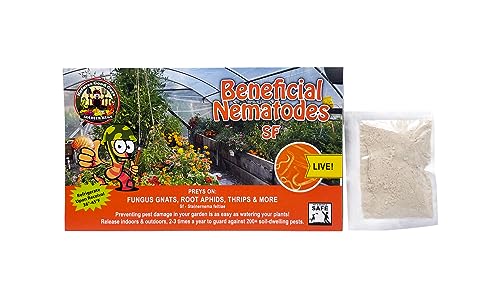
Double the nematodes, double the soil coverage — 10 million hunters for 600 square feet.
This is the big brother to the 5-million-count nematode product (Product 2), offering 10 million Steinernema feltiae nematodes that treat up to 600 square feet of soil depending on infestation severity. It’s designed for larger collections, indoor greenhouses, or serious infestations that require more biological firepower. The active nematodes attack over 200 different species of soil pests, meaning you get broad-spectrum control.
The feedback is overwhelmingly positive, with effectiveness earning 84 positive mentions — the highest count across any aspect in this product’s data. Shoppers say dramatic results: a 95% reduction in gnats within one week after other methods (including mosquito dunks) failed. One buyer described a severe infestation across 13 houseplants that resolved completely two weeks after application, despite the ice pack arriving melted. The key is applying via a watering can (squeeze the sponge into the water), keeping the soil moist for the first week, and being patient.
At this scale, it’s the most cost-effective biological option for serious growers. The only real risk is that the nematodes are perishable, so check the delivery timing — a small number of buyers report receiving dead product, though most find that even delayed shipments still work.
Broad and deep coverage
- Treats up to 600 sq ft — ideal for large collections
- Works against 200+ soil pest species
- Highly effective against severe infestations
Perishable risk
- Live organisms require careful delivery and storage
- Results take 1-2 weeks to appear
For the heavy infestation: The best biological choice when you have many plants or a large area to treat and want maximum coverage per application.
Only if: You can apply within a day or two of delivery and keep the treated soil moist for the establishment period.
8. Bonide Systemic House Plant Insect Control Granules 8 Oz

The chemical long-game — granules that protect from the roots up for eight weeks.
This is a different beast from the biological options above. Bonide’s systemic granules contain imidacloprid, a chemical insecticide that the plant absorbs through its roots and distributes to every leaf and stem. When fungus gnat larvae feed on the roots, they ingest the chemical and die. One treatment provides protection for up to eight weeks, and the product also kills mealybugs, whiteflies, thrips, and aphids.
The effectiveness is the clear standout here — owners consistently report that a single application eliminated gnats for over two months after failing sticky traps and other methods. The product has no smell and no mess, and the granules are simply shaken into the top layer of soil and watered in. Some owners note that the container appears less than half full, which feels wasteful, but the results make up for it. The consensus is that it’s the most effective indoor preventative you can buy.
Set-and-forget protection
- One treatment lasts 8 weeks against multiple pests
- Systemic action protects even new growth
- No smell, no mess, easy application
Chemical approach
- Not safe for edible plants or organic gardens
- Some packaging waste — container appears half-empty
Best for: Indoor plant owners who want the most effective, longest-lasting chemical prevention with minimal effort.
Avoid for: Any plants you intend to eat, or if you prefer biological / organic control methods.
9. Summit Mosquito Bits, 20 lb
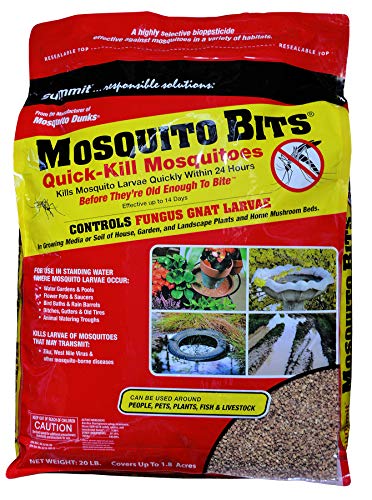
The twenty-pound bag for serious acreage and heavy-duty gnat warfare.
This is the same BTI corn-cob granule formula as the 30-ounce Mosquito Bits, but in a massive 20-pound (320-ounce) bag that’s meant for large properties, greenhouses, or anyone who needs to treat extensive areas. The sheer unit count is 320 ounces versus the 30-ounce version, making it the most cost-effective option by volume if you have enough plants or outdoor breeding sites to justify it.
Owners with 5-acre properties use this early in the season in ponding areas and report effective mosquito control that beats professional services. For fungus gnats specifically, the method is the same as the smaller container: soak the bits in a cheesecloth bag and use the strained water as a soil drench. The recommendation is to avoid putting the bits directly into potted plants, as the corn cob can grow mold or mushrooms.
It’s a pure value play for heavy users — the effectiveness is praised with over 60 positive mentions, and owners note noticeable mosquito reduction. The trade-off is that you’re committing to a very large volume of product, so it only makes financial and practical sense if you’re treating large areas or many plants regularly.
Best cost-per-dose
- Massive 320-ounce bag — best value by volume
- Same trusted BTI formula as the 30-ounce version
- Ideal for properties over an acre or large greenhouses
Only for heavy users
- Too much product for a few houseplants
- Need to soak and strain before use — not direct-apply
For the large-scale grower: The most economical BTI source if you’re treating multiple acres, a greenhouse, or a large plant collection on a regular schedule.
Not for: Casual plant owners — the 30-ounce container is a much more practical size.
Understanding the Specs
BTI: The bacteria that only hurts larvae
Bacillus thuringiensis subspecies israelensis is a naturally occurring soil bacterium that produces a protein crystal. When fungus gnat larvae ingest it, the crystal dissolves in their alkaline gut and paralyzes their digestive system, causing them to stop feeding within hours and die within a few days. BTI is highly specific — it only affects the larvae of fungus gnats, mosquitoes, and a few related flies. It’s completely safe for people, pets, fish, birds, and beneficial insects like bees and ladybugs.
Nematodes: Living predators in soil
Steinernema feltiae are microscopic roundworms that actively swim through soil moisture to find host larvae. They enter through natural openings (mouth, anus, spiracles) and release symbiotic bacteria that kill the host within 48 hours. The nematodes then reproduce inside the carcass and emerge to hunt more larvae. They require moist soil and cool temperatures (applying in the evening is best). They’re a living product, so they must be refrigerated if not used immediately and applied within the shelf life.
Systemic insecticides
Systemic insecticides like imidacloprid are absorbed by the plant’s roots and transported throughout the vascular system. When a gnat larva chews on a root, it ingests the chemical and dies. This provides long-lasting protection — often 6-8 weeks from a single application — and protects new growth as it emerges. The trade-off is that systemic chemicals can harm beneficial soil organisms and are not suitable for edible crops, but they offer the most reliable and easy indoor prevention.
Contact killers vs. larvicides
Contact sprays kill insects on direct application, including larvae on the soil surface and adult gnats on foliage. They provide immediate knockdown but have no residual effect — once dry, they stop working. Larvicides like BTI and nematodes target only the larval stage in the soil and don’t affect adults. The most effective approach combines both: treat the soil with a larvicide to stop the next generation, and use sticky traps or contact sprays to catch existing adults before they lay new eggs.
FAQ
How do I know if I have fungus gnat larvae in my soil?
Does BTI kill adult fungus gnats?
How long does it take for nematodes to kill fungus gnats?
Can I use Mosquito Bits and Dunks together?
Is it safe to use these products on edible plants?
Why do I still see gnats after using a soil drench?
How do I store leftover beneficial nematodes?
Why do my Mosquito Bits grow white mold in the pot?
Will dry soil kill fungus gnat larvae?
How do I prevent fungus gnats from coming back?
Final Thoughts: The Verdict
If you want one dependable pick, the best fungus gnat larvae control winner is the Summit Mosquito Bits (30 oz) because BTI is the most thoroughly proven, safest, and most affordable biological larvicide for indoor potted plants. If you want a set-and-forget chemical prevention with 8-week protection, grab the Bonide Systemic Granules. And for severe infestations that nothing else touches, the NaturesGoodGuys Nematodes are the living biological cure that owners swear by.
How We Picked
We do not accept paid placement. Every pick is matched to a real buyer and a real use-case; we do not hands-on test units.
Sources & Methodology
Specifications: manufacturer listings and product documentation. Review insights: verified customer reviews, as of July 2026. Pricing: not shown on this page (it changes often); check the current price via the retailer link.
As an Amazon Associate, Lawn Gear Lab earns from qualifying purchases. This does not affect which products we feature.