
Specs are compiled from manufacturer listings and verified buyer reviews and can change over time — please confirm the key details on the product page before buying.
Keeping mulch off the lawn and grass out of your flower beds is a constant battle, and flimsy plastic strips that crack in the sun or heave out of the ground after one rain just add to the frustration. You need an edging that stands up to weather, string trimmers, and the occasional rogue sprinkler head — and that actually looks good doing it. The trick is knowing which material and design matches the specific shape and budget of your yard, because the wrong choice creates more work than it solves.
I’m Rikta — the founder and writer behind Lawn Gear Lab. This guide is built by comparing the manufacturers’ published specifications and the patterns across verified customer reviews, so you get each pick’s real strengths and trade-offs instead of marketing spin.
After digging through hundreds of owner experiences across nine different edging styles — from heavy stone-look resin blocks to hammer-in steel strips — the best stone edging for flower beds turns out to be the Beuta Landscape Edging system, which combines the look of natural stone with a modular design that stays put without concrete.
Our Picks at a Glance


How To Choose The Best Stone Edging For Flower Beds
Every edging style asks you to trade something — weight for flexibility, beauty for price, ease of installation for long-term toughness. Here is how to match the decision to your yard’s actual demands.
Material: The Real-World Test
Resin and plastic edging is lightweight and easy to curve, but it can become brittle in extreme cold and may crack under a lawn mower’s tire. Galvanized steel handles abuse from string trimmers without flinching, but it transfers heat that can dry out adjacent soil on hot days. COR-TEN steel develops a rust patina that some love and others see as a maintenance issue — The manufacturer’s data sheet states the weathering steel can last over 100 years., but its bare metal appearance shifts over time. Rubber edging stays flexible in freezing temperatures and bounces back if you run over it, though its dark color absorbs heat and can warp in direct summer sun if not staked every foot or so.
Height and Stake Quality Dictate Stability
A 2-inch tall strip is fine for separating mulch from grass, but you need at least 4 to 6 inches above ground to contain river rock or deep bark on a slope. The stakes matter just as much as the edging itself — several owner accounts across multiple products mention plastic spikes bending or snapping when driven into rocky soil, and the universal fix is to swap them for 16-inch carbon nails or metal tent pegs. If your ground is hard clay or full of roots, look for a system with thicker stakes or one that comes with metal anchors included.
Installation Style: Dig, Hammer, or No-Dig
No-dig edging (scoring a shallow trench and hammering spikes) is the fastest route for a straight or gently curved border on soft ground. Hammer-in steel strips work well for defining tight curves around tree rings and flower beds, but they require a rubber mallet and a block of wood to protect the top edge from denting. Modular block systems like stone-look resin sections involve the most planning — you need to lay them out, connect them with the supplied spikes, and often buy extra starter and finishing pieces separately. The trade-off is that block systems create the most finished, permanent-looking border without needing concrete.
Total Length and Coverage Planning
Measure the perimeter of each flower bed and add 20 percent for waste and curves before choosing a kit. A 40-foot coil covers a modest front garden, while a set of six modular panels covers only about 24 linear feet. Mixing styles across different beds is fine, but keep the same height and material within one bed — mixing a 3-inch plastic strip with 6-inch resin blocks right next to each other creates a visual mismatch that is hard to unsee. The product data shows that most homeowners end up buying a second kit to finish a project, so plan for that from the start.
Quick Comparison
| Model | Best For | Material | Height | Total Length | Amazon |
|---|---|---|---|---|---|
| Beuta Landscape Edging★ Best Overall | Stone-look permanence | Resin | 6.5 inches | 16 ft (4 pack) | Amazon |
| AMURS White EdgingBest White Finish | Crisp white garden borders | Plastic | 5.9 inches | 20 ft | Amazon |
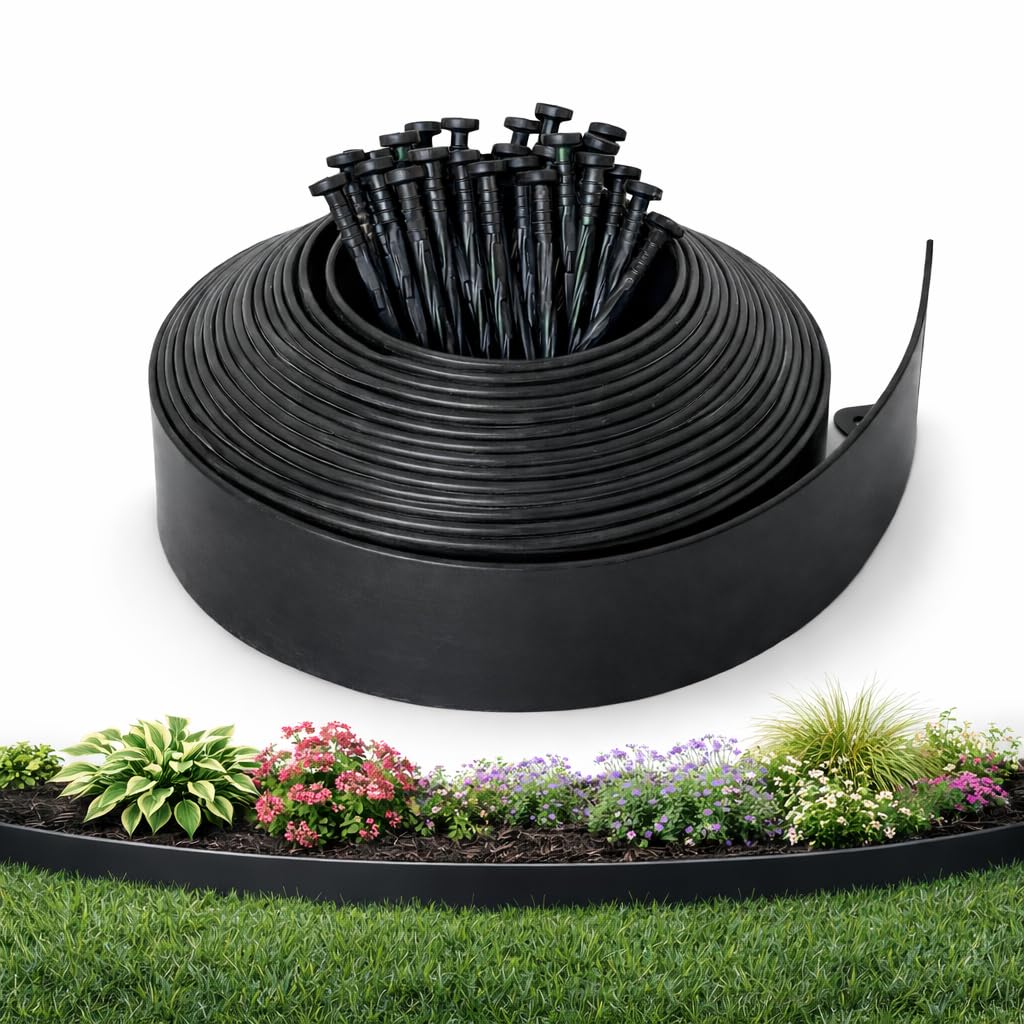
| Gardzen Landscape Edging KitBest Budget Runner | Budget long-run coverage | Plastic | 3 inches | 40 ft | Amazon |
| MIXC 100ft Edging Kit | Large multi-bed projects | HDPE Plastic | 1.5 inches | 100 ft | Amazon |
| Worth Garden Steel Edging | Clean metal contrast | Galvanized Steel | 2 inches exposed | 33 ft | Amazon |
| STIRLINGEAR Steel Edging | Low-profile modern lines | Powder-Coated Steel | 2 inches exposed | 33 ft | Amazon |
| EcoBorder Rubber Edging | Flexible durability | Recycled Rubber | 2.75 inches | 24 ft | Amazon |
| EasyFlex No-Dig Edging | Heavy material retention | Recycled Plastic | 2.5 inches | 100 ft | Amazon |
| Edge Right COR-TEN Steel | Permanent heavy-duty border | COR-TEN Steel | 6 inches | 20 ft | Amazon |
In‑Depth Reviews
1. Beuta Landscape Edging
Our pick — over 4.5★ from 500+ verified ratings; the strongest balance of quality and price.
Modular stone-look blocks that keep mulch where it belongs without concrete.
The Beuta system uses resin blocks in a realistic greystone finish — each section measures 48 inches long by 4 inches wide and stands 6.5 inches tall, which is tall enough that buyers report the “6.5 in height keeps mulch in” even after heavy rain. You get four packs in the box, each containing six blocks, for a total of 16 linear feet of border. The weight here is substantial at 10.75 kg per pack, and that heft translates into stability once the blocks are spiked into the ground.
Installation uses a patent-pending connection system with five different block types — Start, Stop, Turn Right, Turn Left, and Extender — so you can route the border around tree rings and tight flower bed corners without awkward gaps. Owner after owner calls the finish “elegant” and notes that the resin resists fading and corrosion, which is the main reason plastic strips look ratty after two seasons. The trade-off is that you need to buy starter and finishing blocks separately if your layout requires them, and the price is undeniably higher than a roll of plastic edging.
The consensus among hundreds of owners is that this is the most convincing faux-stone edging available right now — it transforms the curb appeal of a front garden in a way that black plastic or steel simply cannot match. The crowd favorite here is the Sandstone color variant, which several owners specifically recommend for its natural warmth.
What wins people over
- Realistic stone texture with 6.5-inch height for deep mulch retention
- Five modular block types curve around beds and tree rings
- Weather-resistant resin won’t rust, fade, or corrode
The honest caveat
- Starter and finishing pieces sold separately add to the total cost
- At 10.75 kg per pack, shipping is heavy and return logistics are tricky
Reach for this if: you want a border that looks like real stacked stone without mixing concrete or hiring a mason.
Think twice if: your budget caps out below the premium tier or you only need a straight run with no curves — a simpler plastic strip costs far less for that job.
2. AMURS 6 Inch Tall 20Ft White Landscape Edging
Bright white panels that pop against dark mulch for a crisp cottage-garden look.
The AMURS kit gives you 20 interlocking panels, each measuring 12.16 inches by 5.9 inches, plus 20 anchoring stakes that The manufacturer claims the stakes can withstand 60 mph winds.. The total run is 20 feet, which is enough for a neatly defined small flower bed or a border around a 10-foot round pool (the owner of one such pool notes that a single box fell short and they needed a second). The panels are made from PP plastic (polypropylene) that resists corrosion and deformation, and the white color creates a clean visual boundary that helps you see the edge even in dim evening light.
Assembly is genuinely simple — the pieces interlock with a tab-and-slot system, and you tap them into the ground with a rubber mallet. The recurring gripe here is the securing stakes. As one owner describes them bluntly: “The securing pins are some of the most worthless plastic imaginable.” The fix is to either build the panels into a closed circle (which creates enough structural tension to hold) or to replace the pins with metal tent stakes, which several owners did with good results. At 2.26 kg total weight, the whole kit is light enough to carry around the yard in one trip.
Within the white edging category, this is the most popular option by a wide margin, and the overall appearance wins consistent praise for making “a silly flower bed look really nice” with minimal effort.
Why owners like it
- Bright white color creates visible separation against soil and mulch
- Interlocking panels are fast to assemble without tools
- Lightweight at 2.26 kg — easy to handle alone
Known weakness
- Included plastic stakes are too weak for hard or rocky soil — plan to buy metal replacements
- Each panel is shorter than some expect; measure your perimeter first
Best for: a small decorative bed where the white border creates a deliberate cottage or formal garden accent.
Look elsewhere if: your soil is hard-packed clay or you need a longer uninterrupted run — the panel system demands frequent staking.
3. Gardzen Landscape Edging Kit 40-Foot
A 40-foot coil that covers a whole front garden for the price of dinner out.
The Gardzen kit is exactly what it looks like: a single black plastic coil measuring 480 inches long by 1.8 inches wide, with a 3-inch above-ground height, and 40 plastic spikes included. The no-dig design means you stake it every two to three holes and you are done — no trenching, no concrete. For a straight run separating a mulched bed from a lawn, this is the fastest and cheapest way to get a clean line. It works especially well for holding small gravel or fine mulch in place, and it is flexible enough to bend around a tree ring or a gentle curve.
The honest boundary here is the plastic stakes. As one owner who used 4-inch rocks next to the edging explains: the rocks slightly bent the edging, and they had to reinforce it with 16-inch carbon nails. The included plastic spikes bend or snap if you hit a rock, which is common in most yards. The solution — upgrading to longer metal stakes — is easy and cheap, but it is an extra step that a first-time buyer should know about before they start. The Gardzen edging itself is weather-resistant and sturdy enough to hold pebbles and mulch, but it is still plastic, so a heavy string trimmer or a lawn mower tire can damage it over time.
For the price, the coverage per dollar is class-leading. The trade-off is that 3 inches of height is fine for a shallow bark or pine straw bed but not tall enough to contain river rock or a deep mulch layer on a slope.
The clear edge: 40 feet of coverage with 40 spikes for a price that makes it almost disposable — great for rental properties or temporary borders.
Grab it for: long straight runs or circle beds where you need the most length for the least money.
skip it if: you want a permanent-looking stone or metal border, or your bed has deep mulch that needs a 4- to 6-inch retaining height.
4. MIXC 100ft Landscape Edging Kit

Three 33-foot rolls for a 100-foot total that tackles every bed on the property.
The MIXC kit comes as three separate rolls of black HDPE (high-density polyethylene) edging, each 33 feet long, for a combined 100 feet of border plus 150 anchoring spikes. The edging stands only 1.5 inches tall, which is the lowest profile in this lineup, so it is meant for shallow separation — think a curb between a lawn and a flower bed where you are not holding back heavy rock. The material is flexible enough to bend into tight curves for uneven terrain, and the pre-drilled holes let you stake it solo without a helper.
What sets this apart is The L-shaped dual-layer design is described as a “soil barrier and root blocker.” to prevent grass and weeds from creeping under the edge. Several owners confirm that the edging survived two harsh Vermont winters and a Houston rainstorm without shifting or cracking, which is strong evidence that HDPE handles temperature swings better than standard PVC or polypropylene. The plastic stakes draw the same complaint as the Gardzen kit — they bend on rocks — but the 150-count supply means you can stake it aggressively every few inches for a bombproof hold. One owner found the stakes sturdy enough in their soil and praised the kit for not bending.
This is the most economical way to edge a large property with multiple beds, but the 1.5-inch height means it works best as a subtle lawn separator rather than a visible decorative border.
Why it works
- 100 feet total coverage edges an entire yard in one purchase
- HDPE material resists UV damage and extreme temperatures
- L-shaped root blocker design stops grass infiltration
The catch
- At 1.5 inches tall, it disappears into tall grass and won’t retain deep mulch
- Plastic stakes struggle in hard ground; metal replacements are recommended
Go for this if: you have multiple beds, pathways, and tree rings that all need a low-profile, weed-blocking edge.
Pass if: you need a tall border to retain river rock or create a visible garden boundary.
5. Worth Garden Galvanized Steel Edging

Powder-coated steel strips that hammer into place for a clean industrial line.
The Worth Garden kit gives you 10 strips of galvanized steel, each 40 inches long and 4.5 inches tall, with a black powder-coated finish. Above ground, only 2 inches of that height is visible — the remaining 2.5 inches is a serrated spike that you hammer into the soil using a rubber mallet and a block of wood to protect the top edge. The total installed length is 33 feet, and you get 11 joining clips plus a pair of work gloves to make the job easier.
Steel edging has a completely different feel from plastic — it does not flex or wave, and it creates an unmistakable sharp line between lawn and bed. Owners consistently praise how easy it is to pound in, even in sandy ground, and the black powder coating resists the rain-driven rust that kills uncoated steel. The main trade-off is that bending these strips around a tight curve takes patience; several owners found that they needed a hacksaw to cut sections for a clean fit at corners. Unlike plastic, steel will not crack in cold weather or warp in the sun, so install it once and expect it to last.
The 4.5-inch total strip height gives you more buried depth than most plastic edging, which means it stays put through freeze-thaw cycles. The visible height of 2 inches is enough to create a crisp visual boundary without interfering with a lawn mower.
The standout spec: galvanized steel with powder coating — rust-resistant, wear-resistant, and flexible enough to curve when you use a bender or a form.
Choose this for: a modern, low-profile metal edge that does not need trenching and will not fade in the sun.
pass on it if: your flower bed layout involves very tight curves (under 2-foot radius) that demand the flexibility of plastic.
6. STIRLINGEAR Galvanized Steel Edging

Thick galvanized panels with a matte black finish that improve a xeriscape or farmhouse yard.
This STIRLINGEAR set is nearly identical in concept to the Worth Garden kit above — 10 panels of 40 inches each for a 33-foot run — but it uses a slightly different design. Each panel measures 5 inches total height, with 3 inches going underground as a stake and 2 inches staying visible for a clean, low-profile border. The 11 included stakes and the powder-coated galvanized steel construction are rust-resistant and designed to hold up against decades of outdoor exposure. The kit also comes with work gloves, a practical touch that signals the maker expects you to be hammering these in by hand.
Owners highlight how the black finish “looks very high-end for the cost” and fits smoothly into mid-century modern xeriscapes and farmhouse garden designs. The steel is thick enough to stand up to string trimmers without denting, yet flexible enough to bend for gentle curves and corners. The recurring request from buyers is for two more joining clips — the standard 11 clips work, but a few owners wanted extras for additional stability at the overlap points. One owner who installed this as a barrier between a sidewalk and artificial grass noted that the low profile avoids being a tripping hazard.
Between the Worth and STIRLINGEAR steel options, the difference depends on the finish and the included accessories — this one leans slightly more modern in appearance and includes gloves as a standard inclusion.
The strong points
- Thick galvanized steel with a modern black powder-coated finish
- Includes 11 stakes and work gloves for immediate installation
- Flexible enough for gentle curves; rigid enough for straight lines
Minor gripes
- Some owners wished for 2 additional joining clips for extra support
- 2-inch visible height is modest — not ideal for deep mulch beds
Ideal for: a modern or farmhouse-style yard where a low black metal edge provides subtle definition without distracting from the plants.
Consider another option if: you need a tall border to contain heavy river rock or bark — steel is strong but short here.
7. EcoBorder Black Recycled Rubber Edging

Heavy recycled rubber sections that a 70-year-old can install solo — but the stakes need an upgrade.
The EcoBorder system is about as straightforward as edging gets: six L-shaped rubber sections, each 48 inches long by 2.75 inches wide, that you stake into the ground with the included plastic pegs. The total run is about 24 linear feet, and the patented L-shape creates an offset lip that lawn mowers can ride over without catching. The rubber is heavy and dense (6.8 pounds per pack), and it does not crack in freezing temperatures or warp in the summer sun the way PVC does. Owners call the look “polished” and “finished,” and the rubber’s texture hides minor installation gaps better than rigid plastic.
The universal owner feedback across dozens of reviews is that the included plastic stakes break the moment you hit a root or a rock. The fix is well-documented: swap them for 3/16-inch steel dowels cut to 2 7/8 inches, or use metal tent stakes. One experienced owner pre-drilled holes with an 11/64-inch bit and drove the stakes in with a hammer and a wood block — that approach worked perfectly. Once installed with metal stakes, the edging is tractor-proof and will not budge. The rubber itself draws near-universal praise for durability and appearance, but the install experience is frustrating if you try to use the included pegs.
This is the best choice for a front foundation bed or a small garden where you want a clean, heavy-looking border that absorbs impact instead of cracking. The recycled rubber construction also appeals to anyone trying to reduce plastic waste in their yard.
What makes it stand out
- Recycled rubber construction — eco-friendly and nearly indestructible
- L-shaped profile allows a lawn mower to ride over the edge safely
- Flexes in cold weather without cracking
Installation reality
- Plastic stakes are brittle and break easily — budget for metal replacements or dowels
- At 6.8 pounds per 6-pack, the material is heavy and needs stable ground for best results
Best for: front flower beds and foundation plantings where a durable, mow-over edge reduces trimming time.
Think twice if: you want to use the included pegs on rocky soil — they will snap, and the installation will be immediately frustrating.
8. EasyFlex 2.5″ Tall No-Dig Landscape Edging Kit

A 100-foot no-dig roll of recycled plastic that retains river rock without trenching.
The EasyFlex Tall Wall kit is the heavy-duty alternative to the Gardzen-style coil — it is made from recycled plastic with a woodgrain texture, stands 2.5 inches tall, and comes as one continuous 100-foot coil with 64 anchoring spikes. The “no-dig” claim is real: you score a shallow 2-inch groove in the soil with a trowel or edger, lay the strip in place, and hammer the spikes through the pre-drilled holes. The 2.5-inch height is specifically designed to retain heavier materials like river rock and pebbles, which tend to spill over a 1.5-inch border. Owners consistently confirm that the edging holds 1×2-inch river rock without bulging or shifting.
The material is thick — about 1/8 to 3/16 of an inch — and has enough body that a string trimmer can bump against it without cutting through. The recycled plastic develops a slight curl in hot sun if not staked every foot, but the included 64 spikes cover roughly every 18 inches, which is enough for most conditions. Several owners recommend buying an extra pack of spikes and placing them every 12 inches for a bombproof hold. At 11.1 kg total, the coil is heavy to maneuver alone, so plan to have a helper unroll it across the bed.
For large-scale projects like a gravel driveway border or a long backyard flower bed, this is the most cost-effective no-dig option that can actually retain heavy stone.
Key stat: 2.5-inch tall wall with 100 feet of coverage — the tallest no-dig plastic coil in this roundup, designed specifically for river rock and thick mulch.
Pick this for: a long border or a gravel retention edge where height matters but you want no-dig installation.
it’s not for you if: you need a decorative stone look or a rigid metal line — this is functional plastic with a woodgrain texture, not faux stone.
9. Edge Right COR-TEN Steel Edging

Six-inch tall COR-TEN steel strips that develop a natural rust patina and outlast the house.
The Edge Right system is built from 16-gauge COR-TEN steel — the same weathering steel used in bridge construction and architectural cladding. Each strip is 48 inches long and 6 inches wide, with a rolled top edge for safety, and the saw-tooth bottom edge is designed to slice into soil as you hammer it in. The total run from the 5-pack is 20 feet. The steel is stiff enough to hold a perfectly straight line but malleable enough to bend into gentle curves under foot pressure — the trick is to work slowly and bend with patience rather than trying to force a sharp angle.
The defining feature of COR-TEN is that it develops a protective rust patina over time, which owners call “bronzey” or “attractive” and which seals the steel against further corrosion. The manufacturer claims the weathering steel can last well over 100 years., and owners who bought the first batch of 200 feet in 2023 report that every section except one — eroded by a concentrated rain runoff — has remained stable and intact. The rolled top edge is specifically designed to withstand repeated hits from a sledgehammer during installation, unlike flat-top steel that dents on the first strike.
This is the most expensive edging in the lineup by a wide margin, but it is also the only one that the owners describe as “a buy-it-for-life product.” If you want a permanent edge that requires zero maintenance and only gets better-looking as it weathers, this is the one. The downside is the upfront cost and the effort required to bend it into complex curves — it is not a flexible strip but a rigid steel bar.
Why it is the ultimate
- 16-gauge COR-TEN steel with a 100-year+ lifespan claim
- 6-inch total height includes a deep buried stake for freeze-thaw stability
- Rolled top edge withstands hammer strikes without denting
The reality check
- Expensive — 20 feet costs more than 100 feet of plastic edging
- Bending for tight curves requires significant effort and patience
Invest in this if: you are edging a property you plan to own for decades and want a border that never needs replacing.
Choose something else if: your beds have tight serpentine curves or your budget needs to stretch across multiple beds at once.
Understanding the Specs
Height Above Ground
The part of the edging that you see directly affects how well it contains mulch and rock. A 2-inch border works for soil-level separation but lets bark and pebbles wash over the top in a heavy rain. A 6-inch wall like the Edge Right or the Beuta blocks creates a genuine physical barrier that keeps deep mulch beds and river rock contained, though it also creates a more pronounced visual line. The right height depends on what you are holding back — fine pine straw needs less height than 3-inch river rock.
Material and Weather Resistance
Plastic edging (PP and HDPE) costs the least and installs fast, but it becomes brittle in sub-freezing temperatures and can warp in direct summer sun if not staked every 12 to 18 inches. Galvanized steel with powder coating resists rust and stands up to string trimmers, but it conducts heat and can dry the soil immediately next to it on hot days. COR-TEN steel develops a rust patina that seals the metal — it is the most durable option but costs significantly more. Recycled rubber stays flexible from below freezing to 100°F and absorbs impacts without cracking, though its dark color absorbs heat and can soften on the hottest days if the ground is soft.
FAQ
How deep should stone edging be buried for flower beds?
Can stone edging be used on a slope?
How long does plastic landscape edging last?
Will stone edging rust or stain the soil?
Can I use stone edging to keep grass from growing into a flower bed?
How do I install edging on hard, compacted soil?
What is the difference between COR-TEN steel and galvanized steel for edging?
How many stakes do I need for a 100-foot edging run?
Final Thoughts: The Verdict
For most yards, the clear winner among the best stone edging for flower beds is the Beuta Landscape Edging because it combines the authentic look of natural stone with a modular system that contains 6.5 inches of mulch without concrete. If you want a crisp, modern metal line that will never crack or fade, grab the Worth Garden Galvanized Steel Edging. And for a project that spans the entire yard and needs to hold river rock in place, the EasyFlex 100-foot Tall Wall kit is the one to reach for — just buy extra metal stakes before you start and you will have an edge that lasts for years.
How We Picked
We do not accept paid placement. Every pick is matched to a real buyer and a real use-case; we do not hands-on test units.
Sources & Methodology
Specifications: manufacturer listings and product documentation. Review insights: verified customer reviews, as of July 2026. Pricing: not shown on this page (it changes often); check the current price via the retailer link.
As an Amazon Associate, Lawn Gear Lab earns from qualifying purchases. This does not affect which products we feature.