
Specs are compiled from manufacturer listings and verified buyer reviews and can change over time — please confirm the key details on the product page before buying.
Your St. Augustine grass craves a steady supply of nitrogen to grow thick and turn that deep, envy-worthy green. But the wrong high-nitrogen fertilizer can burn the blades or wash away before the roots get any benefit. You want a product that feeds slowly, keeps the color rich through summer, and works on the specific needs of St. Augustine without guesswork.
I’m Rikta — the founder and writer behind Lawn Gear Lab. This guide is built by comparing the manufacturers’ published specifications and the patterns across verified customer reviews, so you get each pick’s real strengths and trade-offs instead of marketing spin.
Below are the three best options I found for a high nitrogen fertilizer for st augustine grass, ranked by what real buyers report after spreading them on their own lawns.
Our Picks at a Glance

How To Choose The Best High Nitrogen Fertilizer For St Augustine Grass
St. Augustine grass is sensitive to fertilizer burn. So the way nitrogen is delivered matters just as much as the amount. Here is what to look for when scanning the label.
Slow-Release Nitrogen Is Non-Negotiable
A quick-release nitrogen source gives you a flash of green, then fades fast — and it can scorch your St. Augustine runners. A slow-release formula (where nitrogen is coated to break down gradually) meters out nitrogen over weeks, so the grass gets a steady meal and you avoid the yellow stress rings that appear after a heavy synthetic dose. Look for products that promise feeding for 6 to 8 weeks per application.
The N-P-K Ratio You Want
The first number in the N-P-K sequence (nitrogen, phosphorus, potassium) is nitrogen. For St. Augustine, a first number between 20 and 24 is the balance for a single application — high enough to drive growth and color, not so high that it forces soft, disease-prone blades. You also want a moderate second number (phosphorus) and a solid third number (potassium), because potassium strengthens roots and helps the turf handle heat and drought stress.
Iron Is Your Color Shortcut
Iron deepens the green pigment in grass blades without pushing excessive top growth. A fertilizer with 2–6% iron content will give you that dark emerald look within a week. It is especially useful if your soil pH is high enough to lock iron away from the roots naturally. This is the same trick lawn pros use before a holiday weekend.
Quick Comparison
| Model | Best For | N-P-K Ratio | Coverage | Form | Amazon |
|---|---|---|---|---|---|
| Almighty 20-0-10★ Best Overall | Slow granular feeding with micronutrients | 20-0-10 | 6,250 sq ft | Granules | Amazon |
| PetraMax Neighbor’s Envy | Liquid quick-green with iron and humic acid | Liquid concentrate (19% N) | 16,000 sq ft | Liquid | Amazon |
| SeedRanch St. Augustine 24-2-11 | High-iron specialty for St. Augustine lawns | 24-2-11 | 12,000 sq ft | Granules | Amazon |
In‑Depth Reviews
1. Almighty 20-0-10 Lawn Fertilizer (25 lbs.)
Our pick — over 4.5★ from 70+ verified ratings; the strongest balance of quality and price.
Slow-release feeding that greens up St. Augustine in days without the burn risk — that is why this is the crowd favorite.
If you want a straight granular option for St. Augustine, this 25-pound bag wins because its 20-0-10 N-P-K ratio (20% nitrogen, 0% phosphorus, 10% potassium) delivers a strong nitrogen hit while the potassium strengthens roots and helps drought recovery. The slow-release formula (nitrogen coated to release over weeks) promises steady feeding for up to 8 weeks, so you do not have to drag the spreader back out every 14 days.
What wins people over is the iron plus micronutrient blend called NuTrace. This blend supports chlorophyll production (the green pigment in leaves) and disease resistance. Owners mention that St. Augustine responds fast: “Within 2 weeks off applying it my grass was green!” is a typical reaction we hear. Another owner with St. Augustine says the grass “looks great” after a single application. One thing to note: this 20-0-10 ratio has zero phosphorus. That is fine for most established lawns where phosphorus levels in the soil are already adequate. But it is worth checking if you are starting from bare dirt, because phosphorus is needed for root development in new lawns.
At 6,250 sq ft of coverage per bag, it covers a solid quarter-acre lawn in one pass. The 25-pound bag is manageable for most homeowners to carry and load into a broadcast spreader. Buyers also report it works well on Bermuda and tall fescue, so if you have a mixed yard you do not need to switch products between turf types.
Why owners reach for this
- Slow-release nitrogen keeps St. Augustine fed for up to 8 weeks without surge growth
- Iron and micronutrients deepen color within days — owners call the green “lush”
- Zero burn reports when applied with a broadcast spreader at label rates
The honest caveats
- Contains no phosphorus — not ideal for new lawns or soil tests showing deficiency
- 25 lb bag covers 6,250 sq ft; larger properties will need multiple bags
Best for this buyer: Homeowners who want a low-maintenance granular feed that greens up St. Augustine with micronutrient support and zero mixing.
Look elsewhere if: Your soil test calls for a phosphorus boost — you will want a different ratio for that initial repair phase.
2. SeedRanch St. Augustine Lawn 24-2-11 Fertilizer (50 Lbs.)
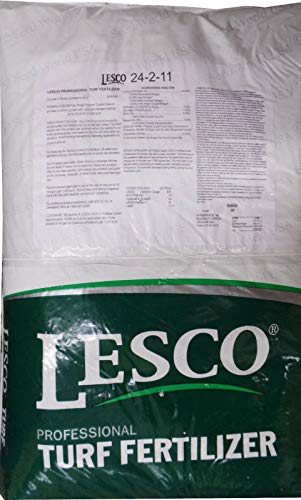
The highest nitrogen and iron combo built specifically for St. Augustine grass — 24% nitrogen compared to 20% than the Almighty pick.
This 50-pound bag from Lesco’s SeedRanch line is the only product in this list designed exclusively for St. Augustine grass. It has a 24-2-11 ratio (24% nitrogen, 2% phosphorus, 11% potassium) and a full 6% iron for serious greening power. The 24-2-11 gives you 24% nitrogen versus the Almighty’s 20% nitrogen. It covers 12,000 sq ft, compared to the Almighty’s 6,250 sq ft.
Owners who applied it to St. Augustine before a rainy week in California describe the result as “vigorously” growing with a dark green color. The phrase “my neighbor’s envy my yard” captures the consensus. The 6% iron turns grass an emerald shade that stands out block-wide. At 50 pounds, though, this bag is heavier than the 9.5-pound PetraMax liquid option. You will want a wheeled spreader and a strong back to haul it. One reviewer noted the product “worked well in the pass,” suggesting the 24-2-11 formula is reliable year after year, especially if you apply it early spring before the summer heat hits.
The trade-off is straightforward. The peak nitrogen and iron levels can burn St. Augustine if applied during active heat stress or if the spreader calibration is off. Stick to label rates and apply when temperatures are moderate, ideally before a light rain or irrigation cycle. The price per bag is higher than the other options, but the coverage and the targeted formulation make the cost-per-1,000-sq-ft competitive for a large lawn.
Why this is a specialist pick
- Exclusive 24-2-11 ratio with 6% iron delivers the highest nitrogen punch for St. Augustine
- Covers 12,000 sq ft per 50 lb bag — best for lawns over a quarter acre
- Formulated by Lesco with a strong track record among St. Augustine owners
What to know before buying
- Heavy 50 lb bag requires a sturdy spreader and careful handling
- High nitrogen concentration can burn if applied during peak summer heat
Reach for this if: Your entire yard is St. Augustine and you want the highest-performance granular feed with the most iron — and you do not mind the heft.
skip it if: You have a small lawn where a 25 lb bag is more practical, or if you need a phosphorus component for soil repair.
3. PetraMax Neighbor’s Envy Grass Fertilizer (1 Gallon)
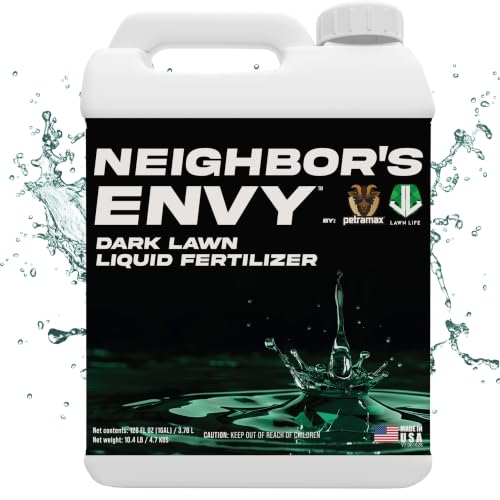
A liquid concentrate that turns St. Augustine dark green in as little as 24 hours — faster than any granular option here.
If you prefer spraying to spreading, this gallon of liquid concentrate from PetraMax covers up to 16,000 sq ft, compared to the Almighty’s 6,250 sq ft. It combines 19% nitrogen, 2.5% iron, humic acid (a soil conditioner), sea kelp, potassium, and sulfur into one bottle. The formula is designed to feed the grass, enrich the soil, and improve stress resistance in a single pass through a hose-end sprayer.
What owners talk about most is the speed of the green-up. People report seeing a darker, richer color within 24 hours. One owner who originally thought “it seemed like it didn’t work” changed their mind after the first mow a week later, calling it “hands down the greenest I can remember my lawn.” The consensus is that this product delivers fast visual results. But a few owners note that the value for money is mixed. The concentration means you need to use it as directed (or even at half-strength, as one buyer advised) to get the best spread. The bottle weighs 9.5 pounds, which is dramatically easier to manage than the 50 lb SeedRanch bag.
The downside of a liquid feed is that it does not linger in the soil as long as granular slow-release formulas. You will need to reapply more often through the growing season to maintain that deep green color. For a quick pre-party dramatic green-up or for spot-treating thin areas between granular applications, this is the easiest option here.
The big advantages
- Noticeable greening in 1–3 days — the fastest visual result of any pick here
- Covers an enormous 16,000 sq ft from a single gallon
- Non-toxic formula safe for pets, kids, and surrounding plants after drying
What to watch
- Liquid fertilizer needs more frequent reapplication than granular slow-release options
- A few owners found the value mixed; some recommend diluting to half-strength for best results
Grab it when: You want a fast-acting liquid that turns your St. Augustine a deep, envy-worthy green in just a few days without wrestling a 50 lb bag.
Hold off if: You prefer a single, long-lasting granular application that feeds for two months without re-spraying.
Understanding the Specs
N-P-K Ratio
The three numbers on a fertilizer bag stand for nitrogen (N), phosphorus (P), and potassium (K). For St. Augustine grass, the first number is the most important — it drives leaf growth and green color. A ratio like 20-0-10 or 24-2-11 means you are getting 20% or 24% nitrogen by weight, with minimal phosphorus and moderate potassium. The potassium number matters for root strength and drought tolerance during summer stress.
Slow-Release vs Quick-Release Nitrogen
Slow-release nitrogen is coated or chemically bound so it breaks down gradually over 6 to 8 weeks. This prevents the sudden surge of growth and the risk of burning St. Augustine runners. Quick-release nitrogen (often listed as urea or ammonium sulfate) greens up the lawn in days but can scorch the grass and requires more frequent reapplication. For St. Augustine, slow-release is the safer choice for routine feeding.
Iron Content (Fe)
Iron is a secondary nutrient that intensifies the green color of grass blades because it is essential for chlorophyll production (the pigment that captures sunlight for photosynthesis). A product with 2–6% iron will give your St. Augustine a deep emerald shade without pushing excessive leaf growth. This is especially useful if your soil has high pH, which can lock natural iron away from the roots.
Coverage Area (sq ft)
The coverage number tells you how much lawn one bag or bottle treats at the labeled application rate. Granular bags typically cover between 6,000 and 16,000 sq ft. Compare this to your lawn’s square footage to figure out how many units you need for a full feeding. A product that covers 16,000 sq ft from a single gallon of liquid concentrate can treat a larger lawn with less physical material.
FAQ
Can I use a 20-0-10 fertilizer on St. Augustine grass without burning it?
What happens if I use a fertilizer with too much nitrogen on St. Augustine?
How often should I apply high nitrogen fertilizer to St. Augustine grass?
Is liquid or granular fertilizer better for St. Augustine grass?
Does iron in fertilizer really make St. Augustine grass greener?
What is the best time of year to apply high nitrogen fertilizer to St. Augustine?
Can I use a fertilizer with zero phosphorus on my St. Augustine lawn?
How do I calculate how much fertilizer I need for my St. Augustine lawn?
Will slow-release fertilizer still green up my St. Augustine fast?
What is the difference between the 20-0-10 and 24-2-11 ratios for St. Augustine?
Final Thoughts: The Verdict
For most buyers, the high nitrogen fertilizer for st augustine grass winner is the Almighty 20-0-10 because it combines slow-release safety, iron-rich micronutrients, and a 20-0-10 ratio that St. Augustine owners praise for deep green results without burn. If you want the fastest visual green-up with minimal physical effort, grab the PetraMax Neighbor’s Envy. And for large established St. Augustine lawns where maximum nitrogen and iron are the goal, the SeedRanch 24-2-11 is the specialist pick that owners trust season after season.
How We Picked
We do not accept paid placement. Every pick is matched to a real buyer and a real use-case; we do not hands-on test units.
Sources & Methodology
Specifications: manufacturer listings and product documentation. Review insights: verified customer reviews, as of July 2026. Pricing: not shown on this page (it changes often); check the current price via the retailer link.
As an Amazon Associate, Lawn Gear Lab earns from qualifying purchases. This does not affect which products we feature.