
Specs are compiled from manufacturer listings and verified buyer reviews and can change over time — please confirm the key details on the product page before buying.
A rake is slow. A blower just moves the pile. A gas leaf vacuum actually makes the mess disappear — it sucks up leaves, chews them into a fine mulch, and stuffs them into a bag so you don’t have to bend over. The trick is finding the one that starts on the first pull, doesn’t clog every five minutes, and fits the size of your property without breaking your back. These eight picks cover everything from a lightweight handheld for a suburban yard to a tow-behind beast for an acreage.
I’m Rikta — the founder and writer behind Lawn Gear Lab. This guide is built by comparing the manufacturers’ published specifications and the patterns across verified customer reviews, so you get each pick’s real strengths and trade-offs instead of marketing spin.
Bagging leaves by hand takes hours, but a gas leaf vacuum can cut that to a quick pass around your yard. This breakdown of the best gas leaf vacuum options helps you pick the one that fits your routine.
Our Picks at a Glance

How To Choose The Best Gas Leaf Vacuum
Every gas leaf vacuum does the same basic job, but the one that feels easy on your lawn can feel miserable on someone else’s. The key is matching the machine’s weight, power, and bag type to how much ground you cover and what kind of debris you deal with.
Handheld vs Walk-Behind vs Tow-Behind
Handheld units (like the Echo or Husqvarna) are light, nimble, and great for small to medium lawns where you can reach every corner. Walk-behind models (like the SuperHandy) are self-propelled with a wide snout — perfect for larger, flat properties but heavy on slopes. Tow-behind vacs (like the Agri-Fab or Billy Goat) hook to a riding mower and cover acres without any carrying, but they need storage space and a tractor or zero-turn to pull them.
Mulching Ratio and Bag Capacity
A higher mulching ratio (like 10:1) means the machine shrinks ten bags of leaves down to one, so you empty the bag far less often. The trade-off is that a finer mulch sometimes needs more engine power to shred wet leaves. Bag size is measured in bushels or cubic feet — a 6-bushel bag is fine for a quick cleanup, while a 32-cubic-foot tow-behind hopper handles a whole acre before you dump.
Engine Reliability and Starting
A frustrating pull cord that fights back can ruin a Saturday morning. Look for an air purge system (priming bulb) and an auto-return stop switch — these features make starting much more predictable. 2-cycle engines (which mix gas and oil) are lighter and simpler, while 4-cycle engines (separate gas and oil) tend to run cleaner and last longer with less smoke.
Quick Comparison
| Model | Best For | Engine Size | Air Flow / Speed | Bag Capacity | Amazon |
|---|---|---|---|---|---|
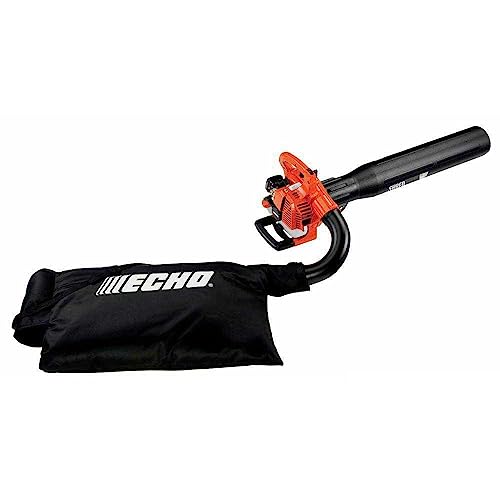
| Echo ES-250★ Best Overall | Overall handheld performance | 25.4cc 2-stroke | 391 CFM, 165 MPH | Bag included (handheld) | Amazon |
| Husqvarna 125BVxTop Performer | Best lightweight blower/vac | 28cc 2-cycle, 1.1 HP | 470 CFM, 170 MPH | Vac bag included (handheld) | Amazon |
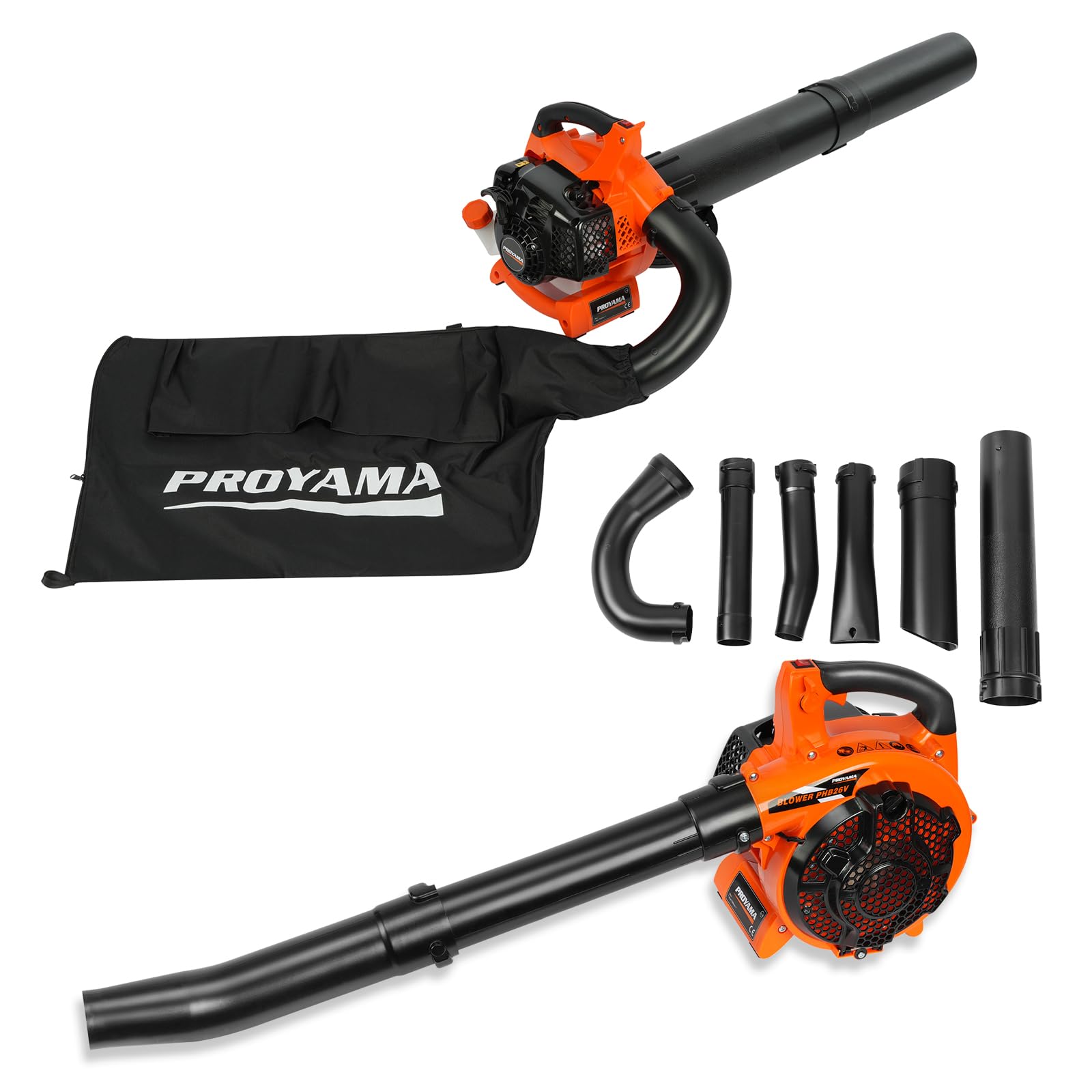
| PROYAMA 3-in-1Budget Champion | Budget-friendly handheld value | 26cc 2-cycle, 1 HP | 412 CFM, 200 MPH | 10 gallon bag | Amazon |
| EARTHCRAFT 26CC | Quiet handheld operation | 26cc 2-cycle | 450 CFM, 200 MPH | Collection bag included | Amazon |
| SuperHandy 7 HP | Walk-behind versatility | 209cc OHV 4-stroke | N/A (vacuum/chipper) | 6 bushel bag | Amazon |
| Agri-Fab 32 Cu Ft | High-capacity tow-behind | 208cc LCT 4-stroke | 80 MPH suction | 32 cu ft (26 bushel) | Amazon |
| Billy Goat KV601 | Walk-behind durability | 190cc Briggs & Stratton | N/A (impeller based) | 40 gallons | Amazon |
| Agri-Fab Chip-N-Vac | Tow-behind with chipper | 208cc (gas powered) | 80 MPH suction | 32 cu ft (26 bushel) | Amazon |
In‑Depth Reviews
1. Echo ES-250 25.4cc Shred N Vac
Our pick — over 4★ from 150+ verified ratings; the strongest balance of quality and price.
The most consistent handheld performer, from first pull to last bag.
This Echo is the crowd favorite for a reason — owners describe it as a “powerful gas unit with great suction” that starts reliably after one or two pulls, season after season. The 25.4cc 2-stroke engine delivers 391 CFM of air flow and 165 MPH at just 70 dB, which is noticeably quieter than many competitors. It is the only unit in the handheld class that hits that low noise level — the EARTHCRAFT model, for comparison, runs at 78 dB.
The Shred N Vac lives up to its name: it vacuums leaves and even small sticks, shredding them into a fraction of their original volume. Buyers report using it in flower beds, around pools, and in mulch areas without issue. The 11-pound weight is manageable for extended use, though the consensus is that the Velcro bag connection and shoulder strap feel flimsy compared to the rest of the build. Durability opinions are mixed — some owners have seen fin wear over time — but the engine performance and starting reliability earn near-universal praise.
The biggest wins
- Exceptional suction that shreds leaves and small sticks fast
- Low 70 dB noise level makes it neighbor-friendly
- Reliable starting, even after sitting for months
The honest trade-offs
- Bag attachment uses Velcro and can feel insecure
- Shoulder strap quality does not match the engine’s durability
- A handful of owners mention fin wear over extended use
Perfect for: Homeowners with small to medium yards who want a dependable, quiet machine that starts every time.
Think twice if: You need heavy-duty daily commercial use — the plastic bag connection may not hold up to constant abuse.
2. Husqvarna 125BVx 28cc Gas Leaf Blower Vacuum Kit
Lighter than the Echo with more CFM — a powerful combination for medium yards.
The Husqvarna 125BVx packs a 28cc engine that pushes 470 CFM and 170 MPH, making it the most powerful handheld on this list by air volume. That balance of raw clearing force and a lightweight frame is what makes it a favorite for properties up to three-quarters of an acre. Owners note it starts easily and runs quieter than older two-strokes they have owned.
In vacuum mode, the metal mulching blades chew leaves and small twigs effectively. The bag is large but gets heavy when full — a dust mask is recommended. The main caveat is that the vacuum tube can clog on heavier, wet debris, and removing the tube requires some effort. A few owners also flag that the muffler location can cause burns if you are not careful. For blower-first use with occasional vacuuming, this is a standout.
What stands out
- top-tier 470 CFM air volume for fast clearing
- Very lightweight at 9.6 lbs, comfortable for extended use
- Metal mulching blades handle twigs and tough debris
What to watch for
- Vacuum tube clogs on wet or heavy debris
- Muffler gets hot and can burn if touched
- Some owners find the vac ergonomics awkward
Reach for this if: You prioritize blowing power and want the lightest handheld that still mulches well.
Look elsewhere if: Your primary need is vacuuming wet, heavy leaf piles — the clogging issue gets frustrating.
3. PROYAMA Gas Powered Leaf Blower, 3-in-1 26cc
A strong 200 MPH blower that doubles as a vac for less than many cordless models.
The PROYAMA delivers 412 CFM and 200 MPH from its 26cc engine, making it one of the fastest handhelds here by air speed. It is a true 3-in-1 unit — blowing, vacuuming, and mulching — with a 10-gallon collection bag. Owners call it a “nice strong blower unit” with easy pull starting and good value for the price. The variable speed throttle and cruise control help reduce fatigue during longer sessions.
The trade-offs are typical for the budget tier. The vacuum and mulching function works well, but the bag mesh can leak fine dust. A few customers note that the plastic choke switch feels fragile, and some have had carburetor issues when using non-ethanol fuel. The manufacturer offers responsive customer support, which helps offset some of the quality control concerns. For a homeowner who needs occasional vacuuming alongside regular blowing, this is a capable entry point.
Why it wins
- High 200 MPH air speed for moving heavy debris
- Easy start with air purge system and cruise control
- Great value compared to premium handhelds
Where it cuts corners
- Bag leaks fine dust in vacuum mode
- Choke and primer components feel fragile
- Some units require carburetor adjustment from the start
Best for: Budget-conscious homeowners who need a blower first and a vac second, and are comfortable with some assembly and tuning.
skip it if: You want a set-and-forget tool — this one benefits from a mechanically handy owner.
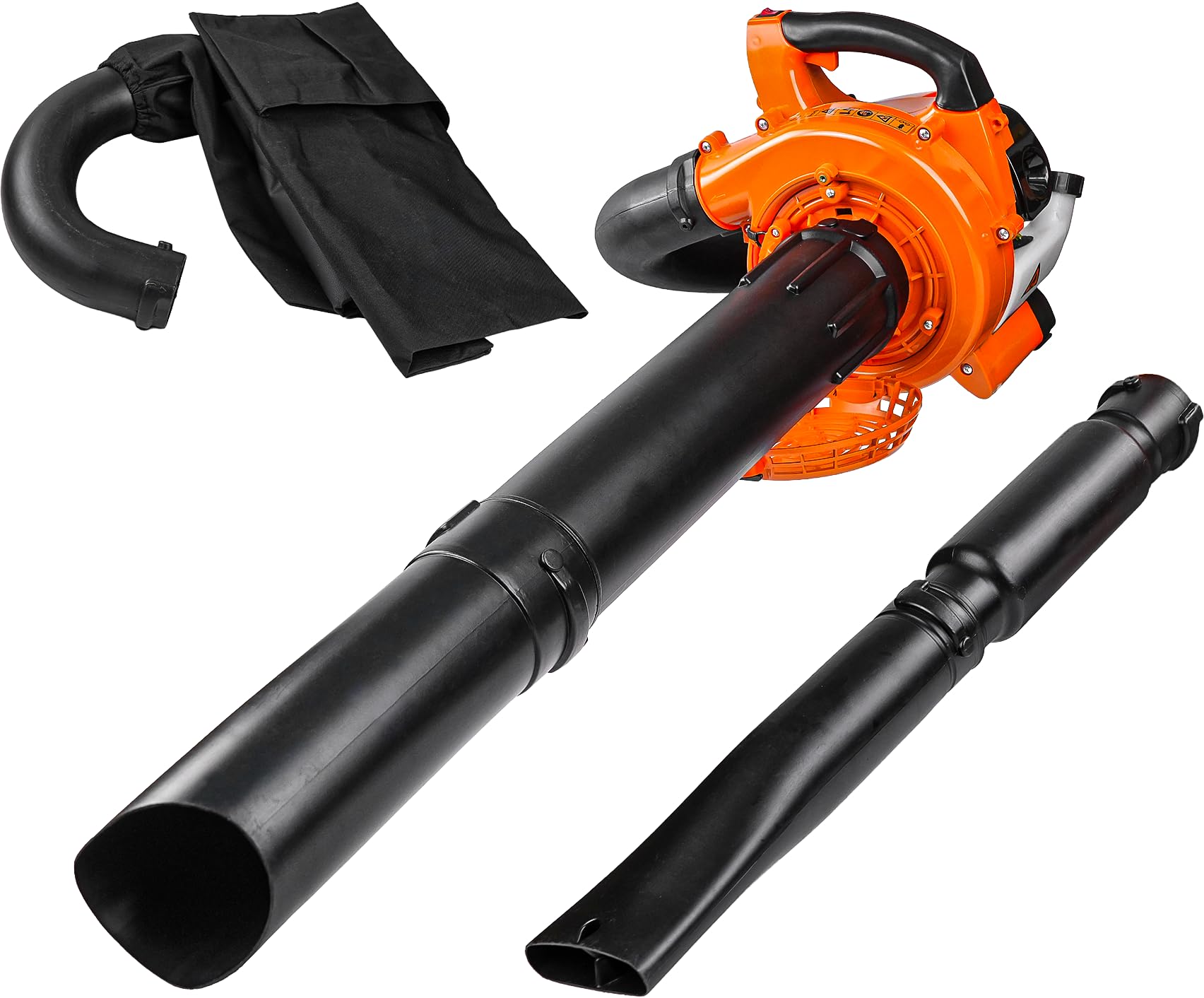
4. EARTHCRAFT 3-in-1 26CC Gas Leaf Blower, 450 CFM
Trades top-tier power for a lighter feel and a quieter noise level.
This EARTHCRAFT model runs a 26cc 2-cycle engine pushing 450 CFM and 200 MPH, matching the PROYAMA on speed while offering slightly higher air volume. At 11.5 pounds, it is one of the lighter handhelds in the lineup. The standout feature is the low 78 dB noise level, which owners appreciate for keeping the peace with neighbors. The package includes noise-canceling headphones, a thoughtful addition for sensitive ears.
On the positive side, owners say it “grinds leaves and debris with no issue” and delivers great value. The machine feels well-built for the price. On the downside, quality is a mixed bag — some units arrive with flimsy plastic that does not inspire confidence, and a few have failed from the start. The manufacturer backs it with a one-year warranty, but the inconsistency is note if you need bulletproof reliability.
The highlights
- Quiet 78 dB operation, includes noise-canceling headphones
- High 450 CFM air volume for efficient clearing
- Lightweight at 10.5 lbs for one-handed use
The risks
- Quality control is inconsistent — some units arrive damaged
- Plastic components feel cheap in hand
- Limited owner history due to low review count
Pick this if: Noise levels are a primary concern and you are willing to take a chance on a newer brand for the savings.
Pass if: You need a guaranteed-out-of-the-box runner — the Husqvarna or Echo are safer bets.
5. SuperHandy Leaf Vacuum & Wood Chipper, 7 HP 209cc

A walk-behind powerhouse that mulches at a 10:1 ratio and chips branches up to 2 inches.
The SuperHandy is a different beast entirely. Its 7 HP 209cc OHV engine turns a 13.4-inch steel impeller with serrated fins, achieving a 10:1 mulch reduction ratio — meaning ten bags of leaves become one. It also chips branches up to 2 inches in diameter, making it a true dual-purpose machine for properties with trees. The 6-bushel bag is large, and the 23.6-inch wide front snout covers ground fast.
The catch is that this unit weighs 130 pounds and is bulky on slopes. Owners find it very difficult to turn on uneven ground, and the suction head can dig into soft soil. The chipper clogs with wet material and requires disassembly to clear. When it works, owners say it has “great suction” and is sturdy, but the quality control issues — some units arriving with incorrect engine timing — mean this is a gamble. It is a brilliant tool for flat, hard surfaces, but a headache on a typical bumpy lawn.
What it does best
- 10:1 mulch ratio reduces leaf volume dramatically
- Chips branches up to 2 inches thick
- Wide 23.6-inch snout for fast coverage
The hard reality
- Very heavy (130 lbs) and hard to maneuver on slopes
- Wet material clogs the chipper regularly
- Inconsistent quality control from the start
Ideal for: Owners of large, flat properties who want both a leaf vac and a chipper in one machine and are comfortable with some tinkering.
Avoid if: Your yard has hills, soft soil, or you need a trouble-free first-season experience.
6. Agri-Fab Hard Top Mow-N-Vac, 32 Cu Ft

Hook it to your mower and clear an acre without ever lifting a bag.
This Agri-Fab unit is a tow-behind system with a 32-cubic-foot (26 bushel) capacity and a dedicated 208cc LCT engine that delivers 80 MPH suction. It connects to mower decks up to 54 inches wide, making it compatible with most riding mowers and zero-turn mowers. The hard-top vented design reduces dust during operation — a real plus if you have allergies. Owners say it is “great at sucking and mulching grass and leaves,” and assembly is straightforward.
The learning curve involves cutting the suction hose to prevent dragging and making wide turns to avoid tipping the top-heavy hopper. The main complaint is that the LCT engine (made in Vietnam) lacks the refinement of a Briggs & Stratton — no oil dipstick, no fuel filter, and vague carburetor lever labeling. A few units have rivet quality issues. Once set up, it is a time-saver for large properties, but it asks for a mechanically inclined owner.
Why it dominates
- Massive 32 cu ft hopper means far fewer stops
- Fits mower decks up to 54 inches wide
- Hard top keeps dust down while operating
The fine print
- Top-heavy design requires careful wide turns
- LCT engine lacks basic features like a dipstick
- Some assembly quality issues (rivets, hose fit)
Best for: Large-lot owners with a riding mower who want to collect leaves while they mow.
Not for: Anyone expecting a polished, premium feel — this is a functional tool with bare-bones components.
7. Billy Goat KV601 Lawn Vacuum, 190cc Briggs

A self-propelled vac from a brand known for commercial-grade toughness.
The Billy Goat KV601 runs a 190cc Briggs & Stratton engine — a name that inspires more confidence than generic engines found on cheaper units. It has a large 5-blade impeller with serrated edges for strong suction and debris reduction, and a 40-gallon breathable mesh bag with marine-style clasps (no zippers to break). Owners love how quickly it picks up leaves, with one noting it “completes the job in less than 30 minutes.” The variable height adjustment lets you switch between hard surfaces and turf.
The mixed feedback centers on ease of use: some find it easy to handle and start, while others struggle with emptying the bag. Transferring debris from the bag to a trash can is awkward unless you can lift and dump the whole bag. Suction power also gets mixed marks — strong on dry leaves but less impressive on wet, heavy material. It is a well-built machine for its niche, but it is not a miracle worker.
What earns its keep
- Trusted 190cc Briggs & Stratton engine
- 40-gallon bag with durable marine-style clasps
- Variable height for turf or hard surfaces
The limitations
- Bag is difficult to empty without lifting the whole unit
- Suction power is average on wet leaves
- Some owners find it hard to maneuver
Go for it if: You value a known engine brand and need a dedicated walk-behind vac for a medium to large lawn.
Pass if: You need a bag that empties easily into standard trash cans — the process is cumbersome.
8. Agri-Fab 45-0578 Chip-N-Vac, 32 Cu Ft

The same tow-behind chassis as the Mow-N-Vac, but with an integrated chipper for woody debris.
The Chip-N-Vac is essentially a Mow-N-Vac with a chipper chute added, allowing it to chip branches up to 2 inches in diameter while it vacuums. It shares the same 32-cubic-foot capacity and 80 MPH suction as the standard model, but adds the ability to process twigs and small branches on the go. Owners say it “makes quick work of cleaning” and the motor still starts on one pull even after two seasons of use.
The chipper function is the main differentiator, but it has limits. It only accepts straight sticks — anything with side branches requires trimming first. The hose can clog if a stick gets wedged, and the hopper overflows easily without a fill indicator. Some owners find the tongue too heavy without a jack. When it works, it cleans well, but the experience is not smooth. The motor performance gets mixed feedback, and the plastic-to-metal seal on the top is a weak point.
Its claim to fame
- Chipper handles branches up to 2 inches in diameter
- Large 32 cu ft capacity for fewer stops
- Made in the USA with a 3-year limited warranty
The frustrations
- Chipper only works with straight sticks — no side branches
- No hopper fill indicator; easy to overfill and clog
- Tongue is heavy and needs a jack for hitch attachment
Choose this if: You have a lot of small branches alongside leaves and want one machine that handles both.
pass on it if: Your debris is mostly leaves — the standard Mow-N-Vac is simpler and cheaper.
Understanding the Specs
CFM vs MPH — What Actually Moves Leaves
CFM (cubic feet per minute) measures the volume of air the machine pushes — think of it as the width of the broom. A higher CFM clears a wider path and is more effective for loose, dry leaves. MPH (miles per hour) measures how fast that air is moving — the force behind the broom. High MPH helps dislodge wet or stuck debris. For vacuuming, CFM matters more because suction relies on air volume, not speed. Look for at least 350 CFM for effective vacuuming on a handheld unit.
Mulch Ratio — The Real Labor Saver
The mulch ratio tells you how much the machine reduces the volume of leaves. A 10:1 ratio means ten bags of leaves become one bag of fine mulch. That matters because you empty the bag ten times less often. Higher ratios (10:1 or more) usually come from walk-behind or tow-behind machines with powerful impellers and serrated fins. Handheld units typically achieve lower ratios but are still a huge improvement over bagging whole leaves.
FAQ
Can I use a gas leaf vacuum on wet leaves?
What size gas leaf vacuum do I need for my yard?
What is the difference between a 2-cycle and 4-cycle engine in a leaf vacuum?
How often do I need to empty the collection bag?
Is a gas leaf vacuum louder than an electric one?
Can a gas leaf vacuum chip branches?
Why is the mulch ratio important?
How do I maintain a gas leaf vacuum?
Does a higher CFM always mean better vacuum performance?
Can I convert a gas leaf blower into a vacuum?
Final Thoughts: The Verdict
Across the board, the best gas leaf vacuum winner is the Echo ES-250 because it combines reliable starting, strong suction, and the lowest noise level in the handheld class — a combination that makes the weekly leaf cleanup genuinely less of a chore. If you want the highest air volume and a lighter carry, grab the Husqvarna 125BVx. And for owners with large properties who prefer to ride while they clean, the Agri-Fab 32 Cu Ft Mow-N-Vac is the one to reach for — it turns a full afternoon of bagging into a single lap around the yard.
How We Picked
We do not accept paid placement. Every pick is matched to a real buyer and a real use-case; we do not hands-on test units.
Sources & Methodology
Specifications: manufacturer listings and product documentation. Review insights: verified customer reviews, as of July 2026. Pricing: not shown on this page (it changes often); check the current price via the retailer link.
As an Amazon Associate, Lawn Gear Lab earns from qualifying purchases. This does not affect which products we feature.