
Specs are compiled from manufacturer listings and verified buyer reviews and can change over time — please confirm the key details on the product page before buying.
Yellow leaves and bland, sparse fruit usually mean your orange tree is hungry, not thirsty. The right fertiliser delivers the NPK trio plus trace minerals to transform a struggling tree into a heavy producer. This guide covers what works for orange trees specifically, whether yours is in a pot on the patio or planted in the backyard.
I’m Rikta — the founder and writer behind Lawn Gear Lab. This guide is built by comparing the manufacturers’ published specifications and the patterns across verified customer reviews, so you get each pick’s real strengths and trade-offs instead of marketing spin.
The difference between a stagnant tree and a prolific one often depends on the formulation you choose. Here is everything you need to choose the best fertiliser for orange trees and stop guessing at the garden center.
Our Picks at a Glance


How To Choose The Best Fertiliser For Orange Trees
Not all plant food works the same for citrus. Orange trees are heavy feeders that crave a specific nutrient balance.
Start with the NPK Ratio
The three numbers on the label stand for nitrogen (N), phosphorus (P), and potassium (K). Nitrogen drives leafy growth and deep green color. Phosphorus supports root development and flower production. Potassium is what gives you firm, sweet fruit. For orange trees, a balanced or slightly potassium-heavy ratio — something like 6-4-6 or 5-2-6 — is the balance. Too much nitrogen and you get a bushy tree with no oranges.
Pick the Right Format for Your Routine
Liquid concentrates (like the Farmer’s Secret pick below) need to be mixed with water and applied weekly. They act fast, which is great for a tree that looks sick right now. Granular slow-release formulas (like the Espoma and FoxFarm picks) are sprinkled around the drip line once every few months. They are the low-maintenance option. Spikes (like the Miracle-Gro and Jobe’s picks) are hammered into the soil near the roots and dissolve slowly. Spikes are the easiest on your back but cover a smaller area than granules.
Check the Micronutrients
Yellow leaves on an orange tree are often a sign of missing micronutrients, not a lack of NPK. Zinc, iron, manganese, and magnesium are the ones citrus trees need most. A fertiliser that includes these trace elements will fix leaf yellowing faster than one that only carries the big three numbers. The GardenWise pick below is a strong example of a formula that addresses this directly.
Quick Comparison
| Model | Best For | NPK Ratio | Item Weight | Form | Amazon |
|---|---|---|---|---|---|
| Farmer’s Secret Citrus Booster★ Best Overall | Quick recovery & container trees | Not listed (liquid concentrate) | 2.9 lb | Liquid | Amazon |
| Espoma Organic Citrus-ToneOrganic Champion | Organic granular feeding | 5-2-6 | 4 lb | Granules | Amazon |
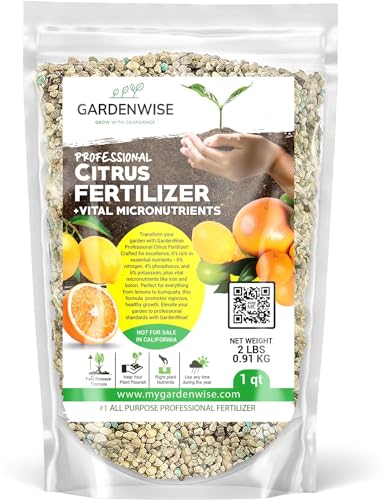
| GARDENWISE Citrus FertilizerMicronutrient Powerhouse | All-in-one micronutrient boost | 6-4-6 | 2 lb | Granules | Amazon |
| Miracle-Gro Spikes | No-mess, no-mix feeding | Not listed (spikes) | 16 oz | Spikes | Amazon |
| Jobe’s Organics Spikes | Organic spikes for containers | 3-5-5 | 6 spikes | Spikes | Amazon |
| FoxFarm Happy Frog | Slow-release with mycorrhizae | Not listed (7-3-3 mix) | 4 lb | Granules | Amazon |
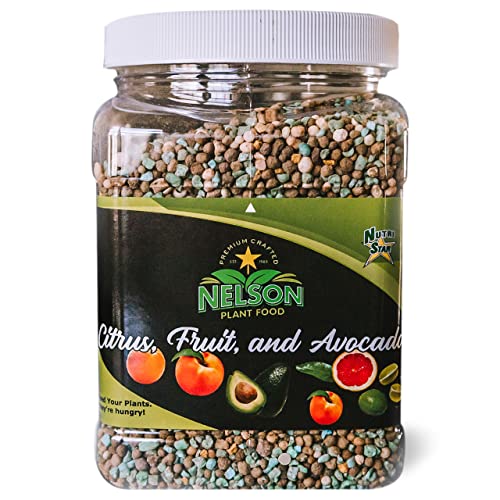
| Nelson NutriStar | High-potassium winter hardiness | 12-10-10 | 4 lb | Granules | Amazon |
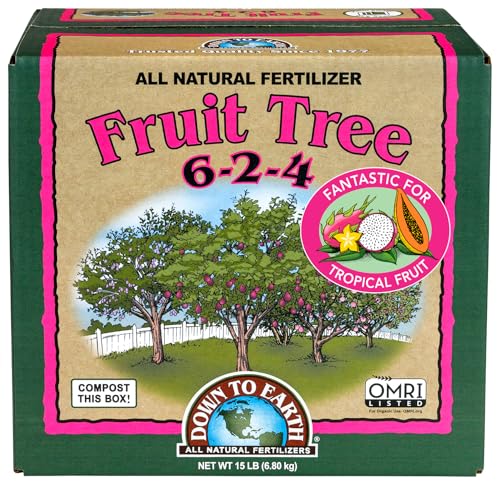
| Down To Earth Fruit Tree | Large backyard orchards | 6-2-4 | 15 lb | Granules | Amazon |
In‑Depth Reviews
1. Farmer’s Secret Citrus Tree Booster Fertilizer (32oz)
Our pick — over 4.5★ from 600+ verified ratings; the strongest balance of quality and price.
The liquid lifeline that brought a tree back from the brink in days.
This is the pick for anyone whose orange tree looks like it is on its last legs. The secret is the concentration — you only need one teaspoon per gallon of water. For a tree in its first season, feed it weekly at one teaspoon. Mature trees get up to two teaspoons per week. The reviews pages sum it up: “Excellent fertilizer, this helped my tree when I thought it was dead.” If you have a potted orange tree indoors or on a patio, the instructions tell you to cut the dosage in half, so it is safe for containers too.
Mix this with water and pour it along the drip line (the circle where the branches end). The liquid form gets into the roots fast, which is why the majority of owners — more than 640 of them — rate this product extremely highly. The most-discussed aspect is effectiveness, and the second most-discussed is overall quality, both overwhelmingly positive. It is a 32-ounce bottle that weighs 2.9 pounds, and it is made in Kentucky. The formula also works on avocado trees if you grow those too.
The honest trade-off is that liquid feeding requires a weekly routine. If you travel often or prefer a hands-off approach, a slow-release granular might suit you better. But for a tree that needs a turnaround right now, this is the product owners reach for.
Where It Wins
- Works fast — buyers report new growth within a week
- Super concentrated form means one bottle goes a long way
- Simple to measure and apply
The Catch
- Requires weekly mixing and watering
- Liquid format is less convenient for large in-ground orchards
Reach for this if: your orange tree is struggling, looks yellow, or you have a container tree that needs a precise feeding schedule.
Look elsewhere if: you want a low-maintenance granular or spike that you apply every few months.
2. Espoma Organic Citrus-Tone 5-2-6 (4 lb)
The granular staple for organic growers who want to feed once and forget it.
Espoma has been in the organic game since 1929, and this Citrus-Tone formula reflects that history. It uses a 5-2-6 NPK ratio with 5% calcium added to strengthen trunks and limbs. The granules are ready to use straight out of the bag — no mixing, no diluting. You just sprinkle them around the drip line of the tree and water them in. Apply it late winter before the bloom, again in spring after the bloom, and once more in fall. The 4-pound bag is noticeably heavier than the GardenWise pick (4 lb vs 2 lb, a 2x gap), giving you more coverage per bag.
There is one thing every buyer should know before opening the bag: this stuff smells. Owners are upfront about it — the odor is the most-discussed negative aspect. The reviews note it is best used outdoors only, and dogs are often attracted to the smell (which fades after about a week). On the positive side, quality and effectiveness are the top-mentioned aspects, with the crowd calling it “the best I’ve found for citrus.” It is also OMRI-listed for organic gardening, meaning it meets the requirements for organic production.
If you are growing a mix of fruit trees — lemons, limes, oranges, even avocado or nut trees — this single formula covers them all. Just keep the bag away from your dog for the first week after application.
One-sentence verdict: The go-to organic granular for anyone who wants proven results and does not mind a stinky bag for a week.
Best suited for: organic gardeners with in-ground citrus trees who want a simple, no-mix granular that feeds over weeks.
Think twice if: you plan to use it on indoor or patio plants — the odor is strong, and one owner noted it is not for houseplants.
3. GARDENWISE Professional Citrus Fertilizer (1 Quart)
The slow-release granular that brings new growth within a single week.
What sets GardenWise apart from simpler citrus fertilisers is the full micronutrient lineup. It includes magnesium (for chlorophyll production and greener leaves), zinc (to strengthen plant defenses), copper (essential for growth and metabolism), iron (for vibrant foliage), and boron (for flower and fruit development). The base NPK is 6-4-6, a balanced ratio that supports vegetative growth and fruit quality. One owner with a 4-year-old Cara Cara orange tree in a 15-gallon pot used this alongside weekly fish emulsion and reported the leaves stayed “green and shiny.”
The granules are coated to release nutrients slowly with each watering, feeding the tree for up to two months per application. That means just a handful of applications per year. The 2-pound bag is lighter than the Espoma 4-pound bag, but the concentrated formula means a little goes a long way. The most-discussed aspect is plant health, followed closely by effectiveness — both overwhelmingly positive. One reviewer noted “new growth on lime tree within 1 week.”
This is a mid-range granular that works well for both in-ground and container trees, but it truly shines if your orange tree shows signs of micronutrient deficiency — yellowing between the veins of the leaves, for example. It is also well-priced, sitting in a similar tier to Espoma, but without the strong odor complaints.
Why it stands out: The micronutrient blend targets the hidden deficiencies that cause yellow leaves and poor fruit set — something the simpler NPK-only formulas miss entirely.
Grab this if: your orange tree has yellowing leaves or weak growth that standard fertilisers have not fixed.
skip it if: you need a liquid for fast emergency feeding — this is a slow-release granular that takes time to work.
4. Miracle-Gro Fertilizer Spikes for Fruit and Citrus Trees (12-Pack)

The spike that turned a plum tree into a heavy producer in six weeks.
If you hate mixing liquids or spreading granules, these spikes are the ultimate shortcut. You hammer them into the soil near the root zone twice a year — once in spring and once in fall. That is it. The spikes release nutrients directly to the roots without any runoff or waste. The 12-pack is enough for several trees, and the package weighs just 16 ounces. One buyer mentioned “massive fruit on plum and first fruit on Rainer cherry tree” after six weeks of using these spikes.
The downside some owners hit: the spikes are brittle. About half of them can arrive broken in the box, according to a handful of buyers. The fix is simple — you use a spade to push the broken pieces into the soil. It is a packaging issue, not a product flaw, but it is worth knowing before you open the box. The overall rating is very strong, with 4.6 stars across a large number of ratings, and convenience is the main driver of that satisfaction.
Compared to the Jobe’s spikes below, these are a synthetic formulation (not organic). For the average home grower who wants the least fuss possible, these are tough to top. Just handle the box carefully when it arrives.
What Works
- No measuring, no mixing, no cleanup
- Only two applications per year
- Targets the root zone directly
What to Watch For
- Spikes are brittle and some arrive broken
- Not OMRI-listed for organic gardening
Perfect for: the gardener who wants to set a reminder twice a year and not think about fertiliser the rest of the time.
Not ideal if: you are committed to organic-only inputs, or you have very small container trees that might be overfed by a full spike.
5. Jobe’s Organics Fruit & Citrus Tree Fertilizer Spikes (6 Spikes)

The organic spike that turned a Meyer lemon tree into a year-round producer.
Jobe’s takes the convenience of spikes and adds organic certification. The NPK ratio is 3-5-5, which is notably higher in phosphorus and potassium relative to nitrogen — a formula designed to push flowers and fruit rather than leafy growth. Each spike includes Jobe’s proprietary Biozome, a microorganism (archaea) that accelerates the breakdown of material in the soil. The spikes are OMRI-listed for organic gardening, meaning no synthetic chemicals. One owner of three potted Meyer lemon trees says they get “an abundance of juicy, sweet lemons every year” using these spikes.
For a single orange tree in a container, one package is enough. For a small orchard, you will need multiple boxes. Owners note that getting the dosage right matters — following the spacing instructions on the package is critical. If you place the spikes too close to the trunk or use too many, the tree can struggle. The most-discussed aspect is effectiveness, followed by bloom growth. A few owners mention that the spikes are a bit pricey per spike compared to granular alternatives.
Between the two spike options, the Jobe’s is the right pick for organic growers or for anyone with container trees who wants a clean, no-mess feeding routine. The Miracle-Gro is better for large in-ground trees at a lower per-spike cost.
Bottom line: If you want organic certification and the convenience of spikes, Jobe’s delivers. The pre-measured dosage protects you from over-fertilizing, which is the number one mistake beginners make.
Best for: container-grown orange trees where you want precise, mess-free organic feeding.
Consider the alternative if: you are feeding multiple large in-ground trees — the 6-count package runs out fast.
6. FoxFarm Happy Frog Citrus & Avocado Fertilizer (4 lb)

The soil-building granular that made old citrus trees look young again.
FoxFarm’s Happy Frog line has a cult following among serious gardeners, and this citrus and avocado formula shows why. It includes mycorrhizal fungi — beneficial soil microbes that attach to the tree’s roots and help them absorb water and nutrients more efficiently. The slow-release nitrogen fuels vegetative growth without shocking the tree. Another buyer said it “finally fixed my citrus trees,” with yellow leaves vanishing and more limes appearing than ever before.
The 4-pound bag is the same weight as the Espoma bag, but the nutrient profile is different (7-3-3 mix, though the exact NPK is not printed on the label in standard form). The granules are easy to apply: sprinkle around the drip line and water in. The most-discussed aspects are growth and effectiveness. There is a quirk worth noting: the formula smells like horse food or alfalfa meal. One buyer asked, “did I really pay for a little sack of alfalfa meal??” But the same buyer conceded it produced really good oranges and lemons. Dogs may try to eat it, so water it in thoroughly to keep pets away.
This is a premium-tier granular that focuses on long-term soil health rather than a quick green-up. It is the right choice if you plan to keep your orange tree for many years and want to build the soil, not just feed the tree.
Strengths
- Mycorrhizal fungi improve root efficiency and water absorption
- Slow-release formula prevents over-feeding
- Works well for both citrus and avocado trees
Weaknesses
- May need more frequent applications during the growing season if leaves yellow
- Some owners find the smell off-putting
Choose this if: you are focused on soil biology and want a fertiliser that feeds the roots through beneficial fungi.
Pass on it if: you need a quick fix for a sick tree — this is a slow-release product designed for steady, long-term results.
7. Nelson NutriStar Citrus Fruit & Avocado Tree Plant Food 12-10-10 (4 lb)
The high-potassium formula that keeps orange trees hardy through cold snaps.
This Nelson formula stands out for its NPK ratio: 12-10-10. The nitrogen content is notably higher than most citrus-specific blends, and the 10% potassium (soluble potash) is specifically included to help trees survive colder weather. It also contains calcium to increase the size and strength of trunks and limbs. One owner reported that their orange tree “taken off and grown a full batch of new leaves” within two months of switching to this fertiliser, even after moving the tree indoors. The formula covers a huge range of fruit trees — not just citrus, but also apples, pears, peaches, figs, and even grapes and kiwis.
The 4-pound bag of granules should be applied every 30 days during the growing season. The manufacturer recommends using NutriStar for “immediate results” that work with the soil’s biology. It is a premium option — the price is higher than the Espoma and GardenWise picks. The most-discussed aspects are plant benefits and growth, both overwhelmingly positive. A few owners note that the formula is a general plant food rather than a citrus-specific specialty blend, so if you want something crafted specifically for the unique needs of citrus, the Espoma or GardenWise might fit better.
The high nitrogen level (12%) means this is best for mature trees that need a strong growth push. For a young or small tree, the nitrogen could be too aggressive. Apply it carefully and stick to the recommended dosage.
One-line take: A premium granular with serious cold-weather potassium — reach for it if your region sees frost or you want a single formula for all your fruit trees.
Ideal for: orange tree owners in colder climates who want extra potassium for winter hardiness, or those with multiple types of fruit trees.
Not the best fit if: you have a young or container-grown tree that could be burned by 12% nitrogen.
8. Down To Earth Organic Fruit Tree Fertilizer 6-2-4 (15 lb)
The 15-pound bag for serious backyard orchards that need season-long feeding.
If you have multiple orange trees or a full backyard orchard, this is the bulk-purchase king. The 15-pound bag of 6-2-4 granules is OMRI-listed for organic gardening. The ratio is lower in phosphorus (2) compared to most citrus blends, with the focus on nitrogen for leafy growth and potassium for fruit quality. It also contains calcium, which is essential for strong cell walls in fruit. One owner reports their tree “has tripled in size” and another mentions their mango tree has “more fruit than ever.” A crabapple tree that was uprooted by wind was brought back to health over two seasons using this formula.
The slow-release nature means you apply it once and it feeds steadily throughout the growing season. Owners say the mix is easy to spread and blends into the soil quickly, with no harsh smell like synthetic fertilisers. The most-discussed aspects are quality and effectiveness, both strongly positive. There is a mixed opinion on value for money — it is the largest bag here by far, so the upfront cost is higher, but the per-pound price is lower than any other granular on this list.
The only real limitation is the 6-2-4 ratio itself. For orange trees, a higher potassium number (closer to 6) is often recommended for fruit quality. This formula leans more toward general tree health and growth. If your primary goal is maximizing fruit size and sweetness, one of the more citrus-tailored formulas above might serve you better. But for a mixed orchard of different fruit trees, this is the workhorse.
Pros
- Massive 15 lb bag — best cost per pound on this list
- OMRI-listed organic, no synthetic chemicals
- Slow-release feeds all season long
Cons
- NPK ratio (6-2-4) is lower in potassium than ideal for heavy fruit production
- Large bag may be overkill for a single small tree
Best for: owners with multiple fruit trees or a large orchard who want an organic slow-release granular in bulk.
Less ideal if: you have a single container orange tree and want a potassium-heavy formula for maximum fruit sweetness.
Understanding the Specs
NPK Ratio — The Three Numbers
The three numbers on every fertiliser label stand for the percentage of nitrogen (N), phosphorus (P), and potassium (K) by weight. Nitrogen drives leaf and stem growth, which is why it is the first number. Phosphorus supports root development and flowering. Potassium is what gives you firm, sweet, well-colored fruit. For orange trees, look for a ratio where potassium is roughly equal to or slightly higher than nitrogen — something like 5-2-6 or 6-4-6. Too much nitrogen gives you a lush green tree with no fruit.
Slow-Release vs Liquid vs Spikes
Granular slow-release fertilisers (like Espoma, GardenWise, and FoxFarm) are sprinkled on the soil and break down over weeks or months. They are the most forgiving because the nutrients release slowly, reducing the risk of root burn. Liquid concentrates (like Farmer’s Secret) work within days because the nutrients are immediately available in the water. Spikes (like Miracle-Gro and Jobe’s) are the easiest to apply — push them into the soil near the root zone and they dissolve over time. The trade-off is control: with liquid you can adjust the dose every week; with spikes you are locked in until they dissolve.
Organic vs Synthetic
Organic fertilisers are made from plant or animal materials (compost, bone meal, alfalfa meal) and are OMRI-listed for organic gardening. They feed the soil microbes, which in turn feed the tree. They are slower to show results but build long-term soil health. Synthetic fertilisers (like Miracle-Gro spikes) are manufactured mineral salts that feed the plant directly. They work faster but do nothing for soil biology and can build up salts that harm roots over time. For orange trees in containers, synthetic spikes can be easier to manage; for in-ground trees, organic granular is gentler in the long run.
Micronutrients — The Hidden Helpers
Iron, zinc, manganese, magnesium, and boron are the micronutrients that citrus trees crave. A deficiency in any of them shows up as yellow leaves with green veins (iron chlorosis), stunted growth, or poor fruit set. Many basic fertilisers provide only the big three NPK numbers. If your orange tree has yellow leaves despite regular feeding, switch to a product that lists specific micronutrients on the label — the GardenWise and FoxFarm picks above are strong examples.
FAQ
When is the best time to fertilise an orange tree?
How often should I fertilise my orange tree?
Can I use a general fruit tree fertiliser on orange trees?
What NPK ratio is best for orange trees?
Are liquid or granular fertilisers better for orange trees?
Can I over-fertilise my orange tree?
Do orange trees need different fertiliser in pots vs in the ground?
How long does a bag of citrus fertiliser last?
Is organic fertiliser better for orange trees?
What if my orange tree leaves are still yellow after fertilising?
Final Thoughts: The Verdict
For most orange tree owners, the best fertiliser for orange trees is the Farmer’s Secret Citrus Tree Booster because it delivers fast, visible results with a super-concentrated liquid formula that works for both sick trees and healthy container trees. If you prefer a low-maintenance organic granular, the {“@context”: “https://schema.org”, “@graph”: [{“@type”: “ItemList”, “name”: “8 Best Fertiliser For Orange Trees”, “url”: “https://lawngearlab.com/best-fertiliser-for-orange-trees/”, “numberOfItems”: 8, “itemListElement”: [{“@type”: “ListItem”, “position”: 1, “name”: “Farmer’s Secret Citrus Tree Booster Fertilizer (32oz)”, “url”: “https://lawngearlab.com/best-fertiliser-for-orange-trees/#product-1”}, {“@type”: “ListItem”, “position”: 2, “name”: “Espoma Organic Citrus-Tone 5-2-6 (4 lb)”, “url”: “https://lawngearlab.com/best-fertiliser-for-orange-trees/#product-2”}, {“@type”: “ListItem”, “position”: 3, “name”: “GARDENWISE Professional Citrus Fertilizer (1 Quart)”, “url”: “https://lawngearlab.com/best-fertiliser-for-orange-trees/#product-3”}, {“@type”: “ListItem”, “position”: 4, “name”: “Miracle-Gro Fertilizer Spikes for Fruit and Citrus Trees (12-Pack)”, “url”: “https://lawngearlab.com/best-fertiliser-for-orange-trees/#product-4”}, {“@type”: “ListItem”, “position”: 5, “name”: “Jobe’s Organics Fruit & Citrus Tree Fertilizer Spikes (6 Spikes)”, “url”: “https://lawngearlab.com/best-fertiliser-for-orange-trees/#product-5”}, {“@type”: “ListItem”, “position”: 6, “name”: “FoxFarm Happy Frog Citrus & Avocado Fertilizer (4 lb)”, “url”: “https://lawngearlab.com/best-fertiliser-for-orange-trees/#product-6”}, {“@type”: “ListItem”, “position”: 7, “name”: “Nelson NutriStar Citrus Fruit & Avocado Tree Plant Food 12-10-10 (4 lb)”, “url”: “https://lawngearlab.com/best-fertiliser-for-orange-trees/#product-7”}, {“@type”: “ListItem”, “position”: 8, “name”: “Down To Earth Organic Fruit Tree Fertilizer 6-2-4 (15 lb)”, “url”: “https://lawngearlab.com/best-fertiliser-for-orange-trees/#product-8”}]}, {“@type”: “Product”, “position”: 1, “name”: “Farmer’s Secret Citrus Tree Booster Fertilizer (32oz)”, “image”: “https://m.media-amazon.com/images/I/41bcpfVbPNL.jpg”, “brand”: {“@type”: “Brand”, “name”: “Farmer’s”}, “url”: “https://www.amazon.com/dp/B0DLVHNZH9/”, “offers”: {“@type”: “Offer”, “url”: “https://www.amazon.com/dp/B0DLVHNZH9/”}}, {“@type”: “Product”, “position”: 2, “name”: “Espoma Organic Citrus-Tone 5-2-6 (4 lb)”, “image”: “https://m.media-amazon.com/images/I/41WkLpe6AAL.jpg”, “brand”: {“@type”: “Brand”, “name”: “Espoma”}, “url”: “https://www.amazon.com/dp/B00YEUROQK/”, “offers”: {“@type”: “Offer”, “url”: “https://www.amazon.com/dp/B00YEUROQK/”}}, {“@type”: “Product”, “position”: 3, “name”: “GARDENWISE Professional Citrus Fertilizer (1 Quart)”, “image”: “https://m.media-amazon.com/images/I/51G8CVY-iDL.jpg”, “brand”: {“@type”: “Brand”, “name”: “GARDENWISE”}, “url”: “https://www.amazon.com/dp/B0CP2T4YWB/”, “offers”: {“@type”: “Offer”, “url”: “https://www.amazon.com/dp/B0CP2T4YWB/”}}, {“@type”: “Product”, “position”: 4, “name”: “Miracle-Gro Fertilizer Spikes for Fruit and Citrus Trees (12-Pack)”, “image”: “https://m.media-amazon.com/images/I/71CxQrKBRlL.jpg”, “brand”: {“@type”: “Brand”, “name”: “Miracle-Gro”}, “url”: “https://www.amazon.com/dp/B000JJYPYE/”, “offers”: {“@type”: “Offer”, “url”: “https://www.amazon.com/dp/B000JJYPYE/”}}, {“@type”: “Product”, “position”: 5, “name”: “Jobe’s Organics Fruit & Citrus Tree Fertilizer Spikes (6 Spikes)”, “image”: “https://m.media-amazon.com/images/I/91Wo5kGiRiL.jpg”, “brand”: {“@type”: “Brand”, “name”: “Jobe’s”}, “url”: “https://www.amazon.com/dp/B07CGD2L53/”, “offers”: {“@type”: “Offer”, “url”: “https://www.amazon.com/dp/B07CGD2L53/”}}, {“@type”: “Product”, “position”: 6, “name”: “FoxFarm Happy Frog Citrus & Avocado Fertilizer (4 lb)”, “image”: “https://m.media-amazon.com/images/I/516wLdTC2WL.jpg”, “brand”: {“@type”: “Brand”, “name”: “FoxFarm”}, “url”: “https://www.amazon.com/dp/B07NPYZP7Z/”, “offers”: {“@type”: “Offer”, “url”: “https://www.amazon.com/dp/B07NPYZP7Z/”}}, {“@type”: “Product”, “position”: 7, “name”: “Nelson NutriStar Citrus Fruit & Avocado Tree Plant Food 12-10-10 (4 lb)”, “image”: “https://m.media-amazon.com/images/I/51lHg4uRBUL.jpg”, “brand”: {“@type”: “Brand”, “name”: “Nelson”}, “url”: “https://www.amazon.com/dp/B004F1W5L2/”, “offers”: {“@type”: “Offer”, “url”: “https://www.amazon.com/dp/B004F1W5L2/”}}, {“@type”: “Product”, “position”: 8, “name”: “Down To Earth Organic Fruit Tree Fertilizer 6-2-4 (15 lb)”, “image”: “https://m.media-amazon.com/images/I/51KsH9A0IVL.jpg”, “brand”: {“@type”: “Brand”, “name”: “Down”}, “url”: “https://www.amazon.com/dp/B08XDNDTNV/”, “offers”: {“@type”: “Offer”, “url”: “https://www.amazon.com/dp/B08XDNDTNV/”}}, {“@type”: “FAQPage”, “mainEntity”: [{“@type”: “Question”, “name”: “When is the best time to fertilise an orange tree?”, “acceptedAnswer”: {“@type”: “Answer”, “text”: “The general schedule for most citrus fertilisers is late winter (just before the spring bloom), late spring (after the fruit has set), and early fall. Avoid fertilising in deep winter when the tree is dormant. If you are using a slow-release granular, two applications per year (spring and fall) are often enough. Liquid concentrates need more frequent application — check the product label for its specific schedule.”}}, {“@type”: “Question”, “name”: “How often should I fertilise my orange tree?”, “acceptedAnswer”: {“@type”: “Answer”, “text”: “It depends on the format of the fertiliser. Slow-release granules can be applied every 6 to 8 weeks during the growing season. Spikes are typically applied twice a year (spring and fall). Liquid concentrates need weekly application. Over-fertilising is more dangerous than under-fertilising — the burn from too much nitrogen can kill a tree. Always follow the product’s instructions.”}}, {“@type”: “Question”, “name”: “Can I use a general fruit tree fertiliser on orange trees?”, “acceptedAnswer”: {“@type”: “Answer”, “text”: “Yes, but check the NPK ratio first. A general fruit tree fertiliser with an even ratio like 10-10-10 can work, but it is not ideal. Orange trees benefit from a slightly higher potassium number to support fruit quality. A blend like 5-2-6 or 6-4-6 is more tailored to citrus needs. If the only option is a balanced 10-10-10, use it at half the recommended rate to avoid nitrogen overload.”}}, {“@type”: “Question”, “name”: “What NPK ratio is best for orange trees?”, “acceptedAnswer”: {“@type”: “Answer”, “text”: “A ratio around 5-2-6 or 6-4-6 is widely considered the balance for orange trees. The nitrogen supports leaf growth, but the slightly higher potassium drives fruit development and sweetness. Avoid high-nitrogen lawn fertilisers (like 30-0-0) on orange trees — they will push huge leafy growth at the expense of fruit.”}}, {“@type”: “Question”, “name”: “Are liquid or granular fertilisers better for orange trees?”, “acceptedAnswer”: {“@type”: “Answer”, “text”: “Both work, but for different situations. Liquid concentrates act fast and are excellent for reviving a struggling tree or feeding container trees where you want precise control. Granular slow-release formulas are better for established in-ground trees because they feed steadily over weeks and are less work. Spikes are the middle ground — easy but less flexible.”}}, {“@type”: “Question”, “name”: “Can I over-fertilise my orange tree?”, “acceptedAnswer”: {“@type”: “Answer”, “text”: “Yes, and it is among the most common mistakes. Too much fertiliser — especially nitrogen — can burn the roots, cause leaf drop, and reduce fruit production. Signs of over-fertilising include yellow or brown leaf tips, wilting despite wet soil, and a white crust of salt on the soil surface. Always err on the side of less, especially with synthetic products. Organic granular formulas are more forgiving because they release nutrients slowly.”}}, {“@type”: “Question”, “name”: “Do orange trees need different fertiliser in pots vs in the ground?”, “acceptedAnswer”: {“@type”: “Answer”, “text”: “Yes. Container trees have less soil volume to hold nutrients, so they drain and deplete faster. They benefit from a liquid fertiliser that you can apply weekly at a reduced dose. In-ground trees have a larger root zone and do well with slow-release granular applied two to three times per year. The Farmer’s Secret pick includes a specific instruction to cut the dosage in half for indoor or container trees.”}}, {“@type”: “Question”, “name”: “How long does a bag of citrus fertiliser last?”, “acceptedAnswer”: {“@type”: “Answer”, “text”: “It depends on the size of the bag and the number of trees. A 4-pound bag of granular (like Espoma or FoxFarm) typically lasts one full growing season for two to three mature trees. A 15-pound bag (like the Down To Earth pick) can cover a small orchard of 8-10 trees for the same period. Liquid concentrates cover more area per ounce but need more frequent application.”}}, {“@type”: “Question”, “name”: “Is organic fertiliser better for orange trees?”, “acceptedAnswer”: {“@type”: “Answer”, “text”: “Organic fertiliser is gentler on the soil and builds long-term fertility by feeding beneficial microbes. It is less likely to burn roots. The trade-off is speed — organic granules take longer to show results than synthetic liquids. For a home grower who wants healthy soil and steady fruit over many years, organic is the better choice. For a tree that is sick and needs immediate help, a liquid concentrate (organic or synthetic) acts faster.”}}, {“@type”: “Question”, “name”: “What if my orange tree leaves are still yellow after fertilising?”, “acceptedAnswer”: {“@type”: “Answer”, “text”: “Yellow leaves with dark green veins usually mean an iron or manganese deficiency, not a lack of NPK. A standard fertiliser may not fix this. You need a product that includes chelated iron and a full micronutrient blend, like the GardenWise pick in this guide. If the yellowing is uniform across the whole leaf, the tree may be over-watered or root-bound, and no fertiliser will help until you fix the drainage.”}}]}]}