
Specs are compiled from manufacturer listings and verified buyer reviews and can change over time — please confirm the key details on the product page before buying.
Walking into a garden nursery supply aisle can feel like standing in a foreign language lab — seed starter cubes, germination mix, clear nursery pots, humidity domes, capillary mats, and a dozen sizes and materials you have never heard of. The real question is simpler: what actually makes your seeds sprout fast and your cuttings root, without you having to babysit them every day? This guide cuts through the shelf confusion by looking at what successful home growers actually use, from the soil they pour to the pots they swear by.
I’m Rikta — the founder and writer behind Lawn Gear Lab. This guide is built by comparing the manufacturers’ published specifications and the patterns across verified customer reviews, so you get each pick’s real strengths and trade-offs instead of marketing spin.
Whether you are starting your first tomato seeds under a grow light or scaling up a home greenhouse operation, the best garden nursery supplies balance visible root health, consistent moisture, and durable materials that will not crack after one season of use.
Our Picks at a Glance


How To Choose The Best Garden Nursery Supplies
Nursery supplies fall into a few key categories — pots, trays, growing media, and storage — and each has one or two specs that decide success. Start with what you are growing: seeds need a fine, moisture-retentive medium and a humidity dome; cuttings need a well-aerated cube or plug that holds its shape; transplants need a pot with drainage and a matching saucer. The three specs below cover the most common buying mistakes.
Drainage and Root Visibility
A pot with no drainage hole is a drowning risk for every plant you put in it. Clear plastic pots let you check soil moisture and root growth without pulling the plant out — roots circling the bottom tell you it is time to repot, while brown or mushy roots mean overwatering has already started. Look for multiple drainage holes and a matching saucer that catches excess water without letting the pot sit in a puddle.
Growing Medium Texture and pH
Seeds and cuttings need a fine, loose mix that holds moisture but does not compact into mud. Sphagnum peat moss is the standard base because it absorbs water evenly and stays airy when blended with perlite and vermiculite. For seed starting, the pH should sit between 5.4 and 6.3 — that range keeps nutrients available to the young roots. Coarse bark or large perlite chunks (common in potting soil) create air pockets that let tiny seeds dry out before they sprout.
Tray Size and Self-Watering Features
The cell size in a seed starter tray determines how long seedlings can grow before you need to transplant. A 1.5-inch cell is fine for the first two to three weeks; anything bigger gives you more time but takes up more shelf space. Self-watering trays with a capillary mat and a water reservoir eliminate the uneven drying that kills seedlings on weekends or busy workdays — the mat wicks water up from below, so the soil stays evenly moist without you guessing.
Quick Comparison
| Model | Best For | Drainage | Material | Capacity / Cells | Amazon |
|---|---|---|---|---|---|
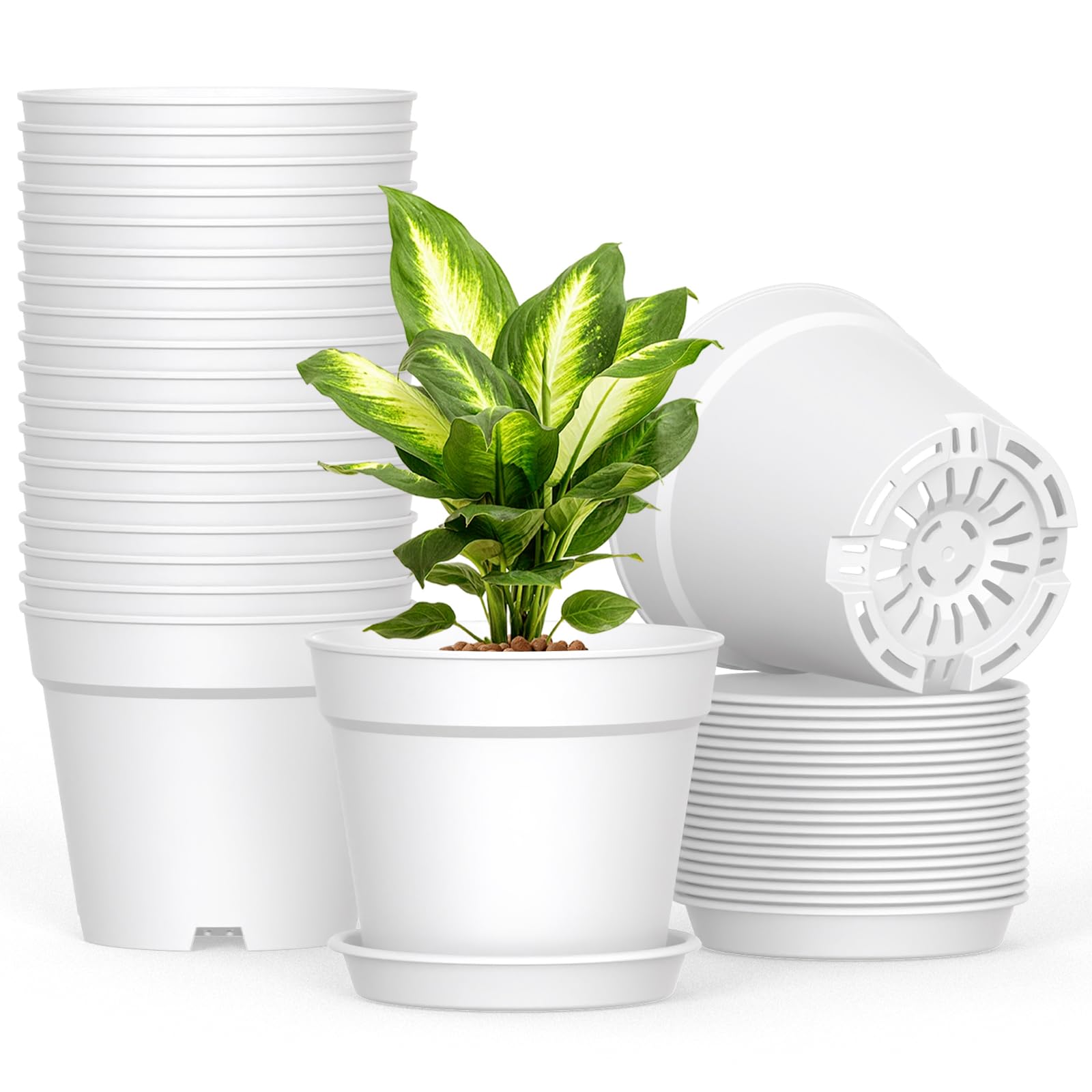
| SwinDuck 20-Pack★ Best Overall | Versatile repotting | Multiple holes + saucer | UV-resistant plastic | 20 pots (6 inch) | Amazon |
| Root Riot Starter CubesTop Performer | Cuttings & fast germination | N/A (absorbent cube) | Sphagnum peat moss | 50 cubes | Amazon |
| GREENPARA Clear PotsBest Value | Root monitoring | Drainage holes + saucer | Polypropylene (PP) | Multi-size set | Amazon |
| HomePekite Seed Organizer | Seed packet storage | N/A (storage) | Oxford cloth + foil lining | 26 slots | Amazon |
| DUNPUTE 40-Pack | Bulk clear pots | Drainage holes + saucer | Flexible plastic | 40 pots (4 sizes) | Amazon |
| SOLIGT Self-Watering Trays | Hands-off germination | Self-watering capillary mat | Extra-thick plastic | 3 packs, 72 cells each | Amazon |
| PURPLE STAR 1N 50-Pack | Kids & party planters | No drainage holes | Hard plastic | 50 pots + lids + trays | Amazon |
| Old Potters Germination Mix | Seed starting soil | N/A (loose mix) | Peat moss + perlite + vermiculite | 24 quarts | Amazon |
| Mr. Pen Seed Starter Trays | Large-volume seed starting | Bottom trays + vented domes | Plastic | 10 packs, 400 cells total | Amazon |
In‑Depth Reviews
1. SwinDuck 20 Pack 6 Inch Plant Pots with Drainage and Saucers
Our pick — over 4.5★ from 750+ verified ratings; the strongest balance of quality and price.
The 20-pack that makes you wonder why you ever bought single pots at the garden center.
These 6-inch pots measure 6x6x5 inches each and come with matching saucers that catch excess water without the ugly, separate-drip-tray look. The plastic is what jumps out at you first — it is thick enough that squeezing the rim produces no flex, and the UV resistance means a stack left on a sunny patio will not turn brittle and crack by August. They also stack neatly inside each other, so storage between seasons takes up almost no shelf space.
What owners praise most is the build quality — the plastic is noticeably denser than the flimsy black nursery pots you get free with a plant purchase, and the matte white finish stays clean-looking even after repeated waterings with hard tap water. Unlike the clear plastic pots lower in this list, these are opaque, so you are trading root visibility for a refined look that fits on a kitchen windowsill or an office desk without shouting “nursery.”
Buyers report them as “sturdy, thick plastic pots with built-in water-catching tray; consistent size, stack well, arrived perfect.” The catch is that at 1.82 kg for the 20-pack, this is a 2.2x heavier set than the Root Riot cubes (0.84 kg), so shipping weight is real — but that weight is exactly what makes the pots feel substantial in hand.
Why they win
- Thick UV-resistant plastic resists cracking and sun damage
- Each pot includes a matching saucer — no separate tray hunting
- 20 pots for the price of 4-5 from a big-box store
The trade-off
- Opaque walls mean you cannot see root growth or soil moisture level
- 6-inch size is too small for larger shrubs or deep-rooted perennials
Reach for these if: you need a clean, durable 6-inch pot for repotting houseplants, gifting plants, or starting a small herb garden — and you want them to still look good next summer.
Think twice if: you rely on clear pots to check root health before watering, or you need larger sizes for mature plants.
2. Root Riot Plant Starter Cubes — 50 Cubes
The cube that turns a seed into a sprout before you have time to forget you planted it.
Each cube is made from sphagnum peat moss with a spongy texture that holds an ideal balance of air and water — not so wet that seeds rot, not so dry that the root tip stalls. A pre-cut slit on top means you drop a seed or insert a cutting and you are done; no guessing at depth. Hydroponic and aeroponic growers in particular praise how the cubes fit standard net pots without gaps, keeping the medium snug around roots.
The results speak for themselves: owners mention seeds sprouting “very quickly (some next day)” and strong root systems developing fast enough that one owner called them a “standout for my tissue cultures.” At 0.84 kg for the bag of 50, the weight is negligible compared to a bag of loose soil, and the cubes are mess-free — no spilled mix, no muddy counters. The only recurring caveat is moisture management: the cubes dry out faster than soil if left uncovered, so they really need a humidity dome or a misting routine. The 2.5x count gap (50 cubes versus 20 pots on the SwinDuck) makes this the higher-volume pick for serious propagation sessions.
Why they win
- Pre-cut holes make seed and cutting placement instant and precise
- Spongy peat moss structure prevents both rot and drought stress
- 50 cubes per bag — enough for a full-season seed-starting run
The trade-off
- Dry out fast without a humidity dome or regular misting
- Not reusable — cubes break apart when you transplant
Grab these for: high-volume seed starting, rooting cuttings, or running a hydroponic/aeroponic system where consistency per cell matters.
Skip them if: you prefer loose soil mixes and do not mind the mess of filling small pots by hand.
3. GREENPARA Clear Plant Nursery Pots with Saucer
The see-through pot that lets you catch root rot before the leaves ever droop.
These transparent pots are made from polypropylene — a plastic that is noticeably thicker than the flimsy liners most clear pots are stamped from. The transparency does two practical things: you can see when the soil is dry (dark means wet, light brown means thirsty) and you can watch roots spreading toward the walls, which is your cue to size up. They also include matching saucers, so you are not scrambling for a drip tray.
Owners consistently highlight the sturdy material — “thicker than the average liners” and “easy to pull out of the decorative pot for weekly bottom watering” — and the venting side holes that improve airflow for fast-drying soil mixes. The value-for-money sentiment is mixed: some buyers feel the price per pot is a bit high for clear plastic, but the consensus is that the build quality justifies it. The root visibility feature alone can save a plant from overwatering-induced death, which makes the upfront cost feel minor compared to replacing a mature houseplant.
Why they stand out
- Thick polypropylene resists bending and cracking better than common clear pots
- Transparent walls let you monitor root health and soil moisture without disturbing the plant
- Venting side holes improve airflow for fast-drying soil mixes
The trade-off
- Price per pot is higher than opaque options of similar size
- Clear plastic can develop algae growth on the inner wall if water sits too long
Best for: indoor plant enthusiasts who bottom-water and want to see exactly when the soil has absorbed enough.
Look elsewhere if: you need a budget multi-pack and root visibility is not a priority for your plant care routine.
4. HomePekite 26 Slots Seed Storage Organizer Box
The one organizer that stops your seed packets from becoming an unlabeled pile by March.
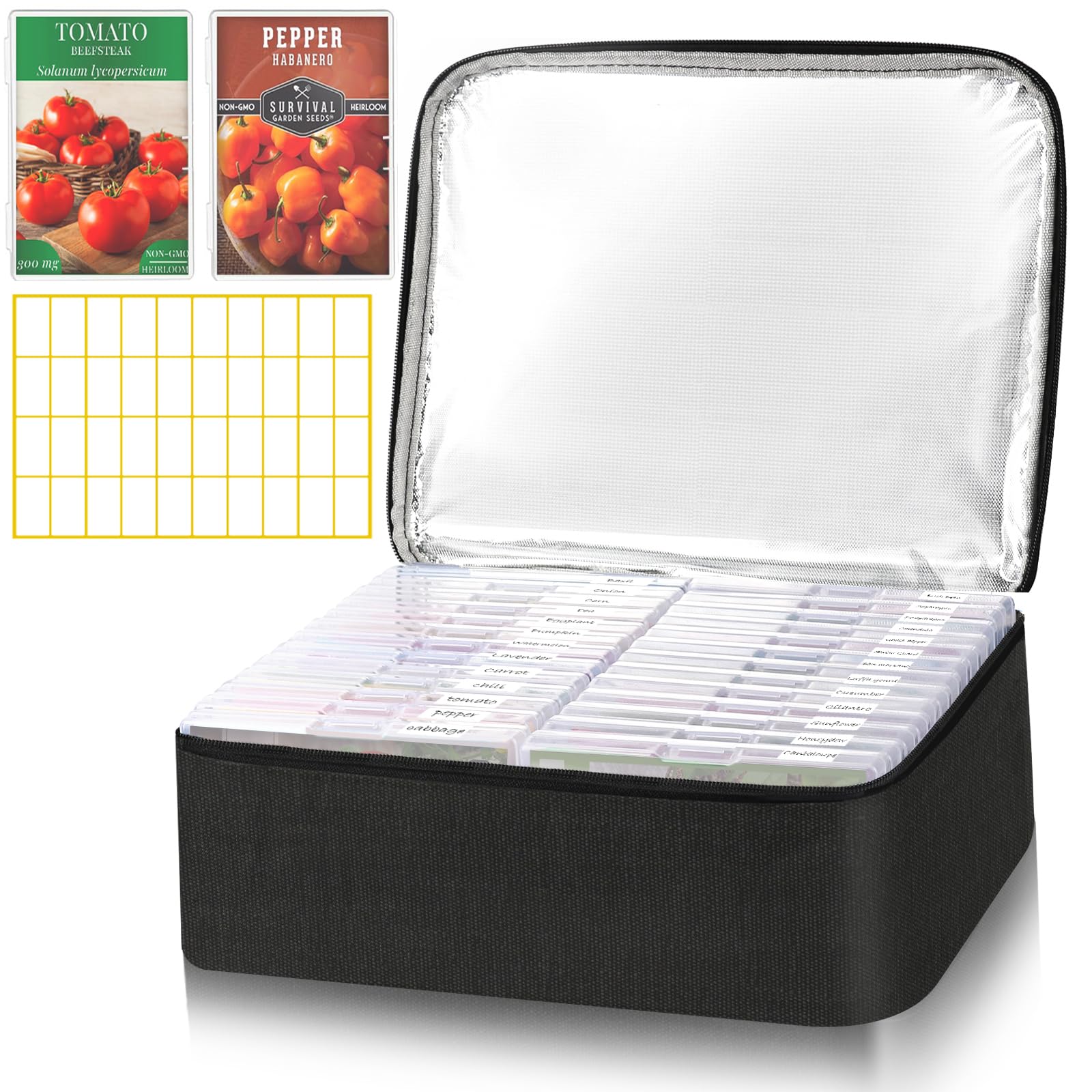
This set includes an Oxford cloth bag with an aluminum foil inner lining, 26 clear plastic seed boxes, and 40 labels. The insulation serves a real purpose: heat and moisture degrade seed viability fast, so the foil lining and waterproof outer fabric protect against humidity swings in a garage or damp basement. Each plastic box holds several seed packets upright, and the transparent lid lets you scan for what you need without opening every container.
Organization is the runaway top praise — owners love that they can finally stop digging through a drawer full of crumpled paper packets. The bag zips closed securely and has a carry handle, making it easy to move from the house to the greenhouse. A few customers note that the plastic boxes are slightly stiff, requiring a gentle push to close fully, and that larger seed envelopes may overlap and make labels on the back ones hard to read. The 26-slot capacity sits at a balance — big enough to cover a serious seed collection, compact enough to stash on a shelf.
Why it works
- Foil-lined bag protects seeds from temperature swings and humidity
- 26 transparent boxes make seed identification instant without opening
- Includes 40 pre-cut labels for sorting by type, season, or date
The trade-off
- Stiff plastic boxes need firm closure — not a one-hand operation
- Oversized paper envelopes can overlap and hide labels behind them
Reach for this if: you collect seed packets across seasons and want a single organized home that keeps them viable until planting time.
Pass if: you buy seeds in bulk pouches rather than standard paper envelopes — the boxes are sized for packets, not loose bulk.
5. DUNPUTE 40 Pack Clear Nursery Pots with Drainage and Saucer

Forty clear pots that let you run a small nursery without spending nursery prices.
This set includes 10 pots each in 4-inch, 5-inch, 6-inch, and 7-inch sizes — every pot clear and every one with a matching drainage tray. The flexibility of the plastic is a deliberate design choice: squeezing the sides slightly pops the root ball out cleanly during transplanting, unlike rigid pots that require you to tear the container. The clear walls make root monitoring and soil moisture checks easy, and the 40-piece count means you can pot up a whole propagation run in one go.
Buyers consistently describe the plastic as “durable” and “not flimsy like some other brands,” with several noting that the pots hold up to repeated use and washing. Semi-hydro growers (LECA/PON users) specifically call out the wick-friendly design and visible root health as major advantages over opaque nursery pots. The main thing to know is that the 7-inch size is the largest included — anything needing an 8-inch or bigger pot will require a separate purchase.
Why it delivers
- 40 pots across 4 sizes cover seedling through medium-stage growth
- Flexible walls make transplanting root-bound plants easy and clean
- Clear plastic allows quick soil-moisture and root-health checks
The trade-off
- No pot larger than 7 inches — not suitable for mature shrubs or trees
- Very flexible plastic may feel less premium than thicker, rigid pots
Ideal for: semi-hydro setups, bulk seed starting, or any grower who needs a range of clear pot sizes without buying separate sets.
Not ideal if: you prefer heavy, rigid pots that stand rock-stable on a windy patio.
6. SOLIGT Self Watering Seed Starter Trays — 3 Pack, 72 Cells
The starter tray that waters itself while you sleep, travel, or just forget for a day.
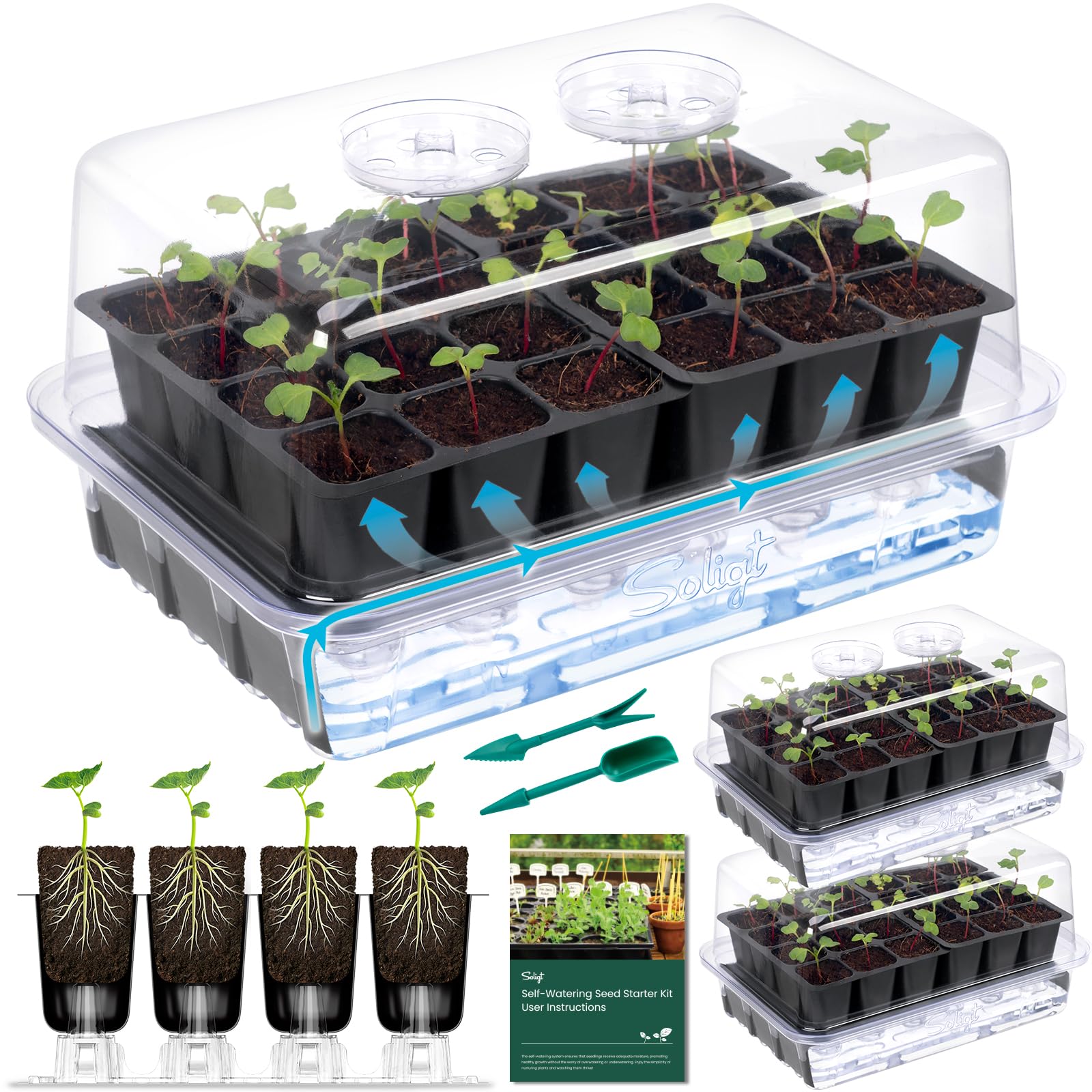
Each of the 3 packs includes a clear bottom tray that doubles as a water reservoir, a capillary mat that wicks moisture upward, two 12-cell seedling trays, support stands, and 100 plant labels. You fill the reservoir to about 3/4 inch deep, and the mat pulls water evenly into every cell — no dry corners, no drowned centers. The humidity dome has adjustable vents so you can dial in the air exchange from fully sealed for germination to open for hardening off.
The extra-thick plastic is a standout feature: reviewers point out these trays have not warped or cracked after multiple seasons, unlike the cheap brittle trays that snap during the first wash. Germination rates are consistently high, with one owner describing it as a “total standout” for tomatoes, basil, and peppers. The support stands are a clever addition — they stabilize the trays and double as soil block pushers for transplanting. The only real complaint is that some domes need tape along the seam to retain humidity perfectly, and a few owners felt the 72-cell count (per tray) produces small cells that need up-potting within 2-3 weeks.
Why it leads
- Capillary mat system eliminates uneven drying — fill the reservoir and walk away
- Extra-thick plastic trays survive multiple growing seasons without cracking
- Adjustable dome vents let you transition from germination to hardening off in the same tray
The trade-off
- 72-cell tray means small cell size — seedlings need transplanting into larger pots within 2-3 weeks
- Dome fit can be loose on some units, requiring tape for full humidity seal
Best for: anyone who has ever killed seedlings by forgetting to water for a day — the self-wicking system buys you real forgiveness.
Skip if: you need larger individual cells for slow-growing plants that stay in the tray for a month or more.
7. PURPLE STAR 1N 50 Packs Cupcake Plant Nursery Pots
The tiny pot that doubles as a cupcake holder and a seed starter — yes, really.
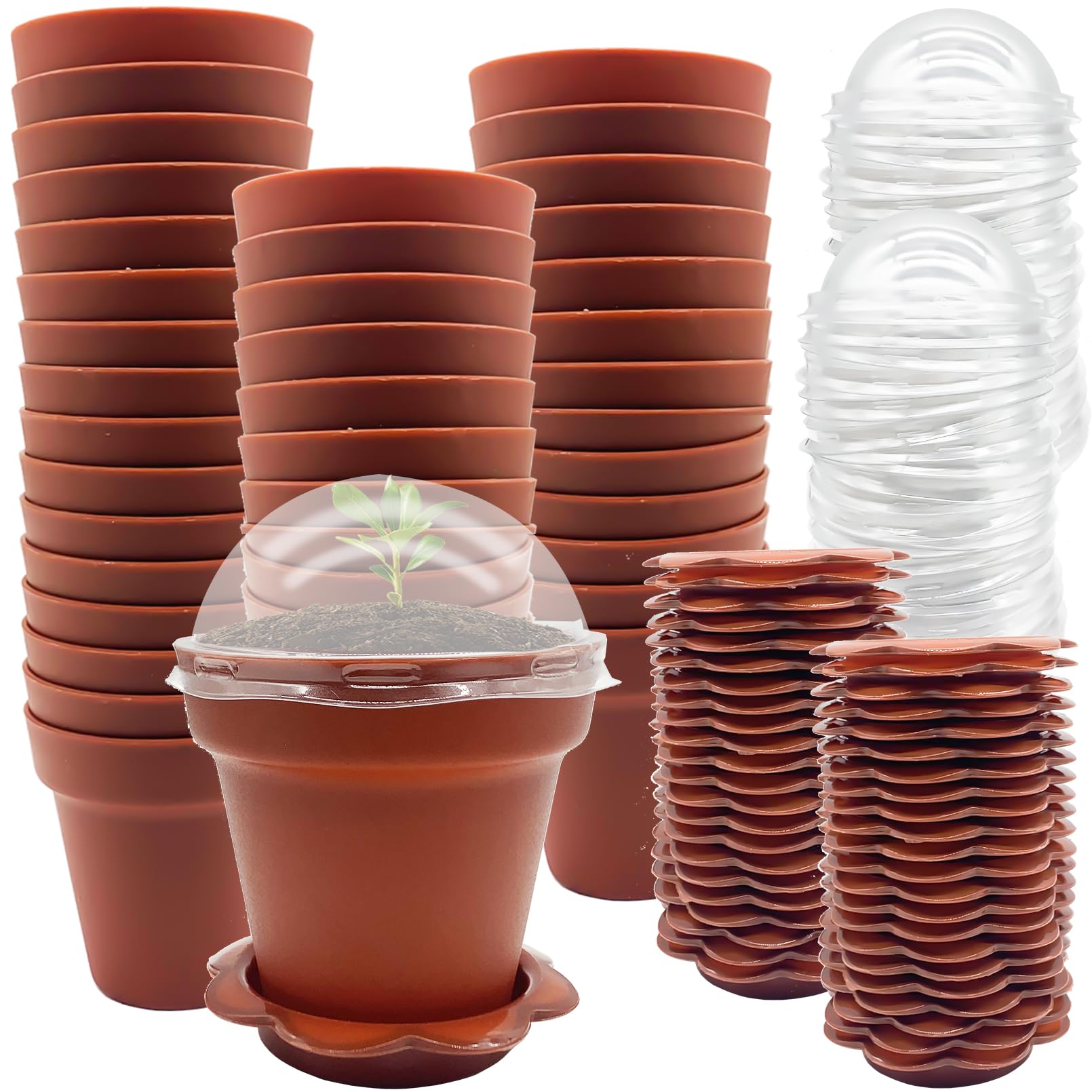
These wine-red pots come in a 50-pack with 50 matching lids and 50 trays. The lids are transparent domes that let you monitor seedling growth without opening, and they fit snugly enough to create a mini greenhouse effect for germination. The “cupcake” name is literal: the same pots work for dirt-pudding desserts at a kids’ party or for starting herb seeds on a windowsill.
The most-discussed aspect is the appearance — the vibrant color and compact 3 x 3.2 x 2.9 inch size make them genuinely cute, and owners use them for everything from succulent propagation to classroom science projects. The catch is that these pots have no drainage holes in the bottom (intentionally, to prevent mess when used as party favors), so they are not suitable for plants that need free-draining soil. They work fine for seeds started in a controlled environment where you can monitor moisture by feel, but long-term potting without drainage is risky for most plants.
Why they are unique
- Transparent dome lids let you check germination without lifting the cover
- 50-piece count is generous for kids’ parties, classroom projects, or small-scale seed starting
- Compact size fits neatly on a windowsill or bookshelf
The trade-off
- No drainage holes make them unsuitable for most long-term potting
- Some owners find the plastic feels thinner than standard nursery pots
Perfect for: a seed-starting project with kids, party favors, or short-term propagation where aesthetics and dome coverage matter more than drainage.
Not for: plants that need to sit in the pot for more than a few weeks — you will either drill holes or risk root rot.
8. Old Potters Germination Mix — 24 Quarts
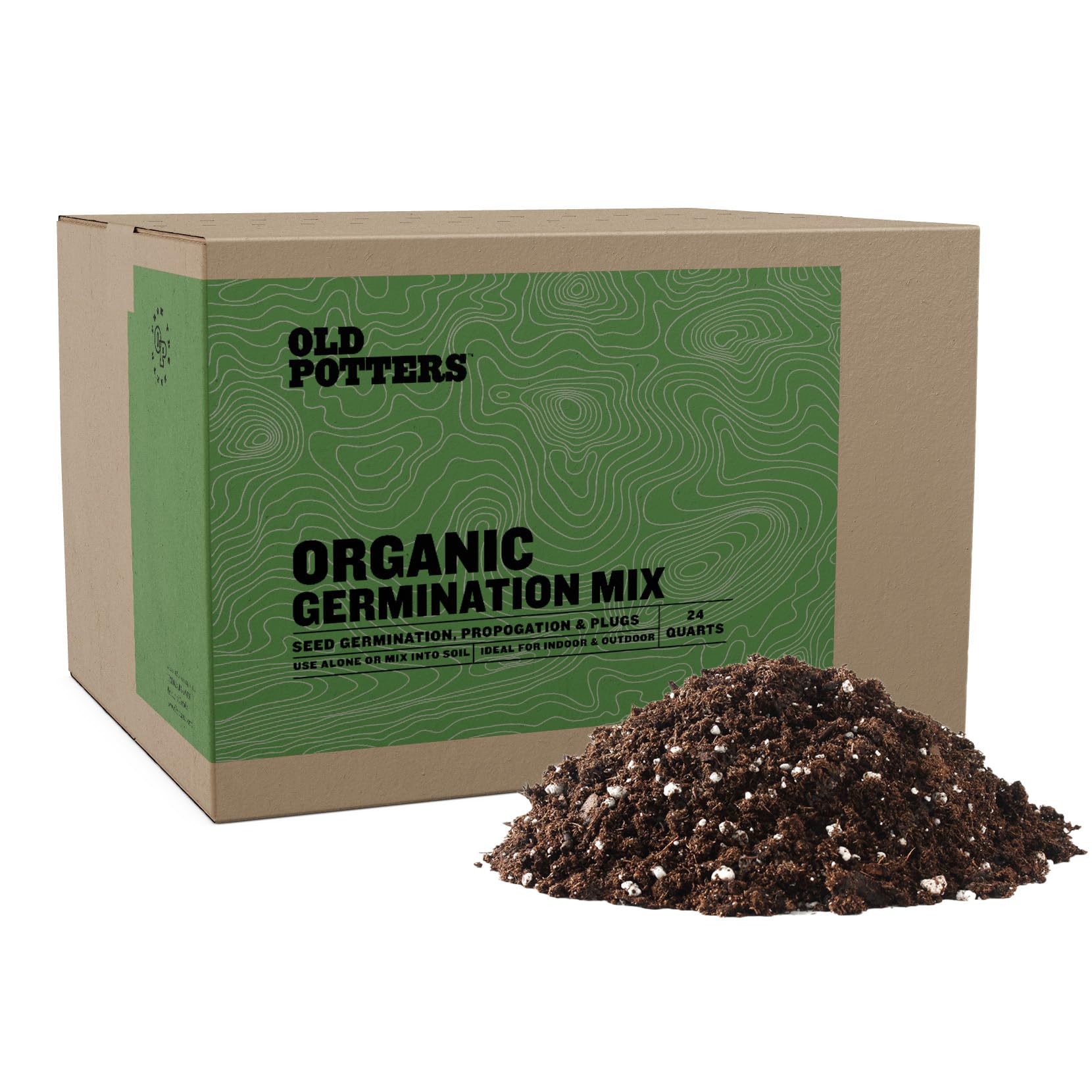
The loose soil that gave one grower a 90% germination rate with zero fungus gnat issues.
This mix contains 80-90% fine Canadian sphagnum peat moss with small-particle perlite and vermiculite — no coarse bark chunks or oversized perlite that would create air gaps where tiny seeds fall through. The fine texture means water wicks evenly through the entire tray, and the pH is locked at 5.4 – 6.3, which keeps nutrients available during the critical first weeks. A wetting agent is blended in, so the peat rehydrates easily even if the bag has been sitting in storage.
The 24-quart volume is the equivalent of six standard 4-quart bags, and owners consistently report that a single bag covers a full season of seed starting with leftover mix for next year. Reviews highlight “90% germination rate” and “best success I’ve had with a seed starting mix” as common refrains. The mix works equally well for sub-irrigation (wicking up from a tray) and overhead watering, which makes it compatible with both the SOLIGT self-watering trays and standard nursery pots. A small number of owners mention mixed feelings about the ingredient proportions, but the overwhelming pattern is that seeds germinate faster and stronger than with cheaper commercial mixes full of coarse fillers.
Why it excels
- Fine particle texture prevents seeds from falling through gaps and drying out
- pH stabilized at 5.4–6.3 for optimal nutrient availability during early growth
- 24-quart bag covers a full season of seed starting with mix to spare
The trade-off
- Contains peat moss, which is a non-renewable resource — some growers prefer coconut coir alternatives
- Fine texture can compact slightly if watered too aggressively from above
Reach for this if: you start dozens of seed trays per season and want a consistent, fine-textured mix that gives you repeatable germination results.
Look elsewhere if: you prefer peat-free or organic-certified growing media for philosophical or environmental reasons.
9. Mr. Pen Seed Starter Tray Kits — 10 Pack, 400 Cells
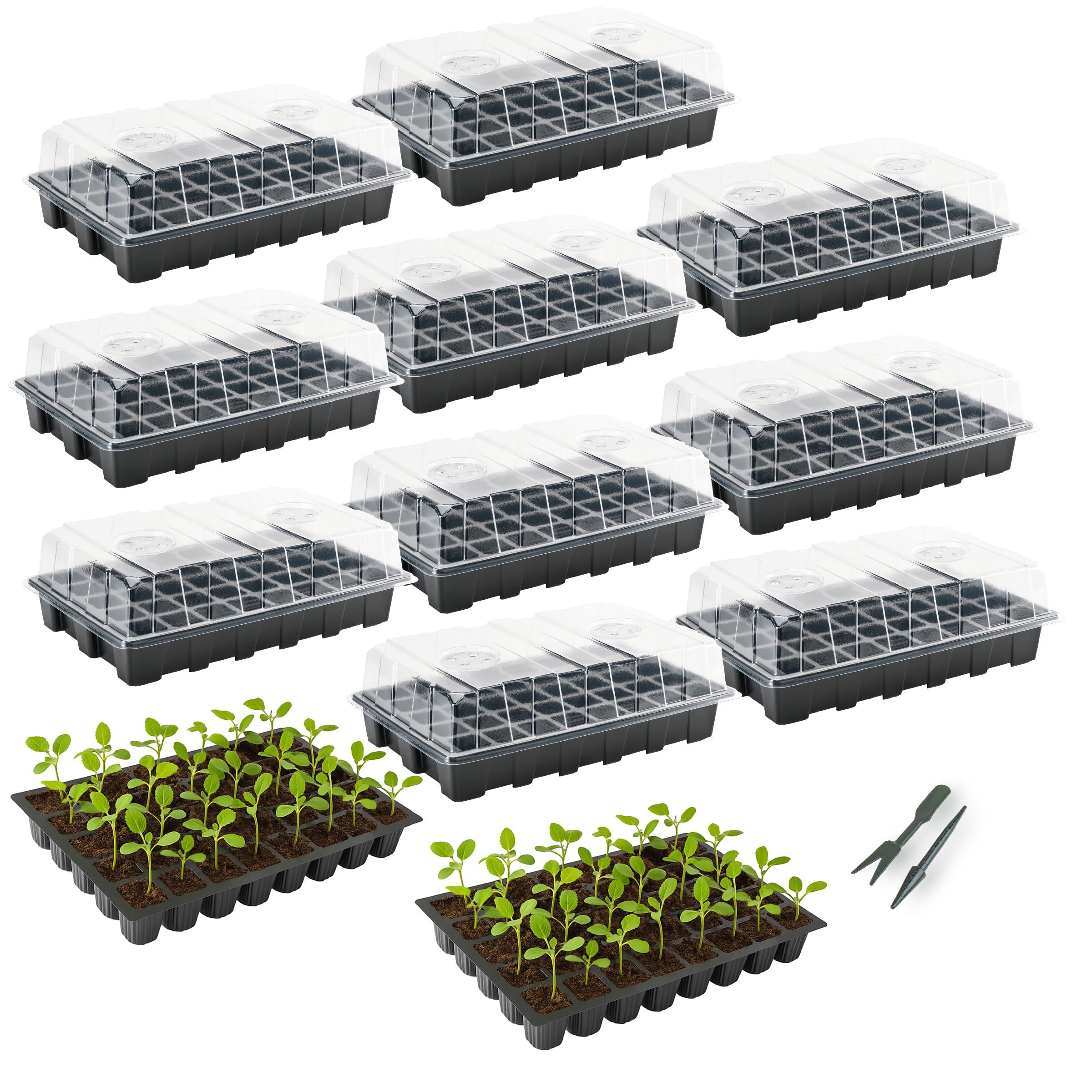
The 400-cell kit that sets you up for a year of seed starting in one box.
This kit includes 10 base trays, 10 seed trays (each with 40 cells), 10 transparent humidity domes with adjustable vents, plus a dibber and a widger for making seed holes and transplanting. At 400 total cells, it is the highest-volume kit in this list — enough to start tomatoes, peppers, herbs, and flowers without running out of space. The domes have adjustable vents that you can open as seedlings mature, transitioning from 100% humidity to open air without switching lids.
Owners consistently describe the trays as “sturdy” and built to “last years,” which is notable at this price point where thin plastic is the norm. The 15-cell version (not included) has larger individual cells that delay the need for up-potting, but the 40-cell trays in this set produce small individual cells — ideal for the first 2-3 weeks before transplanting into a 4-inch pot like the SwinDuck or DUNPUTE options above. The included tools (dibber and widger) are basic but functional, saving you a separate purchase if you are just starting out. A few owners note that the domes slide off easily without a locking mechanism, but this is a minor inconvenience rather than a functional flaw.
Why it wins
- 10 trays with 40 cells each = 400 total cells for large-scale seed starting
- Vented humidity domes adjust from sealed to open as seedlings grow
- Sturdy plastic construction that owners say lasts multiple seasons
The trade-off
- 40-cell size means small individual cells — seedlings need transplanting within 2-3 weeks
- Domes slide off easily; no locking latch to secure them during movement
Best for: serious home gardeners, community garden projects, or anyone starting 100+ seeds per season who needs a durable, organized system.
Not for: small-scale growers who only start a dozen seeds and would prefer a smaller, less bulky kit.
Understanding the Specs
Drainage Holes
A nursery pot without drainage holes is a closed system — water pools at the bottom, roots suffocate, and rot sets in. The number and placement of holes matter: multiple small holes spaced across the base drain more evenly than one large center hole, which can clog with soil. A matching saucer catches runoff so you are not mopping up after watering. Pots sold without saucers often require an extra purchase, so check the included components before you click “buy.”
Capillary Mat and Self-Watering
A capillary mat sits in the bottom tray of a seed starter kit with one edge dipped into the water reservoir. It wicks water upward through the soil in each cell by capillary action — the same physics that draws water up a paper towel. This keeps the growing medium evenly moist without you pouring water from above, which can wash seeds out of their holes or compact the soil surface. The key spec is the material: thick felt-like mats hold more water and wick faster than thin ones.
Cell Size and Count
Seed starter trays are measured by cell diameter and depth. A 1.5 x 1.5 x 2.17 inch cell gives a seedling about 2-3 weeks of root space before it needs a larger pot. Smaller cells (around 1 inch) save tray space but force earlier transplanting. The cell count tells you how many seeds you can start at once — 72 cells is a standard medium tray, while a 10-pack of 40-cell trays gives you 400 total starts. Match the count to your growing space and your transplanting timeline.
Growing Medium pH and Texture
Seedling roots are sensitive to pH swings. A germination mix with a stabilized pH of 5.4 to 6.3 keeps nutrients like nitrogen, phosphorus, and potassium available for uptake. Texture is just as critical: coarse particles create air pockets that let tender roots dry out, while a fine mix with small perlite and vermiculite holds moisture against the seed without drowning it. Peat-based mixes are standard because peat retains water without compacting, but some growers prefer coconut coir for its faster rehydration.
FAQ
Can I reuse nursery pots from one season to the next?
Do I need a humidity dome for seed starting?
What is the difference between seed starting mix and potting soil?
Can I use Root Riot cubes for hydroponics?
How often should I water seeds in a self-watering tray?
Are clear plastic pots better than opaque ones?
How long do seed packets stay viable in a storage organizer?
What size nursery pot do I need for a 3-month-old tomato seedling?
Can I drill drainage holes into a pot that has none?
Is 24 quarts of germination mix enough for a full season?
Final Thoughts: The Verdict
For most growers, the garden nursery supplies winner is the SwinDuck 20-Pack because the combination of thick UV-resistant plastic, built-in saucers, and a clean matte finish makes them the most versatile pot for the majority of home nursery tasks. If you are starting seeds from scratch and want a system that waters itself, grab the SOLIGT Self-Watering Trays. And for anyone who has ever lost a cutting to rot or dried-out cubes, the Root Riot Starter Cubes deliver the fastest, most reliable rooting results in the lineup — shoppers say seeds sprouting the very next day, which is tough to top for anyone impatient to see green.
How We Picked
We do not accept paid placement. Every pick is matched to a real buyer and a real use-case; we do not hands-on test units.
Sources & Methodology
Specifications: manufacturer listings and product documentation. Review insights: verified customer reviews, as of July 2026. Pricing: not shown on this page (it changes often); check the current price via the retailer link.
As an Amazon Associate, Lawn Gear Lab earns from qualifying purchases. This does not affect which products we feature.