
Specs are compiled from manufacturer listings and verified buyer reviews and can change over time — please confirm the key details on the product page before buying.
You plant. You water. You watch it grow. Then birds, squirrels, and insects take their share before you get a bite. A fruit protection bag gives you a simple fix — a mesh pouch that wraps around each piece of fruit on the tree or vine, creating a physical barrier pests cannot break through while sunlight and air still reach the fruit inside.
The best overall pick is the Shintop 100Pcs Bags because it balances count, size, and protection for the price better than any other single option — 100 organza bags at 6×9 inches cover a full backyard orchard without breaking your budget.
I’m Rikta — the founder and writer behind Lawn Gear Lab. This guide is built by comparing the manufacturers’ published specifications and the patterns across verified customer reviews, so you get each pick’s real strengths and trade-offs instead of marketing spin.
Our Picks at a Glance

How To Choose The Best Fruit Protection Bag
Three decisions will make or break your harvest — bag material, closure type, and size relative to your crop.
Material: Organza vs. Nylon vs. Polyethylene
Organza is the most common fabric for fruit bags — it is lightweight, lets air and light pass through, and keeps small insects out when the weave is tight enough (a measure of threads per inch). Nylon mesh is tougher against birds and squirrels but can be heavier on branches. Polyethylene (PE) bags are rigid enough to hold their shape but may feel stiff when you first open them. The trade-off is simple: finer mesh stops insects but may slow airflow slightly; coarser mesh breathes better but lets smaller pests through.
Closure: Drawstring vs. Zipper vs. Ties
A drawstring is the standard — you pull it tight around the stem and the bag is sealed, keeping pests out. The catch is that thin or poorly stitched drawstrings snap under repeated use, especially in wind. Zippers add convenience for large netting covers that go over entire bushes, but they add weight and cost. Simple ribbon ties are the most reliable mechanically, though they take an extra second per bag. Your call depends on how many bags you plan to use each season.
Size: Match the Bag to the Fruit’s Full-Grown Size
A 6-by-8-inch bag is fine for apples, peaches, and tomatoes, so they have room to grow without splitting the mesh. A 6-by-9-inch bag handles slightly larger fruit clusters. If you are protecting mangoes, pomelos, or jackfruit, look for bags at least 12 inches long. The common mistake is buying a bag that fits the fruit early in the season — by harvest time the fruit has outgrown the mesh and split it open. Check the full-grown diameter of your fruit variety before you order.
Quick Comparison
| Model | Best For | Count | Material | Size | Amazon |
|---|---|---|---|---|---|
| 2 PCS Netting Cover★ Best Overall | Whole-bush coverage | 2 | Nylon | 6.6 x 8.2 ft | Amazon |
| Shintop 100Pcs BagsAlso Great | Versatile daily use | 100 | Organza | 6 x 9 in | Amazon |
| 80 Pcs Unves Bags | Large individual fruits | 80 | Organza | 8 x 12 in | Amazon |
| Moonoom 100Pcs Bags | Fast bagging of apples | 100 | Organza | 6 x 8 in | Amazon |
| Boao 200 Pcs Bags | High-volume orchards | 200 | Yarn | 6 x 8 in | Amazon |
| Kikhope 20Pcs Bags | Oversized fruits | 20 | Polyethylene | 21 x 14 in | Amazon |
| Homoda Zipper Net | Berry bush netting | 2 | HDPE | 8 x 8 ft | Amazon |
In‑Depth Reviews
1. 2 PCS Large Fruits Tree Netting Cover for Garden, 6.6 x 8.2 ft
Our pick — over 4★ from 750+ verified ratings; the strongest balance of quality and price.
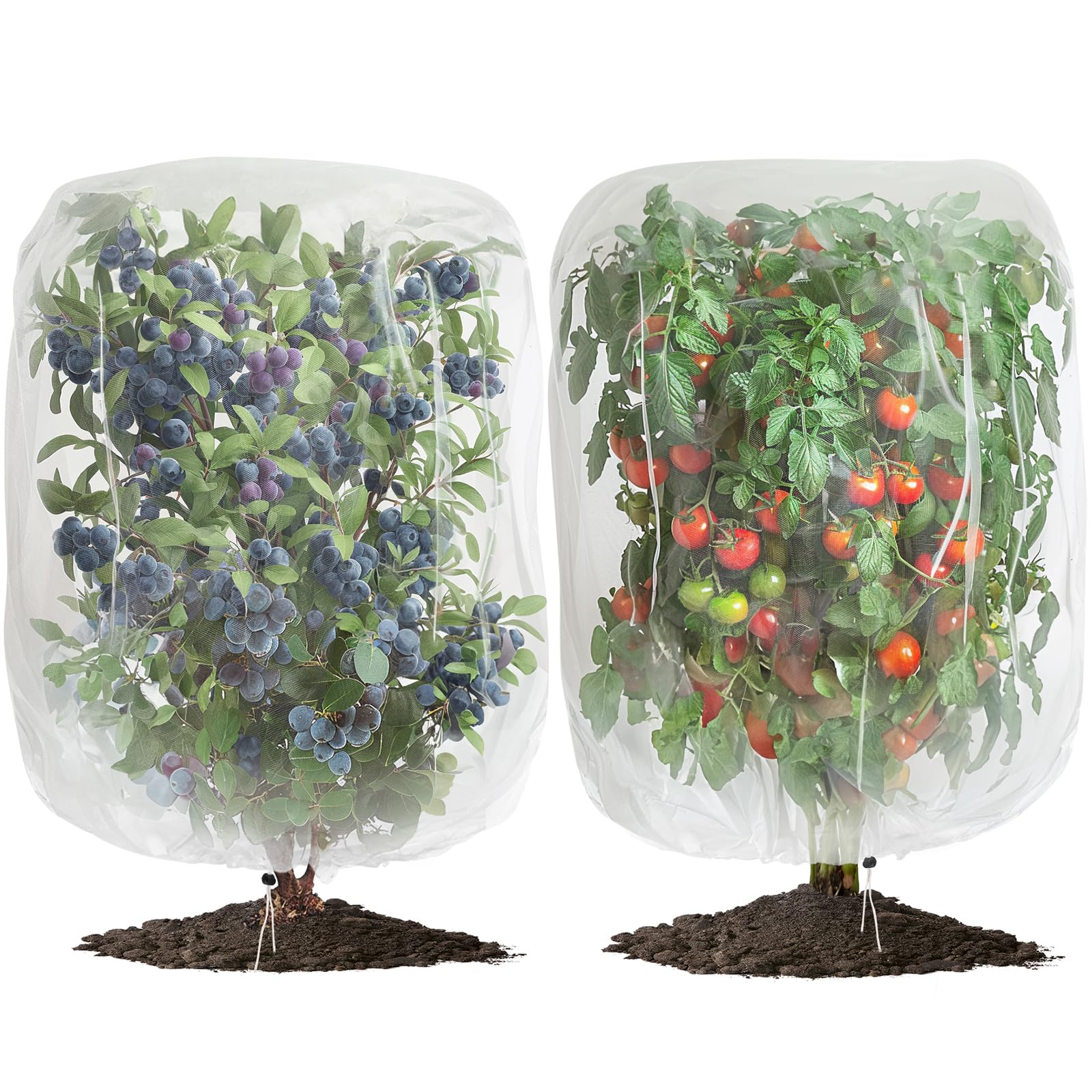
At 6.6 by 8.2 feet per panel, you wrap an entire blueberry bush or tomato cage in one drape — no individual bagging required.
This is not a single-fruit bag — it is a large nylon mesh panel that covers entire blueberry bushes, tomato cages, or small citrus trees. The nylon material (a strong synthetic fiber) is noticeably tougher than the organza used in the Shintop 100-pack. Owners confirm that birds, chipmunks, and squirrels stay out when you cinch the drawstring tight around the trunk. The two-pack weighs 0.73 kg, while a 100-pack of organza bags weighs 0.23 kg, and that weight difference translates to real durability against beak pecks and claw tugs.
Owners mention that the drawstring is the weak link: three strings broke out of twelve bags in one order. The nylon mesh itself holds up well over multiple seasons, but the drawstring attachment point can fail if you handle the netting roughly. When the strings work — which is most of the time — the coverage is fast and complete. 81 owners call it effective against hungry flocks, making it the most-discussed feature.
Best for: Anyone with bushes or low trees who wants to protect an entire plant rather than bag individual fruits — blueberry, tomato, and citrus growers especially.
Think twice if: You need to protect individual large fruits on tall trees where draping a whole net is impractical.
Whole-plant coverage: Two 6.6×8.2 ft nylon panels with drawstrings — drape over a bush and cinch the base in under a minute.
The catch: Drawstrings can snap; handle with care and you will get years of reuse.
2. Shintop 100Pcs Fruit Protection Bags, 6×9 Inch Green Fruit Tree Netting
100 bags in one pack — more than enough for a full backyard orchard — at a price that makes replacing a few each season no big deal.
You get 100 organza bags in a single pack, so you can cover peaches, apples, and tomatoes without restocking. Each bag measures 6-by-9 inches, which gives you an extra inch of length compared to the standard 6-by-8 Moonoom bags. That extra inch prevents a ripening tomato or a large peach from splitting the mesh. The organza material (a finely woven fabric) is soft enough to avoid bruising fruit yet tightly woven enough to block aphids, worms, and fruit flies (small flying insects). According to buyers, the double drawstring makes cinching quick, and the green color blends into the foliage so you hardly notice the bags on the tree.
Honestly, organza has a breaking point against determined rodents. Buyers report that squirrels and birds occasionally chew through the fabric, and the green color gradually fades to yellow over a season in direct sun. But at this price per bag you can afford to replace a few — the harvest you save far outweighs the losses. 72 buyers single out pest protection as the reason they bought these. At 0.23 kg for the whole bundle, the bags add almost no weight to your branches, so even slender twigs carrying pears or plums stay upright.
Who it wins for: Home growers with a moderate number of trees who want a strong balance of bag count, durability, and price — this is the one that fits the most situations.
Who might want more: Anyone protecting extra-large tropical fruit or dealing with heavy rodent pressure should consider a thicker material or a larger bag size.
Best all-rounder: 100 bags, 6×9 inches, organza mesh — the combination that covers the most common backyard fruit with room to spare.
The trade-off: Organza will not stop every determined squirrel; plan to replace a few bags each season.
3. 80 Pcs Fruit Protection Bags, 8 x12 Inch Fruit Tree Netting Mesh Bags
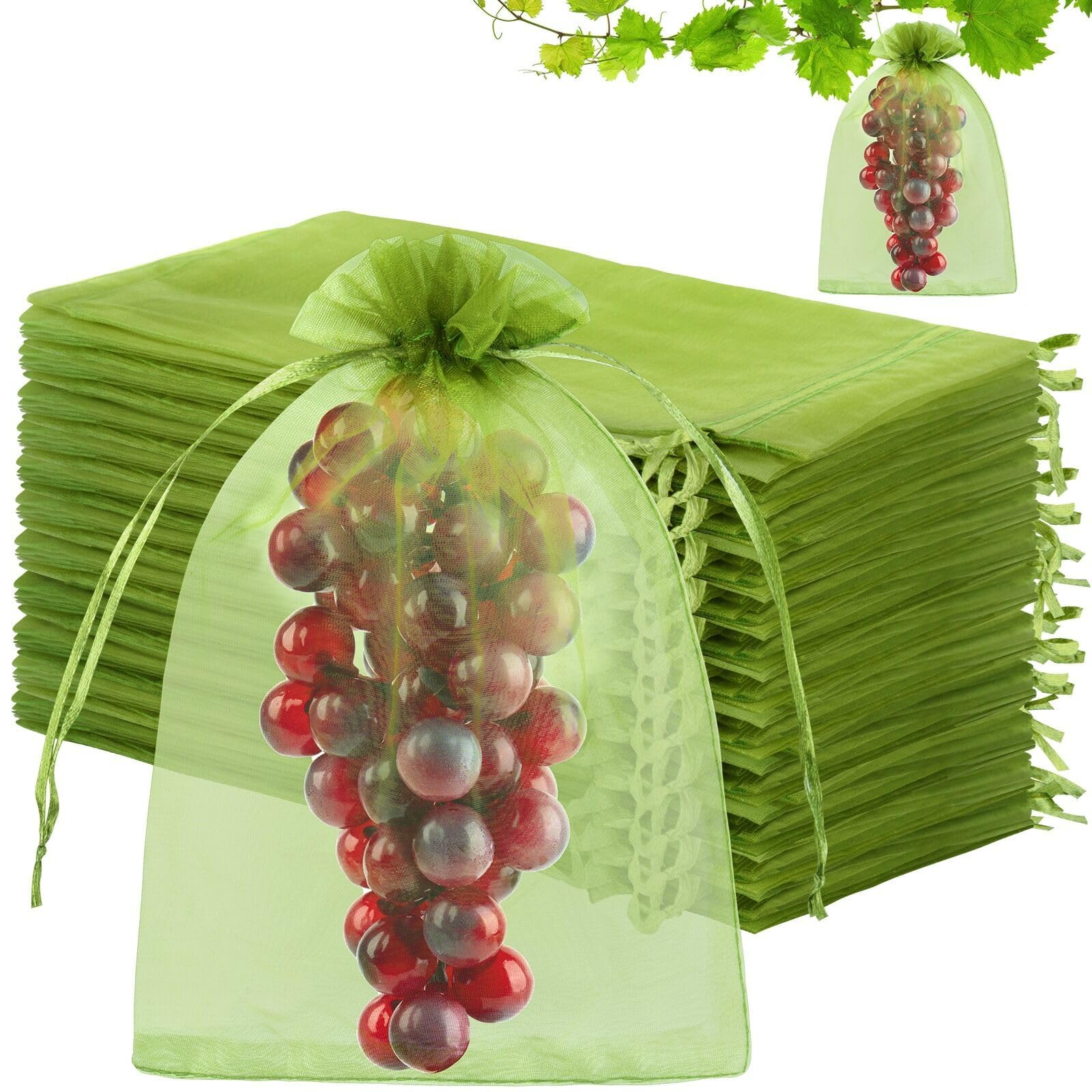
At 8 by 12 inches, these are the largest organza bags in the multi-pack options — ideal for pears and mangoes that need room to swell.
These organza bags give your largest fruit breathing room. The extra length matters if you grow pears, large apples, or melons that need room to swell inside the mesh — they will not outgrow the bag before harvest. The drawstring closure uses a sliding lock that secures more firmly than a simple knot, which matters in windy conditions. Owners confirm the bags keep birds off mangoes and protect cherries from chipmunks — one tester used twelve bags on a cherry tree and found only one was breached.
For round fruit like apples, peaches, and citrus the 8×12 size is generous. The organza is strong enough for reuse season after season, and the green color fades less noticeably than some competitors.
Reach for this if: Your fruit runs large — pears, mangoes, melons, and big apples benefit from the 12-inch depth that smaller bags like the 6×8 Moonoom cannot provide.
skip it if: You are bagging long cucumbers or elongated squash; the 12-inch length may be too short.
Biggest budget bag: 80 bags at 8×12 inches — the most room for your fruit at the lowest price per large bag.
4. 6×8 Inch 100 Pieces Green Fruit Protection Bags

A 100-pack of 6×8-inch organza bags — the classic size that owners call a must-have for backyard gardens.
The organza material is soft enough to avoid scratching the fruit skin while being dense enough to block insects. Reviewers point out that bagging an apple takes about ten seconds once you get the rhythm, and the drawstring cinches securely without needing a knot. The green color is muted enough to blend into the canopy, so the tree still looks natural. 60 owners call insect protection the top praise, saying the bags handle everything from curc bugs on apples to squirrels after peaches.
The durability split is real: about 20 percent of shoppers say drawstrings breaking after a season of use, typically where the string enters the hem. The mesh itself holds up, but the string attachment is the failure point over time. The upside is that the bags are cheap enough per unit that losing a few to string failure is not devastating — you still come out ahead compared to losing fruit to pests.
Best for: Standard apple, peach, and tomato protection where you need a straightforward bag that works without fuss.
Look elsewhere if: You want a bag that will survive three or more seasons without replacing any drawstrings.
The garden staple: 100 bags, 6×8 inches, organza — the size that fits the widest range of common fruit.
The weak point: Drawstrings break on roughly one in five bags over time; plan for an occasional replacement.
5. Boao 200 Pcs Fruit Protection Bags Fruit Netting Bags with Drawstring

The number that defines this pick is 200 — double the Shintop 100-pack count for only a modest step up in cost.
This is the obvious choice if you have multiple trees, a row of berry bushes, or a large vegetable patch. The material here is yarn rather than the organza used in the Shintop 100-pack, which makes the bags softer and more elastic. That elasticity helps when you need the bag to stretch slightly around a growing fruit without constricting it. Owners who used these on strawberries and apples report that the double drawstring is easy to adjust and holds well in windy conditions. “Ease of use” is the top praise with 44 mentions, so you spend less time fiddling with closures.
The trade-off with yarn is that it is less tightly woven than organza, which means very small insects and thrips (tiny flying pests) may occasionally find their way through. The green color also filters some beneficial light wavelengths, and one owner noted that switching to white bags might allow faster ripening. At 10.72 ounces for the whole bundle, the bags are light enough for even delicate flower stems.
Reach for this if: You need serious volume — 200 bags covers a lot of ground without the cost adding up per fruit.
Think twice if: You are protecting against very small insects like thrips; the yarn weave is a bit looser than organza.
Bulk value leader: 200 yarn bags at 6×8 inches — the highest count in this roundup at a practical per-bag cost.
The reality check: Yarn is softer and stretchier but slightly less insect-proof than a tight organza weave.
6. 20Pcs Kikhope Fruit Protection Bags, 21×14 Inch Garden Netting Bags

At 21 by 14 inches, these are the giants of the roundup — big enough to cover a sunflower head or a jackfruit without splitting.
These bags are truly oversized: 21 by 14 inches covers a sunflower head, a whole cluster of bananas, or a jackfruit that would burst a standard 6×8 bag. The material is polyethylene (PE), which is more rigid than organza and holds its shape so the bag does not collapse onto the fruit. Owners confirm that the netting stops birds and squirrels from chewing into tree fruits. The white color makes it easy to spot the fruit through the mesh, and the 20 bags weigh 0.51 kg for the set.
The obvious trade-off is quantity — you get 20 bags instead of 100. These are for protecting your most valuable or largest specimens rather than a whole tree. The drawstring is functional but some owners find it takes effort to pull tight compared to organza bags. For long-season crops like squash or for fruits that grow high in the canopy, the sturdy PE material prevents the bite marks and peck holes that cheaper organza bags allow.
Best for: Large single fruits — jackfruit, mango, sunflower heads, cantaloupe, and anything that needs more than a foot of clearance inside the bag.
Not ideal for: Covering an entire tree of small apples or cherries where you need dozens of bags at once.
For the big stuff: 20 bags at 21×14 inches, made of rigid PE — the only choice for oversized and tropical fruit.
The trade-off: Fewer bags in the pack; buy these for your prize specimens, not for whole-tree coverage.
7. Fruit Tree Netting Cover with Zipper & Drawstring, 2 Packs 8ft x 8ft
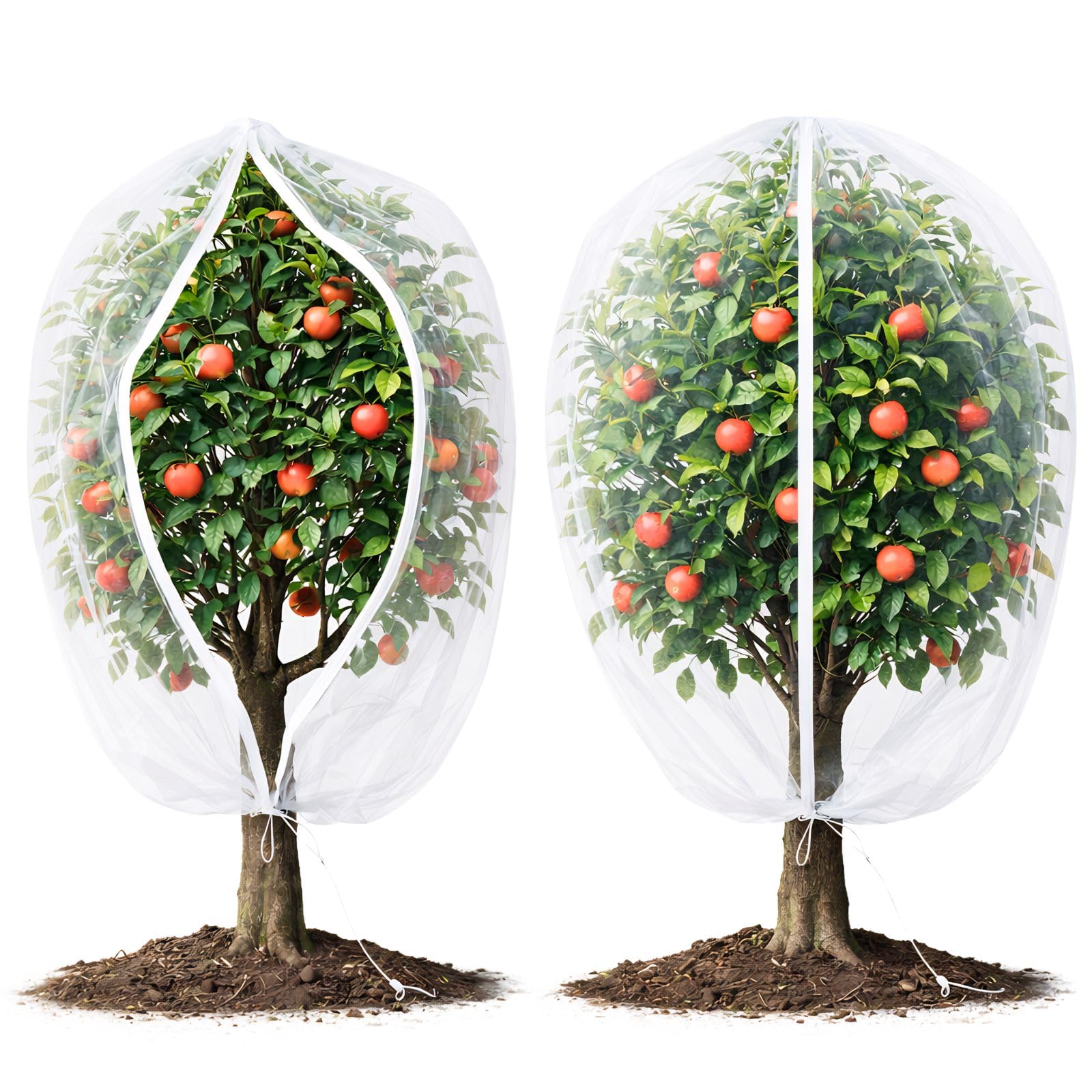
The only net on this list with a side zipper — you can pick berries without pulling the whole cover off.
Two 8-by-8-foot panels made from high-density polyethylene (HDPE) — the same tough material used in heavy-duty bird netting — give you enough coverage for five blueberry bushes or a row of dwarf citrus trees. The defining feature is the side zipper: it lets you open the net to pick fruit without removing the whole cover. Owners who use these on berry bushes say the zipper and drawstring combination makes access easy — unzip, reach in, zip back up. The ultra-fine mesh keeps out even small insects while letting rain and sunlight through, so you never have to remove the net for watering.
The durability feedback is split. Bird resistance is the top praise at 95 mentions — far more than any other feature — and owners confirm the net effectively stops Japanese beetles, chipmunks, and birds. But 61 people mention durability as a mixed point, noting that the drawstrings can break if pulled too hard and the HDPE material can develop small tears at stress points over multiple seasons. At 0.99 kg for the two-pack, this is the heaviest option in the roundup, but that weight corresponds to sturdy construction that stands up to outdoor weather.
Reach for this if: You have berry bushes or low trees and want the convenience of a zipper for easy harvest access without removing the net.
pass on it if: You need individual fruit bags for tall trees — this is a whole-plant cover, not a per-fruit solution.
The zipper advantage: Two 8×8 ft HDPE nets with side zippers — pick your fruit without stripping the cover off every time.
The long-term cost: Drawstrings and seams can wear over time; handle gently and these will last several seasons.
Understanding the Specs
Bag Size and Fruit Compatibility
Bag size is measured flat — a 6×9-inch bag lies open as a rectangle 6 inches wide and 9 inches long. When you tie it around the stem, the usable depth is about an inch less because the closure eats up fabric. For apples, peaches, and medium tomatoes, the standard 6×8 or 6×9 works. For pears, mangoes, and large citrus, step up to 8×12 or larger. The risk of undersizing is that the fruit splits the bag or pushes the drawstring open as it grows.
Material: Organza vs. Nylon vs. HDPE
Organza is a finely woven fabric that blocks insects while letting air and light pass through. It is lightweight and soft on fruit but can tear under aggressive rodent pressure. Nylon is stronger and more stretchy, making it better for drape-over bush covers but heavier on branches. Polyethylene (HDPE) is the toughest — rigid enough to hold shape and resist pecks from birds, but stiffer and less breathable than organza. Your choice depends on whether you fight insects, birds, or both.
FAQ
Will fruit protection bags stop squirrels from stealing my peaches?
Can I leave the bags on fruit all season until harvest?
How many bags do I need for a standard apple tree?
Do fruit protection bags block sunlight from reaching the fruit?
What is the difference between 6×8 and 6×9 bags?
Can I reuse fruit protection bags year after year?
Will the bags attract moisture and cause fruit rot?
Do I need to remove the bags before spraying pesticides or fungicides?
Are white bags better than green bags for fruit ripening?
Final Thoughts: The Verdict
For most buyers, the fruit protection bag winner is the Shintop 100Pcs Bags because it delivers the best balance of count, size, and protection for the price — 100 organza bags at 6×9 inches cover a full backyard orchard while staying affordable. If you need oversized coverage for tropical fruit, grab the Kikhope 20Pcs Bags at 21×14 inches. And for whole-bush protection of blueberries or citrus with the convenience of a zipper, the Homoda Zipper Net is the smart pick.
How We Picked
We do not accept paid placement. Every pick is matched to a real buyer and a real use-case; we do not hands-on test units.
Sources & Methodology
Specifications: manufacturer listings and product documentation. Review insights: verified customer reviews, as of July 2026. Pricing: not shown on this page (it changes often); check the current price via the retailer link.
As an Amazon Associate, Lawn Gear Lab earns from qualifying purchases. This does not affect which products we feature.