
Specs are compiled from manufacturer listings and verified buyer reviews and can change over time — please confirm the key details on the product page before buying.
Bird of paradise leaves are tough, but the fungus that turns them brown, yellow, or spotted is relentless. You need a fungicide that stops the spread without damaging the plant’s sensitive roots or the soil microbiome it depends on. This guide breaks down nine proven formulations — from organic concentrates to systemic treatments — so you can pick the one that actually matches your plant’s specific infection.
I’m Rikta — the founder and writer behind Lawn Gear Lab. This guide is built by comparing the manufacturers’ published specifications and the patterns across verified customer reviews, so you get each pick’s real strengths and trade-offs instead of marketing spin.
When your bird of paradise has powdery mildew on the leaves, root rot in the pot, or black spot spreading across your tropical collection, the fungicide for bird of paradise you choose needs to kill both the visible infection and the spores hiding in the soil.
Our Picks at a Glance


How To Choose The Best Fungicide For Bird Of Paradise
Bird of paradise plants are susceptible to leaf spot, root rot, and powdery mildew, especially when humidity is high or the soil stays wet. The right fungicide depends on whether the infection is on the leaves above ground or rotting the roots below. Here are the three factors that matter most.
Contact vs. Systemic Action
Organic vs. Synthetic Chemistry
Organic options like Bacillus subtilis (a beneficial bacteria) or copper soap break down naturally and are safe for beneficial soil microbes. Synthetic options like propiconazole or Daconil are broad-spectrum and often faster-acting, but they can disrupt the soil’s natural ecosystem with repeated use. Bird of paradise, being a heavy feeder in a pot, tends to respond better to gentler organic choices if the infection is caught early.
Foliar Spray vs. Soil Drench Application
Foliar sprays (applied with a sprayer to the leaves) work best for powdery mildew, leaf spot, and rust that are visible on the foliage. A soil drench (pouring the diluted fungicide directly into the root zone) is the go-to for root rot caused by overwatering or Phytophthora. Some systemic products allow either method, which gives you flexibility depending on where the disease shows up.
Quick Comparison
| Model | Best For | Active Ingredient | Size | Application | Amazon |
|---|---|---|---|---|---|
| Fertilome Fungicide 5★ Best Overall | Organic Prevention | Bacillus subtilis | 16 oz | Soil Drench | Amazon |
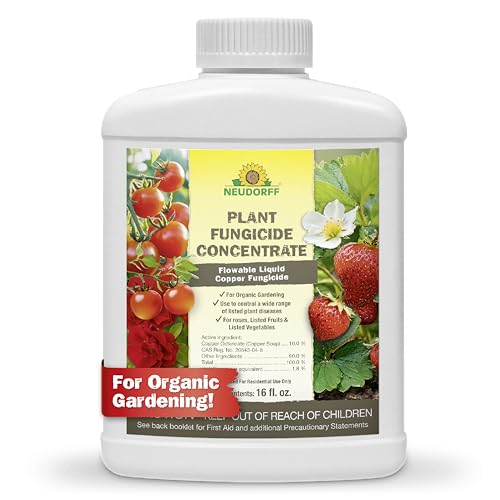
| Neudorff Copper SoapBest Value | Fast Surface Control | Copper Soap | 16 oz | Foliar Spray | Amazon |
| Gardentech Daconil RTUTop Performer | Ready-to-Use Convenience | Chlorothalonil | Spray | Foliar Spray | Amazon |
| Dr. Earth Concentrate | Natural Multi-Purpose | Malic Acid, Rosemary | 24 oz | Foliar Spray | Amazon |
| Daconil Concentrate | Broad-Spectrum Control | Chlorothalonil | 16 oz | Foliar Spray | Amazon |
| Trifecta Crop Control | Pest & Fungus Combo | Essential Oils | 32 oz | Foliar Spray | Amazon |
| Liquid Harvest Propiconazole | Systemic Power | 14.3% Propiconazole | 32 oz | Foliar or Drench | Amazon |
| Quest Reliant Systemic | Tree & Shrub Rescue | Phosphite | 32 oz | Foliar or Drench | Amazon |
| Cease Foliar Control | Commercial-Grade Organic | Bacillus subtilis | 1 Gal | Foliar Spray | Amazon |
In‑Depth Reviews
1. Fertilome (16112) Fungicide 5 Concentrate
Our pick — over 4.5★ from 80+ verified ratings; the strongest balance of quality and price.
A beneficial bacteria you pour into the soil to stop fungus before it reaches the leaves.
This is not a spray that sits on the leaf surface. Fertilome Fungicide 5 uses Bacillus subtilis (a naturally occurring soil bacteria) that you apply as a soil drench around the root zone. The bacteria colonize the roots and create a biological barrier that prevents blights, molds, rots, and mildews from taking hold. It is listed for organic gardening by OMRI, so it meets certified organic production standards.
What makes this a strong choice for bird of paradise is the root-zone approach. Many fungal issues in tropical houseplants start in wet soil before they show up on the leaves. Buyers report using it against boxwood blight and rose black spot with noticeable improvement after three to four applications at the maximum dosage every three days. The concentrate makes about 40 gallons of spray, which goes a long way on multiple plants.
Biological Shield: The root-drench method protects the plant from the ground up, which matches how most bird of paradise infections actually begin.
Catch: It is slower to correct advanced leaf-spot infections than a synthetic contact fungicide would be.
Reach for this if: you want a long-term organic safety net that prevents root rot and soil-borne disease in your bird of paradise.
Look elsewhere if: you have an active leaf infection that needs immediate knockdown — this works best as a foundation, not a rescue treatment.
2. Neudorff Plant Fungicide Concentrate, Copper Soap
A low-copper formula that stops rust, black spot, and powdery mildew without harsh residue.
Neudorff Copper Soap is a 16-ounce liquid copper fungicide that controls a long list of diseases including powdery mildew, rusts, black spot, downy mildew, and peach leaf curl. It uses a lower concentration of copper than some competitors, and it breaks down into soluble copper and fatty acid that plants and soil microbes can actually use. That makes it a gentler option for repeated applications on sensitive tropicals like bird of paradise.
Owners mention that it works almost immediately on black spot and powdery mildew, with one owner saying it “worked great to eliminate a fungus that almost killed our decades old gardenia.” It is safe to use up to the day of harvest on edibles, and you can use it on indoor houseplants, roses, vegetables, and fruit trees. The concentrate comes in a 16-ounce bottle.
The aspect that wins people over is effectiveness — over four dozen ratings single out how well it clears visible fungal spots. A smaller number mention the spray performance is good and a little goes a long way. The one heads-up is that on certain sensitive plants, it can cause leaf burning, so test it on a single leaf first. This pick carries a 4.3-star score from over two hundred ratings.
Gentle Copper: The low copper concentration means you can spray more frequently without building up toxic levels in the soil.
One Caveat: A few owners found it burned hosta leaves, so a spot test on one bird of paradise leaf is smart before a full spray.
Best for: catching powdery mildew or black spot early with a mild copper formula that is safe enough for vegetables.
Think twice if: your plant already has leaf scorch or is stressed from overwatering — the copper could add to the damage.
3. Gardentech Daconil Fungicide RTU Spray
The heavy-hitter contact spray that turned total leaf loss around in two applications.
Daconil is a synthetic contact fungicide that kills over 80 plant diseases on contact. This ready-to-use spray (RTU) means you do not have to mix or measure — you just point and spray. One owner treated 35 plants that had lost all their leaves to black spot and reported full recovery after just two applications in one month.
The main criticism from owners is that the liquid is too thick to produce a fine mist — it tends to come out as a stream rather than a spray pattern, which makes coverage less efficient. Still, for brute-force knockdown of leaf spot, owners call it the “best black spot killer ever.” This product holds a 4.5-star score from over a hundred ratings.
Fast Knockdown: Two applications in a month can reverse severe leaf loss that other treatments could not touch.
Thick Liquid Issue: The RTU nozzle delivers a stream, not a fine mist, so you use more product per leaf.
Grab this if: your bird of paradise has a fast-spreading leaf infection and you need immediate visible results.
skip it if: you need a systemic treatment for root rot or you prefer organic-certified products.
4. Dr. Earth Concentrate Fungicide, 24 oz

An organic blend of malic acid and rosemary oil that smells pleasant while it works.
Dr. Earth Fungicide is a 24-ounce concentrate made from natural ingredients: malic acid (found in apples) and rosemary oil. It is a contact fungicide that also has insecticidal properties — customers note it knocks down lawn fungus and aphids on plum trees at the same time. Within hours of application, they saw visible color change in the grass as the fungus died off.
This bottle holds 50% more liquid than the 16-ounce Neudorff or Fertilome concentrates, so it covers more area per purchase. The natural formula is safe around pets — one owner noted their dogs walked on the treated lawn with no issues — and the rosemary oil leaves a pleasant scent rather than a chemical odor. It requires reapplication every two weeks for ongoing control.
The aspect that gets the most praise is effectiveness, with over three dozen owners calling it out. A smaller group appreciates the natural composition and the fragrance. The honest downside: some bottles arrive with the secure top missing — only the inner seal intact — which requires a workaround cap. This pick holds a 4.4-star score from over two hundred ratings.
Two-in-One: The same spray controls both fungus and soft-bodied pests like aphids, which often show up alongside plant disease.
Baggage: A few shipments lack the outer cap, so you may need a spare sprayer top from an old bottle.
Best for: the organic gardener who wants a single product for fungus and pests with a pleasant smell and safe pet profile.
Not ideal if: you need a systemic treatment — this is strictly a surface contact spray.
5. Daconil Fungicide, 16-oz. Concentrate

The broad-spectrum concentrate that saved a Hoopsie Blue Spruce from needle drop over two years.
This is a 16-ounce concentrated version of the Daconil formula, designed to be mixed with water in a hose-end sprayer or tank sprayer. It controls over 80 plant diseases including leaf spot, rust, powdery mildew, and blight. Unlike the ready-to-use spray above, this concentrate gives you more flexibility to adjust the strength of each application.
Buyers describe it as the only product that worked on English boxwood blight and anthracnose — one owner used a USB microscope to confirm the diagnosis and then knocked it out with Daconil sprays and leaf removal. Another owner rescued a Hoopsie Blue Spruce from severe needle drop by applying it monthly for two years, then kept it up as a preventive. It is approved for flowers, vegetables, shrubs, fruit trees, and shade trees.
The main drawback is that it leaves a white residue on the leaves if over-concentrated, which is cosmetic but noticeable on the broad green leaves of a bird of paradise. The concentrate is more expensive than the RTU version per ounce, but it also goes further since you dilute it yourself. This product carries a 4.4-star score from over a hundred ratings.
Disease Coverage: Over 80 listed diseases, which covers virtually everything that attacks tropical ornamental plants.
White Residue: Applying at too high a concentration leaves a visible chalky film on dark leaves that requires wiping off.
Reach for this if: you need the widest disease coverage and you are comfortable mixing your own spray strength.
pass on it if: the white residue would bother you on display plants, or you want a systemic option for root rot.
6. Trifecta Crop Control Ready to Use 32 oz

A natural essential-oil blend that suffocates fungus spores and soft-bodied insects at the same time.
Trifecta Crop Control is a 32-ounce ready-to-use spray made from plant-based essential oils. It is labeled as a fungicide, miticide, and insecticide all in one — targeting powdery mildew, botrytis, spider mites, aphids, whiteflies, and fungus gnats. The formula dries fast and leaves no visible residue, which matters if you are keeping a bird of paradise as a houseplant where appearance counts.
Reviewers point out it works well on butterfly bushes and sunflowers, and it is widely used by cannabis growers for organic pest and disease control. The natural ingredients mean it is safe for edible crops and can be sprayed indoors. However, the catch is that it kills adult spider mites but not their eggs, so you must spray daily for the full life cycle rather than every three days as the label suggests.
The cost-per-application is also a factor — owners note the 32-ounce bottle treats a limited area, and treating multiple plants multiple times per week gets expensive fast. One owner calculated that a single bottle did not contain enough for a full week of treatment on a small indoor garden. This is the most-reviewed product here with 4.2 stars across thousands of ratings, but that volume also surfaces more negative experiences than the smaller-count products.
Triple Threat: One spray handles fungus, spider mites, and aphids, which is useful when bird of paradise attracts scale and mealybugs.
Small Volume: The 32-ounce bottle goes fast when you are spraying multiple plants every few days.
Best for: indoor growers who need a single natural spray for both fungus and pests on a small collection of plants.
Not for: large outdoor gardens or anyone looking for a one-and-done treatment — expect multiple repeat applications.
7. Liquid Harvest Broad Spectrum Disease Control 32 oz

A systemic propiconazole fungicide that moves inside the plant to fight infections from within.
You can use it as either a preventive measure (watered into the soil) or a curative treatment (sprayed onto the foliage and left on the blades). Shoppers say real results on crepe myrtles, hydrangeas, and peonies with powdery mildew. The self-measuring bottle makes dosing easier: 0.5 to 4 fluid ounces per gallon per 1,000 square feet depending on the severity of the infection.
The mixed reviews reflect that propiconazole is a strong chemical that does not work on every fungal strain. One owner in North Florida applied it three times over three months with no positive results, then switched to a granular product with the same active ingredient that worked immediately — suggesting the formulation or application method may vary in effectiveness. This product holds a 3.9-star score from 52 ratings, the lowest score in this lineup, so it is best matched to a confirmed diagnosis.
Systemic Reach: Because it moves inside the plant, it can stop infections that contact sprays cannot reach.
Uneven Results: Some owners saw no improvement even after multiple applications, which may indicate resistant fungal strains on their plants.
Reach for this if: you have a stubborn internal infection like root rot or advanced powdery mildew that contact sprays cannot clear.
Look elsewhere if: you prefer a proven organic option or you are not sure what disease you are treating — diagnosis matters with this one.
8. Quest Reliant Systemic Fungicide 32 oz

The systemic phosphite that saved a 100-year-old apple tree — and it works on your bird of paradise too.
Quest Reliant is a 32-ounce systemic fungicide based on phosphite (phosphorous acid). It activates the plant’s own natural defense mechanisms to resist disease-causing pathogens, rather than just poisoning the fungus directly. It controls Phytophthora, Pythium, downy mildew, apple scab, root rots, blights, leaf spots, and bacterial diseases.
The most striking owner story involves a 100-year-old apple tree that stood 45 feet tall with a 3-foot trunk — neglected and badly infected — that shed its old bark and produced healthy leaves and blossoms after pruning and a single season of Quest Reliant treatment. Arborists use this product professionally, according to buyers. It mixes easily with water and you can apply it as either a foliar spray or a soil drench.
The concentrated formula is the same strength as Agri-Fos and Garden-Phos, so if you are familiar with those brands, this is a drop-in replacement. It is non-toxic to the plant and is labeled as organic. The main limitation is the price — it costs more per ounce than most alternatives here — and some buyers found it less effective on tomatoes than on cucumbers and peppers. This product carries a 4.5-star score from 66 ratings.
Self-Defense: Instead of just killing spores, it triggers the plant’s immune system, which builds longer-lasting resistance.
Price Premium: It costs notably more than the copper or Bacillus options, so it makes sense for high-value plants or severe infections.
Best for: rescuing a prized bird of paradise with advanced root rot or a systemic infection that has resisted other treatments.
Not for: routine preventive spraying on small plants — the cost-per-application is higher than necessary for mild cases.
9. Cease Foliar Disease Control / Microbial Fungicide, 1 Gallon

The commercial-grade biological fungicide that professional growers rely on for mold and mildew.
Cease is a 1-gallon container of Bacillus subtilis, the same beneficial bacteria used in Fertilome Fungicide 5 but in a much larger volume designed for commercial growers. It is OMRI-listed and NOP-approved for organic production. The bacteria work by competitive exclusion — they colonize the leaf and root surfaces, leaving no room for pathogenic fungi to establish.
Buyers use it on cannabis, small trees, and garden plants with effective results against powdery mildew, downy mildew, leaf spot, and botrytis. The mixing rate is 50 milliliters per gallon, applied twice weekly with full personal protective equipment. One owner found it controlled powdery mildew on indoor cannabis when used every other day at 2-3 ounces per 2 gallons in rotation with another product.
The biggest complaint from home gardeners is that the mixing instructions are written for 100-gallon farm tanks, not for a handheld sprayer — you have to do math to get a small-batch ratio, which feels intimidating. Also, the product has a strong smell that multiple buyers describe as “horrid,” though it fades quickly after drying. This is the priciest option here and makes sense only if you have a large collection or a serious recurring outbreak. This product carries a 4.3-star score from 78 ratings.
Gallon Volume: 128 fluid ounces of concentrate goes a long way for a plant collection or a small greenhouse.
Homeowner Unfriendly: The label assumes commercial mixing equipment, which makes it cumbersome for casual use on a single bird of paradise.
Reach for this if: you maintain multiple tropical plants, a greenhouse, or want the most cost-effective bulk organic option per application.
it’s not for you if: you just need a one-time treatment for a single houseplant — the smaller Bacillus subtilis option is much easier to mix and apply.
Understanding the Specs
Bacillus subtilis (Biological Fungicide)
Copper Soap (Contact Fungicide)
Copper soap, also called copper octanoate, is a contact fungicide that kills fungal spores on the leaf surface by disrupting their cell membranes. It is milder than copper sulfate or copper hydroxide, which means it is less likely to burn your bird of paradise leaves if you use the correct dilution. It breaks down into soluble copper and fatty acids that plants and soil microbes can use as micronutrients. The trade-off is that it washes off in rain or overhead watering, so you need to reapply every 7-14 days during an active outbreak.
FAQ
Can I use a copper fungicide on my bird of paradise indoors?
How do I know if the fungus is on the leaves or in the roots?
What is the difference between a contact and a systemic fungicide?
How often should I reapply fungicide to my bird of paradise?
Can I mix fungicide with insecticidal soap for a combined treatment?
Is Daconil safe to use on bird of paradise indoors?
How do I prevent fungus from coming back after treatment?
What does OMRI listed mean for a fungicide?
Can I use a fungicide on a bird of paradise that is blooming?
How long does it take for a fungicide to show results on bird of paradise?
Final Thoughts: The Verdict
Across the board, the fungicide for bird of paradise winner is the Fertilome Fungicide 5 because the Bacillus subtilis soil drench attacks fungus at its source — the root zone — which matches how tropical plants actually get sick. If you want immediate visible control of leaf spots, grab the Neudorff Copper Soap which uses a gentle copper formula that works fast on powdery mildew and black spot. And for a severe systemic infection or a prized specimen that you cannot afford to lose, the Quest Reliant Systemic is the one to reach for — it activates the plant’s own defenses and has the salvage-track record to back it up.
How We Picked
We do not accept paid placement. Every pick is matched to a real buyer and a real use-case; we do not hands-on test units.
Sources & Methodology
Specifications: manufacturer listings and product documentation. Review insights: verified customer reviews, as of July 2026. Pricing: not shown on this page (it changes often); check the current price via the retailer link.
As an Amazon Associate, Lawn Gear Lab earns from qualifying purchases. This does not affect which products we feature.