
Specs are compiled from manufacturer listings and verified buyer reviews and can change over time — please confirm the key details on the product page before buying.
You built a drip system so you would not have to stand there with a hose. But if the water pressure hits your lines at full force — 60, 80, even 100 psi — those tiny emitters blow off, the soaker hose bulges into a balloon, and your careful layout turns into a geyser. The fix is a single brass valve that knocks the pressure down to a safe 25 PSI and keeps it there, season after season.
I’m Rikta — the founder and writer behind Lawn Gear Lab. This guide is built by comparing the manufacturers’ published specifications and the patterns across verified customer reviews, so you get each pick’s real strengths and trade-offs instead of marketing spin.
Whether you are protecting 1/4-inch drip tape or a bank of soaker hoses, the right drip irrigation pressure reducing valve is the cheapest insurance you will ever buy for your system.
Our Picks at a Glance


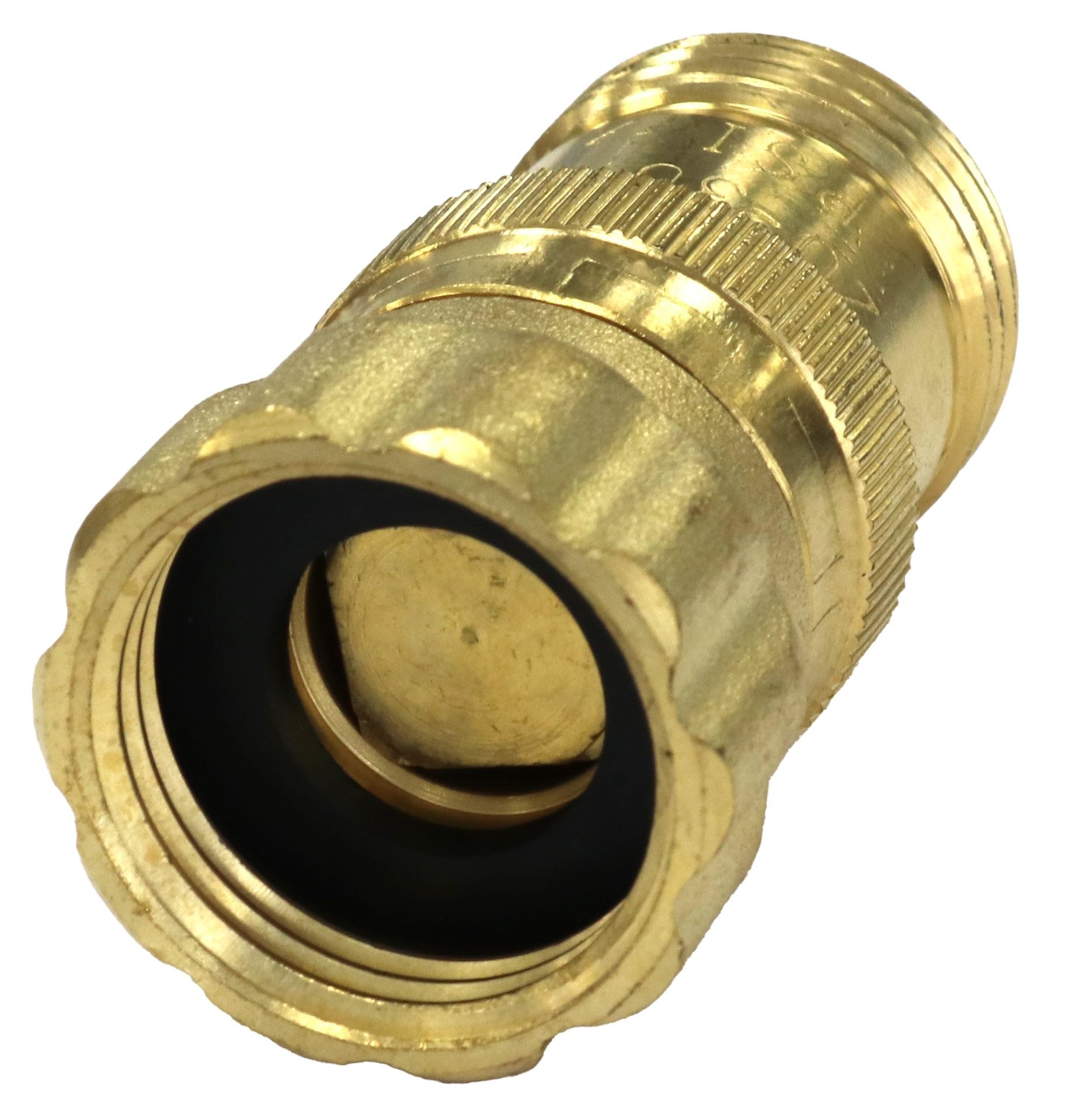
How To Choose The Best Drip Irrigation Pressure Reducing Valve
Your main concern is picking the pressure that matches your tubing. Drip tape usually needs 15 PSI (pounds per square inch, a measure of water force). Standard 1/2-inch drip line and soaker hoses work happily at 25 PSI. A few systems (often those with built-in emitters) call for 30 PSI. The wrong pressure starves your plants or bursts your lines — so match the number before you install. Almost every valve in this guide uses standard 3/4-inch garden hose thread (GHT), which screws directly onto a hose bib or timer without adapters in the US and Canada.
Brass vs. Plastic Construction
Plastic regulators cost less up front, but sunlight makes them brittle after a season or two and they can crack under a sudden high-pressure surge from the municipal supply. Solid lead-free brass takes the UV hit without degrading and handles far higher inlet pressures — typically 140 to 155 PSI compared to a plastic part that might top out around 100 PSI. The trade-off is weight and feel: brass regulators are heavier and feel more substantial when you thread them on. A brass valve can stay in place for years without needing replacement.
Maximum Inlet Pressure
Household water pressure often runs between 50 and 80 PSI. Some homes near hydrants or with pressure-boost systems hit 100 PSI or more. Every valve has a maximum inlet pressure rating — the highest pressure it can survive without damage. If your supply spikes above that number, the valve can fail internally and let full pressure through. The best brass models here are rated for 155 PSI, which gives you a huge safety margin over even the strongest municipal system.
Flow Rate Capacity
This tells you how many gallons per minute (GPM) the valve can pass while still regulating pressure correctly. A standard 25 PSI regulator handles 6 to 7.5 GPM, which covers most residential drip zones. The 15 PSI models (designed for drip tape) flow less — around 2.3 GPM at the regulated pressure — because drip tape uses smaller-diameter lines and runs at lower volume. If you are feeding multiple zones or long runs of soaker hose, check the flow rate to make sure the valve is not a bottleneck.
Quick Comparison
| Model | Best For | Outlet Pressure | Max Inlet PSI | Max Flow Rate | Amazon |
|---|---|---|---|---|---|
| Product 1★ Best Overall | Best Overall | 25 PSI | 150 PSI | 6.5 GPM | Amazon |
| Product 2Proven Workhorse | Proven workhorse | 25 PSI | 140 PSI | 7 GPM | Amazon |
| Product 3Highest Inlet Tolerance | Highest inlet tolerance | 25 PSI | 155 PSI | 6.3 GPM | Amazon |
| Product 4 | Strong flow rate | 25 PSI | 135 PSI | 7.5 GPM | Amazon |
| Product 5 | Low-pressure drip tape | 15 PSI | 125 PSI | 7 GPM (free flow) | Amazon |
| Product 6 | Heavy brass build | 25 PSI | 145 PSI | 6.8 GPM | Amazon |
| Product 7 | Multi-regulator kit | 25 PSI | — | — | Amazon |
| Product 8 | Budget brass pick | 25 PSI | — | 5 GPM | Amazon |
| Product 9 | Regulator + filter combo | 30 PSI | 150 PSI | — | Amazon |
In‑Depth Reviews
1. 25 psi Water Pressure Reducer Regulator for Drip Irrigation System
Our pick — over 4.5★ from 200+ verified ratings; the strongest balance of quality and price.
The crowd favorite that delivers spot-on 25 PSI without a single leak.
This is the valve most owners reach for — and then buy two more. It holds your drip system at a steady 20-30 PSI (25 PSI is the nominal target) with a max inlet of 150 PSI, which means even if your house pressure spikes you will not blow a line. The flow rate tops out at 6.5 GPM, enough for a medium-sized garden zone. Owners confirm the pressure reading with a gauge and report it is “spot on” every time. The solid lead-free brass body contains less than 0.25% lead and shrugs off sunlight that would turn a plastic regulator brittle in a year.
The brass threads are 3/4-inch female hose thread (FHT) on the inlet and 3/4-inch male hose thread (MHT) on the outlet, so it screws directly onto a standard hose bib or timer. The only thing to watch: do not connect it to aluminum hose fittings for long periods, because galvanic corrosion can set in. A few owners mention a tiny drip from the center while the system is running — likely from the connection, not the valve itself.
What wins people over
- Solid lead-free brass handles UV exposure without cracking
- Max 150 PSI inlet provides a generous safety buffer
- Owners verify it delivers accurate 25 PSI with a pressure gauge
A fair caveat
- Aluminum hose fittings can corrode if left connected long-term
- Outlet pressure may creep above 30 PSI when the outlet is completely shut
Grab this if: you want a straightforward, well-tested brass regulator that mates directly to any standard garden hose or timer and holds accurate pressure.
Avoid it for: drip tape that needs lower than 25 PSI — step down to the 15 PSI model instead.
2. Lead-Free Brass 20-30 psi Water Pressure Reducer Regulator
Hefty brass construction that tamed a 75 PSI washing machine hammer.
This regulator shares the same solid lead-free brass build as the top pick, but its max inlet pressure is 140 PSI. That is still well above typical household supply. The flow rate reaches 7 GPM — slightly higher than Product 1, which helps if you are feeding a longer line or multiple branches. Reviewers stress its functionality and water pressure control the most, praising how it steps down aggressive water pressure for float valves and drip systems alike.
One clever owner installed it on a washing machine and solved a 75 PSI water hammer that larger hoses could not fix. The all-metal exterior is impervious to sunlight. The inlet is 3/4-inch FHT and the outlet is 3/4-inch MHT. Same warning as the others: keep it away from aluminum fittings over long periods, and do not expect it to regulate pressure if you shut the outlet completely — the pressure may creep above 30 PSI.
What it does best
- All-brass build outperforms plastic alternatives under direct sun
- 7 GPM flow rate supports larger drip zones comfortably
- Proven to solve high-pressure problems in non-irrigation applications
Consider this
- At 140 PSI max inlet, it has 10 PSI less headroom than the top pick
- Some owners find the output flow too low for systems with high flow demands
Best for: anyone who needs a reliable brass regulator and values a slightly higher flow rate for longer runs of drip line.
Think twice if: your water supply regularly spikes above 140 PSI — choose the 155 PSI model for extra safety margin.
3. Vibrant Yard Co. Heavy Duty 25 PSI Lead-Free Brass Pressure Regulator
The one that survives a 110 PSI assault without breaking a sweat.
This regulator has the highest max inlet pressure in this lineup at 155 PSI — more headroom than the 140 PSI model (Product 2). That extra margin matters if your home sits near a fire hydrant or uses a pressure-boost pump. The flow rate is 6.3 GPM. Owners who had returned five plastic regulators before trying this one report that it finally tamed an 80 PSI supply to a safe 25 PSI for drip irrigation. The free-spinning collar makes threading onto a timer much easier, especially in tight spaces. The brass body handles UV exposure easily.
The functionality earns the most praise — owners call it “well built” and “worth the buy.” The leakage aspect gets mixed feedback: some buyers report no drips, while a few encountered seepage from the start. The valve comes with a single O-ring. Like every regulator here, avoid prolonged contact with aluminum hose fittings.
Standout strengths
- 155 PSI max inlet offers the widest safety cushion in this guide
- Free-spinning collar simplifies installation onto timers and filters
- Brass build is a permanent upgrade over plastic regulators that fail quickly
A mixed point
- Leakage reports are split — most units are fine but an occasional one arrives seeping
Reach for this if: your water pressure sits above 100 PSI or you have had plastic regulators burst on you.
Look elsewhere if: you want the simplest possible install — a few owners needed extra washers to stop a slow drip.
4. Drip Irrigation and Soaker Hose 25 PSI Pressure Regulator, 3/4″ FHT x 3/4″ MHT
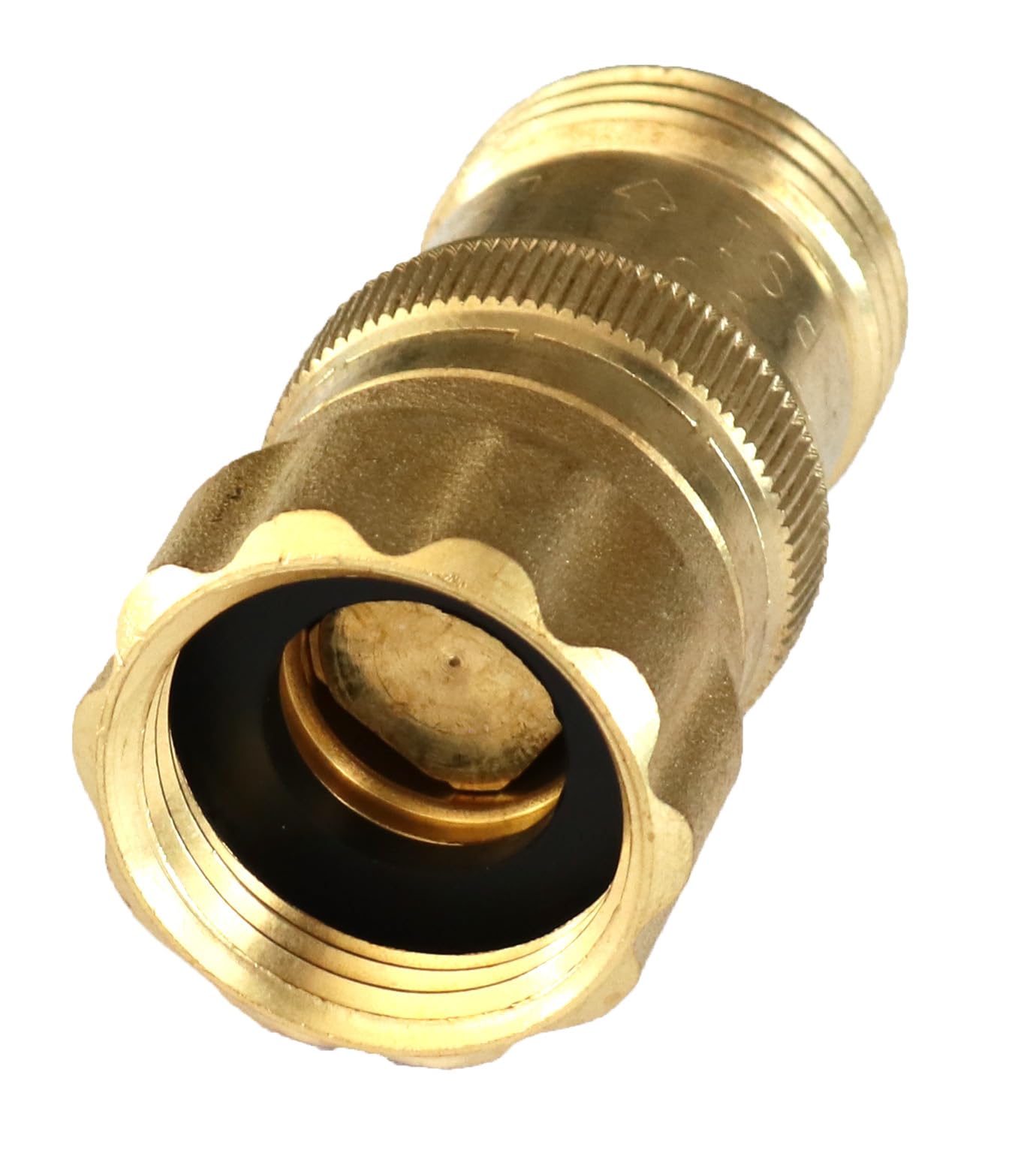
The highest-flow 25 PSI valve that keeps soaker hoses dripping evenly from end to end.
With a flow rate of 7.5 GPM — the top number among the 25 PSI regulators here — this valve is built for systems that need volume, not just pressure reduction. It handles a max inlet of 135 PSI. Owners running 1/4-inch garden sprayers report no pressure drop even with 16 heads active. The material quality (solid brass body, no weep hole) is praised, and the all-metal construction handles full sun with no degradation. The press of the review samples suggests it runs a zone of soaker hoses without the flow falling off at the far end — exactly what makes a soaker system work properly.
Leak-proof feedback is mixed: some owners get bone-dry connections from the start, while others note a slow leak at the pivot point. The included rubber O-ring helps, but thread seal tape is cheap insurance. The inlet and outlet use standard 3/4-inch hose threads, so it pairs with any timer or backflow preventer.
What it has going for it
- Highest GPM rating in the 25 PSI category — great for large or multi-branch zones
- Brass body eliminates the UV brittleness that kills plastic regulators
- No weep hole means no constant trickle wasting water
The catch
- Some units seep from the pivot point; thread tape is a smart precaution
- At 135 PSI, the max inlet is the lowest of the brass models here
Choose this when: you need a high-flow 25 PSI regulator for soaker hoses or a zone with many emitters.
skip it if: your water supply is known to exceed 135 PSI — pick a 155 PSI-rated valve instead.
5. 15 psi Water Pressure Reducer Regulator for Drip Tape, 3/4″ Hose Thread
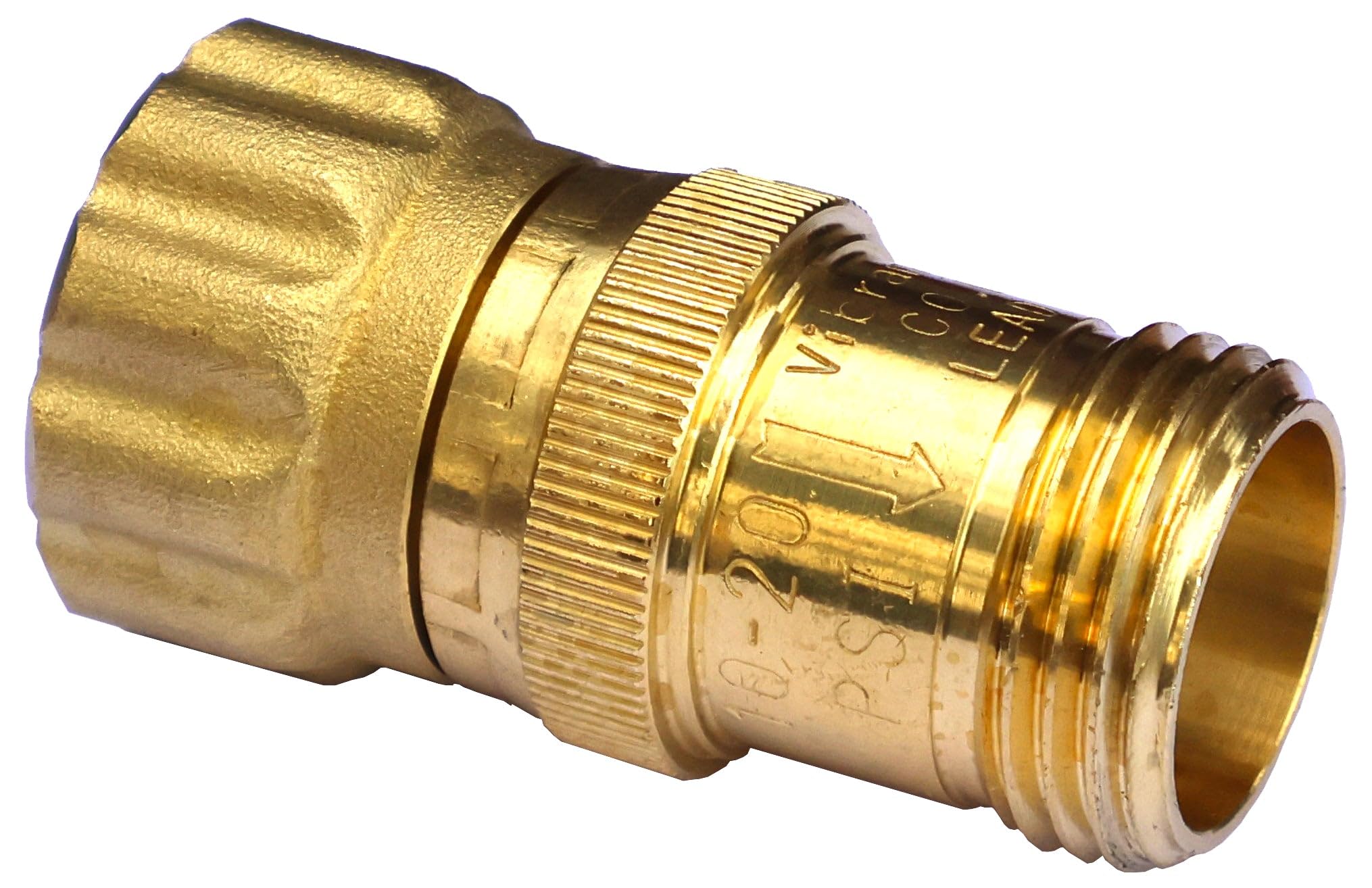
The specialist that drops pressure to 15 PSI so fragile drip tape stays intact.
Drip tape runs at lower pressure than standard 1/2-inch drip line — typically 8 to 15 PSI. This valve delivers a nominal 15 PSI (actual output 10-20 PSI) and flows about 2.3 GPM at that regulated pressure. That low flow rate saves water and prevents tape blow-offs. The max inlet is 125 PSI. Owners mention it prevents 1/2-inch poly drip line from bursting — one reviewer brought an 80 PSI faucet down to a safe 20 PSI and the line held for a full month. The brass construction is rugged enough to survive being driven over.
The water pressure and functionality aspects are both overwhelmingly positive. One owner did report a leak after the second use, so thread tape at the connections is a sensible habit. The valve carries a one-year warranty from the manufacturer.
Why it stands apart
- 15 PSI output is the right spec for drip tape and low-flow soaker setups
- Brass build survives UV, impacts, and continuous outdoor exposure
- Low 2.3 GPM flow rate minimizes water waste
Worth noting
- Not designed for standard drip systems — 25 PSI is the right spec there
- One owner experienced a leak on the second use; sealant is recommended
Buy this for: a drip tape layout, a low-pressure soaker system, or any application where your line is rated for 15-20 PSI.
Avoid if: you run standard 1/2-inch drip tubing with emitters — that calls for the 25 PSI regulators above.
6. Heavy Duty 25 psi Water Pressure Regulator 3/4″ Hose Thread
Sturdy brass that knocked a 60+ PSI supply down to 25 PSI without a drip.
This regulator handles up to 145 PSI incoming pressure and flows 6.8 GPM. Owners who installed it on outdoor plant watering projects praise the “super solid, no leaking” feel. One reviewer saw their house pressure drop from over 60 PSI to roughly 25 PSI — enough to stop leaks in plastic soaker hose adapters that had been dribbling constantly. The metal construction holds up in direct sun where plastic parts would soften and crack. The valve also solved a common issue with automatic timers: install it before the timer valve and the brass body protects the timer from pressure damage.
The durability feedback is mixed — some owners expect it to last for years, while a few report failure after two months. That split means the occasional unit may have an internal defect. The leakage results are also mixed; most units are leak-free, but enough reports of seeping exist to suggest testing before final installation.
Strong points
- Solid brass construction that stops leaks in downstream plastic fittings
- 6.8 GPM capacity supports moderate-sized drip zones
- UV-resistant body lasts outdoors without degradation
Mixed feedback
- Durability is split: many units last, but a few fail within two months
- Leakage reports are inconsistent — test with a quick hose connection before final install
Works best for: anyone who needs a heavy brass 25 PSI regulator with good flow and a solid track record in outdoor plant watering setups.
Be cautious if: you cannot afford a potential replacement — the durability split suggests a small quality-control risk.
7. 8 Pcs 25 PSI Drip Irrigation Pressure Regulator Adapter Kit
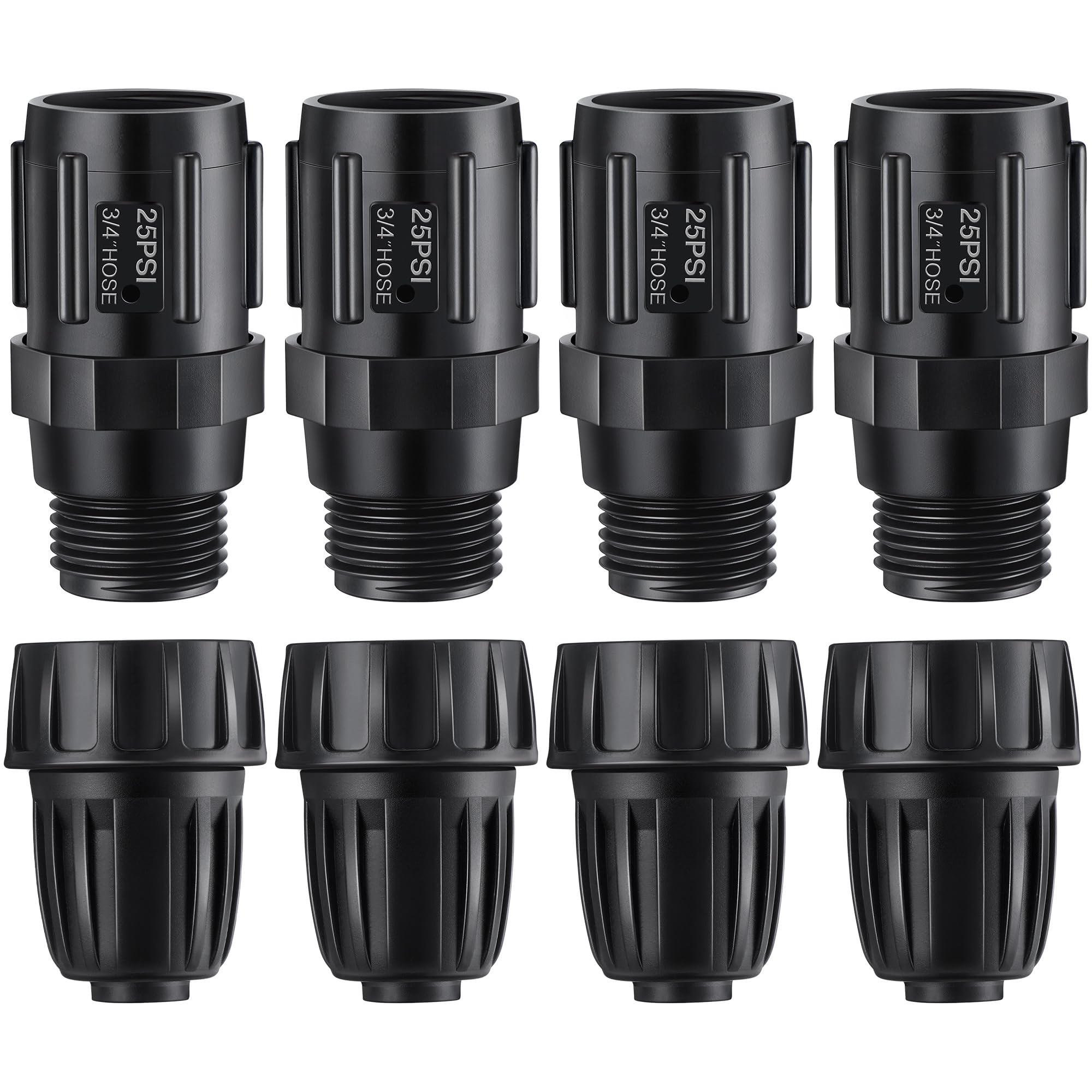
Four pressure regulators and four tubing adapters — everything you need to protect multiple zones.
This kit is built for the gardener managing several drip zones. It includes four individual 25 PSI regulators plus four 1/2-inch tubing adapters, so you can run a single supply line and branch into multiple low-pressure circuits. The regulators are crafted from high-strength ABS plastic — not brass — which keeps the kit light and affordable. Each fitting comes with a pre-installed rubber washer for a watertight seal. Owners say the pressure control is effective and the value for money is strong. It worked well enough for one gardener to protect drip lines from over-pressurizing.
The plastic construction is the trade-off: ABS resists sunlight better than basic polypropylene but it is not as UV-proof as solid brass. A design note from owners: the tubing adapters lack a bevel, which makes pushing 1/2-inch tubing onto the barb very difficult. One owner had to manually bevel the opening with a file. For small-scale or temporary systems the plastic build is acceptable, but for permanent outdoor installations the brass single regulators above may be a better fit.
Kit advantages
- Four regulators in one box solve multi-zone setups in a single purchase
- Tubing adapters included — no extra shopping for 1/2″ connections
- Pre-installed rubber washers help prevent leaks
Know before you buy
- Tubing adapters lack an internal bevel, making tube insertion difficult
- ABS plastic is lighter than brass but less UV-durable for permanent outdoor use
Pick this when: you need multiple regulators at once — the kit format saves time and money for a multi-zone drip layout.
Avoid if: you want regulators that will sit in full sun for years without concern; go with the solid brass single units.
8. Orbit 67743 3/4″ FPT 25 PSI Professional Pressure Regulator
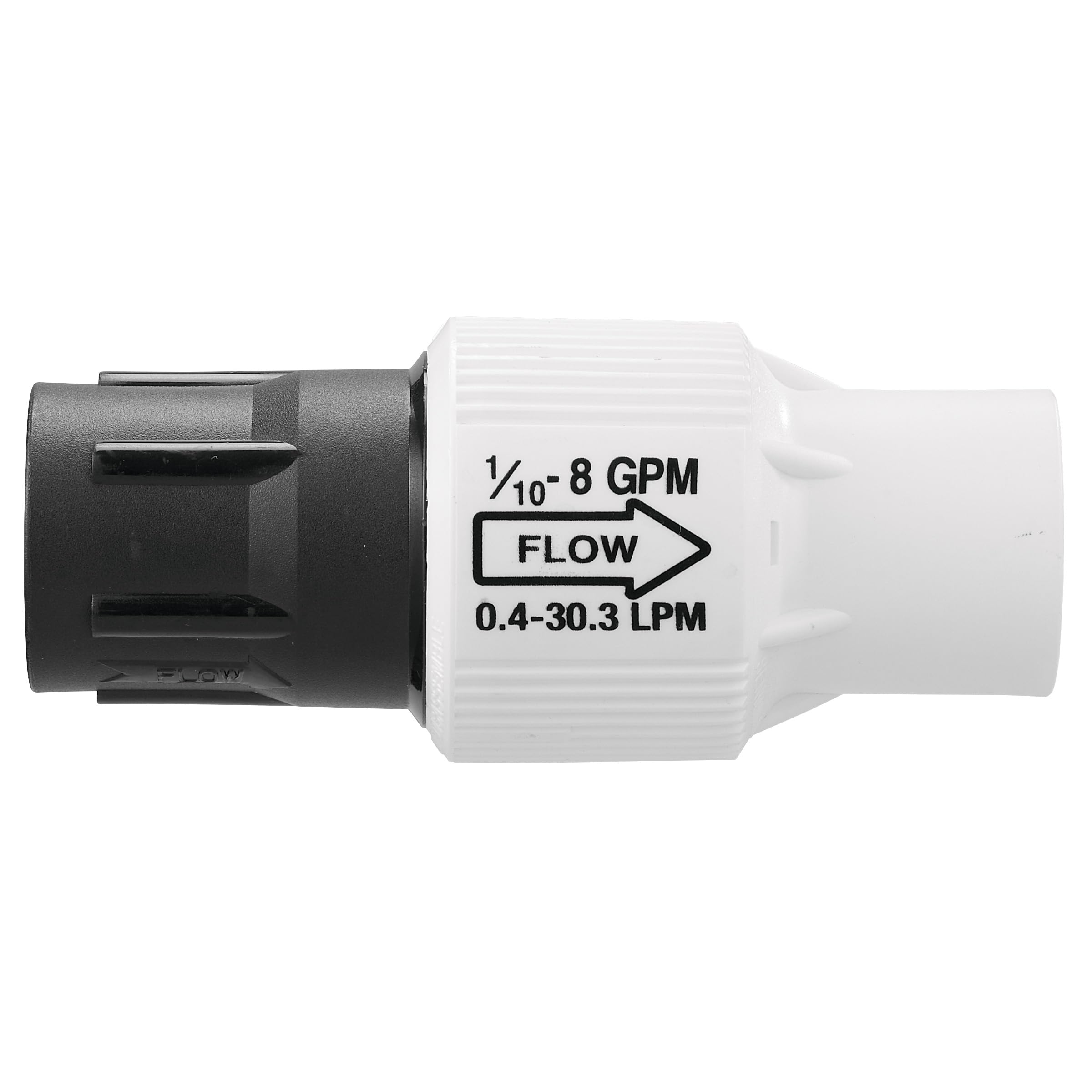
The budget-friendly brass regulator that works — if you manage your expectations about durability.
Orbit’s 67743 is a brass-bodied valve that reduces water pressure to 25 PSI with a maximum flow of 5 GPM. It uses 3/4-inch female pipe thread (FPT) on both ends — note this is FPT, not garden hose thread (GHT), so you may need a male-to-male adapter if your system uses standard hose connections. Owners mention it works well with controllers and valves from Orbit and other major brands. It is compatible with a B-hyve smart controller for automated watering. The functionality earns consistent praise, with one owner noting it was cheaper than the local hardware store.
The biggest complaint is leakage: it is the most-mentioned negative aspect among owners. The plastic housing can crack under high pressure or after extended UV exposure. Several owners also struggled with installation because of the FPT threading. This valve works best in a protected location (like a valve box or shaded area) where plastic degradation is slower. If you need a regulator for a short-term system or a covered installation, this saves money upfront.
Budget benefits
- Low cost makes it accessible for small or temporary drip setups
- Works with B-hyve smart controllers and other Orbit components
- Effective 25 PSI regulation for sprinkler-to-drip conversions
Brass trade-offs
- Leakage is a common owner complaint — sealant is highly recommended
- Female threads on both ends often require an adapter for standard hose systems
Choose this for: a short-term drip project or a covered installation where plastic UV damage is not a concern.
Skip it for: permanent outdoor drip systems exposed to direct sunlight and high pressure — brass is far more reliable.
9. Rain Bird PRF07530S Drip Irrigation In-Line 30 PSI Pressure Regulating Y Filter

Two jobs — filtering and regulation — in one compact Y-shaped body.
Rain Bird’s PRF07530S combines a 200-mesh (75 micron) stainless-steel filter with a 30 PSI pressure regulator in a single unit. That means fewer components to plumb and one fewer potential leak point. The glass-filled polypropylene body and cap are rated for 150 PSI and built for long outdoor service. The cap unthreads for quick cleaning of the filter screen. Owners who installed five of these on converted drip zones report they have been maintenance-free for five years except for an annual rinse of the micro-mesh screen. The 3/4-inch male pipe thread (MPT) connections fit standard irrigation valves.
The pressure control and installation are highly praised. The most-discussed negative is leakage — some units develop drips at the connection points. The durability is mixed: a few owners see the unit fail after 12-18 months, though many others report years of trouble-free service. This combo unit is ideal if you are converting a spray zone to drip and want to filter and regulate in one step.
Key advantages
- Built-in 200-mesh filter protects drip emitters from debris without a separate housing
- 150 PSI pressure rating matches the toughest brass models
- Quick-clean cap — unscrew, rinse the screen, reinstall
Things to know
- Leakage is the most common owner complaint — use thread tape on all connections
- Durability is mixed: some units last years, others need replacement in 12-18 months
- Body is glass-filled polypropylene, not metal — lighter but less impact-resistant than brass
Best for: converting a spray zone to drip irrigation when you want to add filtration and regulation in one compact component.
Avoid if: your system already has a filter — a dedicated regulator without a filter is simpler and has fewer potential leak points.
Understanding the Specs
Outlet Pressure (PSI)
The pressure your drip system actually sees after the valve. Drip tape runs best at 15 PSI. Standard 1/2-inch drip line and soaker hoses need 25 PSI. Systems with pressure-compensating emitters often use 30 PSI. Pick the one that matches your tubing’s rating — too high and emitters blow off, too low and the last emitters in the line dribble nothing.
Maximum Inlet Pressure
The highest incoming water pressure the valve can survive without internal damage. Most households run 50-80 PSI, but spikes happen. Brass valves rated for 140-155 PSI give you a wide safety margin. If your supply exceeds the valve’s max inlet, the regulator can fail open — meaning full household pressure hits your drip lines.
Flow Rate (GPM)
How many gallons per minute the valve passes while still regulating pressure. Standard 25 PSI regulators handle 6-7.5 GPM, which covers most residential drip zones. If you are feeding a long run or multiple branches, a higher GPM rating prevents pressure drop at the far end. Low-flow 15 PSI regulators move about 2.3 GPM — enough for drip tape but not for large soaker hose zones.
Thread Type
Almost all regulators here use 3/4-inch garden hose thread (GHT), which screws directly onto a standard hose bib or timer. Some models use pipe thread (FPT or MPT) instead — those need adapters to work with a garden hose. Check your system’s connection before you buy. A female hose thread (FHT) inlet connects to the faucet; a male hose thread (MHT) outlet connects to the drip line.
FAQ
What happens if I use a 25 PSI regulator on drip tape rated for 15 PSI?
Can I use a pressure reducing valve with a smart timer?
Why does my pressure regulator leak from the center?
How long does a brass drip irrigation pressure regulator last?
What size regulator do I need for a standard garden hose?
Can I connect a pressure regulator to an aluminum hose fitting?
What happens if the outlet of the regulator is completely shut off?
Is 15 PSI or 25 PSI better for soaker hoses?
Can I install a pressure regulator after the backflow preventer?
How do I clean a pressure regulator that has slowed down?
Final Thoughts: The Verdict
For most people, the best drip irrigation pressure reducing valve is the 25 psi Water Pressure Reducer Regulator because it combines the highest crowd rating with a solid 150 PSI max inlet, accurate pressure delivery, and all-brass construction that will last for years outdoors. If you have drip tape that needs low pressure, grab the 15 psi Regulator. And for a zone conversion that needs both filtration and regulation, the Rain Bird PRF07530S simplifies the plumbing into one clean component.
How We Picked
We do not accept paid placement. Every pick is matched to a real buyer and a real use-case; we do not hands-on test units.
Sources & Methodology
Specifications: manufacturer listings and product documentation. Review insights: verified customer reviews, as of July 2026. Pricing: not shown on this page (it changes often); check the current price via the retailer link.
As an Amazon Associate, Lawn Gear Lab earns from qualifying purchases. This does not affect which products we feature.