
Specs are compiled from manufacturer listings and verified buyer reviews and can change over time — please confirm the key details on the product page before buying.
You’ve measured the bed, stacked the timbers, and squared the corners. Now, the one thing that decides whether your edge stays put after a hard rain or a frost heave is the stake you drive through it. A thin nail that bends on the first swing or a short spike that won’t reach solid soil turns a weekend project into a running repair. The right anchor disappears into the ground and locks your work in place for seasons — not weeks.
I’m Rikta — the founder and writer behind Lawn Gear Lab. This guide is built by comparing the manufacturers’ published specifications and the patterns across verified customer reviews, so you get each pick’s real strengths and trade-offs instead of marketing spin.
Whether you’re securing a single raised bed, holding a heavy timber retaining wall, or marking a long boundary line, you need a stake that matches the ground and the load. Here is the honest breakdown of the best landscaping timber stakes to keep your hard work planted exactly where it belongs.
Our Picks at a Glance

How To Choose The Best Landscaping Timber Stakes
Your soil type, the weight of the timber, and how permanent you want the installation to be are the three factors that drive this decision. A spike that works beautifully in loamy garden soil will bounce off rocky ground, and a heavy-duty rebar stake is overkill for marking a temporary veggie row. Match the stake to the task.
Material: Steel vs. Wood
Steel rebar stakes (often powder-coated or galvanized) resist bending and rust, making them the go-to for permanent or heavy-load jobs like retaining walls, concrete forms, and anchoring large timbers. Wooden stakes (typically fir or pine) are lighter, cheaper per stake, and better suited for temporary markers, survey lines, or supporting garden plants — but they will rot over time when left in direct ground contact.
Length and Diameter
A longer stake (16 inches or more) reaches past loose topsoil into compacted subsoil, which gives you real holding power — especially for timber edging that takes sideways pressure from soil or foot traffic. Diameter matters just as much: a 5/16-inch spike is adequate for light garden use, while a 1/2-inch spike resists bending when driven through hard clay or asphalt and provides serious grip once set.
Point Design and Coatings
A chisel point (often cut at a 45-degree angle) pushes soil aside as you drive it, making insertion far easier in dense ground. Flat-topped stakes with a wide head prevent hammer slippage. Look for a black powder-coated or galvanized finish if you want the stake to stay rust-free for years; raw steel or thin paint jobs will corrode quickly in wet soil.
Quick Comparison
| Model | Best For | Length | Diameter | Count | Amazon |
|---|---|---|---|---|---|
| VVOKGO Straight Rebar Stakes★ Best Overall | Best Overall | 16 in | 5/16 in | 24 | Amazon |
| Colingmill Wooden Garden StakesBest Survey Markers | Survey & Boundary Markers | 11.5 in | 0.43 x 1.375 in | 20 | Amazon |
| Alffun 12-Inch Rebar StakesBest Value Set | Versatile Medium Duty | 12 in | 5/16 in | 20 | Amazon |
| VEVOR Wooden Garden Stakes | Tall Plant & Garden Support | 36 in | 0.75 x 0.75 in | 25 | Amazon |
| Homwin 16-Inch Rebar Stakes | High-Stability Anchoring | 16 in | 3/8 in | 18 | Amazon |
| EUOKOK 14-Inch Heavy Duty Stakes | Hard Ground & Asphalt | 14 in | 1/2 in | 10 | Amazon |
| COBARYEN Green Landscape Spikes | Large Area Edging | 10 in | 0.27 in shaft | 100 | Amazon |
| Gbekery 24-Inch Rebar Stakes | Deep-Set Heavy Timber | 24 in | 1/2 in | 16 | Amazon |
| Greenes Fence 4-Ft Garden Stakes | Tall Plant & Sign Support | 48 in | 0.75 x 0.75 in | 50 | Amazon |
In‑Depth Reviews
1. VVOKGO Straight Rebar Stakes 16 Inch
Our pick — over 4.5★ from 400+ verified ratings; the strongest balance of quality and price.
The 24-pack that handles everything from timber to tents without a single bend.
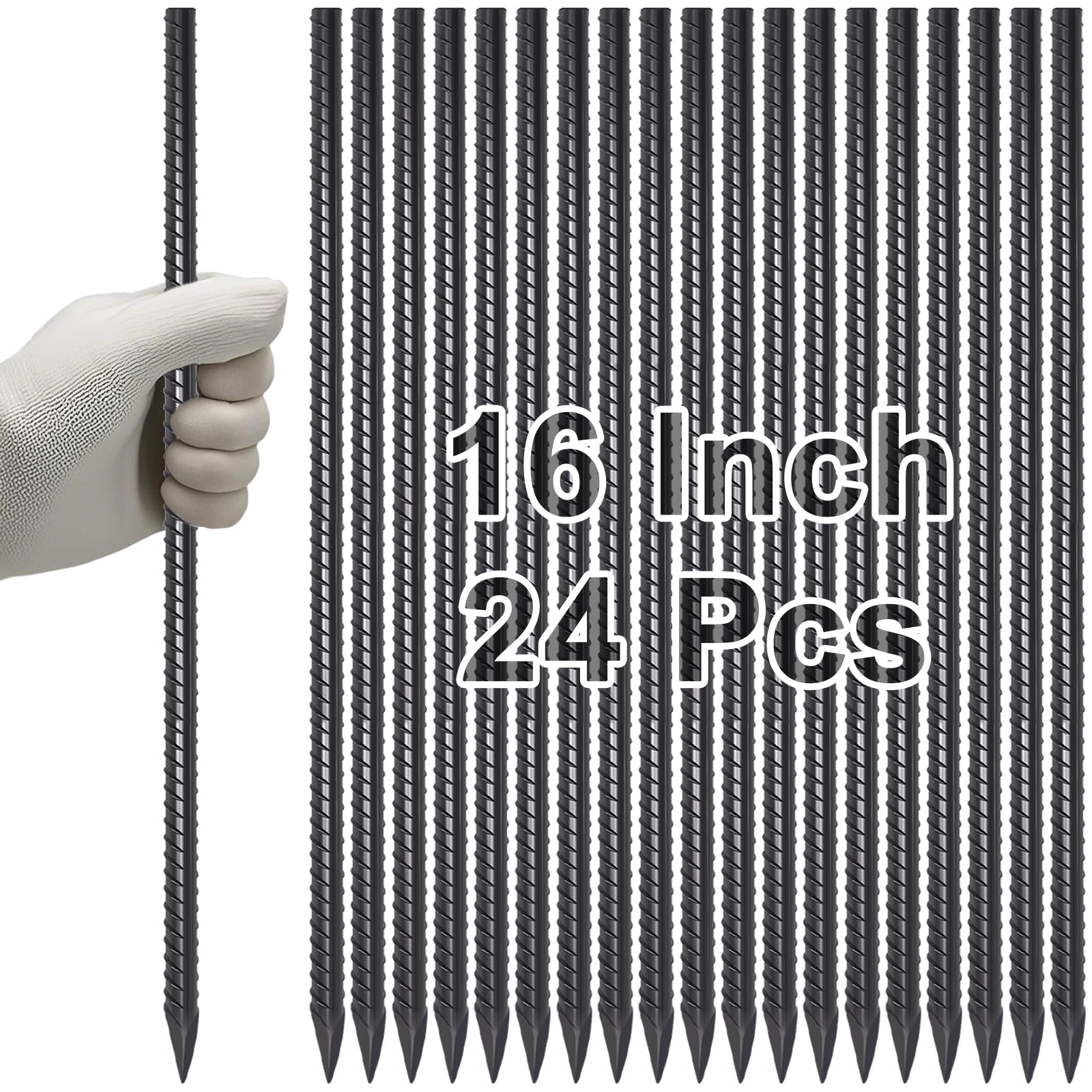
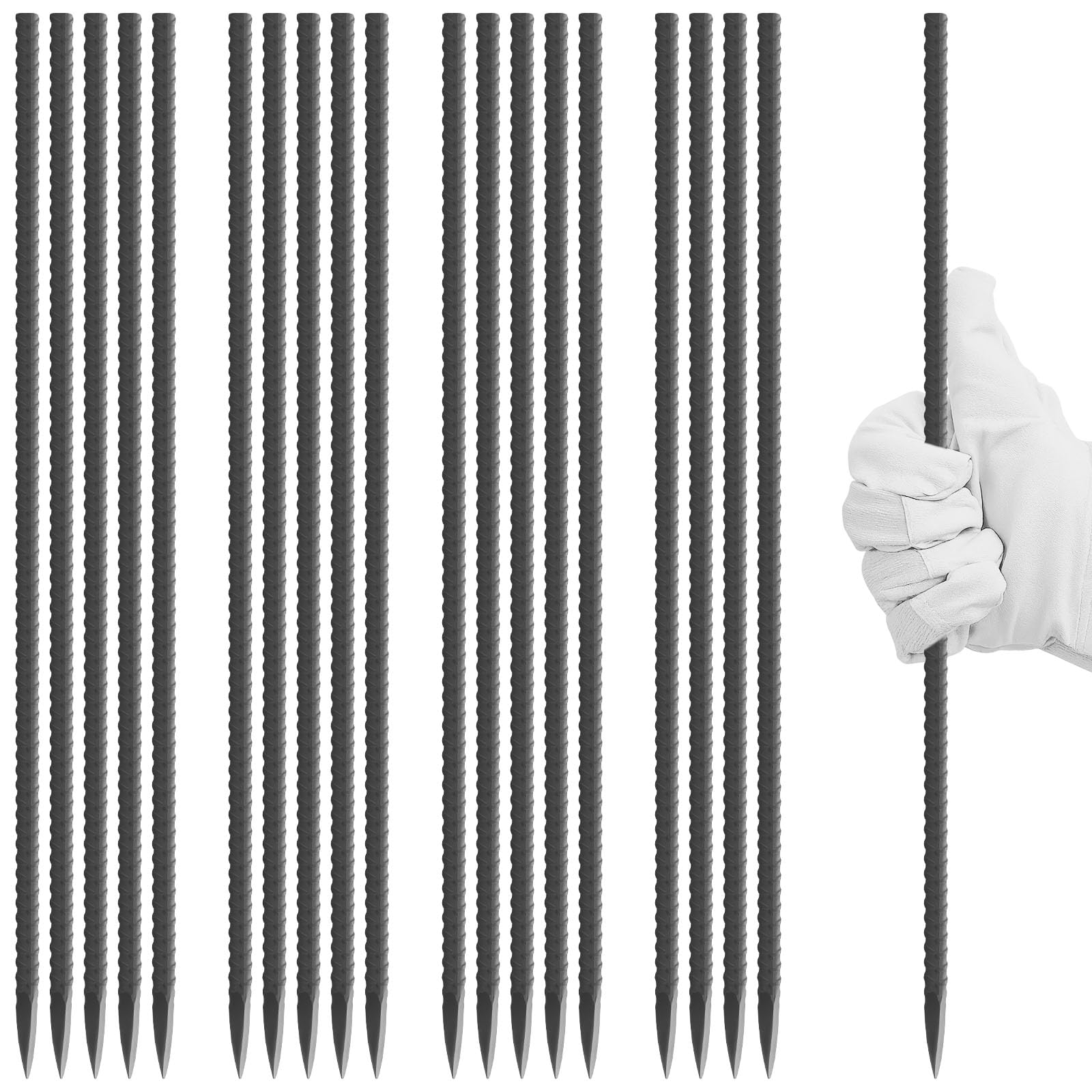
You get 24 stakes in one box, each a full 16 inches long with a 5/16-inch diameter that owners consistently call “very sturdy.” The chisel-pointed end is the feature that wins people over — it slices through hard soil without needing a pilot hole, and the ribs along the shaft keep the stake from spinning or backing out once it is seated. Buyers report using these to anchor landscape timbers, concrete forms, and even heavy tarps, with one noting they worked as “great heavy duty metal spikes” for a small stone wall in clay soil.
The catch is the diameter: some owners found the 5/16-inch spec runs a bit wider than a standard 1/2-inch hole in pressure-treated lumber, which can split the wood if you do not pre-drill a larger hole. At 3.84 kg (about 8.5 pounds) for the bundle, these are not lightweight, but that heft translates into the durability that owners praise most — quality is the top-mentioned aspect, with sturdiness close behind. The black powder coating holds up well, though a few owners hope the galvanized finish on the tips lasts long-term.
For the price per stake, this is the most balanced value in the list: you get enough length for timber anchoring, a sharp point for easy driving, and a count that covers a whole project without leftovers from a bulky 100-pack. The crowd favorite here earns its spot with a strong rating backed by hundreds of owners who actually used them for real landscaping work.
What owners love
- Sharp chisel point drives into hard clay soil with minimal effort
- 16-inch length reaches deep into compacted subsoil for solid hold
- 24 stakes cover a full timber edging project in one purchase
The honest trade-off
- Diameter runs larger than spec — may split lumber if you don’t enlarge pilot holes
- Heavier than wood or thinner wire stakes at 8.5 lbs per pack
Reach for these if: you need a high-volume, heavy-duty steel stake that can handle timber, concrete forms, and general ground anchoring in one reliable bundle.
Look elsewhere if: you’re working with pre-drilled 1/2-inch holes in lumber and don’t want to widen them.
2. Colingmill 20 Pieces Wooden Garden Stakes 12 Inch
The go-to wooden stake for boundaries, baselines, and temporary garden marking.
At 11.5 inches long with actual dimensions of 0.43 inches wide by 1.375 inches high, these solid wood stakes are designed for survey lines, silt fences, and plant support — not for heavy timber anchoring. The wood is “solid and doesn’t splinter” according to owners, and the smooth, processed tips slide into thick soil without splitting the stake head. One buyer used them to set a perimeter around a bush stump so no one misstepped, calling them “great quality and sturdy” even after being hammered into hard dirt.
Versatility is the top aspect owners mention — these stakes are regularly repurposed for crafts, directional yard signs, and reinforcing raised garden beds. At just 0.94 kg (about 2 pounds) for the 20-pack, they are dramatically lighter than the steel picks above — the VVOKGO rebar stakes weigh 3.84 kg (about 8.5 pounds) — making them easy to carry across a property. The rustic log look also blends into garden beds without being an eyesore.
The trade-off is inherent to wood: these will rot if left in direct ground contact for years. They are best for seasonal marking, plant staking, or projects where you want a biodegradable option. If you need a permanent timber lock, you want steel.
Why they work
- Smooth tip drives easily without splitting the wood
- Light enough to carry a 20-pack across a large property
- Works for crafts, signs, and garden reinforcement — not just stakes
The limitation
- Wood will deteriorate over time in direct ground contact
- Too short and thin for holding heavy landscape timbers
Choose these for: survey marking, garden row rows, lightweight plant support, or any temporary project where steel is overkill.
Skip them if: you need permanent anchoring for timber edging, retaining walls, or concrete forms.
3. Alffun 12 Inch Rebar Stakes Heavy Duty, 20 Pack
A sharp, budget-friendly 20-pack for lighter-duty anchoring and creative projects.
These 12-inch stakes are forged from solid Q235 steel with a flat top for even hammer strikes and a chisel-point tip that owners find easy to sink into soil, gravel, or hard ground. The black finish provides basic weather resistance, and the 5/16-inch diameter is thick enough for garden fence posts, plant supports, and tent canopies. One owner used them to “secure logs to the ground,” while another found them perfect for stabilizing top-heavy solar lights — “easy to sink into soil due to sharp point.”
The 20-count is ample for most medium-duty tasks, though some owners note that a full pack is excessive if you only need a few stakes for small projects. At 2.48 kg (about 5.5 pounds) for the bundle, these are lighter than the 16-inch rebar options but still carry real heft. The main complaint is value: a few owners consider them pricey for what you get, especially if you only use half the pack. For the buyer who needs a solid steel stake for moderate anchoring without paying for premium length or thickness, this hits a good middle ground.
What stands out
- Chisel tip penetrates gravel and hard-packed ground with minimal effort
- Flat top distributes hammer force evenly, preventing slips
- Q235 steel construction resists bending during driving
The honest catch
- 12-inch length may be too short for deep timber anchoring in loose topsoil
- 20-pack is a lot of stakes if your project is small
Best for: medium-duty jobs like garden fence anchoring, plant support, Halloween decorations, and stabilizing temporary structures.
Think twice if: you need the deeper hold of a 16-inch or longer stake for permanent timber edging.
4. VEVOR Wooden Garden Stakes, 25 Pcs 36×0.75×0.75 in
Three-foot fir stakes for supporting climbing plants and marking tall garden zones.
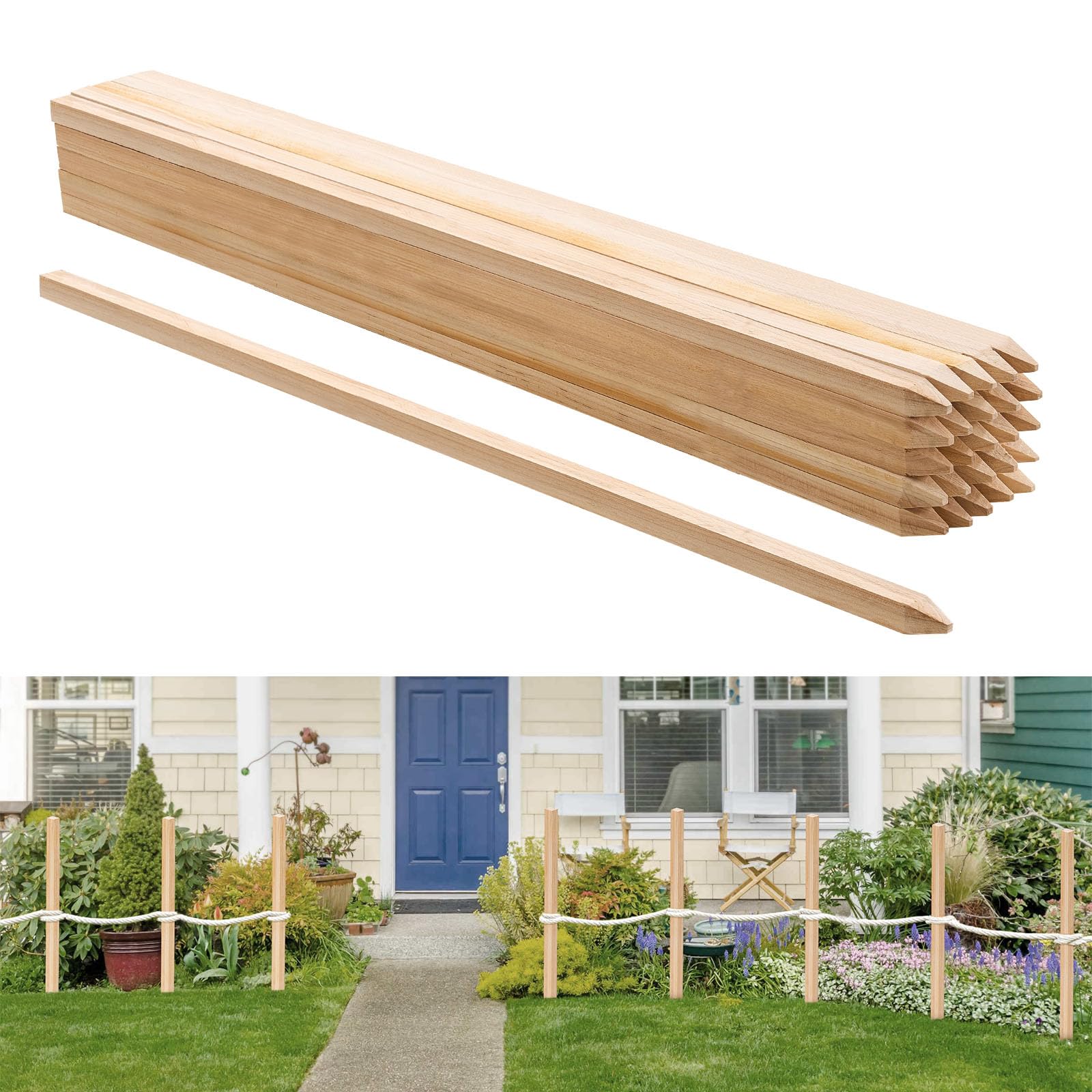
At 36 inches long with a 0.75 x 0.75-inch square profile, these VEVOR stakes are built for height rather than brute holding power. The natural fir wood has a sharp point at the bottom for easier hammering into soil, but owners caution against heavy pounding — the wood will splinter if you treat it like a rebar spike. Instead, they excel at supporting tomatoes, beans, and other climbing plants, marking pathways, and creating decorative borders. One owner used them to mark young trees so they wouldn’t get mowed over, calling them “perfect for our purpose.”
Quality is the top aspect owners mention — the stakes are described as “better stakes than what I’ve bought in big-box stores,” with identical dimensions across all 25 pieces. At 6.8 pounds for the pack, they are heavier than the shorter Colingmill wooden stakes but still manageable. Just keep in mind that these are not designed to anchor heavy timber or concrete forms; they are plant support and boundary markers that happen to share the same category name.
What owners appreciate
- Tall 36-inch length supports climbing vegetables and tall flowers
- Uniform dimensions across all 25 stakes for consistent results
- Sharp point makes insertion easier than blunt wooden stakes
The key limitation
- Fir wood splinters if you hammer aggressively; not for heavy driving
- Wooden stakes will eventually rot in ground contact
Reach for these if: you need tall, lightweight stakes for garden plant support, pathway marking, or temporary fencing.
Skip them if: your project requires anchoring heavy landscape timbers or concrete forms.
5. Homwin 16 Inches Rebar Stakes 18-Pack Heavy Duty
A thicker 3/8-inch rebar stake that owners trust to hold trampolines in high winds.
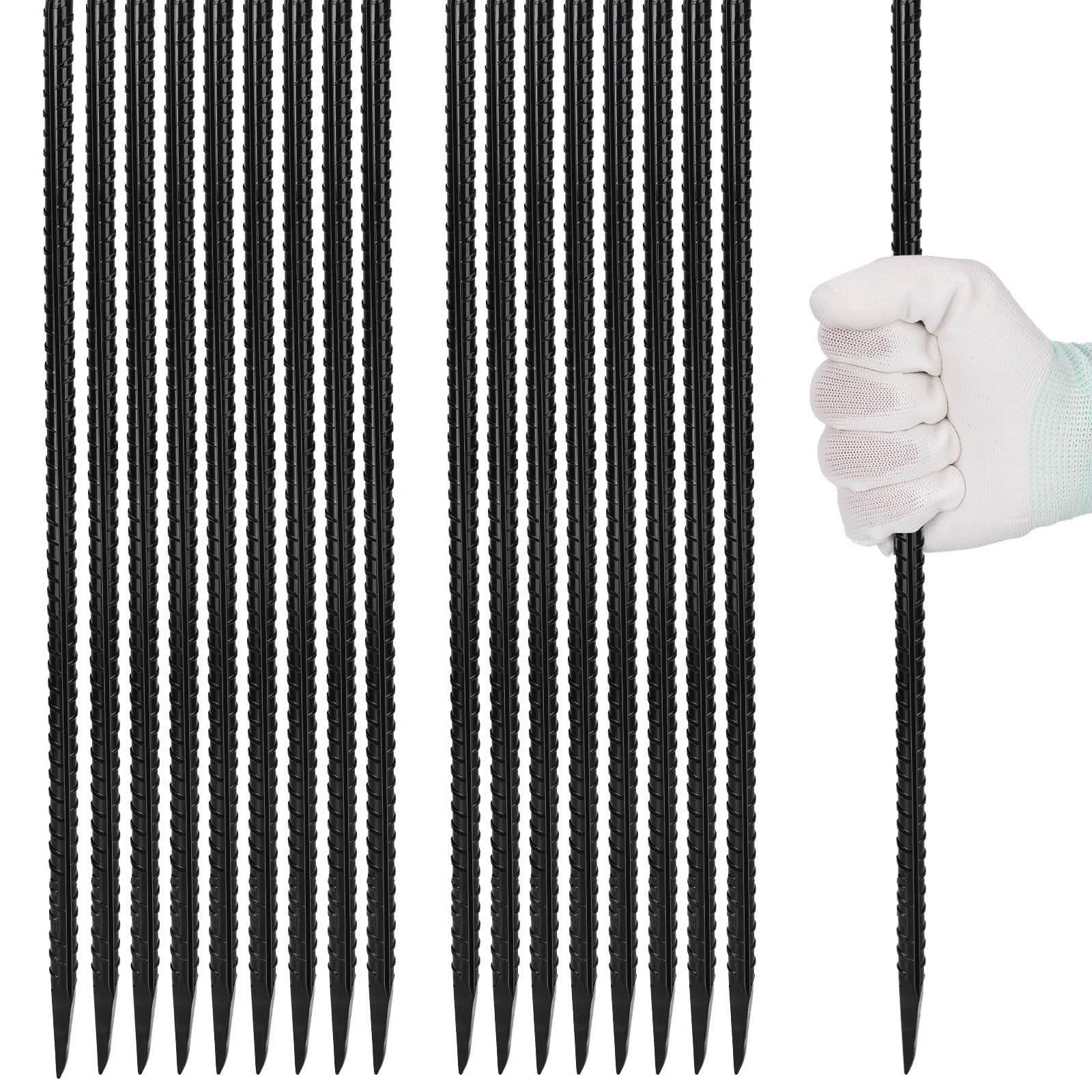
Stepping up from the standard 5/16-inch diameter, these Homwin stakes measure a full 3/8 inch thick and 16 inches long, giving you noticeably more rigidity when driving into tough ground. The 45-degree chisel-point end and flat top make for clean insertion, and the black spray paint coating provides rust resistance. Durability is the top praise from owners — one buyer used them to hold a trampoline base in high winds, driving them into clay soil with a rubber mallet and reporting “trampoline is going nowhere brother!”
At 7 pounds for the 18-pack, each stake has real heft. Owners also appreciate the versatility: they’ve been used to secure Halloween animatronics, outdoor sports nets, and even a top-heavy bird bath that squirrels kept tipping over. The length is a common point — some owners wish for a 30-inch version for deeper anchoring, while others find 16 inches just right for timber and sprinkler stabilization. The 2-year warranty adds confidence that you don’t always get with commodity rebar stakes.
Why owners pick these
- 3/8-inch diameter resists bending better than thinner 5/16-inch stakes
- Chisel point drives into clay soil with a standard mallet
- 2-year warranty covers defects and performance issues
The honest trade-off
- 16-inch length may be short for loose, sandy soils where deeper reach is needed
- 18-pack costs more per stake than the larger 24-pack options
Best for: high-wind anchoring of trampolines, sheds, and heavy garden structures where you need proven durability.
Consider another if: your soil is very loose and you need stakes longer than 16 inches for a secure bite.
6. EUOKOK 14 Inch Rebar Stakes 1/2″ Heavy Duty Ground Anchors
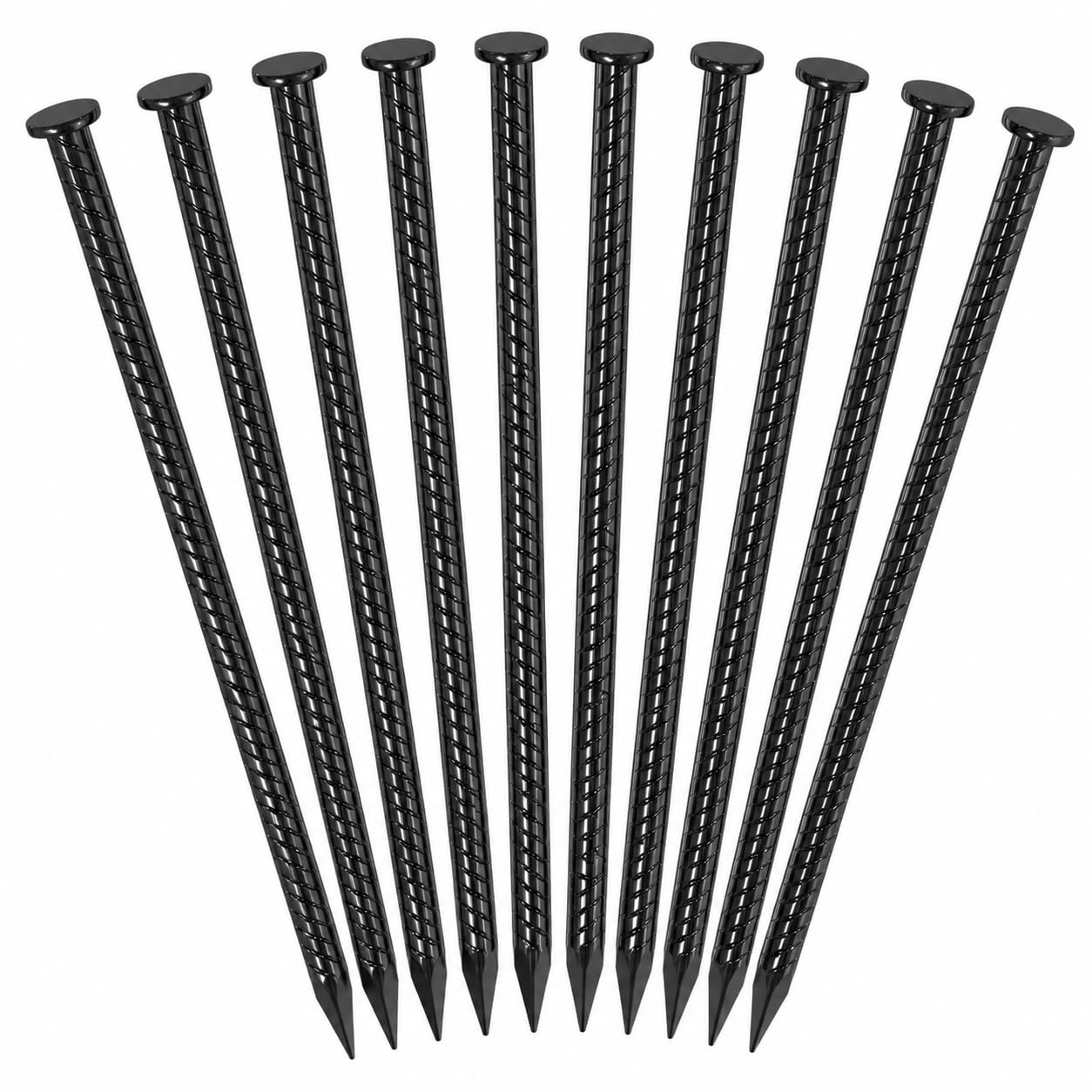
The half-inch rebar spike that chews through asphalt and clay without flinching.
This is the heaviest standard-duty stake in the lineup at a full 1/2-inch diameter and 14 inches long, built from solid steel with a 45-degree chisel point that the maker claims can cut through hard-packed clay, rocky soil, gravel, and even asphalt without pre-drilling. The ribbed surface increases friction with the surrounding soil once driven, which is why owners mention they are “super sturdy and so far are doing a great job of securing the timbers to the clay ground.” The 1-inch flat top gives you a large, stable striking surface that keeps the hammer on target.
A thoughtful addition is the removable safety cap that covers the sharp tip during storage and transport — a detail that matters if you toss these in a truck bed or tool bag. The 10-pack is smaller than most others here, but these are not for covering broad areas; they are for precision anchoring where you need maximum holding power per stake. The crowd favorite here holds a strong rating, with quality and sturdiness tied as the top-mentioned aspects. Owners also appreciate that they are reusable: twist to break the soil friction, pull upward with a pry bar, clean, and store.
What owners praise
- 1/2-inch steel drives through clay, gravel, and asphalt without pre-drilling
- Ribbed surface locks into soil for maximum holding power
- Safety cap protects the sharp tip during storage and transport
The honest catch
- 10-pack is a small count; not cost-effective for large-area projects
- 14-inch length shorter than the 16-inch and 24-inch options here
Choose these for: asphalt speed bumps, parking curbs, wheel stops, or any hard-ground application where thinner stakes would bend or bounce.
Skip them if: you need a large quantity of stakes for a sprawling timber edging project.
7. COBARYEN 10 in Green Landscape Spikes & Metal Stakes 100 Pack
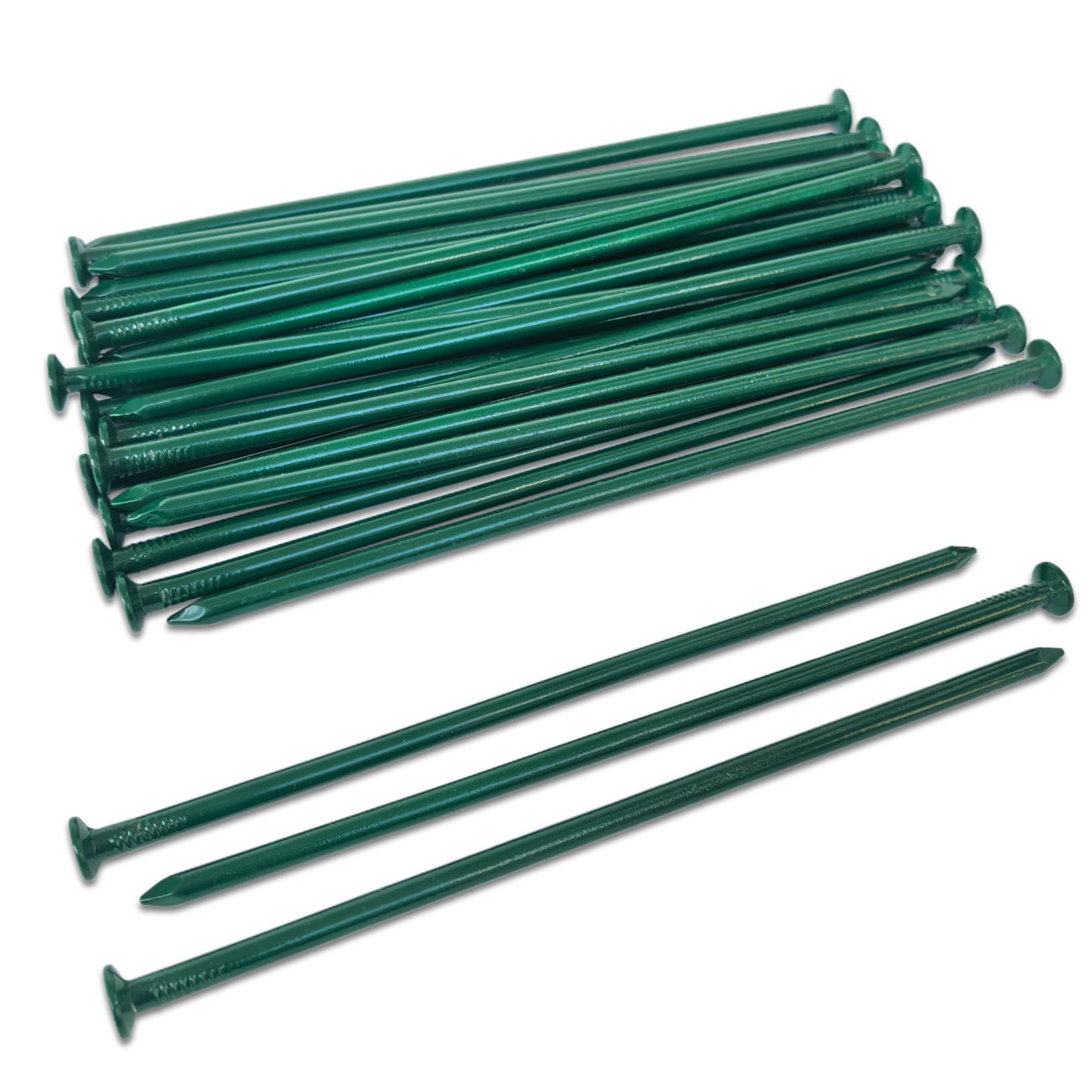
A 100-count bulk box of green-coated spikes for large edging and paver projects.
These 10-inch landscape spikes have a 0.27-inch shaft and a wide 0.61-inch driving cap, designed for securing landscape edging rolls, timber borders, plastic garden edging, and loose pavers. The green powder coating is meant to blend into grass and garden beds for a discreet look. Functionality is the top aspect owners praise — one buyer called them “great for securing landscaping pavers or most anything you need to secure to the ground,” noting the nails are large and “really mean business.”
The honest trade-off here is rust resistance. While the green coating helps, several owners note that the spikes began “getting a rusty color” after just a week in the ground. This is not a problem for temporary projects or areas where surface rust is cosmetic, but if you need long-term corrosion protection in wet soil, you’ll want the thicker galvanized rebar options. At 100 stakes per pack, this is the best value for large-area projects like securing long runs of timber edging or landscape fabric, just budget for eventual replacement in damp conditions.
What works well
- 100-count pack covers large perimeter edging projects in one purchase
- Green coating blends into lawn for a cleaner look
- Wide driving cap protects hands during hammering
The honest downside
- Coating does not prevent rust — spikes can show corrosion within a week
- 10-inch length is short; may not hold in loose or sandy soil
Reach for these if: you need a bulk supply of landscape edging nails for a one-season project or short-term timber border installation.
Look elsewhere if: you need rust-proof anchoring for a permanent timber structure that will stay in the ground for years.
8. Gbekery 24 Inches Rebar Stakes (16pcs) Heavy Duty
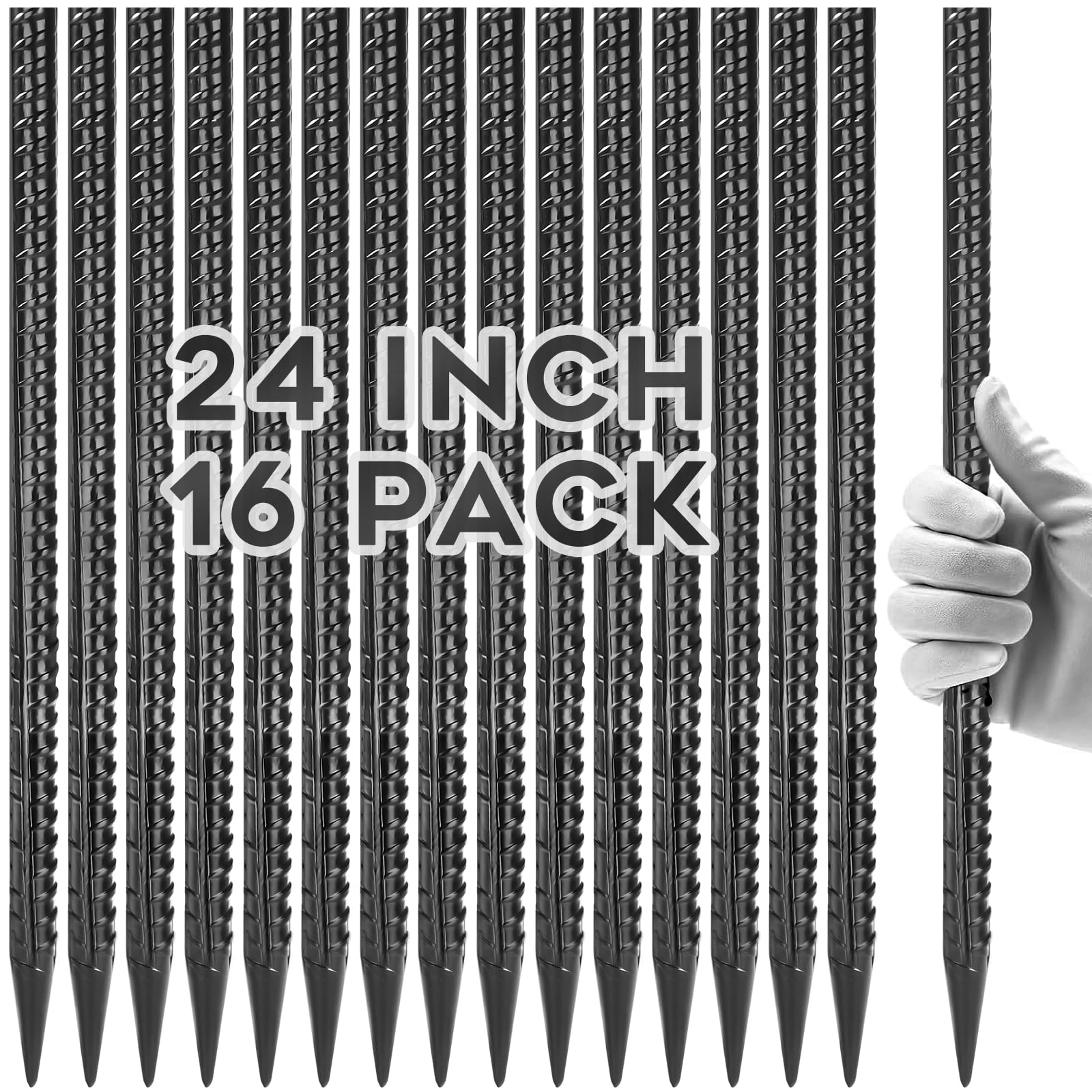
The 24-inch, half-inch monster that locks railroad ties down for good.
At 24 inches long with a full 1/2-inch diameter, these are the longest and thickest rebar stakes in the lineup — and at 17.8 pounds for the 16-pack, you feel every ounce of that steel. The 45-degree chisel point and flat top make driving manageable despite the size, with owners calling them “very easy installation with pointed end and hammer, no sledgehammer needed.” The black spray paint coating adds basic corrosion resistance, though expect some wear over time in wet ground.
Quality and sturdiness dominate the owner feedback — these are described as “much stronger than I expected” and “unbendable.” One owner used them to reinforce a flimsy raised metal planter, reporting the “perfect length stakes made planter solid for adding soil and planting.” Another used them for edging stones on a slope, and the stakes stayed put for two months with no movement. If your project involves heavy railroad ties, deep timber retaining walls, or any application where shorter stakes would simply pull out, this is the insurance policy you want. The trade-off is the highest sticker price and the smallest count (16) per pack among the steel options here.
Why professionals choose these
- 24-inch length reaches deep into subsoil for maximum holding power on heavy timber
- 1/2-inch diameter is virtually unbendable during installation
- Chisel point drives with a standard hammer despite the size
The honest trade-off
- Heavy at 17.8 lbs per pack; cumbersome to carry across a large site
- Higher cost per stake than shorter or thinner options
Best for: anchoring railroad ties, deep timber retaining walls, and any permanent structure that needs to resist soil pressure or frost heave.
Consider shorter stakes if: your soil is shallow over bedrock or you only need to secure lightweight landscape edging.
9. Greenes Fence 4 Ft. Garden Stakes (50 Pack)
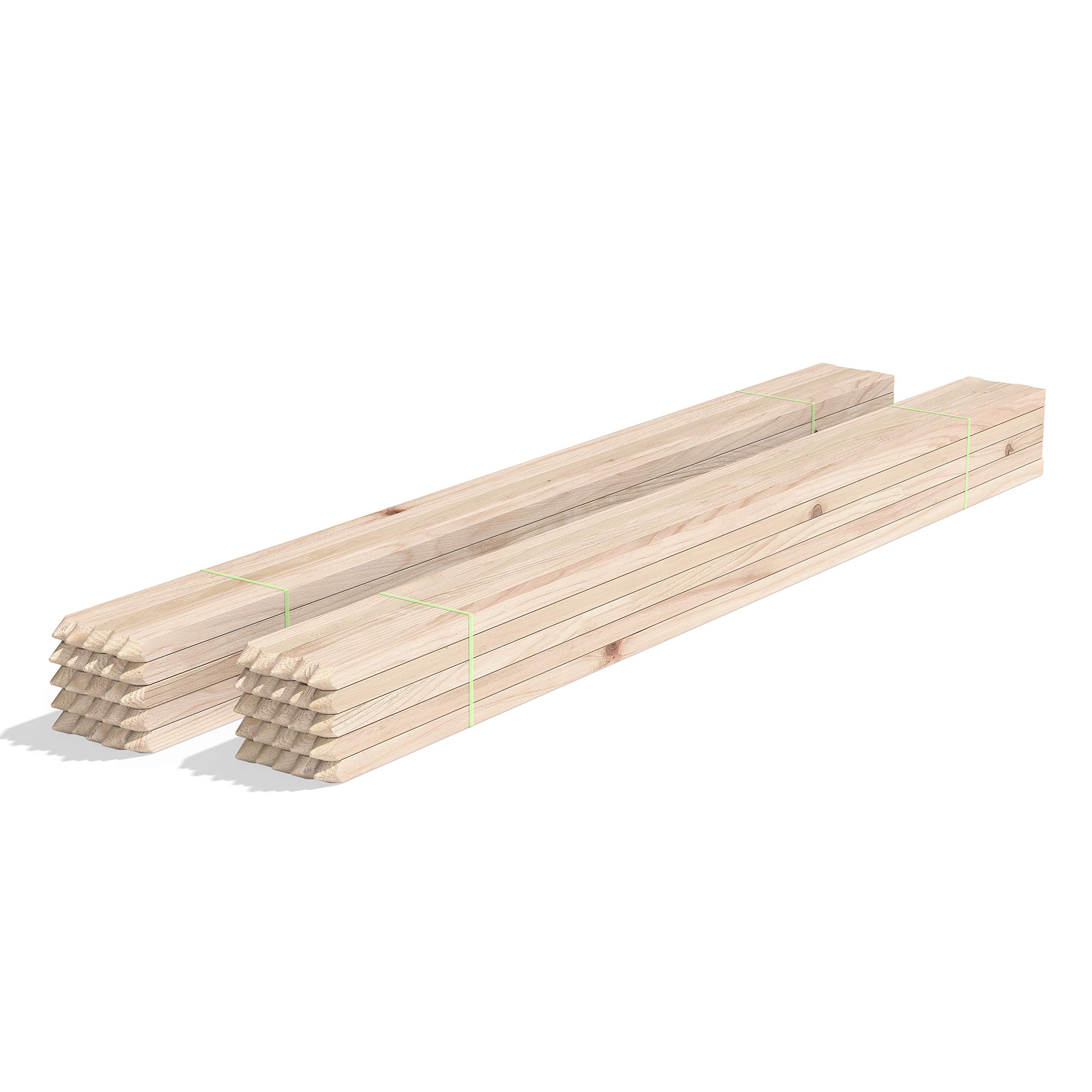
A massive 50-pack of four-foot wooden stakes for tall plants, nets, and sign posts.
At 48 inches long with a 0.75 x 0.75-inch square cross-section, these Greenes Fence stakes are the tallest option here by a wide margin. They are made from solid wood with a pointed end for easier installation, and they are sold in a 50-pack that covers big projects like netting off garden areas, supporting tall flowering vines, or setting up temporary sign posts. One owner used them “to net off an area of plants due to my neighbors cats continually peeing and digging up the mulch,” reporting they all worked perfectly when spaced every few feet.
Quality and sturdiness are the top aspects owners mention — these are described as “great stakes & straight” and “strong, excellent value.” Some owners note that the wood needs a few days outside to off-gas before use, and durability gets mixed feedback: some say the stakes hold up well season after season, while others report rotting after extended ground contact. They are also difficult to extract from hard soil once driven deep, so consider these a semi-permanent installation. For the buyer who needs tall, straight wooden stakes in bulk for sign posts, tall plant support, or boundary fencing, this is the pack to grab.
What stands out
- 48-inch height is class-leading for tall plants, vines, and sign posts
- 50-pack provides enough stakes for large garden fencing or netting projects
- Straight, high-quality wood that owners compare favorably to big-box store stakes
The honest catch
- Wood will rot over time in direct ground contact; not a permanent anchor
- Very difficult to remove from hard soil once driven deep
Best for: tall plant support, garden netting frames, temporary boundary fencing, and sign post applications where height matters more than permanent holding power.
Skip them if: you need to anchor heavy landscape timbers or require a permanent, rot-proof solution.
Understanding the Specs
Stake Length and Diameter
The length of the stake determines how deep it reaches into the ground. For timber edging, you generally want at least 12 to 16 inches so the stake passes through loose topsoil and bites into the compacted subsoil below. Diameter (measured in fractions of an inch like 5/16 or 1/2) directly affects how much force the stake can take without bending. A 1/2-inch rebar stake is vastly stronger than a 5/16-inch one and is essential for hard ground like clay or gravel.
Chisel Point vs. Flat Tip
A chisel point (often cut at a 45-degree angle) pushes soil outward as the stake is driven, requiring much less force than a blunt or flat tip. This makes a huge difference in dense, rocky, or clay-heavy soil where a flat-tipped stake would simply bounce or bend. The trade-off is that a chisel point is sharper to handle and store, which is why some premium stakes include a removable safety cap for the tip.
Powder Coating and Rust Resistance
Black powder coating or galvanizing creates a barrier between the steel and the moisture in the soil. A good coating can keep a rebar stake rust-free for years, while a thin paint job or raw steel will begin corroding within weeks in wet ground. If the product description says “black spray paint” rather than “powder coated” or “galvanized,” expect a shorter lifespan in damp conditions. For permanent installations, prioritize galvanized or thick powder-coated stakes.
Steel vs. Wood for Your Project
Steel rebar stakes are permanent or semi-permanent anchors for heavy timber, concrete forms, and structures that must resist soil pressure and weather. Wooden stakes are lighter, cheaper, and biodegradable, making them ideal for seasonal plant support, survey markers, and temporary fencing. Wood will eventually rot in ground contact, so steel is the better choice for anything you want to stay in place for more than one or two seasons.
FAQ
How deep should I drive a landscaping timber stake?
Can I use wooden stakes for heavy timber edging?
What is the difference between a chisel point and a blunt point stake?
Will these stakes rust if I leave them in the ground?
How many stakes do I need for a timber edging project?
Can I drive rebar stakes through asphalt without pre-drilling?
What length stake should I choose for my soil type?
Are green landscape spikes the same as rebar stakes?
How do I remove a rebar stake from the ground?
Final Thoughts: The Verdict
Across the board, the best landscaping timber stakes are the VVOKGO Straight Rebar Stakes because they deliver the ideal balance of length, sharp-pointed driving ease, and bulk count for timber edging and general anchoring. If you are working with raised garden beds or survey lines, the Colingmill Wooden Stakes are your lightweight, versatile choice. And for deep-set heavy timber or asphalt ground, the EUOKOK 1/2-Inch Stakes offer the brute strength that thinner spikes simply cannot match.
How We Picked
We do not accept paid placement. Every pick is matched to a real buyer and a real use-case; we do not hands-on test units.
Sources & Methodology
Specifications: manufacturer listings and product documentation. Review insights: verified customer reviews, as of July 2026. Pricing: not shown on this page (it changes often); check the current price via the retailer link.
As an Amazon Associate, Lawn Gear Lab earns from qualifying purchases. This does not affect which products we feature.