
Specs are compiled from manufacturer listings and verified buyer reviews and can change over time — please confirm the key details on the product page before buying.
You plant, you water, you watch things grow — and then a flock of birds swoops in and turns your blueberry bushes into a buffet before you even get a taste. That is the frustration garden bird netting solves, and solving it well means picking the right mesh size (the gap between strands), material, and coverage for your specific setup. The difference between a net that tangles into a knot and one that unrolls easily over a raised bed depends on a few key specs. The RIFNY 13×40 FT earns the top spot because its 5/8-inch mesh stops small birds without tangling, and buyers report it withstands major storms season after season.
I’m Rikta — the founder and writer behind Lawn Gear Lab. This guide is built by comparing the manufacturers’ published specifications and the patterns across verified customer reviews, so you get each pick’s real strengths and trade-offs instead of marketing spin.
To protect a strawberry patch from finches or wrap a fruit tree against squirrels, the right garden bird netting keeps your harvest where it belongs — on the plant and in your kitchen.
Our Picks at a Glance


How To Choose The Best Garden Bird Netting
Bird netting looks simple — it is just mesh — but the wrong choice tangles on itself, tears after one windy night, or lets tiny birds slip right through. Focus on these three factors to get it right the first time.
Match the Mesh Size to Your Threat
Mesh size determines which animals the net stops. A 5/8-inch gap keeps out small birds, poultry (like chickens), and even squirrels, but allows sunlight and rain through so plants keep growing. A 1-inch mesh works for blocking larger birds and deer while leaving room for bees to pollinate. An ultra-fine mesh (a weave of 0.1 mm) stops insects like cabbage moths, but its tight weave demands careful handling to avoid snags.
Think About Material and Weight
Lightweight polyethylene nets (a standard plastic material) are easy to drape over raised beds and cost less, but they snag on rough wood and may tear after a season. Heavy-duty HDPE — especially grades around 45gsm (grams per square meter, a measure of material weight) — resists UV damage and holds up through storms, making it a better pick for permanent or large-area setups. Nylon monofilament nets (a single-strand synthetic fiber) offer excellent tear resistance but can stretch under weight.
Consider the Shape That Fits Your Garden
Roll nets give you the freedom to cut custom sizes for large beds, fruit trees, or chicken runs. Bag-style nets with zippers and drawstrings make it easy to cover a single bush or small tree without measuring or cutting. The right shape cuts installation time from an hour to five minutes.
Quick Comparison
| Model | Best For | Mesh Size | Coverage | Material | Amazon |
|---|---|---|---|---|---|
| RIFNY 13×40 FT★ Best Overall | All-Round Protection | 5/8 inch | 13 x 40 ft | Polyethylene | Amazon |
| UWIOFF 7×100 FTBest Value | Large Area Coverage | 3/4 inch | 7 x 100 ft | Polypropylene | Amazon |
| SnugNiture 10×33 FTUltra-Fine Specialist | Insect & Bird Exclusion | 0.1 x 0.1 mm | 10 x 33 ft | Polyethylene (PE) | Amazon |
| GWHOLE 33×13 FT | Fruit Tree Draping | 1 inch | 33 x 13 ft | Nylon | Amazon |
| Homoda Zipper Bags (2 Pack) | Single Bush Coverage | Ultra-Fine | 6 x 6 ft each | HDPE | Amazon |
| RIFNY 2-Pack 10×33 FT | Pest-Proof Beds | Ultra-Fine | 10 x 33 ft each | Polyethylene (PE) | Amazon |
| ORIVOGAS 19.5×19.5 FT | Heavy-Duty Predator Defense | 0.8 inch | 19.5 x 19.5 ft | HDPE (45gsm) | Amazon |
| JUNKOGO 25×50 FT | Large Orchard Coverage | 1 inch | 25 x 50 ft | HDPE | Amazon |
In‑Depth Reviews
1. RIFNY Bird Netting 13 x 40 FT
Our pick — over 4.5★ from 800+ verified ratings; the strongest balance of quality and price.
The netting owners reorder it because it just works season after season.
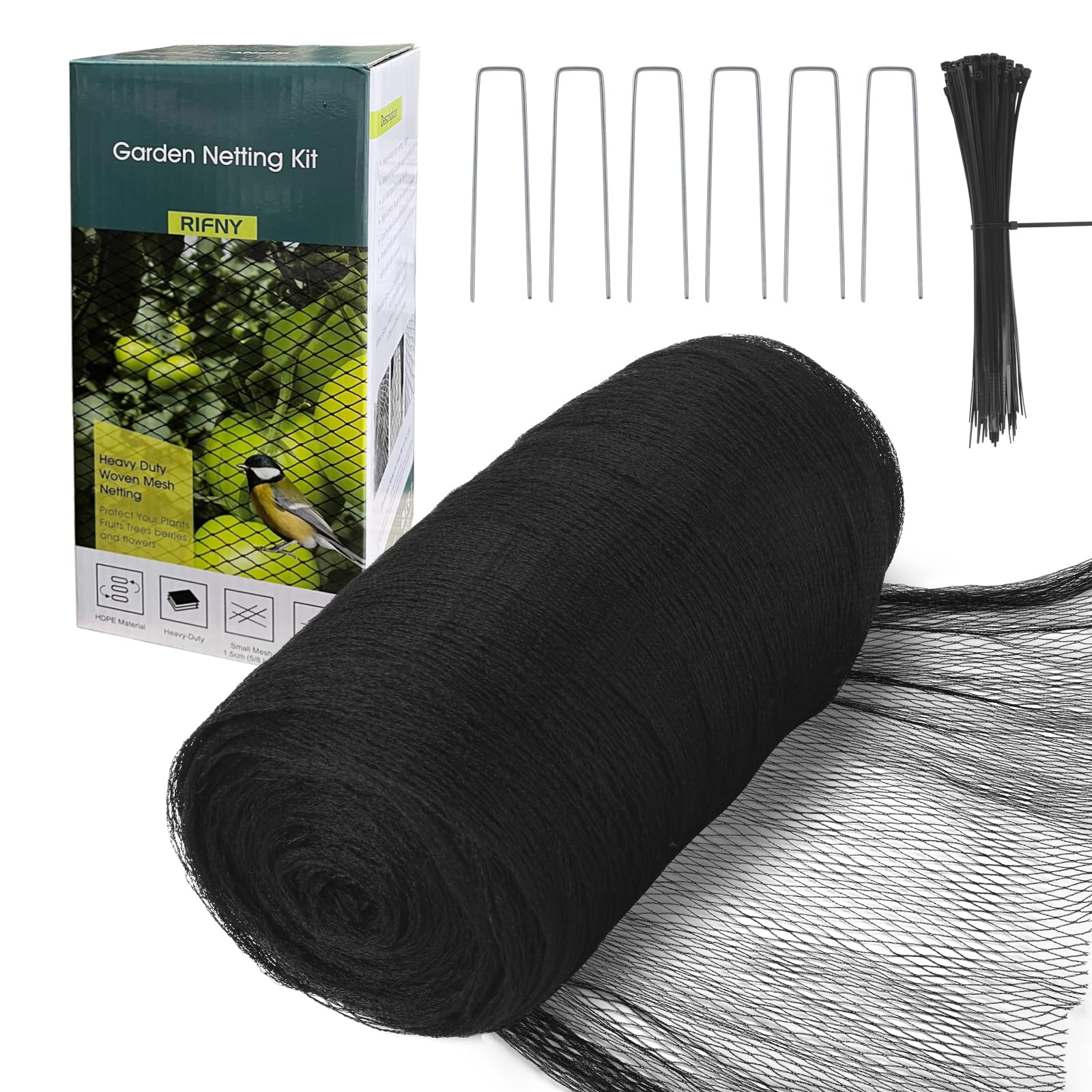
This net keeps your vegetable patch, blueberry bushes, and fruit trees safe from birds, deer, and poultry without turning installation into a wrestling match. The 5/8-inch mesh is small enough that birds cannot push through and won’t get tangled, yet loose enough that it does not interfere with plant growth. At 0.65 oz per square yard, it is light enough to drape easily but durable enough that owners mention it withstood major wind and rain storms. That means you do not have to replace it after a single bad weather event.
The kit arrives with six 7-inch landscape staples (U-shaped pins that hold netting to the ground) so you can cut the 13-by-40-foot sheet to size and secure it right away. Reviewers praise the stretchiness — the netting gives a little without tearing, which makes wrapping around awkward shapes like grape arches or raised beds simple. The caveat is practical: the included staples may not be enough for very large setups, so you might want extra ground stakes if you cover a wide area. Compared to the UWIOFF’s 100-foot length, the RIFNY gives you a thicker, more dependable feel that owners rate higher.
Large coverage area
- Bird protection is the standout — 63 buyers single it out as the feature that delivers
- Doesn’t tangle during unrolling or storage; cuts cleanly with scissors
- Stretches without ripping, making it easier to fit over irregular plant shapes
Tangles easily
- The pack includes only a handful of staples; plan to buy extra for large gardens or hard ground
Big gardens: you need a dependable all-round net that is easy to install, stays put in weather, and keeps small critters out without harming them.
Small spaces: you need an ultra-fine mesh that also blocks insects — step up to the SnugNiture for bug protection.
2. UWIOFF Garden Netting 7 x 100 FT
A 100-foot roll that covers an entire garden for the price of a takeout dinner.
When you have a long fence line, multiple raised beds, or a row of fruit trees to protect, this green polypropylene netting (a lightweight plastic fiber) delivers the sheer length you need. The 7-foot width is tall enough to drape over blueberry bushes or fasten to a trellis, and the square mesh design spreads out flat instead of retracting like cheap diamond-shaped netting. Customers note using it to stop deer from eating hydrangeas, keep rabbits off flowers, and even block a dog from peeing on trees.
The material is UV and rot resistant, so it lasts through several seasons without becoming brittle. One owner buried the edges 5 inches underground with a tight weave at top and bottom to stop squirrels from digging under — and it worked. The honest trade-off: the polypropylene weave is thin, and durability gets mixed feedback. A few owners find it tears more easily than heavier nets, so handle it gently when stretching around sharp stakes. Compared to the RIFNY above, this one gives you more than double the length for a budget-friendly cost, but the RIFNY has a thicker feel and a higher satisfaction rate.
Row covers: covering large areas cheaply, especially if you need a long run of protection and are careful with installation.
Bird protection: you want a heavy-duty net that shrugs off branches and rough handling — the ORIVOGAS heavy-duty pick is sturdier.
3. SnugNiture Garden Netting 10×33 FT
Fine enough to block worms and bugs — not just birds — while letting sunlight pour through.
If your garden battle is both with aerial thieves and crawling pests, this white polyethylene net is the answer. The ultra-fine mesh weave (a 0.1-millimeter gap) stops insects like cabbage moths while still allowing water and light to reach plants. At just 1.2 pounds for the whole 10-by-33-foot sheet, you can drape it directly over plants without crushing them, and the see-through material lets you check growth without lifting the cover. Buyers used it for 7-plus months across multiple beds and fig trees and reported worm-free brassicas (cabbage-family crops) and bug-free lettuce.
The netting is waterproof and sun-proof, designed for long outdoor use without deforming. One owner called it “better than traditional bird netting” precisely because it does not tangle. The catch: the fine weave snags easily on sharp stakes, branches, or rough wood — a few owners noted holes from friction, though they said small holes did not affect usability for years. Where the UWIOFF is about sheer length for the money, the SnugNiture is about total exclusion of tiny pests.
Fruit trees: gardeners fighting both birds and insects on the same crop, especially raised beds with brassicas or leafy greens.
Quick install: you are covering thorny or jagged plants — the fine mesh demands careful handling to avoid snags.
4. GWHOLE 33×13 FT Bird Netting (1-Inch Mesh)

Nylon monofilament that withstands sun and storms without unraveling when cut.
Made from original nylon monofilament — not polyethylene — this netting is naturally tear-resistant and UV-resistant (meaning it does not degrade in sunlight), handling harsh sun and heavy storms season after season. The 1-inch square mesh is large enough to let pollinators through while blocking birds and deer, making it a good fit for fruit trees where bees need access to flowers. The 33-by-13-foot size covers a decent tree or several bushes, and you can cut it to any shape without the edges unravelling. That ability to cut cleanly shows up again when you compare it to the SnugNiture’s ultra-fine weave, which snags more when trimmed.
Buyers have used it vertically as a cat-proof barrier, as a balcony guard against pigeons, and even as a screen replacement to keep cats from jumping. The nylon material gives it a stretchy quality that holds its shape under weight without breaking. The main feedback: installation can be fiddly for some, and the mesh size is not small enough to stop insects — just birds and larger animals.
Large birds: fruit trees and large bushes where you need UV resistance and the ability to cut custom shapes.
Finches: you need insect exclusion — choose the SnugNiture for bug-level protection.
5. Homoda Fruit Tree Netting Cover with Zipper (2 Pack)
A bag with a zipper — so you can pick berries without unmounting the whole net.
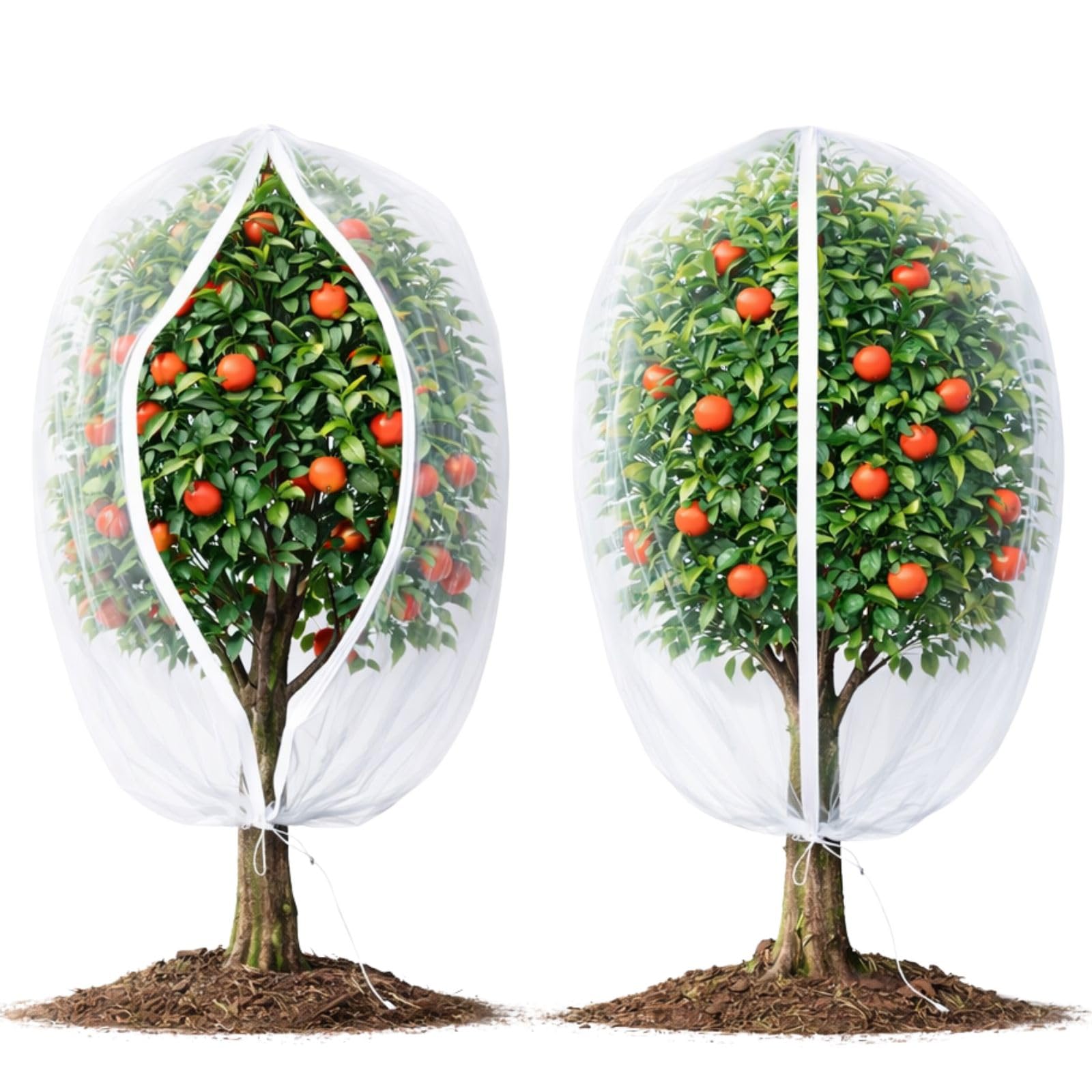
This is not a roll you cut to size; it is a ready-to-use bag made from ultra-fine HDPE mesh (high-density polyethylene, a tough plastic) with a side zipper and a drawstring bottom. You slip it over a blueberry bush, small fruit tree, or shrub, pull the drawstring tight around the trunk, and zip it closed. The design means birds and chipmunks cannot get in, but you can reach through the zipper to harvest ripe fruit without removing the cover. Owners call it “love the zippers” and say they “can’t grow without them” for berry bushes.
The material allows rain, sunlight, and air through, so plants keep growing without the cover being lifted. You get two 6-by-6-foot bags in the pack, covering two trees or bushes at once. The honest caveat: the drawstrings and zippers see the most wear, and durability feedback is mixed, with some owners finding the drawstring breaks over time. Also, the net drapes over branches like a ghost — it does not hold a round shape, so it rests directly on the foliage. For a single-bush approach where the GWHOLE requires cutting and draping, this one is five minutes of setup.
Berry bushes: blueberry bushes, small citrus trees, or any plant where you want easy harvest access.
Open areas: you need to cover a large bed or multiple trees in one go — stick with a roll net.
6. RIFNY Garden Netting 2-Pack 10×33 FT (Ultra-Fine)

A self-healing weave that tugs back into place after a snag instead of ripping wide open.
This 2-pack gives you two 10-by-33-foot sheets of ultra-fine mesh with an oblong hole construction designed to let air, water, and light through while blocking birds, squirrels, chipmunks, and even small insects. Buyers are amazed at its resilience: one owner reports it held up through hail and high winds, and when something snags the fibers, they simply move apart rather than rip — you can tug them back into place almost like the net repairs itself. The ultra-fine weave is tight enough to stop cabbage moths on brassicas and lettuce, making it a strong alternative to the SnugNiture for bug protection.
The PE material is stabilized for long outdoor use and can be reused year after year. The cleaning note: fold it away from sunlight and humidity when not in use to boost its lifespan. The recurring observation from owners is that the material does stretch and tear over time — particularly if snagged on rough wood — making it more of an annual replacement than a multi-year investment. Compared to the Vocray half-inch net, this one wins on insect exclusion but loses on raw toughness.
Seedlings: gardeners who want insect-level exclusion across multiple beds and appreciate the self-healing fiber behavior.
Heavy use: setups where the net will rub against sharp edges daily — the weave will wear through eventually.
7. ORIVOGAS Heavy Duty Bird Netting 19.5×19.5 FT (0.8-Inch)
Industrial-grade HDPE that is 2–3 times heavier than standard netting — and it shows.
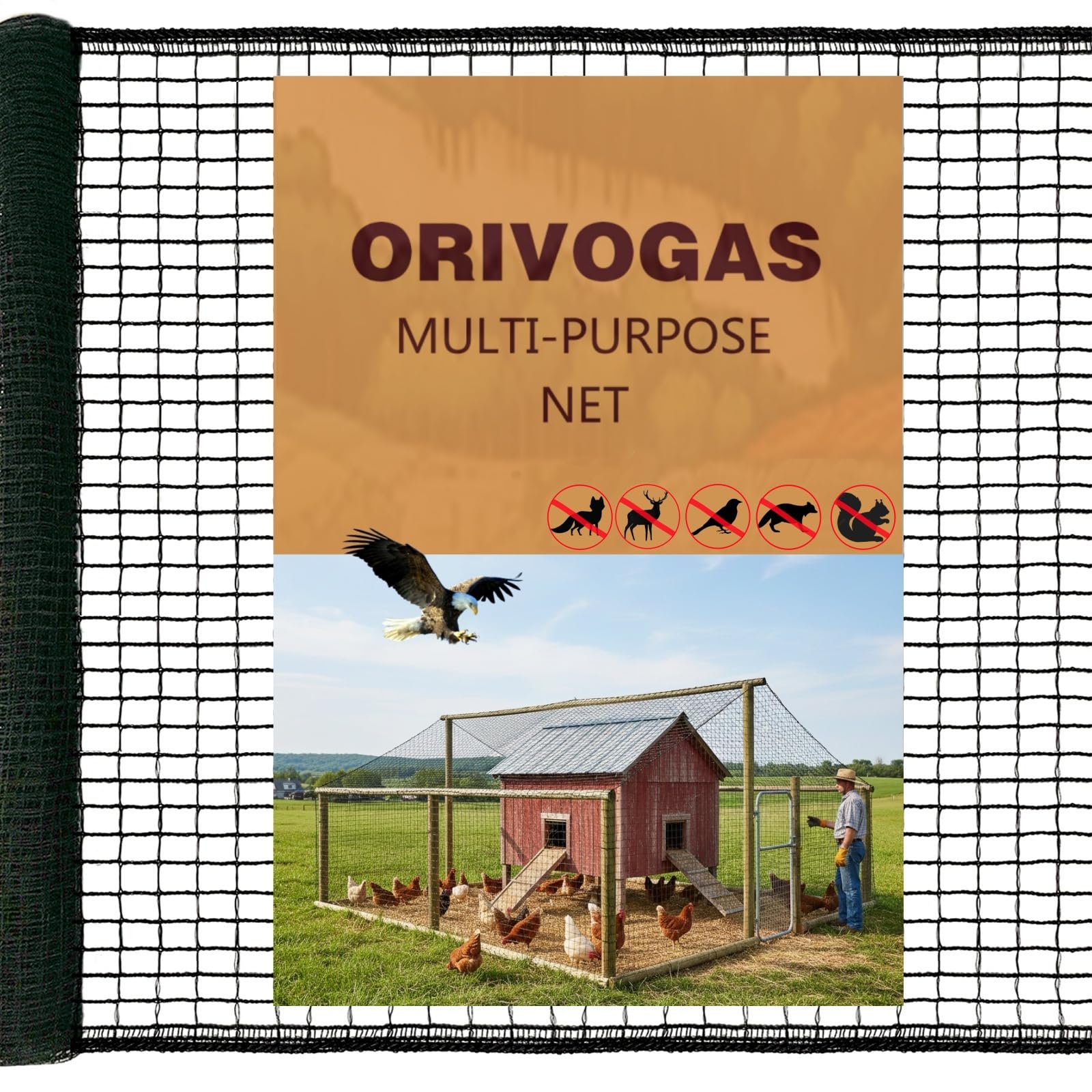
At 45 grams per square meter (gsm, a measure of fabric weight), this netting sits in a different weight class than the others. The reinforced edges come with integrated ropes, so the net stays neat and resists tangling with fallen leaves or weeds. The 0.8-inch mesh is small enough to block deer, birds, hawks, squirrels, and dogs while being wildlife-friendly — animals are less likely to get entangled. The package includes 50 cable ties and 8 ground stakes, giving you everything for a full installation right from the start. That is a sharper value than the Vocray, which requires you to buy your own stakes.
Buyers who used it as deer fencing for arborvitae and as a chicken run cover praise its strength and near-invisible look from a distance. One owner noted it is heavier gauge than standard deer fencing and stretches well, minimizing sag around curves. The honest feedback: it can unravel when cut, and tying off the cut ends takes a little extra effort.
Large orchards: permanent or semi-permanent installations where you want the toughest material and a full mounting kit included.
Small plots: a single raised bed you will cover for just one season — the RIFNY standard net is more economical.
8. JUNKOGO Bird Netting 25×50 FT (1-Inch Mesh)

A 1-inch mesh net that withstood 60 mph storms — and kept raccoons out of the strawberry patch.
This is the big-area specialist: 25 feet by 50 feet of black HDPE netting with a 1-inch diamond mesh that blocks birds, deer, squirrels, rabbits, raccoons, and opossums. The material is thick enough that shoppers say it held up in 60 mph storms without tearing, and the weave is strong enough that squirrels cannot chew through it. Owners use it to cover blueberry bushes, strawberry raised beds, and even as a patio barrier to keep cats in and other animals out.
The netting unfolds easily and does not tangle, and you can cut it to any size without the edges fraying. You can water directly through the mesh without removing it. The size is generous — one buyer covered a 10-by-50-foot garden with material left over. Compared to the ORIVOGAS above, the JUNKOGO gives you more than double the coverage area for the same tier, but it lacks the reinforced edges and full kit. The honest note: the diamond shape means stretching one direction changes the dimensions, so measure and adjust carefully.
Ponds: large orchards, long fence lines, or covering multiple rows of blueberries in one go.
Precise coverage: you want a plug-and-play kit with stakes and ties — you will need to buy your own anchoring hardware.
Understanding the Specs
Mesh Size
This is the single most important spec for bird netting. It tells you the gap between strands, measured in inches or millimeters. A smaller mesh (5/8 inch or less) stops small birds, poultry (like chickens), and even squirrels, but it can also block pollinators like bees if left on during flowering. A 1-inch mesh is better for fruit trees because bees can get through while larger birds and deer are blocked. Ultra-fine meshes (0.1 mm) stop insects but snag easily and need gentle handling.
Material Weight and Type
Weight is measured in grams per square meter (gsm). Standard netting around 20 gsm is fine for light seasonal use on raised beds. Heavy-duty netting at 45 gsm is 2–3 times heavier, offering far better tear resistance and UV protection (resistance to sun damage) for permanent setups. The material matters too: polyethylene (PE) is light and affordable, high-density polyethylene (HDPE) is stronger and lasts longer, and nylon monofilament resists sun damage better but stretches more under load.
FAQ
Will bird netting stop squirrels and chipmunks?
Can I leave bird netting on my plants all year?
How do I keep bird netting from tangling?
Does bird netting let rain and sunlight through?
What is the difference between 5/8-inch and 1-inch mesh?
How do I install bird netting over a raised bed?
Can I use bird netting as a chicken run cover?
How long does garden bird netting last?
Does the netting harm birds or animals?
Can I cut the netting to a custom size?
Final Thoughts: The Verdict
For the majority of shoppers, the garden bird netting winner is the RIFNY 13×40 FT because its 5/8-inch mesh, easy unrolling, and included staples make it a reliable all-round solution that owners return to season after season. If you want ultra-fine insect exclusion that still breathes, grab the SnugNiture 10×33 FT. And for a heavy-duty setup with reinforced edges and a full installation kit, the ORIVOGAS 19.5×19.5 FT is the one to reach for — especially if predators are a persistent problem.
How We Picked
We do not accept paid placement. Every pick is matched to a real buyer and a real use-case; we do not hands-on test units.
Sources & Methodology
Specifications: manufacturer listings and product documentation. Review insights: verified customer reviews, as of July 2026. Pricing: not shown on this page (it changes often); check the current price via the retailer link.
As an Amazon Associate, Lawn Gear Lab earns from qualifying purchases. This does not affect which products we feature.