
Specs are compiled from manufacturer listings and verified buyer reviews and can change over time — please confirm the key details on the product page before buying.
Blueberries are picky eaters. They need soil that is acidic, a steady supply of the right nutrients, and a fertilizer that does not burn their shallow roots. Get it wrong and you get yellow leaves, weak growth, and a handful of sour berries. Get it right, and a single bush can produce buckets of sweet, plump fruit all season.
I’m Rikta — the founder and writer behind Lawn Gear Lab. This guide is built by comparing the manufacturers’ published specifications and the patterns across verified customer reviews, so you get each pick’s real strengths and trade-offs instead of marketing spin.
The right plant food for blueberries is the single most important decision you will make all year, whether you are planting your first bush or nursing a mature patch back to health.
Our Picks at a Glance

How To Choose The Best Plant Food For Blueberries
Blueberries are acid-loving plants (they thrive only in acidic soil). They need soil with a pH (a measure of acidity or alkalinity) between 4.5 and 5.5, and a fertilizer formulated to keep it there. A general-purpose plant food often has too much nitrogen in a form blueberries cannot use, or it lacks the sulfur and micronutrients that prevent chlorosis (yellowing leaves caused by nutrient lock-up). The picks below were chosen because each one is specifically made for acid-loving plants like blueberries, with the right balance of nutrients and a clear application method.
N-P-K Ratio and Sulfur Content
The three numbers on the bag are nitrogen (N), phosphorus (P), and potassium (K) — the primary nutrients plants need. For blueberries, a formula where the first and last numbers are close (like 4-3-4 or 8-4-8) works best because it supports leafy growth without pushing too much fruit too fast. Sulfur is just as important. Blueberries need acidic soil to absorb iron and manganese (minerals for green leaves and plant health), and elemental sulfur (a natural mineral) in the fertilizer helps keep the pH in the right zone.
Granular vs Liquid: Which Is Better?
Granular fertilizers like Espoma Holly-Tone and GARDENWISE release nutrients slowly over weeks or months. You sprinkle them on the soil, scratch them in, and water once. They feed the soil microbes (tiny bacteria and fungi that help roots take up nutrients) and give steady nutrition. Liquid fertilizers like the HiThrive and TPS Nutrients options are mixed with water and applied every one to two weeks. They act fast, which makes them ideal for correcting a sudden deficiency or giving a boost during flowering. The trade-off is that you have to remember to apply them more often.
Organic Certification and Soil Health
Several of the top-rated products are OMRI-listed (Organic Materials Review Institute — a third-party verification of organic inputs) or registered as Organic Input Materials. That means they contain no synthetic chemicals or sewage sludge. Organic fertilizers feed the soil food web — the bacteria and fungi that help roots take up water and nutrients. The Espoma and True Organic products, for instance, use ingredients like seabird guano (dried bird droppings rich in nutrients), shrimp and crab shell meal, and Bio-tone microbes (a proprietary blend of beneficial soil organisms). If you are growing blueberries for their antioxidant punch, an organic fertilizer keeps the growing process clean from start to finish.
Quick Comparison
| Model | Best For | N-P-K Ratio | Item Form | Weight | Amazon |
|---|---|---|---|---|---|
| Espoma Holly-Tone 36 lb★ Best Overall | Best Overall / Large Gardens | 4-3-4 | Granules | 36 lbs | Amazon |
| GARDENWISE 8-4-8Best Value | Budget-Friendly Granules | 8-4-8 | Granules | 1 lb | Amazon |
| Miracle-Gro Water SolubleTop Performer | Quick-Dissolve / Container Gardens | — | Powder | 5 lbs | Amazon |
| HiThrive Liquid Fertilizer | Fast-Acting Liquid Boost | — | Liquid | 1.3 lbs | Amazon |
| True Organic Berry Food | Certified Organic / Container Plants | 5-4-4 | Granules | 4 lbs | Amazon |
| Espoma Holly-Tone 4 lb (2-Pack) | Small-Space / Multi-Plant Use | 4-3-4 | Granules | 4 lbs (2 bags) | Amazon |
| FoxFarm Happy Frog | Premium Soil Health / Recovery | — | Powder | 4 lbs | Amazon |
| Espoma Berry Tone | Berry-Specific Formula | 4-3-4 | Granules | 4 lbs | Amazon |
| TPS Nutrients Liquid | Liquid for Dying Bushes | — | Liquid | 2 lbs | Amazon |
In‑Depth Reviews
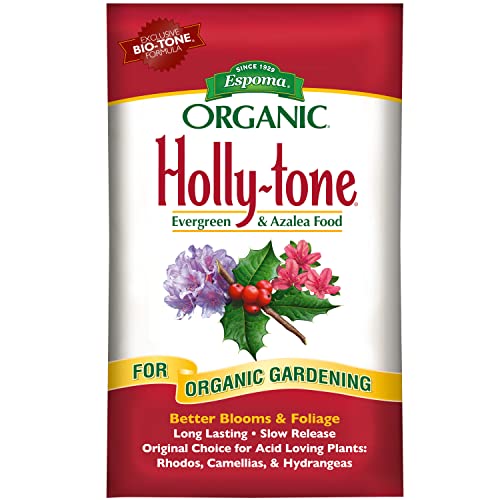
1. Espoma Organic Holly-Tone 4-3-4 Natural & Organic Evergreen & Azalea Plant Food; 36 lb. Bag
Our pick — over 4.5★ from 950+ verified ratings; the strongest balance of quality and price.
The 36-pound legend that turns struggling blueberry patches into neighborhood landmarks.
The Espoma Organic Holly-Tone uses a 4-3-4 N-P-K ratio (the three numbers stand for nitrogen, phosphorus, and potassium — the key nutrients) and includes 5% sulfur to lower soil pH. This formula feeds acid-loving plants slowly over months, so your blueberries get steady nutrition without the risk of root burn. The 36-pound bag weighs more than 27 times the HiThrive liquid bottle (1.3 lbs), but that bulk covers a large berry patch or multiple spring and fall feedings across an entire yard. The magic is in the Bio-tone formula, a proprietary blend of natural organics that breaks down gradually and builds soil health. One reviewer reports the plant food is “on the miracle level,” with blooms and growth they had never seen before. The crowd favorite across nearly a thousand ratings earns a sky-high 4.8 stars because it delivers consistent, visible results without synthetic chemicals. It is approved for organic gardening and made in the USA by a company that has been in the natural organics business since 1929.
holly-tone soil acidifier
- Effectiveness is the most-praised aspect — 48 buyers mention incredible results
- Organic, OMRI-registered formula with Bio-tone microbes
- Massive 36-lb bag covers a full growing season for large gardens
needs repeated application
- At 36 pounds, this bag is heavy and takes up real shed space
- The odor gets a few negative mentions — it is fertilizer, so expect some smell
reach for this if: you have multiple blueberry bushes or other acid-loving plants and want a single, proven, organic granular that you apply twice a year.
look elsewhere if: you have only one container bush or need an instant liquid booster — the 36-lb bag is overkill for a small patio setup.
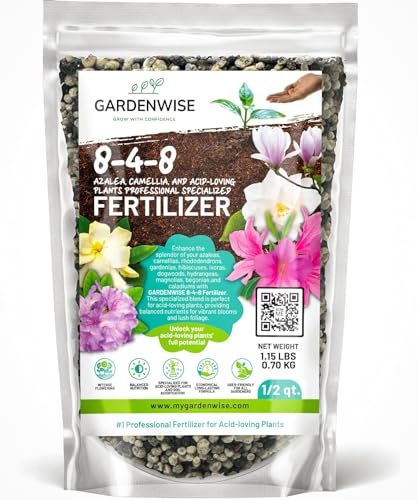
2. GARDENWISE 8-4-8 Acidic Fertilizer for Azaleas, Camellias, Hydrangeas, Blueberries; 1/2 Quart
Nearly a thousand buyers agree — this 8-4-8 formula is the budget-friendly workhorse that delivers fast results.
The GARDENWISE 8-4-8 packs a higher nitrogen and potassium punch than the Espoma products (4-3-4), at a fraction of the weight (1 pound versus 36 pounds). The 8-4-8 ratio is enriched with magnesium, iron, and manganese — minerals that prevent chlorosis (yellowing leaves from nutrient lack) in alkaline soil. The formula also acts as a soil acidifier (a substance that lowers pH), which is crucial for garden beds that have drifted toward neutral pH. One owner reported that their sad rhododendron “looked 75% better in 24 hours” after application. Another says the slow-release granules keep feeding for months, requiring just three feedings per year. The value-for-money rating is mixed, which makes sense — the 1-pound bag is small, but for a gardener with a few bushes, that is exactly what you need without storing a giant sack. Effectiveness is the top aspect at 53 mentions, and at this price point, it is tough to top.
new planter booster: If you are trying blueberries for the first time and want a low-cost, low-risk entry point, this is the granular to grab. The only real caution is the same with any concentrated fertilizer — measure carefully to avoid over-feeding your bushes.
3. Miracle-Gro Water Soluble Azalea, Camellia, Rhododendron Plant Food, 5 lb
The classic water-soluble powder that dissolves instantly and greens up leaves within a week — faster than the granular GARDENWISE or Espoma options.
The Miracle-Gro formulation for acid-loving plants mixes into water at different ratios depending on whether you are watering indoor plants (1:144 — one part fertilizer to 144 parts water) or outdoor bushes (1:18). It feeds every time you water, so you see results fast — leaves darken, buds form, and the plant puts energy into fruit rather than survival. The product lists azaleas, camellias, rhododendrons, gardenias, hibiscus, hollies, hydrangeas, and orchids, but owners confirm it works beautifully on blueberries too. Some frustration lingers around the bag’s Velcro closure, which a handful of owners found ineffective. The effectiveness rating is the single highest aspect at 56 mentions, and the ease of use ties value for money at 10 positive mentions each. For someone comfortable with a hose-end sprayer (a device that attaches to a garden hose to mix and spray fertilizer) or a watering can, this is the fastest path from bag to bush.
choose this for speed: if your bushes look pale and you want them green by next weekend, the water-soluble formula gets nutrients into the root zone immediately. Just be careful with containers — the soluble salts can build up if overdone.
4. FoxFarm Happy Frog Acid Loving Plants Fertilizer – Slow Release – 4 lb

A premium slow-release powder packed with beneficial soil microbes that revive stressed plants — a better pick than the Espoma Holly-Tone for recovery after transplant shock.
The FoxFarm Happy Frog formula is built for acid-loving plants that need gentle, consistent feeding. It contains mycorrhizal fungi (beneficial fungi that attach to roots to help them absorb water and nutrients) and beneficial soil microbes. For blueberries in containers, where soil biology is harder to maintain, this is a major advantage. The mixing ratio is 1/16 cup per gallon of soil, and the slow-release action means you are not chasing your plants with a watering can every week. One owner described how it “saved my bushes from dying” after a frost, and another reported a baby gardenia producing buds within 10 days. Quality (12 mentions) and plant health (11 mentions) are the two most-discussed aspects. At 4.8 stars across hundreds of ratings, this product earns the same top score as the Espoma giant, but in a much lighter bag (4 pounds). The trade-off is that it costs a bit more per pound, and it is not a liquid — so if you need a fast-acting foliar spray (liquid applied to leaves) or root drench (liquid poured at the base), look to the liquid picks below.
plant restoration aid: If your blueberries are recovering from transplant shock, frost damage, or poor soil, the microbe-rich formula gives them a biological head start that standard fertilizers cannot match.
5. Espoma Berry Tone Plant Food, 4-3-4, 4-Lb
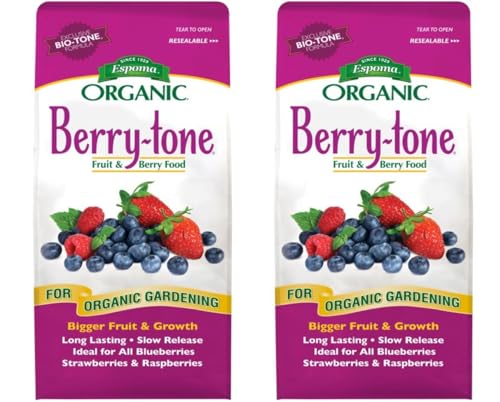
Espoma’s dedicated berry formula — the same Bio-tone technology, now tailored specifically for fruiting plants rather than the broader Holly-Tone.
The Espoma Berry Tone takes the proven 4-3-4 analysis and the exclusive Bio-tone microbe blend from Holly-Tone and packages it specifically for blueberries, strawberries, raspberries, and blackberries. The 5% sulfur content helps maintain the low pH that blueberries demand. Owners apply it twice a year — early and late spring — and report dramatic results. One raspberry grower went from sparse flowers to “bowls of raspberries,” and a blueberry enthusiast swears by it for “the most incredible amount of berries.” Quality (23 mentions) leads the aspect counts, with growth (22 mentions) close behind. The recurring negative is the odor — seven owners mention it, which is typical for organic fertilizers made with natural ingredients. At 4.8 stars across nearly 500 ratings, Berry Tone matches the top score of its bigger sibling but in a more targeted product.
grab this if: you want a product that was designed for berries first, with no guesswork. The ready-to-use granules need no mixing, and the twice-a-year schedule is as simple as it gets.
skip it if: you have a wide variety of acid-loving ornamentals — Holly-Tone covers a broader range of plants in one bag.
6. True Organic Berry Food – Organic Fertilizer for Acid-Loving Plants – 4lb Bag

An OMRI-listed organic blend with seabird guano and shell meal that revived a dying bush in days — a value alternative to the Espoma Berry Tone.
The True Organic Berry Food uses a 5-4-4 analysis and sources its nutrients from seabird guano (dried seabird droppings), shrimp and crab shell meal, and other natural inputs. The sulfur content helps lower soil pH naturally, which improves the availability of micronutrients (tiny but essential minerals like iron and manganese). A 4-pound bag covers up to 58 square feet, and monthly application is all it takes during the growing season. The reviews are striking. One buyer describes how their blueberry bush was “dying after we transferred it into the ground” — leaves turning brown, drying out. After applying this fertilizer, “it has turned back around, and I see new growth everyday.” Another owner says it “made my berries triple in size.” A small number of owners mention the smell, but most accept it as the price of a genuinely organic product. This is a strong pick for anyone who wants certified organic inputs without the premium markup of smaller-bag specialty brands.
container garden star: the 4-pound bag is manageable for patio growers, and the monthly schedule fits into a busy routine. If you value organic certification over raw speed, this is your pick.
7. Espoma Organic Holly-Tone 4-3-4 Evergreen & Azalea Plant Food; 4 lb. Bag, Pack of 2
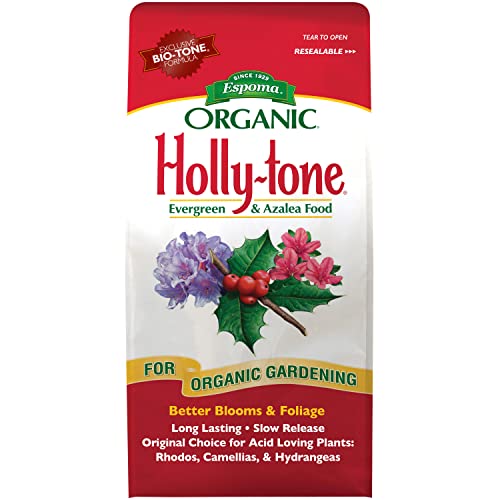
The same organic Holly-Tone you trust, split into two manageable 4-pound bags for flexibility — lighter than the 36-pound version but with the same 4-3-4 formula.
This pack of two 4-pound bags uses the same 4-3-4 formula with 5% sulfur and Bio-tone that made the 36-pound bag our top pick. The smaller bags are easier to handle, store, and use for targeted feeding around the house. The product carries the full Espoma heritage: it is approved for organic gardening, registered as an Organic Input Material, and made in the USA. Plant benefits (24 mentions) is the standout aspect, with owners noting that it keeps trees and shrubs healthy through the year. One owner uses it every spring on hydrangeas for “beautiful blooms,” while another reports that their arborvitae and blueberry bushes all improved. The value-for-money verdict is mixed — some find it a fair price for two bags, while others think it is slightly high given the size. The smell is noted by a few owners, and one pointed out that it did not turn their hydrangeas blue after two weeks (color change can take longer with granular organics).
best for the multi-garden hous: if you feed blueberries at the back of the yard, hydrangeas by the porch, and rhododendrons near the driveway, having two separate bags keeps you from hauling a heavy sack everywhere.
8. HiThrive 16oz Blueberry Fertilizer – Makes 16 Gallons of Liquid Plant Food
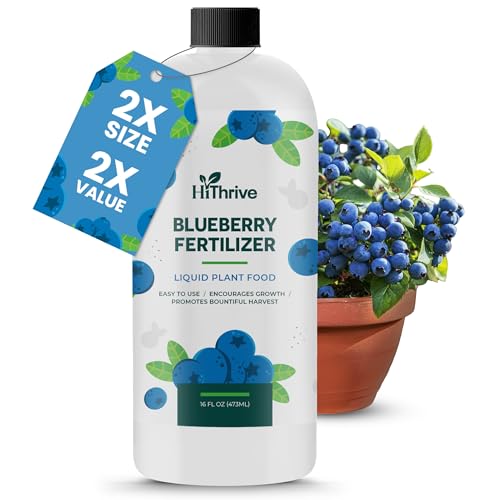
A concentrated liquid that makes 16 gallons of blueberry-specific feed — ideal for weekly watering and faster than any granular like the Espoma Holly-Tone.
The HiThrive formula is built around the specific needs of blueberries: nitrogen for leaves, phosphorus for roots, and potassium for sweeter, plumper berries. The 16-ounce bottle makes 16 gallons when mixed as directed, and owners are instructed to use it every one to two weeks during the growing season. The liquid form means nutrients are available to the roots immediately, which is perfect for a rescue situation or for giving a mid-season boost to bushes that are lagging. Buyers report that “weekly use led to bushier growth, greener leaves, bigger, sweeter berries” and that there was “no fertilizer smell” — a nice upgrade from some granular organics. Another owner revived “declining blueberry plants in raised bed with compost” and saw them perk up quickly. The 1.3-pound bottle is tiny compared to the 36-pound Espoma bag (a 27.7x weight gap), but the concentrated formula goes a long way. The only catch is that you need to stay on a weekly schedule — if you forget, the fast-acting benefits fade faster than a slow-release granular.
struggling bush rescue: if your blueberries have yellow leaves or weak growth, the liquid form gets them what they need within days, not weeks.
9. TPS Nutrients Blueberry Fertilizer – Liquid Plant Food for Bigger Berries, 32 oz
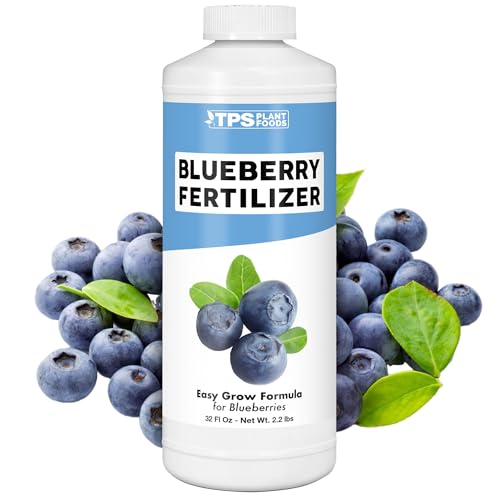
A straightforward liquid formula that packs a 32-ounce bottle for just a few bucks — more volume than the HiThrive 16-ounce bottle at a lower price.
The TPS Nutrients liquid offers the largest liquid volume on this list at 32 ounces. Mix a few tablespoons per gallon of water and apply as a root drench (pour directly at the base of the plant). The formula is designed specifically for blueberry bushes and supports flowering, fruit set, and root strength. It works in garden beds, raised beds, and containers. Effectiveness (21 mentions) and fruit growth (12 mentions) lead the positive feedback. One buyer grew “blueberry bushes from cheap stem-with-roots in weeks.” Another had a bush that “was dying” and after a few days of this fertilizer it “perked up and it’s growing like crazy again.” The potential downside, noted by a more experienced gardener, is that the product may not actively lower soil pH (make it more acidic) — they recommend pairing it with pine wood chip mulch (shredded pine bark that naturally acidifies soil) for long-term acidity. For a beginner, the ease of use and the dramatic results outweigh that nuance.
reach for this if: you want the most liquid for your money and need a simple, no-mix (beyond water) solution that keeps bushes producing. Pair it with a pH-lowering mulch for the best long-term results.
Understanding the Specs
N-P-K Ratio
The three numbers on the bag (like 4-3-4 or 8-4-8) stand for Nitrogen (N), Phosphorus (P), and Potassium (K) — the primary nutrients plants need. For blueberries, look for a formula where the first and last numbers are balanced. Nitrogen (N) fuels leafy growth, which is important for photosynthesis. Too much, and you get a bushy plant with few berries. Phosphorus (P) supports root development and flower production. Potassium (K) helps with fruit quality, disease resistance, and overall hardiness. The middle number (P) is usually lower for blueberries because they do not need heavy phosphorus compared to flowering annuals.
Sulfur Content and Soil pH
Blueberries need acidic soil with a pH (a measure of acidity or alkalinity) between 4.5 and 5.5. Most garden soils start around 6.0 to 7.0 (neutral). Sulfur is the key ingredient that helps lower pH over time. Products like Espoma Holly-Tone (5% sulfur) and GARDENWISE 8-4-8 are formulated to acidify the soil as they break down. If your soil pH is too high, the plant cannot absorb iron and manganese, leading to chlorosis (yellow leaves with green veins). A fertilizer with elemental sulfur (a natural mineral that slowly turns into acid) or ammonium-based nitrogen (a form of nitrogen that releases acid) helps correct that imbalance naturally.
Granular vs Liquid
Granular fertilizers are dry pellets that release nutrients slowly as soil microbes break them down. You apply them to the soil surface, scratch them in, and water. One application can last for weeks or months. Liquid fertilizers are mixed with water and applied directly to the root zone. They act immediately because the nutrients are already dissolved. Granular is better for maintenance and building soil health. Liquid is better for fixing a deficiency quickly or giving a seasonal boost. Some gardeners use both — a granular in early spring and a liquid every few weeks through the fruiting season.
Organic Certification
An OMRI (Organic Materials Review Institute) listing or a “Registered Organic Input Material” label means the product has been verified to contain no synthetic chemicals, sewage sludge, or genetically modified ingredients. For blueberries, which are often eaten fresh, organic fertilizer ensures that whatever goes into the soil is natural. Organic products also feed the beneficial microbes in the soil, which improves long-term soil structure and water retention. The trade-off is that they can smell stronger and may work a little slower than synthetic chemical fertilizers.
FAQ
What is the best N-P-K ratio for blueberry bushes?
Can I use a general-purpose fertilizer on my blueberries?
How often should I fertilize blueberry bushes?
Is organic fertilizer better for blueberries than synthetic?
Can I use Holly-Tone instead of a specific berry fertilizer?
Will this fertilizer make my soil acidic enough for blueberries?
How do I apply liquid fertilizer to blueberry bushes?
Why are my blueberry leaves turning yellow?
Can I use blueberry fertilizer on other acid-loving plants?
Is it possible to over-fertilize blueberry bushes?
Final Thoughts: The Verdict
For most people, the plant food for blueberries winner is the Espoma Organic Holly-Tone 36 lb Bag because it combines an ideal 4-3-4 analysis, 5% sulfur for soil acidification, and a proven organic Bio-tone formula that nearly a thousand owners rate as the best for their bushes. If you want instant results and a lightweight, fast-acting liquid, grab the HiThrive 16oz Concentrate. And for the budget-conscious gardener who still wants granules with microbe-boosting power, the GARDENWISE 8-4-8 is the one to reach for.
How We Picked
We do not accept paid placement. Every pick is matched to a real buyer and a real use-case; we do not hands-on test units.
Sources & Methodology
Specifications: manufacturer listings and product documentation. Review insights: verified customer reviews, as of July 2026. Pricing: not shown on this page (it changes often); check the current price via the retailer link.
As an Amazon Associate, Lawn Gear Lab earns from qualifying purchases. This does not affect which products we feature.