
Specs are compiled from manufacturer listings and verified buyer reviews and can change over time — please confirm the key details on the product page before buying.
Choosing the right plant food for your containers isn’t about picking the strongest bottle — it is about matching the nutrient delivery to a confined root space. A pot is a closed world: too much fertilizer burns delicate roots, too little starves your plants, and the wrong release speed leaves you guessing every week. This guide zeroes in on the formulas that thrive in potting soil’s unique environment, where drainage is fast and roots have nowhere else to go.
I’m Rikta — the founder and writer behind Lawn Gear Lab. This guide is built by comparing the manufacturers’ published specifications and the patterns across verified customer reviews, so you get each pick’s real strengths and trade-offs instead of marketing spin.
These fertilizers deliver greener leaves, stronger roots, and healthier growth without guesswork. These are the fertilizers that consistently deliver that — and this is the most reliable roundup of the best fertilizer for potting soil you will find anywhere.
Our Picks at a Glance

How To Choose The Best Fertilizer For Potting Soil
Potted plants rely on you for nutrients more than in-ground plants do. Choose a fertilizer that releases nutrients steadily to avoid overwhelming roots in confined pots.
Release Speed
Slow-release granules (often resin-coated) break down gradually with water and warmth, feeding plants for months on a single application. They cut down your workload and practically eliminate the risk of burning roots. Fast-acting liquid feeds give quicker results but require a precise weekly schedule.
Organic vs. Synthetic
Organic fertilizers — worm castings, bone meal, kelp, compost — feed the soil’s microbial life, which in turn feeds the plant. They improve soil structure and moisture retention over time. Synthetic formulas deliver nutrients directly to the roots in a form they can absorb immediately, but they do little for long-term soil health.
NPK and Micronutrients
The three NPK numbers on the bag indicate the product’s nutrient emphasis. A balanced 5-5-5 ratio suits most houseplants and general use. A higher phosphorus (middle) number boosts blooms and fruit in vegetables like tomatoes and peppers. Look for calcium and magnesium too — they prevent problems like blossom end rot.
Quick Comparison
| Model | Best For | Form | Release Type | Coverage | Amazon |
|---|---|---|---|---|---|
| Osmocote Smart-Release 2 lb★ Best Overall | low-maintenance feeding | Granules | Slow (6 months) | 75 sq. ft. | Amazon |
| Worm Bliss 1 Qt CastingsBest Value | Living soil enrichment | Organic castings | Slow (microbial) | ~12 small pots | Amazon |
| Grow Queen Liquid 5-5-5Premium Pick | Quick weekly feeding | Liquid | Fast (instant) | 50 gallons | Amazon |
| Back to the Roots 5 lb | Economical organic boost | Granular castings | Slow (microbial) | — | Amazon |
| Rosy Soil Plant Food 4 Qt | Complete all-in-one soil food | Granular mix | Slow (microbial) | 6 plants / 6 months | Amazon |
| Burpee Bone Meal 3 lb | Root & bloom focus | Powder | Slow (organic) | 240 sq. ft. | Amazon |
| FoxFarm Happy Frog All Purpose 4 lb | Gentle all-purpose organics | Granules | Slow (microbial) | — | Amazon |
| FoxFarm Happy Frog Tomato & Veg 4 lb | Heavy-feeding veggies | Granules | Slow (microbial) | — | Amazon |
| FoxFarm Jump Start 3-4-3 4 lb | Seedlings & transplants | Granules | Slow (organic) | — | Amazon |
In‑Depth Reviews
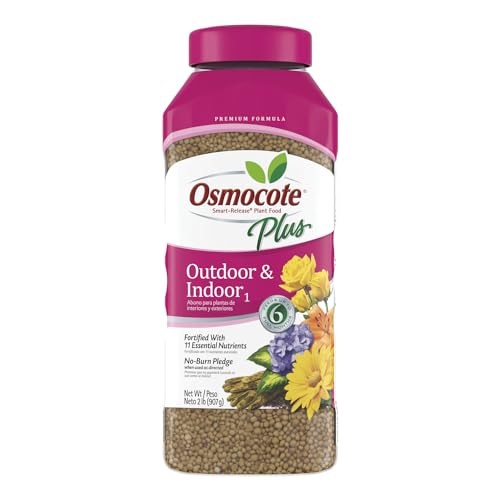
1. Osmocote Smart-Release Plant Food Plus Outdoor & Indoor 2 lb
Our pick — over 4.5★ from 4,500+ verified ratings; the strongest balance of quality and price.
The low-maintenance champion that keeps potted plants fed for six months straight.
This is the undisputed crowd favorite for a reason — a 4.8-star rating across thousands of owners. Each tiny granule is wrapped in a resin coating (a special shell that controls how fast the nutrients seep out), so your plants get a steady meal every time you water. You mix 1 capful (3 tablespoons) into every 2 gallons of potting soil, and you are done until the next season arrives. One 2-pound container covers 75 square feet of soil surface, which is a lot of pots.
Buyers report they are on their third bag, and the refrain is consistent: it works, it does not burn plants, and it is far easier than mixing liquid fertilizer every week. The blend packs 11 essential nutrients, so it covers everything from a fickle fiddle leaf fig to a hungry tomato plant in a grow bag. Unlike the liquid options lower on this list, there is no schedule to remember.
Why owners stick with it
- One application feeds for 6 months — no weekly mixing
- Resin coating prevents root burn even in small containers
- Works indoors, outdoors, in pots, raised beds, and in-ground gardens
- Buyers on their third bag say the results are consistent and reliable
The honest trade-off
- Not instant — takes a few waterings to kick in
- Granules are visible on the soil surface (purely cosmetic)
Reach for it if: you want the lowest-maintenance feeding routine that delivers lush, steady growth across every plant you own.
Look elsewhere if: you prefer the hands-on control of mixing liquid food every week or want an exclusively organic soil-amendment approach.
2. Worm Bliss 1 Qt Organic Worm Castings
A little scoop of this stuff rewires your potting soil into a living, breathing ecosystem.
Worm castings are not a fertilizer in the chemical sense — they are a soil amendment packed with microbes (tiny beneficial organisms that break down organic matter) and humus (decomposed plant material that holds moisture). This 100% vegan, manure-free bag is screened clean of any grit or debris, so you get pure casting material. Owners mention that a single quart repotted 10-12 plants in 4-6 inch pots with leftovers to spare.
The real magic is how it transforms potting soil. It improves water retention, so you water less often, and it introduces microbes that convert nutrients into forms plants can actually eat. The quality and plant health are the two most-praised aspects — owners mix it into chunky aroid blends or sprinkle it on top as a top-dress. It has no odor, which is rare for an organic soil product. The only honest catch is the bag size: 1 quart looks like a snack bag, and heavy users wish bigger options existed.
What wins people over
- 100% pure castings — no sand, dirt, or synthetic fillers
- Improves water retention so you water less frequently
- Feeds soil microbes for long-term potting soil health
- No smell at all, works indoors without upsetting anyone
The honest trade-off
- 1-quart bag is small; heavy users with many plants will go through it quickly
- Not a complete fertilizer on its own for heavy feeders like tomatoes
Best for: anyone building a living potting mix from scratch, especially for houseplants, succulents, and seedlings that thrive on gentle, microbe-rich food.
skip it if: you have a large vegetable garden in containers and need a heavier, more concentrated NPK punch.
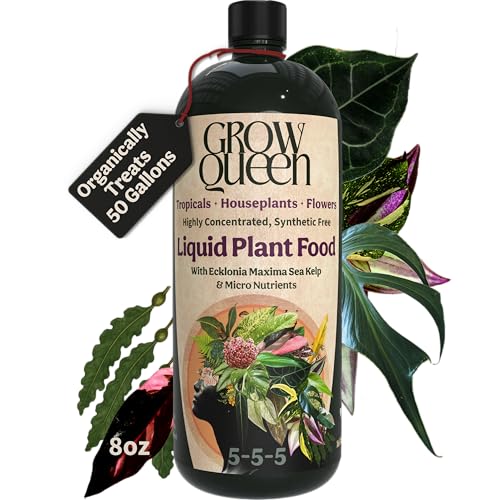
3. Grow Queen Organic Liquid Indoor Plant Food 5-5-5
A single 8-ounce bottle makes 50 gallons of feeding solution and works with every watering.
This liquid fertilizer is built for the hands-on plant parent who enjoys a weekly ritual. It uses Ecklonia maxima sea kelp (a cold-processed seaweed rich in auxins, which are natural growth hormones that encourage root expansion) and delivers a balanced 5-5-5 NPK (the ratio of nitrogen, phosphorus, and potassium). The results show up fast — buyers with collections of 150 to 300 plants report visible new growth within weeks of switching to this formula.
The biggest advantage over the granular picks above is control. You can feed every time you water using a tiny dose, and because it is organic and gentle, there is zero risk of burning your plants. The top praised aspect is plant growth, with dozens of owners singling it out. It works in soil and hydroponics, and it has no smell, which keeps things clean indoors. The trade-off? Liquid feeding demands consistency; if you travel or forget, your plants feel it.
Why plant collectors love it
- Instant-acting — visible growth in days, not weeks
- 8 oz treats 50 gallons, making it extremely economical per feed
- Sea kelp boosts root development and leaf color
- Odorless, safe for pets and kids when used as directed
The honest trade-off
- Must be mixed weekly — not a set-and-forget solution
- A few owners mention a slight smell that some may notice
Choose this if: you enjoy a weekly watering routine and want a fast-acting, natural feed that makes a visual difference quickly.
Pass it up if: you prefer a one-time application that works for months without any effort on your part.
4. Back to the Roots Organic Worm Castings 5 lb

Five pounds of pure vermicompost that gives you more bang for your buck than smaller organic bags.
If the 1-quart bag above feels too small for your garden, this 5-pound bag from Back to the Roots is the logical upgrade. It is pure USA vermicompost (earthworm castings) with no fillers, and it comes in a resealable bag so it stays fresh between uses. Owners praise the quality above all else — 43 buyers call it out — and note that it blends easily into chunky soil mixes without compacting the way some denser amendments do.
The benefits mirror other worm castings: it introduces beneficial microbes that protect seedlings from pathogens and reduces your need for synthetic fertilizers over time. A few bags have contained debris (like a small piece of steel cable, according to one buyer), but the overwhelming consensus is that this provides high-quality material at a fair price. Compared to the Osmocote above, this is a soil-builder, not a direct feeder — think of it as installing a healthy kitchen for your plant’s roots.
What makes it a strong choice
- 5-pound bag offers a much better value per ounce than smaller alternatives
- Resealable packaging keeps castings fresh between uses
- No odor and no burn — safe for even delicate seedlings
- Reduces the need for additional fertilizers by improving soil biology
The honest trade-off
- Very occasional reports of small debris in the bag
- Some owners feel the cost-to-effect ratio is better served by making their own compost
Perfect if: you need a large volume of clean, organic castings to mix into multiple pots or a small garden while staying affordable.
Think twice if: you have had issues with debris in organic products before and prefer a guaranteed pure source.
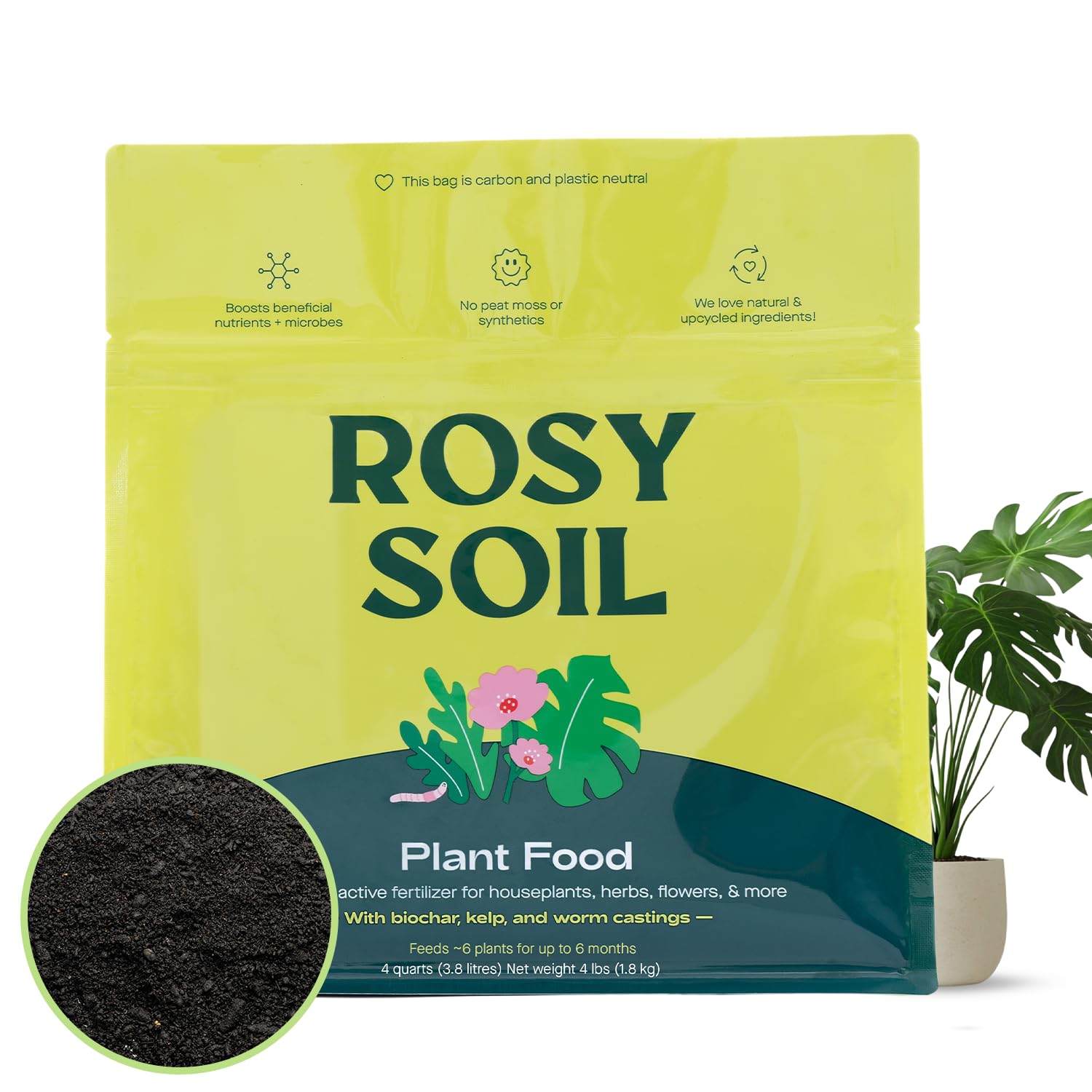
5. Rosy Soil Plant Food 4 Quarts
It is alive — mycorrhizal fungi and biochar turn this bag into a whole soil restoration kit.
This is the most complete soil food on the list. It blends biochar (a charcoal-like substance that locks in nutrients and moisture), kelp, worm castings, compost, bokashi (fermented organic matter), and mycorrhizal fungi (beneficial fungi that partner with plant roots to increase water and nutrient absorption). A 4-quart bag feeds about 6 plants for up to 6 months, and it comes in resealable plastic-neutral packaging.
Buyers with fussy plants like ferns report that a single application revived plants after a long winter, and one owner specifically mentions that this product gave them zero fungus gnat problems — a common headache with rich organic potting mixes. The slow-release, microbe-driven formula makes it forgiving: overfeeding is almost impossible because the nutrients release only when the plant needs them. The downside is the higher price compared to simpler options, and the bag serves a limited number of pots.
What makes it special
- Living ingredients (mycorrhizae, biochar, bokashi) improve soil structure over time
- No risk of overfeeding — nutrients release gradually with each watering
- Customers note zero fungus gnats, a big plus for indoor gardeners
- Works as a top dress or mixed directly into potting soil during repotting
Before you buy
- Higher cost per plant than a simple granular fertilizer like Osmocote
- 4 quarts covers only about 6 plants, so it may not suit large collections
Go for it if: you see potting soil as a living system and want a premium, all-in-one microbial feed for a smaller plant collection.
pass on it if: you have dozens of pots and need a budget-friendly option that stretches further.
6. Burpee Bone Meal Fertilizer 3 lb

A natural phosphorus pump that pushes roots deep and turns bulbs into bloom machines.
Bone meal is a classic for a reason: it supplies phosphorus and calcium (the P and part of the Ca in your plant’s diet) in a form that breaks down slowly in the soil. This Burpee version is OMRI-listed for organic gardening and covers 240 square feet from a single 3-pound bag — far more territory than any other bag on this list. It is made in the USA and has been trusted by gardeners since 1876.
The top-praised aspect here is effectiveness, with 86 owners calling it out. Reviewers point out it makes tomatoes and peppers “come back to life” and produces healthier, stronger roots in bulbs. It works well when mixed into potting soil at planting time or sprinkled around established plants. The honest trade-off is the smell — several owners describe it as “stinky,” especially when the soil gets wet, though the odor fades within a week. Unlike the complete Osmocote blend, this is a targeted supplement, not a full nutrient meal.
Why it stands out
- High phosphorus content supports abundant blooms and fruit set
- Calcium helps prevent blossom end rot in tomatoes and peppers
- OMRI-listed, fine granular consistency spreads easily
- Coverage is enormous — 240 sq. ft. per bag, best value for ground use
The honest trade-off
- Noticeable odor when wet, which some owners find unpleasant
- Not a complete fertilizer on its own — needs a balanced nitrogen source for full plant health
Best for: gardeners focused on flowering bulbs, tomatoes, and peppers in containers who want a targeted phosphorus and calcium boost.
Not for: anyone who is sensitive to natural organic smells or who wants a single product that feeds everything.
7. FoxFarm Happy Frog All Purpose Fertilizer 4 lb

The gentle all-purpose feed that revived a yellowing Monstera and a tired zucchini in the same week.
FoxFarm’s Happy Frog line is a staple among container gardeners, and this all-purpose version is the most versatile entry point. It is packed with beneficial soil microbes that enhance nutrient uptake and water absorption — things the Osmocote above does not do. The 4-pound bag is OMRI-listed, meaning it is approved for organic gardening, and it works on everything from flowers to vegetables to ornamentals.
Buyers rave about its effect on Monstera plants specifically, but the reviews show it works just as well on yellowing tomato plants and zucchini that perked up within a week of application. The quality and effectiveness are the two most-discussed aspects. The main complaint? The smell. Multiple owners describe it as “strong manure-like” and say it lingers for days after watering. If you are feeding plants indoors, this is something to weigh.
What makes it a go-to
- Contains active soil microbes that improve root efficiency
- Gentle, slow-release formula safe for all plant types
- OMRI-listed for certified organic gardening
- Revives struggling plants fast — owners see results in days
Be aware
- Strong earthy/manure odor that is noticeable, especially indoors
- Premium price compared to basic granular feeds
Reach for it if: you want an organic, microbe-rich all-purpose feed that works wonders on houseplants like Monstera and herbs.
Think twice if: you are sensitive to strong organic smells or do most of your feeding inside your home.
8. FoxFarm Happy Frog Tomato & Vegetable Fertilizer 4 lb

The special blend that turned a spindly cherry tomato sprout into a fruit-producing machine.
This formulation is built for heavy feeders — tomatoes, peppers, berries, and squash. The 5-7-3 NPK ratio shifts the focus toward phosphorus (the middle number) and potassium (the last number), which support flowering and fruit development. It also includes calcium to prevent blossom end rot, a common frustration for container tomato growers. The mycorrhizal fungi in this blend help the roots absorb more of what they need, especially in the limited space of a pot.
Buyers are unequivocal: “bumper crop” and “amazing results” appear repeatedly. One owner says a tiny cherry tomato sprig turned into a “tomato-producing tree.” The plant health and plant benefits are the top two praised aspects. Unlike the all-purpose Happy Frog above, this one has less smell, according to reviews — owners note it has no chemical or fishy odor. The catch is that this is a specialized feed, so it is not ideal for general houseplant care or plants that prefer lower phosphorus levels.
Why tomato growers swear by it
- 5-7-3 ratio promotes heavy flowering and fruit set
- Calcium content prevents blossom end rot in containers
- Mycorrhizal fungi improve nutrient uptake in confined root zones
- Minimal smell compared to other organic fertilizers
Keep in mind
- Too high in phosphorus for general houseplants or succulents
- Best used as part of a rotation, not a standalone all-purpose feed
Perfect if: you are growing tomatoes, peppers, or berries in containers and want a targeted formula that delivers large, healthy harvests.
Not for: foliage-only houseplant collections where a balanced 5-5-5 or slow-release general feed is a better match.
9. FoxFarm Happy Frog Jump Start Fertilizer 3-4-3 4 lb

The light starter formula that nudges fragile seedlings into strong, stocky plants without the shock.
This is the specialist of the lineup. The 3-4-3 NPK ratio is lower in nitrogen than the other FoxFarm options, which is exactly what young transplants and seedlings need — too much nitrogen produces leggy, weak growth. Instead, the phosphorus (the middle 4) supports early root development, and the mycorrhizal fungi help the young roots establish quickly in their new potting soil.
Owners praise its effectiveness above all else, with 16 buyers calling it out. One owner notes that after a month-long weather stall, just two small scoops spurred rapid growth. The quality also stands out — the texture is clean, free of large wood chunks that other brands sometimes include. It is OMRI-listed and part of FoxFarm’s greenhouse-tested lineup. This is not a year-round feed; it is purpose-built for the window when you are moving sprouts into their first real pot. Once they are established, you will want to switch to the all-purpose or vegetable formulas above.
Why it is the right start
- Low nitrogen formula prevents leggy, weak seedling growth
- Mycorrhizal fungi reduce transplant shock and boost root establishment
- Clean texture with no large debris or wood chunks
- OMRI-listed, part of a trusted greenhouse-tested system
Its limits
- Too low in nitrogen for mature plants or heavy feeders
- Must be switched out once plants are established — not a one-bag solution
Ideal for: starting seeds indoors or moving tender seedlings into potting soil for the first time, especially if you have had trouble with transplant shock before.
Look elsewhere for: established plants, blooming perennials, or any situation where a general-purpose feed is more practical.
Understanding the Specs
NPK Ratio
Those three numbers — 5-5-5, 3-4-3, 5-7-3 — stand for nitrogen, phosphorus, and potassium. The first number (N) drives leafy green growth. The second (P) supports roots, flowers, and fruit. The third (K) helps overall plant health and disease resistance. A balanced ratio like 5-5-5 works for most houseplants, while 5-7-3 is better for fruiting vegetables.
Slow-Release vs. Instant
Slow-release fertilizers use a resin coating or organic matter that breaks down gradually with water and warmth, feeding for months. This is safer for containers because nutrients spread slowly. Instant liquid fertilizers work within hours — great for a quick fix, but they require weekly mixing and precise dosing to avoid burning roots.
FAQ
Can I use outdoor garden fertilizer in potting soil?
How often should I fertilize potted plants?
Is bone meal safe for all potted plants?
What is the difference between worm castings and regular compost?
Can I mix different fertilizers together?
Why does my organic fertilizer smell bad?
Do I need different fertilizer for seedlings?
Can I use liquid fertilizer in self-watering pots?
Final Thoughts: The Verdict
The winner for most people is the Osmocote Smart-Release — it is the undisputed crowd favorite (4.8 stars across thousands of owners), it feeds for six months with a single application, and it works in every kind of pot. If you want to build a living soil ecosystem for a smaller collection, the Rosy Soil Plant Food is class-leading in ingredients. And for targeted tomato and pepper production in containers, the FoxFarm Happy Frog Tomato & Vegetable is the specialist that delivers the biggest harvests.
How We Picked
We do not accept paid placement. Every pick is matched to a real buyer and a real use-case; we do not hands-on test units.
Sources & Methodology
Specifications: manufacturer listings and product documentation. Review insights: verified customer reviews, as of July 2026. Pricing: not shown on this page (it changes often); check the current price via the retailer link.
As an Amazon Associate, Lawn Gear Lab earns from qualifying purchases. This does not affect which products we feature.