
Specs are compiled from manufacturer listings and verified buyer reviews and can change over time — please confirm the key details on the product page before buying.
Sweet potatoes are hungry growers — they pull a lot from the dirt to build those big, sweet storage roots underground. High-nitrogen fertilizers produce massive vines and tiny spuds. The right NPK ratio shifts the plant’s energy to root and tuber development. This guide cuts through the marketing to show which products deliver the phosphorus and potassium sweet potatoes need, avoiding high-nitrogen blends that grow leaves instead of tubers.
I’m Rikta — the founder and writer behind Lawn Gear Lab. This guide is built by comparing the manufacturers’ published specifications and the patterns across verified customer reviews, so you get each pick’s real strengths and trade-offs instead of marketing spin.
Choosing the right fertilizer is the most effective decision for sweet potato yields, whether you grow in raised beds, grow bags, or rows. That is why we dug into the data to find the absolute best fertilizer for sweet potatoes that actually supports root development and a heavy harvest.
Our Picks at a Glance

How To Choose The Best Fertilizer For Sweet Potatoes
Sweet potatoes are root crops, not leafy greens. The most common mistake is throwing a high-nitrogen all-purpose fertilizer on them, which pushes the plant to grow huge vines at the expense of the tubers you actually want to eat. When you shop, you need to look for a few specific traits.
Look for the Right NPK Ratio
The three numbers on the bag — nitrogen (N), phosphorus (P), and potassium (K) — tell you the story. For sweet potatoes, you want the second and third numbers (P and K) to be equal to or higher than the first. Think of a 5-10-10 or a 2-3-1. Phosphorus supports root and tuber development, while potassium helps with overall plant health and disease resistance. Too much nitrogen just makes leafy vines.
Consider How You Want to Feed
Granular fertilizers like the Dr. Earth or FoxFarm options are mixed into the soil at planting or side-dressed during the season. They break down slowly, feeding the plant over several weeks. Liquid fertilizers, like the Neptune’s Harvest products, act fast — you see results in days — but require you to mix and apply every week or two. For sweet potatoes, a combination often works best: a granular at planting and a liquid boost mid-season.
Quick Comparison
| Model | Best For | NPK Ratio | Form | Weight | Amazon |
|---|---|---|---|---|---|
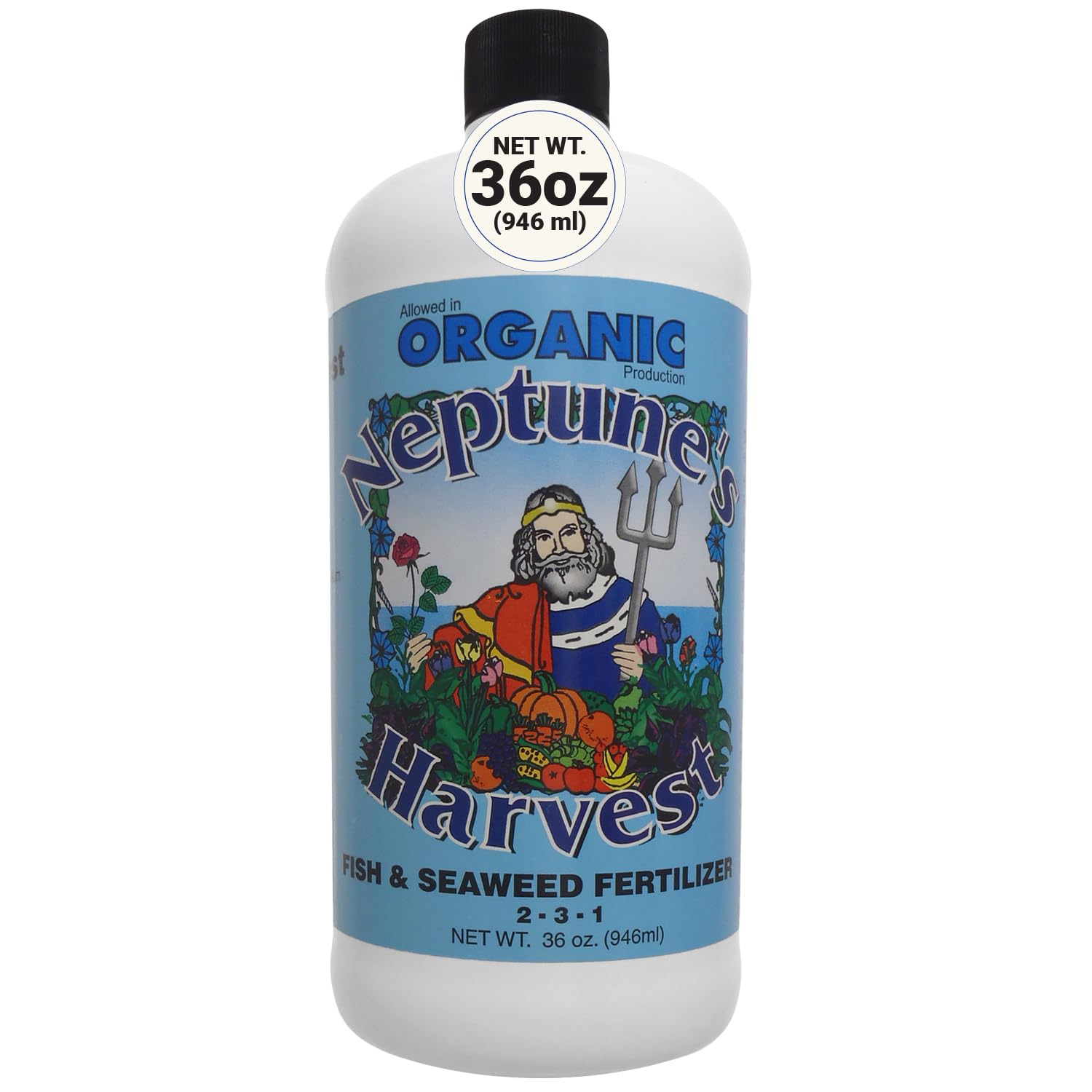
| Neptune’s Harvest Fish & Seaweed★ Best Overall | Best Overall | 2-3-1 | Liquid | 2.3 lb | Amazon |
| Dr. Earth Home Grown OrganicBest Value | Soil Health | — | Powder | 4 lb | Amazon |
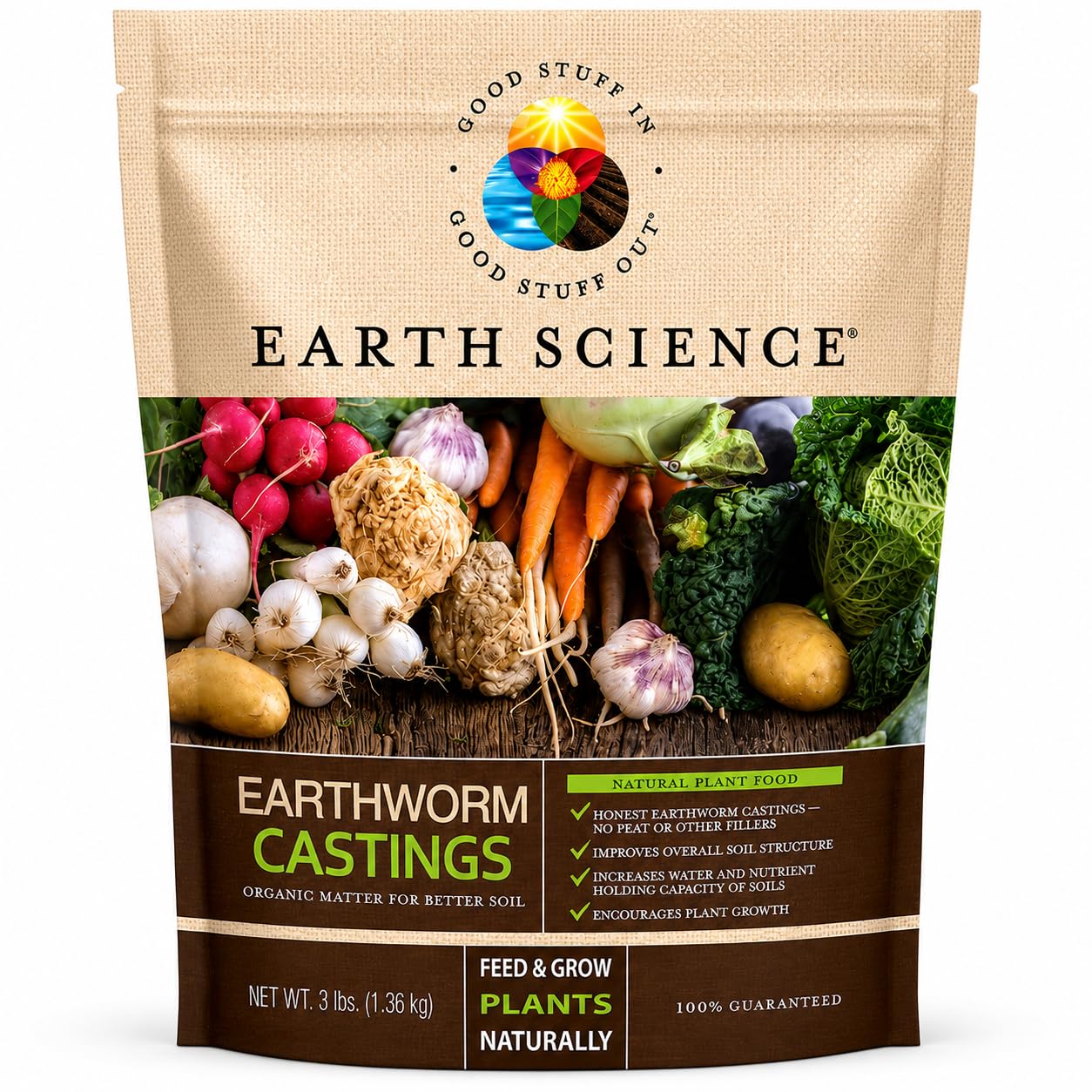
| Earth Science Earthworm CastingsGentle Feed | Gentle Feeding | — | Granules | 3 lb | Amazon |
| Cz Garden 5-10-10 | Fruiting Stage | 5-10-10 | Granules | 4 lb | Amazon |
| Espoma Garden-tone 3-4-4 | Organic Veggies | 3-4-4 | Granules | 4 lb (Pack of 2) | Amazon |
| Down To Earth All Purpose 4-6-2 | Long-Term Feed | 4-6-2 | Granules | 5 lb | Amazon |
| FoxFarm Happy Frog 5-7-3 | Premium Growth | 5-7-3 | Granules | 4 lb | Amazon |
| TPS Nutrients Potato Fertilizer | Targeted for Tubers | 5-10-10 | Liquid | 32 oz | Amazon |
| Neptune’s Harvest Tomato & Veg | Foliage & Fruit | 2-4-2 | Liquid | 16 oz | Amazon |
In‑Depth Reviews
1. Neptune’s Harvest Fish & Seaweed Liquid Fertilizer (2-3-1)
Our pick — over 4.5★ from 7,000+ verified ratings; the strongest balance of quality and price.
The crowd-favorite liquid that balances root growth with a fishy smell you learn to tolerate.
This liquid fertilizer is a blend of 75% fish and 25% seaweed, delivering a balanced 2-3-1 NPK ratio that pushes root growth and fruit development without overloading nitrogen. You only need 1 oz per gallon of water, so a 36 oz bottle goes a long way through the season. It works as a soil drench or a foliar feed, which means you can hit the roots directly or spray the leaves for a quick boost.
The biggest trade-off is real: it smells like you’d expect fish emulsion to smell. The feedback is clear — the odor is a strong point of discussion, but owners overwhelmingly agree the results justify it. Just be careful with the dilution. Buyers report that even 0.5 tsp per cup burned 6-inch tomato seedlings, causing purple leaves, so measure precisely for young sweet potato slips.
Fish & seaweed boost
- Balanced 2-3-1 ratio is ideal for shifting energy to tuber development
- Versatile application as both soil drench and foliar feed
- OMRI listed and safe for kids and pets once dry
Strong fishy smell
- Strong fishy odor that can linger, especially indoors or on leaves
- Very concentrated; improper dilution can burn young plants
Reach for this if: you want a fast-acting liquid that supports both early root growth and the fruiting stage, and you can tolerate a fishy smell for a few hours after application.
Think twice if: you are planting in a small, enclosed space like a sunroom, or if you prefer a low-maintenance granular that doesn’t require weekly mixing.
2. Dr. Earth Home Grown Organic Tomato, Vegetable & Herb Fertilizer – 4lb
A probiotic-packed powder that feeds soil microbes so they feed sweet potato roots.
Dr. Earth sets itself apart by packing in TruBiotic beneficial soil microbes and mycorrhizae. These are living organisms that form a symbiotic relationship with plant roots, increasing the root’s reach for water and nutrients. That is a huge deal for sweet potatoes, which need consistent moisture and nutrient access to swell underground. It is a powder formulation, so you mix it into the soil at planting or side-dress it later.
Owners mention it can revive struggling plants quickly — one shared how it revived yellowing, flowering basil in low-nutrient container soil, turning it greener in a day. But like any concentrated feed, you need to follow the instructions. The consensus warns that over-fertilizing can lead to overgrown plants with low fruit production. At 4 lb, it covers 60 square feet, making it a solid mid-range option that goes further than a liquid bottle.
Organic soil builder: The added microbes and mycorrhizae give sweet potatoes a long-term home advantage, improving drought tolerance and nutrient availability without synthetic inputs.
Grab this for: building long-term soil health before planting, or if you prefer a dry granular that feeds for months with a single application.
Not ideal if: you need an immediate nutrient boost for a mid-season rescue — liquids work faster when the plant is already struggling.
3. Earth Science Earthworm Castings – 3 lb
Pure worm castings that condition the soil while feeding the plant — with zero risk of burn.
This is 100% vermicompost with no fillers. That means it is about as gentle as a fertilizer gets. You cannot overdo it because the nutrients are released slowly by soil microbes. For sweet potatoes, this is a fantastic soil amendment to mix in before planting. It improves water retention and helps reduce soil compaction, both of which are critical for sweet potatoes to grow straight and large underground.
It is not a high-powered fertilizer in the traditional sense — it won’t give you the dramatic mid-season push that a liquid 5-10-10 will. But as a soil conditioner, it earns praise for making plants look healthier and greener. It also acts as a natural deterrent to critters, which is a bonus for anyone who has had a raccoon dig up their sweet potato bed. The 3 lb bag is a manageable size for a small garden or a handful of raised beds.
Perfect for: organic gardeners who want to improve soil structure and water retention without risking any nutrient burn on tender young slips.
Not enough if: you are trying to correct a known phosphorus or potassium deficiency mid-season — you will need a more concentrated granular or liquid alongside it.
4. Cz Garden Supply 5-10-10 Tomato & Vegetable Fertilizer

A 5-10-10 granular that delivers the high phosphorus and potassium sweet potatoes need for tuber growth.
This is a 5-10-10 granular formula, which is almost a textbook-perfect ratio for root crops and fruiting vegetables. The higher phosphorus (the middle number) encourages strong root and tuber development, while the potassium (the last number) supports overall health and disease resistance. It comes in a resealable pouch, which is convenient for storing it dry between applications.
Owners say it is easy to apply — a spoonful around the dripline after the soil is wet — and it has never burned their plants. The feedback on value is mixed; the product itself is praised for effectiveness, but some find it expensive compared to similar blends. Because it is a granular, it takes a bit longer to work than a liquid, but it also lasts longer in the soil. For sweet potatoes, applying this at planting and again when the vines start to run would hit the key feeding windows.
Choose this for: a straightforward, no-fuss granular that hits the high-phosphorus mark sweet potatoes need for big tuber formation.
Skip this if: you want an organic-certified product — Cz Garden is not explicitly labeled as organic, unlike the Neptune’s Harvest or Espoma picks.
5. Espoma Organic Garden-tone 3-4-4 (Pack of 2)

A 3-4-4 organic blend that gives sweet potatoes the potassium they need for stress resistance.
Espoma Garden-tone is an organic granule with a 3-4-4 analysis plus 5% calcium. The calcium is a smart bonus — it helps prevent issues like blossom end rot in fruiting vegetables and supports strong cell walls in the sweet potato skin. The Bio-tone formula in it is Espoma’s proprietary blend of beneficial microbes that help break down organic matter and make nutrients available to the roots.
This comes as a pack of two 4 lb bags, giving you 8 lb total for the price. Customers note outstanding results, with one urban gardener noting their vegetables thrived to the tune of 400 lb of tomatoes and 100 lb of carrots in one season. It is approved for organic gardening and made in the USA. It does have a smell, but it is earthy rather than the fishy punch of the liquids.
Ideal for: organic gardeners who want a slow-release granular that also provides calcium and microbial activity to support sweet potato skin quality and size.
Not for: those who need a high-phosphorus kick — this has a balanced 3-4-4, so it is better as a general feed than a targeted tuber booster.
6. Down To Earth All Natural All Purpose 4-6-2

A multi-ingredient blend that replaces a shelf of separate amendments with one box.
Down To Earth’s 4-6-2 mix reads like a who’s who of organic ingredients: fish bone meal, blood meal, feather meal, rock phosphate, langbeinite, greensand, humates, and kelp meal. That complexity means it provides a wide spectrum of nutrients and trace minerals, not just the NPK numbers on the box. The 5 lb box is a good middle ground — bigger than a small bag but not a 50 lb sack you need to split.
Owners describe it as a gentle, non-burning fertilizer that delivers a steady supply of nutrients. The catch is the odor — it has a fishy smell that can attract raccoons if not watered in properly. One gardener noted it took about two weeks to revive pale, flimsy tomato plants, which gives you a sense of the speed. It is OMRI listed for organic production, and the 5 lb weight at a mid-range price point makes it a strong value for gardeners with a mix of crops.
Best for: smaller gardens where you want one box to feed everything — tomatoes, peppers, squash, and your sweet potato patch — with a single application.
Not ideal if: the smell is a deal-breaker for you; it can linger for a couple of days and may attract wildlife if not covered with soil.
7. FoxFarm Happy Frog Tomato & Vegetable Fertilizer 5-7-3

The premium granular that includes calcium to prevent blossom end rot and mycorrhizae for root efficiency.
FoxFarm’s Happy Frog line has a reputation, and this 5-7-3 blend lives up to it. The added calcium and mycorrhizal fungi address two of the bigger challenges with growing sweet potatoes and other heavy feeders. Calcium helps prevent common fruiting issues, while mycorrhizae increase root efficiency — meaning the roots can absorb more water and nutrients from the surrounding soil.
It is a dry granular with no chemical or fishy smell, which is a relief if you are sensitive to odors. Reviewers point out incredible results, with one calling it a “bumper crop” and another noting it turned a tiny cherry tomato sprig into a “tomato-producing tree.” While it is a premium price point, the effectiveness and versatility (good for peppers, leafy veggies, root crops) make it a strong contender for a dedicated sweet potato bed. It is 4 lb, which is enough for a medium-sized garden.
Reach for this if: you want a top-tier organic granular that actively prevents common problems with calcium and boosts root reach with mycorrhizae — worth the premium for serious growers.
Not for: budget-first shoppers; the price per pound is higher than the Down To Earth or Espoma options, even if the performance justifies it.
8. TPS Nutrients Potato Fertilizer – Liquid, 32 oz
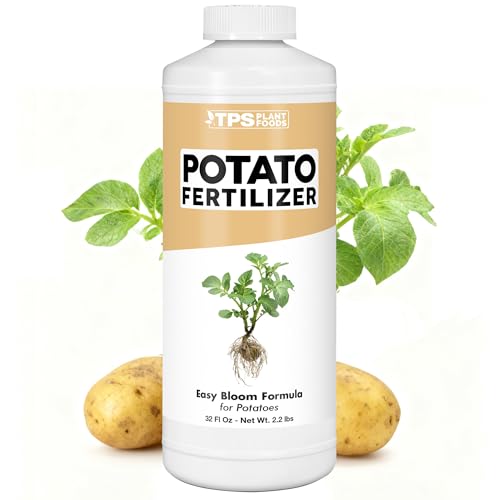
A liquid formulated specifically for potatoes and tubers with a 5-10-10 ratio.
TPS Nutrients made a liquid fertilizer specifically for potato plants, and the 5-10-10 NPK ratio is exactly what sweet potatoes need to shift energy into tuber production. The phosphorus (10) and potassium (10) are both higher than the nitrogen (5), which signals the plant to grow roots and storage organs rather than leaves. As a liquid, it works quickly — you mix it with water and apply it, and the plant starts using it within hours.
Shoppers say seeing results within weeks. One grower in Zone 8B noted that top growth looked healthy after just 4 weeks with 2 fertilizations, and by 9 weeks they spotted red potatoes about golf-ball size near the soil surface. The liquid form is easy to apply and works quickly. The 32 oz bottle is a good size for a dedicated potato patch, but it won’t cover a large field — it is best for backyard gardens and raised beds.
Best for: dedicated sweet potato growers who want a fast-acting, targeted liquid that hits the exact 5-10-10 ratio for maximizing tuber size.
Not for: gardeners who need a general all-purpose feed for multiple crop types; this is a specialist tool for a specific job.
9. Neptune’s Harvest Organic Tomato & Vegetable 2-4-2 (Pint)
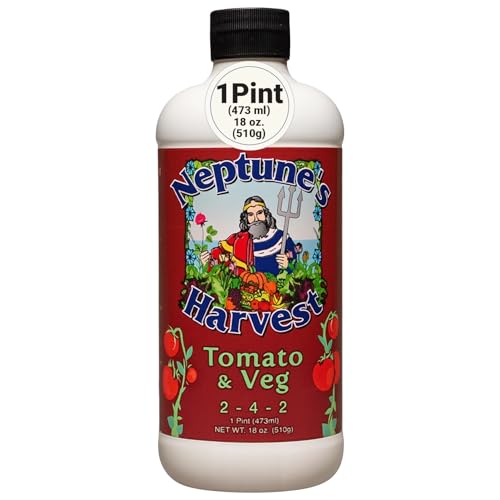
A second Neptune’s Harvest formula, this time with a 2-4-2 ratio that adds molasses and yucca extract.
This is a different product from the standard Fish & Seaweed. It is formulated specifically for the “vegging” stage of tomatoes and vegetables, with a 2-4-2 NPK ratio. The addition of molasses, yucca extract, humate, and liquid calcium gives it a broader nutrient profile. The yucca extract acts as a natural wetting agent, helping the fertilizer penetrate the soil and reach the root zone more effectively.
The strong fishy smell is a recurring theme here, just like its sibling product. Buyers report the smell dissipates after about half a day, so it is manageable if you apply it in the evening. It is effective — one gardener in South Dakota noted it accelerated pepper growth to June versus late July without it. The pint (16 oz) bottle is smaller than the 36 oz Fish & Seaweed, so consider how much area you need to cover before choosing between the two Neptune’s Harvest products.
Choose this for: the early-season vegetative growth phase, especially if you want the added benefits of yucca extract for soil penetration and humates for soil biology.
Not ideal if: you need a higher phosphorus ratio for the tuber-swelling stage; the standard Fish & Seaweed has a better percentage for root crops.
Understanding the Specs
NPK Ratio — The Three Numbers
The three numbers on a fertilizer label (like 5-10-10) stand for nitrogen (N), phosphorus (P), and potassium (K). For sweet potatoes, you want the second number (phosphorus) to be equal to or higher than the first (nitrogen). Phosphorus drives root and tuber development — that is the whole goal. Potassium supports overall plant health, disease resistance, and helps regulate water use inside the plant. A 5-10-10 or 2-3-1 is ideal.
Liquid vs. Granular
Liquid fertilizers (like Neptune’s Harvest) are absorbed by the plant almost immediately. You see results in days, but you need to reapply every 1-2 weeks. Granular fertilizers (like Dr. Earth or FoxFarm) break down slowly over weeks or months, providing a steady feed. For sweet potatoes, a common strategy is to mix granular into the soil at planting and then use a liquid boost during the final two months of the growing season when the tubers are swelling fastest.
FAQ
What NPK ratio is best for sweet potatoes?
Can I use a tomato fertilizer on sweet potatoes?
How often should I fertilize sweet potatoes?
Is liquid or granular fertilizer better for sweet potatoes?
Will fish fertilizer burn my sweet potato plants?
Can I use worm castings as a fertilizer for sweet potatoes?
What happens if I use a high-nitrogen fertilizer on sweet potatoes?
Should I fertilize sweet potatoes when I first plant the slips?
Final Thoughts: The Verdict
For most gardeners, the fertilizer for sweet potatoes that balances effectiveness, cost, and ease of use is the Neptune’s Harvest Fish & Seaweed because its 2-3-1 ratio is ideal for tuber development and it works as both a soil drench and foliar feed. If you prefer a low-maintenance granular that also builds long-term soil health, the Dr. Earth Home Grown Organic with its probiotics is a brilliant choice. And for a pure, targeted tuber boost with no smell concerns, the FoxFarm Happy Frog 5-7-3 is the premium pick that gives you calcium and mycorrhizae in every scoop.
How We Picked
We do not accept paid placement. Every pick is matched to a real buyer and a real use-case; we do not hands-on test units.
Sources & Methodology
Specifications: manufacturer listings and product documentation. Review insights: verified customer reviews, as of July 2026. Pricing: not shown on this page (it changes often); check the current price via the retailer link.
As an Amazon Associate, Lawn Gear Lab earns from qualifying purchases. This does not affect which products we feature.