
Specs are compiled from manufacturer listings and verified buyer reviews and can change over time — please confirm the key details on the product page before buying.
You want the dandelions and crabgrass gone without worrying about your dog sniffing the grass right after you spray. The challenge is separating the genuinely safe formulas from the ones that just claim to be — and finding a mix that actually knocks weeds down fast enough to feel worth it.
I’m Rikta — the founder and writer behind Lawn Gear Lab. This guide is built by comparing the manufacturers’ published specifications and the patterns across verified customer reviews, so you get each pick’s real strengths and trade-offs instead of marketing spin.
if you need a fast-acting concentrate for a gravel driveway or a pet-safe spray for the flower beds, this roundup of the best environmentally safe weed killer options will help you find a formula that fits your yard, your values, and your timeline.
Our Picks at a Glance

How To Choose The Best Environmentally Safe Weed Killer
Not all natural weed killers work the same way. Some burn leaves on contact with high-acid vinegar, while others use herbicidal soaps that suffocate the plant’s cells. Your choice depends on if you need speed, safety around specific plants, or a solution that won’t leave a strong smell hanging around your garden.
Vinegar Strength Matters Most
The active ingredient in most natural sprays is acetic acid. Household vinegar sits at 5%. The products here start at 20% and go up to 45%. That jump changes the game — a 20% formula works within hours on sunny days, while a 45% concentrate can show results in under four hours. The trade-off is a very sharp, pungent smell that some owners compare to industrial pickling.
Ready-to-Use Versus Concentrate
A ready-to-use bottle comes pre-mixed so you pull the trigger and spray. That convenience costs more per gallon. A concentrate requires you to add water (and sometimes dish soap or salt) in a separate sprayer, but you get far more treatments per bottle. If you have a large property or recurring weed problems, a concentrate is typically the better value. For quick spot-treating a patio, a ready-to-use formula saves the hassle.
Safety For Pets And Pollinators
The products here are chosen because they avoid glyphosate and other persistent synthetic chemicals. Still, “safe” has limits — acids and soaps that kill plant cells can also irritate skin and eyes. Most formulas are considered safe for pets and children once the spray has dried completely. To protect bees, avoid spraying weeds that are actively flowering, or choose an herbicidal soap that has a short residual time on leaves.
Quick Comparison
| Model | Best For | Active Ingredient | Liquid Volume | Concentration | Amazon |
|---|---|---|---|---|---|
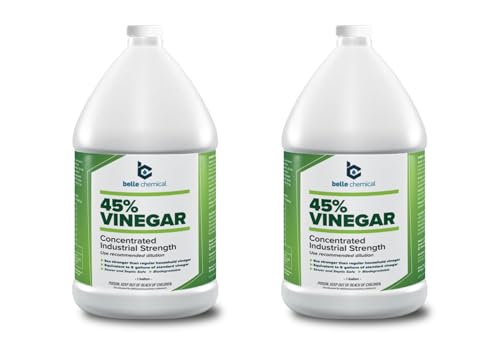
| 45% Pure Vinegar (Belle Chemical)★ Best Overall | Heavy-duty driveways | 45% Acetic Acid | 256 fl oz | Concentrate | Amazon |
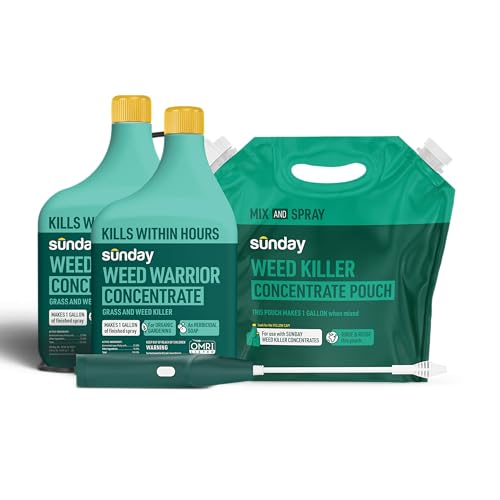
| Sunday Weed Warrior Concentrate KitValue Kit | Fast results + kit | Ammoniated Soap (22%) | 44 fl oz (total) | Concentrate Kit | Amazon |
| Natural Armor 45% VinegarPremium Pick | Value concentrate | 45% Acetic Acid | 128 fl oz | Concentrate | Amazon |
| Bonide Captain Jack’s Deadweed Brew | Organic gardening | Herbicidal Soap | 128 fl oz | Ready-to-Use | Amazon |
| Pet’s Pal Natural Weed Killer | Pet-friendly spots | Natural Ingredients | 128 fl oz | Ready-to-Use | Amazon |
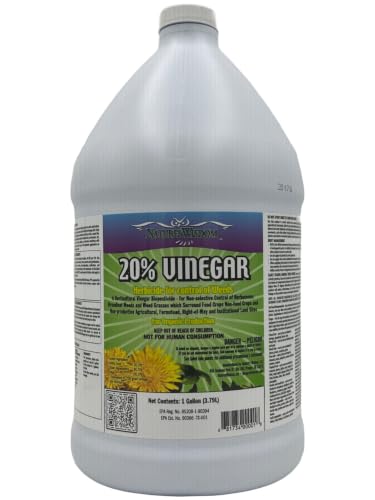
| Natures Wisdom 20% Vinegar | Safe around birds/ducks | 20% Acetic Acid | 128 fl oz | Concentrate | Amazon |
| Green Gobbler Total Control | Killing to the root | Salt & Vinegar | 128 fl oz | Ready-to-Use | Amazon |
| BioSafe Systems Weed & Grass Killer | Organic gardening | Ammonium Nonanoate | 128 fl oz | Concentrate | Amazon |
In‑Depth Reviews
1. 45% Pure Vinegar – Concentrated Industrial Grade (2-Gallons)
Our pick — over 4.5★ from 800+ verified ratings; the strongest balance of quality and price.
The industrial-strength vinegar that wilts weeds in a few hours, backed by over 800 owners.
This is the concentrate that serious gardeners reach for when household vinegar just isn’t cutting it. At 45% acetic acid (45% versus 5% in standard grocery-store vinegar), the results speak for themselves. Buyers report seeing weeds turn brown in as little as 3-4 hours after spraying. The 256-fluid-ounce jug offers a huge liquid volume and at 17 pounds it is a hefty investment in raw killing power.
The things owners praise most are weed control and quality, and the consensus is clear: this is a potent, effective substitute for chemical sprays. But that potency comes with a strong, sharp odor that several owners flag as a real downside, and the safety warnings are serious — the acid concentration is enough to burn skin, so gloves and a mask are non-negotiable during application. One reviewer found it doubled as an excellent bleach alternative for stains.
At 256 fl oz versus the Bonide Captain Jack’s 128 fl oz, and with a rating of 4.7 compared to Bonide’s 4.0, this is the crowd favorite for a reason. It is the pick for anyone who wants the most effective natural option available, even if it means suiting up with PPE.
Real-world kicker: Buyers confirm you can dilute it — mix with water to hit 30% or add salt for driveway weeds — but many use it straight from the jug for maximum speed.
Reach for it if: your main priority is fast, powerful weed killing without synthetic chemicals, and you don’t mind wearing gloves and a mask.
Look elsewhere if: the smell of strong vinegar bothers you, or you need a ready-to-use spray with zero mixing.
2. Sunday Weed Warrior Concentrate Kit
A complete kit that sees weeds wilting in 20 minutes using an OMRI-listed herbicidal soap.
This is not just a bottle of spray — the kit includes two 22-ounce concentrate bottles that mix into 2 gallons of finished spray, plus a reusable mixing pouch and a battery-powered wand sprayer. The active ingredient is an ammoniated soap (22% fatty acids) that works by dehydrating the weed on contact. Owners mention seeing a clear difference within hours, and the label claims a 20-minute start time. Because it is OMRI-listed, you can use it around vegetable beds and fruit trees without worry.
Safety is the single most-praised aspect here — owners appreciate that it is safe for pets, children, and even bees once the spray has dried (just avoid spraying flowers in bloom). The biggest trade-off is the included sprayer: several owners found the hand pump tiring to operate, and there’s no option for a stream or extended wand. The formula is also non-selective, meaning it will kill grass as easily as weeds, so precise application is essential.
If you value a complete, thoughtful system over a bare bottle, this is a standout option that removes the hassle of buying a separate sprayer.
The honest caveat: A few owners found the sprayer design lacking and noted the concentrate goes through fast if you have to soak each weed thoroughly.
Best suited for: the organic gardener who wants a ready-to-go system with fast-acting, pet-safe results.
Think twice if: you have a very large area to cover — the hand-pump sprayer may feel tiring over time.
3. Natural Armor 45% Vinegar Industrial Strength Concentrate (128 Oz Gallon)
A 45% vinegar concentrate that kills weeds in hours and doubles as a home cleaner.
This gallon jug packs the same powerful 45% acetic acid concentration as the top pick, but in a single-gallon format that is easier to handle for smaller jobs. The label claims it is 45% acetic acid compared to 5% household vinegar, and owners confirm it works fast — weeds show visible damage within hours of contact. What really stands out in the owner feedback is how many people also use this for cleaning tasks, praising it as an environmentally safe stain remover and bleach alternative.
Like any 45% vinegar, the smell is strong and the liquid can burn skin. The manufacturer advises rinsing any skin contact under cool water for a full 20 minutes, which tells you the concentration is serious. Owners recommend spraying downwind to avoid catching a face full of vapor. Despite the caution needed, the value is undeniable — a single gallon of concentrate goes a long way when diluted for lighter jobs.
It is the highest-rated concentrate in this list at 4.5 stars from hundreds of owners, and it strikes a great balance between potency, price, and flexibility.
Owner insight: The smell is strong enough that your neighbors might joke you are “spraying salad dressing,” but as one put it, “it does the trick of killing weeds safely for children and animals playing in the yard.”
Grab this if: you want the same 45% power as the top pick but prefer the smaller, more manageable gallon size.
skip it if: you need a ready-to-use spray that doesn’t require mixing or protective gear.
4. Pet’s Pal Natural Weed Killer | Pet Safe Spray (1 Gallon)

A ready-to-use spray made by pet lovers, designed to be safe for dogs and cats in the yard.
This product leads with its pet-friendly promise, and the data backs it up — pet-friendliness and overall effectiveness are the two most-praised aspects in over 100 mentions. The formula contains natural ingredients and no glyphosate, and it is ready to use straight out of the bottle with no mixing. Owners consistently highlight that their dogs and cats can roam the yard safely after the spray dries.
It covers up to 1,000 square feet per gallon and targets common broadleaf weeds like dandelion, clover, ivy, chickweed, and crabgrass. The feedback on speed is mixed — some see results in hours, while others report it takes longer than conventional sprays. A small number of owners found it ineffective, which is a pattern across many natural herbicides; results depend heavily on sunlight, weed type, and temperature.
For anyone whose top concern is keeping a pet-safe yard without having to mix anything, this is the most straightforward option on the list.
What wins owners over
- Truly ready-to-use — no mixing, no measuring
- Pet safety is the clear priority, with dozens praising it
- Works on a broad range of weeds, from clover to Canadian thistle
The realistic trade-offs
- Effectiveness varies — some owners saw fast results; others found it weak
- Value for money is mixed; a few consider it overpriced for household use
- Will kill grass on contact, so keep it off the lawn
Choose this for: a no-fuss, pet-safe spray that is ready the moment it arrives, ideal for small yards and spot treatments.
Pass it up for: large properties where the cost per spray could add up, or if you need guaranteed fast results on the first pass.
5. Natures Wisdom 20% Vinegar Weed & Grass Killer (1 Gallon)
A certified organic 20% vinegar herbicide that is gentle on birds and ducks but tough on weeds.
This is a great middle ground. At 20% acetic acid, it is less potent than the 45% concentrates above, but it still works within hours on sunny days and fully desiccates weeds in under 24 hours. The active ingredient is acetic acid (20%), derived from ethanol distilled from USA-grown corn, making it a certified organic, glyphosate-free option. Owners who have birds and ducks on their property specifically note that this product is not harmful to them, which is a unique selling point.
It is a concentrate — the label says to spray directly without diluting on the weeds themselves. The listed weed coverage is impressively broad, including annual and perennial broadleaf weeds like dandelion, Canada thistle, and ground ivy, plus grasses like crabgrass and quackgrass. The value-for-money feedback is mixed, with some owners finding it expensive for what it does, especially compared to the DIY mix of vinegar, salt, and soap.
If you want a certified organic solution that you can trust around farm animals and waterfowl, this hits a balance between power and confidence.
The honest word from owners: “This one is ok for plants and animals,” and it “beats all weed killer” for its safety profile, but some find the price high for a product that may require touch-ups.
Perfect for: homeowners with ponds, birds, or ducks, who need a certified organic solution they can trust.
Not ideal for: those on a tight budget — some owners feel a homemade mix works just as well for less.
6. Bonide Captain Jack’s Deadweed Brew, 128 oz Ready-to-Use

A ready-to-use organic spray that targets Pearlwort between bricks and is safe for food crops.
This is the go-to choice for gardeners who want an organic, pre-mixed spray they can use near their vegetables. It is approved for organic gardening and works in temperatures as low as 40 degrees Fahrenheit, which is a notable flexibility compared to vinegar products that need sun and warmth. Once the spray dries, it becomes waterproof — so a passing shower won’t wash it off the weeds.
The biggest praise from owners is its effectiveness on specific stubborn weeds. One owner chasing invasive Pearlwort between bricks reports it works perfectly, and others find it effective on thistle, mallow, and grass in gravel yards. However, the effectiveness is mixed — a number of customers note that the results are inconsistent, with some bottles working great and others seemingly ineffective. The sprayer on the bottle also draws criticism, with a few experiencing nozzle failure.
At 128 fluid ounces, it has the same liquid volume as the Natural Armor but at a lower price point. It is a solid mid-range pick for the organic gardener who values convenience and temperature flexibility.
Where it excels
- Approved for organic gardening, safe near food crops
- Works in cooler temperatures (down to 40°F), unlike many vinegar sprays
- Dries waterproof — rain won’t undo your work
Where it falls short
- Effectiveness is inconsistent — some bottles perform better than others
- Sprayer nozzle has a history of failure on certain batches
- Expensive for a ready-to-use formula, especially for larger yards
Reach for it if: you need a rainproof, organic spray that works in cool spring weather and won’t harm your vegetable garden.
Look elsewhere if: you want guaranteed, repeatable results every single time, or you have a very large area to cover.
7. BioSafe Systems 7601-1, BioSafe Weed & Grass Killer Concentrate (1 Gallon)

An EPA-registered, OMRI-listed concentrate that goes a long way — 2 fl oz covers 200 sq ft.
This is a highly concentrated herbicidal soap that operates on a different principle than the vinegar products. The active ingredient is ammonium nonanoate, a soap that destroys plant cell walls on contact. It kills weeds within two hours and is rain-fast, meaning it won’t wash off the leaves once dry. The concentrated formula is extremely economical — just 2 fluid ounces mixed with water covers 200 square feet, so a single gallon jug makes a huge volume of finished spray.
Owners praise its effectiveness and safety profile, noting it works well on gravel driveways and can kill weeds in a single application. Because it is a soap, it does not persist in the soil, meaning you can replant treated areas after just four days. The biggest downside is the cost — it is one of the more expensive gallons here, and owners are vocal about the price tag being steep. Additionally, one owner flagged that the product can harm bees if sprayed directly on them, contradicting the “safe” label for some users.
If you need a truly EPA-registered organic solution that works fast and allows replanting in days, this is a premium choice that owners swear by despite the cost.
Owner voice: “I use this along with vinegar and got really good results. But that PRICE!” — a common refrain that sums up the value vs. cost tension.
Best for: the serious organic gardener who wants EPA registration and the ability to replant within days, and who prioritizes effectiveness over cost.
Not for: budget-conscious shoppers, or anyone who needs a “spray and forget” solution that works every time on large broadleaf weeds.
8. Green Gobbler Natural Total Control Weed & Grass Killer (1 Gallon with Spray Wand)

A dual-action spray that uses both salt and vinegar to attack weeds from leaf tip to root.
Green Gobbler takes a two-pronged approach: the vinegar in the formula wilts the leaves first, and the salt continues working to dehydrate and kill the plant down to the root. It is OMRI-listed for organic use and promises to be safe for people and pets. The kit includes a battery-powered spray wand, which owners generally find works great and reduces hand fatigue.
The feedback here is the most polarized in the list. Some reviewers point out it works surprisingly well and is “just as effective as some of the toxic ones” they used before. Others say it does nothing — with one going as far as “Kills nothing. I think I have more weeds now.” The slow action is a common complaint; several owners note it takes days to see any real effect, and tough weeds like goat head are resistant. The price also draws criticism for being high relative to the results some experience.
It is a gamble: if your weeds are shallow-rooted and young, the dual-action might work great. For established, stubborn weeds, you may need multiple treatments and patience.
The strong points
- Battery-powered spray wand is well-liked — easy to use and spray
- OMRI-listed, pet and family safe with no toxic residue
- Dual-action attack (salt + vinegar) is a unique approach
The weak points
- Results are very inconsistent — some owners see zero effect
- Very slow acting compared to vinegar-only products; takes days
- Expensive for a formula that may require multiple treatments
Consider this for: small, manageable spot treatments where you can afford to wait a few days and reapply if needed.
Pass on it for: large areas or stubborn, deep-rooted weeds where you need guaranteed, fast results.
Understanding the Specs
Acetic Acid Percentage
This is the number that tells you how strong the vinegar is. Household vinegar is 5%, but the weed killers here range from 20% to 45%. The higher the percentage, the faster and more aggressively the spray burns through the weed’s leaves. At 45%, you see results in hours, but you also get a much stronger odor and a higher risk of skin burns. At 20%, results still come within a day, but the product is gentler on the user and the environment.
Ready-to-Use vs. Concentrate
Ready-to-use (RTU) means the product is pre-mixed in the bottle and you simply spray it onto the weed. Concentrate means you need to dilute the product with water (and sometimes add a surfactant like dish soap) in a separate tank sprayer. RTU is more convenient but costs more per spray. Concentrates give you many more treatments from the same bottle, making them cheaper per use if you have a large yard.
OMRI Listing and Organic Certification
OMRI (Organic Materials Review Institute) listing means the product is approved for use in certified organic gardening. It tells you the ingredients meet strict organic standards and do not contain synthetic chemicals like glyphosate. If you are growing vegetables or have edible plants nearby, an OMRI-listed product gives you confidence that the spray won’t leave unwanted residues in your soil.
Herbicidal Soap vs. Acid
Some of the products here use herbicidal soaps (like ammoniated soap or ammonium nonanoate) instead of vinegar. These soaps work by breaking down the waxy cuticle on a weed’s leaves, causing the plant to dry out and die. They are generally more rain-fast than vinegar and have less odor, but they may require more thorough coverage of the leaf surface. Vinegar, on the other hand, burns through the leaf tissue rapidly and is often faster-acting.
FAQ
Is a 45% vinegar weed killer truly safe for pets and children?
How long does it take for natural weed killers to work?
Will these weed killers harm my vegetable garden?
What is the difference between 20% vinegar and 45% vinegar for killing weeds?
Can I mix these concentrates with salt or dish soap?
Do these products kill grass too?
Are any of these products safe for bees?
How do I apply these concentrates without damaging my lawn sprayer?
What is the best natural weed killer for a gravel driveway?
Is there a natural weed killer that works in cool or cloudy weather?
Final Thoughts: The Verdict
For the majority of shoppers, the best environmentally safe weed killer is the 45% Pure Vinegar Concentrate from Belle Chemical because it delivers class-leading potency at a great per-spray value, backed by the highest owner rating in the category. If you want a complete kit with a sprayer and fast-acting herbicidal soap, grab the Sunday Weed Warrior Concentrate Kit. And for those who need a ready-to-use option that is guaranteed safe for pets and kids, the Pet’s Pal Natural Weed Killer is the one to reach for.
How We Picked
We do not accept paid placement. Every pick is matched to a real buyer and a real use-case; we do not hands-on test units.
Sources & Methodology
Specifications: manufacturer listings and product documentation. Review insights: verified customer reviews, as of July 2026. Pricing: not shown on this page (it changes often); check the current price via the retailer link.
As an Amazon Associate, Lawn Gear Lab earns from qualifying purchases. This does not affect which products we feature.