
Specs are compiled from manufacturer listings and verified buyer reviews and can change over time — please confirm the key details on the product page before buying.
That sudden patch of brown lawn that peels back like a rug — that is the signature of grub worm damage. These C-shaped larvae feed on grass roots just below the surface, and by the time you see the dead spots, the roots are already gone. The right insecticide stops them before they turn your yard into a skid-marked buffet for moles, skunks, and birds.
I’m Rikta — the founder and writer behind Lawn Gear Lab. This guide is built by comparing the manufacturers’ published specifications and the patterns across verified customer reviews, so you get each pick’s real strengths and trade-offs instead of marketing spin.
You can kill grub worms fast with a chemical drench, or choose a biological treatment that stays active in your soil for years. The right insecticide for grub worms depends on your timeline — dead grubs this week or a multi-year solution.
Our Picks at a Glance


How To Choose The Best Insecticide For Grub Worms
Grub worm treatments split into two camps — chemical concentrates that target the nervous system of the larvae, and biological spores that infect and kill grubs over a much longer period. Your choice depends on if you need dead grubs this week or a multi-year solution.
Active Ingredient: Imidacloprid vs Bacillus Popilliae
Imidacloprid is a systemic neonicotinoid that stops grubs from feeding within hours of ingestion. It works fast and is the active ingredient in most professional-grade liquid concentrates and granular formulas. Bacillus popilliae (milky spore) is a naturally occurring bacterium that multiplies in the soil and targets Japanese beetle larvae specifically. It takes one to two seasons to establish but can remain active for a decade or more.
Form: Liquid Concentrate vs Granules
Liquid concentrates mix with water and get applied with a sprayer or watering can. They penetrate the turf quickly and are ideal for spot treatment. Granules spread with a broadcast or drop spreader, covering large areas evenly. Granules need to be watered in right after application to carry the active ingredient down to the root zone where grubs feed.
Preventive vs Curative Timing
Preventive treatments containing imidacloprid should go down in late spring to early summer, just as eggs begin to hatch. Curative treatments — often using different active ingredients like trichlorfon — are applied after you see damage, targeting larger grubs that are already feeding. Milky spore works on a different schedule: soil temperatures need to stay above 50°F for the spores to activate.
Quick Comparison
| Model | Best For | Active Ingredient | Form | Coverage | Amazon |
|---|---|---|---|---|---|
| Quali-Pro Imidacloprid T&O 2F★ Best Overall | High-volume curative | Imidacloprid 21.8% | Liquid concentrate | 128 fl oz | Amazon |
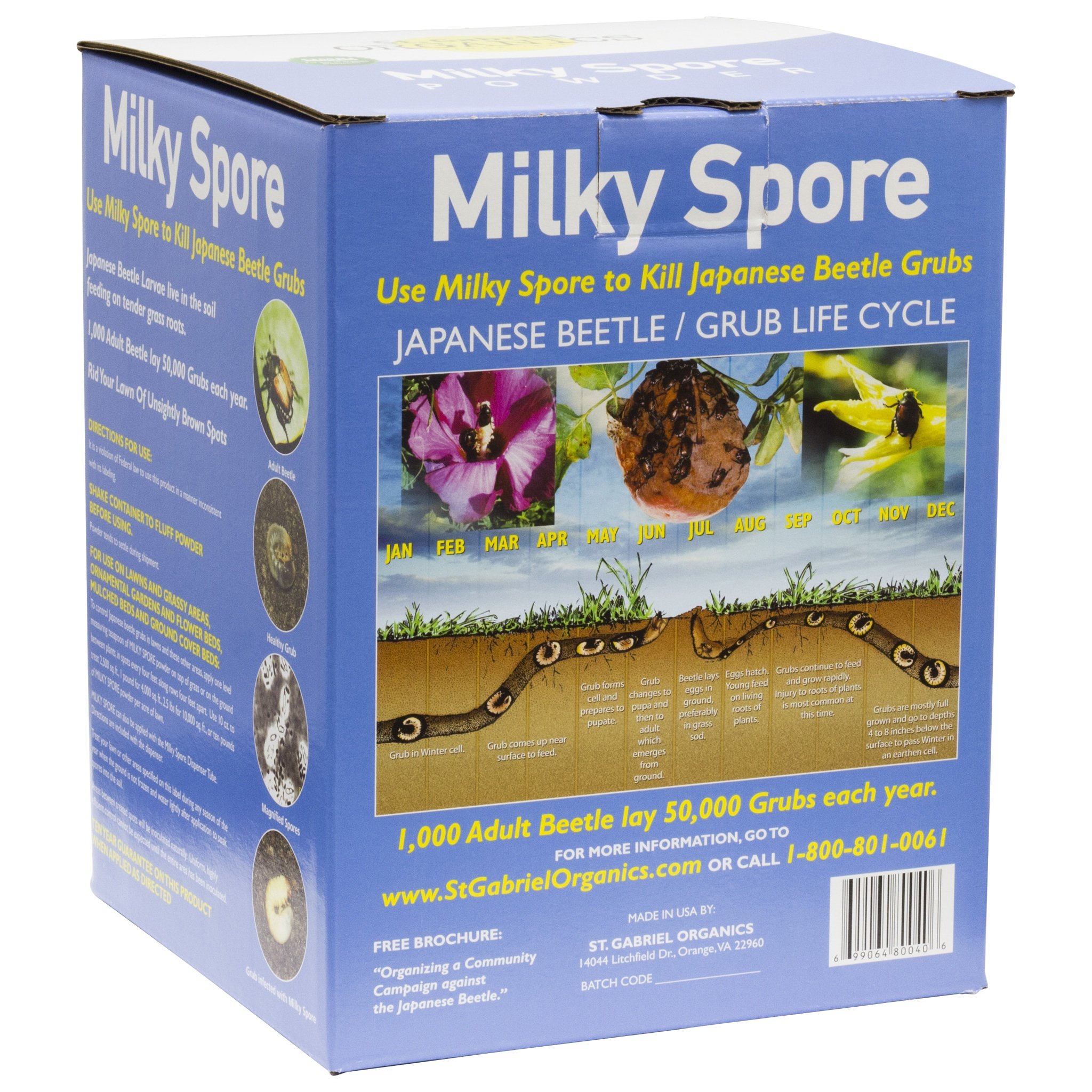
| St. Gabriel Milky Spore Powder 10ozNatural Classic | Natural, spot treatment | Bacillus popilliae | Powder | 2,500 sq ft | Amazon |
| Pro Grub Control 32oz ConcentrateTree & Shrub | Tree and shrub soil drench | Imidacloprid 21.4% | Liquid concentrate | 32 fl oz | Amazon |
| Bonide Insect and Grub Control 6lb | Fast dual-action granular | Imidacloprid + Lambda-Cyhalothrin | Granules | 6 lb | Amazon |
| St. Gabriel Milky Spore Granular 15lb | Large-yard natural prevention | Bacillus popilliae | Granules | 15 lb | Amazon |
| Merit Granules 30LB BA1063 | Broad-acre professional granular | Imidacloprid | Granules | 30 lb | Amazon |
| Bayer Merit 0.5 Granular 30lb | Professional-grade systemic | Imidacloprid 0.5% | Granules | 30 lb | Amazon |
| Syngenta Caravan G 30lb | Insect + fungus control | Imidacloprid | Granules | 30 lb | Amazon |
In‑Depth Reviews
1. Quali-Pro Imidacloprid T&O 2F Insecticide (Generic Merit)
Our pick — over 4.5★ from 450+ verified ratings; the strongest balance of quality and price.
The 128-ounce jug that professional landscapers reach for first.
This is the liquid concentrate that gives you the biggest bang for your money if you have a large lawn or multiple properties to treat. The active ingredient is imidacloprid at 21.8% — a notably higher concentration than many retail versions — so a little goes a long way. The jug holds 128 fluid ounces, meaning you mix small amounts per gallon of water and still have product left for next season.
What wins people over is how broadly it works. The label covers southern masked chafer, northern masked chafer, Japanese beetle, European chafer, European crane fly, and green June beetle. Buyers report it saved laurels from aphid damage and cleared up slug infestations in garden beds. As a soil drench around ornamentals and turf, it keeps working systemically for weeks.
The honest trade-off: this is a concentrated chemical, not a ready-to-use bottle. You need a sprayer or watering can and must follow mixing rates carefully. It is also not for edible plants — the label restricts use to turfgrass and landscape ornamentals. For anyone managing a full yard or commercial landscape, the mix-it-yourself approach is worth the savings.
Why it earns the top spot
- Imidacloprid at 21.8% is a high-concentration active ingredient for serious control
- 128 fl oz bottle covers extensive turf and ornamentals with low mixing cost per gallon
- Systemic action keeps killing grubs, aphids, and chinch bugs for weeks after application
Read the label first
- Not labeled for use on edible crops or vegetable gardens
- Requires measuring and mixing — no hose-end sprayer included
- Neonicotinoid class means careful handling around blooming plants
Best for: Large lawns and ornamentals where you want a single jug that handles multiple pest types — grubs, aphids, chinch bugs, and more.
Look elsewhere if: You want a ready-to-spray solution or you are treating only a small flower bed and do not want to store a 128 fl oz bottle.
2. St. Gabriel Organics Milky Spore Powder, 10oz Japanese Beetle Grub Killer for Lawns
The biological powder that keeps working year after year without reapplication.
This is the original milky spore treatment, and it works differently from every chemical on this list. The active ingredient is Bacillus popilliae — a naturally occurring bacterium that infects Japanese beetle grubs and multiplies inside them. Once the bacteria establish in your soil, they stay there, providing continuous control that the review pages describe as lasting “for years.” One owner summed it up: “I have NOT had a problem with grubs or Japanese beetles this year.”
Coverage is straightforward: a 10-ounce bag treats 2,500 square feet, applied at roughly one teaspoon every four feet along rows. It is safe around pets and beneficial insects — that lack of chemical toxicity is the main reason homeowners with kids or vegetable gardens choose it. The powder form takes a little patience; soil temperature needs to stay above 50°F for the spores to activate, and you apply it multiple times over a two-year program to build up spore density.
The catch is speed. This is not a product that kills grubs overnight. Owners mention that results show up over weeks and months, and some found the packaging size smaller than expected. If your lawn already has dead patches from active grubs, you may want a faster chemical alongside the first spore application.
Your long-term choice: Perfect if you are willing to invest two seasons for a decade-plus of grub control and want zero chemical residue around your yard.
Not for emergencies: If you need grubs dead this week, pair this with a curative chemical or pick a faster option.
3. Pro Grub Control – 32oz Concentrated Imidacloprid (21.4%) Insecticide
A concentrated 21.4% imidacloprid formula that stretches across many seasons.
This one is essentially the mid-size cousin of the Quali-Pro jug — same active ingredient family at 21.4% imidacloprid, but in a 32-ounce bottle that is handier for smaller properties. The application rates are versatile: you can use it as a turfgrass drench, a foliar spray, or a soil drench around trees and shrubs. For soil drenches on ornamentals, the label calls for mixing up to 0.4 fluid ounces per gallon of water per inch of trunk diameter.
Buyers lean on this for hemlock adelgid control and protecting ornamentals. One owner called it “much more economical to use than the alternatives available at local retailers” and figured the bottle held a “lifetime supply” after treating multiple plants. Another noted, “Seems to be working, but it’s been two weeks, still have a ways to go” — a fair summary of the patience needed when treating established infestations. The bottle design got mixed feedback; some found the opening awkward for measuring the concentrated liquid safely.
Smart for small properties: If the 128-ounce jug is more than you will ever use, this 32-ounce bottle gives you the same high-concentration active without the storage problem.
The downside: The bottle makes it tricky to pour the exact amount of toxic liquid, and you will want to wear gloves and long sleeves for safety.
4. Bonide (BND60360) Insect and Grub Control Granules (6 lb)

Kills surface pests and underground grubs in a single granular pass.
What makes this bag different is the combination of two active ingredients: imidacloprid for systemic grub control plus lambda-cyhalothrin for fast knockdown of surface insects. The granular form means you broadcast it with a fertilizer spreader, then water it in lightly. The label promises 24-hour kill speed for above-ground bugs like ants, crickets, and chinch bugs, while the imidacloprid component provides up to three months of soil and surface protection.
The owner experience matches that speed. One buyer called it a “KILLER Product” that eliminated all visible pests within 24 hours. The bag weighs 6 pounds, which covers a moderate lawn well and is easy to lug around compared to the 30-pound professional bags. The downside — several reviewers found it expensive per pound, and one noted it did little for flies and mosquitoes, which are not listed pests. It is also not for indoor use and requires immediate watering to activate.
Fast and broad
- Lambda-cyhalothrin knocks out surface insects in 24 hours — ants, crickets, chinch bugs
- Imidacloprid keeps protecting soil and roots for up to three months
- Easy granular application with a standard spreader
Consider this
- Cost per pound runs higher than plain imidacloprid granules
- Not labeled for flies, mosquitoes, or indoor use
- Requires watering immediately after application
Reach for this if: You have a mixed pest problem — grubs in the soil plus ants and chinch bugs on the surface — and want one product that handles both tiers.
Look elsewhere if: You only need grub control and want the lowest cost per treatment; a straight imidacloprid product gives better value.
5. St. Gabriel Organics Milky Spore Granular (15 lb)

The big bag of milky spore that takes the guesswork out of large-yard coverage.
This is a 15-pound granular version of the same Bacillus popilliae spore that made the powder version famous. Granules are easier to spread evenly over large areas with a broadcast spreader, and the extra bulk means you treat more square footage per purchase. The manufacturer’s claim of up to 15 years of protection against Japanese beetle grubs is the headline here — once established, the spores multiply in the soil and keep working season after season.
Reviewers consistently praise its effectiveness, reporting major reductions in grubs and the moles that feed on them. One owner says they have used it for “10+ years” and that it “eliminates grubs and reduces Japanese beetles.” The spore is harmless to pets, beneficial insects, and wildlife, so you can spread it around vegetable gardens and flower beds without worry. The trade-off is cost — this is not a cheap product upfront, and you need multiple applications over the first two years to build the spore population.
For the long haul: If you want a half-acre or more of natural, chemical-free grub protection that builds over time, this 15-pound bag is the most efficient way to start.
The catch: Upfront cost is real, and you need patience — full control can take two seasons of applications.
6. Merit Granules Insecticide 30 LB Bag BA1063
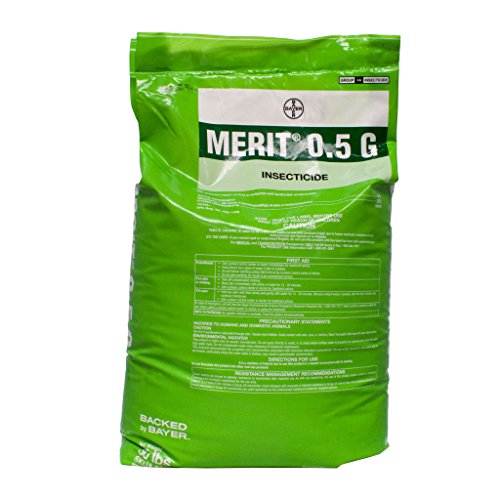
The heavy-duty 30-pound bag that lawn pros use to blanket large properties.
This is a straight imidacloprid granular formulation from the Merit line, sold in a 30-pound bag that suits big lawns and commercial turf. The granules spread easily with a push spreader and get watered in to carry the active ingredient down to the root zone. The biggest advantage here is volume — a single bag can cover a substantial area without needing to buy multiple packages.
Owner reports are emphatic about results. One wrote “Bottom line – NO MORE GRUBS, green grass – YAY,” noting that dead brown patches disappeared after one application. Others on St. Augustine grass report using it annually with no summer insect problems for three straight years. The bag is priced competitively with local suppliers, and the free shipping on a 30-pound bag is a real convenience. A few buyers flag that imidacloprid is a neonicotinoid and poses a risk to bees if applied carelessly; the guidance is to apply in zero wind and water immediately.
For big lawns: If you have a third of an acre or more and want the most cost-efficient granular imidacloprid product available, this 30-pound bag is the play.
Bee caution: Apply carefully around flowering weeds and water the granules in immediately to reduce drift and pollinator exposure.
7. Bayer Merit 0.5 Granular Systemic Insect Control (30 lb)

The 30-pound granular that lawn professionals have trusted for decades.
Bayer’s Merit 0.5 G is a well-known name in turf management. The active ingredient is imidacloprid at 0.5%, formulated as free-flowing granules that spread evenly with any broadcast or drop spreader. It is labeled for use on turfgrasses, trees, shrubs, evergreens, flowers, foliage plants, and ground covers — basically every green thing in your yard except edible crops. The EPA-registered formula carries clear application limits: no more than 80 pounds of product per acre per year.
The effectiveness ratings are the strongest signal here — buyers in large numbers report that a single spring application eliminates grubs, which in turn cuts off the food supply for moles and birds that tear up the lawn. One long-term user noted “correct application timing is critical” and that “user error” is almost always the cause when the product does not work. The cost is higher than generic alternatives, but the brand reputation and consistency explain the premium. A few owners describe it as “expensive but effective,” noting it eliminated spittle bugs for months after one spreader pass.
Brand-name reliability: If you want the granular that lawn care pros recommend and are willing to pay more for consistent results across many pest types, this is your bag.
Watch the price: Generic imidacloprid granules cost less per pound for the same active ingredient, so weigh the brand premium against your budget.
8. Syngenta Caravan G Insecticide Fungicide (30 lb)
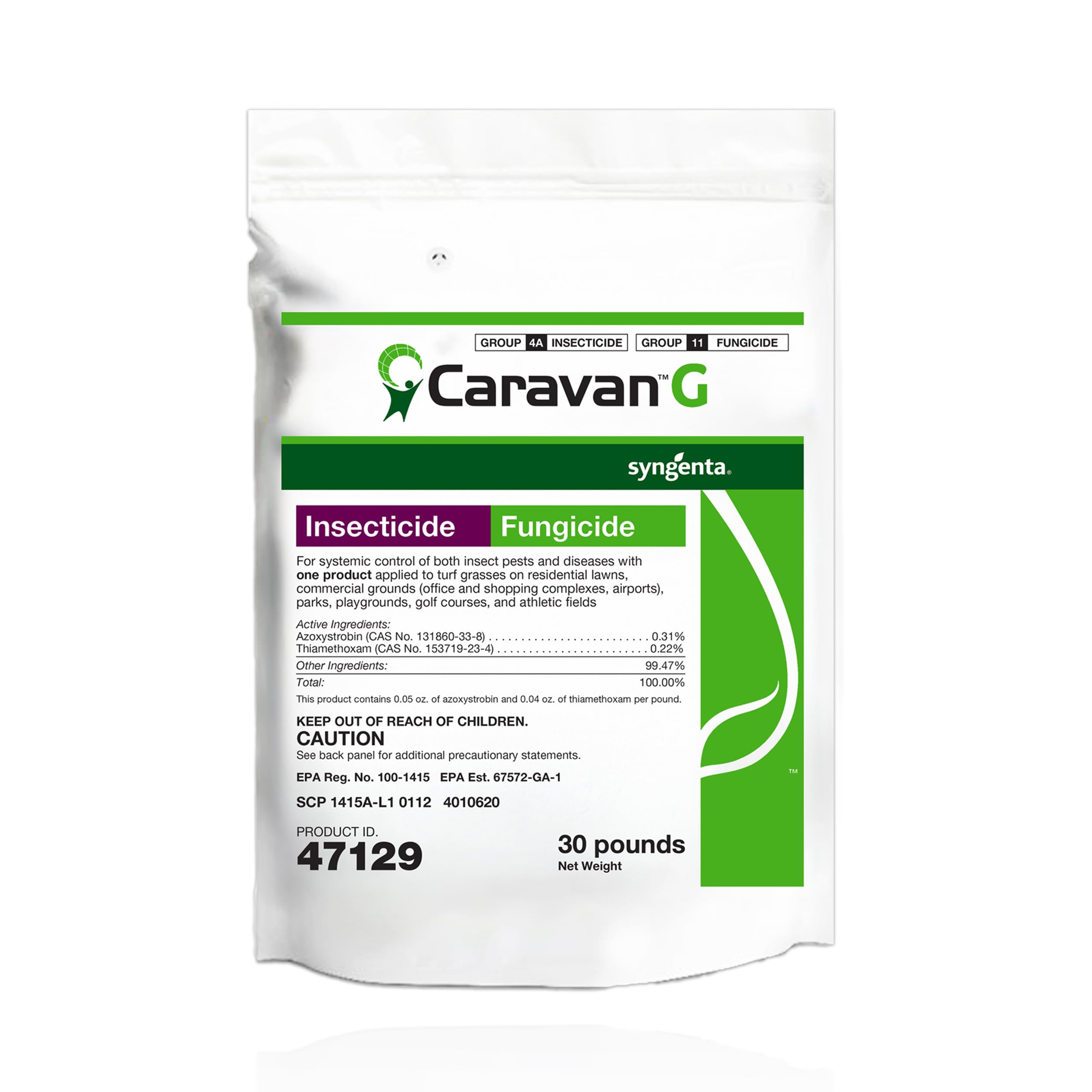
One bag that fights grubs and common lawn diseases at the same time.
Caravan G is unusual because it combines an insecticide with a fungicide in a single granular product. The insect side targets white grubs, chinch bugs, ants, craneflies, billbugs, Japanese beetles, and sod webworms. The disease side covers anthracnose, Pythium blight, brown patch, Pythium root rot, leaf spot, summer patch, take-all patch, red thread, and more. That dual action makes it a strong choice for lawns that have both pest problems and a history of fungal infections.
Customers note good results on tough cases: one buyer had chinch bugs, grey leaf spot, and take-all root rot simultaneously and said “my lawn is beautiful once again” after applying Caravan G alongside proper mowing and watering. Another noted it is “more effective than spraying” for Zoysia in South Florida. The bag design gets positive comments — an easy-to-close bag that reduces waste spills compared to open-top sacks. The mixed feedback is on value: some find the cost per pound justified by the dual function; others are not convinced the fungicide side is worth the premium when the insecticide is their primary need.
Two problems, one bag: If your lawn has grubs plus brown patch, leaf spot, or take-all patch, this granular saves you a separate fungicide application.
Pass if disease-free: If you only need grub control, a straight imidacloprid granular gives you the same insect kill for less money.
Understanding the Specs
Active Ingredient Percentage
The percentage tells you how much of the bottle or bag is the actual pesticide versus inert filler. A 21.8% imidacloprid liquid concentrate is far more potent than a 0.5% granular formulation. Higher percentages mean you use less product per treatment, which makes the concentrate more economical for large areas.
Liquid vs Granular
Liquid concentrates mix with water and get applied with a sprayer or watering can. They soak into the soil quickly and work well for spot treatments around trees and ornamentals. Granules are spread with a fertilizer spreader and work best for covering large, open lawn areas evenly. Both require watering in after application to carry the active ingredient to the root zone.
FAQ
What is the best time of year to apply grub worm insecticide?
Can I use grub insecticide on my vegetable garden?
How long does milky spore take to work?
Is imidacloprid safe for bees and pollinators?
How do I apply liquid concentrate grub killer?
How often should I reapply grub insecticide?
What is the difference between grub control and mole control?
Can I use granules and liquid together?
How do I identify grub damage in my lawn?
Does grub killer also kill other lawn pests?
Final Thoughts: The Verdict
For the majority of shoppers, the insecticide for grub worms winner is the Quali-Pro Imidacloprid T&O 2F because its 128-ounce jug of 21.8% imidacloprid gives you the best cost-per-treatment ratio for large lawns and ornamentals alike. If you prefer a natural approach that builds lasting biological control, grab the St. Gabriel Milky Spore Granular 15lb. And for a fast-acting dual-action granular that handles both grubs in the soil and bugs on the surface, the Bonide Insect and Grub Control is the one to reach for.
How We Picked
We do not accept paid placement. Every pick is matched to a real buyer and a real use-case; we do not hands-on test units.
Sources & Methodology
Specifications: manufacturer listings and product documentation. Review insights: verified customer reviews, as of July 2026. Pricing: not shown on this page (it changes often); check the current price via the retailer link.
As an Amazon Associate, Lawn Gear Lab earns from qualifying purchases. This does not affect which products we feature.