
Specs are compiled from manufacturer listings and verified buyer reviews and can change over time — please confirm the key details on the product page before buying.
A hard plastic greenhouse is a serious backyard investment, and the first question every buyer asks is simple: which one actually survives a real storm without buckling or losing panels? The honest answer depends on the frame, the panel density, and how much assembly patience you bring — because a kit is only as strong as its setup. This guide breaks down ten polycarbonate greenhouses by what matters most: real-world weather resistance, usable interior space, and the assembly experience that determines whether your weekend project becomes a five-hour joy or a three-day headache.
I’m Rikta — the founder and writer behind Lawn Gear Lab. This guide is built by comparing the manufacturers’ published specifications and the patterns across verified customer reviews, so you get each pick’s real strengths and trade-offs instead of marketing spin.
Whether you are overwintering tender perennials or starting seedlings in early spring, the right structure makes the difference between thriving plants and a collapsed frame — this is our focused take on the best hard plastic greenhouse options available today.
Our Picks at a Glance
How To Choose The Best Hard Plastic Greenhouse
A polycarbonate greenhouse is a long-term purchase, so getting the size, panel quality, and frame strength right from the start avoids expensive mistakes. You want a structure that lets in plenty of light, shrugs off wind and snow, and gives you enough room to work comfortably inside. Here is what to weigh before you buy.
Panel Thickness and Gram Weight
The polycarbonate panels are your primary barrier against weather. Look for twin-wall or double-wall construction — the air gap between the layers adds insulation that keeps nights warmer and prevents overheating during the day. Panel weight matters, too: 580g panels are common on budget to mid-range kits and are fine for moderate climates, while 720g/m² panels are denser and resist impact better. Four millimeters of thickness is a reliable starting point for year-round use.
Frame Material and Bracing
Aluminum is the standard here because it will not rust, but not all aluminum frames are equal. Heavier-gauge frames with diagonal or cross-bracing stay square under load. Some kits add reinforced rods or a galvanized steel base for extra rigidity. If you live where heavy snow is a concern, a reinforced frame and a roof pitched enough to shed accumulation are essential features.
Ventilation and Door Design
Roof vents let hot air escape at the highest point of the greenhouse, which helps you keep temperatures from spiking on sunny days. A single roof vent is standard, but two vents improve cross-flow noticeably. Sliding doors save interior space compared to hinged doors, though both styles work well. A lockable door adds confidence if your garden is accessible to others.
Assembly Realities and Anchoring
Every polycarbonate greenhouse requires assembly, and the difference between a smooth afternoon build and a multi-day ordeal depends on the instructions and part labeling. Kits with clearly numbered parts and step-by-step text go together faster. Plan on needing a second person for most builds over six feet. Anchoring is non-negotiable — bolting the base into a wooden frame or using ground stakes prevents the lightweight aluminum structure from lifting in high winds.
Quick Comparison
| Model | Best For | Footprint | Panel Specs | Vents | Amazon |
|---|---|---|---|---|---|
| 6x4FT Sylviera★ Best Overall | Best Overall compact starter | 45″ x 67″ | 4mm, 580g twin-wall | 1 | Amazon |
| 6x6FT FLY BY YANStorm Tested | Square footprint & storm toughness | 66.9″ x 66.54″ | 720g/m² polycarbonate | 1 | Amazon |
| 6×7.5FT AirWireQuick Setup | Quick slide-in assembly | 88.2″ x 66.5″ | 4mm, 720g double-layer | 1 | Amazon |
| 6×7.5FT WUKHG | Budget-friendly with thermometer | 66.53″ x 88.18″ | 4mm, 580g twin-wall | 1 | Amazon |
| 6x8FT HOOYEAH | Soft diffused light for seedlings | 70.87″ x 95.55″ | Milky white polycarbonate | 1 | Amazon |
| 6x6FT Outsunny | Extra height & rain gutters | 74.75″ x 75.5″ | Clear polycarbonate | 1 | Amazon |
| 8x10FT Jiliusure | Spacious premium with 2 roof vents | 119″ x 97″ | 0.157in thick polycarbonate | 2 | Amazon |
| 6x16FT YITAHOME | Long narrow footprint & two skylights | 192″ x 72″ | 4mm double-wall polycarbonate | 2 | Amazon |
| 12x6FT YITAHOME | Longest interior & barrel roof design | 144″ x 72″ | 4mm double-wall polycarbonate | 2 | Amazon |
| 4x8FT Palram Canopia | Lean-to design for tight side-yard spots | 48″ x 96″ | Twin-wall roof + clear wall panels | 1 | Amazon |
In‑Depth Reviews
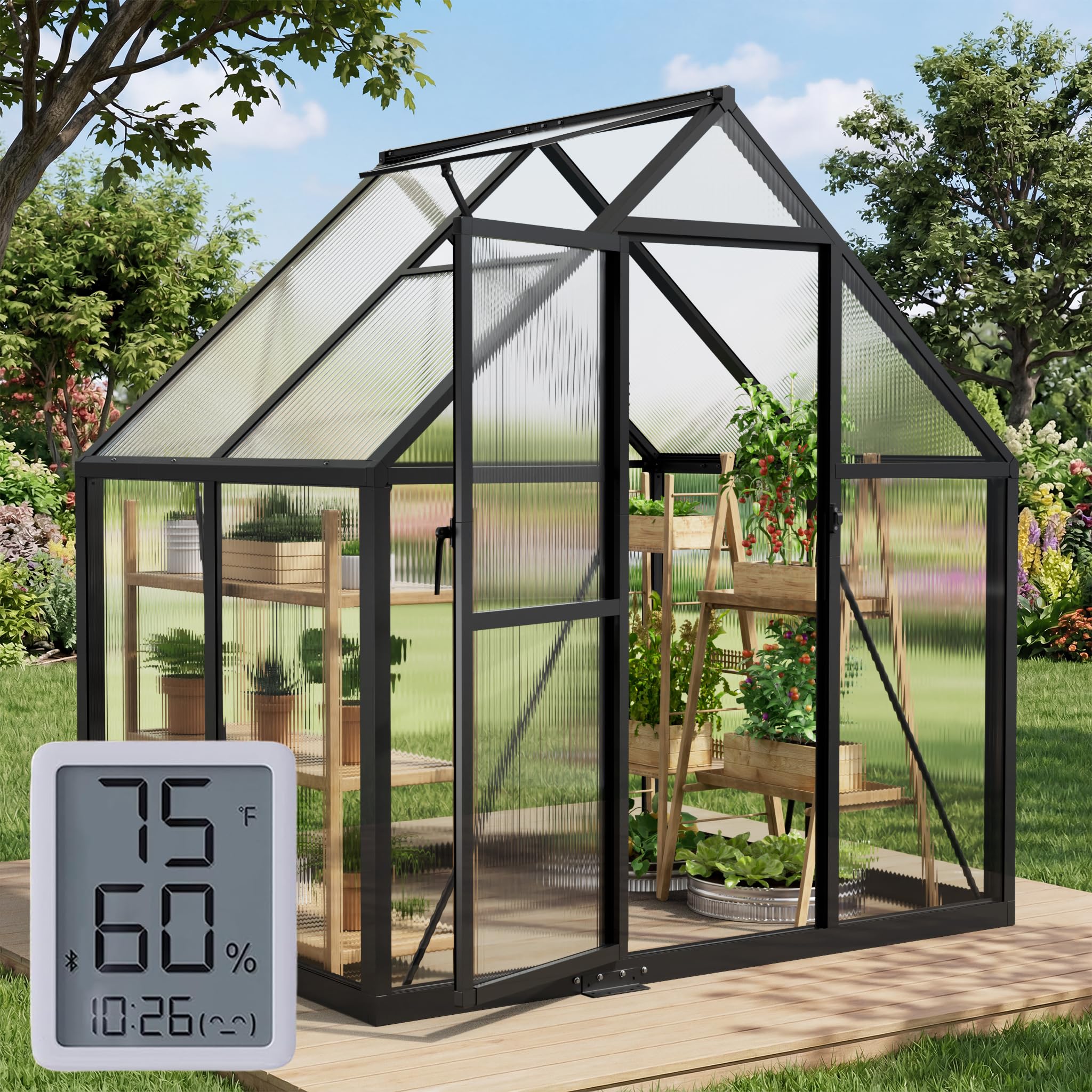
1. 6x4FT Greenhouse with Hygrometer, Sylviera
A roof vent and a built-in hygrometer make this the smartest starter greenhouse.
This 6x4FT greenhouse from Sylviera hits the balance for a first-time buyer who wants real polycarbonate protection without jumping to a premium price tier. The frame is reinforced with premium aluminum alloy, and the panels are 4mm thick twin-wall polycarbonate at a 580g weight — dense enough to resist impact while letting in plenty of light for vegetables, flowers, and herbs. What wins people over is the setup: the kit comes with clearly labeled parts and detailed instructions, so a pair of hands can have it standing in a manageable afternoon rather than a full weekend.
Owners consistently call it sturdy and spacious for its footprint, which measures 45 inches deep by 67 inches wide — tight enough for a side-yard spot but roomy enough to walk inside and arrange shelves. The adjustable roof vent plus a lockable door gives you real control over airflow, which matters when temperatures spike on a sunny March afternoon. The included hygrometer is a thoughtful addition that saves you buying one separately.
Real-world heat trap: Owners note the polycarbonate panels maintain warmth well, and one reviewer noted it survived two weeks of nonstop rain without any leaking. The frame is heavy-duty and the UV-resistant panels block harmful rays, so your seedlings get bright light without sunburn. A minor assembly note from experienced builders: peel the protective film off both sides of every panel before you start — the instruction manual does not highlight this, and leaving the film on traps heat and reduces clarity. The catch for some is that the instructions have occasional errors, so careful study before tightening everything pays off. This is a strong, confidence-inspiring first greenhouse that protects plants through all four seasons.
Best first greenhouse pick: The compact size, a single vent, and aluminum frame give beginners a weather-ready structure that assembles without a contractor’s skill set. Look elsewhere if your garden demands a footprint larger than 6×4 feet — the interior is snug for serious potting-bench work.
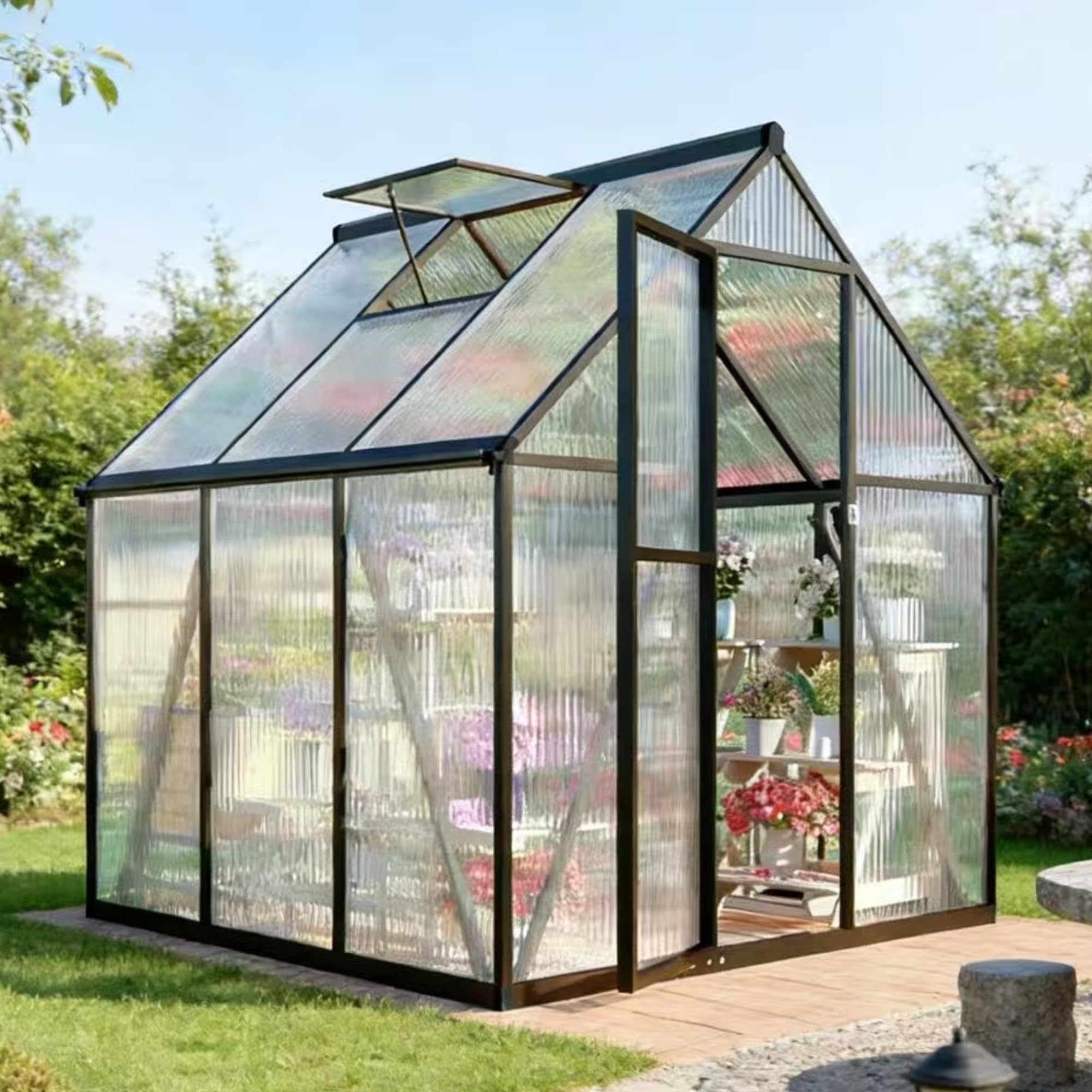
2. 6x6FT Outdoor Polycarbonate Greenhouse, FLY BY YAN
A square-footprint greenhouse built with 720g/m² panels that shrug off violent weather.
The FLY BY YAN greenhouse earns its place with an ultra-durable build: heavy-duty 720g/m² polycarbonate panels paired with a reinforced aluminum frame. That panel density is a full step up from the 580g panels on many kits, and owners confirm it makes a difference. Buyers report it “survived violent storm with winds, rain, snow” — the kind of real-world test that separates a backyard toy from a serious growing structure. The quick-install slide-in panel system is designed to boost setup speed, but most owners still recommend setting aside a full day with two to three helpers.
Sturdiness is the most-praised aspect here, followed by overall quality and value for money. The roof vent is adjustable and a lockable door adds security. The structure has a 66.9 by 66.54-inch footprint with 77 inches of interior height, so you get a near-square layout that feels roomy for a 6×6. The UV coating on the panels blocks harmful radiation while maximizing sunlight penetration.
What holds strong
- 720g/m² panels offer heavy-duty impact and weather resistance
- Storm-tested by owners in strong winds, rain, and snow
- Reinforced aluminum frame with slide-in panel design
- UV-coated surfaces protect plants from solar radiation
What takes patience
- Assembly is a mixed experience — some find it easy, others struggle with instruction clarity
- Best anchored on a pallet base to prevent cold air leakage from the floor
- One owner found the gutter orientation unclear during setup
Best for weather-heavy regions: If your yard sees punishing storms, this is the one owners specifically praise for holding up through them. Think twice if a quick solo assembly is a must — most buyers recommend having extra hands on site.
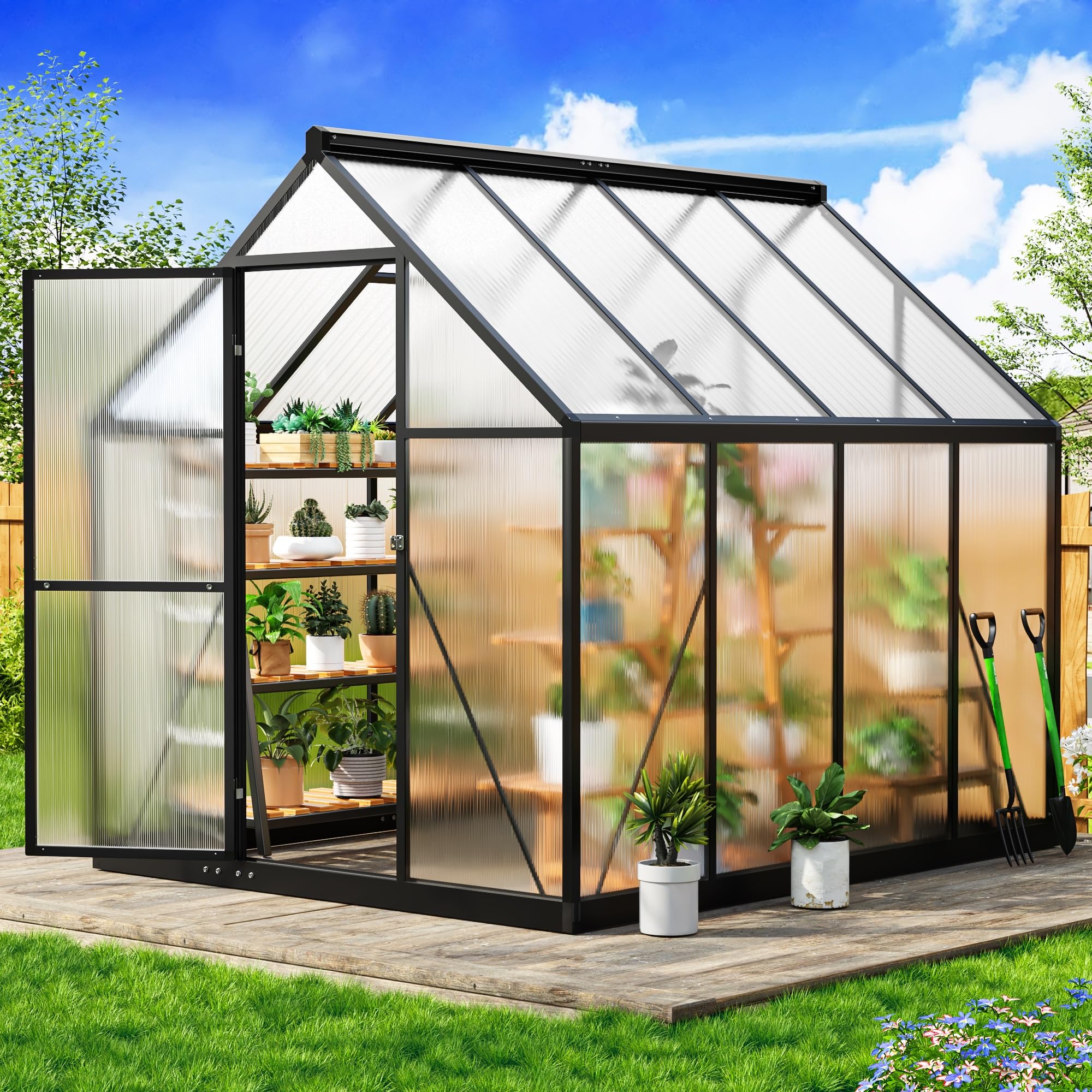
3. AirWire 6×7.5 FT Outdoor Polycarbonate Greenhouse
An innovative slide-in system that shaves hours off assembly time.
AirWire designed this 6×7.5 FT greenhouse around a slide-in panel system that the company says provides faster installation and improved stability. The kit uses 4mm thick, 720g double-layer polycarbonate sheets with a special UV coating, so you get the denser panel weight that resists impact without paying a premium price. The frame is reinforced aluminum alloy, and the structure measures 88.2 inches long by 66.5 inches wide — a noticeably longer footprint than the square 6×6 models above.
The sliding door saves interior floor space, and the single adjustable roof vent helps regulate temperature. Owners consistently praise the appearance and size, with one noting it held up well through winter conditions. Many call the assembly straightforward, though a few note that instructions could be clearer. The UV reflective side of the panels is marked, but one owner found the labeling ambiguous, so take a moment to confirm which side faces outward before sliding panels into place.
Space and stability: At 81.8 pounds, this is a lightweight structure for its footprint — anchoring is strongly recommended. Several owners used zip-tied separate anchors and reported the greenhouse was very sturdy afterward. The single roof vent provides enough airflow to keep temperatures manageable on sunny days, and the spacious interior fits multiple shelving units with room to step inside. The honest trade-off is that the kit is not designed for easy disassembly, so consider this a permanent placement after you build it.
Best for project gardeners: The generous 7.5-foot length and quick-install panels suit someone who wants a larger growing area without spending two weekends assembling it. Pass if you need a square footprint — this one is built long and narrow.
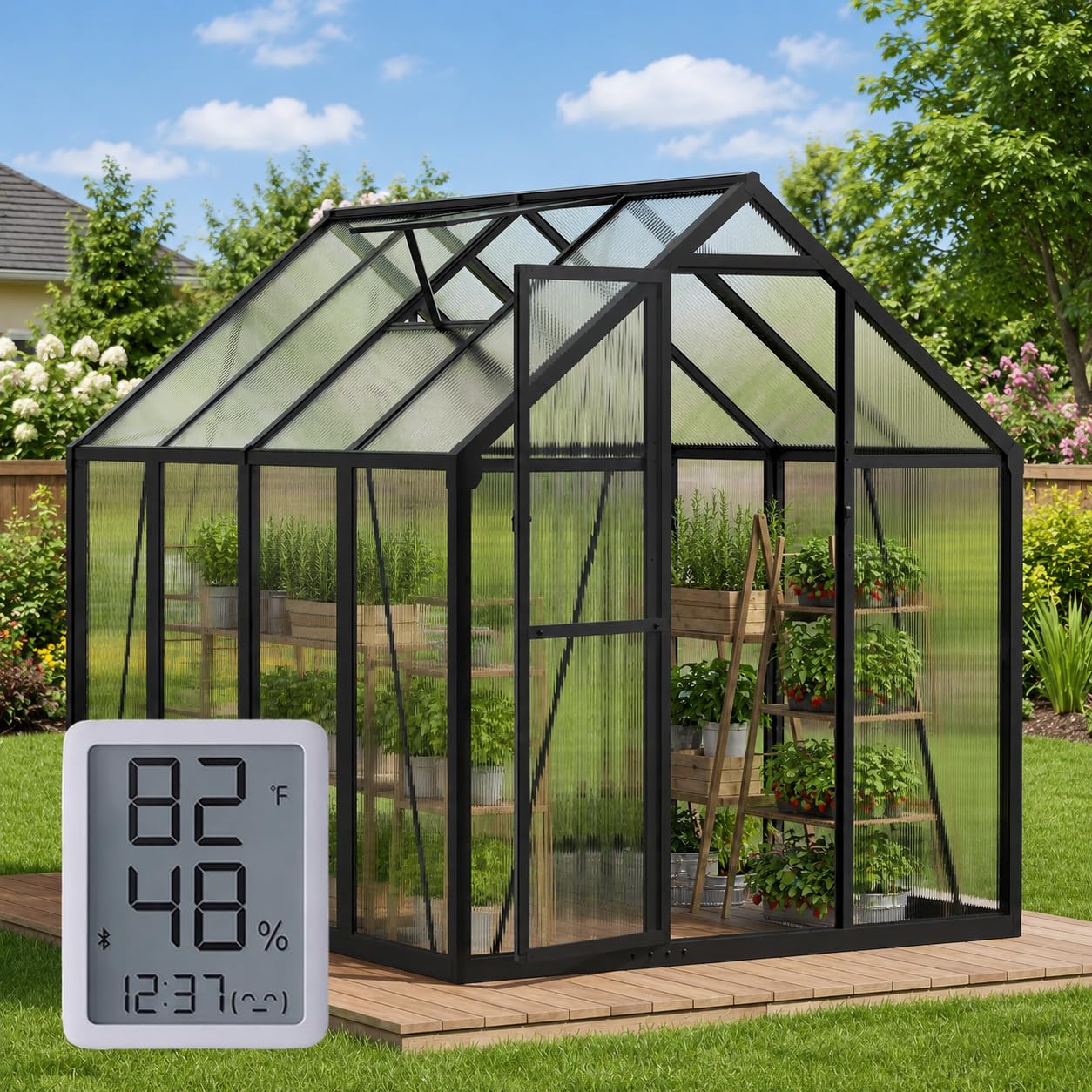
4. 6X7.5FT Enhanced Aluminum Greenhouse with Thermometers, WUKHG
A compact design that packs surprising interior room and a built-in thermometer.
The WUKHG greenhouse uses 4mm thick, 580g twin-wall polycarbonate panels that are shatter-resistant and block harmful UV rays while controlling humidity and temperature. The aluminum frame is reinforced with high-quality alloy, and the structure spans 66.53 inches wide by 88.18 inches long — a footprint that feels larger than the numbers suggest because the layout is oriented for depth. The included electronic thermometer is mounted inside, so you always know the temperature at a glance without having to buy and install an external gauge.
Buyers repeatedly call this greenhouse well-made and durable, with one owner noting it hasn’t blown away through multiple storms. The compact interior is still roomy enough for shelving units and multiple pots, making it a practical greenhouse for extending the growing season without taking over the entire yard. The lockable sliding door and single roof vent provide adjustable airflow.
Keeps plants safe
- Sturdy aluminum frame withholds rain and wind
- Built-in thermometer is a convenient extra feature
- Compact footprint fits smaller yards without crowding
- Twin-wall panels maintain warmth and diffuse sunlight
Needs attention
- Assembly can be tricky — most recommend having three people available
- One owner reported the roof window blew out on the first night; caulking the panels during assembly helps prevent this
- Heat retention drops noticeably after sunset — not ideal for overnight frost protection without a supplemental heater
Best for small-yard growers: The 6×7.5 footprint fits tight spaces while still allowing you to walk inside and tend plants. A few owners caution that the thermoplastic window panels need careful sealing during setup to stay secure in wind.
5. HOOYEAH 6×8 FT Polycarbonate Greenhouse
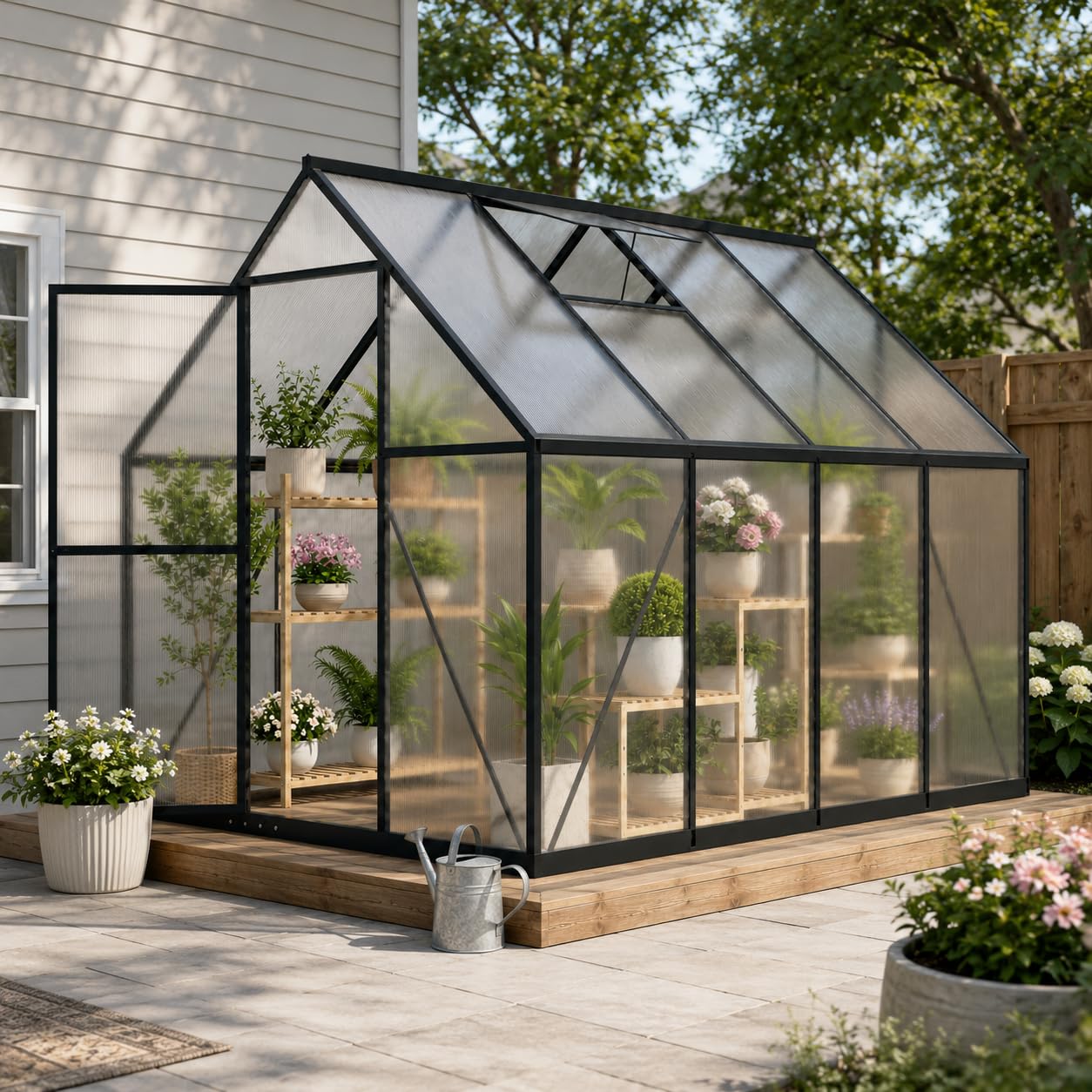
Milky white polycarbonate panels that diffuse sunlight for healthier, more even growth.
The HOOYEAH greenhouse stands out because its polycarbonate panels are semi-translucent and milky white rather than clear. This creates a soft-light environment inside that is ideal for vegetables, herbs, and flowers — the diffused light reaches lower leaves more evenly and reduces the risk of sunscald on tender seedlings. The panels block harmful UV rays while the upgraded aluminum frame with reinforcement bars provides long-lasting stability. At 70.87 by 95.55 inches, the 6×8 FT footprint offers generous shelf space for multiple growing trays and pots.
Build quality is the most-praised aspect here, with owners impressed by how well the panels fit into the frame. One owner reported that a massive storm with 80 mile per hour winds hit the day after setup — the greenhouse was still standing. That kind of real-world wind resistance comes from the snug-fitting panels and the reinforced frame design. The lockable door and single adjustable roof vent give you control over airflow, though the panels are not fully transparent, so you will rely on the door opening for the brightest light on cloudy days.
Assembly note: The kit comes with numbered parts and can be assembled in a single day by one person with basic skills, according to several owners. The instruction manual has minor snags — double-check the reinforcement bar installation against the diagram. The manufacturer recommends placing this greenhouse in partial wind protection, such as near a fence or wall, rather than in a fully exposed location. One experienced builder found the panels snug but manageable, and applied silicone caulk along the frame edges for extra weatherproofing.
Best for soft-light lovers: The milky white panels create an evenly lit interior that sensitive plants love. skip it if you need full transparency — the panels are intentionally translucent, not clear.
6. Outsunny 6′ x 6′ Greenhouse for Outdoors
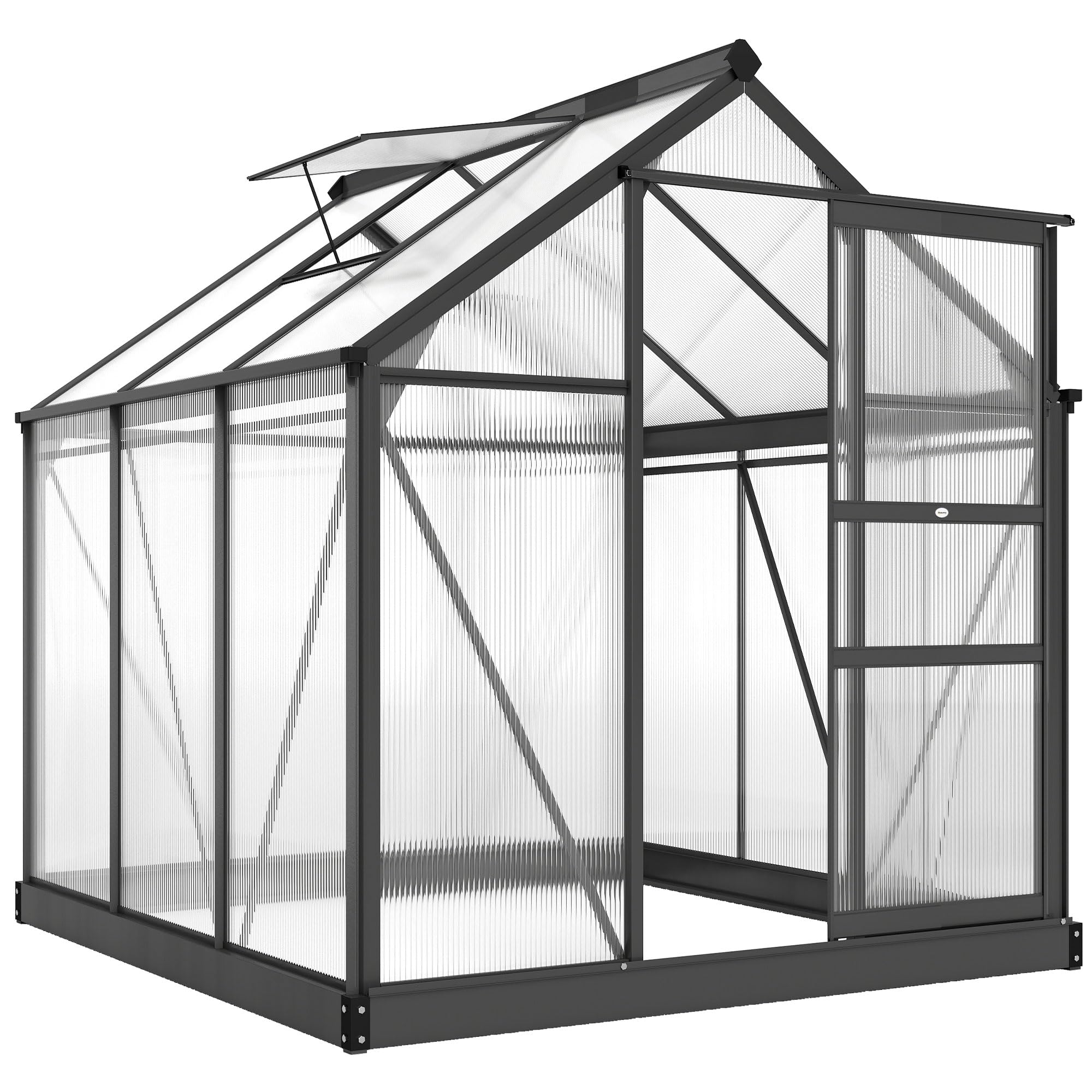
A rain-gutter system and 79-inch height make this a practical, upright walk-in greenhouse.
The Outsunny greenhouse measures 74.75 by 75.5 inches with a 79.25-inch interior height — notably taller than most 6×6 kits, which usually top out at 77 inches. That extra couple of inches makes a real difference when you are standing inside reaching for hanging baskets or top shelves. The powder-coated aluminum frame resists water damage, and the built-in rain gutters let you collect water for your plants, reducing your watering workload during dry spells. A galvanized steel base adds reinforcement at ground level.
Appearance is the top positive takeaway — owners consistently say it looks good in the yard. The sliding door glides open for easy access with tools and planters, and the hinged roof vent allows hot air to escape at the peak. At 63.9 pounds, this is one of the lighter full-size greenhouses, so anchoring is especially important here.
What works well
- Tall 79.25-inch interior height for comfortable standing access
- Rain gutter system collects water for irrigation
- Galvanized steel base adds ground-level rigidity
- Powder-coated aluminum frame resists corrosion
Where it frustrates
- Assembly is the most-discussed challenge — picture-only instructions can be confusing
- Durability concerns are common; some report panels blowing out in moderate wind
- Best placed against a wall or out of direct wind for added stability
Best for tall gardeners: The extra interior height and integrated gutters make this a practical daily-use greenhouse for those who spend real time inside tending plants. Not the pick if you face regular high winds without a sheltered placement.
7. 8 x 10 FT Outdoor Polycarbonate Greenhouse, Jiliusure
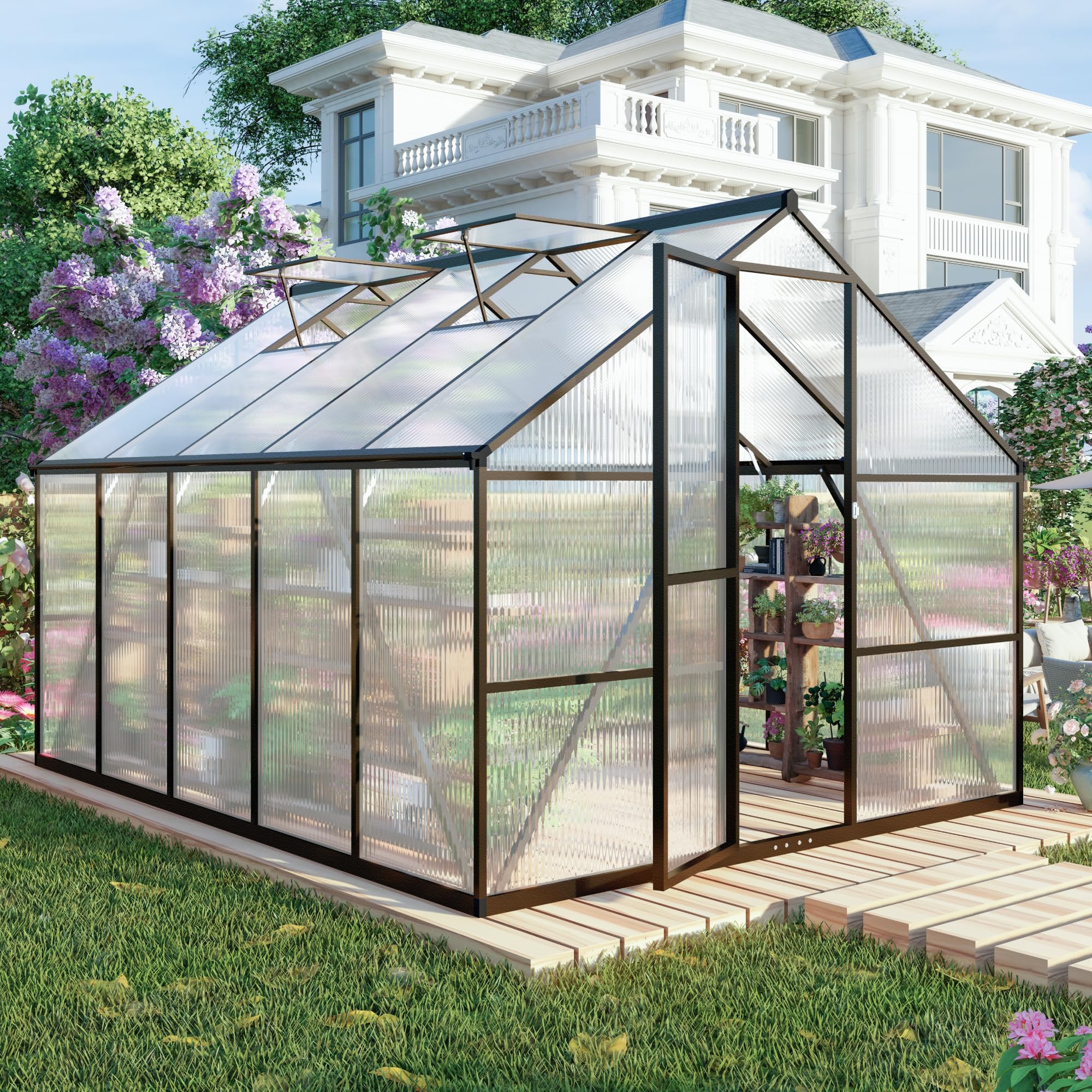
An 8×10 interior with dual roof vents that creates a true plant-growing paradise.
The Jiliusure greenhouse is built for gardeners who need real space. At 119 inches long by 97 inches wide, this is one of the largest walk-in kits on the list, and the 77-inch height keeps headroom comfortable. The frame is a sturdy matte dark gray aluminum alloy paired with high-strength, shatter-resistant polycarbonate panels. Two roof vents provide proper cross-ventilation — a feature that matters when you are managing temperature across a larger growing area. The patented rainwater gutter system directs runoff away from the base.
Owners consistently praise the quality, stability, and how the greenhouse fits smoothly into backyard landscapes. The manufacturer claims the structure can handle temperatures from -4°F to 140°F, and the panels transmit over 90% of natural light while blocking harmful UV rays. Assembly is designed for two DIY enthusiasts to complete in about three hours, according to the instructions.
Real size note: A few owners noted the actual floor dimensions are slightly smaller than the product title suggests — approximately 5.5 feet by 5.5 feet rather than a full 6×6. Measure your intended footprint carefully before purchase. The sliding panels system makes assembly manageable, and the included step-by-step manual with both images and text is a cut above the picture-only instructions found on many kits. A single owner cautioned against letting snow build up on the roof, which is smart advice for any flat-roof greenhouse.
Best for serious growers: The dual vents and broad footprint give you temperature control and shelf space that smaller kits cannot match. Measure first — the floor space is generous but not as large as the overall dimensions might suggest.
8. YITAHOME 6x16FT Polycarbonate Greenhouse
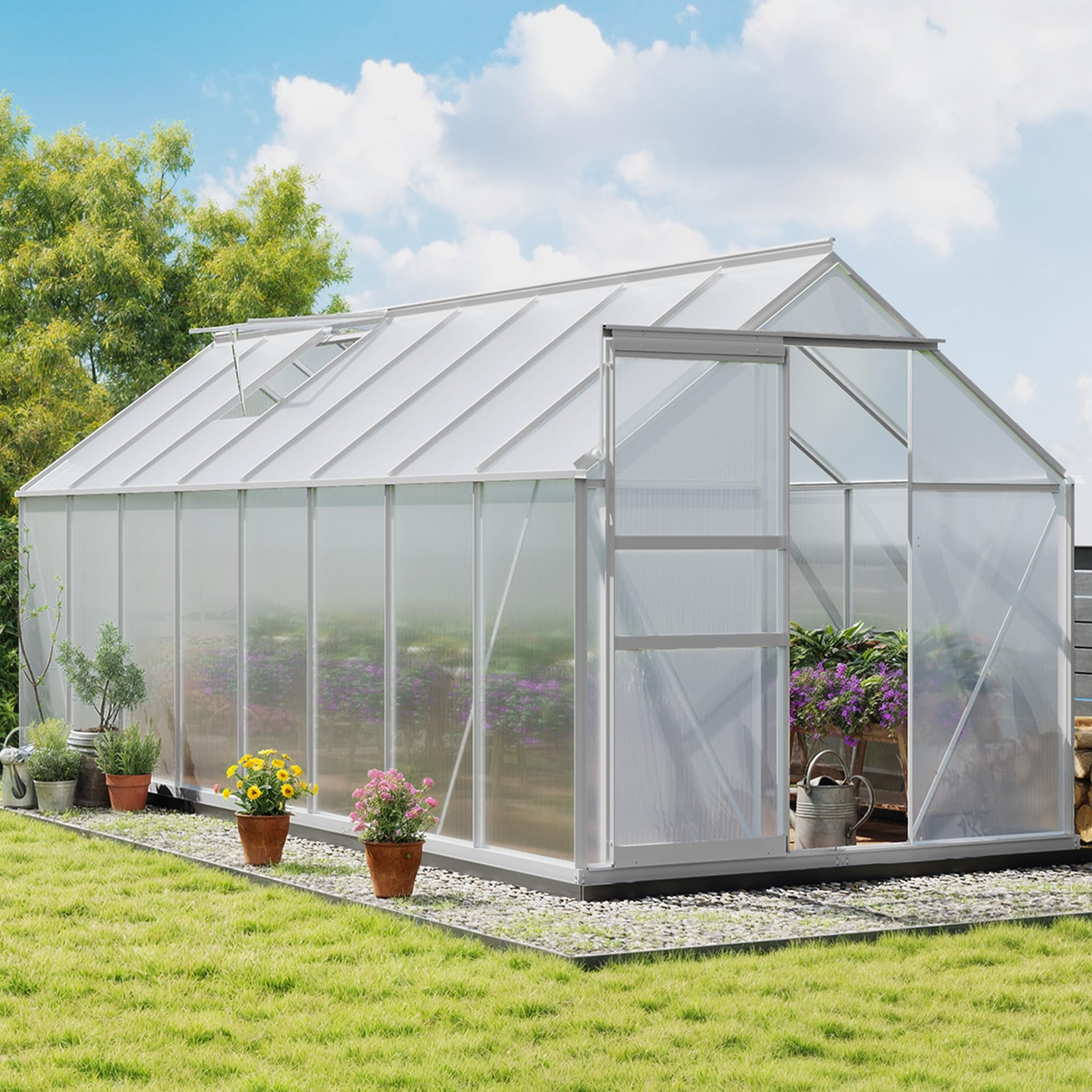
A 16-foot growing tunnel with two adjustable skylights and 99% UV blockage.
The YITAHOME 6×16 greenhouse is built around a long, narrow footprint — 192 inches long by 72 inches wide — making it a natural fit for a side yard or along a fence line. The aluminum alloy frame is reinforced with side rods and diagonal fixation for extra rigidity, and the double-wall polycarbonate boards are 4mm thick with UV protection that blocks 99% of UV radiation. Two adjustable skylights with various opening angles create an effective air circulation system that is noticeably better than single-vent designs for keeping temperatures even across the full length of the structure.
The sliding door saves interior space, and owners appreciate how roomy the greenhouse feels for medium-sized gardens. The frame quality draws positive feedback, with one customer specifically highlighting the metal rods that add stiffness. At 108.6 pounds, this is one of the heavier kits, which translates to a more solid feel once assembled.
Assembly expectations: The instructions are picture-based, and two experienced builders reported spending about 10 hours on assembly. The panels fit snugly but some owners recommend applying silicone sealant to each panel edge during installation rather than waiting until the whole structure is built. The top tilt-angle design sheds rain effectively. The manufacturer recommends placing the frame in a pre-dug trench and securing it with the included expansion screws for maximum wind resistance — this is not a greenhouse you can just sit on grass and expect to stay put.
Best for narrow lots: The 16-foot length gives you serious growing capacity in a strip-shaped yard where a square greenhouse would not fit. Expect a multi-day assembly project — skill and patience are required.
9. YITAHOME 12x6FT Polycarbonate Greenhouse
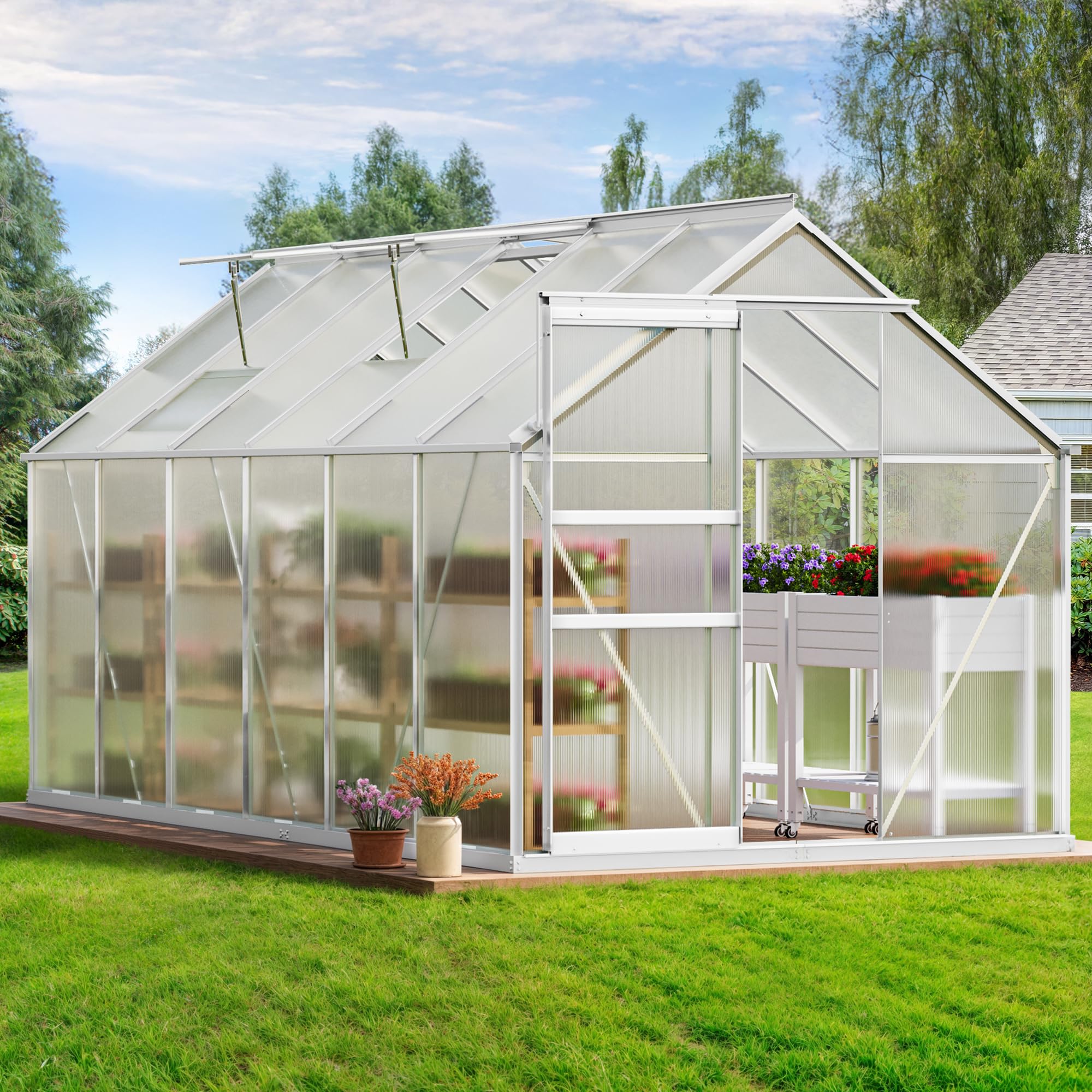
A 12-foot barrel-roof greenhouse that feels larger than its footprint suggests.
This YITAHOME model shares the reinforced aluminum frame and 4mm double-wall polycarbonate construction with its 16-foot sibling, but in a 144-inch length that fits standard garden beds. The barrel roof design is the standout feature here — the curved profile sheds rain and snow more effectively than flat roofs, and owners say it makes the interior feel noticeably larger than the straight-wall dimensions would indicate. Like the 16-footer, this greenhouse uses two adjustable skylights for ventilation and a sliding door for space-efficient access.
Assembly takes two people and the instructions are picture-based, but buyers consistently rate this greenhouse as easy to assemble and functional for the money. The frame quality supports year-round use, and the 99% UV protection from the 4mm panels keeps plants safe from sun damage. Several owners have reported that the structure remains durable through stormy seasons, with one noting it held up well through two years of summer and winter weather.
Practical details: At 93.7 pounds, this is lighter than the 16-foot version but still solid enough to need anchoring. The sliding door glides smoothly, and the two skylights are adjustable to different angles. A few owners experienced off-center holes on some pieces, which required a bit of adjustment during assembly, but the overall structure feels solid once fully tightened. The barrel roof sheds snow well, though removing heavy accumulation is still recommended as a precaution. The greenhouse is shipped in two separate packages that may arrive on different days, so plan for that.
Best for bed-sized gardens: The 12-foot length with a barrel roof gives you generous growing space and good weather shedding in a package that is easier to assemble than the longer 16-foot model. pass on it if you need a square layout — this one is deliberately long and narrow.
10. Palram Canopia Hybrid Lean-To 4′ x 8′ Polycarbonate Greenhouse

A lean-to kit designed to attach to a house wall, chosen as Best Overall Greenhouse Kit of 2024 by Better Homes and Gardens.
Palram’s Hybrid Lean-To greenhouse uses two panel types instead of one: virtually unbreakable twin-wall polycarbonate on the roof to block strong sunlight, and crisp polycarbonate on the walls that provide over 90% light transmission. This dual-panel approach gives you UV-blocking overhead protection with maximum brightness from the sides. The powder-coated aluminum frame with a galvanized steel base is built for long-term outdoor use, and the lean-to design lets you place it flush against the side of your house, garage, or shed — saving yard space and taking advantage of your home’s thermal mass for slightly warmer nighttime temperatures.
The French doors open wide for easy access, and a magnetic door catch holds them open on warm days. The built-in gutter system channels rainwater, and the adjustable roof vent balances humidity and temperature. Appearance and functionality are the top positive aspects, with owners consistently reporting good looks and effective plant protection.
Smart design choices
- Lean-to configuration saves yard space and benefits from house-wall warmth
- Twin-wall roof panels plus crisp wall panels tune light balance
- Galvanized steel base adds structural stability
- Magnetic door catch and lockable handle for flexible access
Assembly notes
- Instructions are a frequent pain point — some owners find them vague and picture-only
- Panels feel thin to some; anchoring is essential for wind resistance
- The 4×8 footprint is compact; consider if you need more interior room for shelving
Best for tight side-yard spaces: If you have a blank wall and want a greenhouse that does not take over the yard, this lean-to design is the smartest use of real estate. Pass if you cannot bolt the base securely to a solid surface — the structure needs anchoring to reach its full stability potential.
Understanding the Specs
Polycarbonate Panel Weight (g/m²)
This number tells you how dense the plastic panels are. A higher gram weight — like 720g/m² versus 580g/m² — means the panels are thicker and more impact-resistant. Denser panels also insulate better, keeping your greenhouse warmer on cold nights and cooler during peak sun. If you face hail or heavy snow, aim for 720g panels.
UV Coating and Light Transmission
A UV coating on the polycarbonate surface blocks harmful radiation while still letting visible light through so plants can photosynthesize. Some panels are fully clear (over 90% light transmission), while others are milky white or diffused. Clear panels are best for maximum sunlight; diffused panels reduce hotspots and leaf burn for sensitive seedlings.
Number of Roof Vents
Hot air rises, so roof vents are the most effective way to release built-up heat. A single vent works for greenhouses up to about 8 feet long. Two vents create cross-ventilation that keeps temperatures more even across the entire interior — a worthwhile upgrade for longer structures or if you grow heat-sensitive crops like lettuce or tomatoes.
Aluminum Frame vs. Steel Base
Aluminum frames are standard because they will not rust, but not all aluminum is the same gauge. Heavier frames with diagonal or reinforced rods resist twisting and sagging. Some kits add a galvanized steel base at ground level — steel is stronger than aluminum but heavier, and the galvanized coating prevents rust. A steel base is a mark of a more durable structure.
FAQ
Do I need to anchor my polycarbonate greenhouse or can it sit on the ground by itself?
Will polycarbonate panels turn yellow or become brittle over time?
How thick should polycarbonate panels be for year-round outdoor use?
Can I assemble a hard plastic greenhouse by myself or do I need help?
How do I keep the greenhouse from overheating on a sunny day?
What is the difference between a walk-in greenhouse and a mini greenhouse?
Should I place my greenhouse in full sun or partial shade?
How do I seal the gaps between polycarbonate panels and the frame?
Final Thoughts: The Verdict
If you want one dependable pick, the hard plastic greenhouse winner is the Sylviera 6x4FT because its twin vents, built-in hygrometer, and 4mm twin-wall panels give beginners a weather-ready structure at a realistic price — and owners confirm it survives heavy rain without leaks. If you want the densest panel protection available, grab the FLY BY YAN 6x6FT with its storm-tested 720g/m² build and reinforced aluminum frame. And for gardeners with a blank house wall who need a space-efficient option that was chosen by Better Homes and Gardens as a top-rated kit, the Palram Canopia Lean-To is the one to reach for.
How We Picked
We do not accept paid placement. Every pick is matched to a real buyer and a real use-case; we do not hands-on test units.
Sources & Methodology
Specifications: manufacturer listings and product documentation. Review insights: verified customer reviews, as of July 2026. Pricing: not shown on this page (it changes often); check the current price via the retailer link.
As an Amazon Associate, Lawn Gear Lab earns from qualifying purchases. This does not affect which products we feature.