
Specs are compiled from manufacturer listings and verified buyer reviews and can change over time — please confirm the key details on the product page before buying.
Most bagged soil is just brown filler — heavy, weedy, or so loaded with wood chips your plants starve before they sprout. The right container mix should do three things on its own: drain sharply so roots never rot, hold enough moisture so you are not watering twice a day, and deliver steady food for weeks without you reaching for a fertilizer bottle. This guide cuts through the marketing to the nine mixes that actually deliver on that promise, from budget-friendly bags to premium blends that outperform anything at the big-box store.
I’m Rikta — the founder and writer behind Lawn Gear Lab. This guide is built by comparing the manufacturers’ published specifications and the patterns across verified customer reviews, so you get each pick’s real strengths and trade-offs instead of marketing spin.
If you repot a single tomato or fill a dozen patio planters, knowing the difference between cheap filler and real soil makes the difference between a season of thriving harvests and a season of disappointment. That is why you need the best garden container soil — and this guide shows you exactly which bag to grab and why.
Our Picks at a Glance

How To Choose The Best Garden Container Soil
Every bag promises “premium,” but three specs separate the real stuff from the filler. Check the volume — a 6-quart bag will barely fill two 8-inch pots, while a 16-quart bag handles a serious patio planter. Look at the ingredient list for perlite (the white volcanic rock that keeps soil from compacting into a brick) or vermiculite (a mineral that holds water like a sponge). And cross-check the organic listing — OMRI or similar means no synthetic chemicals were used, which is crucial if you are growing food you plan to eat.
Volume vs. Weight
Bigger bag sounds better until you carry a 50-pound wet brick across the yard. A 20-quart light mix (heavy on peat and perlite) can weigh 14 pounds; a 20-quart blend heavy on sand can hit 40 pounds. For containers on a second-floor balcony, go with the lighter, fluffier option. For in-ground top-dressing, heavier holds moisture longer.
Organic Ingredients That Feed
Cheap soil has just peat moss and a splash of fertilizer — fine for two weeks, then your plant goes hungry. Good soil comes with slow-release meals: alfalfa meal, kelp meal, lobster-crab shell meal, or worm castings. These break down over months so your basil, peppers, or petunias keep getting a steady snack without you measuring liquid feed every weekend.
Drainage and Aeration
Roots need air as much as they need water. The white flecks you see (perlite) are there to stop the mix from turning into mud. If the bag has no perlite and no coarse sand or coco coir, the soil will compact after a few waterings. That means stunted roots, yellow leaves, and struggles from day one.
Quick Comparison
| Model | Best For | Volume | Item Weight | Features | Amazon |
|---|---|---|---|---|---|
| Coast of Maine Bar Harbor Blend★ Best Overall | Best Overall | 16 qt | 14 lb | Lobster & kelp meal, perlite | Amazon |
| Back to the Roots Peat-FreeBudget Value | Budget Value | 6 qt | 4.4 lb | Peat-free, worm castings | Amazon |
| Midwest Hearth Premium MixSeed Starter | Seed Starting | 8 qt | 2.76 lb | Peat, perlite, vermiculite | Amazon |
| Espoma Organic Potting Mix | Indoor Containers | 8 qt | — | Myco-tone, worm castings | Amazon |
| Michigan Peat BACTTO | Volume Fill | — | 50 lb | Reed sedge peat, starter fertilizer | Amazon |
| Coast of Maine Tomato & Veggie | Tomato Beds | 20 qt | 21 lb | Composted manure, peat moss | Amazon |
| Miracle-Gro Potting Mix (3pk) | Balanced Growth | 8 qt | — | Feeds up to 6 months | Amazon |
| Miracle-Gro Moisture Control | Forgetful Waterers | 2 cu ft | 40.5 lb | AquaCoir, up to 6 months feed | Amazon |
| Brut Organic Potting Soil | Premium Microbes | 1 cu ft | — | Worm castings, Azomite, OMRI | Amazon |
In‑Depth Reviews
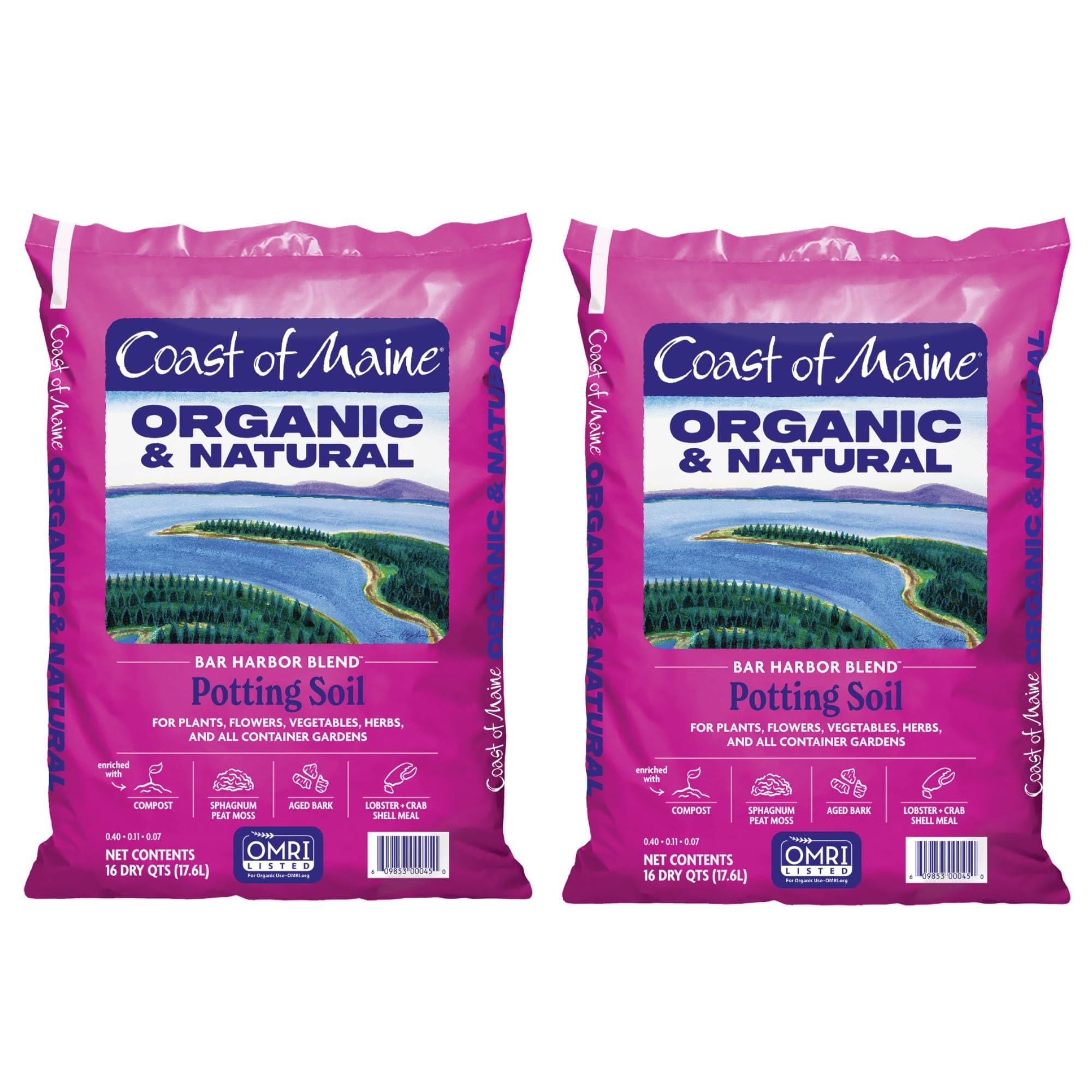
1. Coast of Maine Bar Harbor Blend Potting Soil
Our pick — over 4.5★ from 550+ verified ratings; the strongest balance of quality and price.
The 14-pound bag that feeds containers like nothing else on the shelf.
This is the soil you reach for when you want tomatoes that actually taste like summer and flowers that bloom until frost. The blend packs sphagnum peat moss, compost, perlite, lobster and crab shell meal, and kelp meal — a lineup that delivers steady slow-release nitrogen so your plants keep eating for weeks. At 16 quarts, you have enough to mound up eight potato plants with extra left for two more planters, as buyers report. The 14-pound weight per bag hints at the density and richness inside.
What wins people over is the quality — the single most-discussed aspect by a wide margin. The mix is dark, almost black, meaning high compost content and low peat, and there are no sticks or weed seeds hiding inside. One long-time grower who swore by a certain “top brand” says they will never go back. Another confirms that leaves turn a deep green within days. The catch is the price — at the premium end for a 16-quart bag — and a minority saw mixed results on pest resistance in hot, humid conditions.
What Owners Love
- Pre-mixed nutrients for vegetables — ready to use right from the bag
- No unwanted weeds sprouting from the soil
- Rich, dark color means high compost content and lower peat moss
The Trade-Off
- Premium pricing — a better buy for serious gardeners than casual one-pot shoppers
- Fungus gnats have appeared in a small share of bags in humid climates
Who It Suits: Gardeners who want the highest-rated mix for vegetable containers, raised beds, and indoor pots and are willing to pay for proven results.
Consider Another If: You need a huge volume for many planters — the bag size is premium, not bulk.
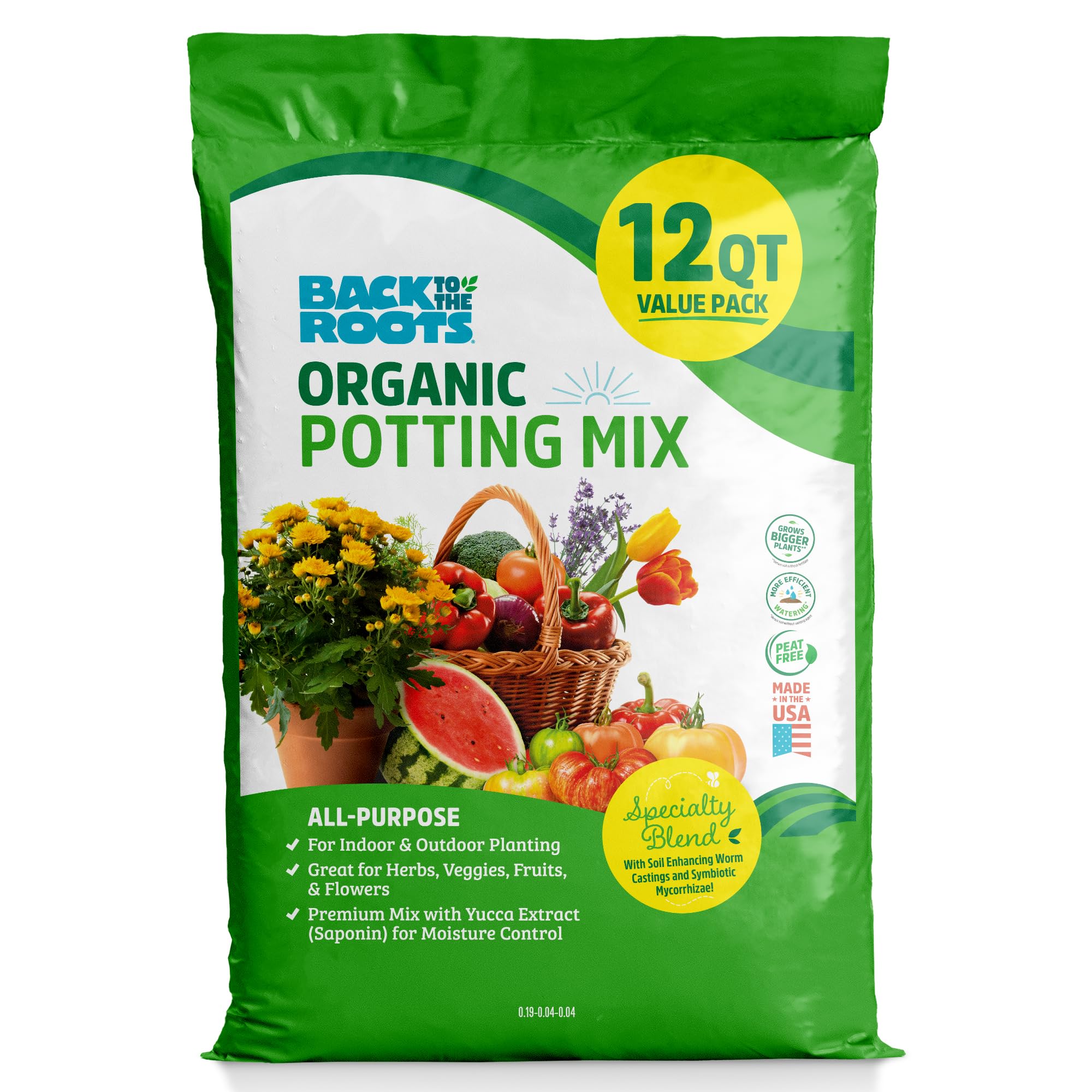
2. Back to the Roots All-Purpose Potting Mix
A peat-free 4.4-pound mix that punches well above its weight class.
This is the first premium peat-free potting soil on the market, and it proves you do not need mined peat to grow strong plants. The secret is coconut coir for moisture, yucca extract to help roots absorb water, and mycorrhizae (a beneficial fungus that attaches to roots and pulls in more nutrients). Dolomitic limestone balances the pH, so your tomatoes or basil get a neutral home right from the start. The 6-quart bag is small — buyers call it “just what I need for @24 pots” — but the 4.4-pound weight tells you it is light, not waterlogged filler.
Buyers who grab three bags for a single project love the value and the fact that the soil already contains “mulch” for aeration. The main note: the mix contains larger bark particles that are not ideal for tiny seeds — use a finer starting mix for seedlings, then transplant into this. For herbs, flowers, and veggie containers, it is a standout entry-level option.
The biggest win: Peat-free means it is better for the planet — mined peatlands release CO2 equal to cars worldwide. Your container garden thrives, and the carbon footprint shrinks. Downside: The bag is small, so you will likely buy two or three for a single large planter.
Ideal For: Eco-conscious gardeners who want organic ingredients without peat and are working with a few pots or window boxes.
Think Again If: You need a massive bag for raised beds — go for a bulk option instead.
3. Midwest Hearth Premium Potting Soil Mix
Balanced pH and a light fluffy texture that seedlings root into fast.
This mix is the same formulation professional growers use — peat moss, perlite, and vermiculite in precise ratios to balance aeration and moisture. The pH is controlled, so it works for a broad range of plants without locking out nutrients. At 8 dry quarts and a light 2.76 pounds, it is the fluffiest bag here, meaning air reaches the root zone easily and water drains quickly. One buyer germinated petunias in it and called it “great for my germinating petunias,” noting the resealable bag is easy to store.
The main praise focuses on the mix’s ability to stay loose — it “does not appear to harden around the roots” — and on the fact that it contains zero weeds or bugs. A few note the 8-quart bag feels small, and the price per quart is higher than bulk mixes. For starting expensive herb or flower seeds indoors, this precision blend is tough to top.
Standout Feature: The triple blend (peat, perlite, vermiculite) gives you both moisture retention AND drainage, which is rare in a single bag. The price per quart is higher, so this is a specialist tool, not a bulk buy.
Perfect For: Starting seeds indoors and transplanting delicate starters into a controlled, sterile environment. Not For: Filling large patio containers — go for a bigger volume bag.
4. Espoma Organic Potting Soil Mix

Myco-tone-enriched blend that your indoor African violets will visibly thank you for.
Espoma packs this 8-quart bag with sphagnum peat moss, humus, perlite, earthworm castings, alfalfa meal, kelp meal, and feather meal — a lineup that feeds from the first watering. The secret ingredient is Myco-Tone, a proprietary blend of endo and ecto mycorrhizae that attach to roots and dramatically expand their reach for water and nutrients. One owner transplanted an African violet into this mix and reported it “responded very well” — rapid new growth within a week.
The soil quality is the top-praised aspect, and multiple users note how quickly their plants turned green and took off. The catch is a split verdict on germination — some seeds failed to sprout, suggesting the mix may be too rich for delicate seedlings. Several also reported fungus gnats in the bag, a known risk with organic blends. Best used for mature indoor plants and transplants rather than starting seeds from scratch.
The Upside
- Myco-tone mycorrhizae supercharges root growth
- Rich blend of worm castings, kelp, and alfalfa meal for steady feeding
The Downside
- Bag can arrive very dry — rehydrate before potting
- Fungus gnats have been reported in some bags
Best For: Indoor containers and houseplants that need a nutrient-rich, organic boost. Skip For: Large outdoor beds where volume matters more than special ingredients.
5. Michigan Peat BACTTO All Purpose Premium Potting Soil

The 50-pound workhorse that gardeners of 50 years trust for hundreds of plants.
This is the old-school standard — rich dark reed sedge peat, perlite, and sand blended with starter and slow-release fertilizers already inside. No mixing, no guesswork. A single 50-pound bag is heavy, but that weight translates to serious volume for containers, raised beds, and large planters. Owners who have gardened for 50-plus years say it is “the best potting soil we have found,” growing over 200 dozen flowers each season. The quality and value-for-money are the top-praised aspects by a long shot.
The texture is heavier and wetter than modern fluffy mixes, so it can compact after watering and make it hard to judge moisture. It retains water without getting truly soggy, but fans of ultra-light mixes may miss the fluffiness. If you have dozens of pots and want one bag that does everything, this is it.
Why It Shines
- Gigantic bag — one purchase handles a massive container garden
- Decades of trust from serious gardeners who buy it again every year
Watch For
- Heavy and dense — not ideal for balcony planters where weight matters
- Moisture retention is mixed — some find it stays too wet
Best For: Gardeners filling many large pots who want a proven, affordable blend in a single massive bag. Not For: Seedlings or anyone who needs a light, fluffy, fast-draining mix.
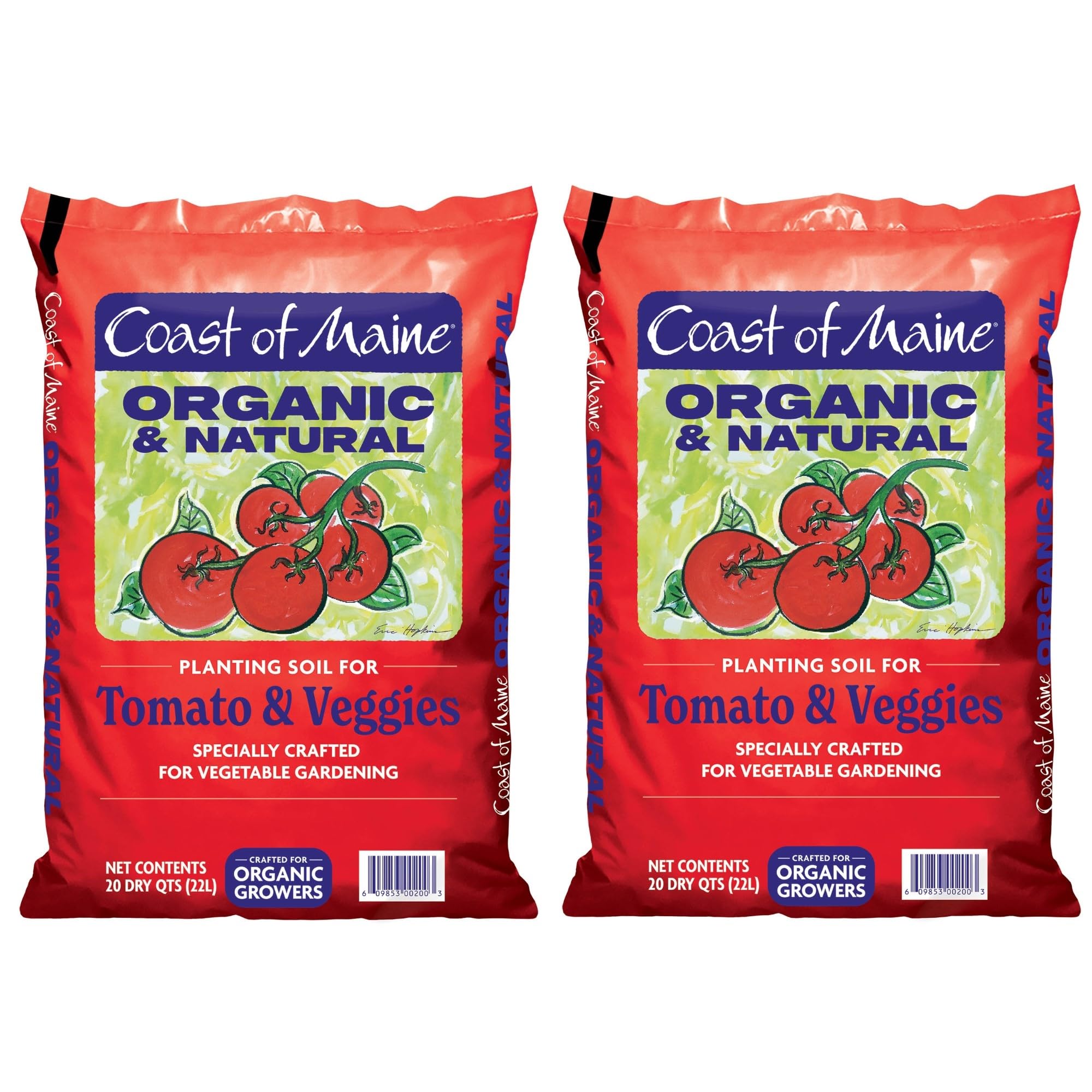
6. Coast of Maine Organic Planting Soil for Vegetables & Tomatoes
Lightweight compost blend that your heirloom tomatoes will visibly outgrow their pot for.
Specifically crafted for tomatoes and vegetables, this 20-quart bag combines composted manure and sphagnum peat moss to strike the balance between moisture retention and drainage. At 21 pounds, it is light enough to carry up stairs but dense enough to feed hungry tomato roots all season. One grower saw “visible growth days after transplanting” and calls it the best for heirloom tomatoes that demand sharp drainage. The bag also contains aromatic wood to deter insects naturally.
The soil quality and plant health are the most-praised aspects — 51 and 31 mentions, respectively. The catch: 19 buyers reported fungus gnats or mold, a known issue with compost-heavy soils in humid environments. Also, it may contain small undecomposed twigs that need picking out for fine-root crops like carrots. Overall, if you are planting tomatoes, peppers, or squash in containers, this is the premium pick.
Best Use: One bag per 5-gallon container for tomatoes — the lightweight texture lets roots breathe. Warning: Open the bag outdoors and let it air out if you are sensitive to fungus gnats.
Ideal For: Dedicated vegetable gardeners who want a compost-rich, lightweight mix that drains well. Consider Another: If you are growing seeds or microgreens — the twigs can be a nuisance in fine soil.
7. Miracle-Gro Potting Mix (3-Pack)

The household name that grows plants twice as big — and feeds them for half a year.
Miracle-Gro’s classic potting mix has been the go-to for casual container gardeners for decades, and this three-pack gives you three 8-quart bags in one order — enough to fill six 8-inch containers. The soil contains a built-in fertilizer that feeds all types of potted plants for up to 6 months. That means you can plant your annuals, perennials, vegetables, or shrubs and not think about feeding again until fall. The quality and plant health are the most-praised aspects, and owners consistently say their plants “love it and they are growing very well.”
The bag size is the recurring point of discussion — the 8-quart bags are small, so a pack handles a modest number of pots. Some also find the value-for-money middling compared to bulk options. But for convenience, a single order that arrives at your door and feeds plants for half a year is tough to top.
Biggest Perk: The 6-month fertilizer means zero maintenance after potting — just water. Downside: The 8-quart bags are small, so you may need multiple packs for a large container garden.
Best For: Casual gardeners who want a reliable, all-in-one mix without measuring fertilizer. Not For: Organic purists — this contains synthetic fertilizer.
8. Miracle-Gro Moisture Control Potting Mix (2 cu. ft.)

The AquaCoir formula that absorbs 33% more water than basic soil — forgiving of forgetful watering.
If you are the type to forget a weekend watering, this 2-cubic-foot bag (weighing 40.5 pounds) is your insurance policy. The exclusive AquaCoir formula absorbs up to 33% more water than basic potting soil and protects against both over- and under-watering. The huge bag fills two 14-inch containers easily, and the built-in 6-month fertilizer means you plant and walk away. One buyer revived struggling pepper plants by transplanting them into this mix — the foliage greened, the growth exploded, and the fruit caught up.
The quality, plant health, and value for money are the top aspects — 58, 33, and 31 mentions respectively. Some owners find the high peat content keeps the soil wet for up to 8 days, which is too long for root-sensitive plants like succulents. Others have found the texture varies by season (finer in spring, chunkier later). For most flowers, vegetables, and shrubs, the forgiveness factor is a huge win.
Why You Will Love It
- Absorbs 33% more water than basic potting soil — a real buffer against dry spells
- Feeds plants for up to 6 months with no extra fertilizer
- Massive bag fills 2 large containers per purchase
Watch Out For
- High peat content can stay soggy for succulents or cactus
- Heavy bag at 40.5 pounds — have a plan to move it from the porch
Ideal For: Busy gardeners who want to cut watering frequency and get a full season of feeding from one bag. Not For: Plants that need sharp drying between waterings.
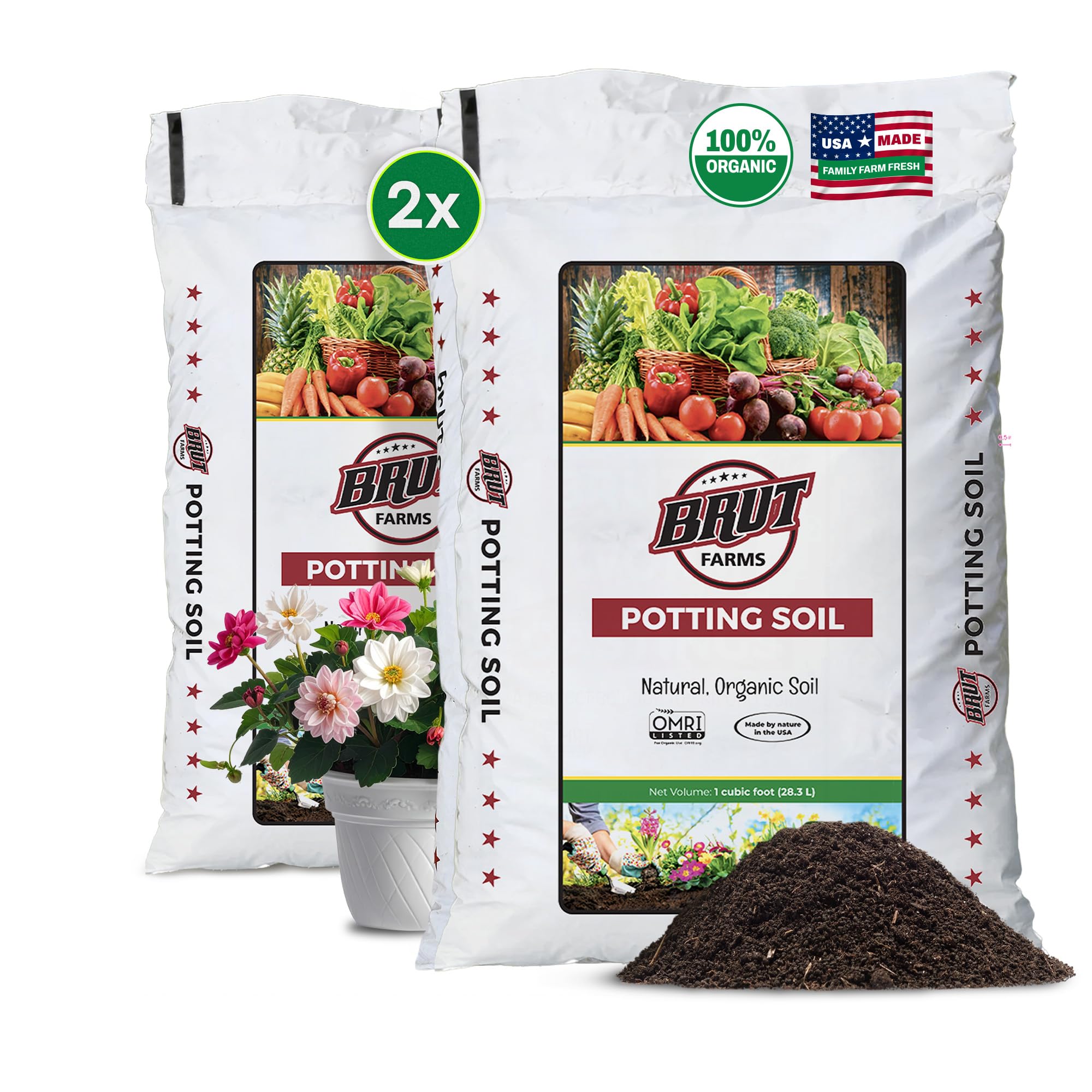
9. Brut Organic Potting Soil
The “black gold” that turns your citrus tree dark green in just 2 days.
Brut Organic Potting Soil is packed with microbe-rich worm castings and trace minerals like Azomite and kelp, feeding plants directly from the root level. The 1 cubic foot bag is OMRI listed for organic use, pH balanced between 6.3 and 6.5, and completely free of sticks, wood chips, and artificial additives. One owner watching their citrus and cherry trees saw “rapid deep greening and new growth in 2 days” — proof of how fast the biology wakes up. The soil quality and rich color (described as “black gold”) are the top-praised aspects.
The catch is the price — it is the highest per-quart soil here, and the value-for-money is mixed among buyers. Also, the richness in organic matter means it can attract flies and cause maggot infestation if left open outside, though owners note a layer of sand or gravel on top prevents that. If you are growing premium herbs, vegetables, or fruit trees in containers and want the best biological activity, this is the bag.
What Makes It Special
- 100% organic with worm castings, Azomite, and kelp — feeds soil biology, not just the plant
- Filler-free — no sticks, wood chips, or mystery ingredients
Keep In Mind
- Premium price — the highest cost per quart in this lineup
- Flies and gnats can appear if bag is left open outdoors — seal it after each use
Best For: Container gardeners who want the most biologically active soil for expensive plants or heirloom vegetables. Skip If: You are on a tight budget — this is a specialty product at a luxury price.
Understanding the Specs
Volume (Quarts vs. Cubic Feet)
Volume is how much space the soil fills, and it matters most. A 6-quart bag covers about two 8-inch pots. A 16-quart bag handles a medium planter. A 2-cubic-foot bag (roughly 60 quarts) fills two 14-inch containers. Always multiply the number of pots by their size before buying — running out mid-project is the most common frustration.
Organic vs. Synthetic Fertilizer
“Organic” means the nutrients come from natural meals (kelp, alfalfa, worm castings, bone meal) that break down slowly. “Synthetic” means manufactured salts that feed fast but can burn roots if over-applied. Organic is better for long-term soil health and edible gardens; synthetic is convenient for short-season flowers and shrubs where you just want quick growth.
Perlite, Vermiculite, and Peat Moss
Perlite (white volcanic rock) keeps soil loose so water drains and roots get air. Vermiculite (a mineral that expands when heated) holds water like a sponge and releases it slowly. Peat moss is the base of most potting mixes — it is light, holds water, and has a slightly acidic pH that most plants love. A good mix has all three in different ratios based on what you are growing.
Mycorrhizae and Myco-Tone
These are beneficial fungi that form a partnership with plant roots. The fungus attaches to the root surface and sends out a massive web of tiny filaments, dramatically increasing the root system’s reach for water and minerals. In return, the plant gives the fungus sugars it makes through photosynthesis. Premium soils add mycorrhizae to give your plants a biological head start.
FAQ
Can I use garden container soil for raised beds?
How many pots will a 6-quart bag fill?
What is the difference between potting soil and garden soil?
Does organic container soil really work better than synthetic?
How do I know if my container soil has too much peat?
Can I reuse potting soil from last season?
What is the ideal pH for container vegetables?
Why does my bag of potting soil have white specs on top?
Final Thoughts: The Verdict
For most buyers, the best garden container soil winner is the Coast of Maine Bar Harbor Blend because it delivers a proven, organic mix of lobster meal, kelp, and perlite that everyday gardeners and long-time growers both swear by. If you want a budget-friendly peat-free option, grab the Back to the Roots All-Purpose Potting Mix. And for a massive bag that forgives missed watering days, the Miracle-Gro Moisture Control Mix is the one to reach for — the crowd favorite with the most verified buyers backing its 24/7 moisture buffer.
How We Picked
We do not accept paid placement. Every pick is matched to a real buyer and a real use-case; we do not hands-on test units.
Sources & Methodology
Specifications: manufacturer listings and product documentation. Review insights: verified customer reviews, as of July 2026. Pricing: not shown on this page (it changes often); check the current price via the retailer link.
As an Amazon Associate, Lawn Gear Lab earns from qualifying purchases. This does not affect which products we feature.