
Specs are compiled from manufacturer listings and verified buyer reviews and can change over time — please confirm the key details on the product page before buying.
A garden border that curls up after a rain or pops loose at the first weed-whack is worse than no border — it is a weekend chore that never ends. The right plastic edging locks down without digging, bends around tight curves without snapping, and stays buried season after season. The trick is knowing which height, which stake, and which material actually deliver on that promise.
I’m Rikta — the founder and writer behind Lawn Gear Lab. This guide is built by comparing the manufacturers’ published specifications and the patterns across verified customer reviews, so you get each pick’s real strengths and trade-offs instead of marketing spin.
You need garden edging that stops grass from creeping into flower beds or holds river rock along a driveway. The best garden edging plastic must bend easily yet stay straight — and the 7 picks below cover every common need and budget.
Our Picks at a Glance

How To Choose The Best Garden Edging Plastic
Picking plastic edging is not about grabbing the longest roll. Three specs control whether your border stays put or becomes a project you have to redo next spring.
Height vs. Mulch Depth
The edging height needs to be at least as tall as the material you are holding back. A 1.5-inch strip will disappear under 2 inches of mulch, making it useless as a barrier. For standard beds with 2 to 3 inches of mulch, a 4-inch height gives you the above-ground wall you need without looking obtrusive.
Stake Quality and Quantity
Plastic spikes save money but snap when you hit a rock or dense clay — reviews across multiple brands confirm this. Metal spikes cost more but drive straight and hold longer. The rule of thumb is one stake every 2 to 3 feet; kits that skimp on stakes force you to buy more or risk wavy edges.
Material Flexibility
Pure polyethylene (PE) bends easily into tight circles around tree rings but can look wavy on long straight runs. High-density polyethylene (HDPE) holds a straighter line and resists sun damage longer. If your yard has mostly straight borders, lean toward HDPE. For curving beds, PE is easier to shape.
Quick Comparison
| Model | Best For | Height | Length | Stakes Included | Amazon |
|---|---|---|---|---|---|
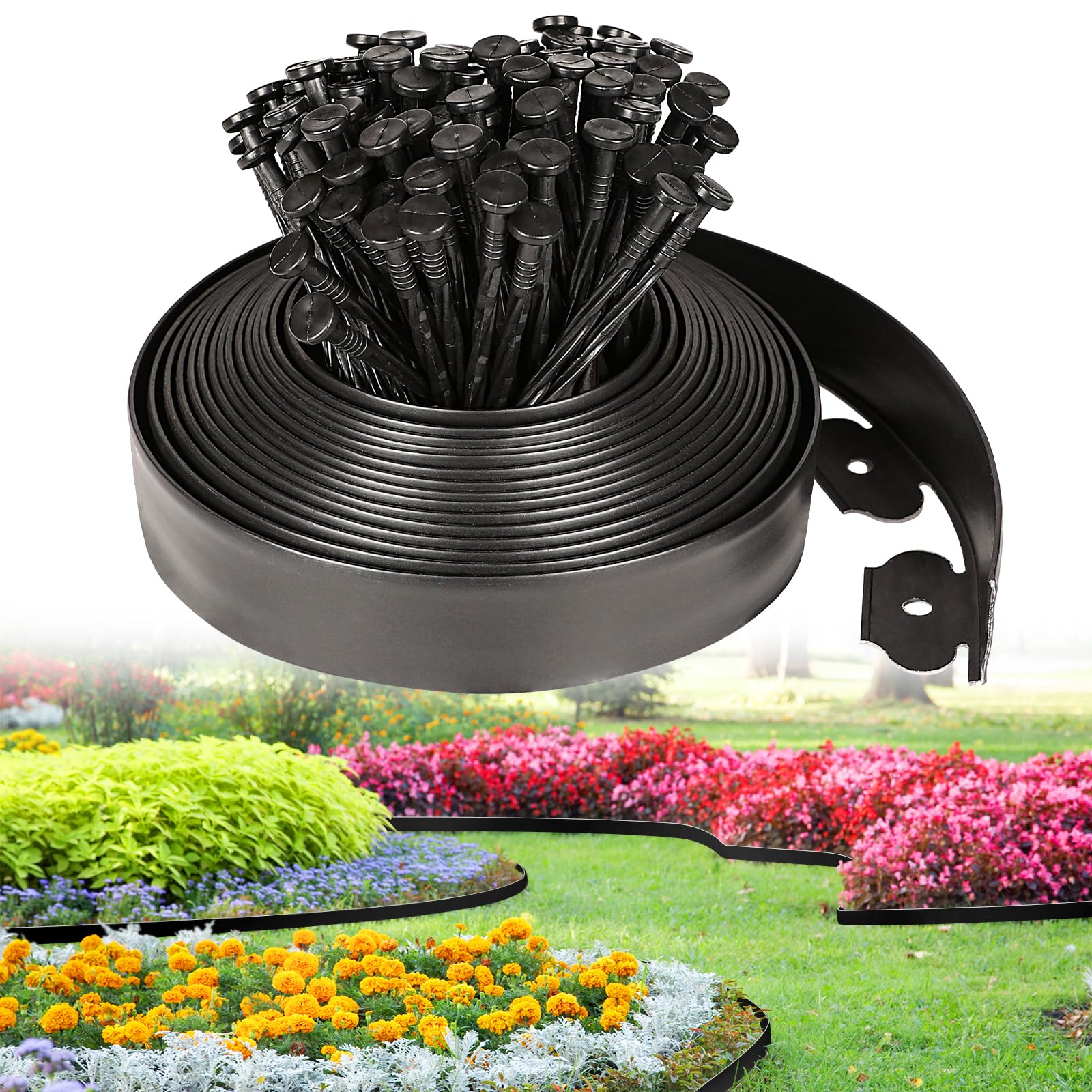
| JERIA 33ft Kit★ Best Overall | Easy curves on a budget | 2 in | 33 ft | 45 | Amazon |
| MASTER MARK Terrace BoardPremium Pick | Straight, rigid borders | 5 in | 40 ft | 10 | Amazon |
| Landscape Edging 33ft Extra Tall | Retaining mulch and rock | 4 in | 33 ft | 50 | Amazon |
| FunFanso 50ft Kit | Long, clean runs | 4 in | 50 ft | 75 | Amazon |
| AGTEK 60ft Coil | Versatile medium projects | 4 in | 60 ft | 18 | Amazon |
| Jorvila No Dig 100ft | Large beds with metal stakes | 1.5 in | 100 ft | 120 | Amazon |
| EasyFlex Tall Wall 100ft | Heavy rock and gravel retention | 2.5 in | 100 ft | 64 | Amazon |
In‑Depth Reviews
1. JERIA 2 Inch Tall 33 FT Garden Edging Kit
Our pick — 4.5★ from 500+ verified ratings; the strongest balance of quality and price.
The easy-install champion that bends around rose bushes without a fight.
This kit gives you 33 feet of 2-inch black edging plus 45 stakes — more spikes per foot than most kits at this level. Owners consistently praise how the plastic “sprang back when accidentally stepped on” after installation, a sign of decent flexibility in the material. The spikes themselves are the weak link here; several buyers report them bending or breaking during installation, especially in compacted soil. That said, the sheer count of 45 spikes means you can afford a few casualties and still secure the line every 10 inches or so. The 2-inch height is best for light containment around flower beds or pathways where you only need a subtle separation between grass and soil.
The crowd favorite here is the install simplicity — you do not dig, you just stake. Buyers handling hard clay soil found the “spikes easily penetrated” with a hammer, and the flexible plastic conforms to curves without kinking. The trade-off is durability over time; a handful of owners mention the thin plastic can warp in extreme heat or freeze. For a small- to medium- sized project that you want done in an afternoon without renting a trenching tool, this is the most balanced pick on the list.
What Wins People Over
- Very easy to install — no digging needed, just stake it down
- Flexible enough to form tight curves around trees and garden beds
- 45 stakes included, so you have plenty for a secure setup
The Realistic Trade-Offs
- Plastic stakes can snap or bend when hammering into rocky or hard soil
- 2-inch height is too low for holding back more than an inch of mulch
Reach for this if: you want an affordable, flexible border for light garden separation and do not mind buying metal stakes later if your soil is tough.
Think twice if: you need to retain 2+ inches of mulch or river rock — bump up to a taller profile.
2. MASTER MARK Terrace Board, 5 in x 40 ft
The rigid terrace board that holds a straight line season after season.
This is the edging you grab when you want a crisp, wood-grained border that does not wave. At 5 inches tall and 40 feet long, it gives you a 2.5x height advantage over the JERIA kit — enough to bury the bottom 1.5 inches below ground for stability while still leaving a substantial wall above. The material is high-density polyethylene (HDPE), the same tough plastic used in cutting boards, and it resists chipping, fading, and rotting. The catch is the stake count: only 10 stakes for 40 feet of edging, which means you will almost certainly need to buy another pack to keep the line straight. Buyers have noted that the plastic has gotten thinner compared to versions sold years ago, but the overall quality still earns top marks across 900+ ratings.
Installation requires a bit more work than no-dig kits — the instructions recommend digging the edge in about 1.5 inches for stable results. The payoff is a border that looks intentional and stays put through freeze-thaw cycles. It bends enough for gentle curves, but it is not meant for tight loops around tree rings. Use this for long, formal bed lines and vegetable garden borders where straight matters more than speed.
Long-run investment: the HDPE holds up against outdoor elements without fading or peeling, making it a low-maintenance choice for permanent borders.
Heads-up: buy extra stakes upfront — 10 is not enough for 40 feet, especially if you want crisp straight lines instead of wavy ones.
Perfect for: straight, formal borders around flower beds and vegetable gardens where a professional look matters.
Not ideal for: tight curves or anyone hoping to avoid digging — this needs a shallow trench for best results.
3. Landscape Edging 33ft, Extra Tall 4IN, with 50 Spikes
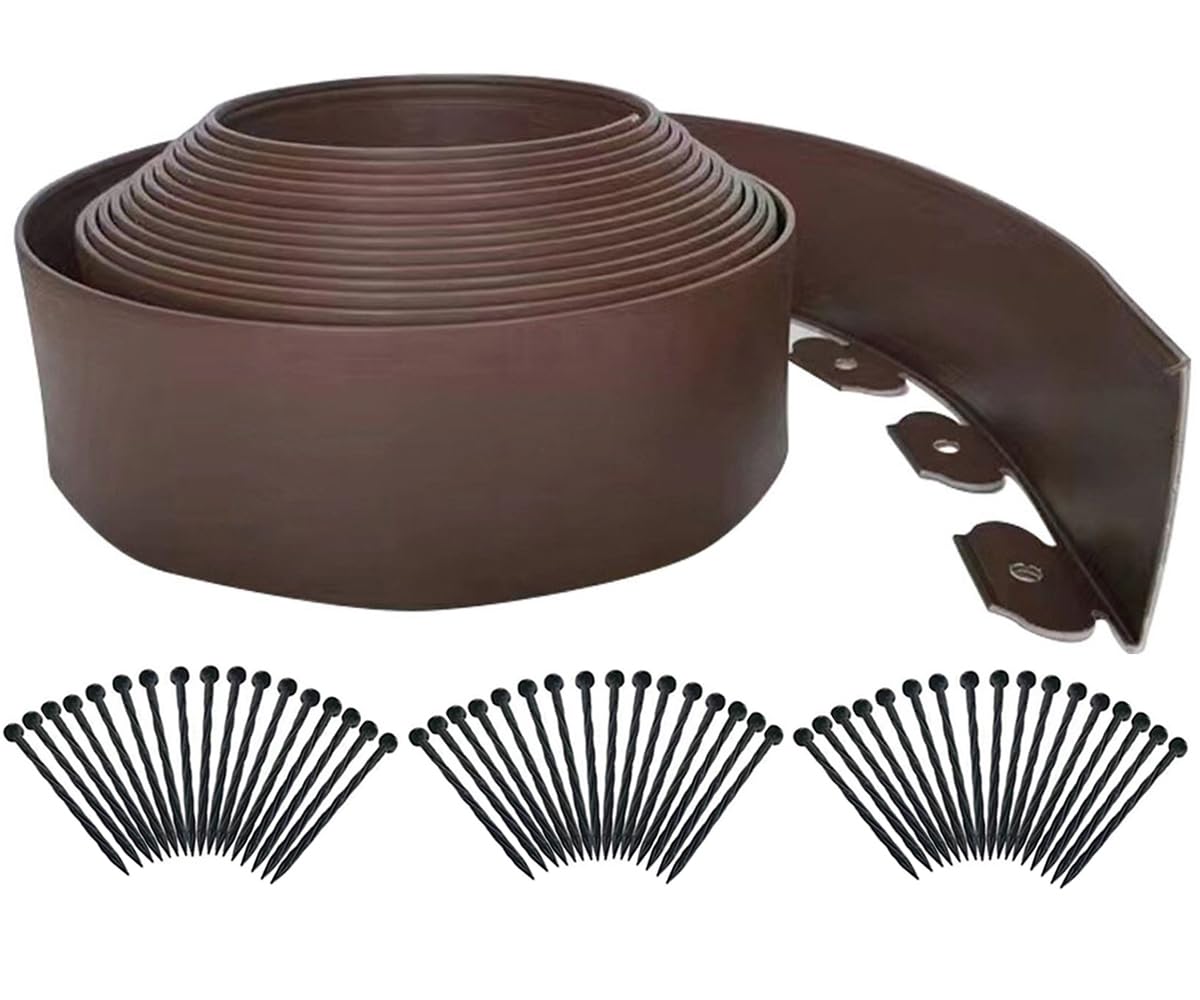
Tall enough to hold mulch, flexible enough to snake around trees.
This edging earns its spot because it sits at a practical 4 inches tall with 33 feet of length — taller than the low-profile JERIA (2 inches) but more flexible than the rigid Master Mark board. The 50 spiral spikes use nylon that won’t rust, and the spiral shape grips loose soil better than straight plastic stakes. Even so, owners mention that a few spikes break during installation. The workaround is simple: pre-drill with a smaller metal stake if your soil is hard. The 4-inch height beats the JERIA’s 2 inches by a factor of 2 on paper, and in practice that extra height makes a real difference for containing mulch and soil around flower beds. Where this pick really shines is curved installations — the PE (polyethylene) material bends into arcs without stress marks, making it a natural fit for tree rings and meandering pathway borders.
The consensus across hundreds of reviews is that the edging itself is durable and weather-resistant, holding up to rain and watering without shifting. The recurring complaint is the stakes, which are plastic and prone to snapping if you hit a rock. Budget for metal stakes if your ground is anything other than soft loam. That one extra cost aside, this is the most versatile middle-ground option for yards that mix straight runs with curves.
Bests at This
- 4-inch height holds mulch and soil well above ground level
- Flexible material curves around tight garden shapes without cracking
- 50 spiral nylon stakes won’t rust and grip better than straight spikes
Know Before You Buy
- Plastic stakes break under force — pre-drilling or metal replacements solve it
- Some buyers find the material feels thinner than expected for the price tier
Best for: medium-sized gardens with curved beds and mixed soil types where 4-inch height is enough.
skip it if: you want metal stakes in the box or need edging that stands perfectly straight without help.
4. FunFanso 4-Inch x 50 FT Landscape Edging Border with 75 Spikes
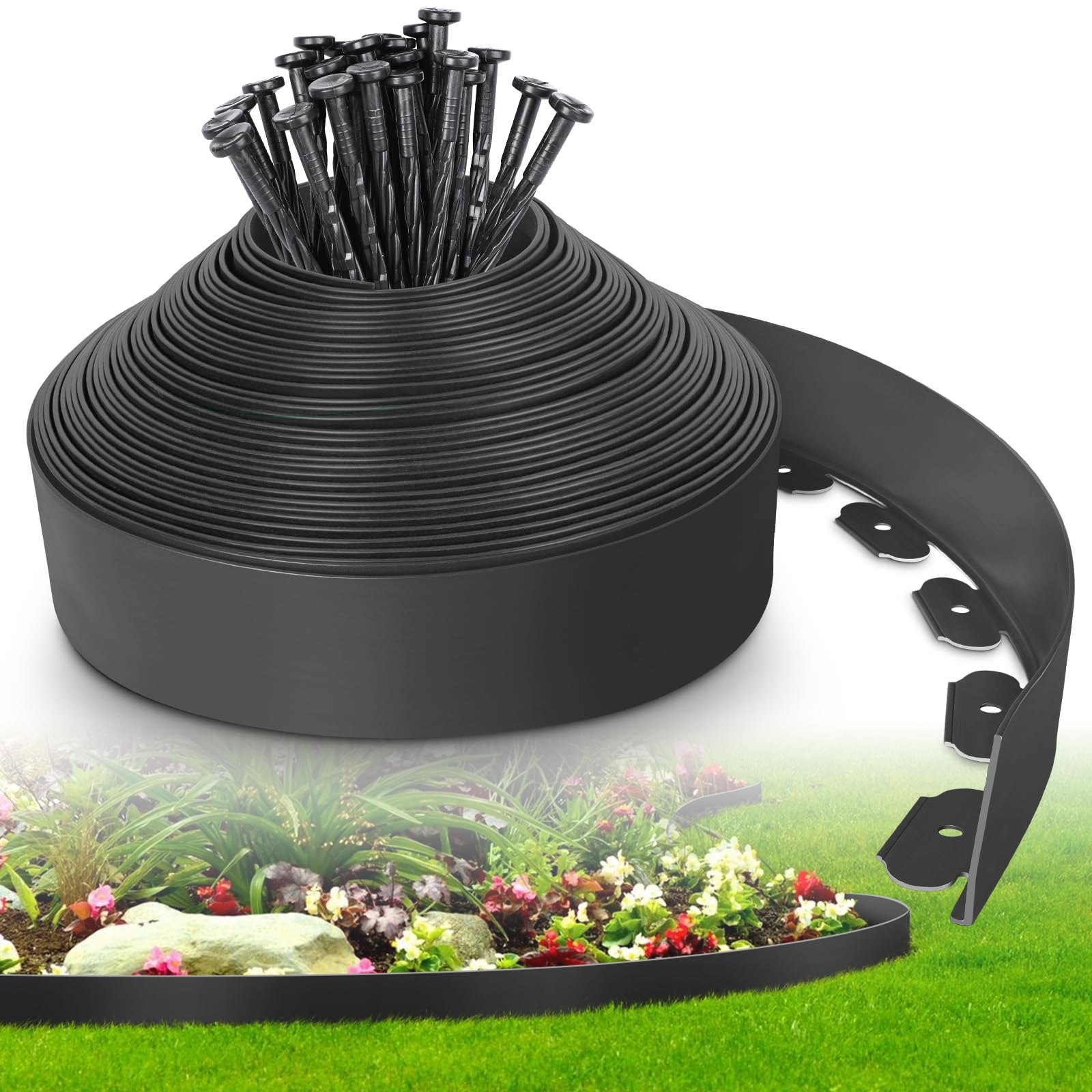
A long 50-foot run with 75 stakes — the best stake-per-foot ratio on the list.
This kit delivers 50 feet of 4-inch black edging and 75 stakes, which is about 5 stakes per meter — noticeably denser than the 3-per-meter standard on some other kits. That extra density is the main reason to choose this over the shorter JERIA or the 33-foot extra-tall option. More stakes mean less waviness on long straight runs, which is the top complaint against thin plastic edging. The material is polyethylene, flexible enough to shape around curves but prone to looking messy if you try to force a perfectly straight line. Customers note that the stakes are plastic and will pop their tops if you drive them too far; the trick is to stop when the stake’s bottom loop meets the ground.
A few users flagged a length discrepancy — one box labeled 200 feet actually held 180 feet across three rolls — so measure your footage when the package arrives. For most projects the 50-foot roll is accurate and manageable. The edging cuts easily with scissors and holds up in sun, rain, and heat without warping. If you are edging a long driveway or a large vegetable garden where you want dense stake support without buying a separate spike pack, this is the most efficient buy on the list.
The smart buy for large borders: 75 stakes eliminate the “not enough spikes” problem that plagues many kits, saving you a second trip to the store.
One detail to watch: the plastic stakes break easily in hard soil — consider metal replacements if your ground is compacted clay or full of roots.
Choose this for: long, straight border runs where you want every foot supported without buying extra stakes.
Pass on it if: you need the edging to stand rigidly straight — flexible PE looks best with slight curves, not ruler-straight lines.
5. AGTEK 60FT Plastic Landscape Edging Coil Kit, 4 Inch
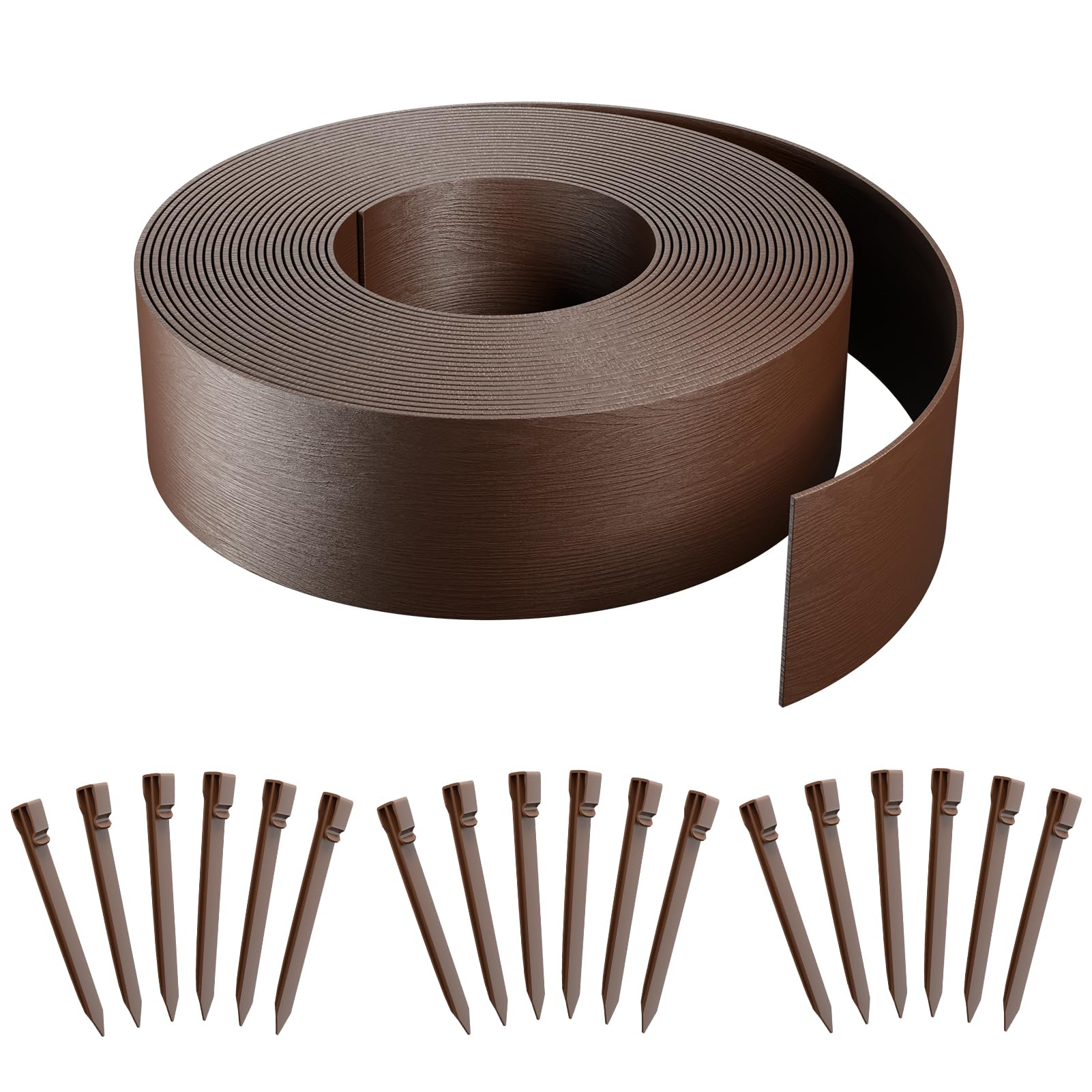
A 60-foot coil that tackles medium-to-large projects with minimal joins.
The main advantage of this AGTEK kit is the 60-foot continuous roll — longer than the 33-foot options and still manageable by one person. At 4 inches tall, it bridges the gap between the 2-inch low-profile edging and the 5-inch Master Mark board, giving you enough height to retain a moderate layer of mulch. The material is polyethylene, which means it bends easily for curves but struggles to hold a perfectly straight line on its own without frequent staking. The kit includes only 18 stakes, which works out to a stake every 3 to 4 feet — that is light for a 60-foot run. Buyers consistently recommend buying extra stakes for best results, especially on straight sections where the edging can wave if unsupported.
Owners describe the edging as “very good quality and flexible” and say the “quality-to-price ratio is excellent.” The dual function — creating an above-ground barrier while the buried portion blocks root invasion — works as advertised. The recurring theme across reviews is that the product itself delivers, but the included stakes are too few. Factor in a separate spike pack and this becomes a solid mid-range option for projects that need more length than the average kit offers. pass on it if you want a kit that includes enough stakes from the start.
Why It Stands Out
- Longer 60-foot roll means fewer seams and connections in your border
- Flexible PE material forms smooth curves around flower beds and trees
- Good quality-to-price ratio according to most buyers
The Catch
- Only 18 stakes for 60 feet — you will need at least double that for a secure install
- Edging can look wavy on long straight runs without denser staking
Pick this for: medium-sized curved beds and tree rings where you want a long continuous piece without joining sections.
Look elsewhere if: you want a complete kit with enough stakes included — budget for extras here.
6. Jorvila No Dig Landscape Edging Kit, 1.5 x 100ft, 120 Metal Spikes

120 metal spikes and a 100-foot roll — the serious landscaper’s starter kit.
This is the only pick on the list that includes metal spikes rather than plastic ones. The 120 spikes have a U-shaped design that grips the edging better than straight pins, and they drive into hard soil without snapping like the plastic stakes on the cheaper kits. The edging itself is only 1.5 inches tall, which is the lowest profile here. That short height works well for separating grass from flower beds where you just need a subtle visual line, but it is not enough to contain 2 inches of mulch — buyers who tried using it as a retaining wall for heavy material were disappointed. The 100-foot length comes in three 33.3-foot rolls, which makes transport and handling easier than wrestling a single 100-foot coil. Choose this over the JERIA if you need metal stakes that won’t snap in hard soil.
The flexibility is high, allowing the strip to bend into tight shapes around garden features. Installation is truly no-dig: you stake the border into the ground every 2 to 3 holes, and the metal spikes hold firmly even in rocky soil. The main trade-off is the height limitation. If your garden beds sit level with the lawn and you only need a clean edge to stop grass invasion, this is the best value per foot on the list. But if you need a visible wall to hold back soil or rock, look at the 4-inch or 5-inch options instead.
The clear advantage: 120 U-shaped metal spikes that actually drive into hard ground without breaking — no need to buy replacements.
The real limit: 1.5-inch height disappears under a standard mulch layer; measure your mulch depth before buying.
Choose this for: large-scale lawn-to-bed separation where you want a low-profile border with rock-solid stakes.
Not the right pick if: you need 2+ inches of above-ground height to retain mulch, soil, or decorative rock.
7. EasyFlex 2.5″ Tall Wall No-Dig Landscape Edging Kit, 100 Foot

The thick, recycled-plastic wall that holds river rock without flinching.
This is the only pick specifically designed as a “tall wall” — 2.5 inches of sturdy recycled plastic with a woodgrain texture that looks more substantial than thin roll edging. The 100-foot coil includes 64 anchoring spikes, which is more generous than the Master Mark stake count but still shy of what you want for a rock-solid install. Buyers strongly recommend adding extra spikes every foot, especially for curved beds where the material can curl in hot sun. The material is noticeably thicker and more rubbery than standard PE edging, which means it resists string trimmer damage and holds heavier materials like river rock and pebbles without bowing.
Installation is no-dig — you score the ground and hammer the spikes in — but the thicker material requires a bit more effort to shape around tight curves. The 2.5-inch height is a deliberate middle ground: tall enough to hold a decent layer of decorative stone but short enough that your lawn mower glides right over it. The biggest crowd complaint is the same as the Master Mark: not enough spikes for the length. Budget for an extra pack of spikes and this becomes the most durable, low-maintenance border option for anyone tired of replacing thin plastic edging every season.
What Makes It Worth It
- Thick recycled plastic resists fading, cracking, and trimmer damage
- 2.5-inch height retains heavy materials like river rock and pebbles
- No-dig install with woodgrain texture for a finished landscape look
Things to Plan For
- 64 spikes for 100 feet is light — expect to buy extra for full support
- Thicker material does not bend into tight curves as easily as thin PE
Best for: permanent borders that need to hold heavy rock or gravel and survive string trimmer encounters.
Trade-off: you will pay more upfront and need extra spikes, but the material outlasts thin plastic edging by years.
Understanding the Specs
Material: PE vs. HDPE
Polyethylene (PE) is the soft, flexible plastic used in most no-dig kits. It bends into tight curves without cracking, making it ideal for tree rings and winding garden paths. High-density polyethylene (HDPE) is a denser, stiffer plastic that holds a straighter line and resists UV degradation longer. It requires a bit more effort to shape but creates cleaner, more permanent borders. If your project is full of curves, go PE. If you want straight, formal lines, HDPE is the better choice.
Stake Material: Plastic vs. Metal
Plastic spikes are cheap and included with most kits, but they break when hit against rocks or hard clay — a pattern that shows up in reviews across multiple brands. Metal spikes cost more but drive straight, hold tighter, and never snap. The trade-off is that metal can rust over time, though galvanized or coated options last for years. For any project longer than 50 feet or any soil that is not pure loam, paying extra for metal stakes is the single best upgrade you can make.
Height and Above-Ground Visibility
Garden edging height is measured from top to bottom, but only the portion above ground creates a visible barrier. A 2-inch edging strip gives you roughly 1 inch above ground after burying the bottom lip, which is enough for a subtle grass barrier but not enough to hold back mulch. A 4-inch or 5-inch edging leaves 2.5 to 3.5 inches above soil level, which contains most standard mulch layers and creates a noticeable visual separation. Match your edging height to the depth of the material you plan to use.
Length and Continuous Runs
Edging rolls range from 33 feet to 100 feet. Shorter rolls are easier to handle and install solo, but they require connectors or overlaps to cover long stretches. Longer rolls reduce the number of seams, which looks cleaner and eliminates weak points where grass can push through. The trade-off is weight and handling — a 100-foot coil of thick material can be awkward to unroll and shape without help. For most home gardens, 33 to 50 feet per project section is the practical balance.
FAQ
How do I install plastic garden edging without digging?
Is plastic garden edging better than metal edging?
How tall should garden edging be for mulch?
How many stakes do I need per foot of edging?
Will plastic garden edging break down in sunlight?
Can I use plastic edging on a sloped or uneven yard?
How do I cut plastic garden edging to length?
What is the difference between no-dig edging and pound-in edging?
How long does plastic garden edging last outdoors?
Can I connect two rolls of edging together?
Final Thoughts: The Verdict
If you want one dependable pick, the garden edging plastic winner is the JERIA 33ft Kit because it combines the best balance of ease, flexibility, and spike count at a budget-friendly price. If you need metal stakes that actually hold in hard soil, grab the Jorvila 100ft Kit with 120 metal spikes. And for retaining heavy rock or surviving string trimmer abuse, the EasyFlex Tall Wall 100ft is the one to reach for.
How We Picked
We do not accept paid placement. Every pick is matched to a real buyer and a real use-case; we do not hands-on test units.
Sources & Methodology
Specifications: manufacturer listings and product documentation. Review insights: verified customer reviews, as of July 2026. Pricing: not shown on this page (it changes often); check the current price via the retailer link.
As an Amazon Associate, Lawn Gear Lab earns from qualifying purchases. This does not affect which products we feature.