
Specs are compiled from manufacturer listings and verified buyer reviews and can change over time — please confirm the key details on the product page before buying.
Trying to bust through packed clay, a web of tree roots, or rocky ground with a flimsy shovel is a fast track to a sore back and a broken handle. You need a tool that does the heavy lifting — literally — so the job gets done without wrecking your body or your gear. This guide cuts through the options to find the ground breaking tools that actually deliver on their promise.
I’m Rikta — the founder and writer behind Lawn Gear Lab. This guide is built by comparing the manufacturers’ published specifications and the patterns across verified customer reviews, so you get each pick’s real strengths and trade-offs instead of marketing spin.
Whether you are clearing a new garden bed, removing a stubborn stump, or digging post holes in hardpan soil, finding the best ground breaking tool means matching the right head, handle, and weight to your specific ground conditions and your own strength.
Our Picks at a Glance


How To Choose The Best Ground Breaking Tool
A tool that excels at digging a soft loamy flower bed will be useless on a patch of caliche, and a 16-pound digging bar is overkill for planting bulbs. Understanding a few key specs helps you match the tool to the task.
Head Weight and Type
The head’s weight and design dictate how much force you can deliver. A pick mattock (a combined pick and chisel-like blade) concentrates mass into a sharp edge, making it ideal for splitting roots and breaking up compacted soil. A heavier head, like the 5-pound forged steel on the Truper, delivers more momentum per swing. Lighter heads (around 1.5 pounds) reduce fatigue, letting you swing longer without tiring your arms.
Handle Material and Length
The handle transfers your energy to the head — or soaks it up. Fiberglass handles resist splintering and weather better than wood, but steel shafts (like the welded unit on the Tabor fork) are nearly unbreakable. A longer handle (60 inches or more) increases leverage, which is a major help for deep digging and prying. A shorter handle (36 inches or so) gives you better control in tight spaces and lighter tasks.
Blade or Edge Design
For shovels, a serrated edge (like the Root Slayer’s V-shaped tip) actively saws through roots as you push. A sharpened, straight edge on a spade slices cleanly through turf and soil, ideal for edging and transplanting. For digging bars, a chisel-like blade end (often 3/8-inch thick) concentrates all the force into a narrow line to crack rock and chop roots. The flat tamper end on the same bar is for compacting backfill — a genuine 2-in-1.
Quick Comparison
| Model | Best For | Head Weight | Handle Material | Total Length | Amazon |
|---|---|---|---|---|---|
| Root Slayer 22011★ Best Overall | Root-filled soil & heavy digging | 5 lb (overall tool) | Carbon Steel (resin-encased) | 45 in | Amazon |
| Ashman Digging ShovelBest Value | Versatile all-purpose digging | 2.2 lb (overall tool) | Fiberglass/Plastic | 48 in | Amazon |
| VNIMTI Spade ShovelTransplant Favorite | Transplanting & tight spaces | 3 lb (overall tool) | Wood | 45 in | Amazon |
| Fiskars IsoCore Pickaxe | Shock-absorbing root & rock work | 1.5 lb (head) | Fiberglass + Steel Tube | — | Amazon |
| Truper 5 lb Pick Mattock | Heavy breaking in clay & rock | 5 lb (head) | Fiberglass | 36 in | Amazon |
| Bully Tools 48″ Digging Bar | Tamping & rocky ground digging | 11.4 lb (overall tool) | All-Steel | 48 in | Amazon |
| TABOR Tools Digging Fork | Heavy clay aeration & compost | 5.5 lb (overall tool) | Welded Steel | 40 in | Amazon |
| Bully Tools 68″ Digging Bar | Deep digging, stump & root removal | 16.2 lb (overall tool) | All-Steel | 68 in | Amazon |
| Fiskars 60″ Pro Shovel | Deep, tough-soil digging | 2 lb (overall tool) | Aluminum | 60 in | Amazon |
In‑Depth Reviews
1. Root Slayer 22011 Garden Shovel, Serrated Blade, Red
Our pick — over 4.5★ from 11,500+ verified ratings; the strongest balance of quality and price.
The serrated V-tip blade saws through roots on contact, turning root-filled ground into a digging shortcut.
This shovel is the crowd favorite for a simple reason: it earned the loyalty of over 11,000 buyers (a 4.8-star average) by doing one thing exceptionally well — cutting through roots. The secret is the sharpened inverted V cutting point on the 13-inch carbon steel blade. That V-shaped tip slices under roots and through packed dirt instead of just pushing against them. As one owner who “dug 250+ gallons of rootball vines” put it, the steel shaft pries effectively and the extended foot rest handles hard soil. It weighs 5 pounds — noticeably heavier than the 2.2-pound Ashman — but that heft comes from a durable carbon steel build with a resin-encased steel shaft meant to endure demanding digging.
The grip earns constant praise: the ergonomic design helps reduce strain on hands and wrists during long sessions. The one honest trade-off is that same weight. Owners note that while it crushes tough jobs, moving it around for lighter tasks can feel like overkill. If you are a smaller-framed gardener or just need a tool for occasional soft-soil planting, the heft might be more than you want to lift each time. For anyone regularly facing dense ground, though, it is the one tool that pays for itself in saved effort.
What wins people over
- Serrated V-tip roots (no exaggeration — owners say it “cuts through roots like butter”)
- Pure durability — carbon steel blade with powder coating resists rust
- Ergonomic handle reduces hand fatigue
The honest trade-off
- Heavier than typical shovels at 5 pounds — some find it tiring for moving dirt
- Not ideal for prying or excessive leverage (as noted by the manufacturer)
Grab it for: Anyone digging in root-laden, compacted soil who wants a shovel that actually saws through roots rather than bouncing off them.
Think twice if: You are a smaller person or need a very lightweight tool for light-duty, frequent-moving tasks.
2. Ashman Heavy-Duty Digging Shovel (1 Pack) 41-Inch
A budget-friendly all-rounder that won’t leave you sore the next day.
At 2.2 pounds, the Ashman is dramatically lighter than the 5-pound Root Slayer — a difference that matters when you are moving soil, compost, or trenching for hours. The 41-inch length with a D-handle gives you two-handed control, and owners consistently call it “strong and reliable.” The hardened round blade is finely sharpened to slice through hard soil, and the handle material is a non-conductive plastic or fiberglass that resists weather. Durability is a mixed note in the review data, with a few owners reporting breakage after light use. One owner summed up the experience: “the one i bought at the hardware store, the handle broke after a couple of years of home use” — implying this one outlasts those cheaper alternatives. The overall 4.5-star rating across nearly 900 buyers confirms most users are very satisfied.
Where it fits best is the person who needs one do-it-all tool for the weekend warrior tasks: some digging, some trenching, moving mulch, clearing a campfire site. It is not a specialist root-cutter or a rock-buster; think of it as the reliable middleweight that handles most jobs without the premium price tag. The D-handle provides good leverage, though taller users (over 6 feet) may find the 41-inch length a bit short for comfortable deep digging.
Why people pick it
- Very lightweight at 2.2 lb — easy to handle all day
- Sharp blade that cuts through hard soil
- Great price-to-performance for general digging and trenching
A few notes
- Mixed durability reports — some say it keeps up, a few broke under heavy use
- May be too short for very tall users doing deep digging
Best suited for: Homeowners and gardeners who want a light, sharp, multi-purpose shovel for general digging, moving soil, and trenching without the price of a premium tool.
Skip it for: Heavy root cutting or rocky soil where you need a more rugged build.
3. VNIMTI Spade Shovel, 45-Inch, Wooden Handle
The narrow 6-inch blade slides under root systems to cut clean plugs without disturbing adjacent plants.
If your primary task is transplanting perennials, dividing hostas, or working in tight garden beds, a standard wide shovel is the wrong tool. The VNIMTI’s narrow blade (just 6 inches wide at the widest) is designed to plunge below root systems and cut a clean circular “plug,” leaving adjacent plants undisturbed. The 3-pound weight is light enough for older gardeners (one 80-year-old owner used it successfully to dig up a fast-growing tree) while still providing enough heft to penetrate hard clay. The solid wood handle with a corrugated foot plate helps prevent slipping when you push down.
The data shows strong praise for its quality (the top positive aspect) and functionality. The recurring concern is durability — particularly the wooden handle, which some owners have reported breaking on first use. That “mixed” verdict on durability (45 mentions) is the biggest caution. The wooden handle offers classic feel and is environmentally friendly, but it cannot match the impact resistance of a steel or fiberglass shaft. If you are planting a few shrubs and respecting the tool’s limits, it is a joy to use. If you plan to pry or force it through heavy rock, the handle may not hold up.
What it does best
- Narrow blade protects neighboring plants during transplanting
- Lighter weight (3 lb) and comfortable for extended use
- Excellent for tight spaces and cutting clean plugs
What to watch for
- Wooden handle susceptible to breaking under heavy force or prying
- Not a heavy-duty rock buster
Reach for this if: You do a lot of planting, dividing perennials, and need a precision spade that works in tight spaces without harming other plants.
Look elsewhere for: Breaking through rocky ground or any task that requires prying leverage — the wood handle is the limiting factor.
4. Fiskars IsoCore Pickaxe Mattock

The IsoCore system transfers less shock and vibration than standard pickaxes, reducing hand and elbow fatigue.
The standard pickaxe punishes your hands and elbows with every hit. Fiskars solved that with the patented IsoCore Shock Control System, which transfers less shock and vibration than standard pickaxes. The difference is immediate: you can swing this 1.5-pound head for longer without the sting that usually stops you. It is a dual-head tool — a pick for penetrating hard ground and a mattock blade for slicing roots and prying rocks. The riveted head is inseparable from the fiberglass and steel tube handle, so there is zero wobble even after rough use.
Owners consistently mention how balanced and comfortable the grip feels, even on tough jobs. The head weight (1.5 lb) is lighter than a full-size pick mattock like the Truper (5 lb), which means less fatigue per swing but also less momentum per hit. It excels at weeding, digging holes for small plants, chopping small roots, and general demolition. The one limitation is the shorter handle — some users wish for more leverage for deep-rooted tree removal. But as many owners note, it is “the one tool every gardener should have.” The Fiskars lifetime warranty adds confidence.
Why it stands out
- IsoCore absorbs shock — 2X less vibration than standard pickaxes
- Dual pick and mattock head for roots, rocks, and digging
- Very balanced and comfortable for extended use
The limit
- Lighter head (1.5 lb) means less swing force than a 5 lb mattock for breaking really dense material
- Short handle can limit leverage on deep work
Perfect for: Gardeners who want a comfortable, shock-free tool for everyday weeding, root chopping, and small digging projects.
Not ideal for: Breaking large rocks or heavy demolition where maximum head weight matters more than comfort.
5. Truper 5 lb Heavy-Duty Pick Mattock (Model 31614)
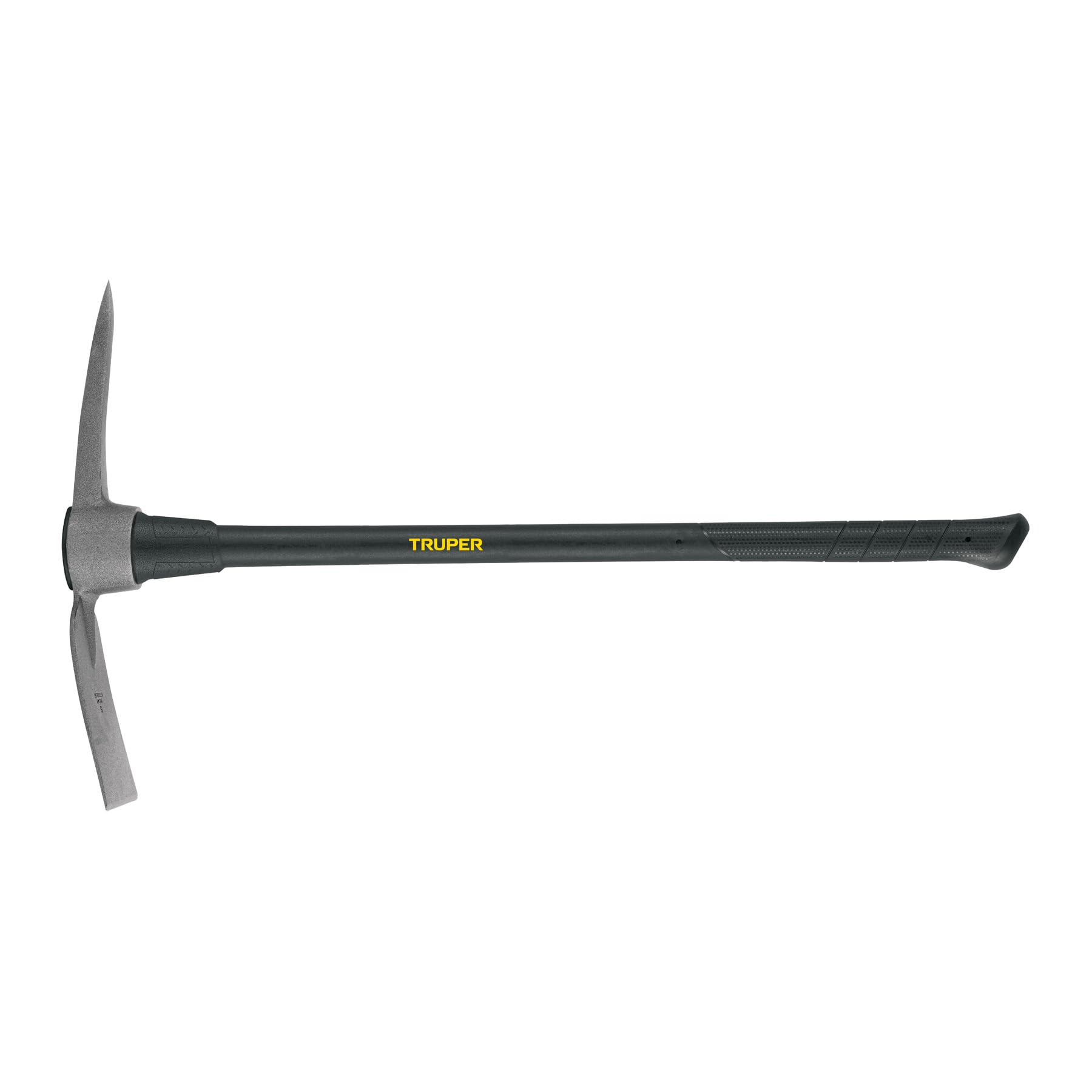
The 5-pound forged steel head delivers enough momentum to break compacted clay with each swing.
When the ground laughs at lighter tools, you need mass. The Truper Pick Mattock brings a 5-pound forged carbon steel head to the fight, which is more than triple the weight of the Fiskars IsoCore. That mass delivers real breaking power: the pointed pick end punches through hardpacked clay and rocky soil, while the flat 4.5-inch mattock cutter blade slices through thick tree roots. The 36-inch weatherproof fiberglass handle resists bending and splintering, and the tapered slip-eye design actually locks the head tighter onto the shaft with every strike — a smart engineering touch that prevents the head from flying off.
Owners who have used it for 3+ years confirm it is a “well made” tool that holds up. The rubber grip provides solid control even with sweaty hands. The main feedback is that some units arrive with cosmetic shipping damage (gouges in the fiberglass handle), but the tool itself remains effective. At 3.5 kg (about 7.7 pounds) total weight, it is a beast to carry around, but that is the point: you want every swing to count when you are breaking ground. It is not a precision tool — it is a brute-force solution for clearing overgrown earth, trenching, and post-hole digging.
The power it delivers
- 5 lb forged steel head for maximum impact on rocks and roots
- 36″ fiberglass handle resists bending and splintering
- Tapered slip-eye design tightens the head with each swing
What to consider
- Very heavy (7.7 lb total) — exhausting for all-day use
- Some units arrive with cosmetic shipping damage
Perfect for: Breaking up solid clay, rocky ground, and thick roots where raw power is the primary requirement.
Not for: Lighter tasks like weeding or transplanting — this tool is a sledgehammer, not a scalpel.
6. Bully Tools 48″ Steel Tamping and Digging Bar

The chisel end breaks up rocky ground, and the flat end tamps backfill — no tool swap needed.
Also called a shale bar, this is the ultimate ground-breaking multi-tool for rocky earth. One end features a 3/8-inch thick chisel blade that you drive into dirt, clay, and rocky terrain to break it up for digging. Flip it over, and the flat steel plate end becomes a tamper for smoothing backfill, setting pavers, or compacting soil around fence posts. The all-steel construction weighs 11.4 pounds and is built from 100% American-made steel that is more durable than foreign competitors. It is available in 48-inch or 69-inch lengths; the 48-inch version is easier to handle for close-up work.
Owners praise it for removing rocks from post holes, prying out concrete, and even breaking up ice. The build quality and welds get consistent positive feedback. The durability aspect shows a mixed group of mentions — some report breakage under extreme use (the tamping head breaking after 8 months in one case), but the company’s limited lifetime warranty earned a positive update when they replaced it. This is not a tool for casual gardening; it is a heavy-duty solution for contractors, landscapers, and homeowners facing seriously tough ground.
What it excels at
- 2-in-1: sharp chisel end for digging, flat end for tamping
- Made from American steel, up to 30% more durable than competitors
- 11.4 lb provides serious weight for breaking ground
The drawbacks
- Very heavy — not a tool for small or casual jobs
- Some reports of head breakage under extreme stress
Pick this if: You need a single, durable tool for breaking up rocky ground, digging post holes, and compacting backfill on job sites or heavy landscaping projects.
Avoid it for: Light garden digging — you will be exhausted after 10 minutes.
7. TABOR Tools J59A Digging Fork, Steel Shaft

The welded steel shaft and forged high-carbon steel head resist bending and breaking in heavy clay.
Standard digging forks with wooden handles often snap the first time you jam them into hard ground. The TABOR Tools J59A uses a welded steel shaft and a head forged from hardened high-carbon steel. The four diamond-point tines are sharp enough to pierce heavy black clay — as one owner living in black clay land confirmed, “it does not slow this tool down.” It is a specialist for loosening, lifting, and turning soil without the bending or breaking that plagues other forks. The 5.5-pound weight gives it serious penetration power, and the 40-inch length provides enough leverage for most users.
The top positive aspect in the data is quality, with owners noting the thick steel tines are welded directly to the shaft — not clamped or pinned, so they do not loosen. The D-handle provides a secure hold even with gloved hands. Some taller users (over 6’2″) wish the handle were longer for deeper work, but for the vast majority it is perfectly proportioned. It is priced higher than a basic fork, but the “buy it for life” construction means you will not be replacing it next season. The only real complaint is a few owners who found it too heavy for their needs — which is a fit issue, not a flaw.
Why it is worth the cost
- Welded steel shaft — virtually unbreakable compared to wood or fiberglass forks
- Sharp diamond-point tines penetrate and lift heavy clay easily
- Can handle rocks and abuse without bending
Who should think twice
- Heavy at 5.5 lb — not ideal for lightweight tasks or small-framed users
- Handle length may be too short for very tall users (6’2″+).
The right pick for: Serious gardeners, farmers, and landscapers who work heavy clay soil and want a fork that will not snap, bend, or break.
Not for: Surface-level weeding or casual flower bed preparation — the weight and power are overkill.
8. Bully Tools 68″ Steel Tamping Digging Bar
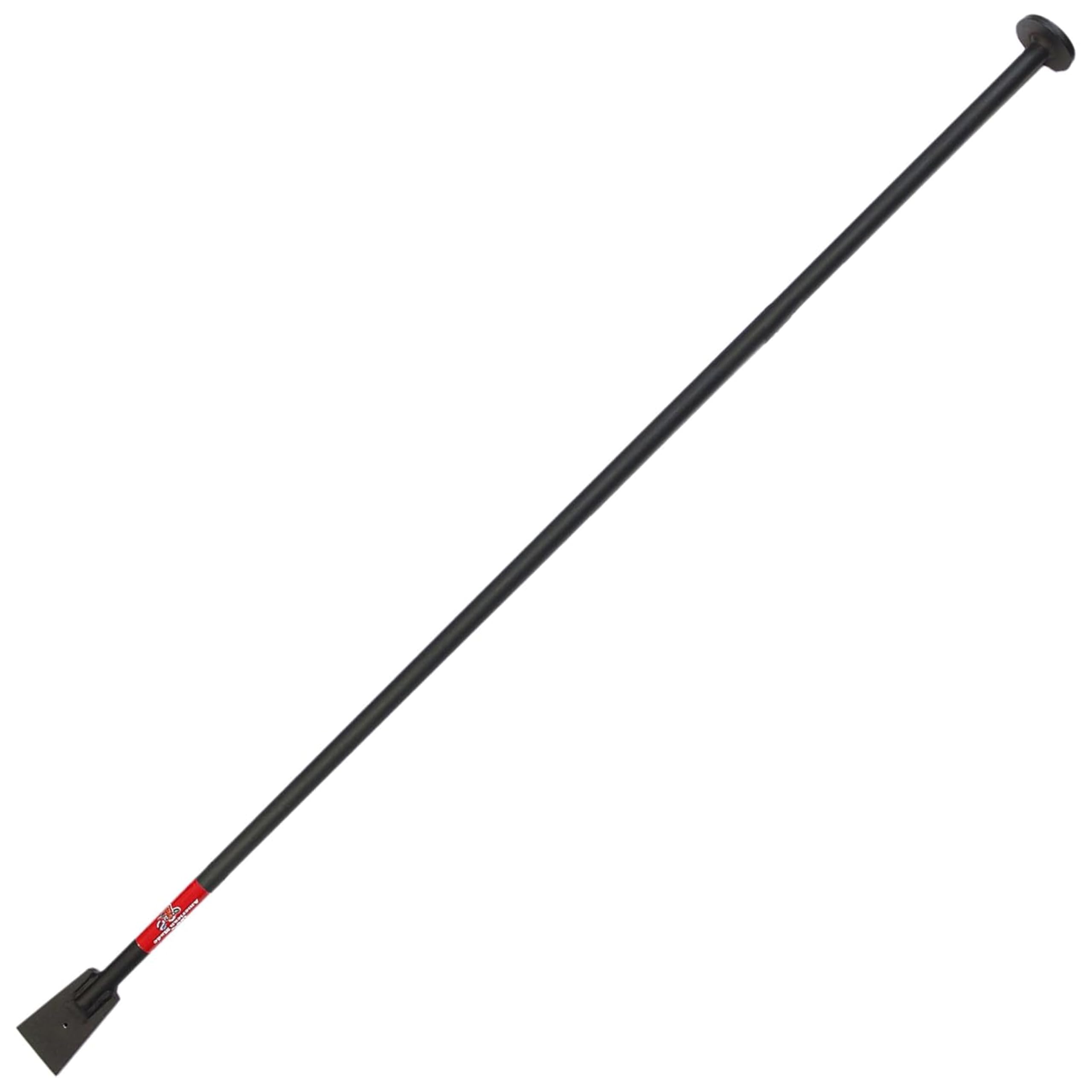
The 68-inch length provides maximum leverage for prying out stubborn roots and rocks.
If the 48-inch Bully bar is strong, the 68-inch version is the monster truck version. At 16.2 pounds with a 1-inch diameter solid steel core, this bar is built for the heaviest ground-breaking jobs: deep post hole digging, stump removal, cutting thick tree roots, and demolition. The extra 20 inches of length over the 48-inch model delivers significantly more leverage, meaning you apply more force with less effort on each pry or swing. The 3/8-inch thick blade end cuts through compacted soil and roots, while the flat plate end is a powerful tamper for backfill.
Owners who have used it for 6 years confirm it is a beast — the shaft flexes under extreme stress but never bends. The top positive aspects are effectiveness and build quality, with many noting it is “made in the USA” and designed to last a lifetime. The honest warning from the review pages is that the weight and sharp blade make it a high-injury-risk tool if used carelessly — “requires respect like chainsaws,” as one owner put it. It is not a casual purchase; it is for serious jobs where a 16.2-pound bar is the most efficient solution.
The brute force advantage
- 68″ length gives maximum leverage for prying and deep digging
- 16.2 lb all-steel construction from American-made steel
- Dual blade end (cutting) and tamper end (compacting)
The serious downside
- Extremely heavy — exhausting to carry and maneuver
- High injury risk if mishandled; requires caution and respect
The go-to for: Contractors, serious homesteaders, and anyone tackling deep stump removal or rocky post-hole digging that demands maximum leverage and weight.
Too much tool for: Light garden work or users who cannot safely handle over 16 pounds of steel.
9. Fiskars 60″ Pro Garden Shovel for Digging
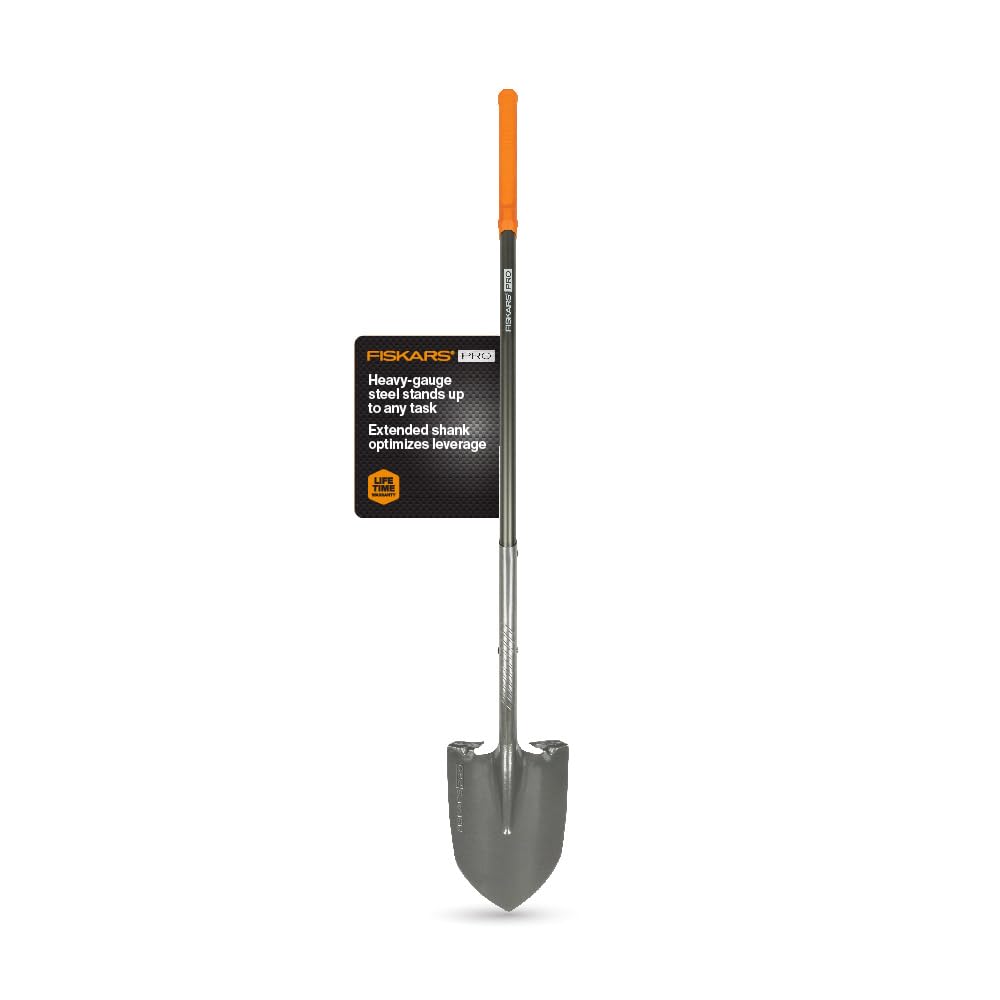
The 60-inch aluminum handle keeps you upright while digging deep holes, reducing back strain.
Standard shovels make you stoop, which saps your back and limits your digging depth. The Fiskars Pro shovel features a 60-inch aluminum handle that keeps you upright while delivering serious digging power. The sharpened steel blade is heavy-gauge and designed to tune digging and prying without separation. The teardrop-shaped shaft provides a better fit for your hands and more control during the digging motion. At just 2 pounds, it is remarkably light for a full-size digging shovel — you get the reach without the extra weight that tires your arms.
The top positive aspects in the data are durability and quality, with owners praising it for surviving heavy abuse: prying out concrete-encased posts, digging in fields full of rocks, and removing overgrown rose bushes. As one owner put it, “This is the best darn shovel I have ever owned. We have abused the heck out of this thing.” The only mixed feedback concerns the price — some find it expensive for a shovel, and a few owners felt the value did not match the cost. The Fiskars full lifetime warranty backs your purchase. The one limitation is that the straight handle lacks a D-grip, so it may not suit everyone’s preference for control on heavy prying.
What makes it a pro tool
- 60″ aluminum handle eliminates stooping, reduces back strain
- Sharpened steel blade stays sharp through heavy use
- Very lightweight (2 lb) for a full-size digging shovel
The trade-offs
- Higher price point — some question the value-for-money
- Straight handle lacks a D-grip for two-handed leverage control
Best for: Taller users or anyone who wants to dig deep holes without bending over and appreciates a tough, lightweight, long-handled shovel.
skip it if: You want a D-handle for two-handed control, or your budget is tight for a one-tool purchase.
Understanding the Specs
Head Weight & Tool Weight
The head weight (on a pick mattock) or overall tool weight (on a shovel or bar) directly determines how much force you generate with each swing. A 5-pound head like the Truper’s delivers high momentum for breaking rock and thick roots, but will exhaust you quickly. A 1.5-pound head (Fiskars IsoCore) is easier to swing all day for lighter weeding and root chopping. Your choice depends on the job intensity and your own stamina.
Handle Material & Length
The handle is your connection to the tool — it transfers your force and absorbs (or transmits) vibration. Fiberglass handles (Ashman, Truper) offer a good balance of durability and weather resistance. All-steel handles (Bully bars, Tabor fork) are the strongest but heaviest. Wooden handles (VNIMTI) feel traditional but can split or break under heavy prying. Length matters: longer handles (60 inches on the Fiskars Pro) give you leverage but can be unwieldy. Shorter handles (36 inches on the Truper) provide control for close-up work.
Blade / Edge Design
A sharpened, straight blade edge slices cleanly through turf and soil for precise digging and edging. A serrated V-tip (Root Slayer) saws through roots as you drive the blade down. A pick mattock’s pointed end concentrates force into a tiny area to crack rock, while its flat chisel edge splits wood roots. A digging bar’s 3/8-inch thick blade end is a mini chisel for rocky ground. The right edge design depends on whether you face roots, rock, or just hard-packed clay.
Shock & Vibration Control
Every swing transmits shock from the head back through the handle into your hands, wrists, and elbows. The Fiskars IsoCore system is a standout here — it uses a patented mechanism to absorb impact, transferring 2 times less shock than standard tools. Fiberglass handles naturally dampen vibration better than solid steel or wood. If you plan to swing for hours, prioritize a tool with a comfortable grip and some vibration damping to protect your joints.
FAQ
What is the difference between a pick mattock and a standard pickaxe?
Should I choose a digging fork or a shovel for breaking ground?
How long should a heavy ground breaking tool last?
Is a heavier tool always better for breaking hard ground?
What is a tamping bar used for in landscaping?
Can I use a digging shovel as a pry bar?
How do I store a ground breaking tool to extend its life?
What is better for clay soil: a digging bar or a pick mattock?
Do I need a tool with a D-handle or a straight handle?
How important is a non-slip or ergonomic grip?
Final Thoughts: The Verdict
For most people, the best ground breaking tool winner is the Root Slayer 22011 because it combines a serrated blade that actively cuts roots, a durable carbon steel build, and an ergonomic grip that reduces strain — all backed by a massive wave of positive owner experiences. If you want a shock-absorbing swing for smaller root and rock work, grab the Fiskars IsoCore Pickaxe Mattock. And for deeply compacted clay and heavy-duty breaking, the Truper 5 lb Pick Mattock is the one to reach for.
How We Picked
We do not accept paid placement. Every pick is matched to a real buyer and a real use-case; we do not hands-on test units.
Sources & Methodology
Specifications: manufacturer listings and product documentation. Review insights: verified customer reviews, as of July 2026. Pricing: not shown on this page (it changes often); check the current price via the retailer link.
As an Amazon Associate, Lawn Gear Lab earns from qualifying purchases. This does not affect which products we feature.