
Specs are compiled from manufacturer listings and verified buyer reviews and can change over time — please confirm the key details on the product page before buying.
Putting out a feeder should welcome chickadees and finches, not a flock of pigeons or a greedy squirrel that empties the whole thing in an hour. If you are tired of watching bully birds muscle your smaller visitors away from the seed, the fix is a feeder built with perches and ports sized specifically to let only the little guys through. A standard tube feeder is an open invitation, but these designs use tighter spacing and smaller openings to create a safe dining spot for the birds you actually want to see.
I’m Rikta — the founder and writer behind Lawn Gear Lab. This guide is built by comparing the manufacturers’ published specifications and the patterns across verified customer reviews, so you get each pick’s real strengths and trade-offs instead of marketing spin.
If you want to feed chickadees, finches, and nuthatches without attracting bigger birds or squirrels, these feeders for small birds only use specific perch lengths and cage gaps to let the little ones in while keeping the rest out.
Our Picks at a Glance

How To Choose The Best Feeder For Small Birds Only
The secret to a feeder that attracts only small birds is in the details. You want a design that physically excludes larger species and squirrels without making it hard for chickadees, finches, and nuthatches to access the food.
Perch Length & Port Size
Short perches are the first line of defense. A perch that is 1.5 inches or less is too small for a blue jay or a dove to land on comfortably. The feeding ports themselves should be narrow — roughly the width of a thistle seed tube — so a larger bird cannot stick its head inside to scoop out seed.
Cage Spacing & Materials
A metal cage around the feeder adds another layer of protection. Look for a mesh opening around 1.5 x 1.5 inches. This spacing lets a goldfinch or warbler hop right through while it stops a squirrel, pigeon, or starling from reaching the seed. Durable metal construction (steel or aluminum) resists chewing and weather far better than plastic.
Weather-proofing
Moisture is the enemy of bird seed. A wide dome or metal roof over the feeder keeps rain and snow off the food. A base tray with drainage holes is also useful so water does not pool at the bottom, which can cause mold and waste expensive Nyjer or sunflower hearts.
Quick Comparison
| Model | Best For | Type | Seed Capacity | Material | Amazon |
|---|---|---|---|---|---|
| Woodlink Audubon Finch Screen Tube | Overall best for finches | Mesh Tube | 1 lb | Die-cast Aluminum | Amazon |
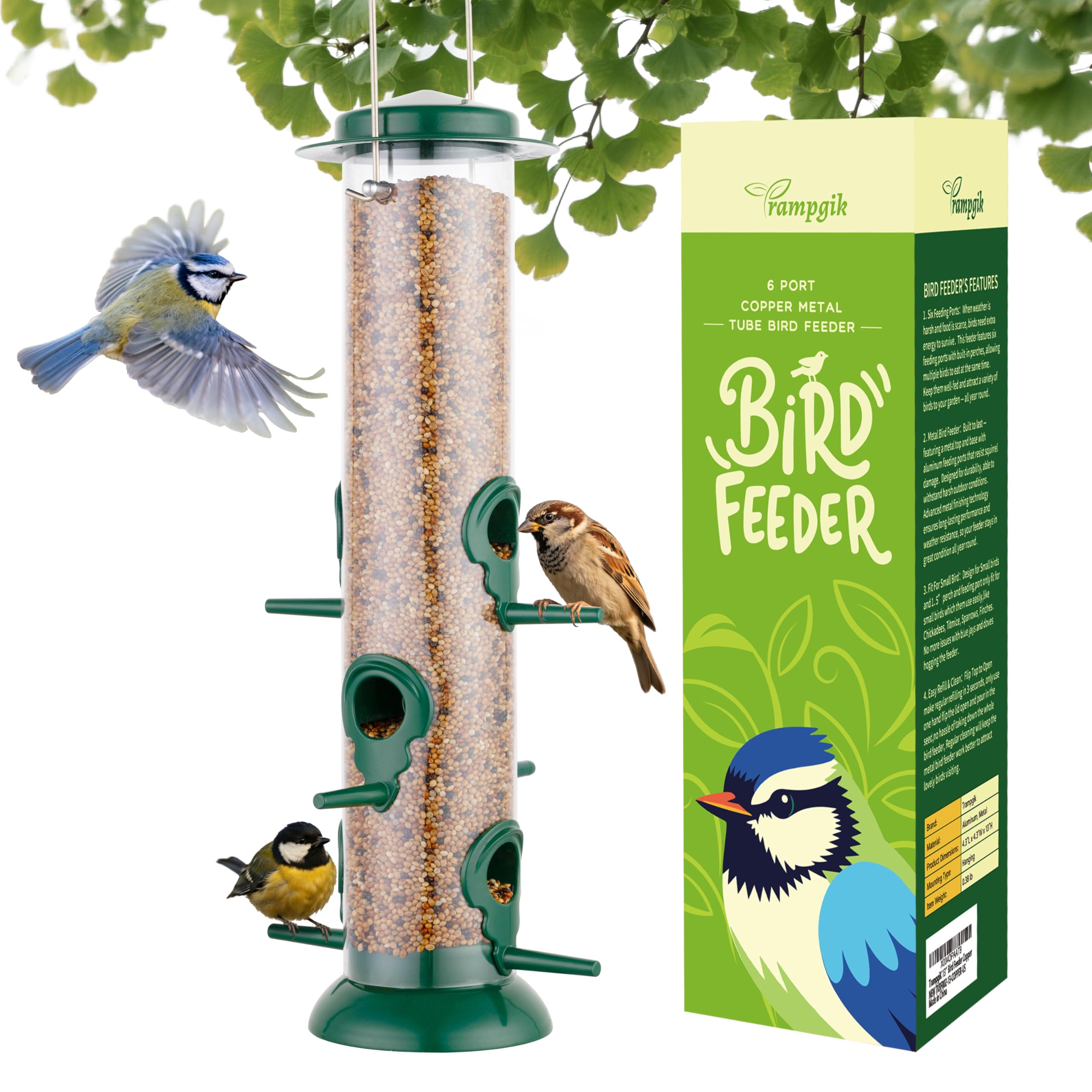
| Trampgik Metal Tube Feeder | Value & small-bird-only perches | Metal Tube | Large (13-inch tube) | Metal | Amazon |
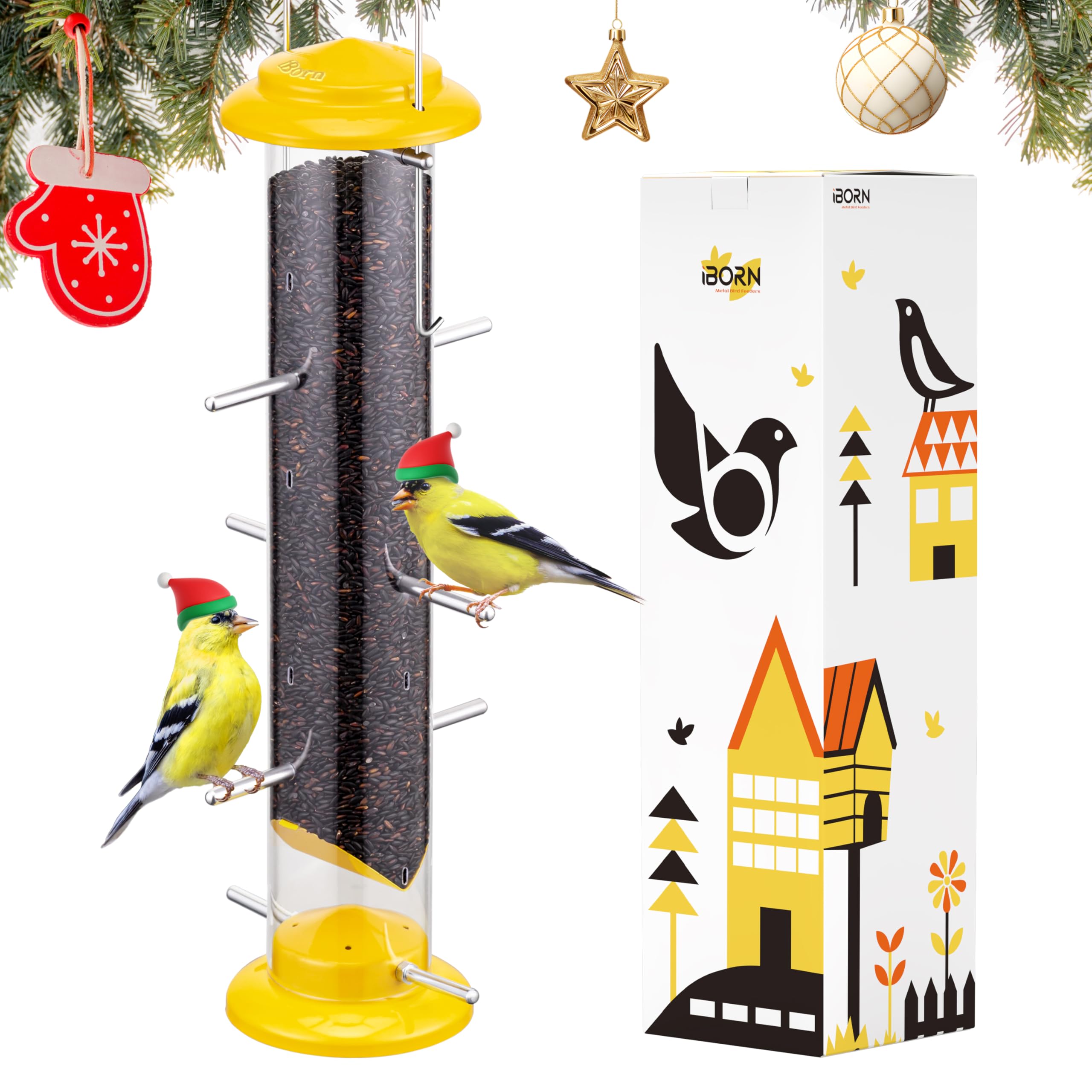
| iBorn Finch Feeder | Nyjer seed & multiple clinging birds | Metal Mesh Tube | 14-inch tube | Metal | Amazon |
| Stokes Select Finch Screen | Long-time durability & high traffic | Screen Mesh | 1.1 lb | Plastic / Cast Alloy | Amazon |
| Gbekery Caged Bluebird Feeder | Mealworms for bluebirds & orioles | Caged Mesh | Bowl (holds mealworms) | Metal | Amazon |
| SEWANTA Squirrel Resistant Feeder | Small birds in a cage format | Caged Tube | 22 oz | Alloy Steel / Plastic | Amazon |
| Kingsyard Dome Feeder | Large capacity & rain protection | Mesh Tube with Dome | 2.5 lb | Metal / Plastic | Amazon |
| Kingsyard Squirrel Proof Cage Feeder | Rain-proof caged feeding | Caged Tube | 1.5 lb | Metal / Plastic | Amazon |
| Mosloly Caged Tube Feeder | Maximum squirrel resistance | Caged Tube | 2.8 lb | Metal | Amazon |
In‑Depth Reviews
1. Woodlink NAWLNT Audubon Die Cast Aluminum Finch Screen Tube
Our pick — over 4★ from 900+ verified ratings; the strongest balance of quality and price.
The rugged mesh tube that finches flock to and doves cannot touch
This is the feeder owners call “the best one I’ve ever had” — a 13-inch die-cast aluminum screen tube that holds a pound of thistle or finch mix. The mesh body is what does the trick: doves and other large birds cannot grip the screen or perch on it, so finches, goldfinches, and house finches get exclusive dining rights. As the review pages sum it up: “Doves cannot feed from this feeder; finches started feeding within minutes.”
It comes ready to hang with no assembly required, and the sliding top makes refilling straightforward. Owners who have had it for years point out that there is no bottom tray to clean — waste seed simply falls through to the ground. That said, a few buyers report that the screen openings are large enough that some thistle spills during filling unless you are careful, and one owner rigged a homemade catch tray to minimize loss. The build quality earns the most praise by far, with people noting it has survived raccoon attacks and still looks new.
The crowd favorite rating speaks to its legendary status among finch fans.
What Wins Owners Over
- Excludes doves and large birds naturally through mesh design
- Die-cast aluminum construction is extremely durable and weather-proof
- No bottom tray to clean; waste seed drops out
The Honest Trade-off
- Screen openings can spill seed during filling if you are not slow and careful
- A separate catch tray (sold separately) is recommended by long-time users to save expensive Nyjer seed
Best for: Anyone who wants a low-maintenance feeder that prioritizes finches and goldfinches above all else.
Reach for the catch tray if: You are using expensive thistle seed and want to minimize every grain of waste during refills.
2. Trampgik Metal Tube Bird Feeder, 13-Inch
Short perches and a metal tube that say “no entry” to blue jays
This entry-level priced feeder gets the small-bird-only job done with a simple trick: it uses 1.5-inch perches and feeding ports that are physically too short for larger birds to land on. Chickadees, titmice, sparrows, and finches fit perfectly, while doves and jays move on. The green 13-inch metal tube is light at 1.5 pounds and offers six feeding ports so multiple birds can eat at once.
The flip-top lid is a convenience standout — you can pour seed in with one hand without taking the feeder down, a nice touch during cold winter mornings. Bird attraction is the top thing owners talk about, and many mention that it attracts finches, cardinals, and chickadees to the yard quickly. A few units have arrived with a missing perch prong, but the company stands behind a 12-month warranty, so you are covered if something is off.
Owners describe it as “very light in weight” and “sturdy,” with one buyer summing it up: “It’s a very light in weight birdfeeder, with six portals for the birds to eat, and they love it.” The perch length (about 1.5 inches) is short enough that larger birds cannot land comfortably, so small birds get the seed. Squirrel resistance is mixed, but for small-bird-only feeding, the perch length does the job reliably.
Why Regulars Recommend It
- 1.5-inch perches naturally exclude larger birds and squirrels
- Flip-top lid for quick, one-handed refills without disassembly
- Metal construction resists rust and weather better than plastic
What to Watch For
- Occasional quality control issues mean a missing perch prong on arrival
- Not fully squirrel-proof despite the “squirrel-proof” claim in the listing
Reach for this if: You want a budget-friendly metal feeder that physically prevents larger birds from landing without any cage or complicated setup.
Look elsewhere if: Squirrels are a major problem in your yard — this one will not stop them.
3. iBorn Finch Feeder, 14-Inch Metal Tube
A 14-inch tube with 12 tiny ports that goldfinches swarm
The iBorn is built for the thistle-and-nyjer crowd, with a yellow metal tube that is 4.33 inches wide and 15 inches tall. It gives goldfinches, chickadees, redpolls, and siskins 12 small feeding ports and 8 metal perches to cling to. The V-shaped spacer at the bottom prevents seed from settling into stale pockets, while four drainage holes let any trapped water escape so the seed stays fresh longer.
The thing owners love most is the stable reinforced metal hook. Unlike flimsy string hangers that swing in the wind and scare skittish birds away, this one stays put. The flip-top lid makes filling straightforward, and the transparent tube lets you see the seed level at a glance. Some long-term users note the plastic tube can develop cracks around the perch holes after a season, likely from temperature stress. But during that season, the finches devour the seed, with one buyer reporting “two pairs feeding all day.”
The Big Draw
- 12 small ports give multiple clinging birds a spot to feed at once
- V-shaped spacer and drainage holes keep thistle seed dry and fresh
- Sturdy metal hook prevents swinging in wind
The Trade-off
- Plastic tube can crack around perches after a season in harsh sun or temperature swings
- Top perch may sit slightly off-center on some units
Best for: Goldfinch enthusiasts who want a dedicated thistle feeder with easy refilling and stable hanging.
Consider the metal-only picks if: Your feeder sits in full, direct sun all day and you want to avoid plastic fatigue.
4. Stokes Select 38171 Finch Screen Feeder

A proven screen feeder that has drawn finches for over a decade
This Stokes Select feeder is a familiar sight in many backyards for good reason: the heavy-duty screen tube is encased in cast alloy caps, and the yellow plastic body contrasts against green foliage to attract goldfinches. It holds up to 1.1 pounds of Nyjer, NyjerPlus, or finch mix, and the twist-off caps make cleaning simple. Owners who have been feeding birds for 40 years call it the best thistle feeder they have used.
The screen design is the key exclusion feature — larger birds cannot grip it, and they do not like the seed anyway. That said, the feeder is not waterproof. In high winds above 35 mph, seed can blow out, and rain can get inside and cause mold if not cleaned regularly. A few owners have modified the dome with a foam insert to keep rain out. The build quality is a strong point, with cast alloy components that resist cracking far better than all-plastic designs.
Why It Endures
- Proven track record with goldfinches, house finches, and purple finches
- Cast alloy caps are far more durable than plastic alternatives
- Easy twist-off disassembly for thorough cleaning
The Catch
- Not waterproof; rain and high winds can wet or blow out seed
- Requires routine cleaning to prevent mold from moisture exposure
Pick this for: A classic feeder with a proven reputation for attracting goldfinches that is built to last in moderate climates.
Pass if: You live in a rainy region and need a feeder with a fully weatherproof dome.
5. Gbekery Caged Bluebird Feeder for Mealworms

A cage that keeps starlings out while bluebirds feast on mealworms
This metal caged feeder uses a 1.5 x 1.5-inch mesh spacing that allows only small birds like bluebirds, goldfinches, and song sparrows to hop inside. The crowd favorite version is the brilliant royal blue color, which owners say attracts bluebirds remarkably well. The glass bowl in the center can hold mealworms, fruit, jam, or even water, which gives you flexibility in what you offer. The roof is removable for easy refilling and cleaning.
One owner painted theirs orange and reported that orioles stayed all season, calling it “oriole PERFECT!” The feeder is effective at saving expensive dried mealworms from being devoured in hours by larger birds. However, the mesh spacing is large enough that some squirrels can get their head through to eat, so it is not fully squirrel-proof. A few units have arrived with cosmetic scratches from packaging. The blue color may fade in direct sunlight, but the metal construction remains sound.
What Makes It Special
- 1.5-inch cage mesh excludes starlings, grackles, and doves effectively
- Glass bowl can hold mealworms, jelly, fruit, or water for versatility
- Removable roof makes refilling and cleaning simple
Limitations You Should Know
- Not fully squirrel-proof; a determined squirrel can reach seed through mesh
- Packaging can cause cosmetic scratches on the metal surface
Reach for this if: Bluebirds or orioles are your target species and you want to protect expensive mealworms from greedy larger birds.
Think twice if: Squirrels are a persistent problem, the square mesh is wide enough for them to feed.
6. SEWANTA Squirrel Resistant Bird Feeder, 22 oz

A steel cage that locks out pigeons and makes squirrels give up
This is a compact feeder built around a simple idea: a sturdy steel cage with bar spacing that tiny birds slip through and everything else bounces off. The 22-ounce clear tube holds sunflower seeds, milo, peanuts, or mealworms, and the cage design makes it nearly impossible for pigeons or grackles to get the seed. Bird attraction, especially for finches, chickadees, and nuthatches, is the reason most people buy it.
Owners mention that squirrels investigate the feeder and then move on because they cannot squeeze through the metal enclosure (the cage gaps are about 1 inch wide). The cage is built with solid steel and a green rustproof plastic coating, so it holds up well outdoors. The main downside is capacity: the tube holds about 1.5 cups of seed, which means you will be refilling daily if you have a busy flock. The screw-on top is also a bit tedious compared to a flip-top lid. However, for a feeder that actually works at excluding larger birds and squirrels, it is tough to top.
The Crowd Favorite Features
- Steel cage design stops squirrels, pigeons, and grackles from accessing seed
- Compact size fits well in smaller yards or on a pole
- Transparent tube lets you see the seed level easily
What to Expect
- Small 22 oz capacity means frequent refills with a hungry flock
- Screw-on top is more cumbersome than flip-top or lift-lid designs
Best for: Birders who want a reliable squirrel- and pigeon-proof feeder in a compact, no-fuss package.
Pass if: You have a large number of birds and do not want to refill the tube every day.
7. Kingsyard Finch Thistle & Nyjer Feeder, 2.5 lb
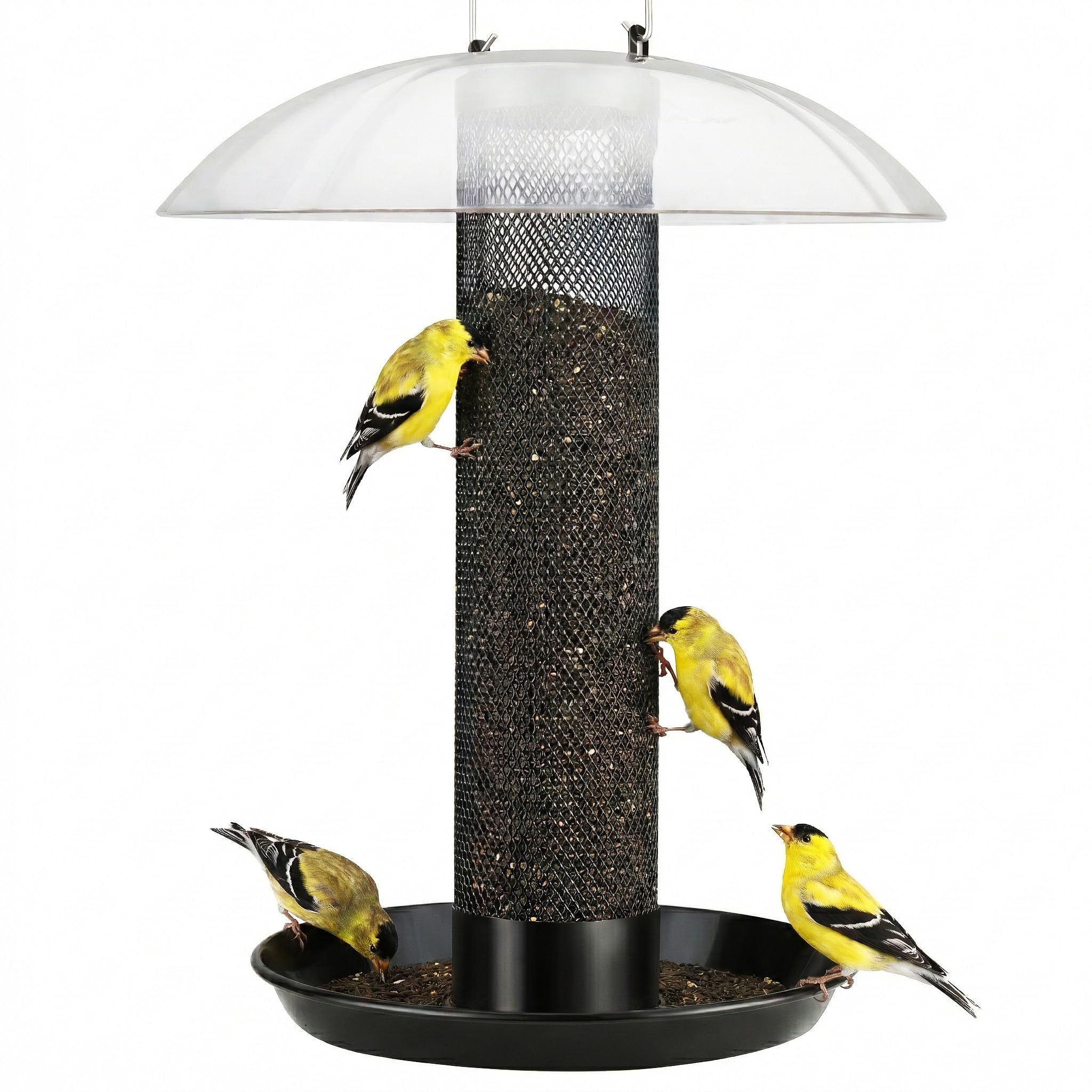
A big dome feeder that keeps a week’s worth of Nyjer dry and squirrel-free
The Kingsyard stands out for its generous 2.5-pound seed capacity, which means you are not refilling every day. The 19-inch tall feeder uses a mesh tube that allows goldfinches, siskins, and juncos to cling and feed from any angle — even upside down. The wide 11.5-inch roof acts as a weather baffle, shielding the seed from rain and snow while also making it harder for squirrels to reach the food.
The 9.5-inch base tray is a smart addition: it catches scattered Nyjer so birds can pick it up later, and it has drainage holes to prevent moisture buildup. Owners say the bright yellow color attracts finches rapidly, and the assembly is simple enough for a child. The recurring constructive criticism is that the tray’s toothpick-sized drainage holes can clog with Nyjer seed, and rain can still wet the seed in the tray if the wind blows. A few defective units had ports that were too narrow for finches to reach the seed, but that seems to be a minority issue. The heavy-duty metal construction stands up well to squirrels trying to chew through.
The Standout Specs
- Large 2.5 lb capacity reduces refill frequency significantly
- 11.5-inch dome provides excellent rain and snow protection for the seed
- 360-degree clinging mesh tube lets birds feed naturally from any position
Things to Note
- Drainage holes in the tray can clog with Nyjer seed, requiring manual clearing
- An occasional unit has defective port sizing that prevents birds from reaching seed
Pick this for: A high-capacity, weather-proof feeder that goldfinches love and you do not need to refill every day.
Consider bringing it inside if: You live in an area with frequent windy rain that can wet the seed in the tray.
8. Kingsyard Caged Squirrel Proof Bird Feeder, 1.5 lb

A caged tube with a rain-proof lid that keeps seed fresh and bullies out
This Kingsyard feeder uses a 1.5 x 1.5-inch metal mesh cage wrapped around a tube, creating a barrier that goldfinches, chickadees, and house finches pass through easily while starlings, pigeons, and squirrels are blocked. The wide metal roof is designed to keep rain and snow away from the seed, a feature owners appreciate compared to open-top cages that let moisture in. It comes pre-assembled, so you can fill it and hang it immediately.
The extended platform below the tube acts as a tray to catch fallen seeds, giving birds extra space to perch and reducing mess. The 1.5-pound capacity is decent, but some owners note that the tube does not hold much and needs daily refills with a very active flock. A few owners also point out that starlings can sometimes still enter the cage through the mesh if determined, but the majority report that it keeps larger birds away effectively. The green color blends well into a garden setting.
Why Owners Choose This
- 1.5-inch mesh cage effectively blocks squirrels, pigeons, and starlings
- Rain-proof metal roof keeps seed dry and mold-free
- Comes pre-assembled with no setup required
The Limitations
- Small 1.5 lb capacity requires frequent refills with a busy flock
- Some agile starlings can still enter the cage through the mesh
Best for: A straightforward caged feeder that arrives ready to hang and offers good rain protection without any assembly frustration.
Pass if: You have very determined starlings or need a larger capacity to cut down on daily refills.
9. Mosloly Caged Bird Feeder, 2.8 lb

The bear-resistant cage that gives small birds a fortress to feed in peace
This is the heavyweight champion of small-bird feeding. The Mosloly caged feeder holds a massive 2.8 pounds of mixed seed, and the metal cage features a 1.76 x 1.3-inch mesh opening that keeps starlings, grackles, and squirrels out while letting chickadees, finches, and mockingbirds hop inside. Customers note that squirrels get frustrated and give up, and one buyer confirmed the feeder survived four bear attacks — bent but repairable.
The assembly is straightforward with clear instructions, and the metal construction is solid with corrosion-resistant coating. The base tray has drainage holes to prevent seed spoilage, though in windy rain the seed in the center dish can still get wet and require cleaning. Some owners note the brown color can fade to a pea-green shade after prolonged sun exposure. The feeder is also heavy, so make sure your hanging point is sturdy. The two side perches can be removed to make it even harder for larger birds to find a foothold, a trick recommended by experienced buyers.
The Heavy-Duty Appeal
- 2.8 lb capacity is the largest on this list, reducing refill frequency
- Metal cage reliably excludes squirrels, starlings, and even bears
- Removable side perches help further exclude larger birds
The Realities of Ownership
- Windy rain can wet seed in the center tray, requiring regular drying
- Powder-coated finish may fade to a different shade over time in direct sun
Reach for this if: You need a high-capacity, fortress-like feeder that withstands squirrels, large birds, and even the occasional bruin.
Consider the lighter picks if: You plan to hang the feeder from a thin branch or a lightweight shepherd’s hook.
Understanding the Specs
Perch Length & Port Size
Short perches (1.5 inches or less) are your best friend when you want to exclude larger birds. A dove or a blue jay needs a longer perch to balance, so a feeder with small stubs naturally gives finches and chickadees exclusive access. The same logic applies to the feeding port itself — narrower openings mean only small birds can stick their heads in to eat.
Mesh Spacing (Cage Type)
If you choose a caged feeder, the mesh opening is the deciding factor. An opening around 1.5 x 1.5 inches lets a goldfinch or wren hop right through but blocks a starling, pigeon, or squirrel. A slightly larger opening (like 1.76 inches) may still block most large birds but allows determined starlings to reach through, so always match the spacing to your local bully species.
Seed Capacity & Material
Seed capacity dictates how often you refill. A 1-pound tube works fine for a small flock, but if you have active feeders you will appreciate a 2.5-pound or larger design. Material matters for longevity — die-cast aluminum and powder-coated steel resist rust and chewing far better than plastic, which can crack in sun or cold temperatures over time.
FAQ
Will a caged feeder keep out starlings?
How do I keep squirrels from chewing through a plastic feeder?
Can I use mixed seed in a finch-specific feeder?
How often do I need to clean a feeder for small birds?
What does “small birds only” mean for a feeder design?
Will a feeder with 1.5-inch perches really keep out larger birds?
Can I hang these feeders from a tree branch or do I need a pole?
How do I stop the seed in the tray from getting moldy?
Is a mesh tube feeder better than a caged feeder for small birds?
How long do these feeders typically last in outdoor conditions?
Final Thoughts: The Verdict
Across the board, the feeders for small birds only winner is the Woodlink Audubon Finch Screen Tube because it combines a proven mesh design that naturally excludes doves with the long-term durability of die-cast aluminum. If you want a budget-friendly metal feeder with 1.5-inch perches that physically stop larger birds, grab the Trampgik Metal Tube Feeder. And for maximum protection against squirrels and very large flocks, the Mosloly Caged Feeder with its 2.8-pound capacity is the one to reach for.
How We Picked
We do not accept paid placement. Every pick is matched to a real buyer and a real use-case; we do not hands-on test units.
Sources & Methodology
Specifications: manufacturer listings and product documentation. Review insights: verified customer reviews, as of July 2026. Pricing: not shown on this page (it changes often); check the current price via the retailer link.
As an Amazon Associate, Lawn Gear Lab earns from qualifying purchases. This does not affect which products we feature.