
Specs are compiled from manufacturer listings and verified buyer reviews and can change over time — please confirm the key details on the product page before buying.
You plant, you water, you watch your tomatoes ripen, and then a hungry deer treats your garden like an all-night salad bar. It is a maddening, expensive heartbreak — and it happens to nearly every gardener who does not fence. The right barrier transforms your garden from a deer buffet into a fortress. The wrong fence is just an expensive step for deer to jump over.
I’m Rikta — the founder and writer behind Lawn Gear Lab. This guide is built by comparing the manufacturers’ published specifications and the patterns across verified customer reviews, so you get each pick’s real strengths and trade-offs instead of marketing spin.
if you need a portable barrier for a small plot or a permanent wall around an orchard, the ideal garden deer fence matches your deer pressure, your garden’s layout, and how much work you want to spend installing it.
Our Picks at a Glance


How To Choose The Best Garden Deer Fence
Choosing a deer fence means balancing height, material toughness, and installation ease. A sagging cheap roll wastes money, but a heavy metal panel is overkill for small, low-pressure gardens.
Height is the non-negotiable starting point
White-tailed deer can clear six feet from a standing start. If your fence is shorter than that, you are simply giving them a target. For open areas with bold deer, a minimum of seven feet is the rule. In tighter garden spaces, four to five feet can work if the fence also wobbles — deer hate unstable footing — but the safest bet is a tall barrier.
Mesh size controls what stays out and what stays in
Deer can squeeze through a four-inch gap. Birds can slip through a two-inch gap. The ideal mesh size for a garden deer fence is 3/4 to 2 inches. Small enough to stop a fawn’s head, large enough to let pollinators and beneficial insects through. If you have rabbits or groundhogs, you need a smaller gap near the bottom — some fences taper the mesh so the openings tighten as they near the ground.
Material determines the lifespan
You have three real choices. Metal (steel or galvanized wire) lasts for decades but is heavy to install and tough to move. Thick polypropylene netting with UV treatment can survive five to ten years of sun without crumbling. Thin budget netting might last one or two seasons before the sun turns it brittle. For year-round fences, UV resistance is the spec that determines if you re-buy next spring.
Installation difficulty varies wildly
Some fences come as a simple roll that you drape over existing posts and secure with zip ties. Others are freestanding metal panels that you stake directly into the ground with no digging required. A “no dig” fence saves your back, but it is only as strong as the ground it sits in — hard, rocky soil may bend the stakes, while loose sandy soil may not hold them steady against a determined buck. If your garden is on a slope, look for flexible netting rather than rigid panels.
Quick Comparison
| Model | Best For | Height | Total Length | Material | Amazon |
|---|---|---|---|---|---|
| Metal Garden Fence 48 in x 20.3 ft★ Best Overall | Small plots & dog owners | 48 inches | 20.3 ft | Alloy Steel | Amazon |
| Plastic Mesh Fence 4x75ftBest Value | Budget-friendly perimeter | 48 inches | 75 ft | HDPE | Amazon |
| Fencer Wire 7 ft x 100 ftTall & Wildlife-Safe | Tall coverage, bird-safe | 84 inches | 100 ft | Polypropylene | Amazon |
| Animal Barrier Fence 42.5 ft x 13 in | Stopping diggers under gates | 13 inches | 42.5 ft | Metal | Amazon |
| Jobes Deer Barrier Fencing 7 ft x 100 ft | Reliable, long-term deer control | 84 inches | 100 ft | Polypropylene (UV treated) | Amazon |
| Farm Fence 4ft x 164ft | Large acreage & livestock | 48 inches | 164 ft | Galvanized Alloy Steel | Amazon |
| TENAX Deer Control Fence 7.5 ft x 165 ft | Premium, see-through barrier | 90 inches | 165 ft | Polypropylene | Amazon |
| FXW No Dig Garden Fence 40 in x 36.4 ft | Decorative, pet-friendly enclosure | 40 inches | 36.4 ft | Metal | Amazon |
In‑Depth Reviews
1. FOREHOGAR Metal Garden Fence 48 in x 20.3 ft
Our pick — over 4.5★ from 550+ verified ratings; the strongest balance of quality and price.
The iron fortress that stops a dog mid-flight and looks good doing it.
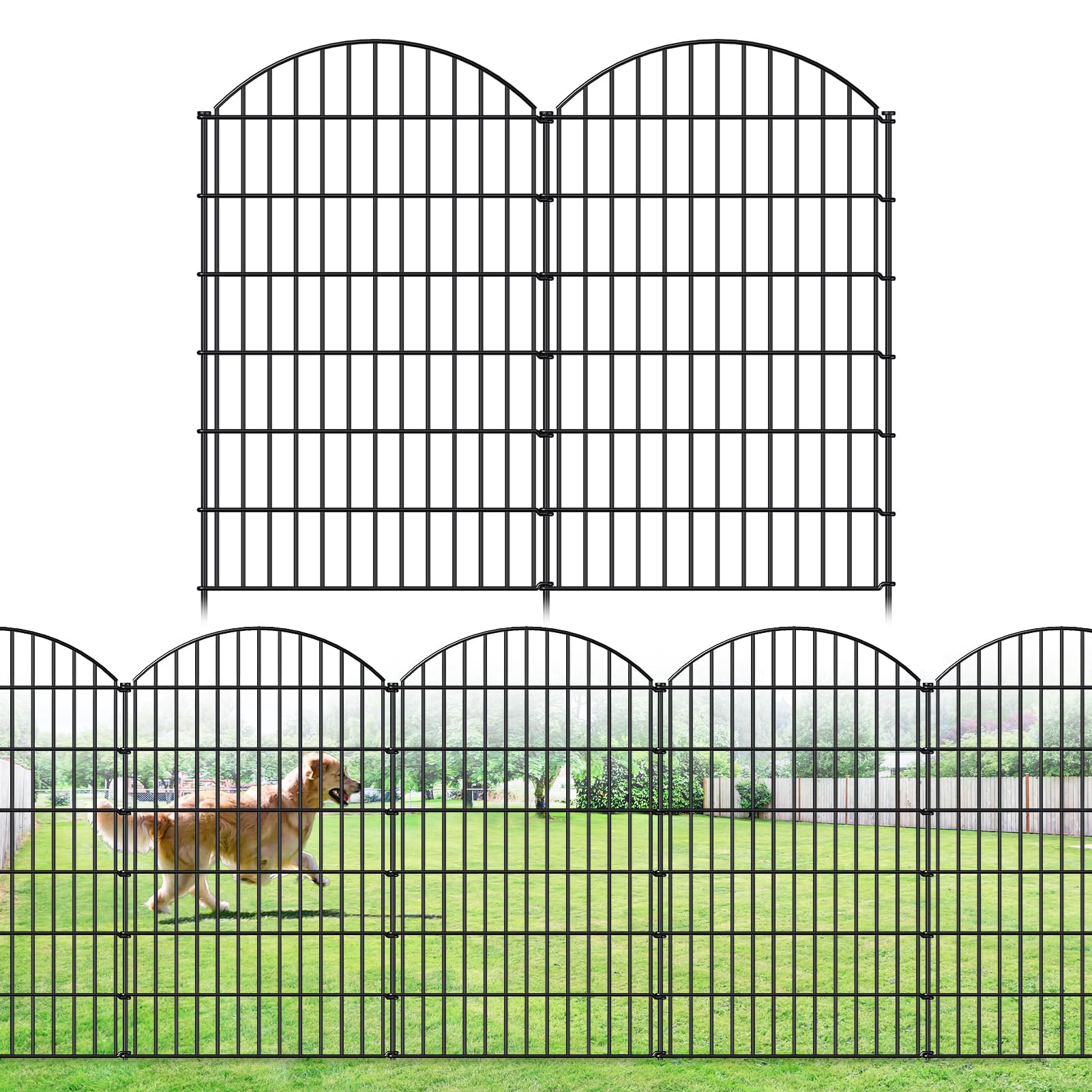
This is the fence you buy when you want it to work on day one with zero fuss. Each panel is welded from Gauge 9 iron wire, standing 48 inches tall and 31 inches wide. The whole set spans 20.3 feet and includes nine stakes. You slide the stakes through the metal loops on each panel and hammer them into the dirt — that is the entire installation. Buyers report it is “perfect fencing for our garden and it keeps the dog out,” and the black powder-coat finish blends into the landscape so the flowers, not the fence, catch your eye.
The kit covers a small-to-medium bed neatly, but you can extend it infinitely by adding more panels — the design has no hard limit. It weighs 39.4 pounds, compared to the 3.4 pounds of the plastic options below; that heft is what keeps it planted when a deer bumps into it at dusk. The trade-off is that this is a decorative-height barrier — 48 inches is not tall enough to stop a determined deer from jumping, so it works best in combination with a taller backstop or in a yard where deer are casual visitors, not a daily herd.
What wins people over
- Superb build quality from heavy-gauge welded iron — feels like a permanent fixture.
- No-dig install that takes minutes per panel; the only tool needed is a rubber mallet.
- Extremely flexible layout: rearrange panels or add more without buying a whole new kit.
The one honest caveat
- At 48 inches, it is a visual and dog barrier, not a jump-proof deer fence by itself.
- Each panel is 31 inches wide, so a large enclosure needs many panels to cover the ground.
Reach for this if: you have a small garden, a medium dog, and want a fence that looks like it belongs in a magazine spread. It is the crowd favorite — a top rating from hundreds of buyers who praise its sturdiness and clean look.
Look elsewhere if: you need to stop deer from jumping over a six-foot wall. This is a ground-level barrier, not a full-height exclusion fence.
2. ORIVOGAS Plastic Mesh Fence 4x75ft
A featherlight 3.4-pound roll that covers 75 feet without breaking your back or your budget.
This is the netting that redefines what “heavy duty” can mean when it weighs almost nothing. The material is 55 gsm high-density polyethylene (HDPE). The mesh squares are 5/8 inch, tight enough to stop a fawn’s nose and too small for most bird heads to get stuck. Owners mention it has been “effective for 3 months against deer and pests in a high-deer area,” and the package includes 50 zip ties and 8 ground stakes so you have everything you need on delivery day.
At 48 inches tall and 75 feet long, it covers a lot of linear ground for its price point. The reinforced edges have an integrated drawstring rope that helps pull the mesh taut so it does not sag between posts like a loose laundry line. One careful note from the reviews: if you cut the netting, the cut edge can unravel, and tying it off neatly takes a little patience. For the money, this is the entry point that punches well above its weight class — but a deer that really commits can push through lightweight netting if the posts are not solid.
Smart budget move: If you are fencing a large vegetable patch on a tight budget, this gives you 75 feet of coverage for a fraction of the cost of metal. The durability is the most-praised feature by far — owners mention it standing up to summer sun and fall storms without tearing. Keep an extra pack of landscape staples on hand for the bottom edge if groundhogs are also part of your local wildlife cast.
3. Fencer Wire 7 ft x 100 ft Garden & Plant Protective Netting
A seven-foot wall that lets birds fly past but stops a buck in his tracks.
The defining spec here is the height: 84 inches (7 feet), which is the minimum most experts recommend for a jump-proof deer fence. The roll runs 100 feet long and weighs just 8 pounds, so you can carry the entire thing under one arm. The mesh is 3/4 inch — small enough that a deer cannot push a hoof through to tear it, but large enough that beneficial pollinators move freely. As the makers put it, “our 3/4 inch mesh provides maximum protection without harming birds and small animals or interfering with plant growth.”
This netting is made from polypropylene and is designed not to tangle or snag on branches. It folds and unfolds easily for re-use season after season. If you need to cover a smaller area, you can cut it without the edges fraying into a mess. Customers note it lasting five-plus years in harsh mountain weather, with one owner noting: a deer ran straight into it, the mesh held, and the post bent instead of the netting breaking. The main point of friction is the material itself — some buyers expect a wire feel and are surprised to find it is a heavy plastic. Do not confuse it with flimsy bird netting; this is a different class of product.
The long-range specialist: This is the best choice for orchards, large vegetable gardens, and anyone who cannot afford a deer breach. The 100-foot length gives you 100 feet of coverage versus the 20.3 feet of the metal panels above. Just be prepared to set proper posts — the netting itself is not self-supporting.
4. AVELOTUUG Animal Barrier Fence 42.5 ft x 13 in

The low-profile barrier that fills the gap under your gate and stops the dig-out artists.
Sometimes the problem is not deer jumping over the top — it is dogs and rabbits burrowing under the bottom. This fence is only 13 inches tall, but it is the solution to a very specific frustration. It comes as 30 individual metal panels that connect via zip ties (included, along with gloves and cutting pliers). The gap between the bottom of your existing fence and the ground is exactly where this goes. It is designed to stop a determined digger from tunneling to freedom. Reviewers point out their dogs “tried to dig out in several places but couldn’t get out.”
The metal carries a rustproof coating and the panels are welded, not just bent wire. At 42.5 feet total length, you can line a decent stretch of existing fence. The stakes are sharp on the bottom so you just push them into the soil by hand. The trade-off is that hard, compacted clay can make insertion tough — some owners recommend soaking the ground first. If your goal is a standalone garden fence tall enough to stop deer, this is not the right tool. But as a companion to a larger barrier, it is genuinely useful.
Best used as: a ground-level add-on beneath a taller fence or gate. The pet-safe aspect is the most-discussed feature by a wide margin — owners with escape-artist dogs swear by it. If your yard is all rock or tree roots, the thin stakes may struggle to find purchase.
5. Jobes Jobe’s Deer Barrier Fencing 7 ft x 100 ft

The 7-foot roll that has been a garden staple for years, and for good reason.
Jobe’s is one of those products that has earned its reputation the hard way — through years of customer use. It is a 7-foot tall, 100-foot long roll of UV-treated polypropylene that will not rust, rot, or corrode like metal or wood. The grid spacing is roughly 1 1/8 inch by 7/8 inch, which is tight enough to stop a deer’s nose but not so tight that it casts dense shade on your plants. Buyers who have used it for two years in the punishing Arizona sun report it holds up well with no visible UV damage.
what separates it is the weight and feel — it is noticeably thicker and stiffer than standard bird netting, which makes it easier to tension between posts without sagging. It attaches cleanly to trees and wooden posts with zip ties, and the black color makes it nearly invisible from a short distance. The honest limitation is sturdiness: it is a plastic mesh, so a fully grown buck hitting it at a run can stretch it, and heavy snow loads can push it down. Buyers recommend using quality UV-protected zip ties and setting posts no more than eight feet apart to keep the tension even.
The reliable workhorse: Deer containment is the most-praised aspect by a large margin — owners trust it to keep herds out season after season. If you need a broad, tall fence for a medium to large garden and you are willing to set proper posts, this is the pick that has the most real-world miles on it.
6. Falanava Farm Fence 4ft x 164ft
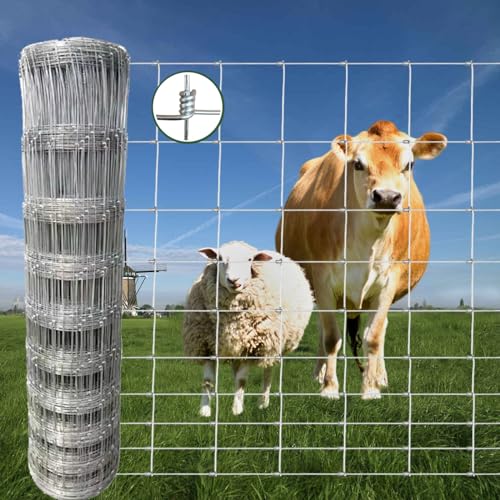
A 164-foot spool of galvanized wire meant for serious livestock and deer pressure.
This is a field fence, not a garden border — the scale is different. It is 4 feet tall and 164 feet long, and the material is hot-dipped galvanized alloy steel wire that is twisted, not welded. That twist construction gives it enough flex to handle uneven terrain without snapping. The mesh openings are scientifically designed: larger at the top to save material weight, and progressively smaller toward the bottom to stop rabbits, chickens, and other small animals from slipping through. A single roll covers a lot of ground — over five times the length of the 20-foot panel sets.
The honest reading from owner experience is mixed here. Some find it genuinely strong and standing up to the elements. Others describe it as flimsy for the price and warn that the wire knots can catch on each other when unrolling. It is also note that the wire is high-tensile, which means you need a good pair of wire cutters to trim it — regular household scissors are not going to work. This fence suits a rural property where the goal is a functional perimeter, not a decorative garden edge.
For the rural homestead: The 164-foot length and tapered mesh design make it a strong candidate for large gardens, orchards, or pastures. The quality is the most-praised aspect. If your soil is soft enough for T-posts and you need to fence a long boundary affordably, this is worth a look. Spend the time to unroll it carefully — the high-tensile wire unspools with some energy.
7. TENAX Deer Control Fence 7.5 ft x 165 ft
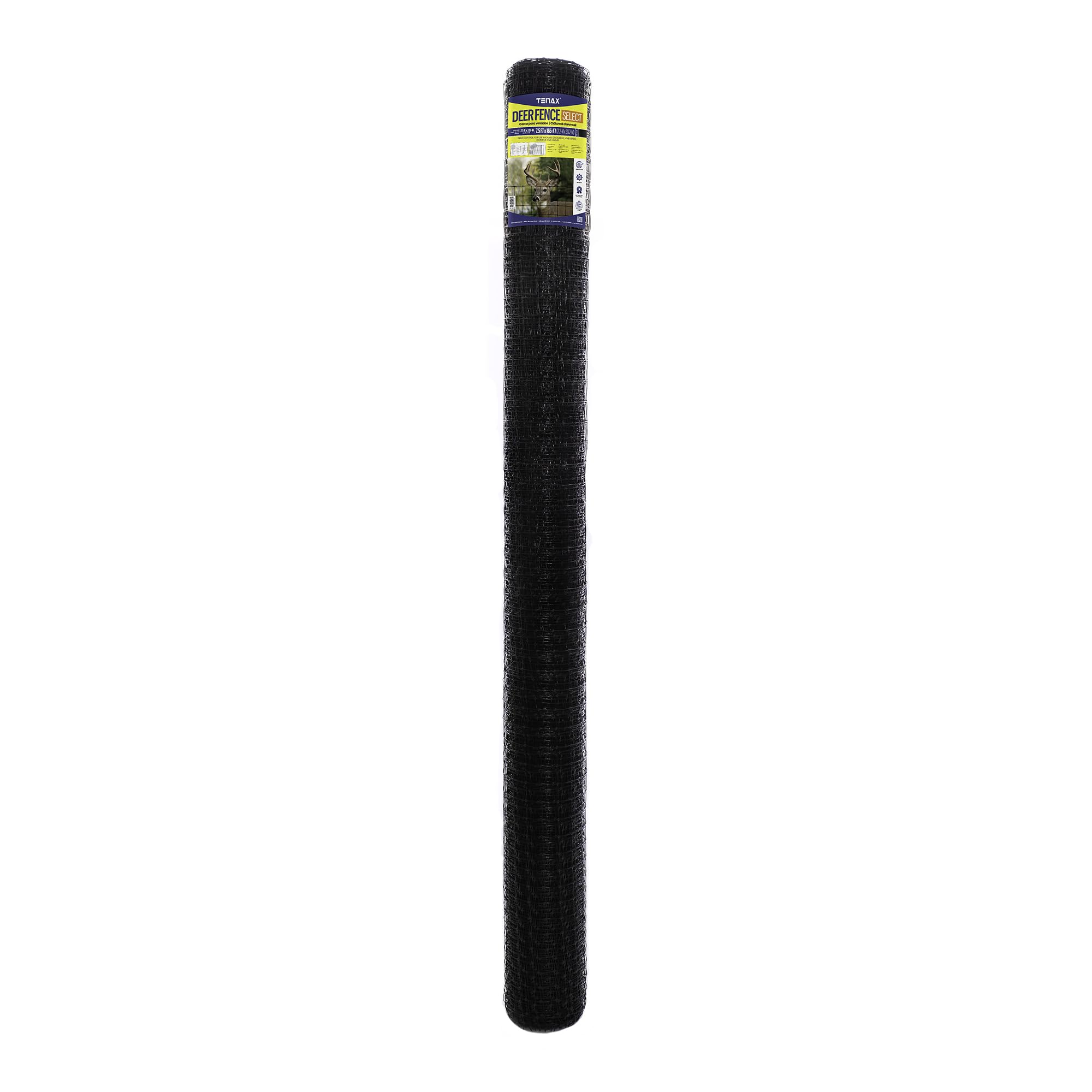
The one you buy when you are done replacing fences every three years.
TENAX says this fence will last 10-plus years, and the reviews back that up. The polypropylene material is noticeably denser and stiffer than budget rolls — shoppers say no sagging or wrinkles over time, even under snow load. The roll is a towering 7.5 feet tall by 165 feet long, giving you the most coverage per roll of any pick here. The mesh is a generous 1.77 inches by 1.97 inches, which means it casts almost no shade and is nearly invisible from a few feet away. As buyers report, it “looks good” and is “not overly obvious or intrusive.”
Installation requires two people — unrolling a 27-pound, 7.5-foot roll solo is awkward. Owners recommend setting 10-foot T-posts every 9 feet and securing the mesh with zip ties. This is the premium choice for the gardener who wants to install it once and forget about it for a decade.
The low-maintenance choice: Durability is the most-praised aspect, and the 10-year lifespan claim is unusual in this category. The buy it for life philosophy applies here — there may be cheaper rolls, but none that last as long.
8. FXW No Dig Garden Fence 40 in x 36.4 ft
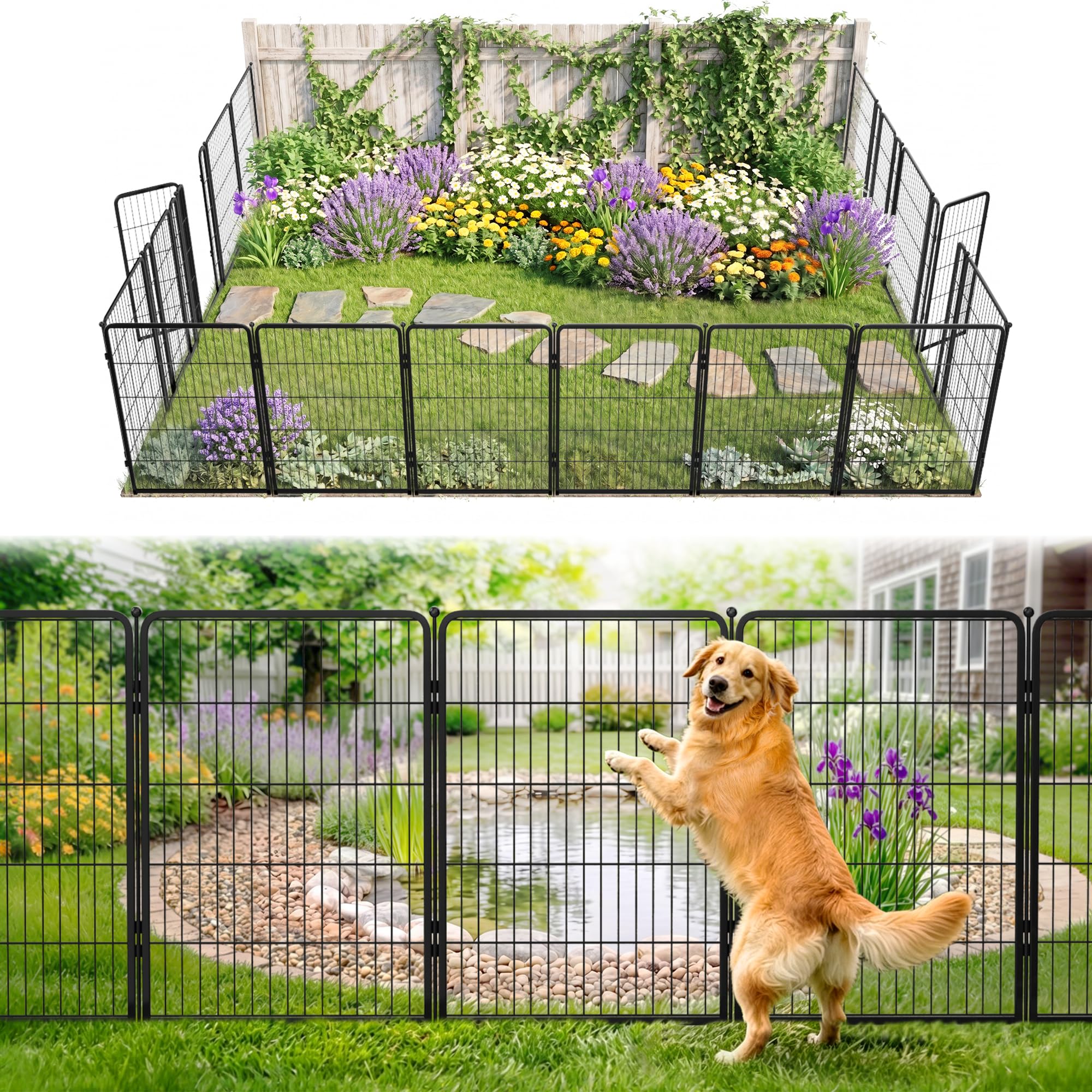
A powder-coated metal fence that looks like it belongs on a show garden but stands up to a Great Dane.
This is the heavy-duty alternative to the FOREHOGAR pick if you want more height and a built-in gate. It consists of 14 panels plus 2 gate pieces, each panel 40 inches tall and 2.28 feet wide, for a total run of 36.4 feet. The metal has been independently tested by Intertek and passes California Proposition 65, so there is no guesswork about safety around kids or pets. The stakes have rounded ball tips so nobody accidentally impales themselves on a sharp edge. Buyers describe it as “versatile, durable, effective, and easy to use,” and note that it withstands heavy rain, heat, and wind without budging — one owner uses it to contain a Great Dane.
The no-dig assembly is straightforward: align the rings on adjacent panels and thread a stake through them. The whole arrangement can be reshaped or moved without tools. At 67.5 pounds, this is the heaviest kit in the review — the weight reflects the solid metal construction, but it also means you are not moving it around casually every weekend. The honest limitation is that 40 inches is still not a jump-proof deer barrier on its own. It works best as a pet enclosure or as a lower tier of a multi-layer defense system.
What owners love
- Independent safety testing (Intertek) and Proposition 65 certified — rare in this category.
- Sturdy enough to withstand a large dog charging into it; the panels do not fold or collapse.
- Two included gates make it easy to walk into the garden without stepping over.
The trade-off
- Heavy — at 67.5 pounds, this is not a fence you reposition on a whim.
- 40-inch height is decorative and pet-grade, not a standing deer jump barrier.
Perfect for: the gardener who wants a beautiful, dog-proof enclosure with a gate, backed by third-party safety certification. If your main worry is your dog trampling flower beds rather than deer clearing the top, this is the premium option.
skip it if: you need a deer-proof perimeter — pair it with a taller netting layer on top, or choose one of the 7-foot options instead.
Understanding the Specs
Mesh Size
The size of the opening between the strands of the fence. A mesh that is too large (over 4 inches) lets a fawn’s head slip through — they can get stuck or push the rest of their body past. A mesh that is too small (under 1/2 inch) blocks pollinators and starts to shade plants. the balance for a garden deer fence is between 3/4 inch and 2 inches. A fence with a 3/4 inch mesh also stops squirrels and rabbits, while a 2-inch mesh lets beneficial insects through freely.
UV Resistance
Plastic netting left outdoors in direct sunlight will eventually become brittle and crack. UV resistance is a chemical additive in the plastic that slows down this breakdown. A fence marked “UV treated” can last several years in full sun, while a basic untreated net may only survive one season before turning into a fragile web that falls apart at a touch. If your fence will be up from spring through fall, this one spec is the difference between re-using it next year and throwing it in the trash.
Height Requirements
A healthy white-tailed deer can easily clear a 6-foot fence from a standstill. The generally accepted safe height for an exclusion fence is 7 to 8 feet. A 4-foot fence will stop a dog and discourage a casual deer, but a hungry deer that knows food is on the other side will jump it without hesitation. A 7-foot or taller fence forces the deer to make a choice — most will look for an easier food source rather than risk the jump.
Gauge and GSM
Gauge refers to the thickness of metal wire — a lower gauge number means thicker, stronger wire. Garden fences often use 9-gauge to 14-gauge wire. GSM (grams per square meter) is the density of plastic netting. A higher GSM (like 55 gsm) means the netting is heavier, denser, and harder for a deer to tear. A 55 gsm net is noticeably sturdier than a 20 gsm net that feels like tissue paper. Do not buy a net that does not list its GSM — you are probably getting the thin stuff.
FAQ
How tall does a garden deer fence really need to be?
Will a plastic deer fence really keep deer out, or do I need metal?
Can deer jump a 4-foot fence?
What is the best mesh size for keeping both deer and rabbits out?
How do I install a deer fence without digging post holes?
Will a deer fence also keep my dog in the yard?
How long does plastic deer netting last before the sun breaks it down?
Can I use a deer fence as a trellis for climbing plants?
Final Thoughts: The Verdict
The best garden deer fence depends on which problem you are solving today. The FOREHOGAR Metal Garden Fence is the overall winner for a small, attractive, dog-proof enclosure — it is the highest-rated pick with the strongest build quality and thousands of satisfied owners. If you need a tall barrier that actually stops deer from jumping into a large vegetable garden, the Jobe’s Deer Barrier Fencing or the Fencer Wire 7 ft Netting are your move, offering 7-foot height and proven track records. And for anyone covering a significant boundary and wanting to install it once for the next decade, the TENAX Deer Control Fence is the low-maintenance premium option that justifies its cost through longevity alone.
How We Picked
We do not accept paid placement. Every pick is matched to a real buyer and a real use-case; we do not hands-on test units.
Sources & Methodology
Specifications: manufacturer listings and product documentation. Review insights: verified customer reviews, as of July 2026. Pricing: not shown on this page (it changes often); check the current price via the retailer link.
As an Amazon Associate, Lawn Gear Lab earns from qualifying purchases. This does not affect which products we feature.