
Specs are compiled from manufacturer listings and verified buyer reviews and can change over time — please confirm the key details on the product page before buying.
Your lawn looks patchy with moss or yellowing grass that stays tired no matter how much you water it. The missing piece is often iron. Ferrous sulphate (a type of iron salt) gives you a fast, visible green-up and kills moss on contact. But the products vary wildly in form, concentration, and ease of use. You want a moss killer that turns moss black in an hour, a soil acidifier for high-pH soil, or a liquid that greens your lawn overnight without mixing. The Alpha Chemicals Ferrous Sulfate, at 20% iron and a 5-pound bag, delivers the fastest moss kill at the best value because it is exactly the same chemical as branded moss killers for a fraction of the cost.
I’m Rikta — the founder and writer behind Lawn Gear Lab. This guide is built by comparing the manufacturers’ published specifications and the patterns across verified customer reviews, so you get each pick’s real strengths and trade-offs instead of marketing spin.
These are the best ferrous sulphate for lawns options you can buy today.
Our Picks at a Glance
How To Choose The Best Ferrous Sulphate For Lawns
Not all iron products work the same way on your lawn. Your choice depends on three main things: what you are treating (moss, yellowing grass, or soil pH), how much time you want to spend mixing, and whether staining concrete matters to you.
Form Matters: Powder vs Granules vs Liquid
Powder dissolves fastest for a foliar spray that greens leaves within days. Granules are slower but easier to spread across a large lawn with a spreader. Liquid is the easiest — just attach a hose and spray — but you get less total iron per dollar.
Iron Percentage and Purity
Nearly all products here carry 20% iron (Fe) from ferrous sulfate heptahydrate. That is the standard. A product with a higher percentage means less dust per application, but check whether it is fully water soluble to avoid clogging your sprayer.
The Staining Factor
Almost all iron products can stain concrete, stone, and clothing if you let them dry. The one exception on this list is Monterey Dr. Iron — it uses an oxide form that stays rust-coloured until it converts in the soil, so spilled pellets on your driveway leave no mark.
Quick Comparison
| Model | Best For | Form | Iron Content | Weight | Amazon |
|---|---|---|---|---|---|
| Alpha Chemicals Ferrous Sulfate★ Best Overall | Moss killing & value | Powder | 20% | 5 lbs | Amazon |
| Greenway Biotech Ferrous SulfateBest Value | Precise application & pH | Powder | 20% | 1 lb | Amazon |
| GRANDAN Ferrous Sulfate | Versatile gardening | Granules | 20% | 2 lbs | Amazon |
| OULLYY Ferrous Sulfate | Soil conditioning & blooms | Granules | 20% | 3 lbs | Amazon |
| Simple Lawn Solutions Energizer | Quick liquid green-up | Liquid | 5% | 1 qt | Amazon |
| Monterey Dr. Iron | No-stain soil acidifier | Granules | 22% | 21 lbs | Amazon |
In‑Depth Reviews
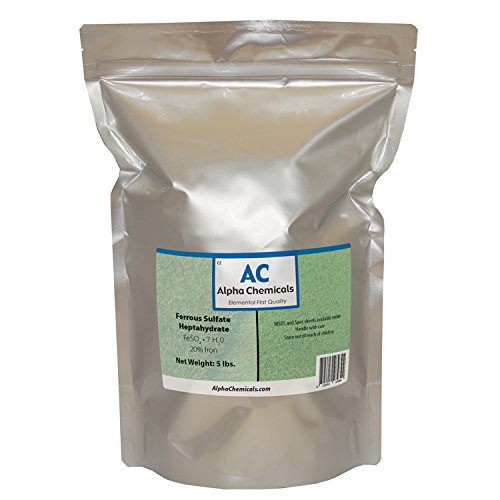
1. Alpha Chemicals Ferrous Sulfate Heptahydrate
Our pick — over 4.5★ from 400+ verified ratings; the strongest balance of quality and price.
Greens clumps and kills moss hours after you spray it — for less than a branded moss killer.
Buyers report: “Was surprised at how quickly this worked to turn the moss black, and it remains so over days until I raked it out.” That is the core appeal — it is the exact same active ingredient found in expensive moss-killing products, and it costs a fraction of the price. A 5-pound bag gives you enough supply to treat a large lawn season after season. Mix 2-3 cups of this powder in 2 gallons of water and the moss turns black within an hour. It also darkens the grass itself, giving your lawn a deep green boost. The downsides: the bag does not seal well, so you want to transfer the powder into a sealed container. It also stains concrete and wood if you do not rinse immediately.
At 20% iron in a fully soluble heptahydrate powder, this is the straight raw material that works fast. Hundreds of owners rate it strongly, and most praise its moss-killing speed and value. One caution: this powder is not formulated with a buffer. Follow a mix guide — 0.5 cup per gallon of warm water is a common ratio — and apply on a cloudy, cool day to avoid leaf burn.
Versatility is another strong point. Owners use it on centipede grass, as a wood protectant against bugs and mold, and even to age wood gray. The 5-pound bag gives you way more for your money than the 1-pound specialty products.
Why it wins
- Kills moss in about an hour — visibly blackens it
- Massive 5-pound bag provides excellent value
- Versatile: lawn green-up, garden beds, wood aging
Know before you buy
- Bag doesn’t reseal properly; transfer to a sealed jar
- Stains concrete, wood, and clothing instantly
Best for: anyone with a heavy moss problem who wants the cheapest, fastest fix without paying for brand-name packaging.
Think twice if: you need a non-staining formula for a lawn with adjacent concrete patios or white fencing.
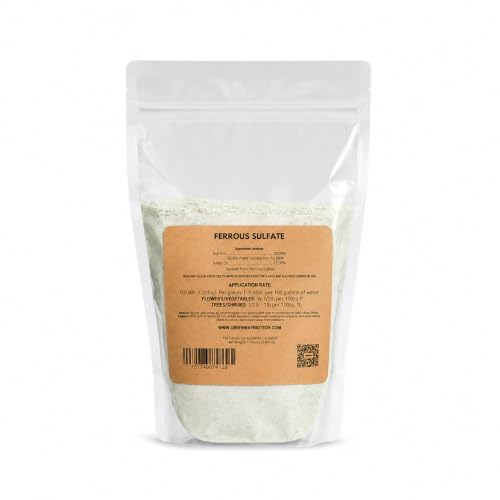
2. Greenway Biotech Ferrous Sulfate 20% Iron
A precision tool for iron-starved lawns and acid-loving gardens.
One owner described this as the “best product in decades for iron deficiency in citrus on heavy red clay soils.” That gives you the picture: Greenway Biotech is for targeted correction of chlorosis (the yellowing between the veins of new leaves). At 20% soluble iron in a fine powder, it dissolves completely for foliar spray, soil drench, or broadcast. Owners say it greened up Kentucky bluegrass, restored cut flowers after a wet spring, and even lowered soil pH over time. A 1-pound bag covers 10,000 square feet for two applications, which makes it very concentrated. The catch: the fine powder can clog sprayers if not fully dissolved first. A warm water pre-mix and a strainer solve that.
What owners praise most is the effectiveness — the product works consistently for lawns, trees, and shrubs. The second-most appreciated trait is the rich dark green color it produces. It is made in California by a family-owned company since 1989, and third-party tested for iron content and heavy metals. That traceability is a big plus if you are particular about what goes on your soil. Compared to the Alpha Chemicals product above, this is a smaller bag by weight (1 lb vs 5 lbs) but has the same 20% iron concentration and costs a little more per pound. You are paying for the brand reliability and the specific formulation trusted by serious gardeners for decades.
Mix it at 1 tablespoon per gallon for a foliar spray, or broadcast at the rate of 1/4 to 1/2 lb per 100 square feet. It works fast — owners mention visible results in 4-6 weeks on mature trees.
Precision pick: the go-to for treating yellowing leaves on acid-loving plants like blueberries, azaleas, and gardenias.
Price note: smaller bag than some rivals, but the concentration and brand trust make it a fair deal for targeted use.
Reach for this if: you have specific chlorosis issues or want a fine powder that dissolves completely for spray application.
Look elsewhere if: you need to cover a massive lawn in one go — you will want the 5-pound bag from Alpha Chemicals instead.
3. Monterey Dr. Iron Soil Acidifier
The non-staining iron that lowers soil pH without the mess.
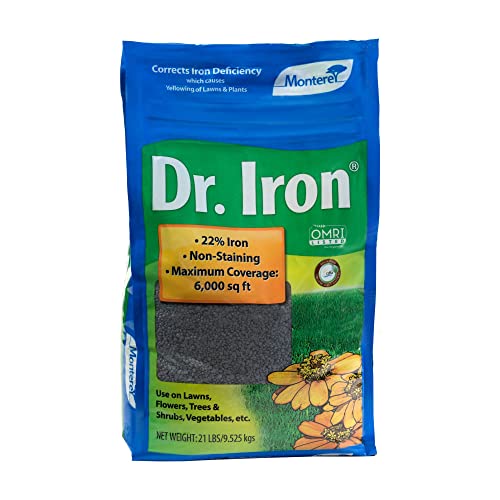
This is the only product on the list that is designed to not stain concrete, and owners confirm it. The secret: it uses an oxide form of iron that stays rust-coloured until it contacts soil moisture and converts to the sulfate form. That means you can broadcast it over your lawn right next to the driveway without orange blotches. It contains 22% iron and 55% sulfur, which is a higher iron content than the standard 20%, plus sulfur to actively lower soil pH. It is OMRI-listed (Organic Materials Review Institute-listed) for organic gardening, so the brand says it qualifies for use under the USDA National Organic Program.
Owners praise its effectiveness for centipede lawns and for deep greening of St. Augustine grass. The 21-pound bag covers a large area, making it the most cost-effective option for acreage despite the higher upfront cost. It is granular, so you apply it with a spreader — no mixing, no spraying, no clogging. The main trade-off: it works slower than a liquid spray or a dissolved powder. You apply it monthly (one owner reported putting it down once a month), and it takes time for the soil moisture to convert the oxide into plant-available sulfate. Also, several owners note it is expensive compared to raw ferrous sulfate — you are paying for the non-stain, slow-release convenience.
For desert soils with high pH (8.2 in one owner’s case), this product is a lifesaver. One application at a quarter of the recommended rate turned crops deep green without root burn. It is a premium investment, but for anyone with a high-traffic lawn next to hardscaping, it solves the staining headache that every other iron product causes.
Premium advantages
- Won’t stain concrete driveways, patios, or sidewalks
- 22% iron + 55% sulfur — highest iron content on this list
- OMRI-listed for organic gardening
- Large 21-lb bag for extensive coverage
The honest trade-off
- Slower acting than liquid or water-soluble powder
- Higher price per pound than raw ferrous sulfate
The verdict on this one: if your priority is keeping concrete clean while lowering soil pH for centipede or St. Augustine grass, Monterey Dr. Iron is your pick.
Not for you if: you need a quick spot-treatment for moss or immediate green-up — choose a fast-dissolving powder instead.
4. Simple Lawn Solutions Lawn Energizer
Spray it from a hose and watch your lawn turn deep green without mixing powders.
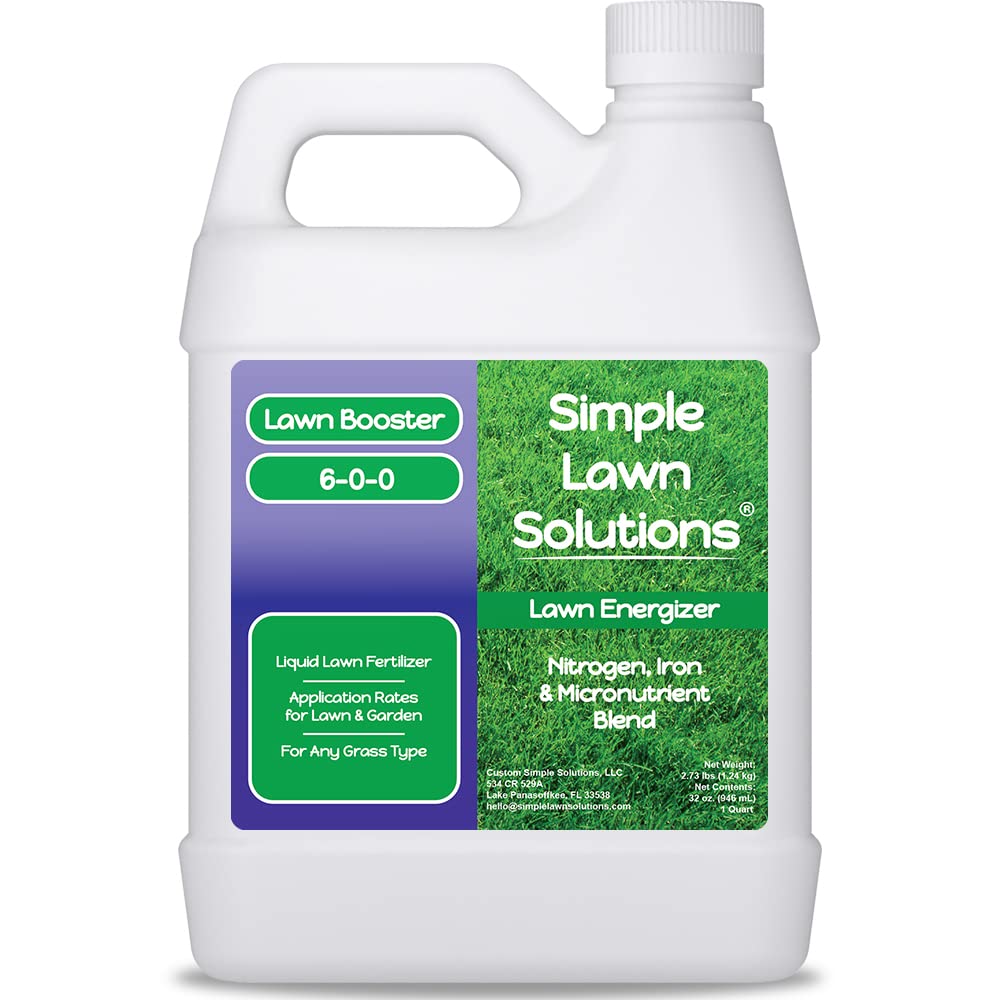
This is not pure ferrous sulphate — it is a blended liquid with 6% nitrogen and 5% iron, plus sulfur, magnesium, and manganese. That makes it a complete micronutrient booster rather than a single-ingredient iron source. The big selling point is convenience: you attach a hose-end sprayer or just use a watering can, and you are done. No measuring powder, no dissolving, no waiting for granules to break down. One owner said their “grass took off!! Lush and green” and even their landscaper noticed the improvement. Another noted that it is natural and safer for kids and pets compared to some chemical fertilizers.
Because it is a liquid, the iron percentage is lower than the powder products — 5% iron versus 20% — so you are paying more per actual gram of iron. That is the trade-off for the ease of use. The owners who love it are those who want a quick, easy green-up for a small to medium lawn without any mixing hassle. It works on all grass types: Bermuda, St. Augustine, Zoysia, Fescue, Ryegrass, and Kentucky Bluegrass. It is also versatile enough for indoor plants, ornamentals, and vegetables. The product is made in the USA by a family-owned business with over 25 years of experience in the commercial turf industry.
A note on application: iron in liquid form still stains concrete, so rinse any overspray immediately. One owner specifically warned about that. But for pure convenience and a fast visible result, this is the easiest product to use on the list.
easy green-up: the best choice if you simply want a darker lawn without measuring, mixing, or messing with powders.
Cost reality: you are paying for convenience — the iron per dollar is lower than bulk powders, but for most small lawns, a quart lasts the season.
Reach for this if: you want a simple liquid you can spray and forget, especially for a small lawn or container plants.
skip it if: you are treating a large moss problem or need high-concentration iron — the liquid is diluted compared to 20% powders.
5. GRANDAN Ferrous Sulfate Heptahydrate
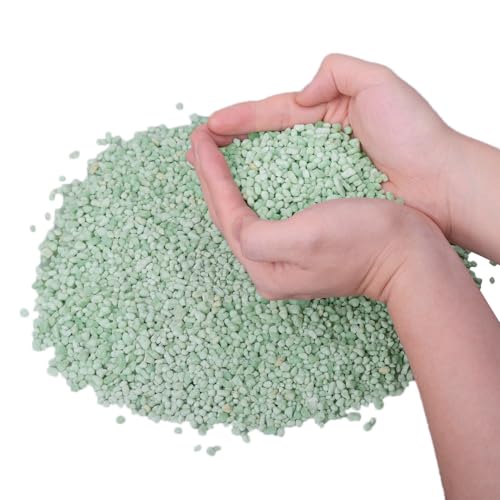
An entry-level 20% iron boost for small citrus trees and vegetable beds.
This 2-pound bag of granules gives you the standard 20% iron plus 12% sulfur. It is water-soluble, so you can dissolve it for a foliar spray or sprinkle it as a soil amendment. The primary use-case here is combatting iron-deficiency yellowing in plants. One owner with a lemon tree said, “my lemon tree is green again” after using it. Another noted that it provides ample nutrients for plants and flowers and is very easy to use. The mix ratio is 1-2 tablespoons per gallon, which is straightforward. The granules are stable and easy to store — no risk of powder clouds when you open the bag.
The main complaint from owners is that the price feels a bit high for a 2-pound bag. You are paying a premium for the granule form factor and the convenience of a resealable package. It is best suited for small-scale gardeners who want a grab-and-go solution without storing a big bag. If you have a huge lawn, you will get better value from the bulk powder options.
GRANDAN brands this as an organic lawn fertilizer for vegetables and plant growth. It is a decent choice for potted plants, raised beds, and small gardens where you want a clean, easy-to-measure granule. Just be aware that the per-pound cost is higher than the competition. The 2-pound bag is also only 32 ounces — exactly half the weight of the Greenway Biotech product above, but the same 20% iron concentration.
Good for small spaces: fits a garden shed shelf without taking up room, and the granules are less messy than powder.
Value note: cost per pound is higher than bulk options — ideal for a small garden, not for acreage.
Best if you have: a few citrus trees or a small vegetable garden and want a simple, granule-based iron supplement.
Think twice if: you are treating a large lawn or heavy moss — you will need to buy multiple bags to match the value of a 5-pound powder.
6. OULLYY Ferrous Sulfate Fertilizer
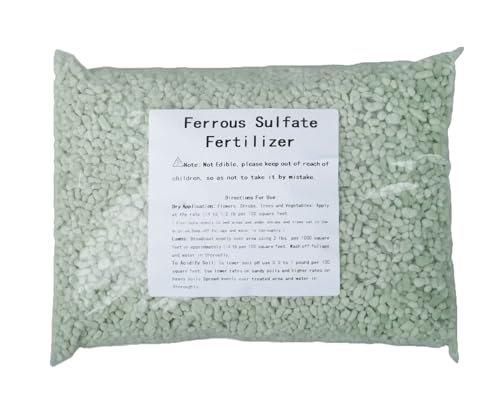
A straightforward 3-pound bag for soil conditioning and deeper green lawns.
OULLYY sells this as a ferrous sulfate heptahydrate granule with 20% iron and 12% sulfur. It is 99%+ water soluble, meaning you can dissolve it completely for a liquid feed or spread it as a dry soil conditioner. Customers note that it kills weeds (turns them black) and greens grass, and it definitely helps plants produce blooms. The label suggests mixing at a 1:500 ratio with clean water for a root drench, applied every 30 days. For lawns, it recommends 2 lbs per 1000 square feet, with a thorough water-in after application.
The honest feedback from owners is that the packaging does not give clear instructions for home gardeners. The label looks like it is meant for professional or bulk use, with small-print guidance that can be confusing if you are new to iron treatments. One owner specifically wished for simpler dosage guidelines for home gardens. That is the main weakness here — the product itself works, but you may need to do your own research on application rates if you are a beginner. The coverage guide is there (1/4 to 1/2 lb per 100 square feet for beds, 2 lbs per 1000 square feet for lawns), but it takes some reading to find it.
At 3 pounds, this sits between the 2-pound GRANDAN bag and the 5-pound Alpha Chemicals bag in terms of value. The price per pound is competitive, though not as cheap as the bulk powder. It is best for a mid-size garden where you need a moderate supply for flowers, shrubs, and a small lawn. The granules are easy to spread by hand or with a small spreader.
What works
- 99%+ water soluble — dissolves fully for sprays
- 3-pound bag is a good middle-ground size
- Effective for greening grass and killing weeds
What could be better
- Packaging lacks clear instructions for home gardeners
- Granules may need more water-in time than powder
Best for: gardeners who are comfortable looking up their own mixing ratios and want a mid-size supply for flower beds and lawn patches.
Not ideal for: beginners who need explicit step-by-step directions on the label.
Understanding the Specs
Iron Content
The percentage of elemental iron (Fe) in the product. Most ferrous sulphate products offer 20% iron, which is the standard concentration for effective moss killing and lawn greening. The higher the percentage, the less product you need to apply. Monterey Dr. Iron stands out at 22% iron, but it is in a slow-release oxide form.
Form: Powder vs Granules vs Liquid
Powder dissolves fastest and works best as a foliar spray for immediate results. Granules are slower but easier to spread over large areas with a spreader — they release iron as they dissolve in soil moisture. Liquid is the easiest for small lawns or spot treatments, but has the lowest iron percentage per dollar.
Staining Risk
Most iron products will stain concrete, stone, wood, and clothing orange or rust-brown if they dry on the surface. Rinse immediately if overspray hits hardscaping. The exception is Monterey Dr. Iron, which uses iron in an oxide form that does not stain until it reacts with soil moisture.
Water Solubility
Products labeled “water soluble” dissolve completely in water for foliar sprays or soil drenches. Finer powders dissolve faster. Granules may take longer and can clog sprayers if not fully dissolved — some owners recommend dissolving in hot water and straining first.
FAQ
How fast does ferrous sulphate green up my lawn?
Will ferrous sulphate kill moss permanently?
Can I use ferrous sulphate on any grass type?
How do I apply ferrous sulphate without staining my driveway?
What is the difference between ferrous sulphate and chelated iron?
How often should I apply ferrous sulphate to my lawn?
Is ferrous sulphate safe for pets and children?
Can ferrous sulphate lower soil pH?
Should I mix ferrous sulphate with other fertilizers?
How much ferrous sulphate do I need for a 5000 sq ft lawn?
Final Thoughts: The Verdict
Across the board, the ferrous sulphate for lawns winner is the Alpha Chemicals Ferrous Sulfate because it combines the fastest moss kill with the best value at 5 pounds for the price of a single branded moss killer. If you want precision correction for chlorosis on specific plants, grab the Greenway Biotech Ferrous Sulfate. And for a no-stain, slow-release soil acidifier that is also organic-approved, the Monterey Dr. Iron is the one to reach for.
How We Picked
We do not accept paid placement. Every pick is matched to a real buyer and a real use-case; we do not hands-on test units.
Sources & Methodology
Specifications: manufacturer listings and product documentation. Review insights: verified customer reviews, as of July 2026. Pricing: not shown on this page (it changes often); check the current price via the retailer link.
As an Amazon Associate, Lawn Gear Lab earns from qualifying purchases. This does not affect which products we feature.