
Specs are compiled from manufacturer listings and verified buyer reviews and can change over time — please confirm the key details on the product page before buying.
A numb plant is a dead plant. The single hardest part of winter greenhouse ownership is picking a heat source that keeps the chill off your seedlings without turning tender leaves into crispy tufts. Standard space heaters cycle on and off hard, creating volatile temperature swings that shock growth. You need something that can run reliably in a damp, dusty, unheated shed of glass — and that is a much taller order than a typical living-room plug-in.
I’m Rikta — the founder and writer behind Lawn Gear Lab. This guide is built by comparing the manufacturers’ published specifications and the patterns across verified customer reviews, so you get each pick’s real strengths and trade-offs instead of marketing spin.
Every greenhouse gardener knows the dread of a sub-freezing forecast, which is why we’ve pulled together a reset on what matters in best greenhouse heaters — from BTU output and safety shutoffs to the quiet, constant hum that healthy roots depend on.
Our Picks at a Glance
How To Choose The Best Greenhouse Heaters
Picking a greenhouse heater is different from picking one for your living room. Greenhouses lose heat fast through their glazing, they trap high humidity, and they often sit on a separate circuit. You need to match the heater to the cubic volume of the space, the climate zone, and the sensitivity of your plants — not just the square footage.
Match Heat Output to Your Space, Not Your Budget
British Thermal Units (BTU) or wattage tells you how much heat the unit can generate. A rough rule for an average greenhouse is about 10–15 watts per square foot in mild climates, but you may need double that in a zone 4 winter. If the heater is undersized, it will run constantly and never catch up. If it is oversized, you risk temperature spikes that stress seedlings.
Safety Features Are Non-Negotiable in a Wet Space
A greenhouse is essentially a high-humidity enclosure with electrical equipment. Look for a unit with overheat protection, tip-over shutoff, and ideally an IPX4 splash-proof rating (meaning it resists water splashing from any direction). Flame-retardant casing materials add a further layer of confidence.
Thermostat Type Determines How Stable the Temperature Is
A basic bimetal thermostat clicks on and off at set thresholds, causing temperature swings of 5–10 degrees. A digital thermostat with hysteresis control (a dead zone around the target temperature) holds the air much steadier, which matters for plants that stress under rapid fluctuation. Some premium models add a sensor that you place at canopy level for zone-specific accuracy.
Quick Comparison
| Model | Best For | Heat Output | Coverage Area | Safety Features | Amazon |
|---|---|---|---|---|---|
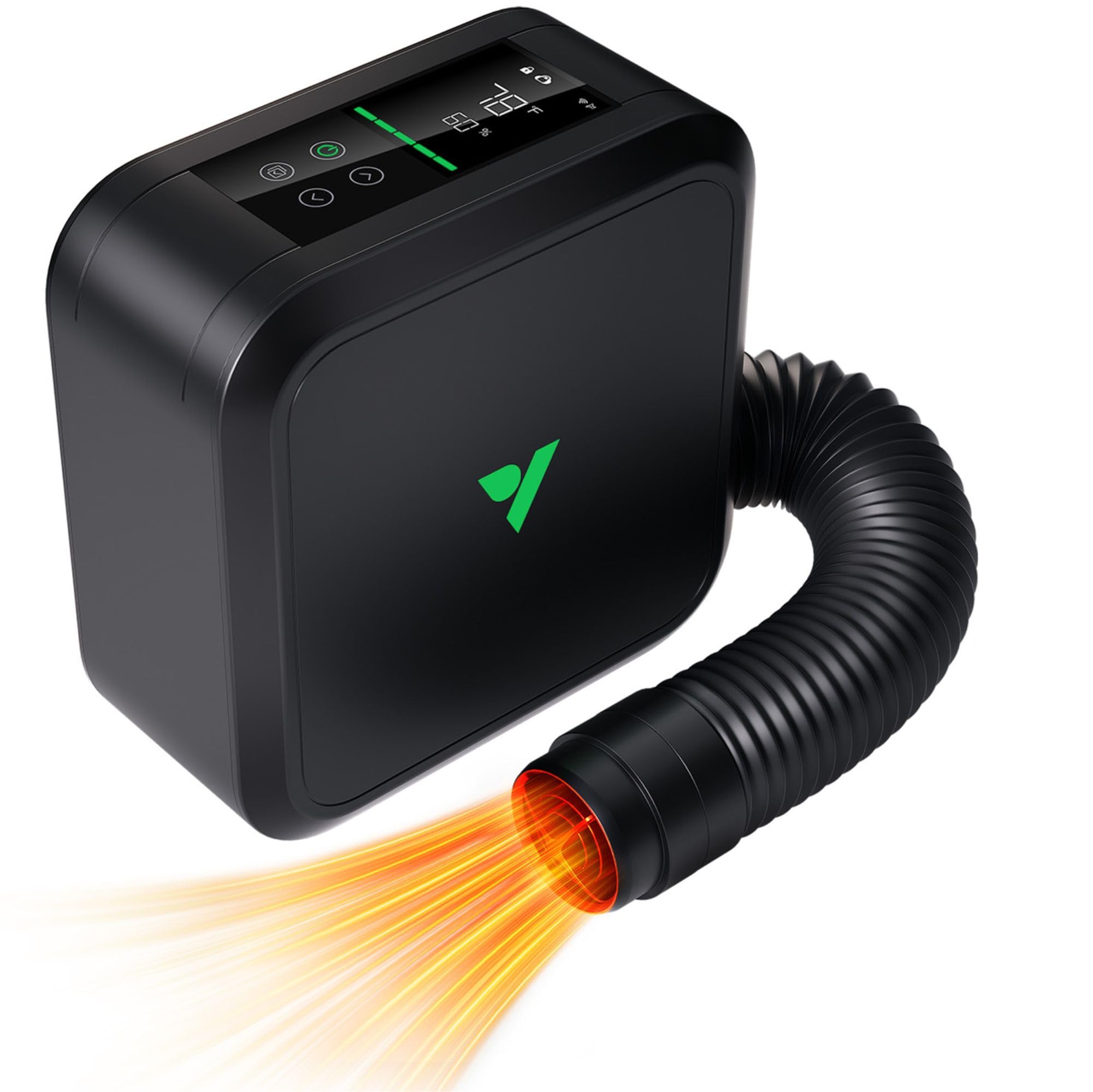
| VIVOSUN AeroFlux 700W★ Best Overall | Smart / App Control | 700W PTC | Grow tent up to 4×4 ft | V0 flame-retardant, tip-over, overheat | Amazon |
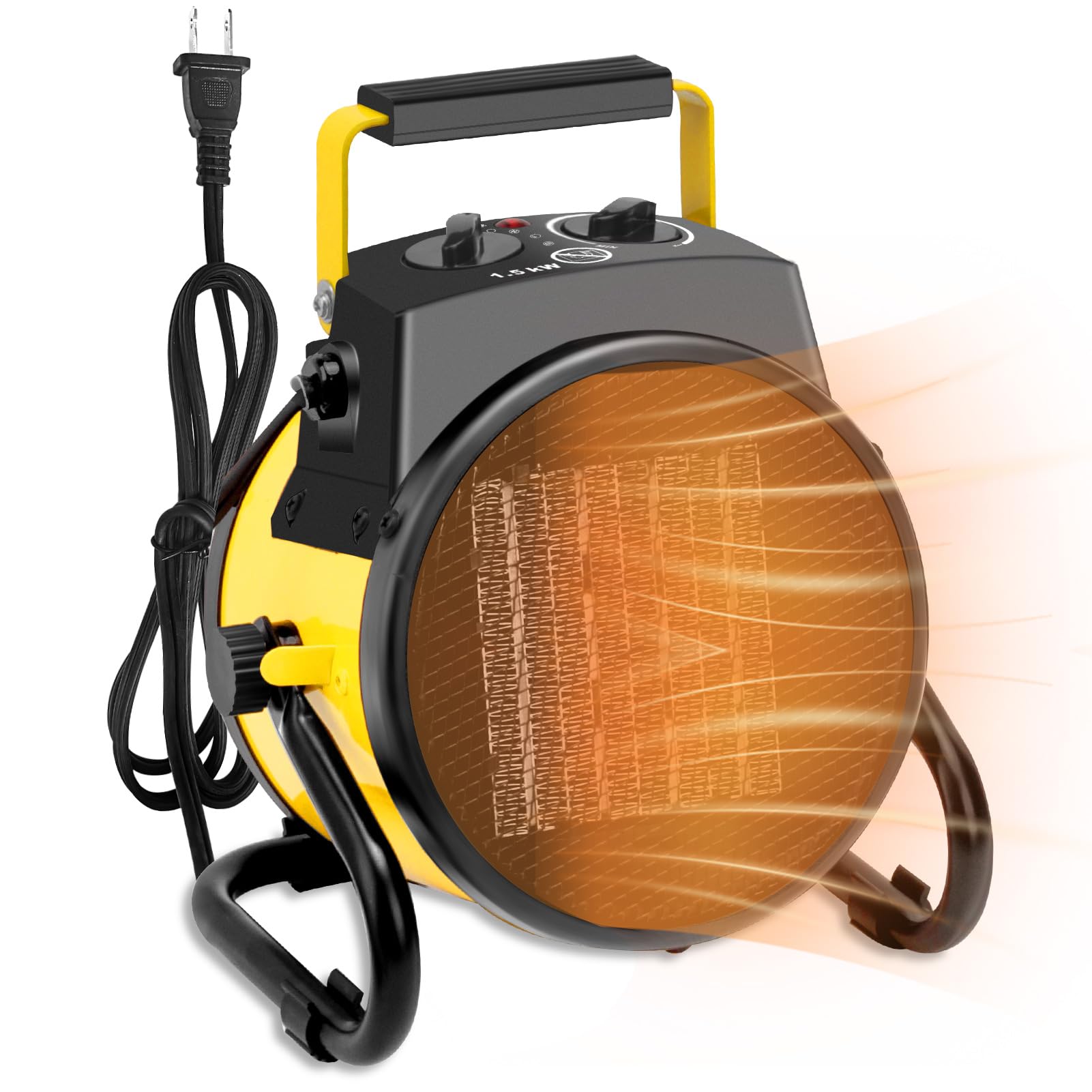
| POOPLE 1500W Garage HeaterBest Value | Budget / Garage | 1500W PTC | Up to 215 sq ft | Overheat, self-resetting thermal cutoff | Amazon |
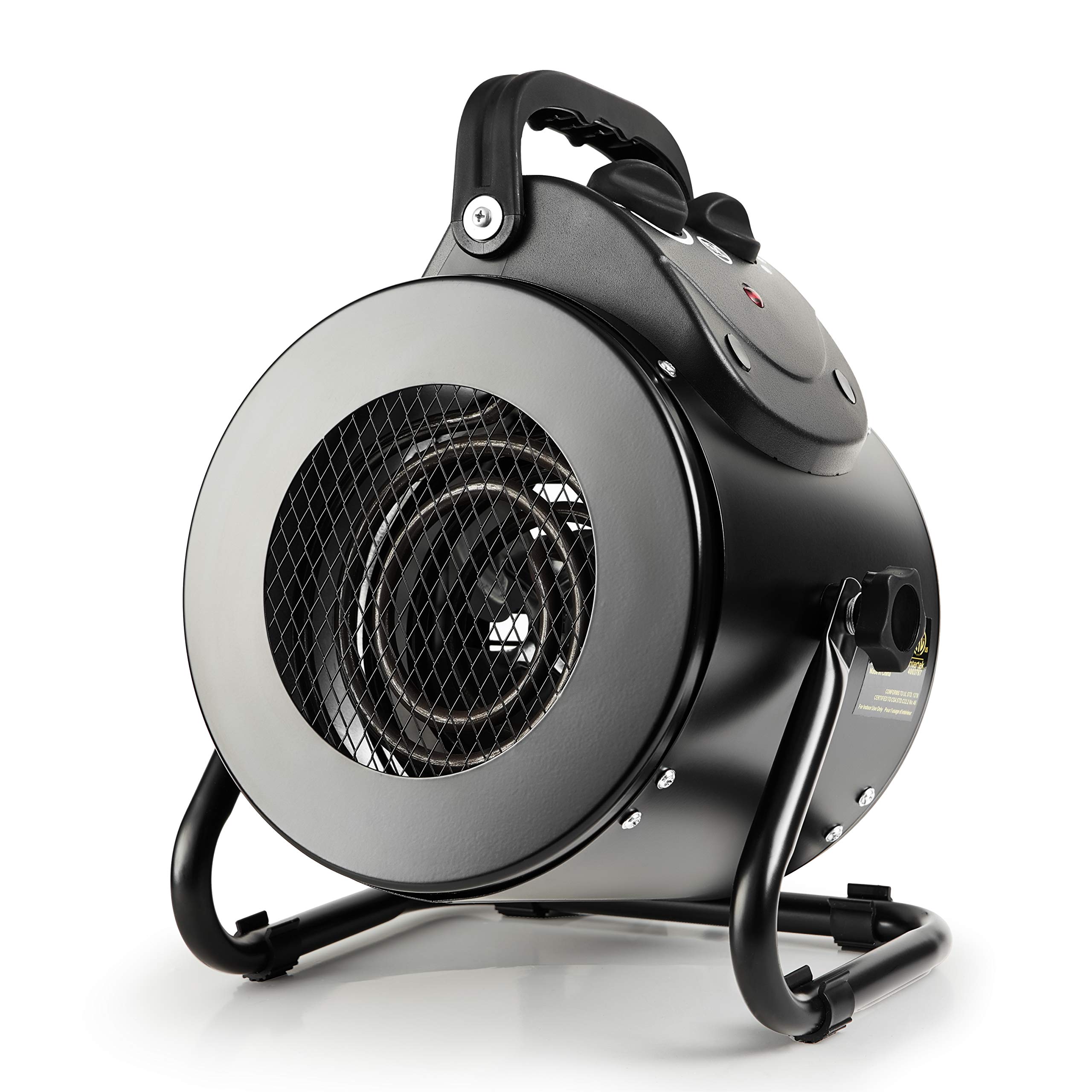
| iPower Electric Heater FanHeavy-Duty Runner | High-Humidity / Continuous Run | 1500W forced air | Small to mid greenhouses | Overheat protection, auto shut-off | Amazon |
| Dura Heat EUH1500 | Quiet / Basement Workshops | 5120 BTU (1500W) | Up to 250 sq ft | Overheat shut-off | Amazon |
| GRPWWT Greenhouse Heater Kit | Small Greenhouses / Beginner | 1500W forced air | Up to 120 sq ft | Independent overheat protection | Amazon |
| Spider Farmer 530W Heater | Tent / Gentle Heat | 530W PTC | Small to mid grow tents | Thermal protection, flame-retardant | Amazon |
| DR. INFRARED HEATER DR218 | Large Greenhouses / Freeze Protection | 3000W infrared | Up to 600 sq ft | IPX4 splash-proof | Amazon |
| Bio Green PAL 2.0 | Long-Term Reliability / Orchids | 2560 or 5120 BTU (fan) | Up to 120 sq ft | IPX4 splash-proof | Amazon |
In‑Depth Reviews
1. VIVOSUN AeroFlux 700W PTC Grow Tent Heater
Our pick — over 4★ from 200+ verified ratings; the strongest balance of quality and price.
The smartest keeper of your canopy — app-set temps without a second thought.
This is the one that earns the top slot because it combines a smart thermostat with VPD (Vapor Pressure Deficit) control — a metric serious growers obsess over to dial in plant transpiration. The 700-watt PTC heater runs 40% stronger power-wise than standard models, yet its compact 9.45″ x 4.72″ x 9.45″ frame tucks into a tent corner without hogging floor space. Buyers report it maintains a dead-steady setpoint — as owners mention, it “maintains 67.9-69.1°F” with a high-precision sensor. The app lets you set target temperature, minimum temp, and day/night modes so conditions never drift while you are away.
The thing owners praise most is the pure functionality — the heater is seen as reliable and well-built. Durability and heat output earn positive marks, though some find the value-for-money and WiFi connectivity mixed. Functionality (41 positive mentions) and temperature control (26) are the standout aspects. The 5-level PWM control lets you fine-tune output per growth stage without blasting tender starts. V0 flame-retardant materials, tip-over protection, and overheat shutoff cover the safety bases for a damp tent environment.
Where the AeroFlux falls short of the 1500W iPower below is total raw heat — at 700W it cannot match the brute-force coverage of a higher-wattage unit for a very large greenhouse. It is really designed for grow tents and compact greenhouses where precision matters more than raw power. And while the crowd gives it a solid rating, the budget-friendly POOPLE actually carries more reviews overall.
Why setpoint accuracy wins
- Precise temperature and VPD control via app — holds within 1.2°F as owners note
- 40% stronger than standard 500W models despite compact size
- Safety in spades: V0 fire rating, tip-over, and overheat shutoff
The honest trade-off
- 700W output means it is best for tents and small greenhouses, not large open structures
- Some owners find the app connectivity and overall value mixed
Reach for this if: you run a 4×4 tent or a compact greenhouse and want app-precise temperature and VPD control without constant manual tweaking.
Think twice if: your greenhouse is large (over 100 sq ft) and uninsulated — you will need a higher-wattage forced-air unit instead.
2. POOPLE 1500W Portable Garage Heater
Punchy warmth on a budget that does not hog the floor.
If raw affordable heat is the priority, this 1500-watt PTC ceramic unit fires up in about 3 seconds and claims to cover up to 215 square feet — a much larger area than the VIVOSUN above handles. Owners describe it as small but mighty, with one noting it is “powerful enough for a large aviary; had to reduce to medium.” The three-mode dial (fan only, 750W low, 1500W high) lets you scale back for milder nights, and the noise level stays under 40 dB, which is quieter than a library hum. The compact 9″ x 6″ x 10″ body and built-in handle make it easy to move between the greenhouse and the garage.
Heat output is the top positive aspect here, with 29 owners praising its warmth. Sturdiness also gets positive marks. That said, effectiveness and size are mixed in the feedback — some owners find it adequate while others report the unit stopped working early. A small but vocal set flags durability issues. The 7.5 ft power cord gives you decent placement flexibility, and the non-slip base keeps it planted on uneven greenhouse floors.
Bang for the buck
- 1500W PTC heat in 3 seconds — fast to warm a medium greenhouse
- Three modes mean you are not stuck at full blast when temps are mild
- Under 40 dB noise rating so it won’t disturb nearby living spaces
Where it slips
- Reliability is a split bag — some customers note failure within a week
- Effectiveness ratings are mixed; may not cut it in a large or drafty structure
Pick this when: you want entry-level greenhouse heat for a small to mid-sized space on a tight budget, and you are willing to accept some variability in longevity.
Look elsewhere if: you need a heater that can run unattended for months in a commercial or unheated structure — the durability ratings do not inspire that confidence.
3. iPower Electric Heater Fan
The humidity-hardened workhorse that survived a mushroom farm.
This is the forced-air specialist that gets mentioned in the same breath as extreme conditions. At 1500 watts with a 12.4″ x 8.3″ x 13.8″ floor-standing frame, it pushes 4500 cubic feet of air per hour, making it a better fit for a medium greenhouse than the smaller VIVOSUN. One owner reports it “kept mushroom greenhouse at 55-65°F with 65-90% humidity for 6 months, running 24/7 in Pacific Northwest” — a level of endurance that speaks to its build quality. The air-circulation design also helps reduce mold formation by keeping air moving through the foliage.
The feedback on heat output is mixed, which aligns with one buyer’s honest second take: “it takes a while to heat up” but “is doing a great job in my greenhouse.” That is the character of a forced-air unit — it provides steady, distributed warmth rather than a concentrated blast. The trade-off is that some units fail after a few seasons, with a few reports of the temperature control knob breaking. By volume, the community is large enough (nearly 900 reviews) that these are not isolated patterns but speak to batch variability.
Humidity champion: the iPower is the one to trust in condensation-heavy environments where cheaper electronics would short. Owners consistently commend its build quality for the task.
Reality check: reliability and heat output are the two most mixed aspects — expect it to perform well in a sealed, insulated greenhouse but know that some units fade after a few seasons.
Reach for this if: you run a small to medium greenhouse that stays humid most of the year and you need a heater that can keep up without quitting.
skip it if: you want instant heat in a large, uninsulated space — the forced-air output is better at maintaining temperature than catching up from a deep freeze.
4. Dura Heat Electric Forced Air Heater EUH1500
Low noise, rugged steel, and a thermostat that actually cuts out.
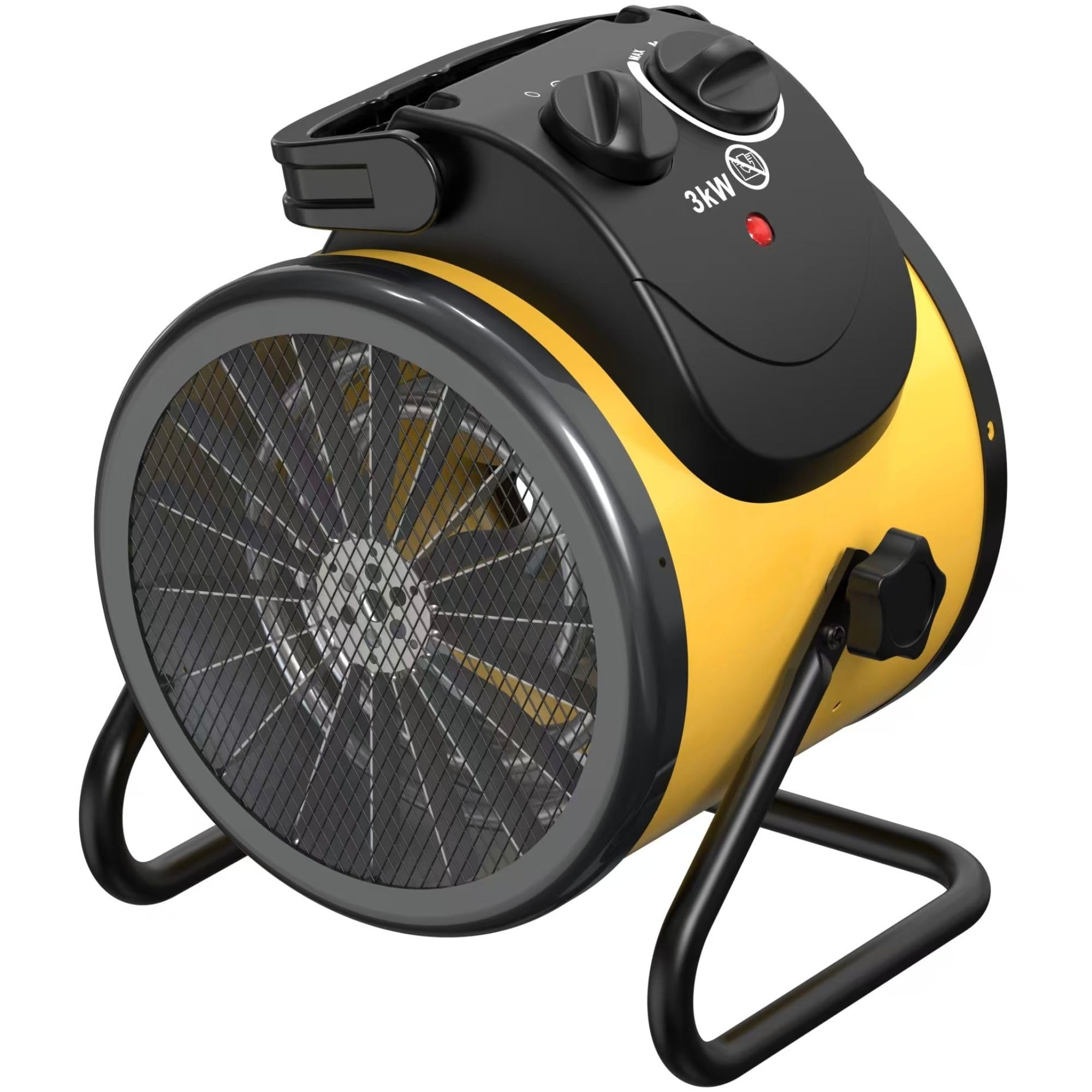
Rated at 5120 BTU (equivalent to about 1500W), this Dura Heat model is built for smaller spaces up to 250 sq ft. The cabinet-style steel body with a carry handle and adjustable stand feels more substantial than many plastic rivals. Owners consistently note it is “extremely quiet” during operation, which matters if your greenhouse sits near a patio or bedroom window. The built-in thermostat and overheat shut-off are the primary safety controls. One buyer found it heated their 8×18 ft space effectively, with warmth felt 7 feet away and the room brought up to temperature in about 30 minutes.
The major caveat: heat output receives genuinely mixed feedback. Several owners find the fan speed slow and the heating element produces only “slightly warm” air rather than the toasty blast they expected. This seems to be a function of the 1500W output at the edge of the 250 sq ft rating — it works best as a supplementary or mild-climate heater. The single-speed fan also means you cannot throttle airflow when you need less push. Still, for a dedicated greenhouse and workshop space where background warmth and silence are the priority, it has a loyal following.
Best suited for: small, insulated greenhouses (around 10×12 ft or less). It is quiet, well-built, and the thermostat prevents the space from overheating beyond your target.
The limit: this is not a deep-freeze solution. If temps drop below 20°F and your greenhouse is drafty, the output will feel underwhelming.
Grab this for: a small greenhouse where quiet operation and a rugged steel build matter more than raw thermal output.
Pass on this if: you need to raise the temperature more than 20°F above outdoor ambient in a large or uninsulated space.
5. GRPWWT Greenhouse Heater with Thermostat Kit
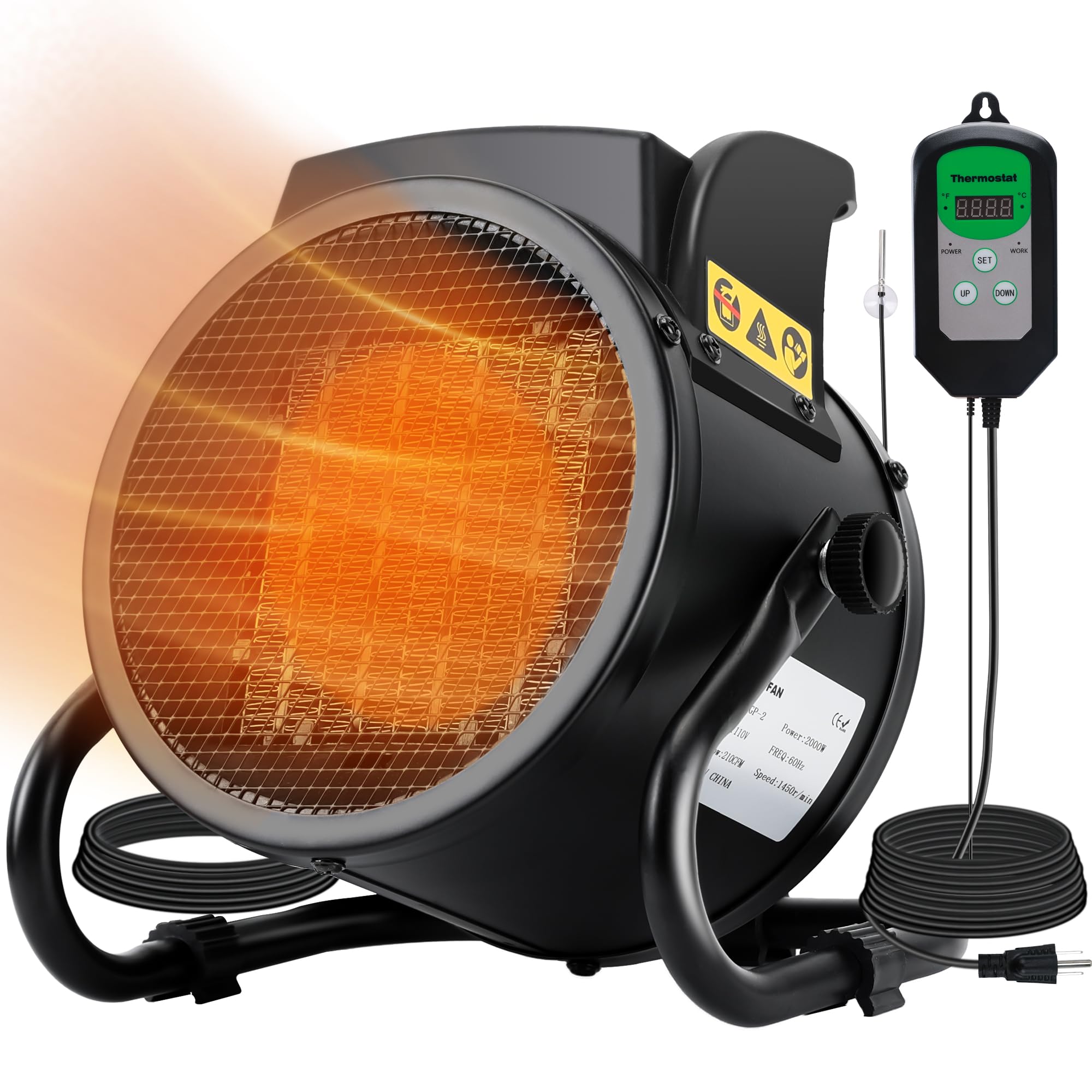
A digital thermostat and a reliable 1500W heater in one simple kit.
This is the all-in-one starter pack for a small greenhouse. The set includes a standalone 1500W forced-air heater plus a separate 15A digital thermostat controller — you place the thermostat sensor at plant height and it turns the heater on and off to maintain your set temperature. Owners say it is “beginner-friendly” and that the auto temperature control makes it easy to keep plants safe. The heater itself reaches full warmth in about 3 seconds and covers up to 120 sq ft, which fits a standard 8×12 hobby greenhouse. The independent thermostat is rated up to 120°F, giving you a wide operating window for everything from seed germination to overwintering tender perennials.
Reliability and heat output are the two aspects owners praise most — 42 and 21 positive mentions respectively. One owner describes it as a “lifesaver” after it kept their greenhouse at 50°F when outside temps dropped to between 20°F and 30°F. The absence of a tip-over shutoff is the one safety gap that a few owners flag directly. If your greenhouse is on a hill or you have pets bumping into things, that is a missing layer of protection worth noting. The kit comes with fireproof materials and independent overheat protection, which partly compensates.
What owners celebrate
- Reliable performance through harsh winters — 42 owners cite reliability as the top strength
- Separate digital thermostat means stable, set-and-forget temperature control
- Weighs just 4.5 pounds, easy to reposition around the greenhouse
The missing safety gate
- No tip-over shutoff — a notable gap for a unit that will sit on a greenhouse floor
- Coverage (120 sq ft) is limiting for larger greenhouses; expect to need a second unit
Perfect for: a first-time greenhouse owner or someone with a small 8×12 structure who wants simple, reliable digital control without app complexity.
Caution: the missing tip-over shutoff means it should sit on a stable, level surface away from traffic.
6. Spider Farmer 530W Grow Tent Heater
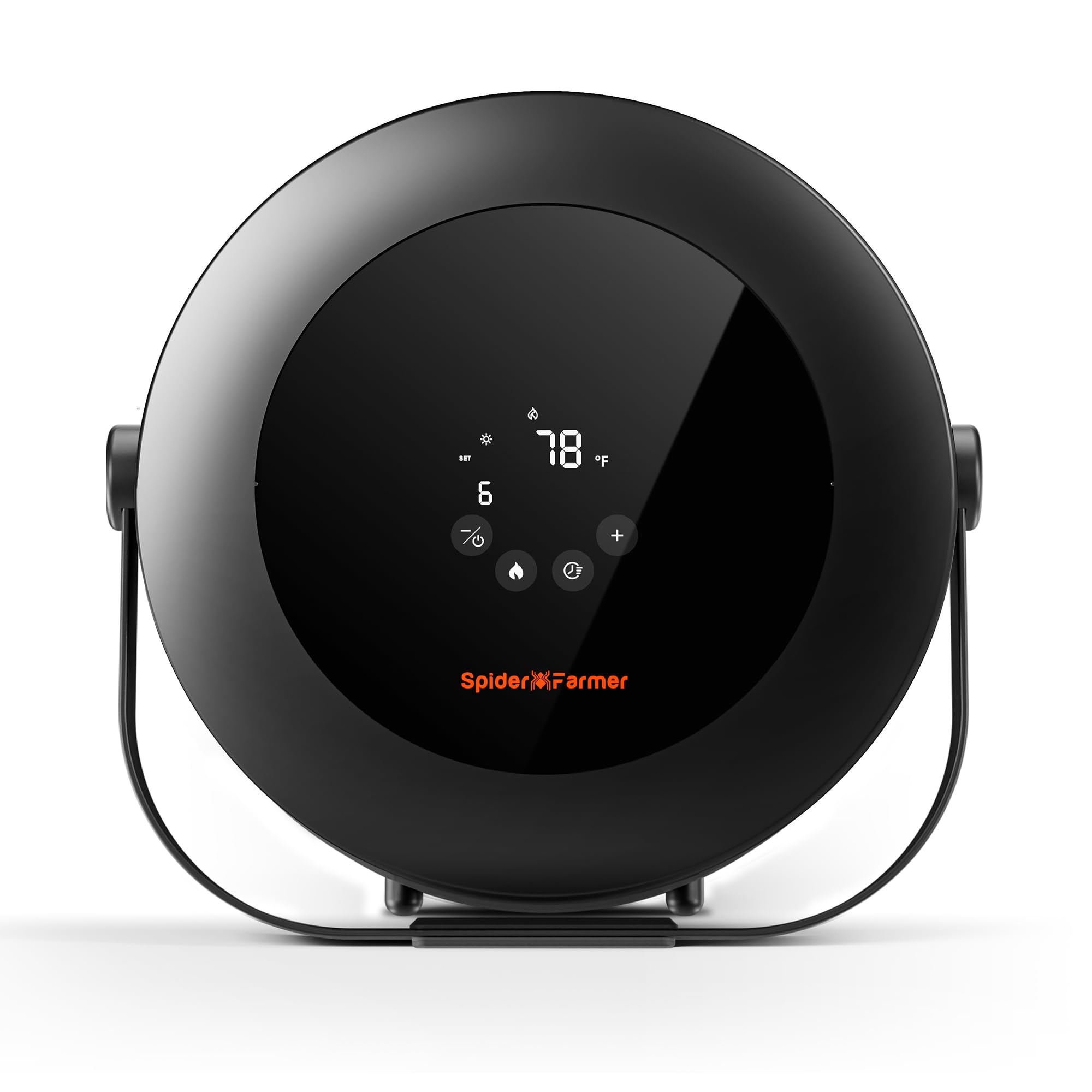
Gentle PTC heat with a dead-zone thermostat that stops short-cycling.
Instead of a hard on/off thermostat, Spider Farmer uses a temperature zone regulation design with built-in dead zones of 3°F (the unit turns on when the temp drops 3°F below your set point and off when it rises 3°F above). That prevents the heater from cycling on and off every few minutes, which reduces plant stress and saves electricity. The 530-watt PTC ceramic output is lower than the big 1500W guns, but for a small to mid-sized grow tent it keeps the air warm without harsh hot blasts. Owners call the airflow “very gentle and adjustable,” which matters for seedlings and clones. The 5.4-pound body includes a 160cm extension hose that routes warm air away from the plant canopy, preventing leaf burn.
The unit offers 10 adjustable levels each for temperature and fan speed, plus a 24-hour countdown timer. The panel auto-shuts its backlight after 30 seconds, keeping the tent dark during the night cycle. Safety mechanisms include thermostat hardware protection and both internal and environmental over-temperature protection. Owners give it strong marks for adjustability, and many find it “reliable and efficient.” That said, the 530W output means it may struggle in colder climates or larger setups — one buyer notes it works well in small tents but might be underpowered for a big grow room.
Smart cycle control
- 3°F dead-zone thermostat stops short-cycling for steadier temps and fewer on/off surges
- 160cm vent hose directs warm air away from foliage
- Panel light turns off automatically to protect dark-cycle plants
Size matters
- 530W is low compared with 1500W competitors — not suited for large uninsulated greenhouses
- Temperature range instructions could be clearer, per some owners
Ideal for: a small to medium grow tent where precise, gentle heat and dark-cycle plant protection are priorities over raw wattage.
Not for: a large, drafty greenhouse or any space that needs to be warmed more than 25°F above outdoor temp.
7. DR. INFRARED HEATER DR218-3000W

Massive 3000W infrared output that can handle a 600 sq ft greenhouse.
This is the heavy-hitter for large greenhouses and workshops that need cold-weather protection. At 3000 watts and rated for up to 600 square feet, it outclasses every other unit on this list in sheer coverage. The infrared (radiant) heating method is different from forced-air: it warms objects, soil, and plants directly rather than heating the air first. That makes it a strong pick for overwintering because the heat reaches the root zone without creating hot-dry air pockets. It has an IPX4 splash-proof rating, meaning it resists water splashing from any direction, a critical safety feature for wet greenhouse environments. Owners say it “blows warm air, not hot, ideal for plants” and maintains 42–48°F inside a 6×8 ft greenhouse during a 22°F freeze.
The heater has two settings (high and low for 3000W or partial output) and a thermostat for temperature control, though some owners note it “doesn’t shut off when reaches temperature” reliably. The build quality is well-regarded, and the green tower form factor at 10″ x 10″ x 13″ sits on the floor without taking excessive space for its output. On the downside, there are rare but serious reports of thermostat wiring failure in some units. The heater also requires a 240V, 20A outlet — not a standard US household plug — which is a key compatibility consideration before purchase. At 12.5A, it needs a dedicated circuit in many installations.
Why size matters
- 3000W covers up to 600 sq ft — more than double most greenhouse heaters here
- IPX4 splash-proof means it can handle direct rain and irrigation spray
- Infrared heat warms plants and soil, not just the air
Installation reality
- Requires a 240V/20A circuit — not compatible with standard 120V household outlets
- Rare but real reports of thermostat wiring issues in some units
Choose this for: a large greenhouse (up to 600 sq ft) where you need frost protection and have access to 240V power.
Skip this if: your greenhouse only has standard 120V outlets, or your space is small enough that a 1500W unit will cover it more efficiently.
8. Bio Green PAL 2.0 Basic Electric Fan Heater
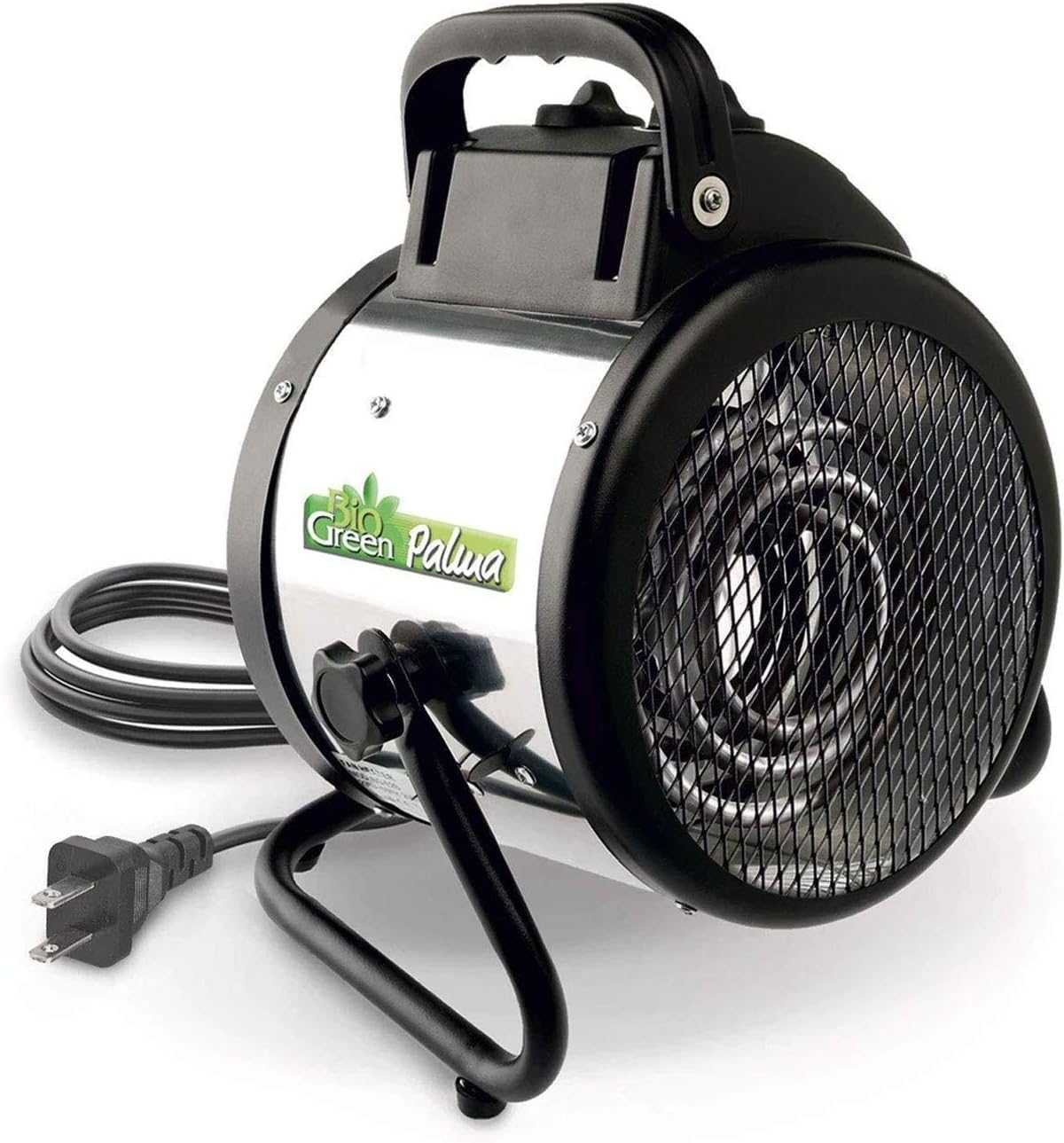
The German-engineered fan heater that orchid lovers swear by.
The Bio Green PAL 2.0 is the longest-tenured product on this list, with a following among serious greenhouse enthusiasts who prioritize reliability over flash. It offers two separately adjustable heating elements (2560 BTU or 5120 BTU, roughly 750W or 1500W equivalent) that let you match output to the season. The stepless thermostat ranges from 32°F to 185°F, but the real standout is the air circulation mode: it can run as a fan-only for summer ventilation, moving up to 4317 cubic feet of air per hour without wasting electricity on heat. The IPX4 splash-proof rating makes it safe in damp conditions, just like the DR. INFRARED HEATER above. One owner is on their third unit — the first lasted over 5 years — which speaks to build consistency over time.
The biggest divide in the feedback is between owners who have had them run for years without issue and those who received a dead unit on arrival. Reliability and heat output are the most mixed aspects across the 800+ reviews. The manufacturer backs the unit with a 2-year warranty, which addresses the DOA risk. Some owners note the built-in thermostat calibration is off and recommend using an external digital thermostat for precise control. The heater is suited for rooms up to 120 sq ft with an average 6.6 ft ceiling height, making it a compact but effective option for a small hobby greenhouse.
What makes it special
- Dual heating elements give you 2560 or 5120 BTU flexibility — match output to ambient conditions
- Fan-only mode means it pulls double duty for summer ventilation
- IPX4 splash-proof for safe damp-room use
Quality control variance
- Some units fail early while others run 5+ years — reliability is the most-discussed mixed aspect
- Thermostat calibration is off from the start for many owners; plan to add an external controller
Best for: experienced greenhouse owners who value long-term build quality and want a heater that doubles as a summer fan, and who are willing to work around imprecise factory calibration.
Not the best choice for: anyone who wants a plug-and-play unit with no setup fiddling, or who needs to heat more than 120 sq ft.
Understanding the Specs
BTU vs. Wattage
British Thermal Units (BTU) measure heat energy; watts measure electrical power. A rough conversion is 1 watt ≈ 3.41 BTU. A 1500W heater delivers around 5120 BTU. For greenhouse sizing, BTU is more useful because it tells you how much the unit can raise the temperature in a given volume. A standard rule is you need about 25–30 BTU per square foot of greenhouse in most climates, but this climbs dramatically in uninsulated structures or severe winter zones.
PTC vs. Coil vs. Infrared
PTC (Positive Temperature Coefficient) ceramic heaters self-regulate — as the temperature rises, resistance increases and output drops, preventing overheating. Traditional wire coil heaters run hot and pose more fire risk. Infrared heaters warm objects and soil directly, which means less heat loss to open air but slower overall response. For greenhouses, PTC and forced-air are generally safer and more responsive for plant environments, while infrared suits large, drafty structures where you want to warm the plants themselves.
FAQ
Can I use a regular space heater in my greenhouse?
How do I calculate what size heater I need for my greenhouse?
Is a 1500W heater enough for a 8×10 greenhouse?
What safety features matter most for a greenhouse?
Can I leave a greenhouse heater running overnight?
Do I need a 240V heater for a large greenhouse?
What does the IPX4 rating mean for a greenhouse heater?
How do I protect my plants from direct hot air from the heater?
Final Thoughts: The Verdict
For most greenhouse owners, the best greenhouse heaters winner is the VIVOSUN AeroFlux 700W because it delivers the most precise temperature and VPD control in a compact, app-configurable package. If you want raw heating power for a large structure, grab the DR. INFRARED HEATER DR218. And for a small hobby greenhouse where simplicity and reliability matter most, the GRPWWT Thermostat Kit is the one to reach for.
How We Picked
We do not accept paid placement. Every pick is matched to a real buyer and a real use-case; we do not hands-on test units.
Sources & Methodology
Specifications: manufacturer listings and product documentation. Review insights: verified customer reviews, as of July 2026. Pricing: not shown on this page (it changes often); check the current price via the retailer link.
As an Amazon Associate, Lawn Gear Lab earns from qualifying purchases. This does not affect which products we feature.