
Specs are compiled from manufacturer listings and verified buyer reviews and can change over time — please confirm the key details on the product page before buying.
Dollarweed is that persistent, coin-shaped invader that seems to pop up overnight and refuses to budge with standard treatments. The real challenge is picking a dollarweed herbicide that kills the weed without damaging your lawn.
I’m Rikta — the founder and writer behind Lawn Gear Lab. This guide is built by comparing the manufacturers’ published specifications and the patterns across verified customer reviews, so you get each pick’s real strengths and trade-offs instead of marketing spin.
Whether you’re dealing with a few scattered leaves or a full-blown invasion, finding the best dollarweed herbicide means matching the chemistry to your grass type and your comfort level with reapplication. We’ve broken down the top contenders to help you choose with confidence.
Our Picks at a Glance

How To Choose The Best Dollarweed Herbicide
Picking the wrong herbicide can waste time, money, and damage your lawn. Before you spray, focus on these three key factors to target dollarweed without collateral damage.
Your Grass Type is the First Filter
Not all herbicides are safe for every lawn. Products containing atrazine or quinclorac can be tough on certain warm-season grasses like Bermuda or St. Augustine if applied incorrectly, while mesotrione can temporarily bleach new turf. Always check the label to see if your grass species is listed as safe.
Liquid vs. Granular: Which Fits Your Routine?
Liquid concentrates give you spot-treating precision and immediate results, making them ideal for smaller patches or for mixing with a surfactant to help the chemical stick. Granular, broadcast-style formulas are easier to spread over a large, infested lawn without dragging a sprayer around, but they require watering-in and take longer to show effect.
Selective vs. Non-Selective Kill Power
A selective herbicide targets specific weeds like dollarweed and leaves your grass mostly alone, which is the standard choice for a healthy lawn. A non-selective option, like a vinegar-based spray, kills everything it touches, so it’s only suitable for driveways, patios, or spots you plan to dig up. For lawn use, always look for “selective” on the label.
Quick Comparison
| Model | Best For | Active Ingredient | Coverage | Form | Amazon |
|---|---|---|---|---|---|
| Quinclorac 1.5L (Quali-Pro)★ Best Overall | Multi-Target Weed Kill | 17.79% Quinclorac | 1,500 sq ft | Liquid | Amazon |
| T. Andersons Meso 4 SCAlso Great | Seeding & Overseeding Safety | Mesotrione | 8 oz Concentrate | Liquid | Amazon |
| Primesource Quinclorac 1.5LPremium Performer | Large Lawn Control | 18.92% Quinclorac | 500 sq ft | Liquid | Amazon |
| PBI Gordon SpeedZone Southern EW | Fast-Acting Southern Lawns | — | 128 oz Concentrate | Liquid | Amazon |
| ECO Garden PRO Vinegar | Kid & Pet Safety | Sodium Chloride (Salt) | 1,000 sq ft | Liquid | Amazon |
| Lontrel Turf & Ornamental | Professional Stubborn Weeds | — | 1 qt Concentrate | Liquid | Amazon |
| Pro Crabgrass & Grassy Weed Killer | High-Concentration Power | 18.92% Quinclorac | 32 oz Concentrate | Liquid | Amazon |
| Fertilome Dollar Weed Control | Southern Granular Application | Atrazine | 5,000 sq ft | Granule | Amazon |
| Image Herbicide All-in-One | Ready-to-Use Hose End | — | 6,000 sq ft | Liquid | Amazon |
In‑Depth Reviews
1. Quinclorac 1.5 L – Quali-Pro (Half Gallon)
Our pick — 4.5★ from 300+ verified ratings; the strongest balance of quality and price.
A broad-spectrum arsenal that handles dollarweed plus a dozen other invaders.
If your lawn has more than just dollarweed—if crabgrass, foxtail, dandelion, and clover are all competing for real estate—this Quali-Pro concentrate covers them all in a single bottle. The active ingredient is 17.79% quinclorac, a selective post-emergent herbicide that owners mention as the “top difference-maker” in a lawn care regimen. They note it kills crabgrass in about four days, and paired with a surfactant (a sticking agent like MSO), it handles dollarweed effectively without damaging the surrounding grass.
The 64-ounce bottle covers 1,500 square feet, making it a strong mid-range option for yards that need systematic treatment rather than just spot-spraying. One buyer summed up the sentiment perfectly: “MSMA worked way better. Kill rate maybe 80%. Will need to reapply.” That’s honest—a single pass may not eliminate every leaf, but it’s a reliable base for a repeat-treat strategy. It’s note this product has a smaller coverage than the Image herbicide by a factor of 4 (1,500 square feet vs. 6,000 square feet), so factor that into your planning.
Performance Verdict: The go-to for mixed-weed lawns. Its weakness on clover is the only real gap—if you’re fighting pure clover, look at a different active ingredient. For everything else, this is the workhorse.
The All-in-One Solution: Choose Quali-Pro Quinclorac if you have a variety of broadleaf and grassy weeds and want one product to tackle them all.
The Caveat: You’ll almost certainly need a second application and a surfactant to get the best results on stubborn dollarweed.
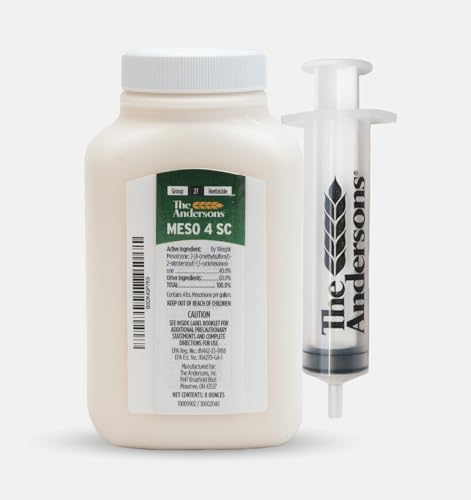
2. The Andersons Meso 4 SC – Mesotrione Pre-Emergent and Post-Emergent Weed Control
The rare herbicide you can apply while seeding a new lawn.
The biggest headache with killing dollarweed is that most powerful chemicals prevent new grass from germinating, forcing a choice between weed control and lawn repair. The Andersons Meso 4 SC sidesteps this entirely—its active ingredient, mesotrione, works both as a pre-emergent (stopping future weeds) and a post-emergent (killing existing dollarweed), and is safe to use when overseeding, except with fine fescue blends.
Buyers report a telling pattern: weeds turn white and die while the grass recovers. The concentrate is potent, mixing at just 1 teaspoon per 2 gallons of water, and it causes a temporary bleaching effect on the weed itself, making it easy to see where it’s working. It’s a smart choice for the early season, stopping dollarweed before it becomes a problem while you patch bare spots. Keep in mind it should not be applied to Bermuda grass, zoysia, or St. Augustine.
Why It’s the Top Pick
- Safe to use when seeding or overseeding, so you can repair your lawn simultaneously.
- Kills dollarweed on contact and provides residual control against future growth.
- Highly concentrated—a small bottle makes up to 48 gallons of spray solution.
Read This Before Buying
- Not safe for Bermuda grass, zoysia, or St. Augustine lawns.
- May temporarily bleach the grass itself during application.
- Relatively new with fewer reviews than established brands.
The Seeder’s Best Friend: Reach for The Andersons Meso 4 SC if you plan to overseed or patch bare spots this season and need a weed killer that won’t sabotage your new grass.
Grass Type Non-Negotiable: skip it if you have a warm-season lawn like Bermuda or St. Augustine—you need a different chemistry.
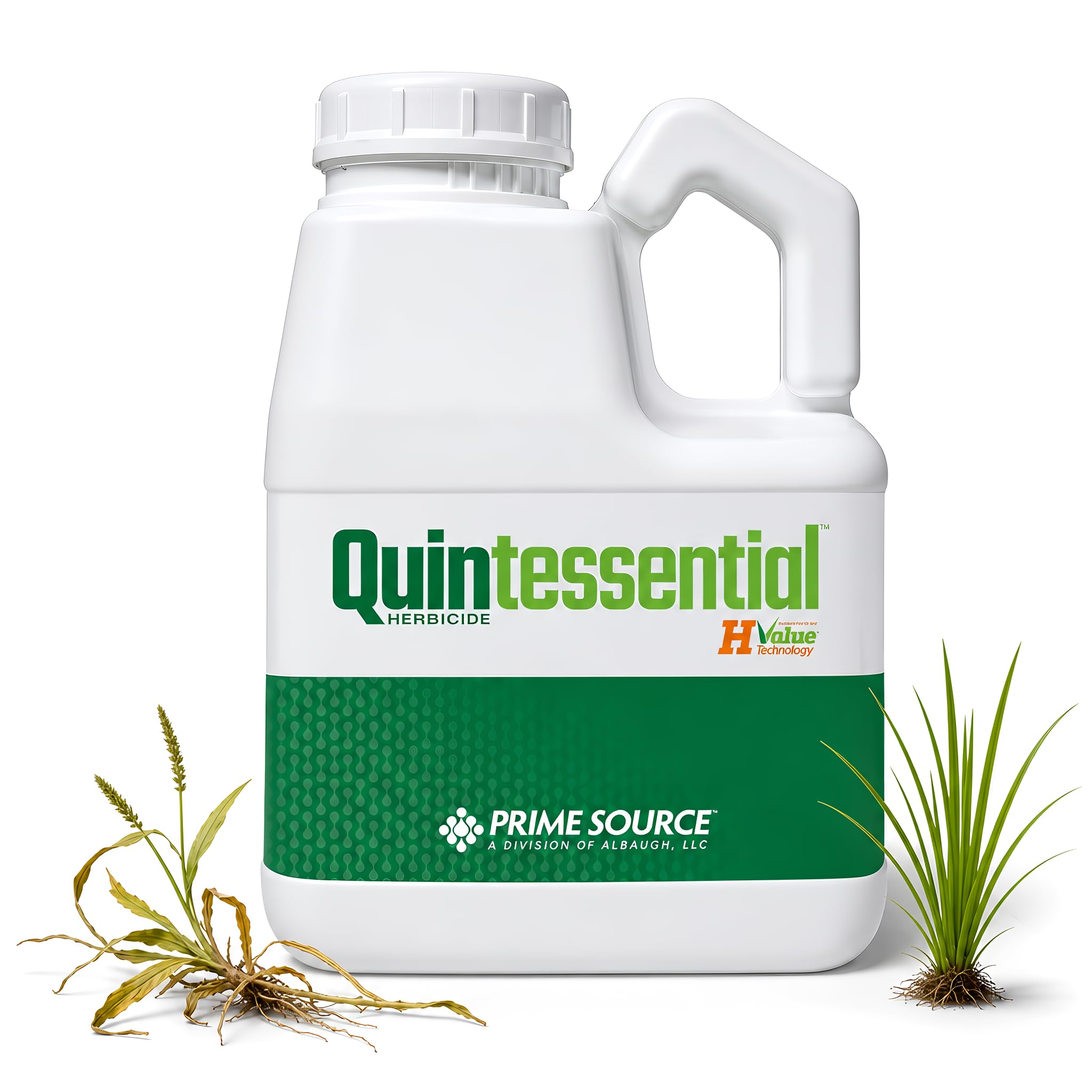
3. Primesource Quinclorac 1.5L Liquid Crabgrass Killer (64 oz)
The heavy hitter for mature, stubborn patches that need a stronger concentration.
You get a slightly stronger dose of the active ingredient here: 18.92% quinclorac versus the Quali-Pro’s 17.79%, which helps on stubborn weed patches. This selective, post-emergent formula (meaning it kills weeds after they sprout) targets dollarweed, crabgrass, dandelion, and torpedograss, so it works on many lawn types, both residential and non-residential. Customers note fast results—one noted crabgrass showed signs of death within 24 hours when mixed with MSO surfactant (a spreader-sticker that helps the liquid cling to leaves), and turned fully brown in under a week.
The biggest practical advantage here is the user experience. Reviews consistently mention that using a blue dye with the mix ensures nearly complete coverage (98% on a first pass, according to one owner). This eliminates the guesswork of whether you sprayed every leaf. The trade-off is its coverage area: the label states 500 square feet, which is the smallest spray coverage in this group compared to the Quali-Pro’s 1,500 sq. ft. Use it for intensive spot treatment rather than whole-lawn broadcast.
Why It’s a Premium Pick
- High 18.92% quinclorac concentration for maximum potency on mature weeds.
- Fast-acting—reviewers point out crabgrass dying in 24 hours and fully shriveled in under a week.
- Blue dye compatibility helps achieve near-total spray coverage.
Limitations
- Covers only 500 square feet, so it’s best for spot treatment rather than large lawns.
- Some users report a lower kill rate on first pass (60–70%), requiring reapplication.
- The surfactant bottle can be hard to pour, according to owner feedback.
The Spot-Spray Specialist: If you have isolated but stubborn dollarweed clumps and want fast, visible results, Primesource is the precision tool.
Not for Whole-Lawn Jobs: For a full-yard blanket treatment, the smaller coverage area means you’ll run through the bottle quickly—look at the Quali-Pro 1,500 sq ft option instead.
4. PBI Gordon SpeedZone Southern EW Herbicide (128 oz)

Developed for southern lawns where heat and humidity change the game.
SpeedZone Southern is formulated differently than standard weed killers to work with warm-season grasses like St. Augustine, Zoysia, and Bermuda. It uses a fast-acting chemistry that produces visible injury to dollarweed within hours—not days. One buyer tested it on clover in their Zoysia lawn and reported seeing results in 24 hours. Another specifically praised its performance on dollarweed and Florida betony, two stubborn southern weeds. The label warns it can torch nearby flower beds if the wind catches the spray, so be meticulous about drift.
At 128 fluid ounces (a full gallon), this is the largest liquid concentrate volume in the line-up, designed for serious coverage across a large southern lawn. The downsides are real: some users find it takes two or three applications over several weeks to fully eliminate dollarweed, and its potency means a misapplication can damage desirable plants quickly.
Speed vs. Precision: Works brilliantly on dollarweed in southern turf types, but requires careful application to avoid collateral damage to flower beds. The bottle’s size makes it cost-effective for recurrent treatments.
The Fast-Action Crew: Best for southern lawn owners who want to see dollarweed wilt within hours and have a large area to treat.
Handle with Care: Not ideal if you have adjacent flower beds or if wind is unpredictable in your area—drift can be destructive.
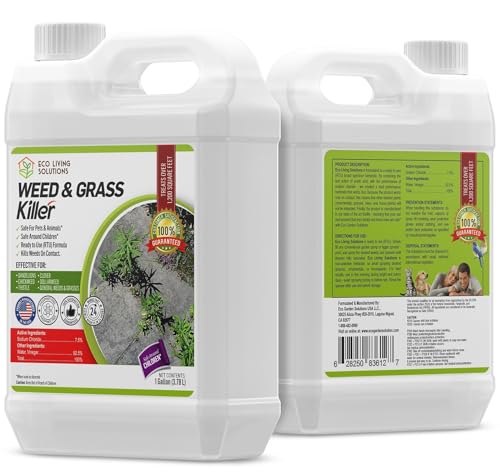
5. ECO Garden PRO – Organic Vinegar Weed Killer (1 Gallon)
Zero synthetic chemicals but still delivers a knockout punch to dollarweed.
If you have kids, pets, or a garden you don’t want to douse with synthetic chemicals, this white-vinegar-based spray is the most popular natural option on the market by a wide margin, with over 4,000+ ratings. Its active ingredient is sodium chloride (organic rock salt), not quinclorac or atrazine. It kills by contact, causing weeds to wilt by evening, and is labeled safe for pets, children, bees, and fish after drying. The formula is biodegradable and phosphate-free, making it a solid choice for use near vegetable beds or water features.
The crowd favorite aspect here is effectiveness, with over 700 buyers praising its ability to handle dandelion, clover, and dollarweed. The clear trade-off: it’s non-selective and kills any plant it touches—including grass. Use it for driveways, patios, and mulched beds, not for spot-spraying in the middle of your lawn. It also requires multiple applications on mature weeds, as shoppers say it “takes several applications and doesn’t work on all weeds.”
The Natural Advantage
- Safe for pets, children, bees, and fish once dry—no synthetic residuals.
- Shows visible results within 24 hours on contact.
- Biodegradable and phosphate-free, safe for groundwater.
The Natural Trade-Off
- Non-selective—kills grass as well as weeds, so not for lawn use.
- Requires repeat applications for stubborn dollarweed.
- Does not come with a sprayer; you’ll need your own.
confidence First: Reach for the ECO Garden PRO when you want zero chemical exposure around kids and pets and are treating hard surfaces like patios, driveways, or mulched beds—not your lawn.
Not for the Turf: Skip this if you want to keep your lawn intact—look at the selective options in this list for in-grass dollarweed control.
6. Lontrel Turf and Ornamental Herbicide

The specialist that spares your ornamentals while eliminating dollarweed at the root.
Lontrel is a specialty herbicide from Dow AgroSciences, designed specifically for turf safety while delivering superior post-emergence control of clover, dandelion, thistle, and dollarweed. Its standout feature: it is labeled for both warm-season and cool-season turf, including St. Augustinegrass, closely mowed bentgrass, and bermudagrass fairways—the very grasses that many other herbicides (like the Andersons Meso 4 SC) specifically warn against. This makes it the pick for owners of those sensitive grass types who still need to wage war on dollarweed.
Buyers report mixing about 4 tablespoons per 4 gallons of water to cover a 100’x40′ area, and one owner claimed it lasted two full seasons without needing a respray. Another simply says, “I buy for Dollar weed and works well for that.” The catch: at 1 quart, it’s the smallest volume on this list for a premium price, and a minority of buyers found it ineffective, calling it a “big waste of.” This is a professional-grade tool that works brilliantly when you match it to the right weed and grass type.
The Compatibility King: Uniquely safe for St. Augustine and Bermuda—two grasses that most other dollarweed killers damage. If you have these turf types, Lontrel is your best bet.
For Sensitive Grass Owners: Reach for Lontrel if you have a St. Augustine or Bermuda lawn and need a herbicide that won’t cause yellowing or die-back.
Not a First Try: Given the cost and mixed results, start with a small test patch before spraying your entire yard.
7. Pro Crabgrass & Grassy Weed Killer – 18.92% Quinclorac (32 oz)

Same high percent quinclorac as the premium brand but at half the volume.
This Liquid Harvest product packs the same 18.92% quinclorac concentration as the Primesource option, but in a 32-ounce bottle for those who don’t need a half-gallon supply. It’s labeled for crabgrass, foxtail, and a long list of broadleaf weeds including dollarweed, clover, dandelion, and ground ivy. The formula is designed for residual control, meaning it keeps working to prevent re-emergence after the initial kill. Owners mention that when used correctly with a surfactant, crabgrass starts turning color by the next day and is fully yellow-brown by day 4. The manufacturer recommends 1.5 ounces per gallon of water per 1,000 square feet.
Effectiveness varies across reviews. While many see fast results, customers note you may need multiple reapplications on established weeds—especially on tough Bermuda grass—and one buyer cautions that the small print on the bottle mentions you may need a sticking agent (surfactant) for the liquid to adhere properly. It’s a powerful but finicky tool; follow the instructions exactly and you’ll likely see good results.
Best Features
- Equivalent high 18.92% quinclorac concentration at a lower volume entry point.
- Residual control helps prevent dollarweed from returning after treatment.
- Reviewers point out visible discoloration within 24 hours when mixed with surfactant.
The Fine Print
- Without a surfactant, the liquid may fail to stick, rendering the application ineffective.
- Multiple reapplications are often necessary on established dollarweed in Bermuda grass.
- Value for money receives mixed feedback—some find it overpriced for the concentration.
The Surfactant is Non-Negotiable: If you are comfortable mixing a herbicide with a surfactant and want a high-concentration option, this is a solid mid-range choice.
Skip if You Skim Labels: If you prefer a straightforward “spray and forget” product, the surfactant requirement and need for repeat applications will frustrate you.
8. Fertilome (11913) Dollar Weed Control Post-Emergent Granules (17 lbs)

The spread-and-go granular option for covering large southern lawns.
If you’d rather not mix and spray, the Fertilome granular formula is the simplest application method in this line-up. The active ingredient is atrazine, a well-known post-emergent broadleaf weed control specifically labeled for established southern lawns. The 17-pound bag covers 5,000 square feet—the largest coverage of any option here—making it the most practical choice for a full-yard broadcast. It can be applied any time weeds are actively growing, from spring through fall.
The feedback is straightforward: it works on dollarweed when used as directed, but it’s not a one-shot solution. Shoppers say it “definitely kills the dollar weed” but “took a few times to finally kill the weeds.” About a quarter of reviewers report no visible results at all, which suggests that granular application is less precise than liquid spot-spraying. For a large, heavily infested southern lawn on St. Augustine or centipede grass, this is a solid starting point, but expect to reapply.
The Ease-of-Use Pick: If you have a 5,000 sq ft or larger lawn and want a simple broadcast treatment without a sprayer, Fertilome is your best bet.
The Set-It-and-Forget Approach: Best for owners who want to cover a lot of ground quickly and are okay with two or three reapplications over a season.
Not for Spot Treatment: If you have isolated dollarweed patches in an otherwise healthy lawn, a liquid concentrate will be far more efficient and effective.
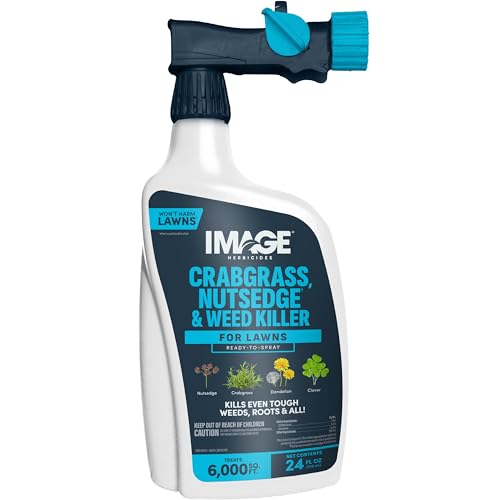
9. Image Herbicide Crabgrass, Nutsedge & Weed Killer (24 fl oz)
The affordable, ready-to-use option that covers 6,000 square feet right from the start.
Image’s 24-ounce concentrate is designed to be hooked to a garden hose, making it by far the easiest application method here—just screw it on and spray. It covers a massive 6,000 square feet (4x the coverage of the Quali-Pro Quinclorac at 1,500 sq ft), and its label reads like a dictionary of problem weeds: crabgrass, yellow and purple nutsedge, dandelion, clover, chickweed, and dollarweed. One buyer declared it “the first and only product that has actually worked for me” for crabgrass, calling it easy to use and effective on broadleaf weeds.
The honest picture: it carries a 3.6-star rating, which is the lowest average in this group. A significant number of buyers received damaged bottles (leaked during shipping), and several report the hose-end sprayer failing after minutes of use, leaving three-quarters of the product stuck in the bottle. Efficacy is inconsistent—one batch works, another seems to do nothing. For the price, it’s a low-risk entry point to test if atrazine chemistry works in your yard, but it lacks the reliability of the more established concentrates.
Entry Level Appeal
- Covers 6,000 square feet, making it the largest area coverage in this guide.
- Hose-end sprayer makes application as simple as possible—no mixing required.
- When it works, buyers report it knocks out crabgrass and broadleaf weeds effectively.
The Cons
- Inconsistent results—some batches appear to have no effect at all.
- Hose-end sprayer reported failing after 5 minutes of use, wasting product.
- Damaged bottles are a common complaint, with labels soaked through in the box.
The Low-Barrier Entry: If you are new to dollarweed control and want a cheap, easy test before investing in a concentrate and sprayer, Image is the lowest-risk starting point.
The Reality Check: Be prepared for potential packaging issues and have a backup plan—you may end up needing a second product if the first bottle disappoints.
Understanding the Specs
Quinclorac vs. Mesotrione
Quinclorac is the most common active ingredient for dollarweed control. It’s a selective herbicide that targets grassy and broadleaf weeds without harming many lawn grasses, especially fescue and bluegrass. Mesotrione works differently: it is both a pre-emergent (stops weeds before they sprout) and a post-emergent (kills existing weeds), and is uniquely safe to use during seeding. The trade-off with mesotrione is that it can temporarily bleach your grass, and it is dangerous for Bermuda, zoysia, and St. Augustine lawns.
Selective vs. Non-Selective
A selective herbicide targets specific weed species (like dollarweed) while leaving your grass mostly unharmed. This is the chemistry you need for lawn application. A non-selective product, like a salt-based spray, kills every plant it touches—grass included. Use non-selective products only for hardscapes like driveways, patios, and mulched beds. Always look for the word “selective” on the label if you plan to spray a lawn.
FAQ
Will quinclorac kill dollarweed in St. Augustine grass?
How long does it take for a dollarweed herbicide to work?
Can I apply dollarweed killer before mowing the lawn?
Do I need a surfactant with quinclorac for dollarweed?
Why does dollarweed keep coming back after I spray?
Is the ECO Garden PRO vinegar spray safe for vegetable gardens?
Can I use Andersons Meso 4 SC on a new lawn from seed?
How do I switch from granular atrazine to a liquid quinclorac?
Final Thoughts: The Verdict
For most people, the dollarweed herbicide winner is the The Andersons Meso 4 SC because it uniquely combines pre- and post-emergent control with the ability to seed your lawn at the same time—a rare feature that saves an entire season. If you have multiple weed types beyond dollarweed, grab the Quali-Pro Quinclorac 1.5 L for its 20+ weed label and proven track record. And for pet owners treating patios and driveways, the ECO Garden PRO Vinegar Weed Killer is the one to reach for, offering safety without sacrificing fast results.
How We Picked
We do not accept paid placement. Every pick is matched to a real buyer and a real use-case; we do not hands-on test units.
Sources & Methodology
Specifications: manufacturer listings and product documentation. Review insights: verified customer reviews, as of July 2026. Pricing: not shown on this page (it changes often); check the current price via the retailer link.
As an Amazon Associate, Lawn Gear Lab earns from qualifying purchases. This does not affect which products we feature.