
Specs are compiled from manufacturer listings and verified buyer reviews and can change over time — please confirm the key details on the product page before buying.
Raised beds solve gardening’s biggest real-world problem: saving your back. But the choice between wood, galvanized steel, and a standing table can feel overwhelming, especially when you just want to grow tomatoes without a PhD in materials science. The real question is simple — which holds up to weather, gives roots enough room, and goes together without a fight.
I’m Rikta — the founder and writer behind Lawn Gear Lab. This guide is built by comparing the manufacturers’ published specifications and the patterns across verified customer reviews, so you get each pick’s real strengths and trade-offs instead of marketing spin.
Whether you are sizing up your first planter or upgrading from flimsy boards, these picks cover the spectrum of garden raised beds that actually earn their place in the yard.
Our Picks at a Glance
How To Choose The Best Garden Raised Beds
The ideal raised bed balances three things: how deep the soil is, how long the material lasts, and how easy it is to put together. Picking the wrong one usually means a warped frame, a backache, or soil that dries out too fast.
Material Matters: Wood vs. Metal vs. Composite
Wood looks natural and blends into a garden, but it can rot or warp over time unless it is rot-resistant cedar or fir. Metal — particularly galvanized steel with a powder coating — shrugs off weather for years but can have sharp edges on cheaper models. Composite or plastic beds last nearly forever but often lack the rigidity to hold heavy, wet soil without bowing.
Soil Depth Is Everything
A bed that is only 6 to 8 inches deep will limit you to shallow-root crops like lettuce and herbs. Tomatoes, peppers, carrots, and potatoes need at least 12 to 17 inches of soil to develop strong root systems. The capacity in cubic feet or gallons tells you how much soil you will need to fill the box, which directly affects both your budget and your plants’ health.
Quick Comparison
| Model | Best For | Material | Soil Depth | Soil Capacity | Amazon |
|---|---|---|---|---|---|
| Vego 6-in-1 Modern Gray★ Best Overall | Best Overall | Aluzinc Metal | 17 in | 10.3 cu ft | Amazon |
| SoliWood Cedar w/ LegsErgonomic Stand | Ergonomic Standing | Cedar Wood | 30 in (stand height) | 6 cu ft | Amazon |
| KING BIRD Galvanized w/ LegsBest Value Stand | High-Capacity Stand | Galvanized Steel | 31.5 in (stand height) | 50 gal | Amazon |
| Ohuhu 8x3x1.9 ft Metal | Deep Root Crops | Galvanized Steel | 22.8 in | 45.6 cu ft | Amazon |
| Land Guard 8x4x2 ft Metal | Massive Volume | Galvanized Metal | 24 in | 478 gal | Amazon |
| AMERLIFE 8×4 ft Fir Wood | Classic Wood Look | Fir Wood | 15 in | 44 cu ft | Amazon |
| Anleolife 8x4x2 ft Oval | Premium Build | Galvanized Steel | 24 in | 478 gal | Amazon |
| Vego 10-in-1 Olive Green | Maximum Flexibility | Aluzinc Metal | 17 in | 21 cu ft | Amazon |
| Infinite Cedar 3x6x11 in | USA-Made Cedar | Western Red Cedar | 11 in | 16.5 cu ft | Amazon |
In‑Depth Reviews
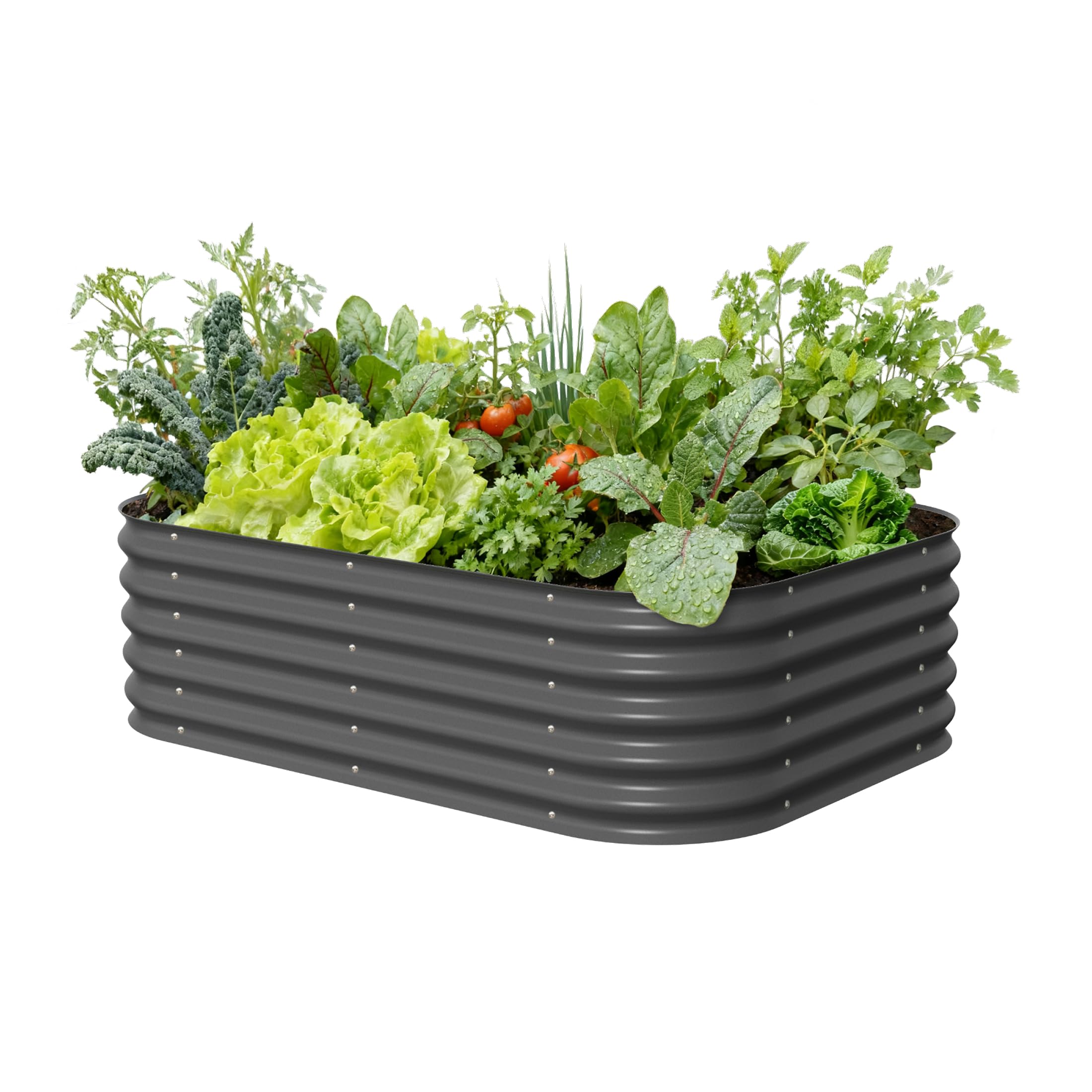
1. Vego Garden Aluzinc Raised Garden Bed Kit (Modern Gray)
Our pick — over 4.5★ from 750+ verified ratings; the strongest balance of quality and price.
The crowd favorite that balances easy assembly, 17-inch soil depth, and a finish backed by lab testing.
This bed hits the balance for most gardeners. The 17-inch soil depth gives tomatoes, peppers, and carrots room to sink deep roots while keeping you from stooping too far. It holds 10.3 cubic feet of soil — a meaningful jump compared to the 6 cubic feet of the standing SoliWood bed, giving you 72% more planting space in a compact footprint. The panels use VZ 2.0, a zinc-magnesium-aluminum coated steel, and the maker says the corrosion resistance was verified at the Texas A&M National Corrosion Lab. Owners love that assembly is straightforward solo, though one notes it uses more screws than some single-post designs. The build quality earns more than 120 mentions from buyers, and the 17-inch height draws praise for letting you tend plants from a stool or chair — exactly what one gardener called “perfect for stool/chair gardening.”
A 76-year-old owner reported the SoliWood bed went together easily with pre-drilled holes, a sentiment that carries across the Vego as well: everything lines up, the rubber edging covers the top corners, and the stainless steel bolts feel substantial. The dark horse is value — some owners find the price high for a metal box, though the 20-plus-year lifespan claim makes the math work if you are in it for the long haul.
What owners rave about
- Assembly is straightforward — over 120 people mention how easy it goes together.
- The 17-inch depth is perfect for comfortable stool or chair gardening.
- Six-in-one design lets you build a custom shape for odd yard spaces.
The honest trade-off
- More screws to drive than some single-panel competitors.
- Premium price over basic galvanized beds of similar size.
Grab it if: you want a lab-tested, long-lasting metal bed with a comfortable working height and the flexibility to reconfigure your garden layout year after year.
Pass it by if: your budget is tight and you only need one simple rectangular bed — the modular features cost extra.
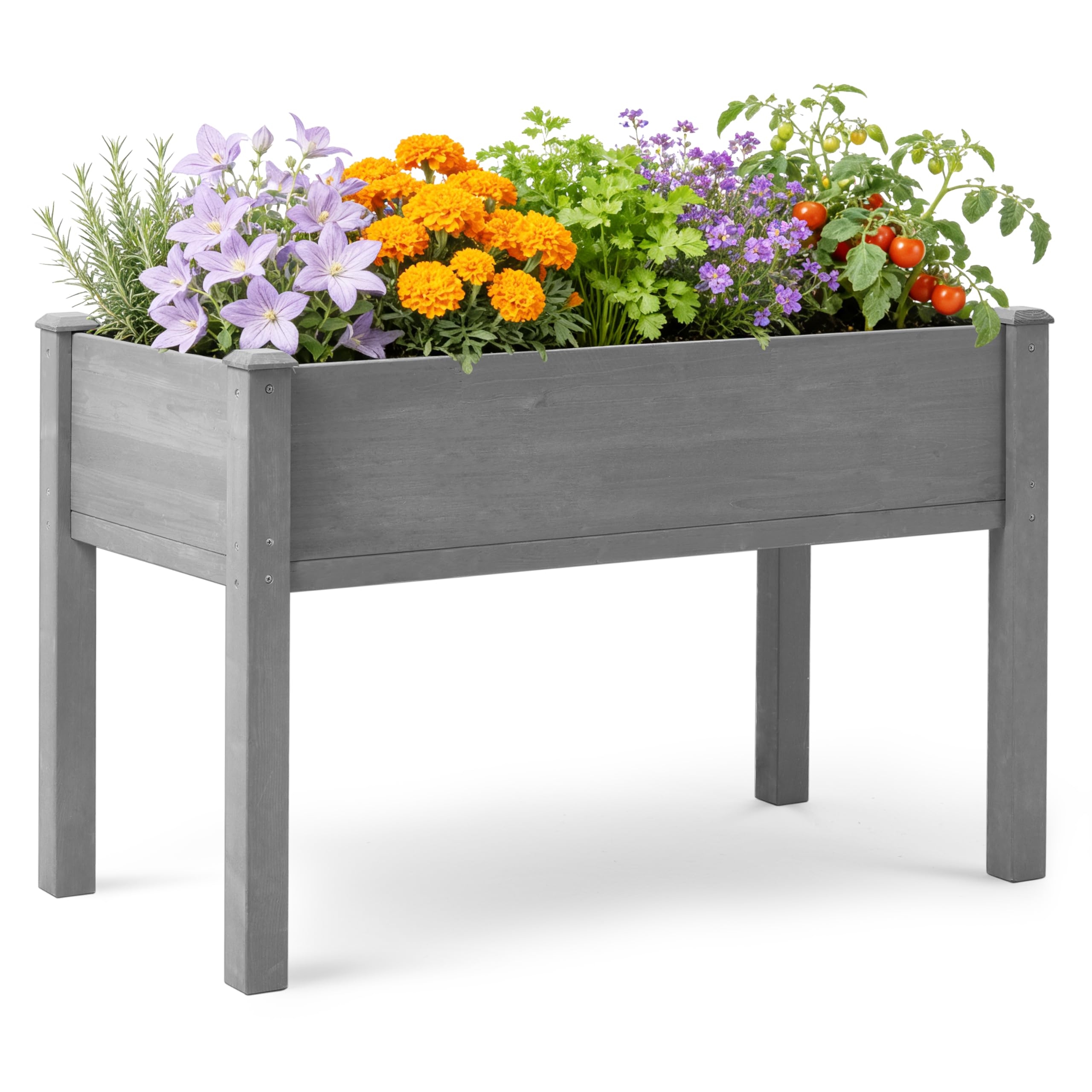
2. SoliWood Raised Garden Bed with Legs (Grey Cedar)
A standing-height cedar planter that lifts the growing space 30 inches so you never bend over again.
If your back dictates your gardening gear, this is the pick. The bed sits on 2.4-inch-thick legs that lift the planter box a full 30 inches off the ground, putting the soil right at waist height. The growing box itself holds 6 cubic feet, and the panels are 0.7-inch thick cedar with a water-based grey finish that won’t leach chemicals into your vegetables. It weighs 38.9 pounds — nearly four times heavier than the Vego metal bed — which makes it feel solid but also means you will want help moving it when filled. Buyers call out the assembly as straightforward: pre-drilled holes align perfectly, and one reviewer noted it was “easy assembly for a 76-year-old.” The appearance gets a lot of love — the grey color looks better in person than on screen, and the natural cedar grain adds a classy feel to the yard. The catch is that the soil capacity is smaller than many ground-level beds, so root vegetables are limited by the box’s depth. The wood itself is rot-resistant, but a few owners note that the wood can split if you drill too aggressively into the end grain.
Why it stands out: This is the only standing-height cedar bed in the lineup, and owners consistently praise the no-bending ergonomics. If mobility or joint pain is your biggest garden barrier, this solves it directly.
Reach for it if: you need a waist-high planter that eliminates stooping and you prefer natural wood aesthetics over metal.
Look elsewhere if: you plan to grow deep-root crops like potatoes or want maximum soil capacity in a small footprint.
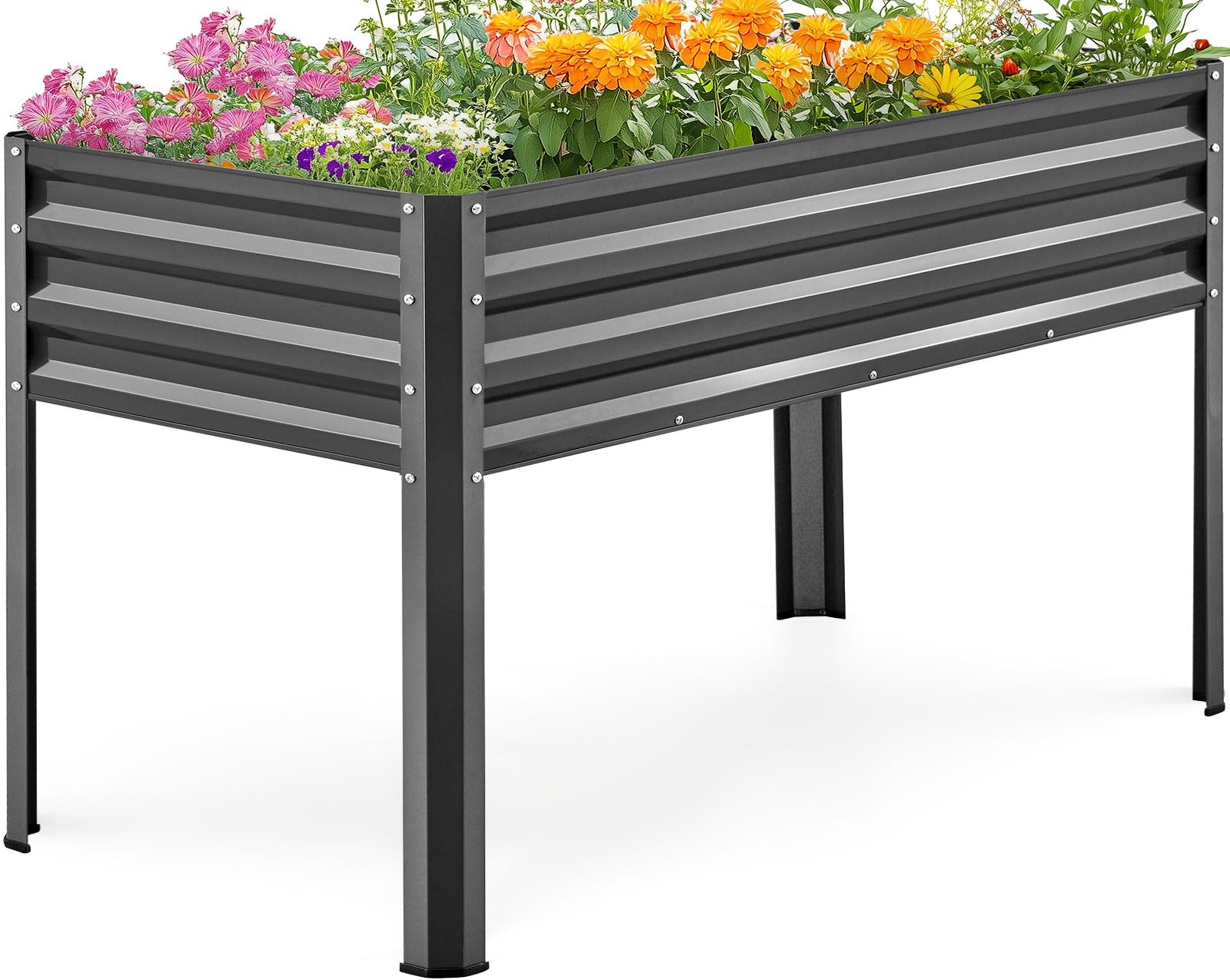
3. KING BIRD Large Raised Garden Bed with Legs
A generously sized standing bed with a 400-pound load rating at a price that undercuts most competing stands.
The KING BIRD stands at 31.5 inches tall — a full 1.5 inches taller than the SoliWood — and its 48-by-24-inch box holds 50 gallons of soil. Assembly uses butterfly nuts, which you can tighten by hand without tools, and owners note it goes together reasonably fast. The open bottom with drainage holes helps prevent waterlogged roots, and the included non-woven fabric liner keeps soil contained. A few buyers report missing hardware — some swing nuts were absent from one package — but the company’s customer service resolved it. The steel body is more durable than a wooden kit that might warp after a season, but note that the planter box depth is 11.8 inches, which is shallower than the 17-inch Vego or the 24-inch Anleolife. The 31.5-inch height is generous, meaning taller gardeners will still stoop slightly compared to a 36-inch surface, but for most people it eliminates the need to kneel.
The standout spec: 400-pound capacity at this price point is rare — the bed can hold heavy, wet soil without buckling, which is a common failure point on cheaper steel stands.
Best for: anyone who wants a standing-height bed on a budget and values a high weight capacity for soil-heavy planting.
skip it if: you need the deepest possible soil depth for tomatoes and root vegetables — 11.8 inches limits you to shallower crops.
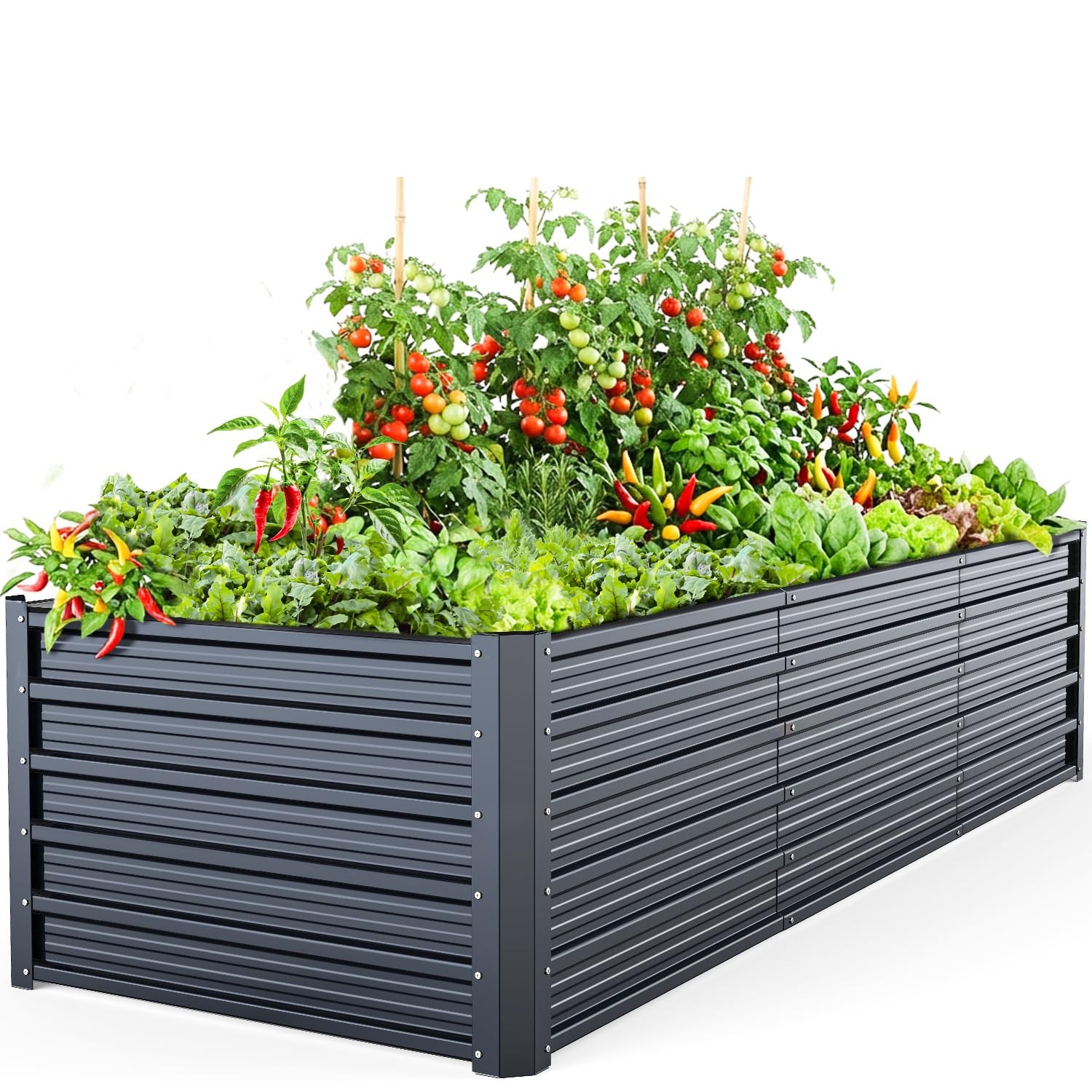
4. Ohuhu 8x3x1.9 FT Metal Raised Garden Bed
A 22.8-inch-deep bed that gives root vegetables the room they need, at nearly twice the depth of standard beds.
This is the bed for potato, carrot, and parsnip growers. The Ohuhu stands 22.8 inches tall and holds 45.6 cubic feet of soil, which is nearly 341 gallons — a massive volume for such a deep design. The panels are heavy-duty galvanized steel with an eco-coating that is CA65 and REACH certified, so it is safe for organic produce. Eight bracing rods and four thickened corner brackets keep the walls from bowing when the bed is packed with wet soil. Assembly is tool-free: pre-drilled panels and wing nuts let you put it together without a screwdriver. Owners warn that the metal edges can be sharp — several mention cutting their hands if they lean on the rim. The sturdiness gets mixed feedback too: some say it is rock-solid, while others find the metal panels a bit thin and flimsy before the braces are installed. Buyers who wanted a bed to last through rain and snow without rot are generally happy. After two years, one owner reports the paint still looks brand new, which is the kind of durability that justifies the purchase.
One honest caution: The sharp edges are a recurring theme in the reviews. Plan to wear gloves during assembly and handling, and consider adding a top cap or trim if you will lean against the rim while tending.
Choose it if: you grow deep-root crops and want a safe, certified-galvanized bed that won’t leach into your soil.
Think twice if: sharp edges bother you or you want a bed that feels heavy-duty right from the start without a few extra brace rods.
5. Land Guard Galvanized Raised Garden Bed (8x4x2 ft)

An 8-foot by 4-foot by 2-foot metal bed that swallows 478 gallons of soil for serious food production.
This bed is built for the gardener who wants to grow a lot of food. The Land Guard measures 96 inches long by 48 inches wide by 24 inches deep, which is a full foot wider than the Ohuhu’s 36-inch width. That extra width means you can plant in rows or wide blocks rather than single-file strips. The galvanized metal is reinforced at the corners and frame, and the bed has an open bottom that lets roots reach natural soil below while providing drainage. Assembly is a mixed bag: some owners say it goes together easily in about 15 minutes, while others find it time-consuming because of the many screws. The four internal support braces prevent bulging when filled, which is a common problem with large-span beds. Owners who bought two beds appreciated that leftover panels could be used to build a separate 4-foot round box — a clever reuse of the modular design. The downsides are few: the support braces are thin rods that attach with three separate bolts, which some find fiddly, and the silver color shows dirt more quickly than darker finishes. Still, for the sheer volume per dollar, this is a hard bed to beat.
Volume comparison: The Land Guard holds 478 gallons versus the Vego’s 10.3 cubic feet (roughly 77 gallons). If you are feeding a family or growing staples, the scale difference is enormous.
Great for: large-scale vegetable gardens where you want to boost growing area without spending premium prices for a name-brand kit.
Not ideal if: your yard space is small or you dislike assembling many individual screws and bolts.
6. AMERLIFE 8×4 Ft Wood Raised Garden Bed
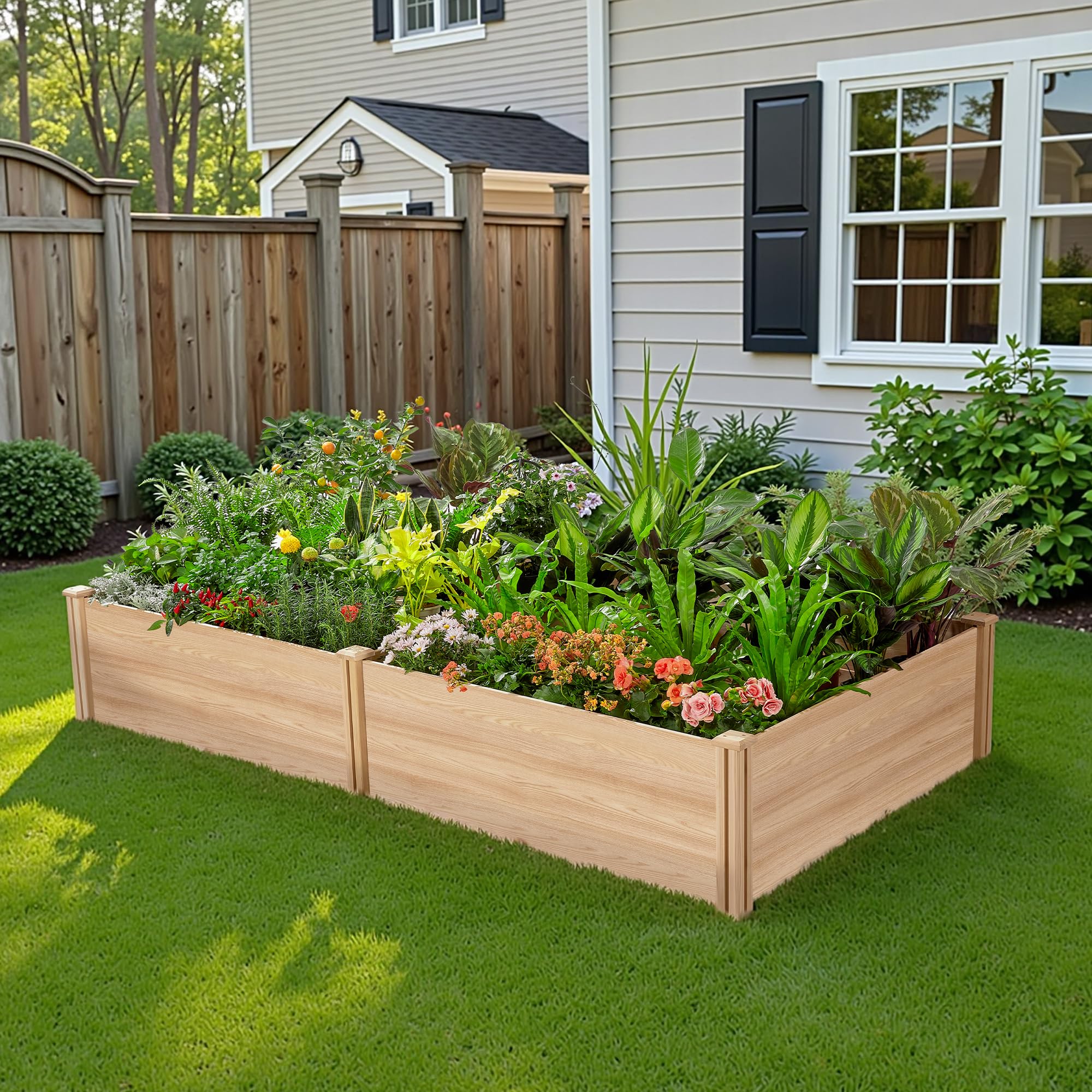
A fir-wood, 15-inch-tall bed with a mortise-and-tenon design that goes together without a single tool.
If you prefer the look of natural wood over metal, this AMERLIFE bed brings warmth to the garden. It measures 8 feet by 4 feet by 15 inches tall and holds 44 cubic feet of soil — a generous size for a mid-range wooden planter. The mortise-and-tenon structure means the boards slot together without screws or nails, and a central divider helps organize different crops. Assembly takes under 30 minutes according to several owners, and the fir wood offers natural durability. The open base allows good drainage. The honest trade-off is that the wood quality gets mixed reviews. While some find it solid and sturdy, others say it is cheap softwood that can crack or warp over time. Durability is the most common negative mention, with some owners reporting corner pieces cracking after a year. The planter is finished with an eco-friendly coating, but it is untreated wood, so moisture will eventually take its toll. This is a bed for a gardener who values quick assembly and natural aesthetics and is willing to replace it after a few seasons rather than expect 20 years of service.
The honest math: Wood costs less upfront than premium metal beds, but you will likely replace a wooden bed every 3-5 years. A metal bed like the Vego aims for 20-plus years. Your choice depends on if you want to pay less now or less over time.
Pick it if: you want a quick, tool-free wood assembly that looks great in a cottage-style garden and you don’t mind replacing it every few years.
Pass if: you want a long-term investment that won’t warp, crack, or rot after a few seasons of rain and sun.
7. Anleolife 8x4x2 ft Oval Deep Root Galvanized Raised Garden Bed
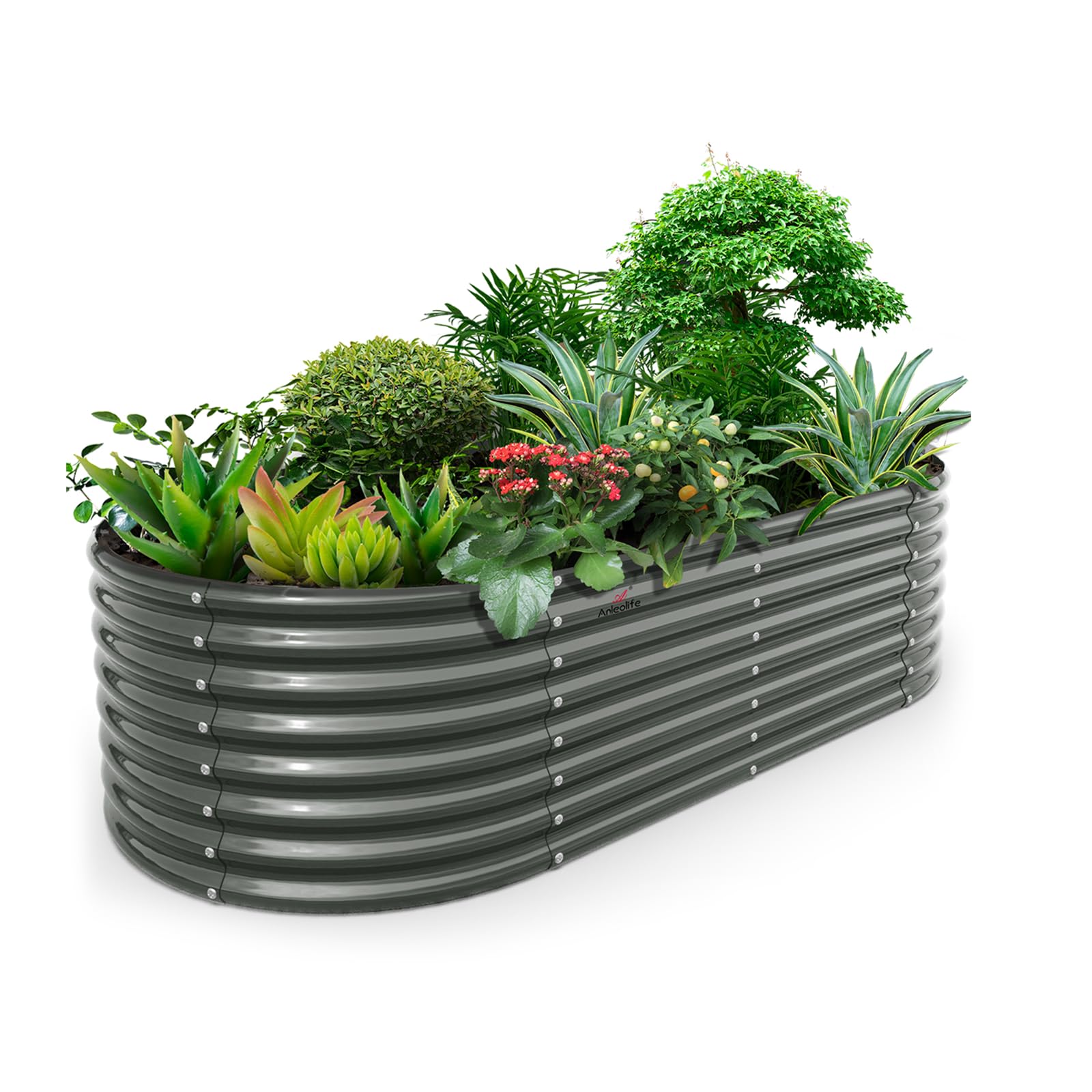
A thick-gauge, automotive-quality powder-coated steel bed with rolled edges that eliminate the sharp-metal problem.
The Anleolife is the premium contender among the large metal beds. Its panels are 22-gauge, 0.8mm thick corrugated galvanized steel — thicker than budget beds — and the multi-layer eco-friendly powder coating resists chipping and fading. The oval round shape gives it a modern look, and the rolled edges are genuinely smooth to the touch, addressing the sharp-edge complaint you read with the Ohuhu and some other metal beds. It holds 478 gallons and sits 24 inches tall — the same capacity and depth as the Land Guard but with beefier material and a more refined finish. Assembly includes garden gloves, extra hardware, and clear instructions. Owners are effusive about the build quality: one calls it “beautifully crafted,” another says the finish is “automotive-quality.” The company includes two center support braces, though some owners order two more for extra confidence on the long span. A few report that the bed shipped without supports, but customer service quickly offered replacements or a credit. The bed is heavy when filled — the steel structure alone is substantial — so place it where you want it to stay before adding soil.
Rolled edge advantage: This is the only large metal bed in the lineup that consistently gets praise for having safe, smooth edges. If you garden in shorts or have kids helping, this detail matters.
Best for: serious gardeners who want a thick, rust-resistant steel bed with a premium finish and no sharp edges. This is a buy-once, cry-once investment.
pass on it if: you are on a strict budget — the cheaper Land Guard offers the same 478-gallon capacity for less money, though with thinner metal and less refined edges.
8. Vego Garden 10-in-1 Jumbo Modular Raised Garden Bed Kit (Olive Green)
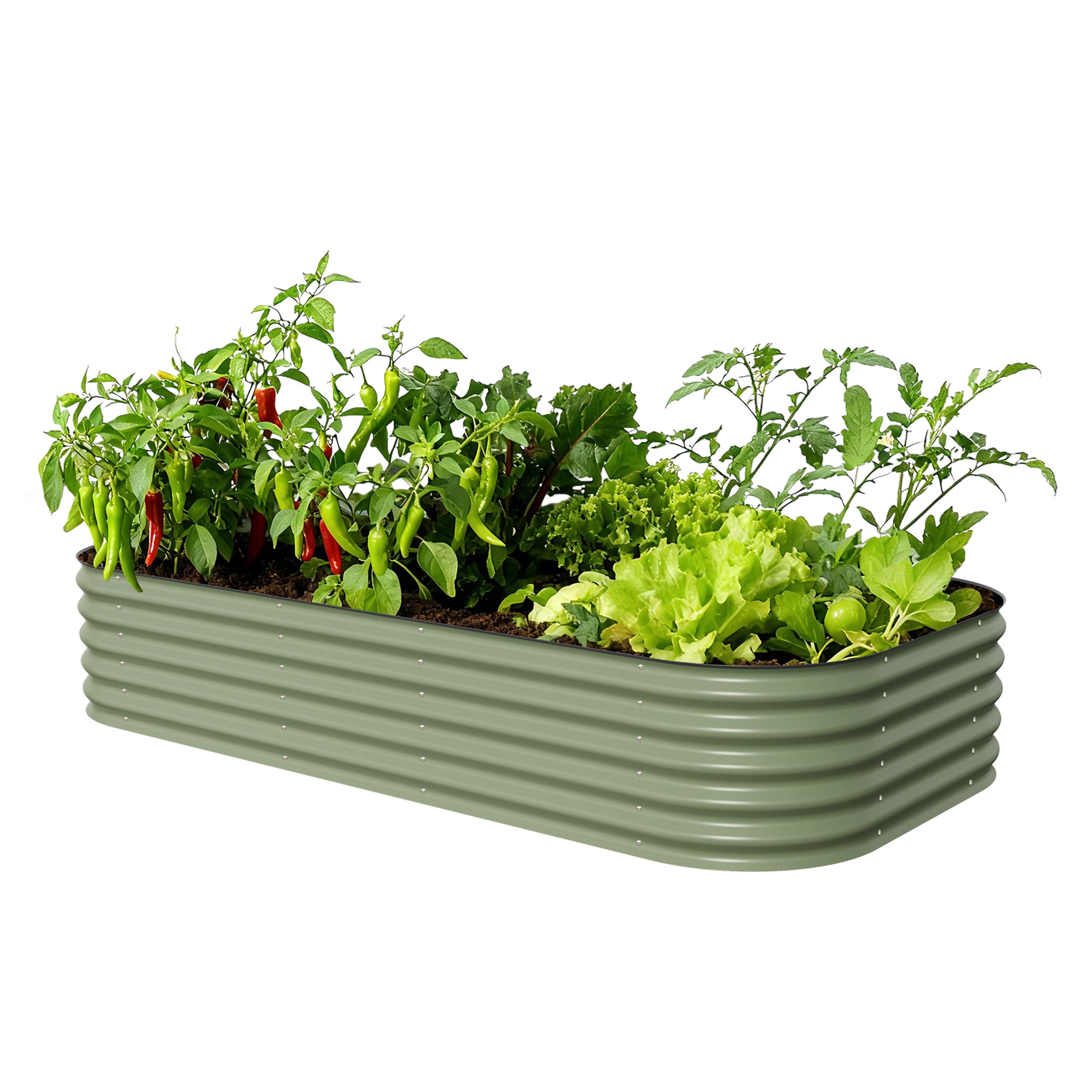
The ultimate modular system — 10 possible layouts from one kit, all made with food-safe, 20-year-rated Aluzinc steel.
This is the Vego big brother. Where the 6-in-1 kit offers six layouts, this 10-in-1 version opens up ten possible configurations, ranging from a U-shape to an L-shape to a straight rectangle, all in olive green. The capacity is 21 cubic feet — double the 6-in-1’s 10.3 cubic feet — and the 17-inch height stays consistent for comfortable stool gardening. The VZ 2.0 material is the same zinc-magnesium-aluminum coated steel, USDA-approved and tested at Texas A&M. Assembly is tool-free with no sharp corners, and heavy-duty rubber edging covers the top edges for safety. Owners who replaced old cedar beds rave about how much lighter and more durable the metal is — one compared the Vego favorably against DIY treated lumber (which weighs 338 pounds for the same footprint) and cedar (which cost them for a 4×8 bed). The caveat is that assembly is time-consuming because of the many fasteners. The kit weighs 41.7 pounds, which is manageable with two people but too heavy to easily reconfigure once you add soil. A few owners mention the panels can scratch, but that is purely cosmetic. The real value is the flexibility: if your garden shape changes next year, you can break down and reconfigure the bed without buying new materials.
Versus the 6-in-1: The 10-in-1 offers 10 configurations versus 6, and the olive green color is exclusive to this kit. Capacity is also higher at 21 cubic feet versus 10.3, making it better for larger gardens.
Perfect for: gardeners who want to change their layout year after year or who need an odd-shaped bed to fit around patios and pathways.
Not for: someone who just wants a simple rectangle and doesn’t want to spend extra for modularity or manage a box of 50-plus fasteners.
9. Infinite Cedar Premium Cedar Raised Garden Bed (3x6x11 in)

Handcrafted in Maine from 1-inch-thick North American Western Red Cedar that goes together in five minutes with no tools.
This is the polar opposite of the modular Vego kits. The Infinite Cedar bed is a simple, elegant 3-foot by 6-foot rectangle made from rot-resistant Western Red Cedar. The boards are a full inch thick — noticeably beefier than the thin pine or fir you see at big-box stores. Assembly is laughably simple: the interlocking corners hold the boards together with no screws, nails, or tools. A 72-year-old owner confirmed she put it together solo in minutes. The wood is untreated and unfinished, so it will weather to a natural silver-gray over time, and the mesh bottom (not included) is recommended to keep out burrowing animals. The bed is only 11 inches deep, which is fine for lettuce and herbs but shallow for tomatoes or carrots. Owners love the look and feel of the solid cedar, but a few note that the wood can warp over time — one buyer mentioned the long side bowing after a month, though the manufacturer replaced it quickly. The 5-year warranty is the longest of any wood bed here, and the fact that it is assembled in Maine from North American wood adds appeal for buyers who prioritize domestic manufacturing. The 16.5 cubic foot capacity is modest, so if you are feeding a family, you will need multiple units or a larger bed.
Why the premium matters: The 1-inch-thick Western Red Cedar is naturally resistant to rot and insects without chemical treatments. Cheaper wood beds use 0.5-inch or 0.75-inch pine that will rot in 2-3 seasons. This bed is built to last a decade or more with minimal maintenance.
Best if: you value handcrafted quality, domestic manufacturing, and want a small, elegant bed that goes together without tools and will not rot quickly.
Think twice if: you need deep soil for root vegetables or you want a bed wider than 3 feet — the fixed size and 11-inch depth limit what you can grow.
Understanding the Specs
Soil Depth (Inches)
This is the vertical space from the top of the bed to the ground. Shallow beds (6-11 inches) work for lettuce, herbs, and strawberries. Medium beds (12-17 inches) handle peppers, tomatoes, and bush beans. Deep beds (18-24 inches) let you grow potatoes, carrots, and parsnips. Standing beds with legs lift the soil to waist height but often have shallower boxes, so check the box’s internal depth, not just the overall bed height.
Material and Coating
Galvanized steel is steel dipped in zinc to resist rust. Powder coating adds a colored baked-on layer for extra protection. Aluzinc (like Vego’s VZ 2.0) uses aluminum, zinc, and magnesium for corrosion resistance that is tested at corrosion labs. Cedar is naturally rot-resistant and contains oils that repel insects. Fir is cheaper and less durable but still better than untreated pine. Always look for food-safe certifications if you are growing edibles — some cheap galvanized beds can leach zinc into acidic soil over time.