
Specs are compiled from manufacturer listings and verified buyer reviews and can change over time — please confirm the key details on the product page before buying.
if you want denser turf, a fruit-free ornamental tree, or cuttings that root in days instead of weeks, what you actually reach for changes everything. A plant growth regulator isn’t a fertilizer — it’s a signal that tells your plant exactly *where* to put its energy. Picking the wrong active ingredient means you spend money on results you never get.
I’m Rikta — the founder and writer behind Lawn Gear Lab. This guide is built by comparing the manufacturers’ published specifications and the patterns across verified customer reviews, so you get each pick’s real strengths and trade-offs instead of marketing spin.
The garden supply aisle is full of bottles promising bigger blooms and faster rooting, but a few specific formulas consistently solve the real problems gardeners face. This breakdown of the best plant growth regulators covers the ornamental growth-control specialist, the propagation secret weapon, and the turf-taming heavyweights that actually deliver on their labels.
Our Picks at a Glance
How To Choose The Best Plant Growth Regulators
A plant growth regulator (PGR) is not a one-size-fits-all bottle. Some suppress vertical growth in grass, others stimulate root development in cuttings, and a few stop a tree from dropping messy fruit. The trick is matching the active ingredient to your specific goal.
Understand the Goal: Suppression vs. Stimulation
The most common PGRs fall into two camps. Gibberellic acid inhibitors (like trinexapac-ethyl) slow down stem elongation, so your lawn grows slower and denser. On the opposite side, auxin-based products (like Indole-3 Butyric Acid, or IBA) encourage root cells to divide and grow — perfect for cloning cuttings. You don’t want to spray a rooting hormone on your lawn, and you wouldn’t use a grass-growth regulator on a cutting. Know which job you’re doing before you buy.
Check the Active Ingredient Concentration
The percentage of the active chemical matters enormously. A product like Primo Maxx contains trinexapac-ethyl, but at different concentrations for different coverage areas. A rooting powder at 0.8% IBA is for semi-hardwood cuttings, while a 0.1% is for delicate softwood. Using too high a concentration can burn tender plant tissue. Always look for the exact percentage on the label — that number is the key to getting the dose right.
Liquid, Powder, or Gel
The form dictates how you apply it. Liquids mix with water for sprayers — ideal for covering a whole lawn or a large tree canopy. Powders are for dipping the wet end of a cutting before you stick it in soil; they cling but can be messy. Gels stay in place on a stem without running off, which is useful for tough-to-stick cuttings on vertical surfaces. Choose the form that fits your application method, not what looks cheapest per ounce.
Quick Comparison
| Model | Best For | Active Ingredient | Form | Coverage Area | Amazon |
|---|---|---|---|---|---|
| Atrimmec Plant Growth Regulator | Ornamental & hedge growth control | Dikegulac sodium | Liquid | 1–5 fl oz/gal | Amazon |
| Root DropsBest for Propagation | Water-rooting cuttings | Natural Hormones/Vitamins | Liquid Drops | 4 oz | Amazon |
| VermisTerra VitalityBest Growth Booster | All-purpose growth boost | Fulvic Acid + Enzymes | Liquid Concentrate | 16 oz | Amazon |
| Hormex Rooting Powder Combo | Propagation variety pack | IBA (0.1 – 0.8%) | Powder | 3 x 1 oz | Amazon |
| Monterey Florel | Fruit suppression + mistletoe | Ethephon | Liquid | 1 Quart | Amazon |
| Primo Maxx★ Best Overall | Lawn growth regulation | Trinexapac-ethyl | Liquid | 20,000 – 40,000 sq. ft | Amazon |
| Atticus Pramaxis MEC | Professional turf management | Trinexapac-ethyl 11.3% | Liquid MEC | 8 oz | Amazon |
| Cloning Gel by Ventana | Gel-based cuttings | IBA 0.5% + Vitamin B-1 | Gel | 16 oz | Amazon |
| Quali-Pro T-Nex | Large-area turf regulation | Trinexapac-ethyl 12% | Liquid | 128 oz | Amazon |
In‑Depth Reviews
1. Atrimmec Plant Growth Regulator

The spray-on pruning shortcut that makes hedges and shrubs grow denser instead of taller.
Atrimmec by Gordon’s is a professional plant growth regulator built around dikegulac sodium, an active ingredient that temporarily stops the terminal (tip) growth of a plant. With the leader shoot paused, the plant pushes its energy into the lateral buds, so ornamentals fill in denser and bushier rather than stretching upward. It ships as a liquid concentrate that you mix at 1 to 5 fluid ounces per gallon of water, dialing the rate up or down for the species and the amount of growth suppression you want.
The practical appeal is that it replaces a lot of repetitive hand-pruning. It is used to suppress unwanted regrowth and flowering on hedges, groundcovers, shrubs, and vines — spraying a hedge to slow its rebound between shearings, or knocking back a vigorous groundcover so it stops climbing where it should not. Think of it as a chemical alternative to the shears rather than a fertilizer or a turf product, so it belongs in the ornamental bed and not on the lawn.
It carries a 4.5-star rating across roughly 100 verified ratings, and at around $139.49 for the concentrate it is priced as a professional-grade product rather than a consumer spray. That number stings for a single hedge, but the bottle is highly concentrated — only a few ounces per gallon — so it stretches across a lot of shrubbery over a season, which is where the math starts to work for anyone maintaining large plantings.
Why it earns a spot
- Redirects growth into dense lateral branching instead of leggy vertical shoots
- Cuts down on repeat hand-pruning of hedges, groundcovers, and vines
- Highly concentrated liquid — 1 to 5 fl oz per gallon covers a lot of shrubbery
The honest trade-off
- Premium price that is hard to justify for just a plant or two
- Strictly for ornamentals — not for lawns, turf, or edible crops
Reach for this if: you maintain hedges, shrubs, or groundcovers and want denser branching with far less shearing and hand-pruning.
Look elsewhere if: your goal is a thicker lawn or rooting cuttings — this dikegulac-sodium inhibitor is built for woody and ornamental plants, not turf or propagation.
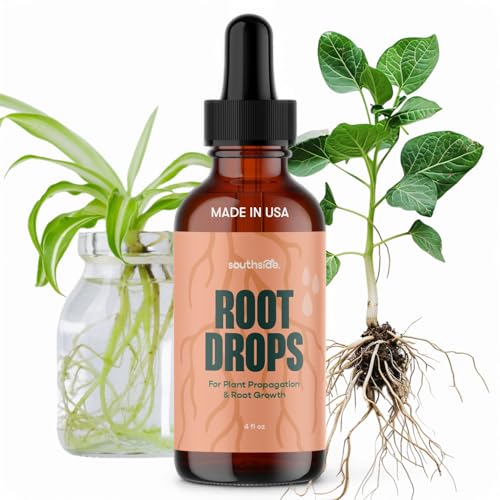
2. Root Drops – Liquid Rooting Hormone for Cuttings
Two drops per cup turns weeks of waiting into days of rooting.
Unlike messy powders that clump or gels that slide off, this liquid rooting hormone is applied straight into the water — just two drops per cup for water propagation. It works for soil transplants, leca, pon, and sphagnum moss too, which makes it unusually versatile for anyone growing in a range of substrates. The bottle holds 4 fluid ounces but weighs only 5 ounces, a sign of how concentrated the formula is. Owners mention that “Pothos cuttings showed roots in 5 days vs. weeks normally,” and that the bottle lasts a long time because a little goes far.
The formula contains all-natural rooting hormone and vitamins, designed to reduce transplant shock when moving a cutting from water to soil or repotting a mature plant. The thing owners praise most is its effectiveness — 82 people single it out as a top feature — which is rare for a product category where results can be subtle. The 4.6-star rating across hundreds of reviews backs up the claim that this is the propagation shortcut serious houseplant lovers turn to.
At 4 fluid ounces, the bottle is about a quarter the size of the VermisTerra Vitality (16 oz), but the concentration means you use far less per application. The bottle size gets mixed reactions — some wish it were bigger, but the consensus is that the tiny bottle punches far above its weight.
Smart-buy perspective: This is the easiest way to speed up rooting without any mixing, measuring, or cleanup. The price is entry-level, but the concentration makes it a value play that outperforms many pricier gels.
Grab this if: you propagate cuttings in water or want a single product that works across soil, leca, and moss with zero fuss.
skip it if: you need a high-IBA powder for woody hardwood cuttings — this is for soft to semi-hard propagation.
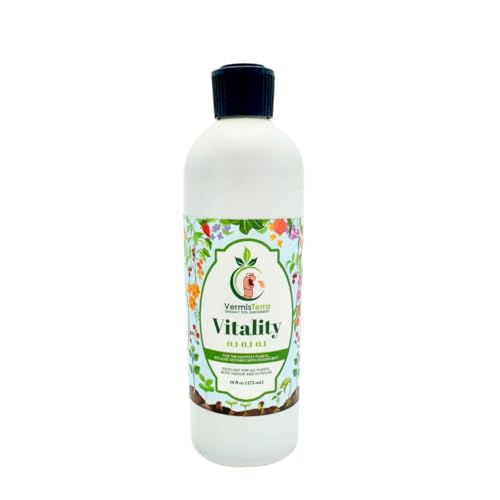
3. VermisTerra Vitality 16 oz – Growth Accelerator
Chicken soup for the plant soul — gentle nutrition that sparks explosive growth.
This one is not a synthetic PGR in the traditional sense. It uses biologically derived fulvic acid, enzymes, plant probiotics, and natural hormones to encourage root development and lush foliage without the harsh spikes of chemical fertilizers. The mixing ratio is 1:128 — super concentrated — and the bottle weighs 16 ounces for that same volume. Customers note seeing “an explosion of growth after use” on established plants, and one reviewer called it “chicken soup for the plants soul.”
The standout feature is that it reduces transplant shock and root rot by providing gentle, bioavailable nutrition that doesn’t wash away. It also helps cuttings root faster thanks to natural hormones. The 16-ounce bottle offers a generous liquid volume at a much lower price point than most concentrated PGRs, making it accessible for regular feeding schedules. Owners say it works best when used 1-2 times per year alongside a balanced fertilizer, rather than as a standalone every-watering solution.
Plant growth is the thing owners praise most — 19 people call it out — and the product carries a strong 4.6-star rating. The catch is that overuse can cause drooping in sensitive plants like ponytail palms, so the label’s 1:128 ratio is worth respecting.
Our read: This bridges the gap between a fertilizer and a growth regulator. It nourishes the soil biology rather than forcing synthetic growth, which is why established plants respond so dramatically.
Best for: any indoor or outdoor gardener who wants a gentle, organic-feeding boost without risking chemical burn.
Think twice if: you want a targeted hormonal PGR for specific fruiting or flowering control — this is a broad nourishment tool, not a precision regulator.
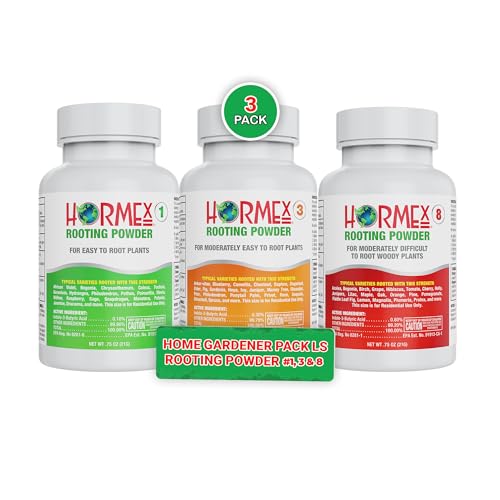
4. Hormex Rooting Powder Combo #1, 3, 8 (0.10-0.8 IBA)
Three strengths in one box so you never guess the dose again.
Hormex has been making rooting formulas for over 65 years, and this combo pack gives you three concentrations of Indole-3-Butyric Acid (IBA) — 0.1%, 0.3%, and 0.8% — so you can match the hormone strength to the cutting type. The #1 powder (0.1%) is for delicate houseplants and succulents; #3 (0.3%) is for common garden cuttings; #8 (0.8%) is for semi-hardwood trees and medicinal plants. Each bottle is 1 ounce, and the total package weight is 2.25 ounces.
Users report full roots in 3 weeks on fig cuttings, and thriving new hibiscus plants from broken clippings in 2 months. The process is straightforward: snip a 3-8″ stem at a 45-degree angle just below a node, dip in water, coat in the powder, and plant in a rooting medium. The powder is clean and minimalist — no dyes or filler ingredients.
Root growth is the thing owners praise most, with 8 people highlighting it. However, effectiveness gets a mixed verdict from the review count (15 mentions) because success depends heavily on cutting type, season, and temperature — hot weather gave one grower only 3 roots out of 20 ivy cuttings. This is a tool for the propagation enthusiast who enjoys dialing in the process, not a magic wand.
This removes the guesswork.
Reach for this if: you propagate a wide variety of plants from soft succulents to woody shrubs and want the right IBA level every time.
Look elsewhere if: you only ever root one type of cutting — a single-strength powder or liquid would be cheaper and simpler.
5. Monterey Florel Plant Growth Regulator with Measuring Spoon
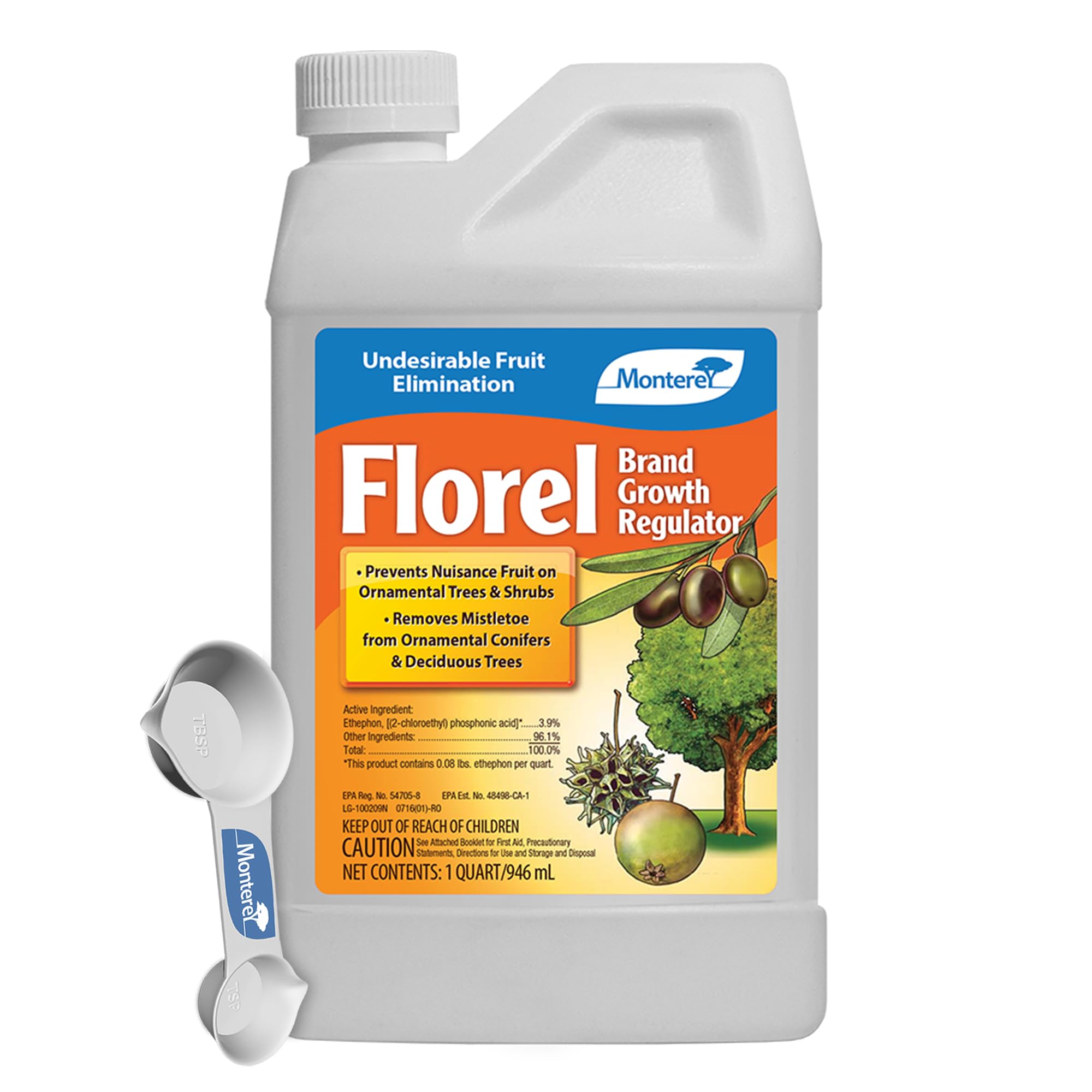
The spray that tells your crabapple tree to stop dropping fruit on the driveway.
This is a specialized PGR that uses ethephon as its active ingredient, which the plant converts into ethylene — the natural hormone that triggers fruit drop and flower inhibition. It is designed to stop unwanted nuisance fruit on trees like crabapple, flowering pear, olive, sweet gum, and maple. It also works for dwarf mistletoe shoot removal and increasing lateral branching in ornamental shrubs and greenhouse floriculture crops like chrysanthemums and geraniums.
The 1-quart bottle covers 2 full-size trees or partial coverage of 4, according to owners who have used it on crabapples and olives. The key is timing — you spray right after the flowers open. Reviewers point out that when applied correctly, sprayed branches produce zero fruit while unsprayed branches produce normally. It is colorless and odorless after application, and the 32-ounce bottle lasts multiple seasons for a homeowner.
Effectiveness is the most-discussed aspect by far, with 61 owners calling it out, and the product scores well on ease of use. The mixed feedback on fruit performance (9 mentions) is almost entirely about application timing mistakes — spraying too early or too late yields poor results. A ladder or a good sprayer is essential for reaching tall tree canopies.
Bottom line: If you have a messy ornamental tree that drops fruit where you walk, park, or play, this is the most direct solution available. It is narrow in purpose but excellent at what it does.
Grab this if: you are tired of sweeping up crabapples or fighting mistletoe in your ornamentals.
pass on it if: you need a general-purpose growth regulator for lawn or propagation — this is exclusively for trees, shrubs, and floriculture.
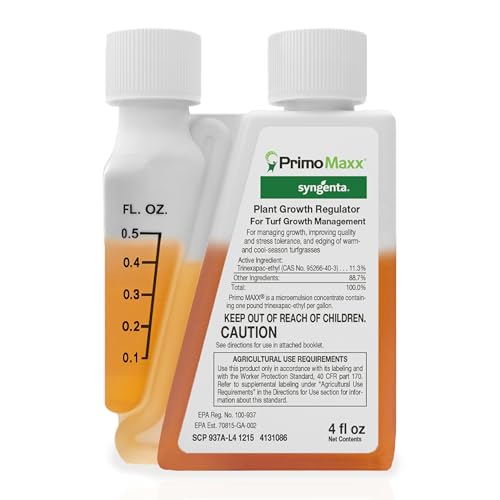
6. Primo Maxx Plant Growth Regulator
The Syngenta-crafted PGR that turns your lawn into a slow-growing, thick carpet.
Primo Maxx is the benchmark product for turfgrass growth regulation, containing trinexapac-ethyl as its active ingredient. It slows vertical blade growth while promoting lateral spread, root mass, and drought tolerance — which means you mow less and your grass gets thicker. The 4-ounce bottle covers 20,000 to 40,000 square feet, depending on the application rate. The mixing ratio is 1 part Primo Maxx to 100 parts water.
Owners of Bermuda grass lawns are the biggest fans, reporting that it “slows vertical Bermuda growth, boosting lateral spread, density, and root strength” for a golf-course-style canopy with significantly less mowing. One owner noted being “very happy with not having to mow in the summer.” The product is also useful for managing difficult-to-mow areas and reducing the need for edging turfgrass.
Effectiveness is the top praised aspect, with 15 owners calling it out, and quality follows with 8 mentions. The mixed feedback comes on value for money — 6 people find it pricey, which is understandable for a premium Syngenta product. The effect is real but can be subtle on the first application; consistent use across the growing season delivers the dramatic transformation.
Why it matters: This is the go-to for serious lawn enthusiasts who want professional-grade results. It is the same active ingredient used on golf courses and athletic fields, scaled for residential use.
Best for: homeowners with warm-season grasses (especially Bermuda) who want a denser, darker lawn with half the mowing frequency.
Think twice if: you have a small lawn or are looking for a one-time fix — PGRs require a seasonal application plan for best results.
7. Atticus Pramaxis MEC Plant Growth Regulator for Lawn (8 oz)
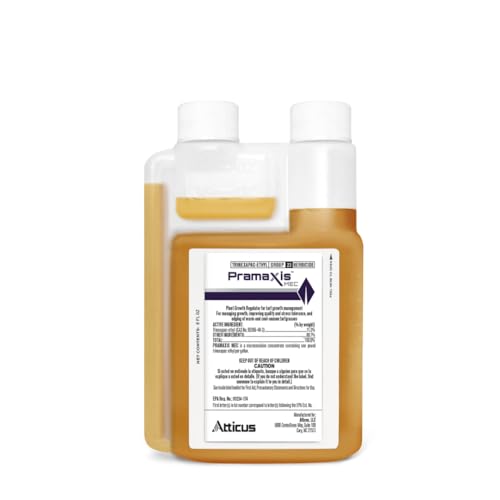
The same trusted active ingredient as Primo Maxx, in a microemulsion that stays mixed.
Atticus Pramaxis MEC contains 11.3% trinexapac-ethyl — the same active ingredient used by professional turf managers for over 30 years — but in a microemulsion concentrate (MEC) formula. MEC means the particles are extremely small, so the liquid blends into solution easily and resists settling, eliminating the need for constant agitation in the tank. This matters when you are spraying large areas and don’t want to stop and remix.
The 8-ounce bottle is double the size of the Primo Maxx 4-ounce bottle, yet both use the same active ingredient. Shoppers say using it on hybrid Bermuda grass with great results, noting “significant spreading” and improved lawn health. One owner bought it specifically to suppress growth during vacation and reported it worked for 6-8 weeks, with possible lawn-thickening as a side benefit.
Effectiveness is the most-discussed aspect, praised by 23 owners, and growth improvement gets 11 mentions. The value-for-money verdict is mixed — the cost per ounce is high, which makes it expensive for very large yards. The 8-ounce size is a good starter option for homeowners who want to try a professional-grade PGR without committing to a gallon.
The head-to-head: Compared to Primo Maxx, this offers a larger bottle at a similar price point with the MEC formula advantage. For the same active ingredient chemistry, this is the cost-efficient entry point.
Reach for this if: you want the professional trinexapac-ethyl chemistry but prefer a microemulsion that won’t settle in the sprayer.
Look elsewhere if: you need maximum coverage for a very large property — the per-ounce cost makes bulk options like Quali-Pro T-Nex more economical.
8. Cloning Gel by Ventana Plant Science (16 oz)
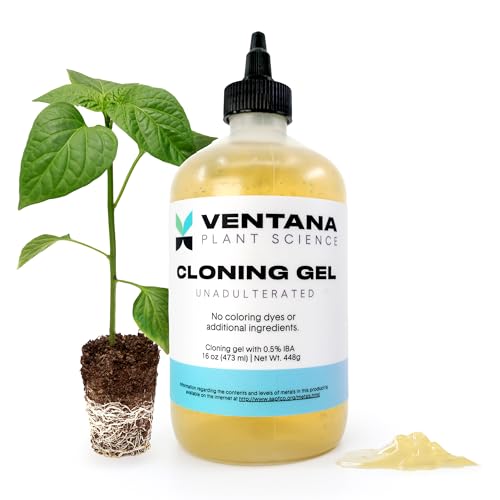
The gel that stays on the stem — no drip, no mess, no dyes.
This cloning gel uses 0.5% Indole-3 Butyric Acid (IBA) plus Vitamin B-1 to promote root development, all in a dye-free formula. The big advantage over powder is adhesion: gel stays in place on the cutting without running off, which matters for tough-to-stick species or vertical applications. The 16-ounce bottle weighs 1.3 pounds, and the gel consistency means you use less per cutting compared to dipping in powder.
Buyers report rooting success on cuttings that had failed for 3 months in water, moss, and perlite — the gel finally produced roots in under a month. The lid design prevents contamination of the gel inside, and there is no leakage in storage. The formula is also effective for larger plants, not just clones.
Cloning performance is the top praised aspect with 8 mentions, and ease of use follows with 5. However, effectiveness gets a mixed verdict (19 mentions) — some owners mention great results while others see no effect on certain plant species. Discoloration also gets mixed feedback (5 mentions), as the gel can darken over time or leave a tint on some cuttings. Store it below 75°F to maintain consistency.
Compared to powders: If you’ve had trouble with powder falling off your cuttings or clumping, this gel solves both problems. It is also easier to apply one-handed while holding the cutting.
Grab this if: you propagate tricky cuttings that need the hormone to stay precisely where you put it.
it’s not for you if: you prefer powders for their longer shelf life and lower per-application cost.
9. Quali-Pro T-Nex Plant Growth Regulator (128 oz)

The gallon jug that slashes your mowing from twice a week to once.
Quali-Pro T-Nex contains 12% trinexapac-ethyl — slightly higher concentration than the 11.3% in Atticus Pramaxis — and comes in a 128-fluid-ounce (1 gallon) jug weighing 8 pounds. This is the serious bulk option for large lawns, golf courses, or anyone who wants the lowest per-ounce cost for professional-grade turf regulation. It covers warm-season grasses like Bermuda and St. Augustine as well as cool-season types like fescue and bluegrass.
Customers note cutting their mowing frequency in half — from twice a week to once a week — and collecting significantly less grass clippings. One owner uses it with a mix of iron and surfactant every two weeks for deep, dark color. The recommended application rate for Bermuda is 0.75 oz per 1,000 square feet, which makes the gallon jug last for over 170,000 square feet of coverage.
Effectiveness is the most-discussed aspect with 56 owners praising it, and value for money follows with 10 positive mentions. The mixed feedback comes on grass appearance — 10 owners note it can turn the turf slightly brownish if over-applied or applied during heat stress. The product is highly concentrated, so accurate measuring is critical. It is not available for sale in Alaska, DC, Hawaii, New York, or Vermont.
The economy-of-scale argument: At 128 ounces, this is 16 times the volume of the Primo Maxx 8-ounce option. If you have a large property or share with neighbors, the per-ounce savings are substantial.
Best for: property owners with large lawns (over 10,000 sq ft) who want professional results at the lowest possible per-ounce cost.
Think twice if: you have a small yard or don’t want to store and measure a large container — the 4 oz Primo Maxx or 8 oz Atticus Pramaxis are easier to handle.
Understanding the Specs
Trinexapac-ethyl
This is the most common active ingredient in turfgrass growth regulators. It works by slowing the production of gibberellic acid, the plant hormone responsible for stem elongation. The result is a shorter, denser blade with more energy diverted to root and lateral growth. Look for concentrations between 11% and 12% for residential lawn use. It is safe for both cool-season (fescue, bluegrass) and warm-season (Bermuda, zoysia) grasses.
Indole-3 Butyric Acid (IBA)
IBA is the gold-standard auxin for rooting cuttings. It encourages root cell division and elongation at the cut site. Concentrations from 0.1% (for soft succulents and delicate houseplants) up to 0.8% (for semi-hardwood trees and shrubs) cover the full range of propagation needs. Powder formulations are classic and cheap, but liquids and gels give better coverage on difficult cuttings.
Dikegulac sodium
Dikegulac sodium is the active ingredient in growth-inhibiting PGRs for ornamentals. It temporarily halts the terminal (tip) growth of a plant, which pushes energy into the lateral buds so the plant branches out and grows denser instead of taller. Products like Atrimmec use it to suppress unwanted regrowth and flowering on hedges, groundcovers, shrubs, and vines — a spray-on alternative to hand-pruning. It is typically mixed at 1 to 5 fluid ounces per gallon of water.
Mixing Ratio & Coverage
Liquid PGRs are concentrates that must be diluted with water. A ratio like 1:128 means 1 part product to 128 parts water — roughly 1 ounce per gallon. Coverage estimates (like 20,000-40,000 sq ft for a 4-ounce bottle) assume standard application rates. Always follow the label for your specific grass type or target species; over-application can stress plants and under-application wastes your time.
Liquid Volume vs. Active Weight
Two bottles can have the same liquid volume (16 oz) but very different amounts of active ingredient. A concentrated formula packs more active chemical into the same bottle than a mostly-water product, so it weighs more and stretches further per ounce. The active-ingredient percentage on the label matters more than the bottle size when you compare value across different brands.
Form: Liquid, Powder, or Gel
Liquids mix into sprayers and cover large areas efficiently — best for lawns and tree canopies. Powders coat the cut end of a stem but can fall off easily; they last longer on the shelf. Gels stick best to vertical or smooth stems and are ideal for tricky cuttings that refuse to take. Each has a use case, and having one of each covers every propagation and regulation scenario.
FAQ
What is the difference between a plant growth regulator and a fertilizer?
Can I use a lawn PGR on my houseplants?
How often should I apply a turfgrass growth regulator?
Will a rooting hormone work on all types of cuttings?
Is it safe to use PGRs on vegetable plants?
Does trinexapac-ethyl work on all grass types?
How do I measure liquid PGRs accurately?
What is the shelf life of a rooting powder or gel?
Can I mix a PGR with fertilizer or pesticide in the same sprayer?
Why did my tree produce fruit after I sprayed it with Florel?
Final Thoughts: The Verdict
For most people, the best plant growth regulators winner is the Primo Maxx because its trinexapac-ethyl chemistry is the turf-management standard — slowing vertical growth for a denser lawn and far less mowing. To tame ornamentals and hedges without endless hand-pruning, the Atrimmec growth inhibitor redirects energy into tighter, bushier branching. If you want faster rooting for your propagation projects, grab the Root Drops, and for the lowest per-ounce cost on a big lawn, the bulk Quali-Pro T-Nex is the one to reach for.
How We Picked
We do not accept paid placement. Every pick is matched to a real buyer and a real use-case; we do not hands-on test units.
Sources & Methodology
Specifications: manufacturer listings and product documentation. Review insights: verified customer reviews, as of July 2026. Pricing: not shown on this page (it changes often); check the current price via the retailer link.
As an Amazon Associate, Lawn Gear Lab earns from qualifying purchases. This does not affect which products we feature.