
Specs are compiled from manufacturer listings and verified buyer reviews and can change over time — please confirm the key details on the product page before buying.
A sudden late freeze or an unexpected cold snap can undo months of careful gardening work in a single night. That morning panic — rushing outside to find wilted, blackened leaves on plants you babied through the season — is exactly what a freeze blanket for plants is designed to prevent. The right cover traps ground warmth, lets in sunlight and rain, and acts as a barrier between tender foliage and sub-freezing air, all without smothering your crops or shrubs.
I’m Rikta — the founder and writer behind Lawn Gear Lab. This guide is built by comparing the manufacturers’ published specifications and the patterns across verified customer reviews, so you get each pick’s real strengths and trade-offs instead of marketing spin.
You need a freeze blanket that fits your garden’s size, handles your local winter lows, and works for a few potted plants or a whole raised bed. Here are the best freeze blankets for plants to match your setup and budget.
Our Picks at a Glance
How To Choose The Best Freeze Blankets For Plants
The best cover for your garden depends on a few straightforward decisions. Focus on these four factors to narrow down the field quickly.
Fabric Weight and Density
This is measured in ounces per square yard (oz/yd²). A lighter fabric (0.9 oz/yd²) works well for light frosts and lets more sunlight through. A heavier fabric (1.1 to 1.5 oz/yd²) offers better insulation for harder freezes but blocks a bit more light. The crowd favorite for moderate winters is the 1.1 oz/yd² range — a good balance of warmth and breathability.
Coverage Size and Shape
For raised beds and row crops, a large rectangular sheet (10 ft x 30 ft or 10 ft x 33 ft) gives you the freedom to cut custom pieces. For individual trees, shrubs, or pots, a drawstring bag-style cover (like a 22.4″ x 24″ jacket) is more convenient and stays put in the wind. Measure your plants and beds before you buy — a single large sheet can often cover several smaller plants if you cut it.
Drawstring vs. Floating Row Cover
Drawstring covers cinch around the base of a trunk or pot, making them secure against wind but limited to individual plants. Floating row covers are laid loosely over plants and weighted down with stones, soil, or stakes — they cover larger areas but need more anchoring. If you garden in a windy spot, floating covers need extra reinforcement.
Reusability and Storage
All the picks here are reusable if kept dry and clean. A durable non-woven polypropylene fabric can last several seasons if you fold it neatly between uses and store it indoors. The thicker the fabric, the more likely it will survive multiple seasons of handling and wind exposure without tearing.
Quick Comparison
| Model | Best For | Fabric Weight | Coverage | Style | Amazon |
|---|---|---|---|---|---|
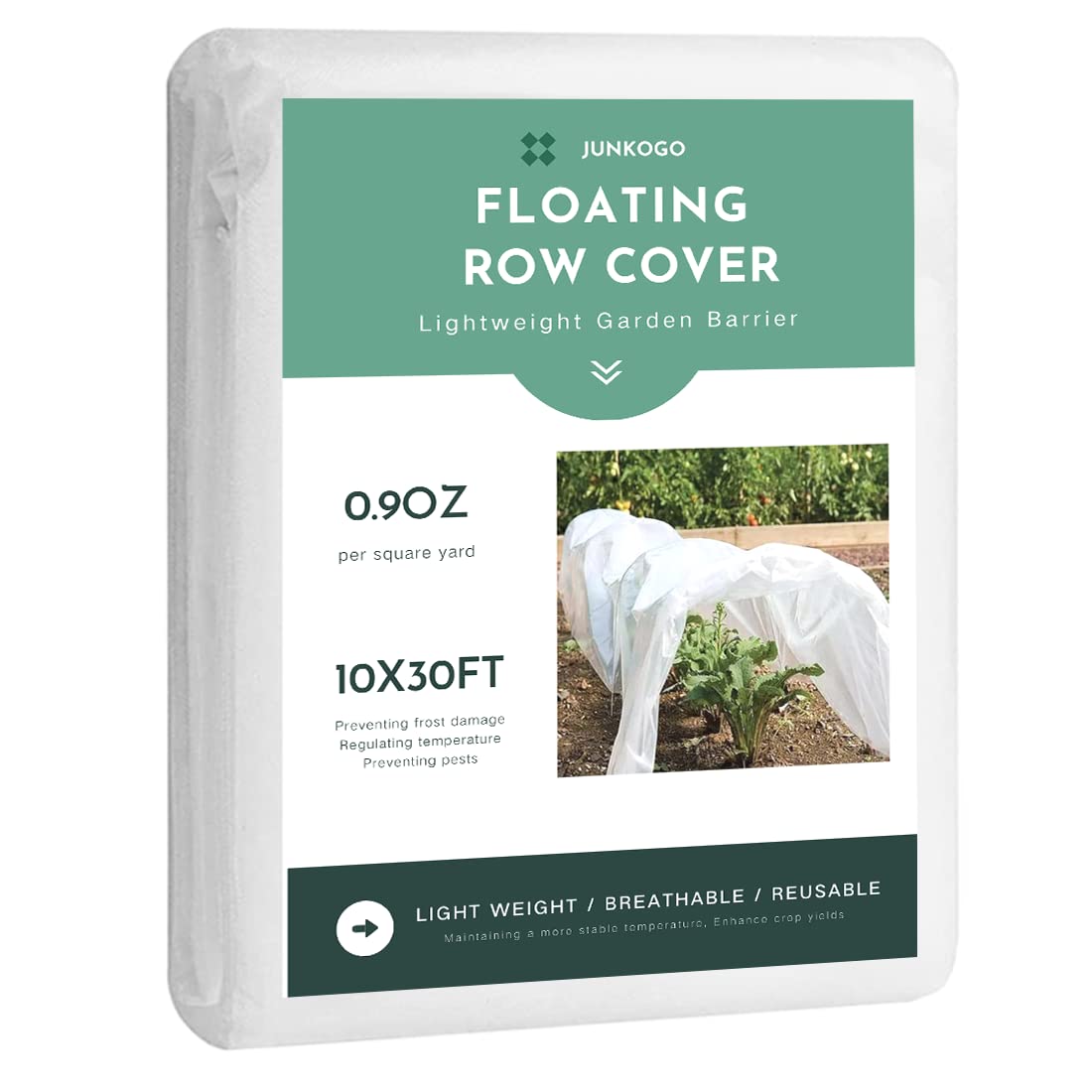
| Plant Freeze Protection Cover (10×30 ft)★ Best Overall | Best Overall | 0.9 oz/yd² | 10 x 30 ft | Floating Row Cover | Amazon |
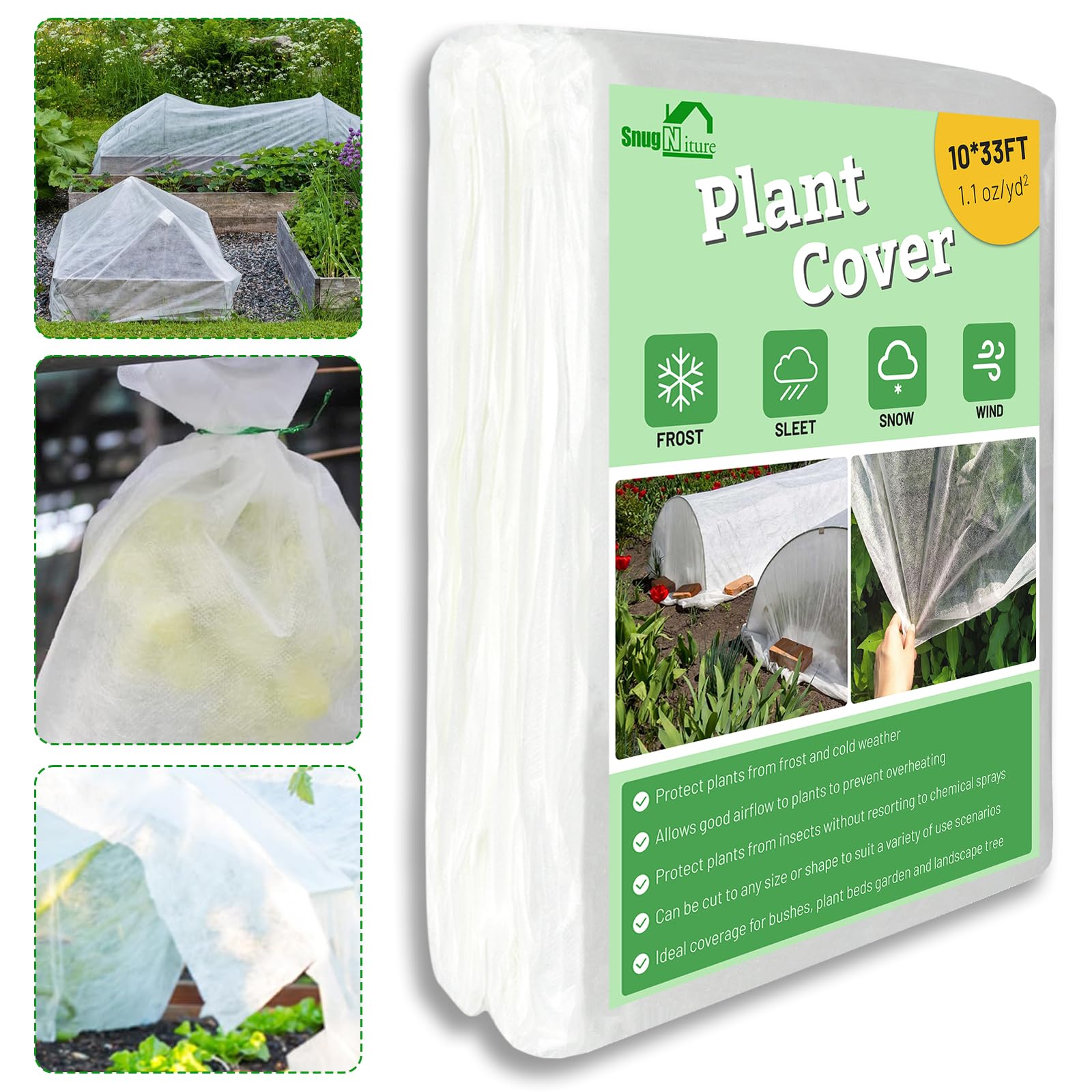
| SnugNiture Plant Covers (10×33 ft)Premium Pick | Heavier Protection | 1.1 oz/yd² | 10 x 33 ft | Floating Row Cover | Amazon |
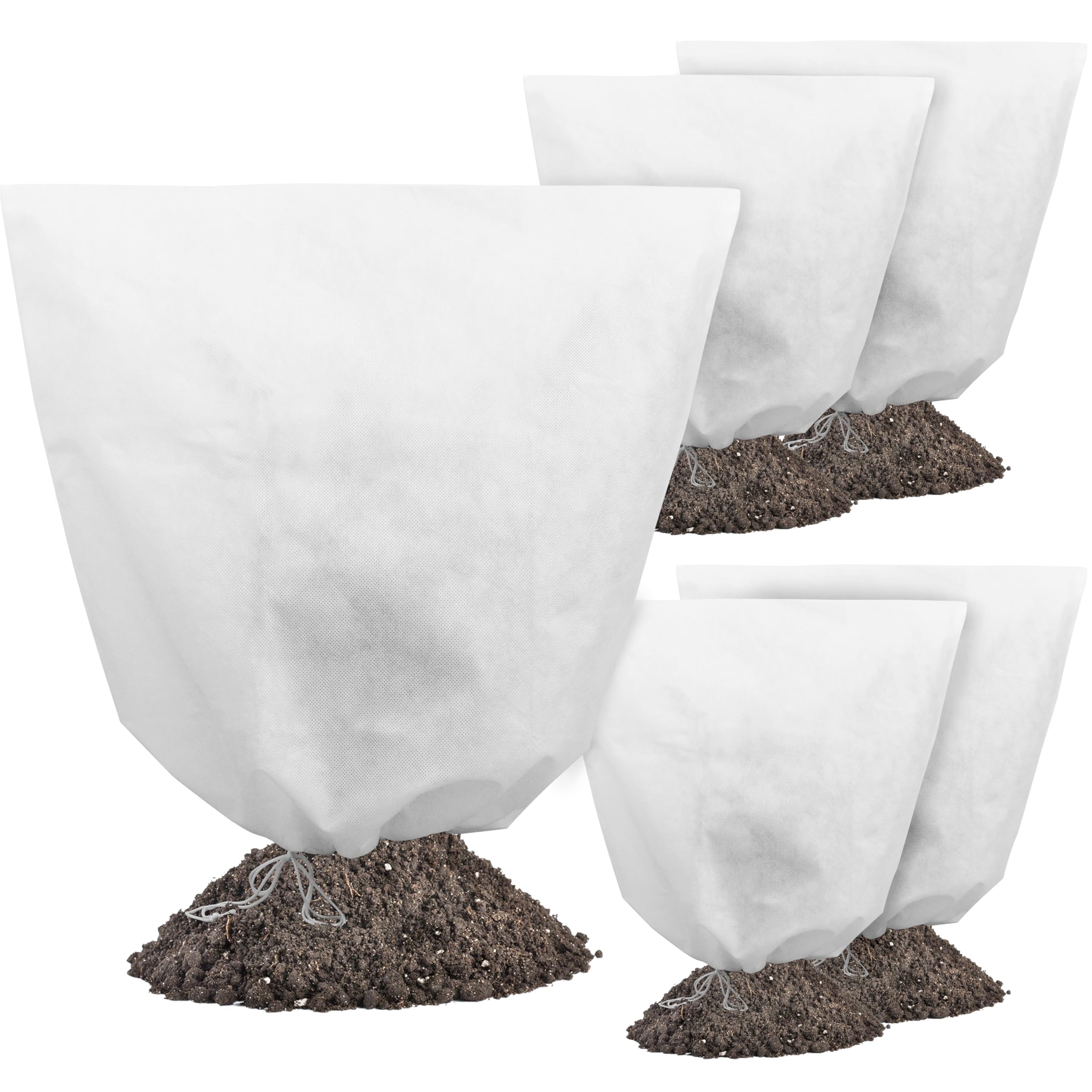
| Gardzen 5-Pack Drawstring CoversBest for Trees | Individual Tree Covers | 2.06 oz/yd² | 22.4″ x 24″ each | Drawstring Bag | Amazon |
| Amazon Basics Plant Cover (10×30 ft) | Budget Row Cover | 0.9 oz/yd² | 10 x 30 ft | Floating Row Cover | Amazon |
| Plant Covers Freeze Protection (10×20 ft) | Large Garden Beds | 0.9 oz/yd² | 10 x 20 ft | Floating Row Cover | Amazon |
| White Plant Covers (10×30 ft) | Thicker Freeze Guard | 1.5 oz/yd² | 10 x 30 ft | Floating Row Cover | Amazon |
| Garutom Plant Covers (10×33 ft) | High-Value Row Cover | 1.1 oz/yd² | 10 x 33 ft | Floating Row Cover | Amazon |
| AlpineReach Plant Cover (10×30 ft) | Rated for 28°F | 1.2 oz/yd² | 10 x 30 ft | Floating Row Cover | Amazon |
In‑Depth Reviews
1. Plant Freeze Protection Cover, 10×30 ft Floating Row Cover
Our pick — over 4.5★ from 250+ verified ratings; the strongest balance of quality and price.
The lightweight row cover that earned a 4.6-star reputation for surviving multiple winters.
This 10×30 ft cover is made from a 0.9 oz/yd² non-woven fabric that breathes, allowing air, moisture, and sunlight to reach your plants while trapping warmth. It is light enough that you can lay it directly over vegetables, flowers, or small trees without crushing them, yet buyers report it stood up to high winds. The material is cut-friendly too — trim it with scissors to fit odd-shaped beds or wrap individual pots.
Owners mention this blanket “saved these sensitive plants from sub freezing temps.” It also works as a shade cover, insect barrier, and bird deterrent in spring and summer. With 4.6 stars across 270+ ratings, it is the crowd favorite. The only quibble: it arrives folded, not rolled, so unspooling on a breezy day can be awkward.
What Owners Love
- Effectiveness is the top praise — 31 buyers single it out for saving plants from frost and vine borers alike.
- Quality and durability both score well, with one owner noting it protected eucalyptus in Virginia all winter with zero damage.
The Honest Trade-off
- At 0.9 oz/yd², it is best for light to moderate frosts — not a hard-freeze fortress. For extreme lows (teens), some owners double it up or pair it with a thicker cover underneath.
Reach for this if: you want the proven, do-it-all row cover that handles frost, shade, and pest duty with one purchase.
Think twice if: your winters regularly dip into the single digits — you may need a thicker fabric or a second layer to get the same protection.
2. SnugNiture Plant Covers Freeze Protection, 10ft x 33ft, 1.1 oz/yd²
Heavier fabric that shrugs off a Texas freeze without letting a single leaf burn.
This cover jumps to a 1.1 oz/yd² non-woven polypropylene fabric — a step up in density from the lighter options. At 1.96 pounds, it is noticeably heavier than the 1.39-pound Plant Freeze Protection Cover (a 41% more gap), which gives it a reassuring heft on the plants. Owners in Texas report it survived three days below freezing with no plant damage, which is the kind of proof that resonates if you have ever lost a citrus tree to a snap frost.
Plant protection is the top-cited strength — 24 buyers mention it — and the large 10×33 ft size lets you cut custom lengths for raised beds, shrubs, or a small orchard. The fabric lets rain and sunshine pass through, so you do not have to lift it on sunny days. One recurring note: there are no clips or stakes in the box, so budget for landscape staples or bricks to hold it down in gusty weather.
What Wins People Over
- The heft — at 1.96 pounds it feels substantial and drapes well over plants without blowing off.
- Frost protection is the second-most praised trait (16 mentions), with real-world proof from a Texas freeze event.
The Fair Warning
- Durability is mixed: some owners say it tears in high wind, while others report several seasons of reuse. The 1.1 oz/yd² fabric is a middleweight — treat it gently and it will last.
Best for: gardeners in the transition zone (Zones 7-8) where a frost cloth needs to handle occasional hard freezes without being overkill.
skip it if: you need built-in anchoring — plan on buying separate ground staples or sandbags to keep the edges sealed.
3. Gardzen 5-Pack Plant Covers Freeze Protection, Drawstring Tree Cover, 22.4″ x 24″
The cinch-and-go bag that wraps individual trees in a 2.06 oz/yd² winter coat.
Gardzen gives you five bag-style covers with drawstrings instead of one giant sheet. The fabric is a dense 2.06 oz/yd² (70 gsm) — thicker than any other row cover here — and each bag measures 22.4 x 24 inches, big enough for a small tree, large rose bush, or hefty potted shrub. You slip it over the foliage, pull the drawstring around the trunk, and you are done in seconds.
You do not need stakes or stones — the drawstring keeps cold air out and the cover in place. The thick fabric also resists deer and rabbits, which buyers in mixed-use gardens appreciate. The catch: each bag covers only one plant, so for a dozen young trees you will need multiple packs or a row cover. Some owners also note the drawstring could be more sturdy for very tall trees where the fabric pulls against the tie.
Biggest Strengths
- Plant protection (54 mentions) and quality (36 mentions) lead the feedback by a wide margin — owners trust this fabric to survive winter after winter.
- The zipper and drawstring combo makes it easy to access plants for watering or inspection without undoing the whole cover.
Where It Falters
- Durability is mixed: some owners say the fabric disintegrates after a season, while others have used theirs for years — the key is storing them dry and avoiding direct ground contact with the zipper.
Best for: anyone protecting specimen trees, rose bushes, or individual pots — the drawstring fit is far more secure than a sheet in windy spots.
Not for: large vegetable beds or row-crop coverage — you would need too many bags to cover a 4×8 bed.
4. Amazon Basics Plant Covers for Frost Protection, 10 x 30 ft
A no-frills 30-foot sheet that saves hydrangeas and early tomatoes on the cheap.
Amazon Basics enters the frost-protection game with a straightforward 10×30 ft cover made from 30 g/sqm (0.9 oz/yd²) polypropylene. It is the lightest fabric in this lineup, designed for light frost, light snow, and mild cold — think late-fall early-winter, not a January deep freeze. Buyers confirm it worked perfectly to keep plants warm and saved hydrangeas from a late season frost, so for its intended job it delivers exactly what the description promises.
The value is clear: you get the same coverage as pricier 10×30 ft options at a lower cost. However, the fabric is thin enough that it will not stand up to hard freezes or heavy snow without layering. Those expecting a multi-year investment should temper expectations — this is more of a seasonal tool for Zone 8 and warmer gardens that only need a light barrier against occasional frost.
Why It Works
- Ease of use (5 mentions) and effectiveness (5 mentions) lead the feedback — buyers call it simple and effective for its intended range.
- At 2.35 pounds it is the heaviest of the 0.9 oz/yd² options, suggesting a bit more material density for the same weight class.
The Reality Check
- Thin material means no hard-freeze protection; customers note needing to double the fabric over for temps in the teens.
Reach for this if: you need a quick, inexpensive frost cover for mild winters or short-season extensions in warm climates.
Look elsewhere if: your winters regularly drop below 20°F — you will want a heavier fabric or a second layer.
5. Plant Covers Freeze Protection 10×20 ft Frost Cloth

An 806-rating crowd-pleaser that shifts from frost shield to summer shade with zero effort.
At 10×20 ft (covering up to 200 square feet), this is the first option in the list that locks down a specific coverage number. The fabric is a UV-stabilized polypropylene at 0.9 oz/yd² — the same weight as the Plant Freeze Protection Cover but in a smaller, more manageable sheet. Buyers in the Pacific Northwest and Houston alike call it effective against light freezes, ice, and wind, noting that it handled dogs walking on it without tearing.
The versatility angle is strong: it works as a freeze blanket in winter, a shade cloth in summer (blocking some sunlight and heat), and a barrier against birds and insects during the growing season. That dual-use value is why the feedback taps out at 806 ratings. The main gripe is thin material — some owners say it is not 100% freeze-proof for sub-tropical plants during a hard freeze, and you will need rocks or bricks to hold the edges in windy conditions.
Most Praised
- Plant protection (46 mentions) and effectiveness (40 mentions) are the top two aspects — owners consistently say it saves plants from frost.
- Weighing only 1.26 pounds, it is the lightest of the 10-ft-wide row covers here, making it easy to drape and reposition.
The Caveat
- Durability is mixed (26 mentions) — some reviewers point out it started falling apart after a season, while others say it held up fine; storing it dry and folded is the key to a long life.
Best for: budget-minded gardeners who want a large frost cover that also doubles as shade cloth in summer — the dual season utility is a real money saver.
pass on it if: you face regular hard freezes below 20°F — the 0.9 oz/yd² fabric is simply not built for that extreme.
6. White Plant Covers Freeze Protection, 10 x 30 ft, 1.5 oz/yd²
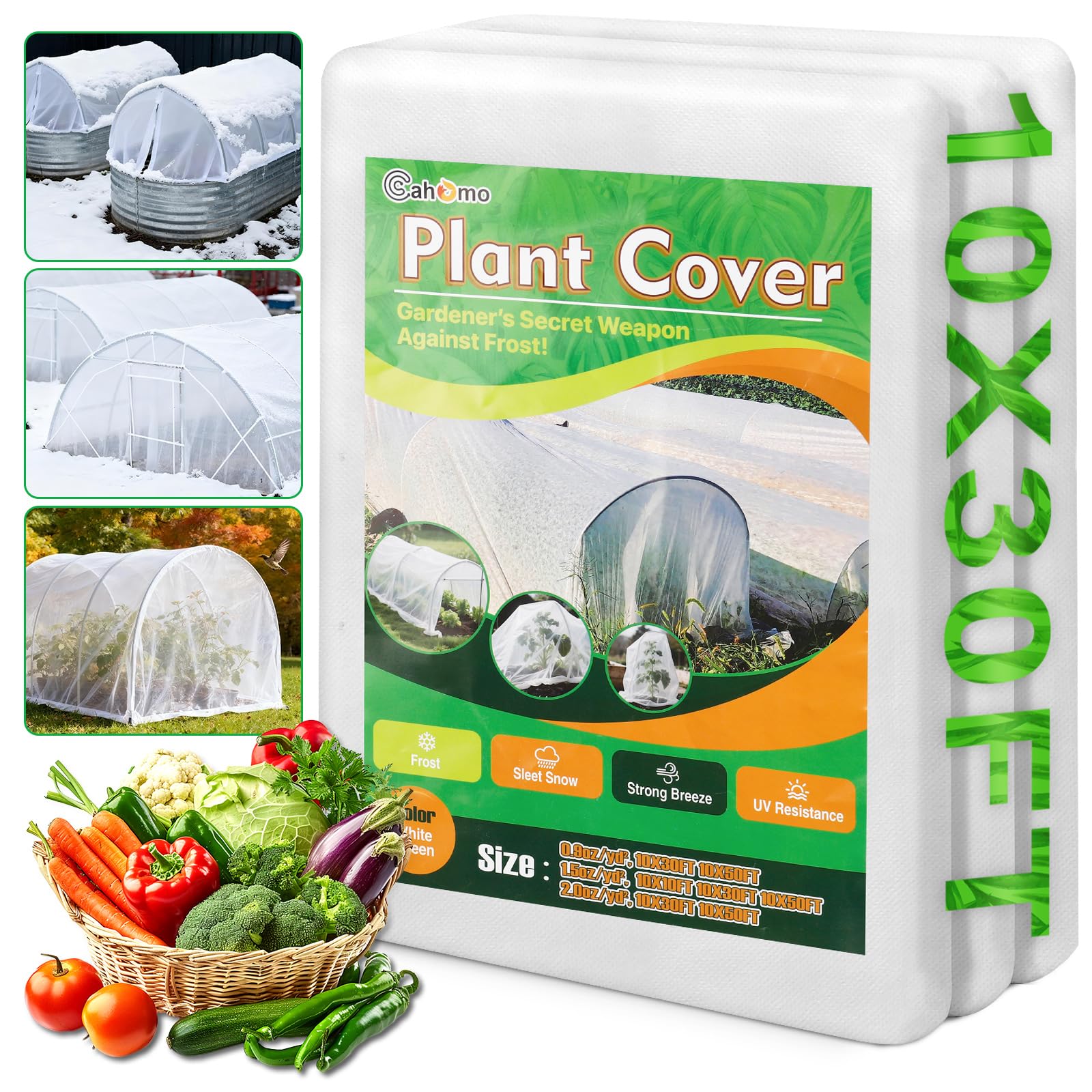
The 1.5 oz/yd² workhorse that one Florida owner calls “better thickness than others.”
This is the thickest fabric in the lineup — a full 1.5 oz/yd² of 100% polypropylene with 3% UV resistance treatment on the surface. The extra density translates to serious cold protection: the fabric has a microporous structure that blocks cold air while still allowing internal air circulation. Owners in Florida used it to save new shrubs and small trees during a freeze, and the weight holds it down better than lighter cloths in gusty conditions.
The trade-off for that thickness is breathability — while the material does let light and air pass through, it is not as transparent as the 0.9 oz/yd² covers. The manufacturer explicitly warns that when temperatures rise, you must lift the cover promptly to avoid overheating and humidity buildup. At 2.59 pounds, it is the heaviest cover here, which makes it less portable but more stable once laid out.
Standout Strengths
- Functionality (20 mentions) and quality (18 mentions) lead the feedback — owners praise how it performs in actual freeze events.
- Thickness (13 mentions) and frost protection (12 mentions) are both positively rated, confirming its hard-freeze credentials.
Honest Consideration
- The same thickness that blocks cold also traps heat fast — you have to remove it on warm days or risk cooking your plants.
Reach for this if: you need serious insulation for plants that must survive sustained freezing temperatures (teens and below).
Think twice if: you live in a climate with rapid temperature swings — the daily on-and-off labor might be more than you want to handle.
7. Garutom Plant Covers Freeze Protection, 10ft x 33ft, 1.1 oz Frost Cloth

A 1.1 oz/yd² cover with 85% light transmission — the greenhouse effect without a greenhouse.
Garutom delivers a 10×33 ft frost cloth at the same 1.1 oz/yd² density as the SnugNiture but with a specific light-transmission boast: 85% of available light passes through. That is important because it means your plants can keep photosynthesizing under the cover, which speeds recovery after a cold night. The polypropylene non-woven fabric is also treated to resist UV degradation, so it holds up better under spring and summer sun when used as a shade cover.
With 603 ratings and frost protection the top-cited aspect (53 mentions), the real-world numbers back up the spec sheet. Owners say it saved vegetables through freezing nights and doubled as a spring row cover. At 15.7 ounces, it is notably lighter than the other 1.1 oz/yd² option — the SnugNiture weighs 1.96 pounds — which makes it easier to handle but also means the fabric feels a bit less substantial in hand. The recurring note is that durability is mixed: some shoppers say tears after a season, while others say it holds up fine if handled carefully.
What Shines Here
- Frost protection leads at 53 mentions — more than any other aspect on any product in this list — and functionality follows at 31.
- The light weight (15.7 oz) means you can easily drape it over hoops or frames without the fabric sagging and crushing seedlings.
The Catch
- Durability is mixed (32 mentions) and thickness is mixed (18 mentions) — it is not designed to be a multi-year heavy-duty cloth, so budget to replace it every couple of seasons.
Best for: gardeners who want the 1.1 oz/yd² weight at a lower price than the SnugNiture, especially for covering large raised beds.
Not for: those seeking a permanent, never-replace solution — this is a solid seasonal performer, not a 10-year investment.
8. AlpineReach Plant Covers Frost & Sun Protection, 10 x 30 ft, 1.2 oz/yd²
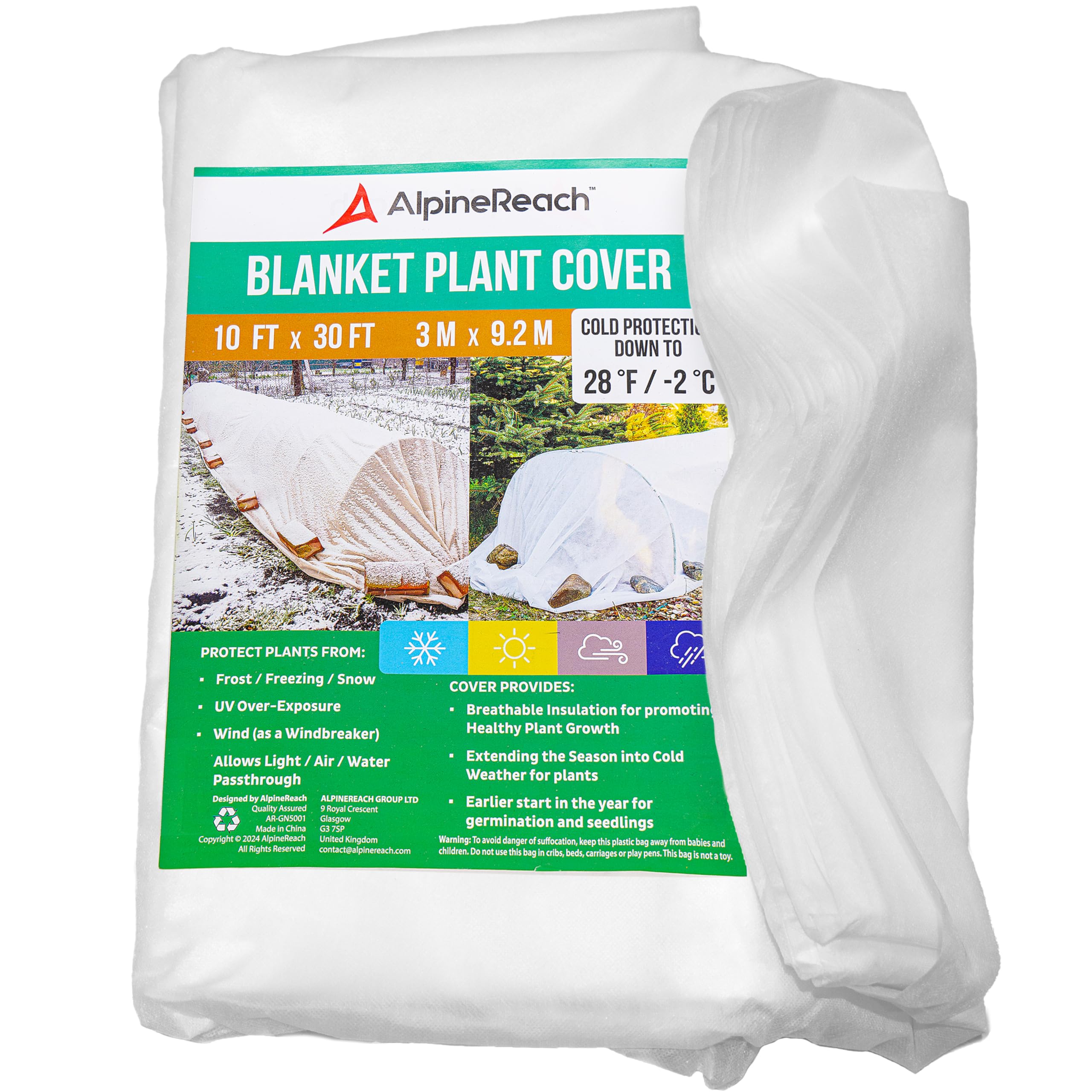
The only cover here that arrives with a specific temperature guarantee — rated to protect down to 28°F.
AlpineReach steps up the fabric density to 1.2 oz/yd² and makes a rare claim in this category: a design target of low 28°F temperatures. That is not a guarantee, but it is a useful benchmark when comparing against the 0.9 oz/yd² covers that offer no such spec. Owners in north central Texas put it through a week-long single-digit freeze and reported their Indian Hawthorns remained green — real-world proof that the thicker fabric holds up under extreme conditions.
The fabric is also breathable and permeable to sunlight and water, so you do not have to uncover plants on warmer winter afternoons. Plant protection tops the feedback at 58 mentions, more than any other single aspect in the entire lineup. At 2.46 pounds it is the second-heaviest cover here (behind the 2.59-pound White Plant Cover), which makes it a workout to handle alone but gives it a reassuring heft against the wind. The material thickness feedback is mixed — some owners wish it were even thicker, while others find it just right for their needs.
Why Owners Pick This
- Plant protection at 58 mentions is the highest aspect count of any product here — owners trust this cover to deliver.
- Quality (34 mentions) and value for money (10 mentions) round out a strong positive profile that justifies the mid-range price.
Fair Warning
- Durability is mixed (32 mentions) — some buyers report tearing after a single season, so plan to handle it carefully and store it dry.
Reach for this if: you want a cover with a specific cold-protection benchmark (28°F) and the highest plant-protection acclaim in the whole category.
it’s not for you if: you need a cover that survives rough handling and heavy wind without reinforcement — stake this one down well.
Understanding the Specs
Fabric Weight (oz/yd²)
This number tells you how dense the fabric is — think of it like the warmth rating on a winter jacket. A 0.9 oz/yd² cover is light and breathable, ideal for light frosts (upper 20s to low 30s). A 1.5 oz/yd² cover blocks more cold but also blocks more light, so it is better for hard freezes (teens to low 20s). The middle ground is 1.1 to 1.2 oz/yd² — warm enough for most winters without starving plants of sunlight.
Breathability and Light Transmission
A good freeze blanket lets air, moisture, and sunlight through. If the fabric is too dense, condensation builds up inside, which can freeze on the leaves or promote rot. Look for covers described as “breathable non-woven fabric” or those that state a light transmission percentage (like 85%). You want the cover to trap warmth, not humidity.
FAQ
What is the difference between a floating row cover and a drawstring plant cover?
What fabric weight should I choose for my climate?
Can I leave the freeze blanket on all winter?
How do I keep a floating row cover from blowing away in the wind?
Will the fabric tear easily if it catches on thorns or branches?
Can I use a freeze blanket as a shade cloth in summer?
Is a thicker freeze blanket always better?
How long does a freeze blanket typically last?
Final Thoughts: The Verdict
For the majority of shoppers, the freeze blankets for plants winner is the Plant Freeze Protection Cover (10×30 ft) because it nails the balance of light weight, proven effectiveness, and year-round versatility at a crowd-pleasing price point. If you want a thicker fabric for harder freezes and the reassurance of a 1.1 oz/yd² density, grab the SnugNiture Plant Covers (10×33 ft). And for protecting individual trees with zero guesswork, the Gardzen 5-Pack Drawstring Covers are the ones to reach for.
How We Picked
We do not accept paid placement. Every pick is matched to a real buyer and a real use-case; we do not hands-on test units.
Sources & Methodology
Specifications: manufacturer listings and product documentation. Review insights: verified customer reviews, as of July 2026. Pricing: not shown on this page (it changes often); check the current price via the retailer link.
As an Amazon Associate, Lawn Gear Lab earns from qualifying purchases. This does not affect which products we feature.