
Specs are compiled from manufacturer listings and verified buyer reviews and can change over time — please confirm the key details on the product page before buying.
If your lawn is measured in acres, not square feet, you know the weekend grind: hours behind a zero-turn or pushing a mower until your ears ring. A large robotic mower changes that math entirely — it handles the cutting while you reclaim your Saturday. “Large” varies by brand: some prioritize battery endurance, others cutting width, and a few slope-climbing ability. You need a mower that covers acres, navigates wire-free, and powers through thick grass without stalling.
I’m Rikta — the founder and writer behind Lawn Gear Lab. This guide is built by comparing the manufacturers’ published specifications and the patterns across verified customer reviews, so you get each pick’s real strengths and trade-offs instead of marketing spin.
After digging through the specs and owner feedback on the biggest robotic mowers out there, one machine clearly stands above the rest for sheer coverage ability. This is the unvarnished breakdown of the best large robotic lawn mower options you can buy right now.
Our Picks at a Glance
How To Choose The Best Large Robotic Lawn Mower
The biggest robotic mowers are engineered for terrain, cutting width, and navigation beyond smaller units. They are engineered to handle terrain, cutting width, and navigation in ways that smaller units simply cannot.
Daily Coverage vs. Battery Capacity
A mower’s battery determines how much it can cut in one charge, but total daily coverage depends on how fast it charges and resumes. A machine that runs for three hours then recharges for two might still cover more ground in a day than one with a bigger battery that charges slowly. Look for the advertised daily coverage number — it reflects real-world cycles.
Slope Ability and Traction
A slope rating tells you the steepest incline the mower can climb without getting stuck or tipping. This number is critical for anyone with a sloped yard. Track-drive systems (like on the Lymow) offer better grip on loose or wet hills than standard wheels. The rating is usually given in degrees or as a percentage — a 45° slope equals 100% climb capability.
Navigation: Perimeter Wire vs. RTK vs. Vision
The oldest method uses a buried boundary wire to keep the mower inside the lawn. Wire-free systems use RTK GPS (a satellite correction signal) for centimeter-level accuracy, often paired with cameras or ultrasonic sensors to see obstacles. Vision-based systems use AI to recognize objects like pets and toys. Wire-free is far easier to install on a large property but can struggle under dense tree cover.
Quick Comparison
| Model | Best For | Cutting Width | Max Slope | Daily Coverage | Amazon |
|---|---|---|---|---|---|
| Segway Navimow X430★ Best Overall | Best Overall | 17 in | 84% (40°) | 1 Acre | Amazon |
| Lymow One PlusPeak Coverage | Peak Coverage | 16 in | 100% (45°) | 1.73 Acres | Amazon |
| Segway Navimow X450 | Premium Reliability | 17 in | 84% (40°) | 1.5 Acres | Amazon |
| Husqvarna Automower 420iQ | Brand Trust | 9.4 in | 45% | 1 Acre | Amazon |
| Yarbo Lawn Mower Pro | Largest Yard | 20 in | 70% (35°) | Up to 6 Acres | Amazon |
| Mammotion LUBA 3 AWD | All-wheel-drive robot | 15.7 in | 45% | 0.75 acre | Amazon |
In‑Depth Reviews
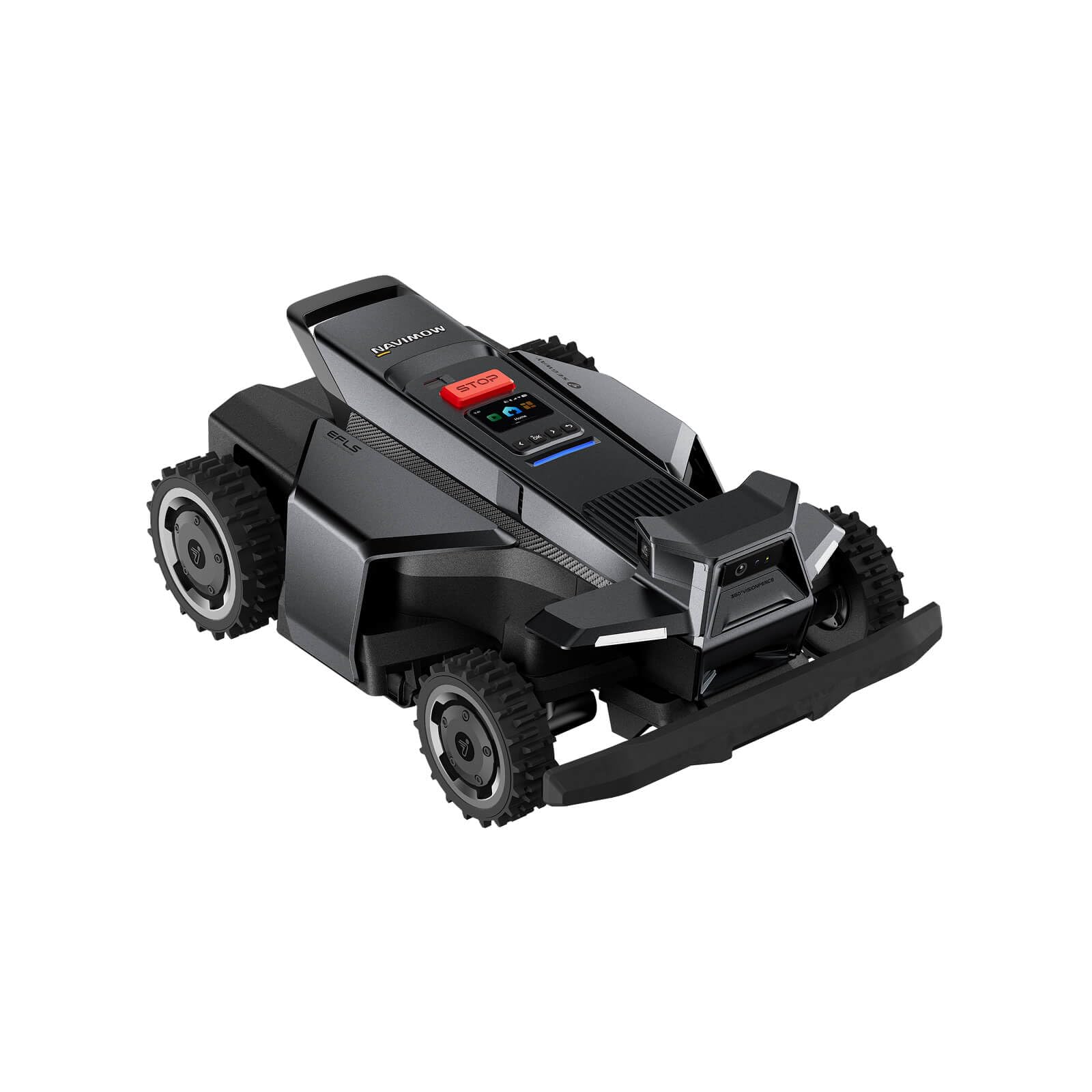
1. Segway Navimow X430 Robot Lawn Mower
Our pick — over 4★ from 80+ verified ratings; the strongest balance of quality and price.
The crowd-pleasing all-rounder that nails setup and cuts cleanly from day one.
The Navimow X430 proves robotic mowing finally works for the typical acre-sized lawn. The 17-inch cutting width lets you cover ground faster than narrower competitors, and the ORV-tuned dual suspension (Segway’s term for its all-wheel-drive system) climbs 84% (40°) slopes without slipping. Two 180W motors spin 12 blades across two discs, and the mower adapts blade speed to grass density so it does not bog down in tall patches. Buyers report it “maps easily” — a sentiment reflected in many reviews praising the one-tap Auto Mapping setup. The EFLS tri-frequency RTK positioning keeps it centimetre-perfect even under trees.
The honest trade-off is battery life on hilly terrain. Owners consistently note the mower “recharges 3-4 times” to finish a full-acre cut, so the job takes longer than you might expect on a single charge. The cutting height ranges from 0.75 to 4 inches across 11 positions, giving you fine control over grass length, and EdgeSense trims within 2 inches of borders. Reviews highlight functionality above all else, with 33 owners singling it out as the strongest point, followed by 22 praising setup ease.
What wins people over
- Wire-free, antenna-free setup that takes minutes, not hours.
- Climbs 84% slopes confidently — one owner called it a “little tank.”
- EdgeSense leaves under 2 inches of trimming, so manual touch-up is minimal.
The real-world limits
- Battery life on slopes means 3-4 recharge cycles for a full acre.
- Stops for wet grass or rain, so timing matters on dewy mornings.
- Tall, thin weeds sometimes slip through — expect 6-8 inch missed patches.
Reach for this if: you want the most complete package of easy setup, accurate mapping, and slope-climbing ability for an acre lot.
Look elsewhere if: you need to mow a full acre in one continuous run without recharge stops — its battery simply does not last that long on hills.
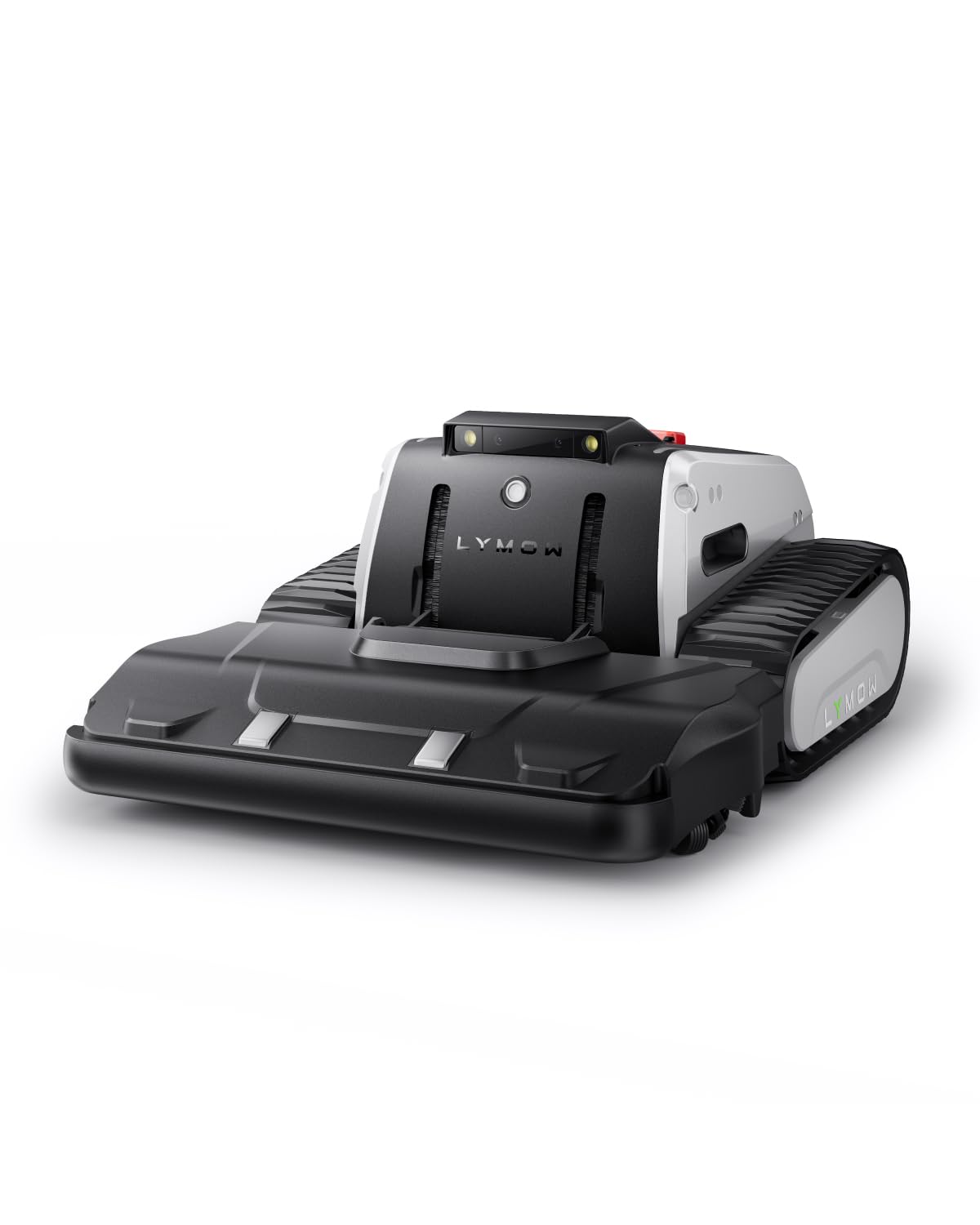
2. Lymow One Plus Robot Lawn Mower
The track-driven beast that mows nearly two acres daily — no wire required.
The Lymow One Plus is a coverage monster. Its 15,000mAh LiFePO4 battery, rated for 2,000+ charge cycles, powers a 1,785W peak motor that spins dual SK5 steel blades at up to 6,000 RPM. The numbers translate to a 3-hour charge mowing 0.57 acres per cycle, with the mower automatically returning to dock and resuming up to three times a day — netting 1.73 acres of daily coverage. That beats every other machine here for raw volume. The track-drive system climbs a full 100% slope (45°), the steepest rating here, and its 2.8-inch obstacle-crossing height lets it roll over branches and stone paths.
Where the Lymow slips is the software. Multiple owners mention the mower “loses positioning after a week of normal operation,” requiring a remap. Others describe the setup as straightforward but warn that mapping no-go zones takes practice. On the plus side, owners handling 3+ acres say it is “life-changing” on uneven ground and thick patches, and the cyclone airflow (which lifts flattened grass before cutting) delivers a noticeably clean, striped finish. The cutting range spans 1.2 to 4 inches — slightly less range than the Navimow’s low end but still broad enough for most lawns.
The Coverage King: No other mower in this class can cut 1.73 acres per day without user intervention, making it the top choice for very large properties.
The Holding Pattern: The positioning bugs are real — if you cannot tolerate occasional remapping, this is not the set-and-forget dream it promises to be yet.
Best for: owners of 1.5 to 3-acre properties who prioritize maximum daily cut volume and have a steep, uneven terrain that track drive handles best.
Think twice if: you want absolute reliability from day one — its software is less mature than Segway’s, and some owners hit early glitches.
3. Segway Navimow X450 Robot Lawn Mower
The X430’s bigger sibling that trades top speed for extra acre capacity.
The X450 is essentially the X430’s big-yard variant, sharing the same 17-inch cutting width, dual 180W motors, and EFLS tri-frequency RTK navigation, but rated for 1.5 acres instead of 1. This means the larger battery or more efficient power management lets it run longer between charges. Owners switching from the Mammotion Luba 2 specifically praise the X450’s “cleaner cut quality” and the protected blade design that stops grass buildup — a common gripe with exposed-blade mowers. The zero-turn steering, driven by eccentric front wheels with smart traction control, scuffs the turf far less than skid-steer alternatives.
The reviews lean heavily positive, with cut quality and reliability the most-praised aspects (8 and 7 mentions respectively). One owner summed it up neatly: “This is a little tank. Intuitive app. Takes a little practice to learn how to steer it comfortably for mapping. But once you map a boundary, you always have that exact same boundary.” The key limitation compared to the X430 is simply price — you pay a premium for the extra half-acre of coverage. The X450 also shares the same 0.75 to 4-inch height adjustment range and 84% slope rating. The battery on a 5,000 sq ft section sits at 60% after one hour, suggesting it will handle the full 1.5-acre rating comfortably across multiple cycles.
The Reliable Upgrade: If you trust the X430 but need more acre capacity, the X450 delivers identical navigation and cut quality with guaranteed consistency — “works identically every time,” as customers note.
Get this if: your property is 1.25 to 1.5 acres and you want the most dependable mapping and cut consistency from the Segway ecosystem.
skip it if: you can get by with the X430’s 1-acre rating — the extra half-acre costs a notable jump in price.
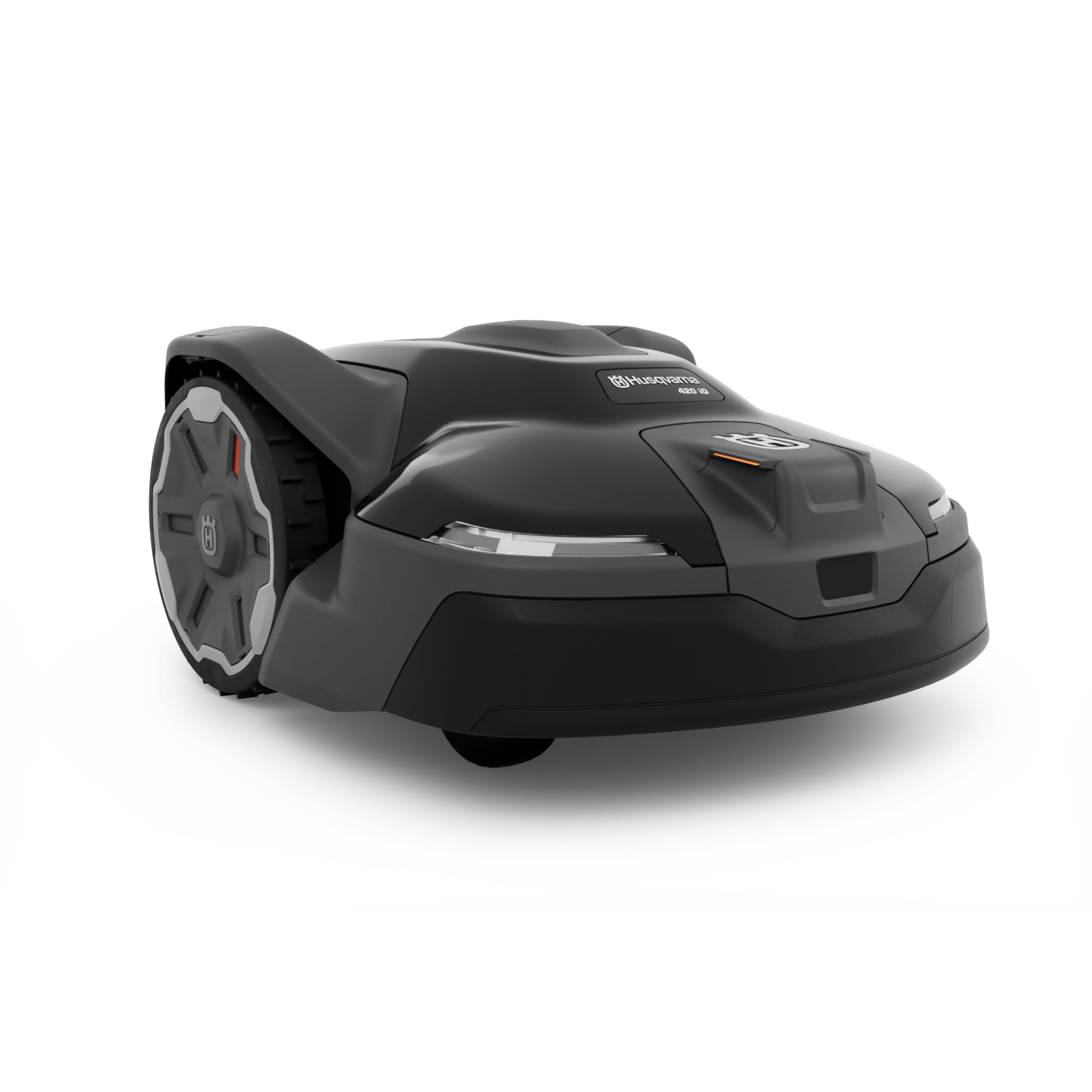
4. Husqvarna Automower 420iQ Robotic Mower
The veteran brand’s wire-free mower that prioritizes cutting range over speed.
Husqvarna claims the “world leader in robotic mowing” title for a reason — decades of engineering show in the 420iQ’s details. The EPOS (Exact Positioning Operating System) delivers centimetre-accurate location data without a perimeter wire, and the mower’s onboard radar helps it dodge obstacles. The standout spec is the cutting height range: 1 to 4 inches, the widest spread in this list (tying the Yarbo for top end). This lets you manage everything from a tight fairway cut to a longer, drought-tolerant grass height without swapping decks. The 9.4-inch cutting width is narrow by comparison — well under half the widest decks here — meaning it takes more passes to finish the same area.
Setup is the aspect owners praise most, with 10 mentioning its ease. The mower uses cell signal for setup, so no antenna or relay is needed. But the app draws criticism for its counterintuitive scheduling and boundary crossing logic. One experienced owner who compared the 420iQ directly to the Husqvarna 450X EPOS noted the 420iQ has larger wheels, a top screen, and faster initial setup — but is slower overall and lacks the 5-blade disc of its bigger sibling. The 1-acre capacity and 45% slope rating are lower than the Segway or Lymow options, making this a better fit for flat to moderate properties.
Why it stands out
- Widest cutting height span (1-4 in) of any mower here — covers fairway to deep grass.
- Wire-free setup via cell signal with no antenna needed.
- Anti-theft GPS tracking and a 4-year warranty add confidence.
Where it falls short
- 9.4-inch cutting width means more passes — slower on large, open lawns.
- Slope rating of 45% is half what the Lymow handles.
- App logic for scheduling and boundaries frustrates even experienced users.
Pick this if: brand heritage, a wide cut-height range, and a 4-year warranty matter more than raw coverage speed or steep-slope ability.
pass on it if: your yard has hills over 45% or you want the fastest possible mow on a large, open acre — the narrow deck will test your patience.
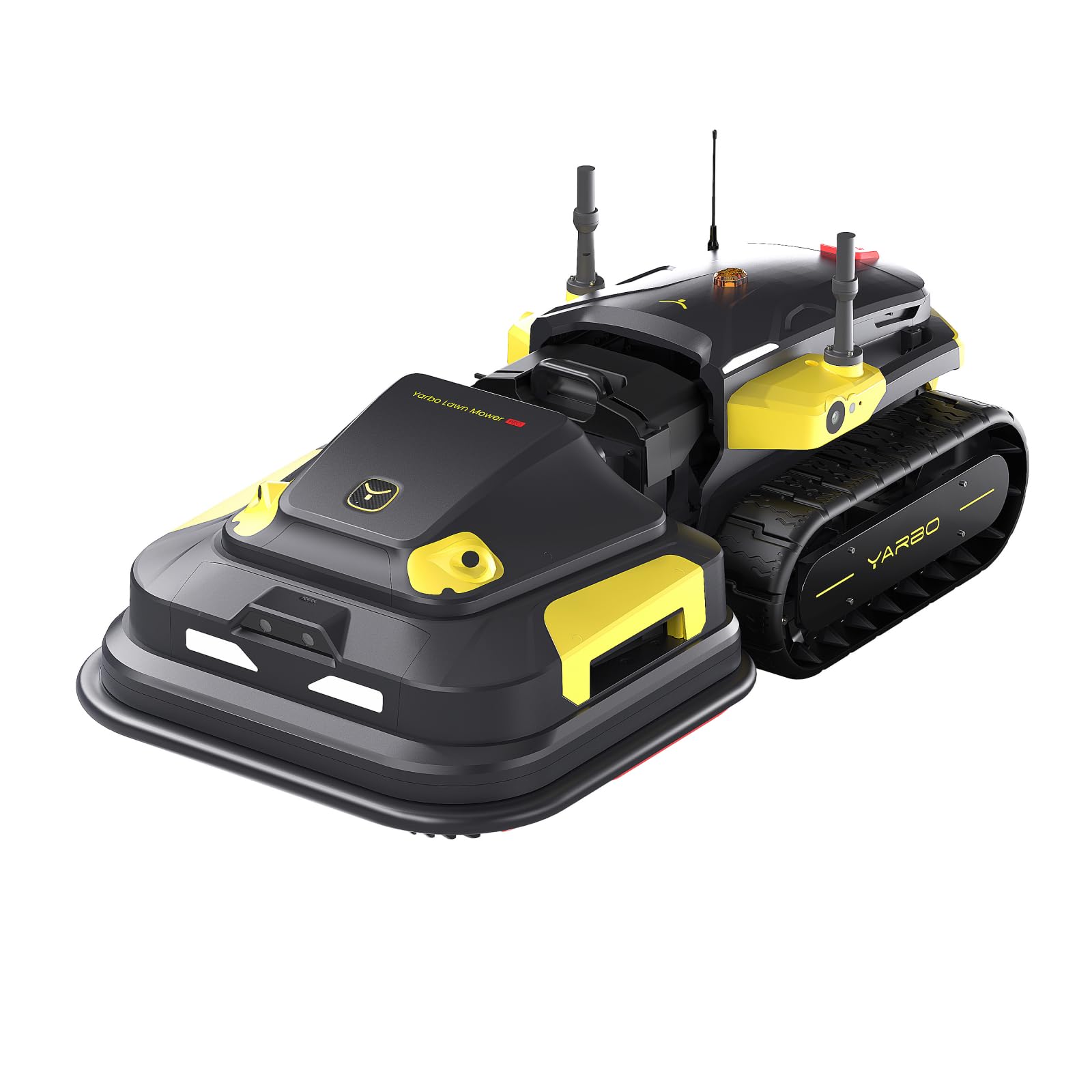
5. YARBO Robot Lawn Mower Pro
A modular system that treats mowing like a job site task, not a weekend chore.
The Yarbo Pro is in a different league from the rest. Rated for up to 6 acres, it packs a 20-inch cutting width — the widest of any autonomous mower here — and a 300W dual-motor cutting system designed to chew through thick, wet, overgrown grass without clogging. The 215-pound, track-driven chassis climbs 70% (35°) slopes and handles uneven, muddy, or stony terrain with patented multi-terrain tracks and all-steel skid shoes. Reviewers point out it delivers “professional straight mowing lines” and handles hills admirably.
The trade-off is complexity. Setup involves a roof-mounted data centre that needs a 120° unobstructed view of the sky, and the mower ships in 4 separate boxes requiring two adults for assembly. The triple-fusion navigation (RTK-GPS + binocular vision + multi-sensor PPVS) is cutting-edge, but owners warn the machine is not truly “autonomous for months” — it still benefits from regular checks. The cutting height adjusts from 0.8 to 4 inches, and the LiFePO4 battery runs for 120 minutes per charge. One frustrated owner reported the unit bricked three times in three weeks, though others call it “the best investment for our 2-acre lawn” with outstanding customer support.
The Acreage Champion: For properties approaching 6 acres, there is simply no other wire-free mower that matches this coverage potential.
The Experience Barrier: This is not a beginner’s mower. The setup demands careful planning, and early software bugs have frustrated some early adopters — patience and a willingness to tinker are prerequisites.
Get this if: you own 3+ acres of complex terrain and have the technical comfort to troubleshoot the initial setup and occasional software quirks.
Avoid it if: you want a true “low-maintenance” experience — the Yarbo currently rewards time invested in learning it, not passive use.
6. Mammotion LUBA 3 AWD 3000H Robot Lawn Mower
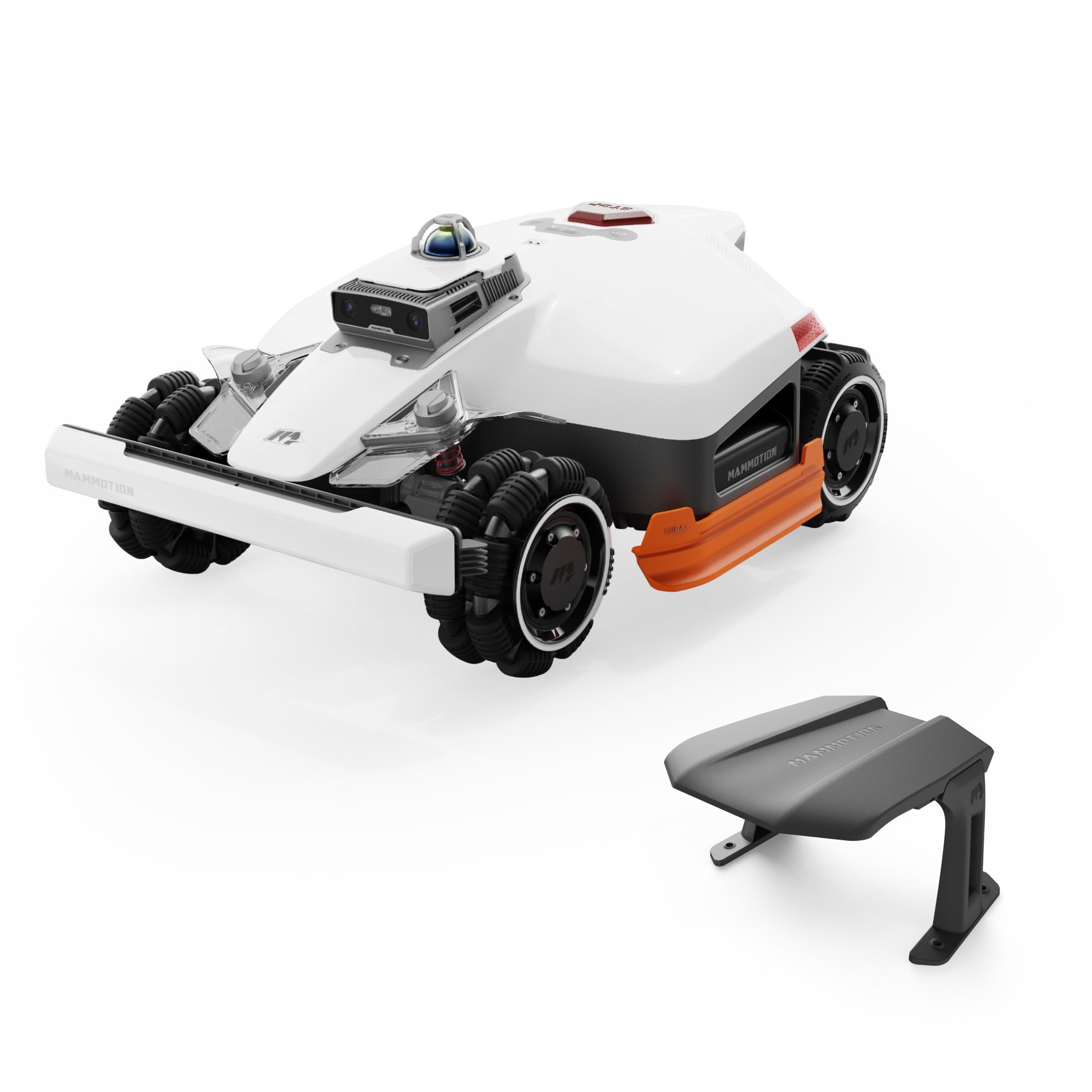
A genuinely autonomous all-wheel-drive robot that maps and mows rough, sloped yards on its own – no wires, no driving.
This is the truly hands-off robot the keyword asks for. Unlike a human-driven remote-control machine, the Mammotion LUBA 3 AWD 3000H navigates by itself using a fusion of 360-degree LiDAR, NetRTK correction, and dual-camera AI vision, so it maps your lawn and mows a planned pattern without a perimeter wire. Four independently driven wheels give it real all-wheel-drive traction, letting it climb slopes and cross uneven, off-road terrain that stops simpler two-wheel robots.
It covers up to about three-quarters of an acre on a charge cycle, cuts a 15.7-inch swath, and adjusts cutting height from 2.2 to 4 inches through the app, where you also set zones, schedules, and no-go areas. It docks and recharges on its own, then resumes – the set-and-forget behavior that defines a robotic mower. Owners highlight the wire-free setup and how confidently the AWD drivetrain handles bumps and grades, and this model ships with a garage to shelter it between runs.
As with any RTK-and-vision robot, it wants a reasonably clear view of the sky for the best positioning, and heavy tree canopy can slow navigation. It is a premium machine, but it delivers exactly what a remote-control mower cannot: fully automatic mowing with no operator standing there driving it.
Why it impresses
- Genuinely autonomous – LiDAR, NetRTK, and AI vision, no perimeter wire
- True all-wheel drive climbs slopes and crosses rough, uneven ground
- Self-docking and scheduling for hands-off, set-and-forget mowing
Who might pass
- Premium price for the AWD and sensor package
- Wants a fairly open sky; dense canopy can slow navigation
Best for: Owners of larger, sloped, or uneven yards who want a fully autonomous robot that drives itself instead of a machine they have to operate.
Not for: Anyone on a tight budget or with a lawn under heavy tree cover that blocks satellite positioning.
Understanding the Specs
Cutting Width
This is the single most practical spec for large properties. A wider cutting deck means you cover more ground per pass, reducing the total time the mower needs. The difference between a 16-inch deck (like the Lymow) and a wider 20-plus-inch deck translates to roughly 35% fewer passes on the same area. For autonomous mowers, a wider deck also means fewer battery cycles to finish the job.
Slope Rating
Given in degrees or as a percentage, this tells you the steepest hill the mower can climb without losing traction or tipping. A 45° slope equals a 100% grade — nearly vertical by driving standards. Most flat-lawn mowers stop at 25-30% grade. If your property has any noticeable incline, look for a mower rated at 70% or higher. Track-drive systems (like the Lymow and Yarbo) generally outperform wheels here.
Daily Coverage
This number reflects total cut area in a 24-hour period, factoring in mowing time plus recharge cycles. A machine that mows 0.57 acres per 3-hour charge but auto-docks and resumes three times a day can cover 1.73 acres daily. Without this spec, a big battery alone is misleading — a mower that takes 6 hours to recharge is far less productive than one that tops up in 2 hours and gets back to work.
Cutting Height Range
Measured from the lowest blade position (scalping height) to the highest (meadow length). A wider range (like 0.8 to 4 inches on the Yarbo) lets you manage different grass types or seasons without adjustments. The minimum height matters if you like a very tight cut; the maximum matters if you let grass grow long between mows or manage rough terrain.
FAQ
Will a large robotic mower work on my sloped yard without falling over?
How does wire-free navigation actually work for a large mower?
How long does a typical large robotic mower last before needing replacement?
Can a large robotic mower handle wet grass or frequent rain?
What is the difference between a robotic mower and a remote control mower?
How much area can the largest robotic mowers actually cover?
Do I still need to edge or trim manually with a robotic mower?
How much maintenance does a large robotic mower need compared to a riding mower?
Is it safe for pets and kids to be around a robotic mower?
How do I winterize a large robotic lawn mower?
Final Thoughts: The Verdict
For most people, the large robotic lawn mower winner is the Segway Navimow X430 because it combines the best balance of easy setup, reliable wire-free navigation, strong slope climbing, and a clean cut quality that owners consistently praise. If you want maximum daily coverage across the largest properties, grab the Lymow One Plus for its 1.73-acre-per-day capability and track-drive grip. And if you want an all-wheel-drive robot that climbs slopes and crosses rough ground entirely on its own, the Mammotion LUBA 3 AWD maps wire-free with LiDAR and handles uneven terrain that trips up simpler wheeled robots.
How We Picked
We do not accept paid placement. Every pick is matched to a real buyer and a real use-case; we do not hands-on test units.
Sources & Methodology
Specifications: manufacturer listings and product documentation. Review insights: verified customer reviews, as of July 2026. Pricing: not shown on this page (it changes often); check the current price via the retailer link.
As an Amazon Associate, Lawn Gear Lab earns from qualifying purchases. This does not affect which products we feature.