
Specs are compiled from manufacturer listings and verified buyer reviews and can change over time — please confirm the key details on the product page before buying.
Voles tunnel under your garden, chew through roots, and destroy months of work in a single night. A standard fence does nothing because they dig underneath it. The only reliable solution is a physical barrier buried in the soil with openings small enough that a vole cannot squeeze through — and strong enough that an animal that chews through tree bark cannot bite through it either. That barrier is called hardware cloth, and picking the right gauge and mesh size is the difference between solving the problem and re-installing everything next year.
I’m Rikta — the founder and writer behind Lawn Gear Lab. This guide is built by comparing the manufacturers’ published specifications and the patterns across verified customer reviews, so you get each pick’s real strengths and trade-offs instead of marketing spin.
Below you will find the mesh that blocks voles, resists rust, and survives being underground long enough to be worth the work of digging the trench. These are the best options for hardware cloth for voles, narrowed down by gauge, mesh size, and real-world owner experience.
Our Picks at a Glance


How To Choose The Best Hardware Cloth For Voles
Picking mesh for voles is different than picking it for a chicken coop. Voles are small and determined diggers, so you are choosing a barrier that blocks their entry while surviving contact with moist soil season after season. Three specifications determine whether the mesh you buy will actually solve the problem.
Mesh Size — The One Number That Decides Everything
A vole can squeeze through any opening larger than half an inch. That means you need 1/4 inch mesh or, at most, 1/2 inch mesh if you are on the borderline. The 1/4 inch opening blocks voles, mice, and most small snakes. Once you go above 1/2 inch, you have chicken wire, which voles treat like a doorway. Every product in this guide uses either a 1/4 inch or 1/2 inch opening so it physically stops the animal from passing through.
Gauge — How Much Bite Resistance You Get
The gauge number is a thickness measure where a lower number means thicker wire. A 19 gauge wire is noticeably stiffer and harder to cut than a 23 gauge wire. Thicker wire also resists the gnawing that voles and other rodents will attempt on any barrier. If you plan to bury the mesh under a raised bed or around the foundation of a shed, 19 gauge is the safer bet. If you are lining the bottom of a planter box where there is less pressure, 23 gauge is easier to work with and still effective.
Galvanization — The Rust Dictator
Underground soil holds moisture against the metal constantly. Simple zinc plating wears off in months. Hot-dip galvanizing, where the wire is dipped in molten zinc after welding, bonds a thicker layer that resists corrosion for years. Some products here use a black vinyl coating over the galvanized layer for additional moisture protection. If you intend to bury the mesh, choose a product explicitly described as hot-dip galvanized after welding — that is the only process proven to hold up underground for the long term.
Quick Comparison
| Model | Best For | Mesh Size | Gauge | Length | Amazon |
|---|---|---|---|---|---|
| Nueve Deer 19 Gauge★ Best Overall | Best Overall | 1/2 inch | 19 Gauge | 50 ft | Amazon |
| WURJHSONG 23 GaugeEntry Level | Entry-level barrier | 1/4 inch | 23 Gauge | 30 ft | Amazon |
| Sanzeus Double-GalvanizedBed Liner | Raised bed lining | 1/4 inch | 23 Gauge | 50 ft | Amazon |
| YARDGARD 23 Gauge | Trusted brand | 1/4 inch | 23 Gauge | 25 ft | Amazon |
| Kicari Black 19 Gauge | Above-ground visibility | 1/2 inch | 19 Gauge | 50 ft | Amazon |
| SEBOSS Black Coated | Predator-proof runs | 1/4 inch | 23 Gauge | 50 ft | Amazon |
| LAN JIA 23 Gauge | Large ground coverage | 1/4 inch | 23 Gauge | 50 ft | Amazon |
| GoldPeak Hot-Dip | Heavy underground use | 1/4 inch | 23 Gauge | 50 ft | Amazon |
| Trenk 100 ft Roll | Long runs | 1/4 inch | 23 Gauge | 100 ft | Amazon |
In‑Depth Reviews
1. Nueve Deer 19 Gauge 1/2 Inch Hardware Cloth
Our pick — over 4.5★ from 800+ verified ratings; the strongest balance of quality and price.
Thick steel that voles cannot gnaw through underground.
This is the thickest wire on the list at 19 gauge, and thickness is exactly what matters when voles try to chew through the barrier. The 1/2 inch mesh opening is a compromise — it stops voles, but it is large enough that you can still see through it easily when working. The roll is 36 inches wide and 50 feet long, giving you enough material to line a large raised bed or a section of garden perimeter.
The hot-dip galvanization is applied after the welding so every cut end and joint stays protected against rust. The manufacturer reports a 15% increase in weld area and a 10% boost in zinc coverage compared to standard products. A pair of work gloves is included because the cut edges will cut your skin if you handle it bare-handed.
Owners consistently describe it as “strong and well made mesh” that works for chicken coops, bird cages, and small aviaries. The only recurring note is that the material is thinner than some expected, though that is relative — at 19 gauge it is still thicker than any 23 gauge product on this list. The manufacturer states that their defect rate for welding issues is less than 0.0003%, which is about as close to perfect as an industrial roll product gets.
What wins people over
- Thick 19 gauge wire resists chewing better than any 23 gauge option here
- Hot-dip galvanized after welding for long-term underground rust protection
- 15% more weld area and 10% more zinc coverage than standard hardware cloth
The trade-off
- 1/2 inch mesh is the largest size that stops voles — 1/4 inch blocks more small animals
- Thicker wire is harder to cut and bend than thinner 23 gauge alternatives
Reach for this if: You want the most durable underground barrier and are willing to use a little more elbow grease during installation. The 19 gauge steel will outlast thinner wire in soil contact.
Think twice if: You need the absolute smallest mesh to block all pests, or you need a wire that cuts with household scissors rather than metal shears.
2. WURJHSONG 1/4 Inch 20 x 30 Ft Hardware Cloth
Tight 1/4 inch mesh at a price that fits a small garden project.
This roll uses 23 gauge wire with 1/4 inch square openings, which is the smallest mesh size that reliably blocks voles, mice, and even small snakes. The 20 inch width by 30 foot length makes it a good fit for someone protecting a single raised bed or sealing the gaps under a shed. The hot-plating galvanizing process means it resists rust longer than cold-plated alternatives.
What wins people over is how easy it cuts with metal shears and bends into shape. It is flexible enough to wrap around a tree trunk or form a U-shaped trench barrier. One owner reported that it “worked perfectly” to keep rabbits out of flowers and that they connected sections with zip ties. The packaging uses a paper box with transparent film wrapping, which helps prevent the roll from arriving dented.
The recurring note from owners is that the quality is solid for the price point, though a few mention it feels a bit pricey for what you get. The 20 inch height means you will need to overlap two strips if you are burying a barrier deeper than that. Be sure to wear gloves when cutting — the edges are sharp enough to poke through skin.
The strong points
- 1/4 inch mesh blocks voles, mice, and snakes — the most versatile size
- Easy to cut with metal shears and bend by hand for custom shapes
- Hot-plating galvanizing resists rust better than cold-plated wire
The limits
- 20 inch height is shorter than most buried barriers require
- 23 gauge is thinner than 19 gauge; voles can theoretically damage it over time
Best for: A first-time vole barrier on a budget or a small garden bed where the soil is not heavily active with rodents.
Not ideal if: You are fencing a large perimeter or need a deeper underground wall that requires more than 20 inches of height.
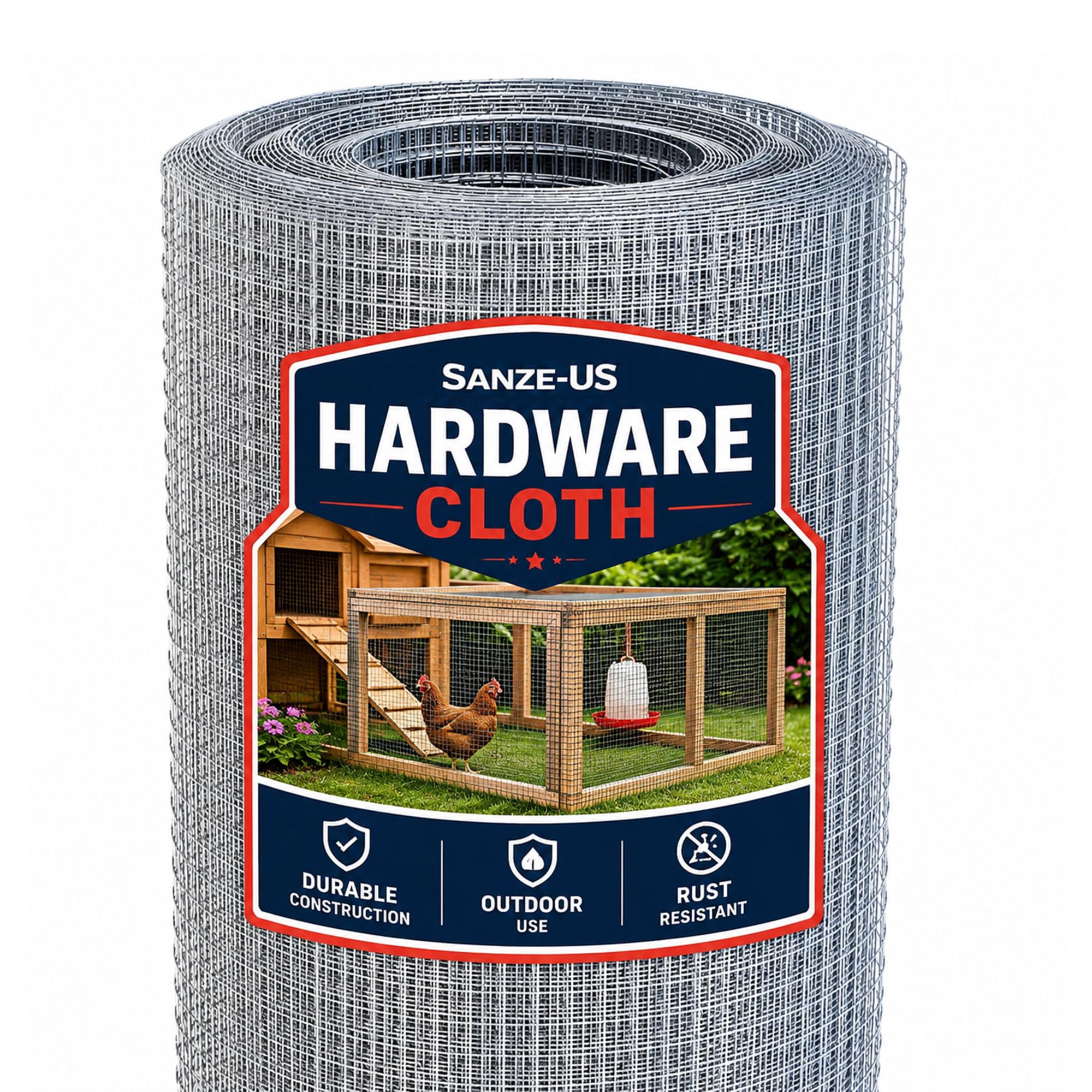
3. Sanzeus 1/4 Inch 24 x 50 Ft Double-Layer Hot-Dip Hardware Cloth
Double galvanized wire that survives underground without rusting.
This roll goes through the galvanizing process twice — once before welding and again after — which lays down a heavier zinc coating than a single pass. The result is a 23 gauge wire that holds up noticeably longer in direct soil contact. The 1/4 inch mesh blocks voles, and the 24 inch width by 50 foot length gives you enough coverage for multiple raised beds or a decent perimeter trench.
Owners praise how well it works as an underground garden barrier. One long-term user reported it kept rabbits out of vegetables for an entire growing season. The wire is flexible enough to curve around tree trunks as a protector, and it cuts cleanly with standard wire cutters. The manufacturer upgraded the packaging to include transparent film wrapping and a paper box to prevent denting during shipping.
The only real limitation is the 24 inch height — if you want a deeper underground wall, you will need to overlap two strips or choose a taller roll. The 23 gauge is easier to work with than the 19 gauge alternatives but offers less resistance to determined chewing over multiple years.
What stands out
- Double hot-dip galvanizing provides better rust protection than single-pass treatments
- 1/4 inch mesh blocks voles and other small burrowing animals
- Flexible enough to curve and shape around garden obstacles
The catch
- 24 inch height may be too short for some deep underground installations
- 23 gauge is thinner than the 19 gauge options; less gnaw resistance over many seasons
Pick this for: Lining the bottom of raised garden beds where the mesh stays in constant contact with damp soil.
skip it if: You need a taller barrier or prefer the thicker 19 gauge wire for high-rodent-pressure areas.
4. YARDGARD 1/4 Inch 36 x 25 Ft Hardware Cloth

A name you recognize with a mesh tight enough for voles.
YARDGARD is among the most established brands in the fencing aisle, and this 36 inch tall by 25 foot roll follows their standard formula: 23 gauge galvanized steel with 1/4 inch openings. The 36 inch height is useful because you can bury a foot of it underground and still have two feet of above-ground barrier. The double zinc coating is designed to resist corrosion in moist environments like garden beds and greenhouse floors.
The mesh is flexible and lightweight enough to trim with ordinary hand tools. It is explicitly designed for the exact uses that vole control demands — small pest exclusion, raised bed bottoms, and cage reinforcement. Owners use it around fish ponds, garden beds, and under sheds. One buyer called it “perfect” for keeping bunnies out of their garden and said it was easy to install at the right price.
The trade-off is durability. While the quality and functionality scores are strong in reviews, some owners note that the wire gauge feels light. It is fine for suburban rodent control but not heavy enough for determined animals like beavers or muskrats. A small percentage of rolls arrive with a flawed spot, though most buyers find the defect does not hinder the usefulness.
Why it sells
- 36 inch height lets you bury 12 inches and still have a 24 inch barrier above ground
- Double zinc coating resists rust in damp soil
- Brand recognition and consistent quality from a major fencing manufacturer
Know this
- 25 foot length goes fast — measure your perimeter before ordering
- Some owners find the wire gauge thinner than expected for heavy-duty use
Reach for this if: You want a brand you already trust and the 36 inch height gives your installation flexibility without needing to overlap strips.
Look elsewhere if: You need a longer continuous run or you prefer thicker 19 gauge wire for high-chewing-pressure areas.
5. Kicari Black 19 Gauge 1/2 Inch Hardware Cloth
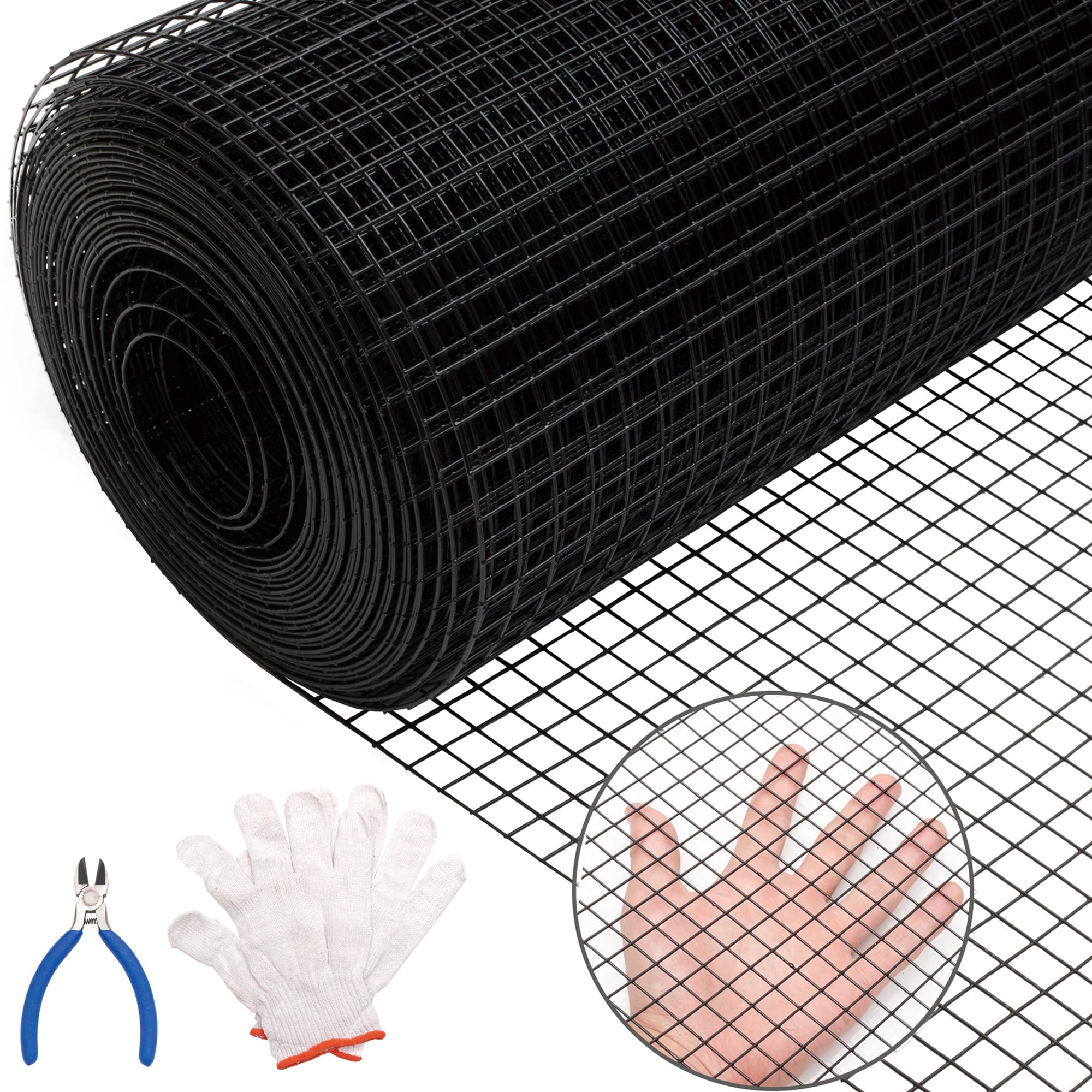
Black coating hides against fences and resists rust longer.
This is one of the few black-coated options on the list, which matters if you are using it above ground where silver wire stands out. The powder coating is applied after welding and adds an extra layer of protection on top of the galvanized steel. At 19 gauge with 1/2 inch openings, it has the same chewing resistance as the Nueve Deer pick but in a darker finish that blends into garden beds and fence lines.
The roll is 36 inches tall and 50 feet long. A wire cutter and a pair of fabric gloves are included in the package, which is a thoughtful touch for a first-time buyer. Owners use it to protect maple saplings from deer, build tree cages, and fence off vegetable gardens. One reviewer noted it was “easy to cut” and “holds up well” for keeping deer out of their garden. The powder coating also makes the surface smoother than raw galvanized wire, which means less snagging when you handle it.
The downside mentioned most is flexibility — the 19 gauge steel is stiff, and some owners find it too bendable for their purposes. It is thicker than 23 gauge but still has some give. The price is higher than basic galvanized rolls, and a few owners feel it is expensive for what you get.
What you get
- Black powder coating resists rust and blends into garden environments
- 19 gauge steel provides strong chewing resistance
- Comes with wire cutter and gloves for immediate installation
The drawbacks
- Black finish adds cost compared to bare galvanized wire
- Some owners find the stiffness makes it harder to shape precisely
Grab this if: You want a black mesh that looks clean above ground and still gives you 19 gauge thickness for vole defense.
pass on it if: You are burying the mesh completely — the black coating is wasted underground, and bare galvanized is more cost-effective.
6. SEBOSS 1/4 Inch 36 x 50 Ft Black Vinyl Coated Hardware Cloth

Black vinyl coating that will not crack from sun exposure.
SEBOSS takes a different approach to rust prevention: a galvanized steel wire core wrapped in a black vinyl coating made from new plastic pellets. The manufacturer claims the coating resists cracking and discoloring even with prolonged sun exposure, which matters if the mesh sits above ground as a visible fence. The 1/4 inch opening and 23 gauge wire make it effective for voles while staying flexible enough for custom installations.
The 36 inch height by 50 foot length is a common dimension that works for both underground trench barriers and above-ground fencing. Owners use it for deer protection around pots, rabbit barriers, chicken runs, and garden enclosures. One owner described it as “strong” and said it keeps predators out of the chicken enclosure. The black color makes the mesh nearly invisible from a distance, which is a significant advantage if you care about how your garden looks.
The honest trade-off is that the coating adds thickness, but the underlying 23 gauge wire is still thinner than a 19 gauge alternative. A small number of owners note that the wire can be bent by deer pressure or that squirrels can still access plants through the 1/4 inch openings. The vinyl coating also makes the cut edges particularly sharp — the included gloves are not optional.
The advantages
- Vinyl coating resists sun damage and rust better than paint
- Black color blends into garden and fence lines
- 1/4 inch mesh blocks voles effectively
The caveats
- Coated wire is stiffer than bare 23 gauge at the cut points
- 23 gauge core is not as strong as 19 gauge for high-pressure areas
Choose this for: A visible above-ground fence where you want the mesh to be less noticeable and the coating to hold up in full sun.
it’s not for you if: You need the absolute strongest wire or you are burying the mesh entirely and do not need the vinyl layer.
7. LAN JIA Heavy Duty 1/4 Inch 48 x 50 Ft Hardware Cloth

Four feet wide so you cover more ground with less overlap.
The 48 inch width is the standout feature here — most rolls are 36 inches or narrower, so at 48 inches wide versus 36-inch rolls, it covers more ground per strip. That means fewer seams to fasten and a faster installation. The 1/4 inch mesh and 23 gauge wire follow the standard vole-blocking formula, but the 50 foot length at this width gives you massive coverage for a large perimeter or multiple beds. The wire is black annealed steel with hot-dip galvanizing applied after welding.
The manufacturer backs this one with an 8-year quality guarantee, which is unusual for a mesh product and suggests confidence in the galvanization. Owners use it for chicken runs, snake fences, and greenhouse vents. One owner reported it was “so much cheaper than the big box store” and praised the quality. Another used it for pet reinforcement and noted that the wires resisted claw and weight pressure without sagging.
The obvious trade-off is weight — at 26.2 pounds, this is a heavy roll to maneuver. You will need a second pair of hands or a solid plan for unrolling it on site. The 48 inch width also means the cut edges are long, so sharp ends are more likely to catch you if you are not careful.
The big benefits
- 48 inch width reduces the number of strips and seams needed for large areas
- 8-year quality guarantee is the longest on this list
- Hot-dip galvanized after welding for rust resistance
The challenges
- At 26.2 pounds, it is the heaviest roll to handle and transport
- Wide roll is harder to cut straight without a proper work surface
Get this for: Large ground-level installations like a garden perimeter or greenhouse floor where the 48 inch width saves you time.
Think twice if: You are working alone or need to carry the roll a long distance from your vehicle to the installation site.
8. GoldPeak 1/4 Inch 48 x 50 Ft Hot-Dip Galvanized Hardware Cloth
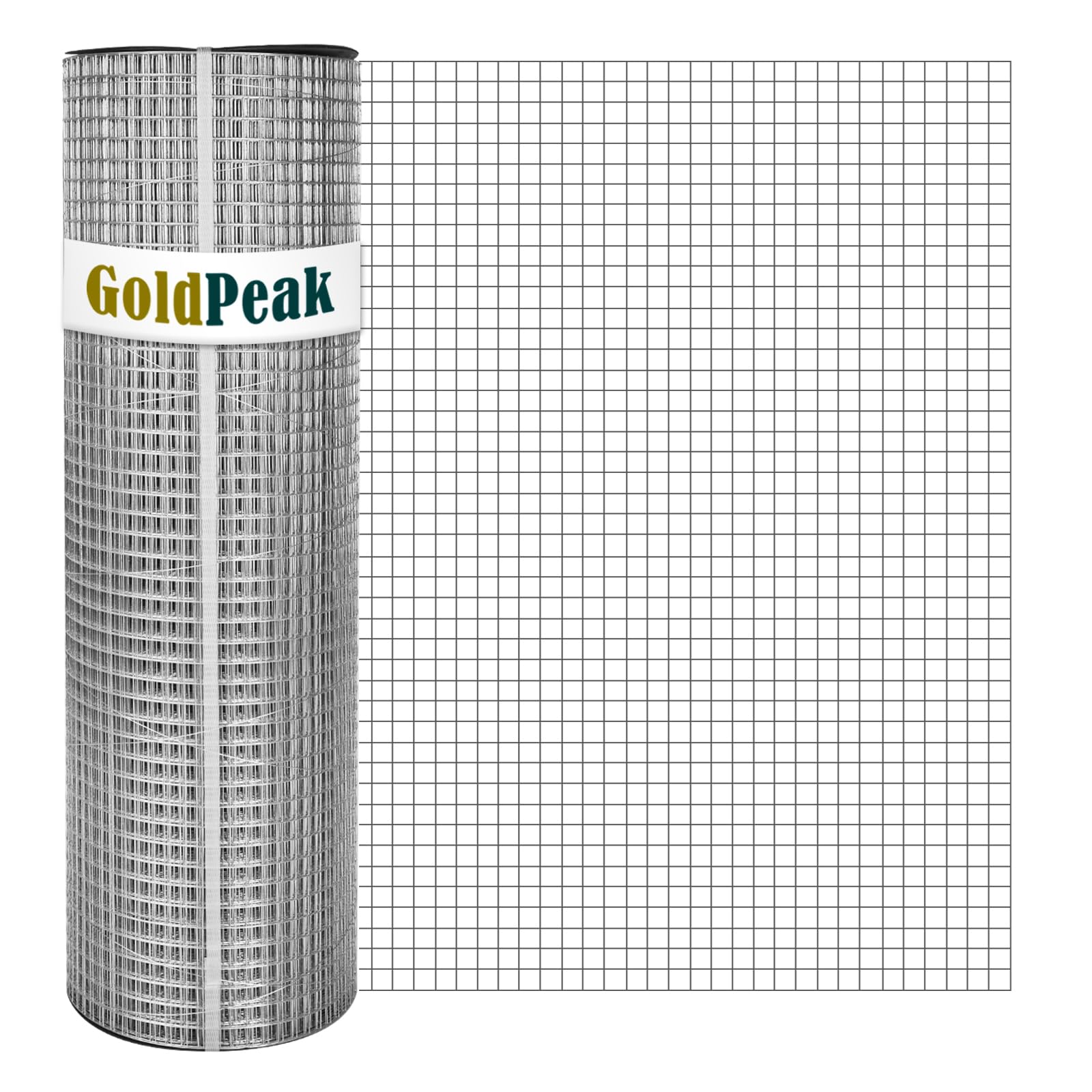
The crowd favorite with exceptional rust protection and sturdy welds.
GoldPeak holds the highest rating on this list for a reason. The hot-dip galvanizing is done after welding, which means every single weld joint is sealed in zinc rather than just the bare wire. The manufacturer runs five separate inspections per roll to catch weak welds or missing wires before shipping. The 1/4 inch mesh and 23 gauge wire hit the balance for vole control — small enough to block them, thick enough to last. The roll is 48 inches wide by 50 feet long.
Owners consistently describe it as “excellent quality” and “easy to install.” The mesh is used for chicken runs, garden fencing, and raised bed bottoms. One buyer mentioned using it on ten raised beds and planning to seal around their shed next. The 5-year warranty provides concrete assurance that the galvanization will hold up, which is rare in this category. The reinforced carton packaging prevents the bending and edge damage that frustrates buyers of cheaper rolls.
The only meaningful limitation is that the 23 gauge wire is thinner than the 19 gauge options higher on this list. Some owners note the wire feels light relative to what they expected from heavy-duty hardware cloth. It is more than adequate for suburban vole pressure but may bend under extreme ground movement or heavy animal traffic.
Why it wins
- Five inspections per roll ensure consistent quality and fewer defects
- Hot-dip galvanized after welding seals every joint in rust-resistant zinc
- 5-year warranty is a strong signal of durability confidence
The one catch
- 23 gauge wire is not as strong as the 19 gauge options for extreme chewing pressure
Reach for this if: You want the highest-rated mesh with a proven track record and the five-inspection quality process gives you confidence.
Choose differently if: You need the absolute thickest wire possible and are willing to trade the 5-year warranty for 19 gauge steel.
9. Trenk 1/4 Inch 36 x 100 Ft Hardware Cloth

One hundred feet of mesh for the biggest vole-blocking projects.
Some jobs require continuous coverage — a long fence line, a large garden perimeter, or sealing the entire foundation of a shed. The Trenk roll gives you 100 feet of 1/4 inch mesh in a single 36 inch wide roll, which covers 300 square feet. The wire is 23 gauge galvanized annealed steel wire with hot-dipped galvanization. The manufacturer increased the welding area by 15% and boosted the zinc coating by 20% compared to similar products, aiming for superior corrosion resistance in underground applications.
Owners use it for gopher barriers in raised beds, sealing open foundations, and keeping vermin out of crawl spaces. One buyer described it as “tough stuff” and buried it a few inches down around their garden. Another used it to seal the base of a small cabin and reported it worked great. The tiny 1/4 inch squares mean voles and most other pests simply cannot pass. The included work gloves are a practical necessity because the cut edges are sharp.
The main limitation is durability consistency. While the majority of reviews praise the quality, a few owners have reported that a roll arrived with weak points or areas where the mesh broke easily. One long-term buyer who had purchased multiple rolls noted that the most recent roll seemed weaker than previous ones. This suggests that while the overall quality is high, the consistency could improve.
What makes it special
- 100 feet of continuous mesh means fewer joints and faster installation for large areas
- 15% larger welding area and 20% more zinc coating than comparable products
- Hot-dipped galvanization is ideal for underground use
Be aware
- Long roll is heavy and awkward to handle without a second person
- A small number of buyers report inconsistent quality between rolls
Choose this for: A large, continuous installation where a single 100-foot run eliminates the need for seam connections.
Look elsewhere if: You are covering a small area and do not want to wrestle with 100 feet of coiled mesh.
Understanding the Specs
Mesh Size — 1/4 Inch vs 1/2 Inch
The opening size determines which animals the mesh stops. A 1/4 inch opening blocks voles, mice, and most small snakes. A 1/2 inch opening also blocks voles but lets smaller mice and tiny snakes through. The trade-off is that 1/2 inch mesh lets in more light and air, and it is typically available in thicker gauges. For vole-only protection, both work. For total pest exclusion, go with 1/4 inch.
Gauge — 19 vs 23
Gauge numbers work backward: a smaller number means thicker wire. 19 gauge wire measures roughly 0.04 inches thick and resists chewing and bending much better than 23 gauge, which is around 0.024 inches thick. The thicker wire is also harder to cut and bend. For underground use or areas with heavy rodent pressure, 19 gauge is the safer choice. For raised bed liners or low-pressure zones, 23 gauge saves you effort during installation.
Hot-Dip Galvanizing After Welding
This is the gold standard for rust protection. The wire mesh is welded first, then dipped in molten zinc. This coats every weld joint, every cut end, and every wire surface with a thick zinc layer. Electro-galvanizing (cold plating) applies a thinner zinc layer that wears off faster in soil contact. Any product listed as “hot-dip galvanized after welding” will outlast a cold-plated product underground by multiple seasons. The phrase “after welding” is critical — it means the welds are protected, not just the bare wire.
Buried Installation Depth
To stop voles from tunneling under your hardware cloth, you need to bury the bottom edge at least 6 to 12 inches deep. Voles burrow shallowly, typically in the top 6 inches of soil, but they will dig deeper if they sense a barrier. Bend the bottom few inches of mesh outward in an L-shape before burying it — this creates a horizontal apron that voles hit when they try to dig straight down. The total height of the roll you buy should include both the buried portion and whatever above-ground height you need.
FAQ
Will 1/2 inch hardware cloth stop voles completely?
How deep should I bury hardware cloth to stop voles?
Can voles chew through hardware cloth?
What is the difference between 19 gauge and 23 gauge hardware cloth for voles?
Is hot-dip galvanized hardware cloth worth the extra cost for underground use?
How do I cut hardware cloth safely?
Can I use chicken wire instead of hardware cloth for voles?
Which is better for a raised garden bed — lining the bottom with 1/4 inch or 1/2 inch mesh?
How long can I expect hardware cloth to last underground?
Will hardware cloth rust in my garden soil?
Final Thoughts: The Verdict
For most people dealing with voles, the hardware cloth for voles winner is the Nueve Deer 19 Gauge 1/2 Inch because the thick 19 gauge steel resists chewing and the hot-dip galvanization keeps it rust-free underground for years. If you want the smallest mesh for total pest exclusion in a raised bed, grab the Sanzeus 1/4 Inch Double-Galvanized. And for a massive continuous run without seams, the Trenk 100 Foot Roll is the one to reach for. The crowd favorite — GoldPeak — sits just behind the top pick with a 4.8 rating across 700+ owners, making it a near-perfect alternative if you prefer 1/4 inch mesh.
How We Picked
We do not accept paid placement. Every pick is matched to a real buyer and a real use-case; we do not hands-on test units.
Sources & Methodology
Specifications: manufacturer listings and product documentation. Review insights: verified customer reviews, as of July 2026. Pricing: not shown on this page (it changes often); check the current price via the retailer link.
As an Amazon Associate, Lawn Gear Lab earns from qualifying purchases. This does not affect which products we feature.