
Specs are compiled from manufacturer listings and verified buyer reviews and can change over time — please confirm the key details on the product page before buying.
Feeding your flowers the wrong plant food is like giving a marathon runner a bowl of sugar — you get a burst of green leaves and almost nothing in the bloom department. You need a formula built from the ground up for blossoms, not foliage. A flower and bloom fertilizer shifts the nutrient balance hard toward phosphorus (the middle number in the N-P-K label) to trigger bud set, deepen color, and stretch out that peak bloom window.
I’m Rikta — the founder and writer behind Lawn Gear Lab. This guide is built by comparing the manufacturers’ published specifications and the patterns across verified customer reviews, so you get each pick’s real strengths and trade-offs instead of marketing spin.
The key is the ratio: a high-phosphorus formula sends energy directly into flower production rather than leaf growth. best flower and bloom fertilizer choices tip the scale toward that critical middle number, and the nine picks below cover everything from instant liquid boosts to slow-release organic granules.
Our Picks at a Glance

How To Choose The Best Flower And Bloom Fertilizer
Picking a bloom formula depends on three factors: the N-P-K ratio match for your plant type, the form (powder versus granular versus liquid) that fits how often you water, and the total coverage you need for the season.
High-Phosphorus Ratio Is The Bloom Trigger
Look at the middle number in the three-digit ratio on the bag. That is phosphorus, and it is the element flowers draw on most heavily for bud formation and petal development. A ratio where phosphorus is the highest number — for instance 10-30-20 or 9-58-8 — means the product is engineered specifically for flowering rather than leafy growth.
Powder Verses Granules Verses Liquid
Water-soluble powders (like the Carl Pool BR-61 and Jack’s Classic) mix into a watering can and feed immediately — great for container plants and quick correction. Granules (like the Espoma Rose-Tone and Miracle-Gro Performance Organics) sit in the soil and release nutrients gradually over weeks. Liquid concentrates (like the Great Big Roses Booster) are ready-to-dilute and flow directly into the root zone for fast uptake.
Total Coverage And Application Frequency
A 3-pound bag of powder might make 48 gallons of liquid fertilizer, enough for a full season of weekly feeding for a medium flower bed. Granular products often ask for reapplication every 4 to 6 weeks. Check the unit count or weight against how many plants you are feeding — bigger bags usually deliver better value for larger gardens.
Quick Comparison
| Model | Best For | N-P-K Ratio | Form | Container Size | Amazon |
|---|---|---|---|---|---|
| Carl Pool BR-61★ Best Overall | Best Overall Power | 9-58-8 | Powder | 48 oz | Amazon |
| Jack’s Classic Blossom BoosterTop Performer | Immediate Results | 10-30-20 | Powder | 8 oz | Amazon |
| Schultz Bloom PlusBudget Champion | Budget Value | 10-54-10 | Powder | 16 oz | Amazon |
| Miracle-Gro Performance Organics Blooms | Organic Granules | 5-7-10 | Granules | 8 oz | Amazon |
| Roots Organics Terp Tea Bloom | Heavy-Yield Organic | 3-7-4 | Dry | 3 lb | Amazon |
| Miracle-Gro LiquaFeed Bloom Booster | Liquid, Easy Refill | — | Liquid | 64 fl oz | Amazon |
| Espoma Organic Rose-Tone | Rose & Shrub Special | 4-3-2 | Granules | 4 lb (2-Pack) | Amazon |
| Nelson Plant Food ColorStar | Season-Long Slow Release | — | Granules | 32 oz | Amazon |
| Great Big Roses Liquid Booster | Premium Rose Revival | — | Liquid | 32 fl oz | Amazon |
In‑Depth Reviews
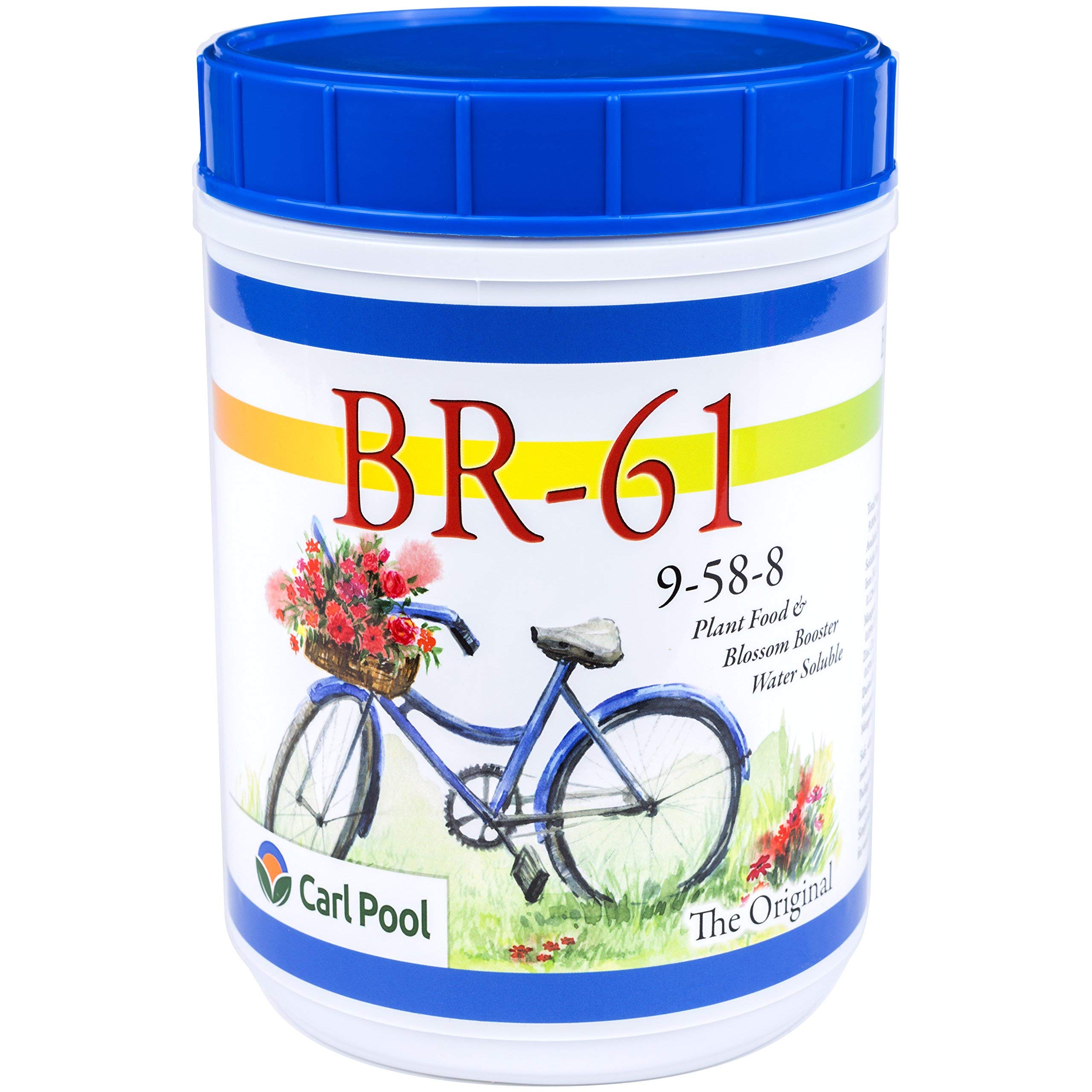
1. Carl Pool BR-61 Plant Food 9-58-8 3 Lbs
Our pick — over 4.5★ from 900+ verified ratings; the strongest balance of quality and price.
The phosphorus-heavy legend that turns potted flowers into a season-long color show.
This is the product the crowd of over 900 owners has improve to a nearly perfect score, and for good reason. The 9-58-8 ratio is almost absurdly weighted toward bloom-driving phosphorus, which means every watering directs energy straight into bud formation rather than leaf expansion. The reviews pages sum it up: “I love the size of this one, it’s hard to find in a store and this one lasts!” — that 48-ounce unit count gives you 48 ounces versus the Jack’s Classic 8-ounce tub, so a single purchase can carry you through a full growing season without running out.
The mixing formula is simple enough — one tablespoon per gallon of water — making it as straightforward as any powder on this list. what separates it is the consistency buyers report across years of use. Many mention they have bought it for several years running and that plants grow 6-8 inches taller after switching. The most-discussed theme is quality, with owners praising the bloom growth and overall effectiveness as the top two reasons they stay loyal.
The honest trade-off here is availability: it can be hard to find in brick-and-mortar stores, so Amazon is the reliable source, and the powder form means you need to mix a fresh batch each feeding rather than sprinkling and forgetting. If you prefer a set-it-and-water-it granular, keep reading. But for pure bloom power in a water-soluble format, this is as good as it gets.
What wins people over
- Sky-high 9-58-8 phosphorus ratio drives dense, continuous flowering all summer
- 48-ounce bag — the largest unit count here — means fewer repurchases per season
- Simple 1-tablespoon-per-gallon mixing, no measuring complexity
The reality check
- Powder requires mixing at every feeding, slower than granular scattering
- Hard to find locally — online ordering is the primary channel
- Not formulated for organic gardening systems
Reach for it if: you want the single most concentrated bloom-specific formula for potted flowers, hanging baskets, and annual beds and are comfortable mixing powder each week.
Look elsewhere if: you need an organic-certified product or you prefer a granular slow-release that you scatter once and forget for a month.
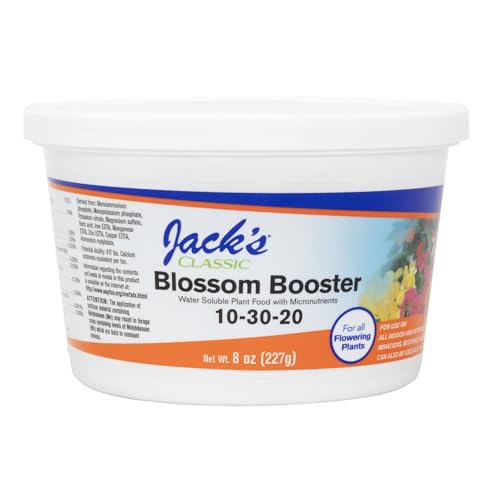
2. Jack’s Classic 10-30-20 Blossom Booster Water-Soluble Fertilizer
The orchid whisperer that delivers visible results within days of the first feeding.
Jack’s Classic carries a 10-30-20 analysis that runs a close second to the Carl Pool for phosphorus content, but it brings a crucial practical edge: it works as both a foliar spray and a root drench. That flexibility means you can spray it directly onto leaves for fast absorption when plants show signs of bud stall, or you can pour it into the soil for sustained feeding. Owners mention it works within days and that it is particularly beneficial for orchids, hydrangeas, and lilacs — plants notorious for being finicky about their feed.
The catch that buyers run into fast is the container size. At 8 ounces, this is a small tub — several owners note the entire container was used in a single day for outdoor flower beds. Compared to the Carl Pool’s 48 ounces (48 ounces versus 8 ounces), the Jack’s Classic delivers high-quality nutrition but in a quantity that assumes you are feeding a modest collection or are willing to repurchase often. The customers-say summary directly flags value for money as a mixed point: the product itself earns high marks, but the price-to-volume ratio gives some owners pause.
Where it shines is precision. The included measuring spoon makes dosing predictable, and the micronutrient package means you do not need to supplement with extra feed. For indoor growers or gardeners with a small but prized collection of bloomers, this is a top-tier choice. For a sprawling bed of annuals, the Carl Pool above or the Schultz below gives you more volume for your money.
Standout strengths
- Dual-use — foliar spray or root feed, whichever your plants need
- Micronutrient blend eliminates need for extra supplements
- Works rapidly, owners see difference in days
Before you buy
- 8-ounce tub is sample-sized for large gardens — expect to repurchase
- Value for money is mixed in owner consensus
- Not labeled for organic use
Best if you: have a smaller collection of orchids, hydrangeas, or prize bloomers and want a fast-acting, versatile powder that can be sprayed or watered in.
Think twice if: you plan to feed a large outdoor flower bed all season — the container runs out in one application.
3. Schultz Bloom Plus Water Soluble Plant Food 10-54-10
The entry-level bloom booster that Christmas cactus owners swear by.
Schultz Bloom Plus carries a 10-54-10 formula — the highest phosphorus concentration in this entire lineup — yet it lands at a price point that puts it within reach of any gardener. The “bloom plus” name is literal: that middle number of 54 means the entire mix is engineered to push flower density rather than leaf growth. Customers note that it keeps plants blooming through winter and produces the kind of color displays that neighbors stop to ask about.
The standout approval comes from houseplant enthusiasts. As buyers put it: “Great product, my Christmas cactuses LOVE IT.” The 16-ounce weight here is 16 ounces versus the Jack’s Classic 8-ounce tub, but at a lower entry cost, making it the strongest value-for-money proposition of the three water-soluble powders. Owners also praise its effectiveness on vegetables, noting that it produces larger blooms and bigger vegetables when used on tomatoes and peppers.
The catch is that the formula is not recommended for bushes, trees, or cacti by some long-term users — stick to flowering plants and it does exactly what the label promises. The powder dissolves evenly with every watering (the brand calls it “feeds like nature”), which means you get consistent nutrient delivery without hot spots. For a budget-friendly bloom-specific feed that does not compromise on phosphorus punch, this is the one to start with.
The verdict at this tier: The strongest phosphorus ratio of any pick here at a price that invites experimentation. Owners applaud its effectiveness on both flowers and vegetables, and the 16-ounce container provides 16 ounces versus the Jack’s Classic 8 ounces at a lower cost.
Grab this if: you are on a budget, feed a mix of flowering plants and vegetables, or want the highest possible phosphorus ratio (10-54-10) for the lowest entry cost.
Pass if: you need an organic-certified product or you prefer slow-release granules — this is a water-soluble powder only.
4. Miracle-Gro Performance Organics Blooms Plant Nutrition Granules
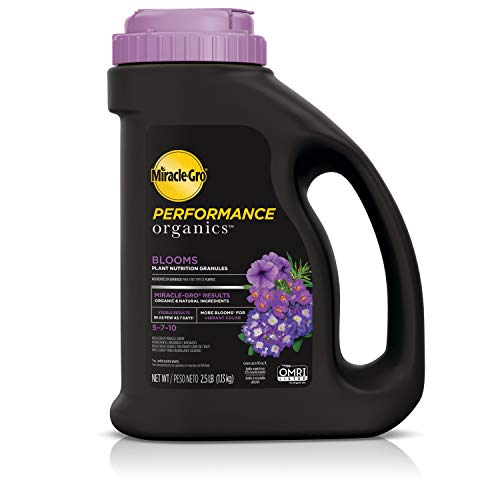
The OMRI-listed granule that pushes blooms in just 1-2 weeks without synthetic chemicals.
Granular feeders appeal to a different kind of gardener — one who wants to scatter once and walk away. This Miracle-Gro Performance Organics bag covers up to 165 square feet with a single application and asks for reapplication every 4 to 6 weeks, which translates to roughly 2-3 feedings across a typical growing season. The OMRI listing means it meets organic production standards, so you can use it in a vegetable bed or flower border without worrying about chemical runoff.
The 5-7-10 ratio is more balanced than the ultra-high-phosphorus powders above, but the organic ingredients deliver a slower, steadier nutrient release that suits perennials and shrubs. Reviewers point out that it works within 1 to 2 weeks and produces large blooms on all plants, with butterfly bush being a standout responder. The reviews pages describe it as having a “huge difference in my garden” and note that it revived a Mandevilla that was refusing to bloom.
The honest downside is that the 8-ounce bag is on the smaller side for the price, and several owners noted that the paper seal under the lid was loose, suggesting the bottle may not arrive completely full. Still, for anyone committed to organic methods who wants a simple sprinkle-and-water bloom feed, this is the most accessible entry point. It trades the instant phosphorus hit of a powder for confidence about what is going into the soil.
Why it works
- OMRI-listed — approved for organic gardening without synthetic additives
- Easy granular scatter, no mixing or measuring required
- Covers 165 sq. ft. per bag, feeding for 4-6 weeks each application
Things to note
- Moderate 5-7-10 ratio — less bloom-specific than high-phosphorus powders
- Bag size is modest; shoppers say loose seals on some units
- Reapplication every 4-6 weeks means multiple purchases for long seasons
Choose this for: organic vegetable gardens, butterfly bushes, and any bed where you want a no-fuss granular feed with certified organic ingredients.
skip it if: you want maximum bloom intensity in a short window — a powder like the Carl Pool or Schultz delivers faster, denser flowering.
5. Roots Organics Terp Tea Bloom Natural Dry Fertilizer
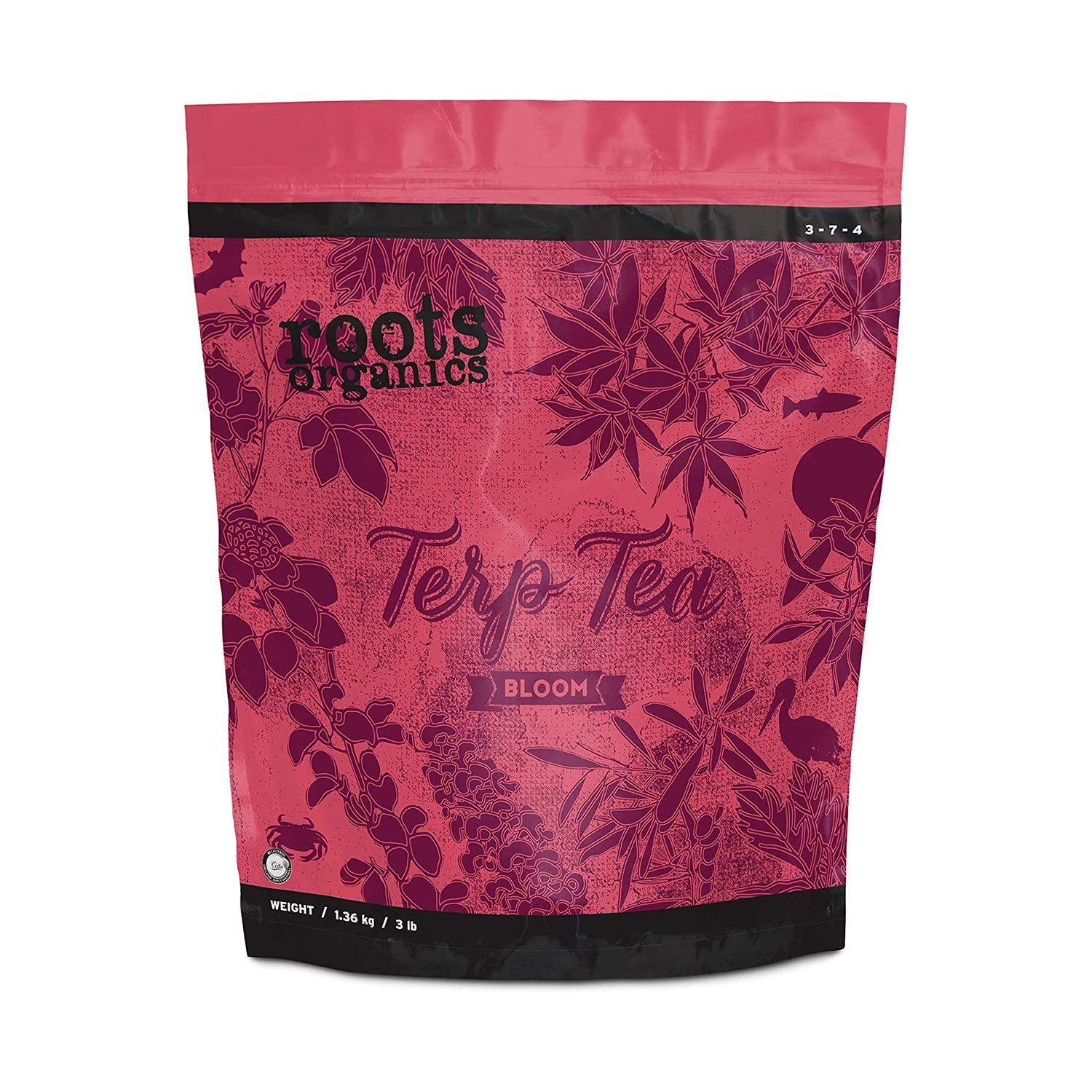
The nutrient-dense dry feed for gardeners who want full-spectrum organic power.
This bag is built from a dense blend of feather meal, fish bone meal, bat guano, crab meal, and kelp meal — ingredients that read more like a soil diet plan than a fertilizer label. The 3-7-4 ratio is not the highest phosphorus in this roundup, but the organic matter here does more than just feed the plant: it feeds the soil microbes that convert those nutrients into plant-available forms. Owners describe it as “superior to all others” and note that it works exceptionally well when blended with other organic amendments.
The user base for this product trends toward dedicated organic growers and those pushing for heavy yields — the “Terp Tea” name nods toward terpene production in flowers, which matters for anyone growing aromatic or high-yield blooms. Buyers report using it as both a top-dress and a mix-in, and the micronized powder makes it easy to work into potting soil without clumping. The crowd of over 600 owners has given it an excellent score, with quality and effectiveness being the most frequently praised aspects.
The one area where some owners found frustration is duration — the product works best as part of an ongoing organic regimen rather than a single-shot solution. It also carries a notable smell (common with animal-based organic fertilizers). For the gardener who wants a full-spectrum organic feed that builds soil health alongside bloom production, this bag delivers. For someone just looking for a quick bloom boost, the powder options above are faster and simpler.
The organic edge
- 10+ natural ingredients including bat guano, kelp meal, and fish bone meal
- Feeds soil biology, not just the plant — long-term garden health
- Versatile: works as top-dress, mix-in, or base nutrition for heavy feeders
Know before you buy
- Organic animal ingredients produce a strong smell during application
- Works best as part of a consistent organic regimen, not a quick fix
- Duration flagged as an occasional weak point
Ideal for: the dedicated organic grower who wants to improve soil microbiology while pushing heavy bloom yields.
Not for: casual gardeners who want a single bag to mix and apply instantly — this thrives in a regular feeding schedule.
6. Miracle-GRO LiquaFeed Bloom Booster Flower Food

The no-mix liquid that turns a hose or watering can into a bloom machine.
If mixing powder is a step you would rather skip, this LiquaFeed system removes it entirely. The liquid concentrate integrates with Miracle-Gro’s hose-end feeder or can be diluted into a watering can, delivering the bloom formula directly to the root zone without measuring or stirring. The twin-pack gives you 64 total fluid ounces of concentrate, which owners mention lasts them through multiple rounds of feeding when applied 2-3 times per week.
The target here is convenience without sacrificing results. Owners consistently praise the ease of use, and the consensus is that the product keeps plants in bloom throughout summer with many colorful flowers. A typical owner summary reads: “We use this plant food 2-3 times a week to keep our flowers blooming and help promote healthy growth.” The bloom and quality aspects are the top positives, with effectiveness running close behind.
The catch is that value for money is a mixed topic among owners — the concentrate is priced as a premium convenience product, and those with large gardens found themselves going through bottles faster than expected. If you already own a Miracle-Gro feeder or simply prefer liquid over powder, this is the smoothest path to consistent blooming. If you are feeding a sprawling bed of annuals, a powder or granular option will stretch further per dollar.
The short take: Maximum ease of use for liquid lovers. Customers note beautiful, continuous blooming with minimal effort, though the cost per feeding runs higher than powder alternatives.
Reach for this if: you use a hose-end feeder or simply want liquid fertilizer you can pour and go — no mixing, no dust, no measuring spoons.
Think twice if: you are on a tight budget or feed a very large garden — the concentrate goes faster than a powder equivalent.
7. Espoma Organic Rose-Tone 4-3-2 Fertilizer

The time-tested organic that makes drift roses burst from spindly to spectacular.
Espoma has been in the organic gardening business since 1929, and the Rose-Tone formula reflects that long history. It is designed specifically for roses and other flowering shrubs like viburnum, bougainvillea, and clematis, with a 4-3-2 analysis enhanced with their proprietary Bio-tone microbes. This is not a high-phosphorus bloom booster in the traditional sense — instead, it fosters gradual, sustained flowering by improving the soil environment around the root zone.
The reported results are dramatic. One owner described transforming spindly drift roses into plants “bursting with color” after using one cup per plant per month. The product goes a long way despite the modest bag size — several owners note they use it by scattering a bit here and there and see growth popping up within days. The customers-say summary reports that it helps roses improve by 100% and produces beautiful blooms. The 2-pack gives you 4 pounds total, enough for a medium rose bed for a full season.
The trade-off that gets mentioned most often is the odor. The organic ingredients create a noticeable smell during application, which some owners describe as unpleasant, though most agree it is “worth it when you see the beautiful flowers springing up.” The 4-3-2 ratio is also lower in phosphorus than the dedicated bloom boosters above, meaning results take longer to appear. For the organic rose grower who wants a natural, soil-building approach, this is the trusted name. For a fast phosphorus jolt, the powders are better suited.
A rose’s best friend
- Tailored for roses and flowering shrubs with Bio-tone microbial enhancement
- Certified for organic gardening — no synthetic chemicals
- Gradual release that builds plant strength over the season
One honest caveat
- Strong organic odor bothers some gardeners during application
- 4-3-2 ratio is lower in phosphorus than dedicated bloom boosters
- Results build over weeks, not days
Best for: rose enthusiasts and organic gardeners who want a monthly granular feed that improves long-term bloom production without harsh chemicals.
Not the pick if: you need fast, visible results in under a week or you find organic fertilizer smells hard to tolerate.
8. Nelson Plant Foods ColorStar Outdoor & Indoor Plant Fertilizer
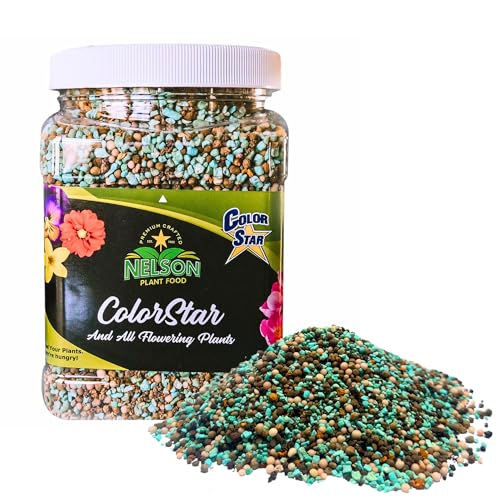
The one-and-done granule that feeds for up to five months straight.
The central promise of ColorStar is that a single application provides 4 to 5 months of continuous feeding. That is a compelling value proposition if you dislike the weekly rhythm of mixing powder or reapplying granules. The formula includes 25% bone and blood meal plus a suite of micronutrients — iron, zinc, copper, and manganese sulfates — designed to keep bloom production consistent across the entire season.
Hydrangea owners are the most vocal fans here. One typical report: “I used this in the spring and they are in full bloom and it looks like there are even more blooms than usual.” The customers-say summary highlights plant health as the standout positive theme, with effectiveness and bloom quality also earning consistent praise. The 32-ounce jar is not the largest container on this list, but given the slow-release nature, it covers a meaningful area over the long season.
The honest feedback that surfaces most is about the price-to-size ratio. Several owners note that the jar is smaller than expected for the cost — one even said “great but pricey.” Value for money is flagged as a mixed point, meaning you are paying a premium for the convenience of the extended feeding window. If that convenience matters to you and you have a moderate-sized bed of perennials or shrubs, this is an efficient choice. For large annual beds, a water-soluble powder gives you more control and lower cost per gallon.
Set-and-forget appeal
- Single application feeds for 4-5 months — the longest interval here
- Includes 25% bone/blood meal plus 8 micronutrients
- Works on annuals, perennials, bulbs, and flowering shrubs
Before you commit
- Jar size is modest; value perception is mixed among owners
- Slow-release means no fast correction for struggling plants
- Not labeled for organic gardening
Pick this for: gardeners who want a single spring application and do not want to think about fertilizer again until autumn.
Skip this if: you prefer organic certification or need a fast-acting solution for container plants that need weekly feeding.
9. Great Big Roses and Flowers Liquid Fertilizer Booster
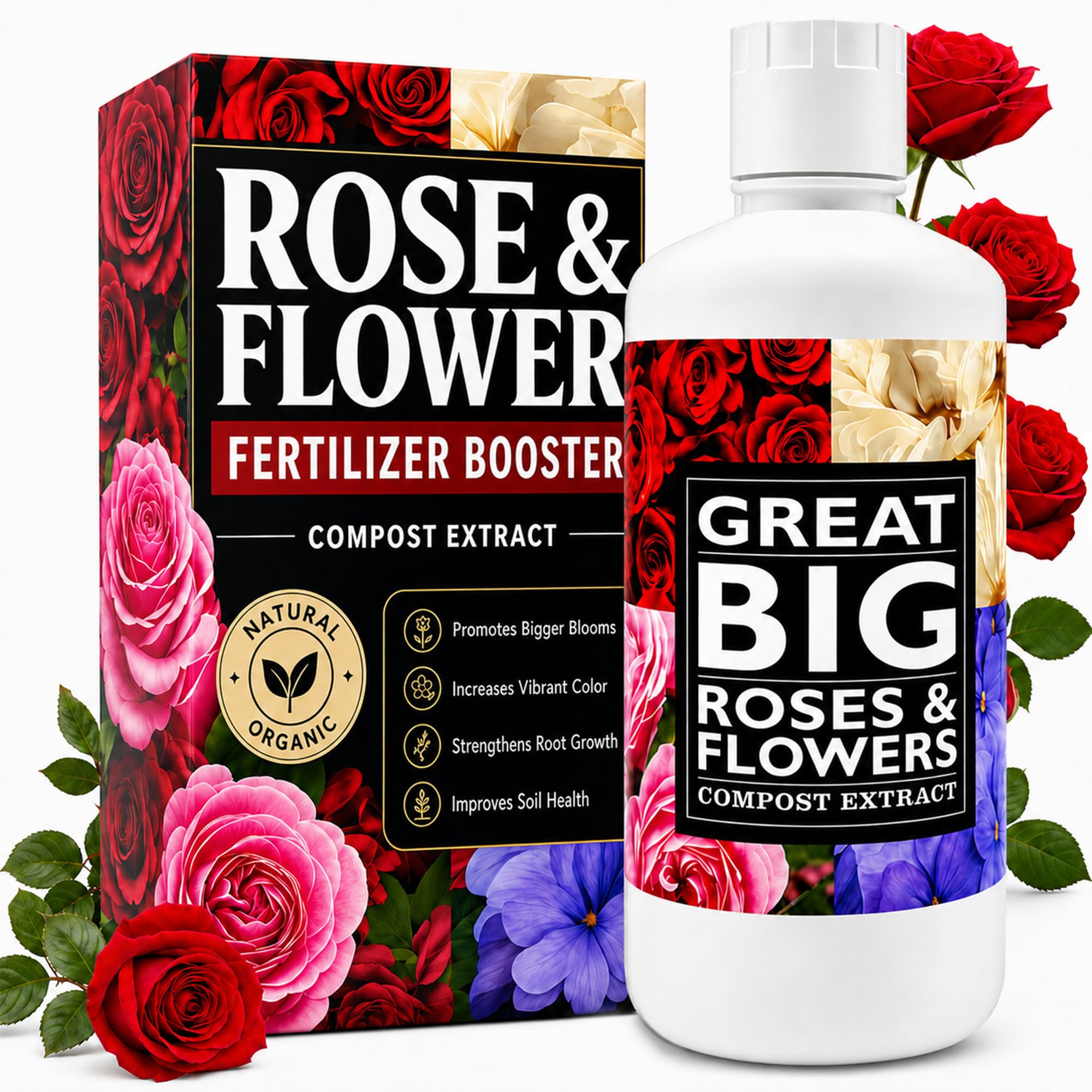
The liquid concentrate that reportedly coaxes non-blooming roses into flower in weeks.
This is the most concentrated and premium-priced liquid option in the lineup, and it is built around a different philosophy than the simple N-P-K ratios above. The formula delivers over 70 chelated trace minerals, humic acids, and seaweed extract directly into the root zone — it works as a soil activator rather than a straight fertilizer. The manufacturer’s claim, echoed in many owner reports, is that rose bushes that had not bloomed in years produce big flowers within weeks of the first application.
The numbers back up the enthusiasm. The customers-say summary reports vigorous growth with plants growing up to a foot in a single night and producing abundant, perfectly formed blooms even after a harsh winter. One owner described transforming “small bushes to large, healthy, prolific bloomers over 3 years.” The blend is designed to amplify the results of any existing fertilizer you are using, making it more of a supplement than a standalone feed. Owners use it alongside fish emulsion, bone meal, and worm castings to multiply the effect.
The clear barrier here is the price point. Value for money is the most frequently discussed aspect, and it is the only one where the owner verdict is negative — the liquid concentrate is expensive per ounce, and a 32-ounce bottle makes 30+ gallons of feed water, which is reasonable coverage but still hits the wallet harder than bagged alternatives. For the gardener tending prized roses or a collection of flowering shrubs who has struggled with lackluster bloom performance, this has earned a loyal following that considers it worth every cent. For the budget-conscious, the powders above deliver more phosphorus for less money.
The premium case
- 70+ chelated trace minerals, humic acids, and seaweed in every dose
- Reported to revive non-blooming plants within weeks
- Works as a soil activator alongside any existing fertilizer regimen
The honest trade-off
- Premium price — value for money is the most-cited concern
- Best used as a booster rather than a standalone fertilizer
- Organic-oriented but not OMRI-certified
Choose this if: you have prized roses or flowering shrubs that have been underperforming and you want a comprehensive mineral-rich liquid that works as both a feed and a soil conditioner.
Look elsewhere if: you need the highest phosphorus ratio per dollar or you want a simple, one-product solution — this shines as an amplifier, not a solo act.
Understanding Bloom Fertilizer Specs
N-P-K Ratio And The Middle Number
Every fertilizer label shows three numbers separated by dashes, like 10-30-20. The first is nitrogen (N), which drives green leaf growth. The second is phosphorus (P), which is the bloom trigger — a higher middle number means the product is formulated to push flower development. The third is potassium (K), which supports root strength and overall plant health. For a dedicated flower feed, look for a middle number higher than the first, as phosphorus is what your blooms actually draw on to set buds and deepen petal color.
Water-Soluble Powder Versus Granules Versus Liquid
Each form has a different use case. Water-soluble powders dissolve instantly and feed on contact — you mix them into a watering can and the nutrients reach the roots immediately, which is ideal for container plants and quick corrective feeding. Granules sit on top of the soil and release nutrients gradually over weeks as you water, making them better for garden beds where you want to feed once and forget it for a month. Liquid concentrates are the fastest to absorb but often cost more per feeding, and they work well with hose-end feeders for large-scale application.
FAQ
What does the middle number in N-P-K mean for blooming plants?
Can I use a bloom booster on vegetables?
How often should I apply a water-soluble bloom fertilizer?
Is organic bloom fertilizer better than synthetic?
Can I mix a bloom booster with my regular fertilizer?
What causes fertilizer burn on flowers and how do I avoid it?
How long does a 3-pound bag of bloom booster last?
Can I use a rose fertilizer on other flowering plants?
Final Thoughts: The Verdict
If you want the most powerful bloom-specific formula in a water-soluble powder that the gardening community almost universally loves, the Carl Pool BR-61 is the top pick — its 9-58-8 ratio and 48-ounce bag set the standard for this category. For a mid-range organic option that builds soil health while producing dramatic results on roses and shrubs, the Espoma Organic Rose-Tone gives you a trusted name and a natural approach. And for gardeners who want the highest phosphorus concentration at the lowest entry cost, the Schultz Bloom Plus delivers a 10-54-10 punch that houseplant owners and Christmas cactus fans swear by.
How We Picked
We do not accept paid placement. Every pick is matched to a real buyer and a real use-case; we do not hands-on test units.
Sources & Methodology
Specifications: manufacturer listings and product documentation. Review insights: verified customer reviews, as of July 2026. Pricing: not shown on this page (it changes often); check the current price via the retailer link.
As an Amazon Associate, Lawn Gear Lab earns from qualifying purchases. This does not affect which products we feature.