
Specs are compiled from manufacturer listings and verified buyer reviews and can change over time — please confirm the key details on the product page before buying.
Greenhouse rain gutters do one simple thing — they catch the water falling off your roof and send it somewhere useful, instead of letting it pool around your foundation or drip onto your plants’ leaves and cause disease. But here’s the problem: many greenhouses advertise gutters as a feature, yet the plastic panels crack, the gutters themselves rust, or the whole roof bows under the weight of a single light snow. What you actually need is a system where the gutter is built into a frame strong enough to carry water without falling apart.
I’m Rikta — the founder and writer behind Lawn Gear Lab. This guide is built by comparing the manufacturers’ published specifications and the patterns across verified customer reviews, so you get each pick’s real strengths and trade-offs instead of marketing spin.
You need a greenhouse that collects rainwater without collapsing in your local weather. The right best greenhouse rain gutters depend on matching the frame’s wind and snow rating to your climate, not just how much water the trough holds.
Our Picks at a Glance
How To Choose The Best Greenhouse Rain Gutters
Greenhouse rain gutters are not one-size-fits-all. You are buying a whole structure, and the gutter is a built-in part of the roof edge. Your job is to pick the structure whose gutter system, frame material, and panel type match your climate first, with price as a secondary concern.
Double-Wall vs. Single-Wall Polycarbonate
Double-wall polycarbonate panels have two layers with an air gap in between. This slows heat transfer, so your greenhouse stays warmer on cold nights without running a heater as hard. They are also much stiffer — less likely to crack when you tighten a screw or when snow piles up. Single-wall panels are lighter and cheaper, but buyers report they buckle under light snow loads. For the price difference, double-wall is the smarter long-term investment if you face any snow at all.
Frame Material and Anchoring
Aluminum frames resist rust naturally, which is critical for a structure meant to sit in damp soil and rain. But not all aluminum is the same thickness. Look for reinforcement — extra braces at the corners and a thicker gauge at the roof peak. Also check whether the kit includes ground-anchoring footings or just stakes. Several owner reports describe greenhouses flipping in a storm because the frame was light and the anchors were inadequate. A gutter full of water adds weight high up, which makes a weak frame even less stable.
Gutter Integration and Drainage
The gutter itself should have a clean outlet — either a downspout you can attach a hose to or a drainage hole that directs water away from the foundation. Some models claim gutters but include cheap plastic that cracks within months. Look for aluminum or reinforced polycarbonate gutters. The real test is whether the gutter is sealed at the seams to prevent leaks into the frame cavity, because trapped moisture inside an aluminum channel speeds corrosion.
Quick Comparison
| Model | Best For | Frame Material | Panel Type | Interior Space | Amazon |
|---|---|---|---|---|---|
| Outsunny 8′ x 6′★ Best Overall | Budget-conscious beginners with light climates | Aluminum | Polycarbonate (PC) | 8′ L x 6.25′ W x 6.4′ H | Amazon |
| Jiliusure 8′ x 8′ | Versatile mid-size with strong wind resistance | Reinforced aluminum | Double-wall polycarbonate | 97.24″ L x 95.28″ W x 77″ H | Amazon |
| Aoodor 6′ x 8′ | Premium build with sealed gutter system | Heavy-duty aluminum | Polycarbonate (PC) | 95.7″ L x 72″ W x 81″ H | Amazon |
In‑Depth Reviews
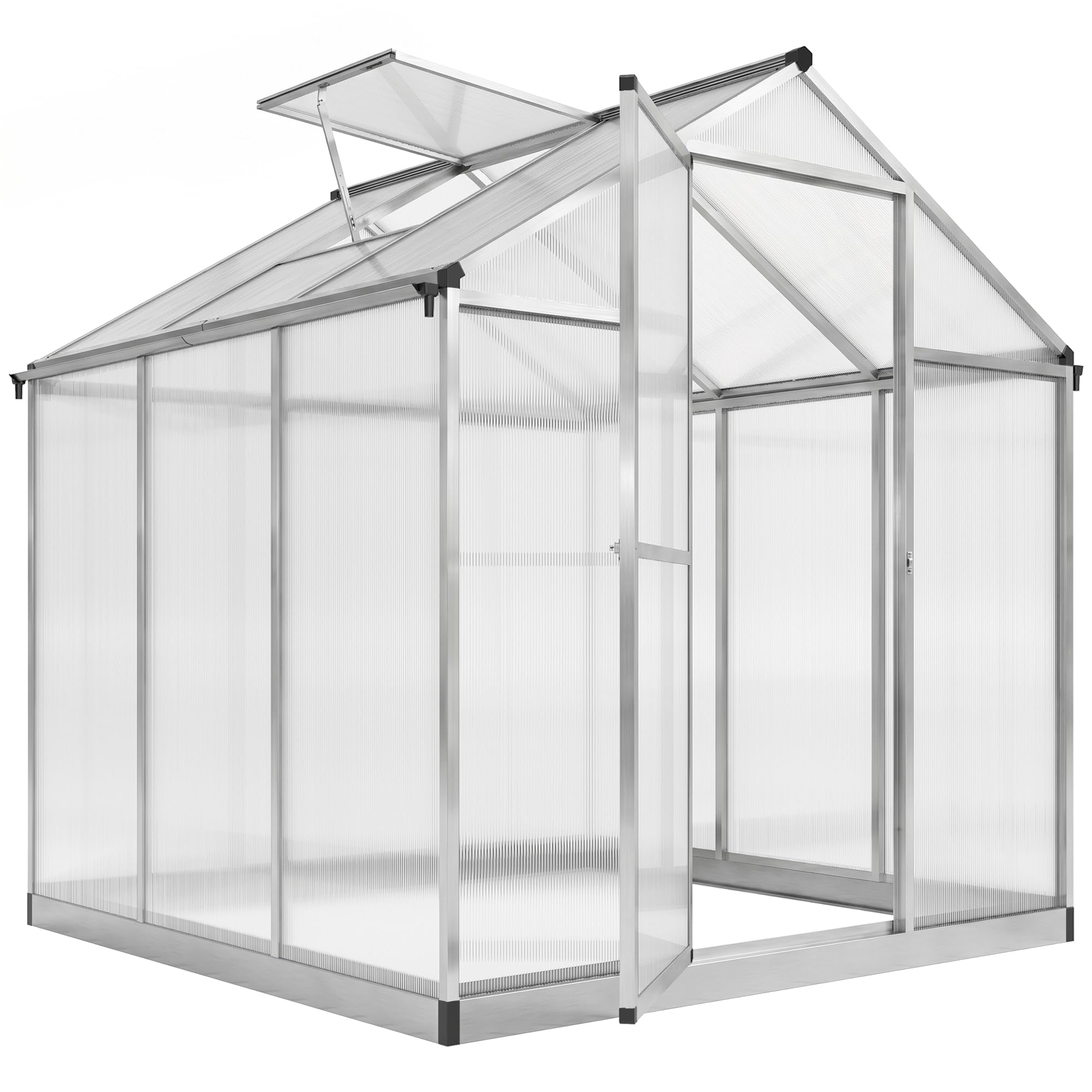
1. Outsunny 8′ x 6′ Greenhouse with Rain Gutter and Roof Vent
A gutter-equipped greenhouse that saves water but needs extra prep to survive winter.
The headline feature here is the rain gutter designed for collecting natural rainwater — you attach a hose to the outlet and start saving on your water bill. At an 8′ by 6.25′ footprint, the walk-in space is generous enough for seedlings, garden tools, and small pots. The aluminum frame and polycarbonate panels keep the weight manageable at 68 pounds, and the adjustable roof vent lets you dial back humidity on damp days.
Owner experiences tell a mixed story. Some call it “surprisingly sturdy” after assembly, while others report panels collapsing under wind and light snow. The lightweight frame includes no anchoring system, so anchoring is essential.
Assembly takes about 8 hours, according to several owners; the picture-based instructions contain mislabeled parts. The unanimous advice is to caulk every seam during assembly for stability and weatherproofing — do not skip this step. If you live in an area with mild winters and minimal wind, and you are willing to spend an extra day reinforcing the seams and anchoring it solidly, this is the lowest entry price for a gutter-equipped walk-in greenhouse. But if snow or high winds are regular visitors, the frame will struggle regardless of how well the gutter works.
What wins people over
- Rain gutter with hose attachment for free collected water
- Generous 8-foot length for small-scale seedling nurseries
- Adjustable roof vent for managing humidity
The honest trade-offs
- Panels can crack under light snow
- No frame anchoring system included
Who should grab this: A budget-conscious gardener in a mild, low-wind climate who is ready to spend an extra day caulking seams and anchoring the frame.
Look elsewhere if: Your area sees regular snow or strong gusts — the single-wall polycarbonate and lightweight aluminum will need reinforcement you should not have to provide.
2. Jiliusure 8 x 8 FT Outdoor Polycarbonate Greenhouse, Dark Gray
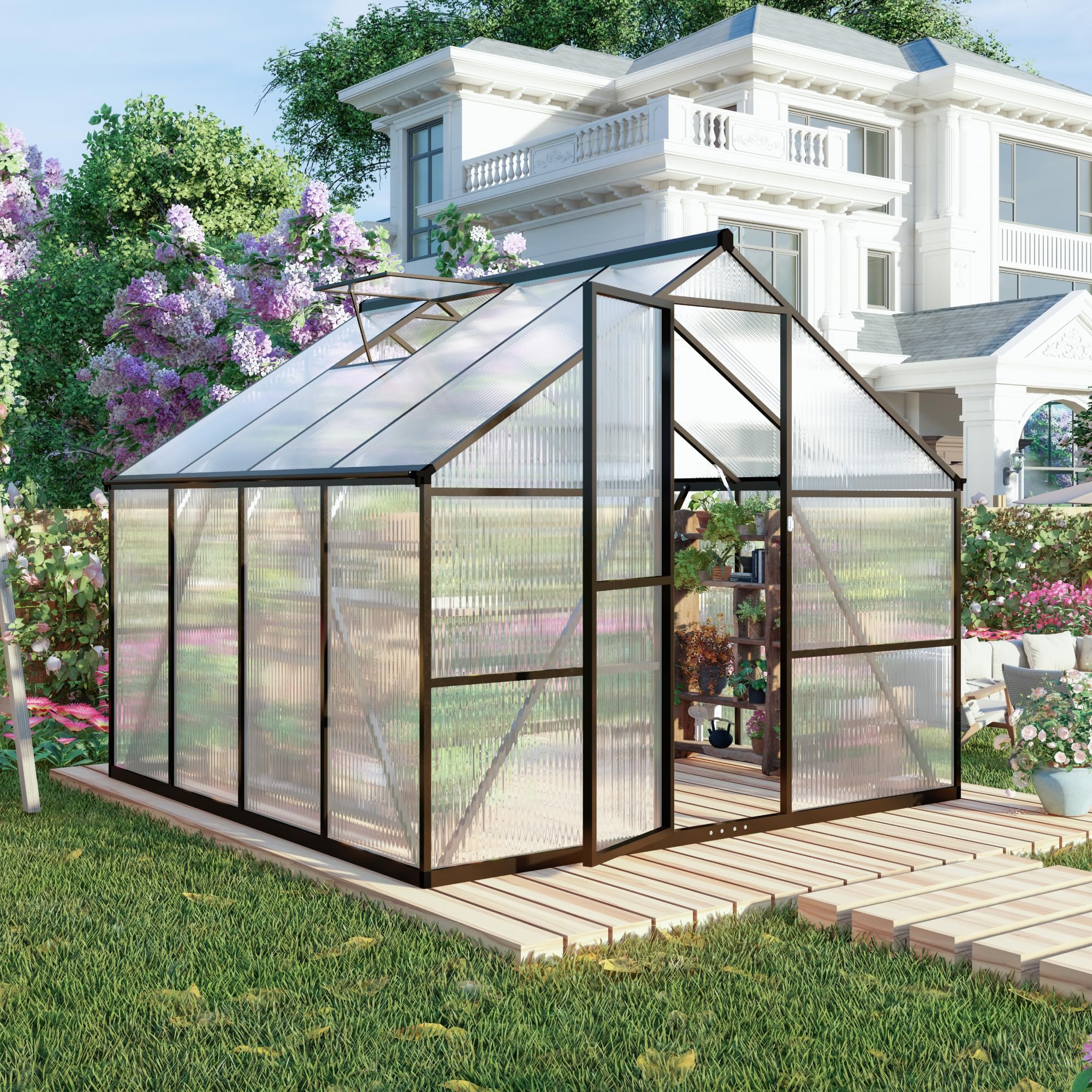
The double-wall frame that stays put when the weather turns nasty.
What makes this one different from the cheaper options is the reinforced aluminum frame. The structure uses upgraded connectors and ground-anchoring footings — the kind of hardware that keeps the whole thing from lifting off in a gust. Where many greenhouses rely on flimsy stakes, this one has footings that actually grab the ground. Customers report the greenhouse is sturdy with great stability, and one owner said it held up well through an Appalachian winter. One buyer put it through an Appalachian winter and confirmed the durability holds.
The gutter is integrated into the roof edge, and the double-wall polycarbonate panels are 0.157 inches (4 mm) thick — shatterproof and UV-protected. Double-wall construction gives you an insulating air gap, so the interior temperature stays more stable than with single-wall panels. The design also includes a lockable sliding door and an adjustable roof vent for airflow, which means you can fine-tune humidity without letting cold drafts hit your seedlings directly.
The catch is size honesty. Owners mention the interior dimensions are not a full 8′ x 8′ — the actual grow space is closer to 5.5′ x 5.5′ due to the frame thickness. If you are planning rows of raised beds, you will find the footprint tighter than expected. Assembly is rated as “pretty simple” by some, but the manual uses picture-only instructions that can be confusing; setting aside a full day with an extra pair of hands is the realistic expectation.
Smart upgrade pick: If you have ever watched a lightweight greenhouse tumble across your yard, the combination of reinforced aluminum, double-wall panels, and proper ground anchors here gives you a structure that stays planted through proper storms.
Reach for this if: You need a mid-size greenhouse that can handle wind and light snow without the frame twisting or the roof panels cracking.
Think twice if: You are counting on the exact 8′ x 8′ footprint for shelving — measure the interior before you plan, because the frame eats up several inches on each side.
3. Aoodor 6 x 8 Ft Walk-in Greenhouse with Gutter, Silver
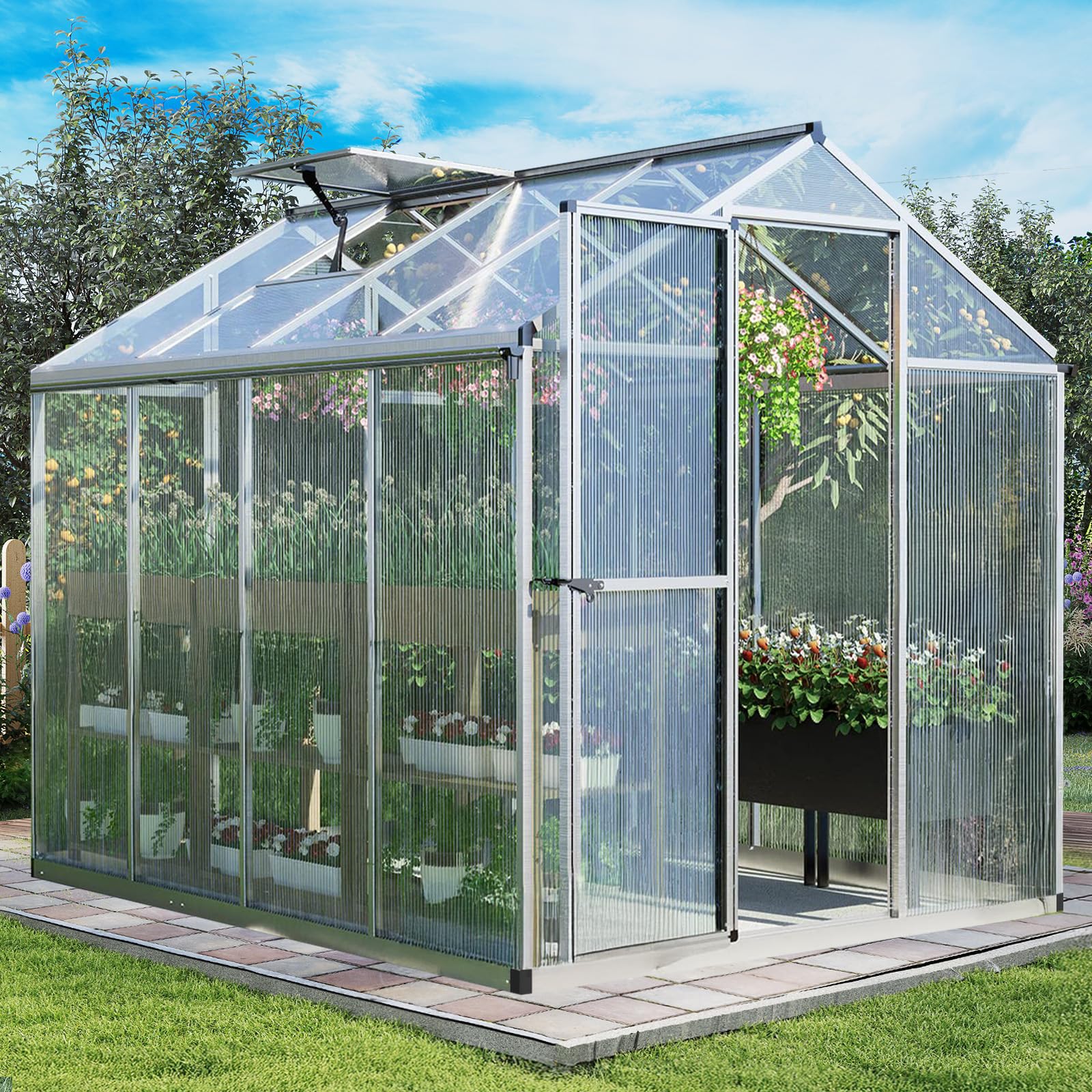
Gutters on both eaves and a skylight that actually vents hot air.
This is the only model in this roundup that puts gutters on both sides of the roof, not just the front edge. That matters because it directs all rainwater to the drainage outlets equally, preventing pooling on either side of the foundation. The heavy-duty aluminum frame is rust resistant, and the polycarbonate panels offer light transmission close to glass while insulating better. One owner summed it up: “It’s definitely value for the money & sturdy quality.”
The adjustable skylight vents hot air at the peak where it naturally rises, keeping your plants from overheating on a 90-degree afternoon. The polycarbonate panels are lightweight enough that one person handled the entire assembly — as one buyer put it: “I’m a girl and I successfully assembled this in 1 day.” The included instruction manual uses visualized, modular assembly steps to reduce guesswork.
The honesty trade-off is that durability opinions split sharply. The same panels that make assembly light also lead some owners to describe the build as “super flimsy” — the recurring warning is to keep everything tight during assembly, because loose connections let panels pop out. The 6′ x 8′ size also means a narrower door that does not fit large potted plants easily. Customer service is responsive (one missing panel was replaced free, fast), but you want to open the box immediately and check for damage before the return window closes.
Take the extra hour: Seal every panel joint during assembly with clear silicone caulk. Owners who skipped this step report panels working loose in wind. Those who did it report a stable, warm greenhouse through the season.
Best suited for: A gardener who wants proper gutter coverage on both sides and values insulation over absolute snow-load capacity.
Skip it for: Heavy snow zones — the thin panels and lightweight frame are best for mild to moderate climates.
Understanding the Specs
Single-Wall vs. Double-Wall Polycarbonate
Single-wall panels are one layer of clear plastic — they let in maximum light but offer almost no insulation. Double-wall panels sandwich an air gap between two layers, which reduces heat loss and makes the panel stiffer against snow pressure. Most cheap greenhouses use single-wall; Jiliusure uses double-wall. If your winter temperatures drop below 30°F, double-wall is the difference between seedlings freezing and surviving.
Rain Gutter Integration
Not all gutters are created equal. The best designs run along both roof eaves (not just the front) and have sealed drainage outlets you can attach a hose to. Cheaper models attach a plastic channel to a weak section of the roof frame — if the roof bends under snow, the gutter bends too, dumping the water right at your foundation. Check whether the gutter is part of the main aluminum frame (good) or clipped onto the polycarbonate edge (prone to snap).
Wind Resistance and Anchoring
Greenhouses are tall, flat-sided structures that catch wind like a sail. A reinforced aluminum frame with ground-anchoring footings is your minimum defense. Some kits include screw-in ground stakes; better ones have concrete-ready footings or bolt-down base rails. Owners who skip anchoring often report the structure lifting or flipping. If your property sees gusts above 40 mph, plan to add your own tie-downs even if the kit claims wind resistance.
Snow Load
Snow load is the weight of accumulated snow your roof panels must hold before flexing or breaking. Polycarbonate panels are rated by thickness — 4mm (0.157 inches) double-wall panels handle light snow; anything thinner will sag. The real killer is not the snow weight itself but the freeze-thaw cycle: snow melts, refreezes into ice, and the expanded ice cracks the panel edges. If you get regular snow, look for a roof pitch steep enough to shed snow naturally, and avoid flat-topped greenhouses.
FAQ
Will these gutters work with my existing greenhouse or are they only sold as part of a kit?
How do I attach a standard garden hose to the rain gutter outlet?
Can I leave the gutter attached in winter or will ice damage it?
What is the difference between a reinforced aluminum frame and a standard aluminum frame?
How much water can I realistically collect from a greenhouse gutter?
Why do some shoppers say their greenhouse panels cracking under light snow?
Is it worth spending twice as much for double-wall polycarbonate?
How long does it take to assemble one of these greenhouses?
Can I attach extra shelving or hang tools from the frame?
Final Thoughts: The Verdict
Across the board, the best greenhouse rain gutters winner is the Jiliusure 8′ x 8′ because its reinforced aluminum frame and double-wall polycarbonate panels handle real outdoor weather — wind, rain, and Appalachian winters — without the frame twisting or the roof cracking. If you want a system that collects rainwater from both sides of the roof with the best insulation for its price, grab the Aoodor 6′ x 8′. And for a budget entry point where you are willing to caulk every seam and anchor it yourself, the Outsunny 8′ x 6′ is the one to reach for.
How We Picked
We do not accept paid placement. Every pick is matched to a real buyer and a real use-case; we do not hands-on test units.
Sources & Methodology
Specifications: manufacturer listings and product documentation. Review insights: verified customer reviews, as of July 2026. Pricing: not shown on this page (it changes often); check the current price via the retailer link.
As an Amazon Associate, Lawn Gear Lab earns from qualifying purchases. This does not affect which products we feature.