
Specs are compiled from manufacturer listings and verified buyer reviews and can change over time — please confirm the key details on the product page before buying.
That orange dust covering your shoes and coating your mower blades isn’t just ugly — it’s a sign your lawn is under attack. Grass rust fungus weakens the blades, stealing their energy until the grass turns yellow and thin. The right spray or granular treatment stops rust fast, but picking the wrong active ingredient wastes time and money. This guide breaks down the top-rated fungicides that kill rust and prevent its return.
I’m Rikta — the founder and writer behind Lawn Gear Lab. This guide is built by comparing the manufacturers’ published specifications and the patterns across verified customer reviews, so you get each pick’s real strengths and trade-offs instead of marketing spin.
if you need a heavy-duty liquid concentrate for a large lawn or a simple granular feed-and-treat combo for quick maintenance, these top picks for the best grass rust fungicide treatments set the standard for what actually works on real turf.
Our Picks at a Glance


How To Choose The Best Grass Rust Fungicide
Choosing a fungicide means matching the active ingredient to your lawn size, your tolerance for mixing, and if you need a cure or prevention.
Active Ingredient: The Real Name on the Bottle
Brand names change, but the active ingredient is what does the killing. For rust, look for propiconazole, azoxystrobin, or myclobutanil on the label. All three are systemic fungicides, meaning the grass absorbs them and the rust dies from the inside out. Propiconazole is the most common and well-trusted; azoxystrobin is gentler on the grass; myclobutanil is a strong backup for rotation.
Liquid vs. Granular: How You Apply It
Liquid concentrates (like propiconazole) must be mixed with water and sprayed. They provide faster, more thorough coverage because the chemical coats every leaf. Granules (like Scotts DiseaseEx) are easier — you spread them with a standard lawn spreader and water them in. Granules take effect a bit slower but are far less messy and are perfect for prevention.
Curative vs. Preventative: Timing is Everything
If you already see orange rust, you need a curative product — one that kills existing fungus. Most liquids work curatively. If you’re simply afraid of rust returning in cool, wet weather, a preventative granular product can stop it before the first spore appears. Many of the best products do both, but you need to apply them at the right stage.
Rotation: The Secret to Long-Term Success
Rust fungi can become resistant to a single chemical after continuous use. The smart strategy is to use a propiconazole product one season, then switch to an azoxystrobin or myclobutanil product the next. This “rotate your chemistry” advice is echoed by nearly every serious lawn owner in the reviews.
Quick Comparison
| Model | Best For | Active Ingredient | Form | Coverage | Amazon |
|---|---|---|---|---|---|
| Quali-Pro Propiconazole 14.3★ Best Overall | Best Overall (Power & Value) | Propiconazole 14.3% | Liquid Concentrate | High (long-lasting bottle) | Amazon |
| Scotts DiseaseExBest Granular Cure | Best Granular Cure | Azoxystrobin | Granules | 5,000 sq. ft. | Amazon |
| Bonide Fung-onilMulti-Purpose Garden | Multi-Purpose Garden | Chlorothalonil | Liquid Concentrate | 16 oz makes 6–12 gal | Amazon |
| Select Source Propiconazole | Budget Liquid Value | Propiconazole 14.3% | Liquid Concentrate | 16 oz | Amazon |
| Bonide Infuse Granules | Easiest Systemic Granule | Propiconazole | Granules | 5,000 sq. ft. | Amazon |
| Atticus Gravex 20EW | Best for Rotation | Myclobutanil 19.7% | Liquid Concentrate | 16 oz | Amazon |
| Garden Safe Fungicide3 | Organic & 3-in-1 | Neem Oil Extract | RTU Liquid | 1 Gallon | Amazon |
| Atticus Gunner 14.3 MEC | Low Odor Liquid | Propiconazole 14.3% | Liquid Concentrate | 32 oz | Amazon |
| Scotts Turf Builder Healthy Plus | 2-in-1 Feed & Treat | Systemic Fungicide (broad) | Granules | 4,000 sq. ft. | Amazon |
In‑Depth Reviews
1. Quali-Pro Propiconazole 14.3 Fungicide
Our pick — over 4.5★ from 850+ verified ratings; the strongest balance of quality and price.
The 32-ounce bottle that lawn pros reach for before rust spots spread.
The Quali-Pro bottle delivers a high concentration of propiconazole (14.3%) in a microemulsion formula that mixes cleanly and coats every blade. It is locally systemic, meaning it moves through the leaf surface to kill rust from the inside — one owner saw his rust patches vanish and new grass visible within a week after treating a third of an acre. The 32-ounce size goes a long way; buyers report a single bottle lasting four to five years with annual applications.
What wins people over is the effectiveness — 48 buyers cite it, calling it their “go to in Spring and Fall.” The crowd favorite also notes that it works on brown patch and dollar spot in addition to rust, and that it outperforms branded alternatives.
The honest trade-off is that it requires a sprayer (a hose-end or pump sprayer), so there is a small learning curve, and you should avoid applying it in extreme heat.
What Owners Love
- Highly concentrated — a 32 oz bottle lasts multiple seasons even on a 1/3 acre lawn.
- Kills rust, brown patch, dollar spot, and powdery mildew in one application.
- Low odor formula that mixes easily and stays stable in the tank.
One Thing to Watch
- You need a sprayer; it’s not a simple “spread and water” granular.
Reach for it if: you want the most potent, budget-friendly liquid that holds up for years and works on a wide range of lawn fungi.
Look elsewhere if: you prefer a no-mix granular you can walk on with a spreader — the Scotts DiseaseEx below is your better match.
2. Scotts DiseaseEx Lawn Fungicide
The granular that starts healing rust within 24 hours with no sprayer needed.
Scotts DiseaseEx uses azoxystrobin, a broad-spectrum systemic active ingredient that the grass absorbs through the roots. It controls 26 listed diseases including stem and stripe rust, and the granular form means you simply walk the lawn with a spreader. Owners mention that the rust-colored patches turn green after just one week. It covers up to 5,000 square feet per 10-pound bag and remains rainproof within hours of watering in.
This is the single most popular product on the list, with tens of thousands of reviews. Effectiveness leads the conversation — 649 buyers praise it, and the consensus is that it works fast. The formulation is safe for all grass types when used as directed, and the protection lasts up to four weeks per application. Owners note that it is effective even on tough cases like “yellow spots and the rusty looking areas” that clear up almost immediately.
The recurring gripe is that brown patch reduction gets mixed feedback from 170 buyers. Some see a complete turnaround; others need a second application. If you have a heavy rust infestation, a liquid concentrate like the Quali-Pro may hit harder, but for everyday prevention and mild outbreaks, this granular is the easiest path.
Why It’s a Bestseller
- Starts working within 24 hours; controls disease up to 4 weeks.
- No mixing — just spread with a lawn spreader and water in.
- Safe for all grass types including Bermuda, fescue, and zoysia.
Heads Up
- Heavy rust cases may need a second application or a switch to a liquid concentrate.
Best for: homeowners who want a no-fuss, reliable granular that works fast on rust, brown patch, and powdery mildew.
Think twice if: you have a severe, widespread rust infection that hasn’t responded to granules — the liquid concentrates below are more powerful.
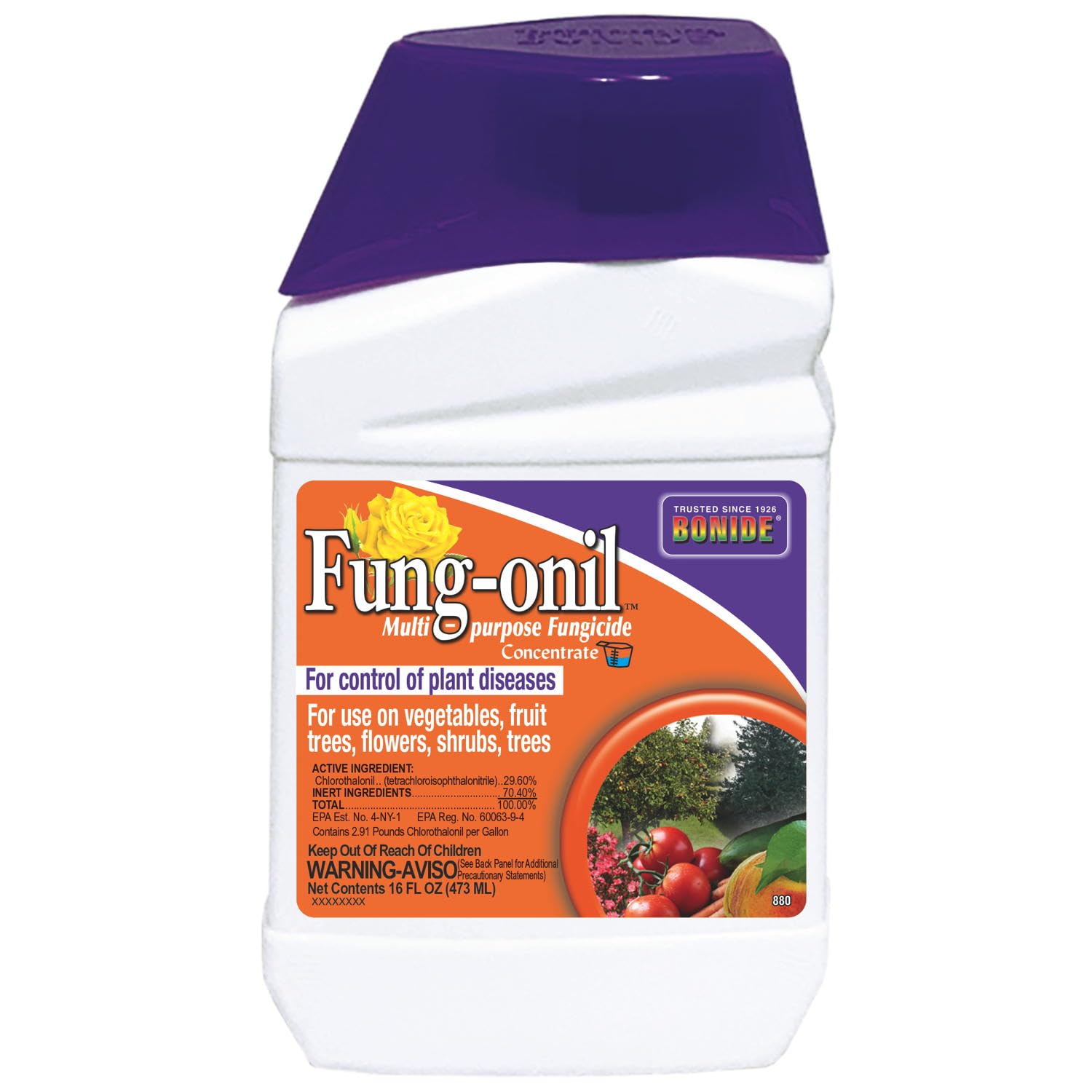
3. Bonide Fung-onil Multi-Purpose Fungicide
The 16-ounce concentrate that treats rust on grass, vegetables, and ornamentals with one mix.
Bonide Fung-onil uses chlorothalonil as its active ingredient, a broad-spectrum protectant that creates a barrier on the leaf surface to stop spores from germinating. It controls leaf spot, rust, blight, and mildew on beans, vegetables, fruits, shrubs, and trees. The 16-ounce bottle makes between 6 and 12 gallons of spray when mixed according to instructions. Customers note it “worked for my tomato plants that were already infected with black spot fungus,” confirming its reach beyond just turf.
Effectiveness is the top praise, with 64 buyers calling it out. The formula has a milky, soapy texture that clings to plants and is safe enough for weekly preventative use. The main complaint is that the instructions can be unclear — some owners would prefer a simpler mixing chart on the bottle.
Keep in mind this is a protectant, not a deep systemic. For rust that has already penetrated deep into the grass blade, a systemic like propiconazole will hit harder. But if you have a mixed garden with vegetables, flowers, and a small lawn area, this one product does it all.
The big draw: one bottle covers lawn rust, vegetable blight, and ornamental mildew — a true multi-purpose tool.
Reach for it if: you have a garden with veggies, flowers, and a lawn and want one spray to treat them all.
Look elsewhere if: you only need a lawn-specific systemic for stubborn turf rust — the Quali-Pro or Scotts DiseaseEx is more targeted.
4. Select Source Propiconazole 14.3 Select Fungicide

The same active ingredient as the pro brands, at a price that feels like a steal.
Select Source delivers a 14.3% propiconazole concentrate that matches the chemistry of the big-name fungicides. It provides excellent residual control with low use rates, meaning a little goes a long way on your lawn. Owners call it a “very inexpensive way to apply your propiconazole treatment” and note that a single bottle keeps a bermuda lawn healthy for multiple seasons.
Effectiveness is the top topic among 38 buyers, and the overall rating of 4.5 stars across 600+ ratings confirms this isn’t a cheap knockoff — it performs. The 16-ounce bottle is light, easy to handle, and mixes well with a hose-end sprayer. It is labeled for both turf and ornamental applications, so it works on rust, brown patch, and dollar spot.
The honest limitation is that it is a smaller bottle than the Quali-Pro (16 oz vs 32 oz), so if you have a large lawn, you’ll need to buy more sooner. But for smaller yards or spot treatments, the value is undeniable.
The trade-off: smaller bottle for a smaller yard — perfect for the homeowner who doesn’t want to store a quart of concentrate for five years.
Best for: budget-conscious owners with small to medium lawns who want professional-grade propiconazole without the premium price.
skip it if: you have a large property (over half an acre) — the 32-ounce Quali-Pro is more economical per treatment.
5. Bonide Infuse Lawn & Landscape Systemic Granules

Sprinkle, water, and let the grass do the rest — systemic protection without the sprayer.
Bonide Infuse delivers propiconazole in a ready-to-use granular form that covers 5,000 square feet per bag. Because it is systemic, the grass absorbs the fungicide through the roots and moves it to every blade, curing rust, brown patch, powdery mildew, and snow mold. Owners love that you simply “sprinkle it out, water it in, and it works” — no mixing chemicals, no sprayer cleanup.
Effectiveness gets 54 mentions from buyers, and the ease of use is a close second. Several owners note it saves them hundreds of dollars compared to replacing ornamentals. The granules work on all cool and warm season grasses including Bermuda, fescue, and St. Augustine. One owner summed it up: “I sure wasn’t going to buy the kind that you have to spray on each leaf.”
The main feedback from the data is that the duration of effect is mixed — some owners feel they need to reapply sooner than expected. For heavy rust outbreaks, a liquid concentrate may provide a stronger immediate knockdown, but for ongoing prevention and mild cases, this is the easiest systemic you’ll find.
Why It’s Simple
- No mixing, no sprayer — just sprinkle with your hand or spreader.
- Systemic action protects from the roots up for 2–3 months.
- Safe for all lawn types and ornamental plants.
One Caveat
- May need more frequent reapplication on severe rust compared to liquid concentrates.
Reach for it if: you want the convenience of granules with the systemic power of propiconazole — perfect for the “set and forget” lawn owner.
Look elsewhere if: your rust is out of control and needs a one-time strong cure — go with a liquid first, then use this for maintenance.
6. Atticus Gravex 20EW Fungicide
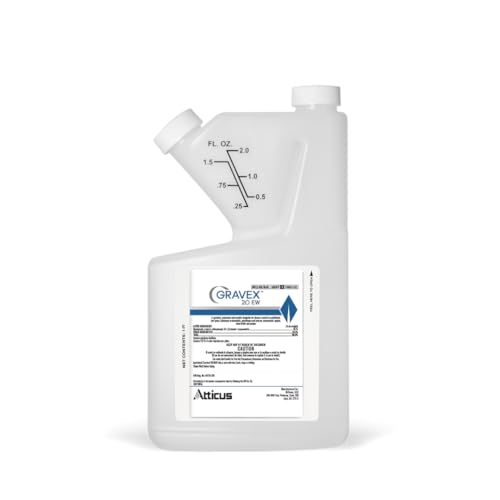
The myclobutanil specialist — ideal for rotating when propiconazole starts losing its edge.
Atticus Gravex 20EW contains 19.7% myclobutanil, the same active ingredient as the pro-grade Eagle 20EW. Myclobutanil is a different chemistry than propiconazole, making this the perfect rotation partner to prevent rust from building resistance. It works both curatively and preventatively, tackling 38 different plant fungi including rust, brown patch, red thread, and powdery mildew. The systemic mobility moves upward through the plant, protecting new growth for up to 28 days.
Owners rate the effectiveness highly (50 mentions), and the bottle has a handy measuring spout. One owner used it on 350+ zinnias with powdery mildew and saw improvement within 24 hours. On turf, it delivers visible results 4–6 weeks after application. It is approved for more than 100 ornamental plants and residential fruit trees, so it’s versatile beyond the lawn.
The most-reported downside is the odor — it has a strong, unpleasant smell during application. Also, it cannot be shipped to Alaska, D.C., New York, Puerto Rico, or Vermont, so check your state’s regulations.
Why Rotate With It
- Different active ingredient (myclobutanil) resists fungal resistance.
- Works quickly — improvement seen within 24 hours on some plants.
- Protects new growth for up to 28 days.
Heads Up
- Strong chemical odor during mixing and spraying.
Best for: serious lawn owners who rotate fungicides each season to keep rust from adapting — pair it with a propiconazole product like the Quali-Pro.
Think twice if: you are sensitive to chemical smells or live in a restricted state.
7. Garden Safe Brand Fungicide3
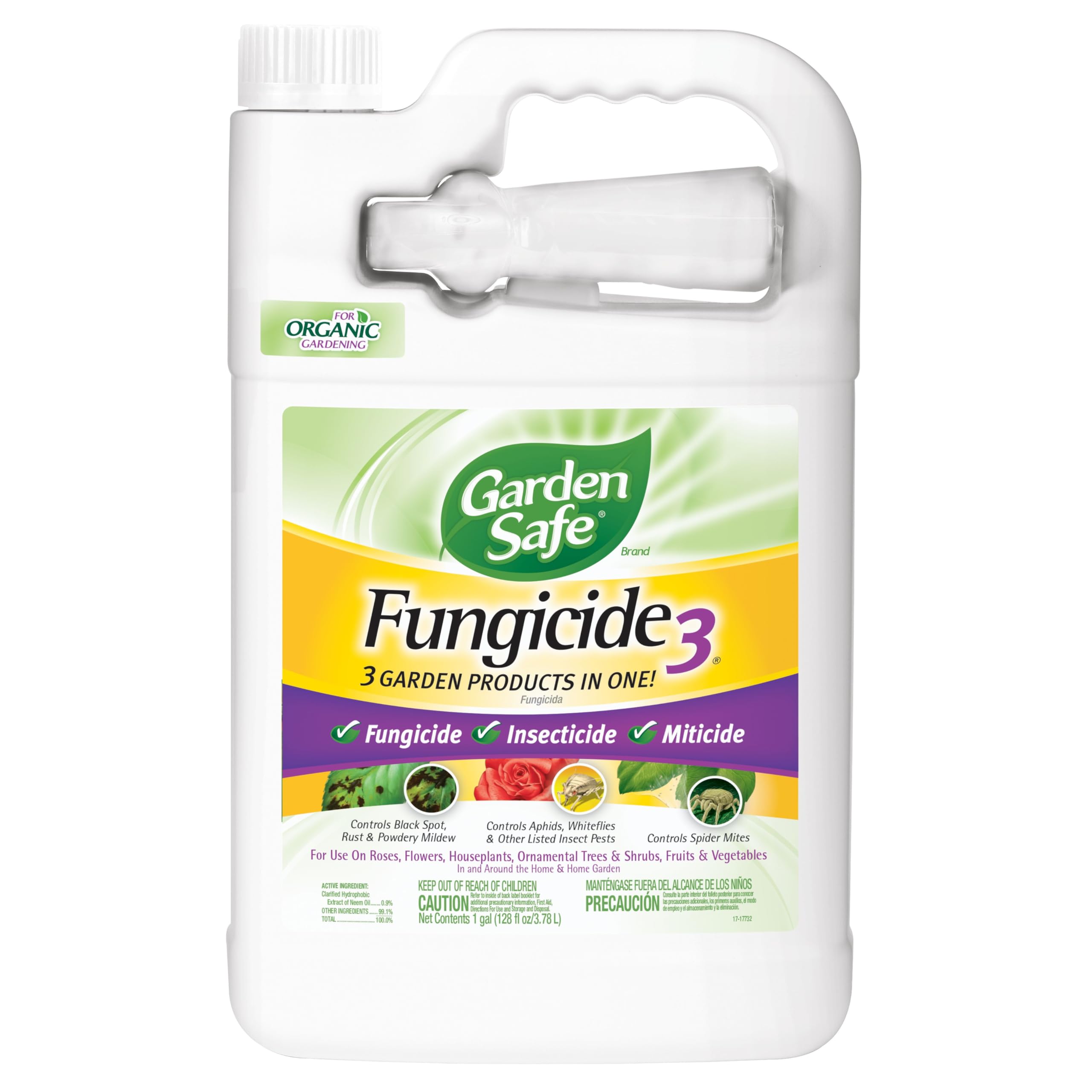
A ready-to-use spray that kills rust, aphids, and spider mites with one trigger pull.
Garden Safe Fungicide3 is a 3-in-1 product that works as a fungicide, insecticide, and miticide, all with clarified hydrophobic extract of neem oil as the active ingredient. For organic gardening, it prevents and controls rust, black spot, and powdery mildew while also tackling insect pests like aphids and whiteflies. It comes ready-to-use in a 1-gallon spray bottle, so there is zero mixing required.
Reviewers point out it works well on roses, orchids, vegetables, and ornamentals. One owner noted it made their hibiscus, roses, and tomatoes “greener foliage, more blossoms, increased yield.” Another confirmed it is “safe for veggies” and effective against black spot on roses. The 3-in-1 nature saves shelf space — one bottle replaces three separate products.
The main complaint is the sprayer design: several owners find the nozzle poorly designed with a short coil tube. Some users burn plants if they apply during daytime heat, so always spray in the evening or early morning. This is also a contact fungicide, not a deep systemic, so it works best as a preventative or early treatment rather than a cure for advanced rust.
The reality check: this is great for organic gardeners and veggie patches, but if your lawn is already orange with rust, you’ll want a systemic like propiconazole first.
Reach for it if: you prefer organic solutions and want one product that handles fungus, aphids, and mites on flowers and veggies.
Look elsewhere if: you need a powerful systemic cure for a lawn-wide rust outbreak.
8. Atticus Gunner 14.3 MEC Propiconazole Fungicide
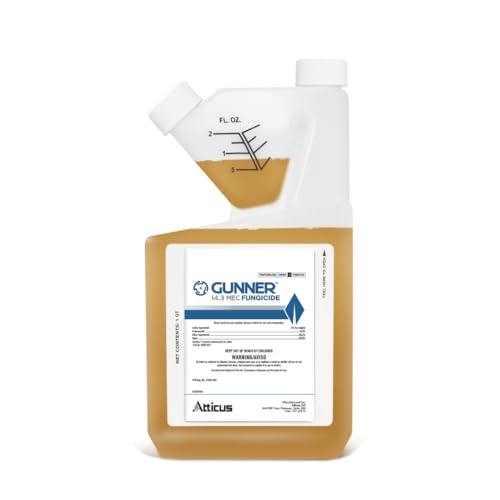
Mixes clean, stays stable, and leaves no smell — the discreet cure for sensitive noses.
Atticus Gunner 14.3 MEC uses the same propiconazole chemistry as the Quali-Pro but in a microemulsion concentrate (MEC) formulation. MEC particles are extremely small, which means the liquid mixes into water instantly and won’t separate or settle in the tank — you mix once and spray. It is fast-acting, entering the plant through root uptake and stem absorption, and lasts up to 28 days. Once dry, it resists washing away from rain or irrigation.
Effectiveness leads the conversation with 47 mentions, and owners also praise the resulting lawn growth. The low-odor design is a standout feature for those who dislike the strong chemical smell of some fungicides. This product works on over 20 plant fungi including rust, dollar spot, brown patch, and blights. Owners recommend alternating it with granular azoxystrobin for the best resistance management.
The mixing instructions are printed small on the label, so some owners find them hard to read. It also cannot be shipped to Alaska, D.C., Hawaii, Puerto Rico, or Vermont.
The edge: won’t stink up your garage or your lawn — one of the few potent fungicides that blends in without announcing itself.
Best for: owners who want the power of propiconazole without the typical chemical odor, especially if treating near patios or play areas.
pass on it if: you live in a restricted state or prefer granules over liquid mixing.
9. Scotts Turf Builder Healthy Plus Lawn Food

Feed your lawn and kill rust in one pass — no separate trips around the yard.
Scotts Turf Builder Healthy Plus is a 2-in-1 granular product that combines a broad-spectrum systemic fungicide with lawn food fertilizer. It controls 27 types of lawn diseases, including rust, brown patch, leaf spot, and red thread, while delivering nutrients that turn the grass deep green. The 13.7-pound bag covers 4,000 square feet. Owners on St. Augustine grass report the combination quickly cleared fungus and produced a thick, lush lawn within weeks.
Grass growth is the top praise at 29 mentions, with owners saying their lawns became “extremely green and healthy” and “looks amazing.” The two-in-one convenience saves a trip around the yard — you spread it with a standard Scotts spreader just like you would regular fertilizer. It works on all grass types and is designed for summer application when heat and drought stress make turf most vulnerable.
The main caution from the data is that overuse can burn the grass, so stick to the labeled rate of once or twice a year. Effectiveness is rated mixed by some, likely because the fertilizer component dilutes the fungicide concentration compared to a dedicated product. For heavy rust, a dedicated fungicide like the Scotts DiseaseEx above is stronger, but for maintenance and greening, this is a convenient combo.
Why Combine
- One bag feeds the lawn and fights 27 diseases including rust.
- Easy granular application with any spreader — no mixing.
- Produces visibly greener, thicker grass within weeks.
Watch Out For
- Can burn the grass if over-applied — follow the label rate closely.
Reach for it if: you want to simplify your lawn care routine and address rust while fertilizing in one step.
Look elsewhere if: you already have a severe rust outbreak — use a dedicated curative fungicide first, then switch to this for maintenance.
Understanding the Specs
Propiconazole 14.3%
The most common active ingredient for lawn rust control. It is a systemic triazole fungicide — meaning the grass absorbs it through the leaves and roots, and it moves throughout the plant to kill the rust from the inside. It controls brown patch, dollar spot, and powdery mildew in addition to rust. A 14.3% concentration is standard for residential use; higher concentrations exist for commercial turf.
Azoxystrobin
A strobilurin-class fungicide that is also systemic but works through a different biochemical pathway. Scotts DiseaseEx uses this. It is gentler on the grass during hot weather and provides preventive protection for up to 4 weeks. The main risk is that rust can develop resistance if you use azoxystrobin every season without rotating with a triazole (propiconazole or myclobutanil).
FAQ
Will propiconazole kill rust on my lawn?
Can I use a grass rust fungicide on my vegetable garden too?
How often should I apply a rust fungicide to my lawn?
Is granular or liquid fungicide better for grass rust?
Why does my lawn keep getting rust even after treatment?
Is neem oil effective against grass rust?
How long does it take for a fungicide to work on grass rust?
Can rust fungus on grass spread to my other plants?
What is the best time of year to apply rust fungicide?
Do I need to water in granular fungicide after spreading it?
Final Thoughts: The Verdict
For the majority of shoppers, the best grass rust fungicide winner is the Quali-Pro Propiconazole 14.3 because it packs professional-grade strength in a 32-ounce bottle that lasts for years and kills rust, brown patch, and dollar spot with one application. If you want a no-mix granular that starts working within 24 hours, grab the Scotts DiseaseEx. And for rotating your chemistry to prevent resistance, the Atticus Gravex 20EW with myclobutanil is the one to reach for.
How We Picked
We do not accept paid placement. Every pick is matched to a real buyer and a real use-case; we do not hands-on test units.
Sources & Methodology
Specifications: manufacturer listings and product documentation. Review insights: verified customer reviews, as of July 2026. Pricing: not shown on this page (it changes often); check the current price via the retailer link.
As an Amazon Associate, Lawn Gear Lab earns from qualifying purchases. This does not affect which products we feature.