
Specs are compiled from manufacturer listings and verified buyer reviews and can change over time — please confirm the key details on the product page before buying.
The wrong gravel turns your raised garden bed into a swamp. The right layer lets water drain freely, keeps soil from washing away, and gives roots the air they need to thrive instead of drowning. It isn’t just about looks — it is the foundation your plants sit on.
I’m Rikta — the founder and writer behind Lawn Gear Lab. This guide is built by comparing the manufacturers’ published specifications and the patterns across verified customer reviews, so you get each pick’s real strengths and trade-offs instead of marketing spin.
For this comparison, I focused on what genuinely matters under the soil line — drainage performance, particle size, weight, and how each material holds up after a season of watering. These are the top options for anyone searching for the best gravel for raised garden bed.
Our Picks at a Glance
How To Choose The Best Gravel For Raised Garden Bed
You want gravel that drains fast so your plant roots don’t rot, but you also need it light enough that your raised bed frame doesn’t buckle. The right size and type keep your soil loose and airy (aerated) so water flows through freely.
Particle Size and Drainage Speed
Gravel that is too fine — think sand or dust — packs tight and blocks water flow. A range around 3/8 inch to 1/2 inch leaves enough gap between each stone for water to pass freely. That means your vegetable or flower roots are never sitting in a puddle after heavy rain.
Weight and Structural Load
A cubic foot of gravel can weigh 100 pounds or more. Before you fill the bottom of a raised bed, consider whether the frame can take that extra load, especially if it sits on a deck or rooftop. Lighter options like lava rock give you drainage without the heavy freight.
Material Type and Plant Safety
Natural stone — volcanic rock, river pebbles, or crushed gravel — is the safe bet. It contains no dyes, chemicals, or fillers that could leach into your soil. Porous materials like lava rock also hold a bit of moisture and trace minerals, which can help plants during dry spells.
Quick Comparison
| Model | Best For | Weight | Particle Size | Material | Amazon |
|---|---|---|---|---|---|
| GreatBuddy 10-lb Pebbles★ Best Overall | Top dressing and small containers | 10 lb | 3/8 inch | Polished river stone | Amazon |
| TOPZEA 12lb Mix Lava RocksAlso Great | Soil aeration and moisture retention | 12 lb | 0.25 – 0.4 inch | Volcanic stone mix | Amazon |
| CJGQ 18LB Black Lava Rocks | Heavy drainage layer in larger beds | 18 lb | ~1/2 inch | Volcanic lava rock | Amazon |
| Quibbay 45 LB River Pebbles | Pathways and heavy ground cover | 45 lb | 0.3 – 0.6 inch | Natural river stone | Amazon |
| Mulctun 45LB White Rocks | Aesthetic top dressing and walkways | 45 lb | 1/4 – 3/4 inch | Polished natural stone | Amazon |
In‑Depth Reviews
1. GreatBuddy 10-lb Pebbles, 3/8″ Pea Gravel
Our pick — over 4.5★ from 200+ verified ratings; the strongest balance of quality and price.
Polished, waxed, and ready to sit pretty on top of your soil.
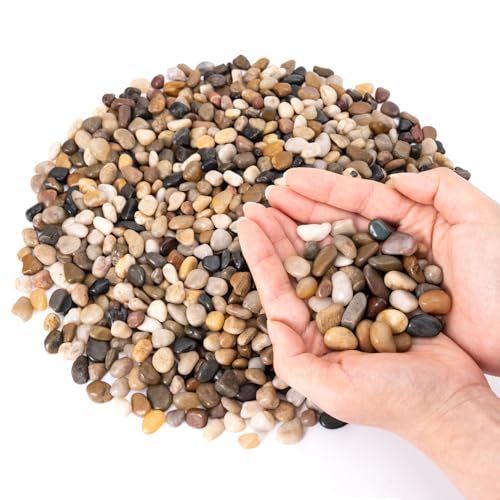
These 3/8-inch pebbles come highly polished with wax to bring out natural color and shine — no fillers, dyes, or oils. The smooth surface resists fading and makes them safe for plants and animals. While the TOPZEA mix works below the soil, this bag is the opposite: owners use it as a top dressing to hold moisture in and keep soil from splashing out during watering.
It weighs in at 4.57 kilograms (roughly 10 pounds) and the irregular shapes give a natural look in vases, fish tanks, succulents, and terrariums. Buyers are wowed by the shine — “Rockiest rocks ever!! Shiny too!!” is how one owner put it. The catch is the bag occasionally arrives with a small tear, though the stones themselves stay functional.
For a raised garden bed, stick to these as a surface layer rather than a deep drainage base. The polished finish means less friction between stones, so water flows through the top but the weight keeps the soil in place.
The Appeal
- Polished and waxed for a long-lasting shine without dyes
- Versatile across plants, aquariums, and terrariums
- Safe size that is too big to be a fish choking hazard
The Bag Note
- Some deliveries arrive with a slightly torn bag, though contents are fine
- Weight can be slightly under 5 lbs per some reports
Pick this for: a decorative top layer that keeps soil in pots and beds looking tidy.
Think twice if: you need heavy drainage material for the bottom of a large raised bed — these are better as a finish.
2. TOPZEA 12lb Mix Lava Rocks Pebbles
The mix that gives roots both drainage and a slow sip of moisture.
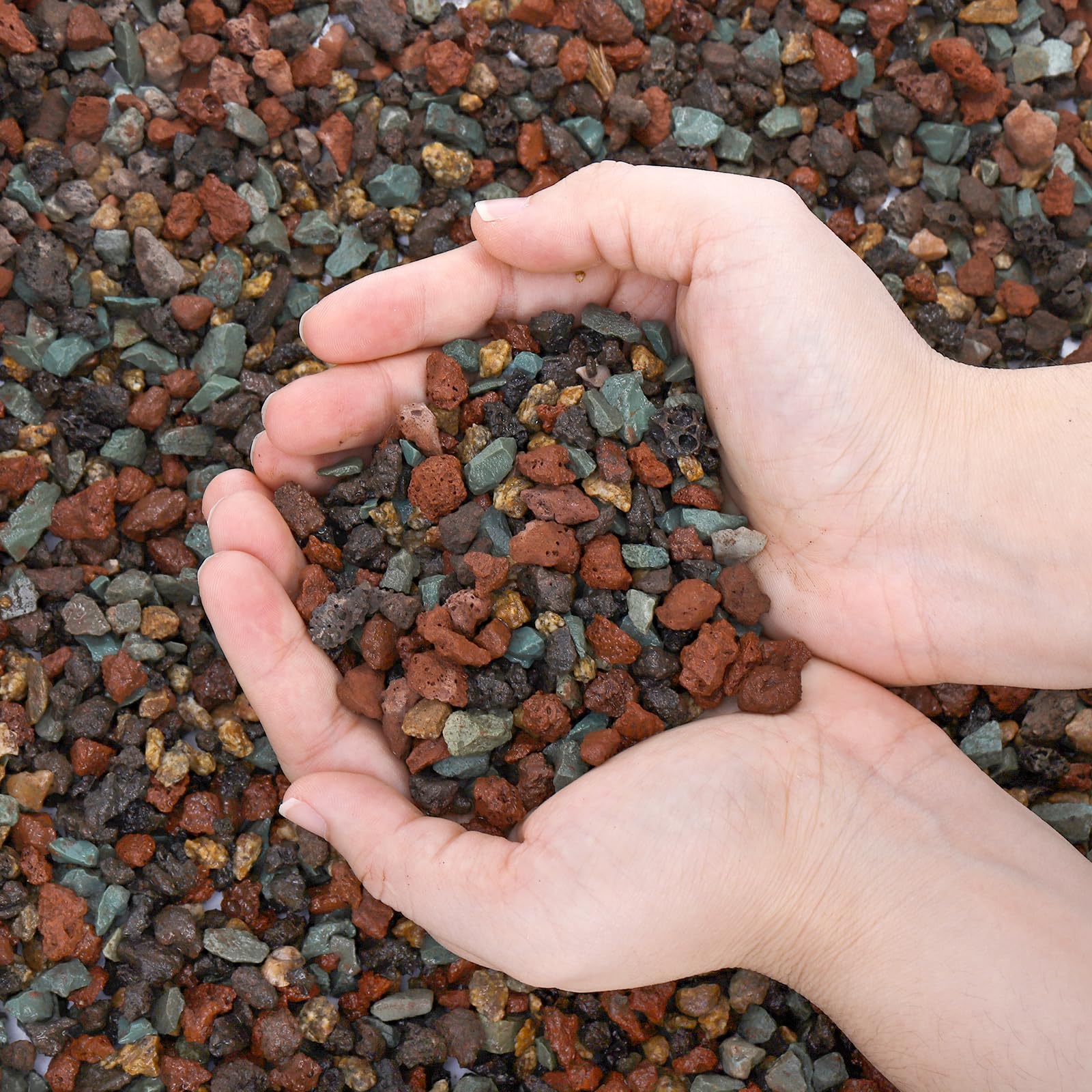
This bag pulls together four different stone types — black volcanic rock, red volcanic rock, green zeolite, and maifan stone — each doing a different job under your soil. The porous volcanic rocks let water and air run through, solving drainage issues and preventing rot on house plants, while the zeolite and maifan stone help balance pH and absorb moisture. It is not just a drainage layer — it is a soil conditioner you mix right in.
At 12 pounds with particles between a quarter and four-tenths of an inch, this is a fine gritty size that works for orchids, succulents, cacti, and bonsai trees. The crowd agrees: people find them good quality and consistent in size, and they work well for drainage in semi-hydroponic systems. The trade-off? Some arrive dusty and need a quick rinse before use — but owners say the color pops after a wash.
For a raised garden bed, this mix is lighter than river rock and brings more function than plain pebbles. It handles the bottom drainage job while also feeding the soil chemistry over time.
What Wins People Over
- Four-stone blend actively balances pH and moisture
- Porous structure prevents rot while keeping slight moisture
- Generous amount for the price in a commercial-grade bag
The Rinse Required
- Dust on arrival needs a thorough wash before use
- Some owners wish it included pumice for a complete DIY pon
Reach for it if: you want a functional soil additive that aerates, drains, and feeds minerals in one bag.
Look elsewhere if: you need a single uniform decorative stone — this mix varies in color and shape by design.
3. CJGQ 18LB Black Lava Rocks

18 pounds of porous volcanic rock that holds water and releases it slowly.
This is the heavy lifter for a raised bed drainage layer. Each piece averages about half an inch, and the porous nature of lava rock means it absorbs excess water and gradually releases it back — a built-in buffer against both overwatering and dry spells. It is 100% natural with no artificial fillers, dyes, or chemicals, and it naturally contains trace minerals that promote plant strength.
Owners find the quality and versatility excellent, especially for succulents and lithops. The 18-pound bag (8.26 kilograms) gives you significantly more material than the TOPZEA or GreatBuddy options — a solid base for a medium-sized bed. Some do find the rocks smaller than expected and dust is a common complaint; a rinse before use solves the grit. For a raised bed, that half-inch size is actually ideal for drainage without letting soil filter through.
It also makes a convincing top dressing: the uniform black color gives planters a clean, modern look while keeping the soil moist underneath.
The Strengths
- Porous structure absorbs and slowly releases water
- Naturally contains trace minerals for plant nutrition
- Thick plastic bag for storage and 18 lb weight is good value
The Caveats
- Dusty on arrival — needs thorough cleaning first
- Some pieces clock in under the half-inch expectation
Go for it if: you need a substantial drainage base that also holds moisture for dry periods.
Skip if: a dusty bag is a dealbreaker — budget time to rinse before using.
4. Quibbay 45 LB Natural River Rocks

45 pounds of untreated river stone for serious ground coverage.
This bag is about coverage area, not soil chemistry. The grey river pebbles run between 0.3 and 0.6 inches — larger than the lava rock options — and are completely natural with no coating, fillers, or dyes. They weigh in at a full 45 pounds (720 ounces), making this a bulk play for covering walkways, paving, or creating a wide drainage base under a large raised bed.
Owners praise the quality and appearance, calling them “beautiful stones” that are “exactly what I was looking for” as accent pieces. The unpolished matte surface gives a natural look that blends into landscaping. The honest note: the size runs smaller than some expect, and the bag is heavy to move. Several buyers feel the price per bag is steep for what is essentially raw stone.
In a raised garden bed, these work best as a thick bottom layer for a very large structure where you need mass to hold the frame stable.
What Stands Out
- 45 lbs of natural, untreated stone for large coverage
- Smooth elliptical shapes work well for walkways and paving
- Non-toxic and safe around pets and children
The Fit Note
- Some find the rocks smaller than expected for the price
- Bag weight is genuinely heavy — plan how to move it
Best for: a big landscaping project where you need smooth, natural stone in bulk.
Not ideal if: you want a porous rock that holds water — these are dense and drain straight through.
5. Mulctun 45LB Natural White Rocks

White stone with a matte chalky finish that brightens any garden space.
If the visual look of your raised bed matters as much as the function, this is the bag to consider. The Mulctun rocks are natural white stones that are polished for smooth edges so they won’t cut roots or hands. They range from a quarter inch to three-quarters of an inch, offering the widest size spread in this list. The matte “chalky” finish gives a low-gloss look that stays subtle in bright sun.
Owners value the versatility, using them for herb garden planters, garden paths, and even fish tanks. The honest feedback: the size is a sticking point. Some love the small pebble look; others find them “extremely small” and the bag smaller than a 45-pound visual expectation. A few owners noted staining, which the natural dust on the surface causes — a wash solves it.
For a raised garden bed, these work best as a top layer that reflects light back up to the plants and keeps the soil surface cool. Their white color also makes pests and dropped leaves easy to spot.
The Draw
- Smooth polished edges are safe for handling and roots
- Matte chalky finish creates an elegant, low-gloss look
- Good for herb garden planters and decorative pathways
The Catch
- Size can be polarizing — some find them too small
- Surface dust may cause temporary staining until washed
Pick it for: brightening up a dull garden bed with clean white stone that stays cool.
Look past it if: you need consistent, chunky gravel for a deep drainage layer — the size variance works against uniformity.
Understanding the Specs
Particle Size (Inches)
This is the single most practical spec on the bag. Stones around 3/8 to 1/2 inch leave enough air space for water to drain but are too big to slip through the fabric liner of a raised bed. Smaller than 1/4 inch and the gaps close up, acting more like sand than gravel. Bigger than 3/4 inch and the roots have too much empty air below them.
Weight for Coverage
Gravel is heavy — a 10-pound bag covers roughly half a square foot at 2 inches deep, while a 45-pound bag handles a few square feet. The right bag size depends on your bed dimensions. Lighter porous rocks like lava give you more volume per pound than dense river pebbles, so check the weight, not just the bag size.
FAQ
How deep should my gravel layer be in a raised garden bed?
Can I use pea gravel instead of lava rock for drainage?
Does gravel at the bottom of a raised bed actually help drainage?
Will lava rock change the pH of my soil?
How much gravel do I need for a 4×8 foot raised bed?
Should I put landscape fabric between the soil and gravel?
Is white gravel safe for vegetable beds?
Why does my lava rock arrive so dusty?
Can I use aquarium gravel in a raised garden bed?
How long does gravel last in a raised bed before it needs replacing?
Final Thoughts: The Verdict
For most gardeners, the gravel for raised garden bed that balances drainage and soil health is the TOPZEA 12lb Mix Lava Rocks, because its four-stone blend aerates, drains, and feeds minerals without needing a second product. If a polished top dressing is your main need, grab the GreatBuddy 10-lb Pebbles. And for building a deep drainage base in a large bed with minimal cost per pound, the CJGQ 18LB Black Lava Rocks delivers the most material for your money.
How We Picked
We do not accept paid placement. Every pick is matched to a real buyer and a real use-case; we do not hands-on test units.
Sources & Methodology
Specifications: manufacturer listings and product documentation. Review insights: verified customer reviews, as of July 2026. Pricing: not shown on this page (it changes often); check the current price via the retailer link.
As an Amazon Associate, Lawn Gear Lab earns from qualifying purchases. This does not affect which products we feature.