
Specs are compiled from manufacturer listings and verified buyer reviews and can change over time — please confirm the key details on the product page before buying.
Winter doesn’t mean the end of your growing season. But keeping a greenhouse warm enough for tender seedlings or overwintering plants without racking up a massive electric bill is the real challenge. The right heated greenhouse kit makes that balancing act possible—delivering steady, reliable warmth exactly where your plants need it.
I’m Rikta — the founder and writer behind Lawn Gear Lab. This guide is built by comparing the manufacturers’ published specifications and the patterns across verified customer reviews, so you get each pick’s real strengths and trade-offs instead of marketing spin.
Whether you’re protecting a few prized bonsai or starting seeds for a spring garden, choosing the wrong heater can mean stunted growth or worse. So we’ve done the heavy lifting to find the best heated greenhouse kit for every type of grower and budget.
Our Picks at a Glance

How To Choose The Best Heated Greenhouse Kit
Picking a greenhouse heater isn’t just about grabbing the highest wattage. You need to match the heater to your space, your climate, and the type of plants you’re growing. Here are the key factors that separate a smart buy from a costly mistake.
Wattage and Coverage Area
Wattage determines how much heat a unit can produce. A good rule of thumb is about 10 watts per square foot of greenhouse space, but insulation, outside temperatures, and wind exposure all affect the actual need. A 1500W heater covers roughly 120 to 215 square feet, depending on the model and conditions.
Heating Technology: PTC vs. Radiant vs. Forced Air
PTC (Positive Temperature Coefficient) heaters are the current favorite for greenhouses. They self-regulate to prevent overheating and are energy-efficient. Radiant heaters warm objects directly rather than the air, which can be good for keeping soil warm but less effective for air temperature. Forced-air heaters circulate warm air quickly but can be noisy and create dry spots.
Smart Controls and Thermostats
A built-in thermostat with a clear temperature range (like 40°F to 108°F) lets you set and forget. More advanced units offer VPD (Vapor Pressure Deficit) control, which adjusts heat and humidity for optimal plant transpiration. Smart app connectivity adds convenience but isn’t essential for most growers.
Quick Comparison
| Model | Best For | Heat Output | Heating Method | Max Temp | Amazon |
|---|---|---|---|---|---|
| AC Infinity THERMOFORGE T3★ Best Overall | Precision VPD control | — | PTC Heating | 140°F | Amazon |
| Greenhouse Heater 1500W (Red)Best Value | Medium greenhouses up to 215 sq ft | 1500W | Convection | 108°F | Amazon |
| Spider Farmer 530WTop Performer | Energy-efficient small tents | 530W | PTC Heating | 140°F | Amazon |
| GRPWWT 1500W Thermostat Kit | Reliable all-winter use | 1500W | Forced Air | 120°F | Amazon |
| DR. INFRARED HEATER DR218-3000W | Large greenhouses (600 sq ft) | 3000W | Radiant | — | Amazon |
| VIVOSUN AeroFlux 700W | App-controlled precision | 700W | PTC Heating | 86°F (30°C) | Amazon |
| AC Infinity THERMOFORGE T7 | Powerful compact heating | 1000W | PTC Heating | 100°F | Amazon |
| Bio Green PAL 2.0/US | Small greenhouses (120 sq ft) | 5118 BTU | Forced Air | 185°F | Amazon |
| Bio Green PHX 2.8/US | Large, durable heating | 2800W / 9553 BTU | Forced Air | — | Amazon |
In‑Depth Reviews
1. AC Infinity THERMOFORGE T3, Environmental Grow Tent Heater with VPD Temperature Controller
Our pick — over 4★ from 650+ verified ratings; the strongest balance of quality and price.
The smart grower’s first choice for precision climate control inside a tent or greenhouse.
The T3 gives you precise climate control, not just basic heating. It uses PTC (Positive Temperature Coefficient — a self-regulating heating element that adjusts its power as the temperature changes) with 10 distinct levels, controlled by PWM (Pulse Width Modulation — a method that fine-tunes heat output by rapidly switching power on and off instead of just cycling the heater on and off). This means you get steady warmth, not temperature swings. The onboard controller and a corded sensor probe let you set triggers for both temperature and VPD (Vapor Pressure Deficit — a measure of how easily the air pulls moisture from plant leaves, which affects growth).
What wins people over is its quiet, stable performance and high build quality — it’s an AC Infinity product, after all. The flexible hose and additional 4-foot attachment let you duct heat directly into a specific area. It integrates with UIS controllers for true 0-100% output control and advanced automations. The compact footprint saves space, and the clear display is easy to read.
The crowd favorite earns its spot with a strong 4.4-star score from hundreds of owners. The recurring trade-off is heat output: in a 4×4 tent with ambient temperatures at 61°F, some find it can’t reach a target of 70°F on the high setting. The temperature control is also a mixed bag — while many praise its consistency, a minority report it won’t push above 66°F. It’s best for well-insulated spaces or smaller tents where precision matters more than raw power.
Why growers choose it
- 10-level PTC heating with PWM for incredibly steady temps
- Flexible duct hose directs heat exactly where needed
- Integrates with AC Infinity’s UIS controller ecosystem for app and AI control
The trade-offs to know
- Struggles to raise temp significantly in larger or poorly insulated 4×4 tents
- Auto mode function has been reported to fail on some units after a few weeks
Best for: Growers who want tight VPD control and smart integration over raw heating power. It excels in small, well-insulated tents.
Think twice if: Your greenhouse is drafty or you need to raise ambient temps by more than 10°F — you may need a higher-wattage unit like the T7 or a 1500W model.
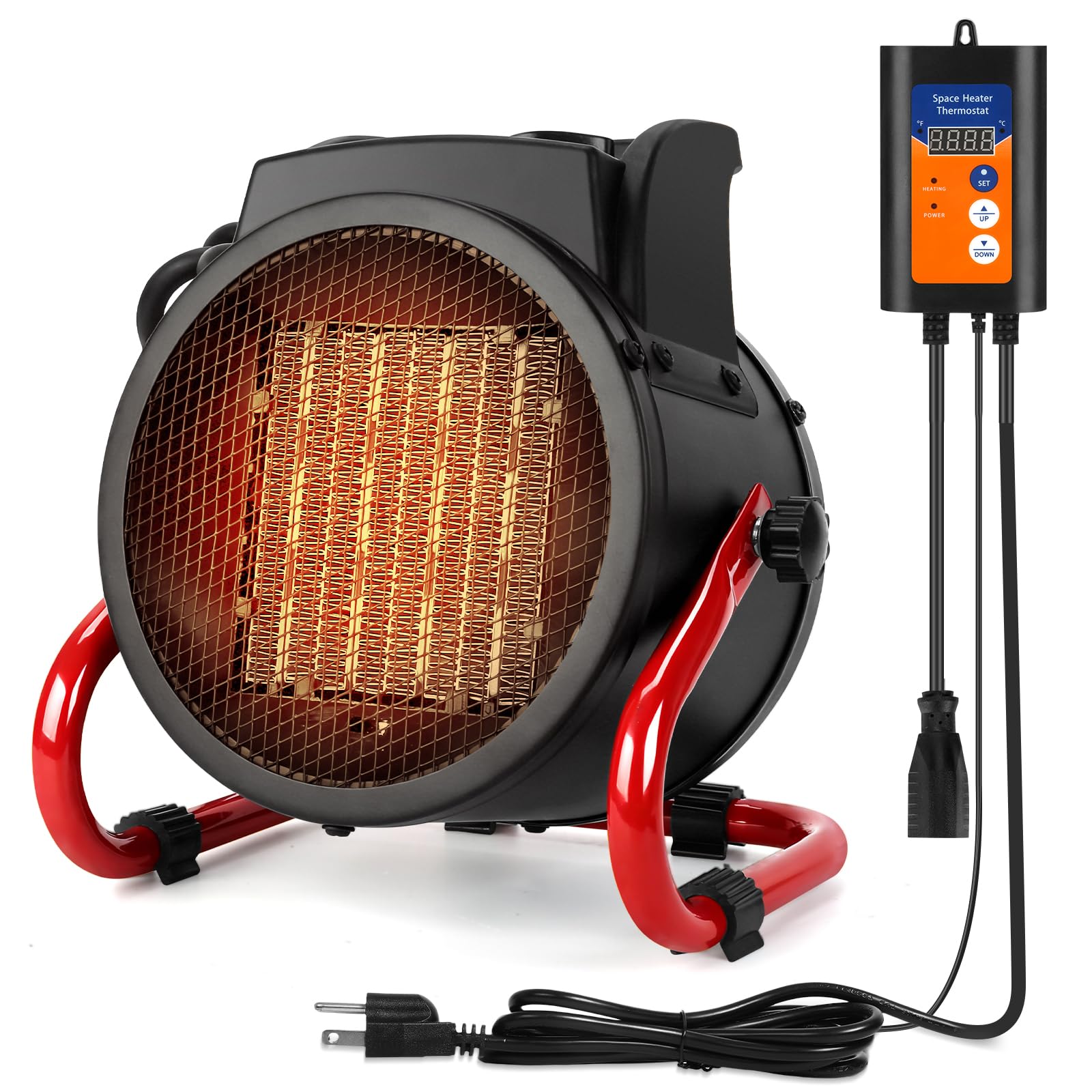
2. Greenhouse Heater with Digital Thermostat 1500W Grow Tent Heater (Red)
Serious 1500W power for medium greenhouses at a budget-friendly price point.
This red heater from Rui Cheng packs a punch with 1500 watts of convection heating, covering up to 215 square feet. That makes it a direct and far more powerful alternative to the 530W Spider Farmer, which covers a much smaller area. It comes with a high-precision digital thermostat that is adjustable from 40°F to 108°F, so you can dial in the exact climate for seedling germination or wintering flowers.
Buyers report it works well in small to medium greenhouses. One reviewer noted it kept an 8’x5′ greenhouse warm during cold April nights. Another noted it held a steady 66°F inside when outside temps dropped to the 50s for two weeks straight. The IPX4 water resistance rating (protected from splashing water from any direction) handles damp greenhouse conditions, and the overheat protection adds safety.
The body is made from high-strength stainless steel with an anti-corrosion treatment, so it stands up to humidity. An ergonomic carry handle makes it easy to move between a greenhouse, patio, or workshop. The main caveat is that some users find the included thermostat is more suited to heat mats than the heater itself, raising a reliability concern over time. But for the price, it’s a solid workhorse.
Who it suits: If you have a medium greenhouse (up to 215 sq ft) and need powerful, reliable heat without smart features, this is your pick. It runs on standard 120V outlets but delivers 1500W, which is near the limit of a typical 15-amp circuit.
Great for: Overwintering plants in a mid-sized greenhouse where 1500W of convection heat is needed to fight off frost.
Heads up: The thermostat is a separate unit designed for heat mats; some owners advise confirming its accuracy before relying on it for critical temperatures.
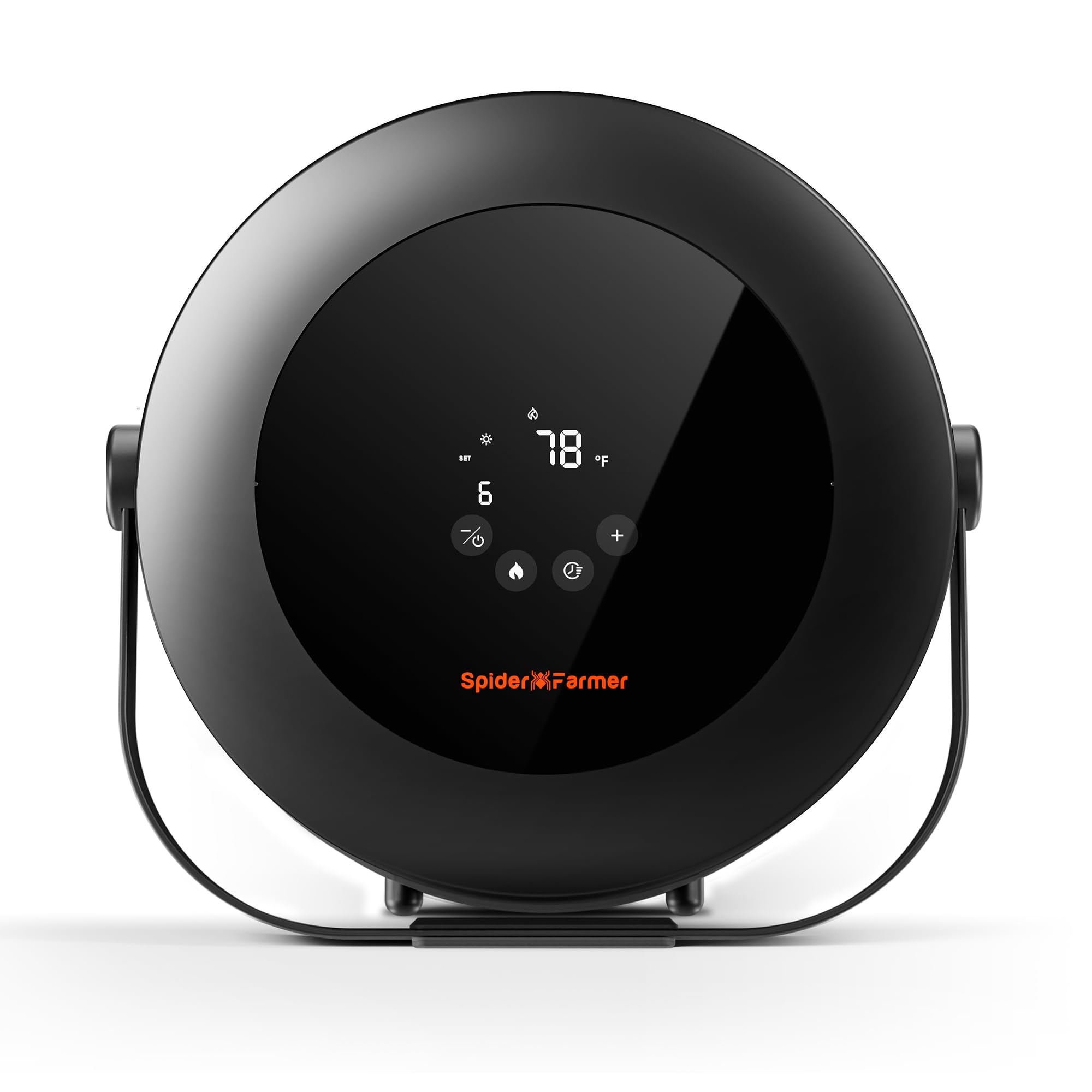
3. Spider Farmer Grow Tent Heater, 530W Portable Heater with Smart Temperature Control
An energy-sipping PTC heater with a gentle touch that’s perfect for small grow tents.
At just 530 watts, this Spider Farmer heater uses advanced PTC heating and PWM control to provide efficient, adjustable warmth without blasting plants with harsh, dry air. It is significantly more energy-efficient than the 1500W models, making it a great choice for smaller setups where you don’t need massive heat output. It features a “temperature zone regulation” design with a built-in dead zone of +/-3°F, which stops the heater from clicking on and off constantly, providing more stable conditions for your plants.
The smart controller allows you to set four different modes: Normal Open, Temperature All-day, Temperature Daytime, and Temperature Night Mode. This is a huge plus for maintaining a consistent environment. It also has a 24-hour countdown timer. The longest adjustable hose in its class at 160cm (about 63 inches) lets you direct heat exactly where you want it, avoiding direct blasts on foliage. The panel auto-shuts off after 30 seconds to prevent light pollution during dark cycles.
Owners have found it reliable and durable over long-term use, with one noting it performed flawlessly for 5 months. It is, however, best suited for small grow tents. The instructions lack detail on temperature ranges, and it’s not powerful enough for larger greenhouses in very cold climates. As buyers put it, you need to “crank up the heat level to warm up the space in a matter of minutes” if it’s very cold.
What makes it gentle
- Very gentle, non-harsh heat output — great for sensitive seedlings
- 4 programmable temperature modes for day/night cycles
- Longest hose (160cm) for flexible placement
Where it falls short
- 530W is too weak for large or uninsulated greenhouses in winter
- Instructions are lacking in detail on how to set up temperature ranges
Perfect for: A small grow tent (2×2 to 4×4) where you want gentle, precise heat that won’t dry out your plants or spike your electric bill.
Not for: Drafty greenhouses or any space above 80 sq ft in freezing climates; you’ll want the 1500W option for that.
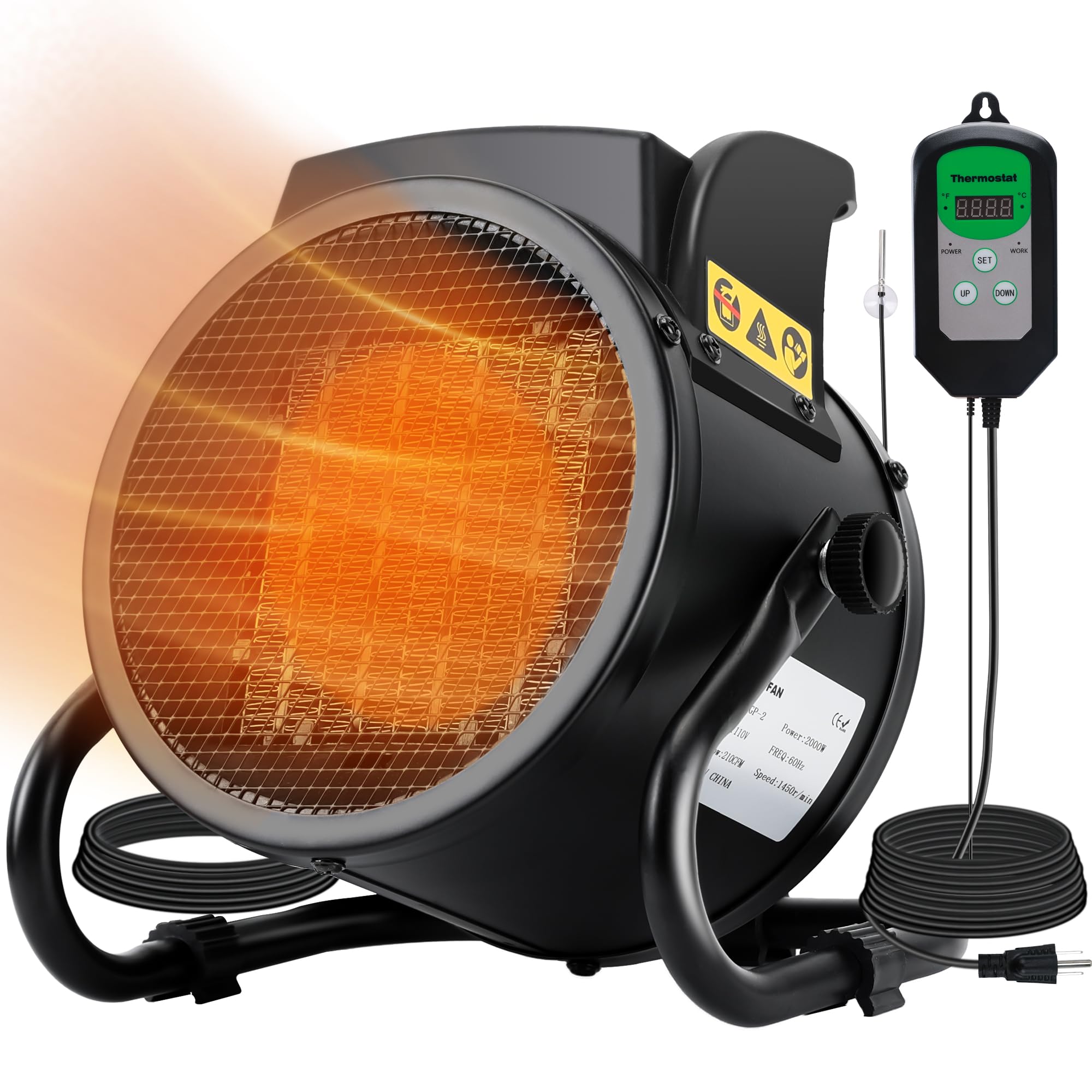
4. Greenhouse Heater with Thermostat, GRPWWT 1500W Auto Temperature Control Kit
Fast 3-second heating and a reliable thermostat that owners trust through harsh winters.
This kit from GRPWWT brings together a 1500W forced-air heater and a separate digital thermostat. The heater itself reaches full warmth in just 3 seconds and effectively covers up to 120 square feet. The independent 15A-rated thermostat is the brains of the operation, constantly monitoring the temperature and switching the heater on or off to maintain your target climate. This is a reliable, no-fuss system that many find perfect for small greenhouses.
What stands out in the owner feedback is its reliability. The thing everyone raves about is how it performs in tough winter conditions. One owner credits it with saving bonsai trees during sub-20°F days, running continuously despite snow and moisture. It maintained a steady 50°F inside a greenhouse holding 7-8 trees when outside temps were 20-30°F. The digital display and auto temp control make it very easy for beginners to set up and forget.
The design uses fireproof materials and features independent overheat protection for safety. It’s also energy efficient, using the automatic on/off thermostat to reduce wasted electricity. The one notable omission is a tip-over safety shutoff, which some safety-conscious owners might miss. It’s a great, dependable choice for a small to medium greenhouse where you need quick heat and reliable thermostatic control.
The bottom line: If you want a system that is simple to use, heats up instantly, and has a proven track record of surviving harsh winters, this is an excellent choice. The lack of tip-over protection is a minor flaw in an otherwise solid package.
Reach for this if: You have a small greenhouse (up to 120 sq ft) and need a dependable, fast-heating solution you can set and forget.
Look elsewhere if: Tip-over safety is a primary concern for you, or if you need to cover more than 120 square feet.
5. DR. INFRARED HEATER DR218-3000W Greenhouse Garage Workshop Infrared Heater

Massive 3000W radiant heat that blankets a large greenhouse in gentle, plant-friendly warmth.
This is not a dainty little tent heater. The DR. INFRARED HEATER DR218 is a heavy-duty 3000W unit that can heat up to 600 square feet. It uses radiant heating, which warms objects (like plants and soil) directly rather than just blowing hot air around. The result is a more even and comfortable heat that plants love. It requires a 240V, 20A outlet, which is a step up from standard household circuits, so plan your installation accordingly.
Owners confirm it is well-built and effective for its intended purpose. It has an IPX4 water-resistant structure, which is crucial for damp greenhouse environments. The green tower form factor is compact but powerful. In a 6×8 greenhouse during a 22°F freeze, it maintained temperatures between 42-48°F. The infrared heat output is “blows warm air, not hot,” as one buyer describes it, which is ideal for preventing leaf burn or stress on plants.
However, the electrical requirements are a deal-breaker for many. It uses a 240V, 20A outlet, which is not common in all greenhouses. There are also reports (from a small number of owners) of thermostat wiring failures leading to the unit overheating, so consistent monitoring is advised for the first few uses. The crowd favorite earns a 4.2-star average from nearly 900 owners, proving its value despite these caveats.
The big advantages
- 3000W of radiant heat covers up to 600 sq ft
- Gentle, non-drying heat that is safe for plant foliage
- IPX4 water-resistant housing for damp environments
What to watch for
- Requires a dedicated 240V, 20A outlet — not a simple plug-and-play for most
- A few reports of thermostat wiring issues; initial monitoring is wise
Best for: Growers with large greenhouses (up to 600 sq ft) who have access to 240V power and want gentle, even radiant heat.
skip it if: You don’t have a 240V outlet installed. This is a significant installation requirement that rules out most hobby greenhouses on standard 120V circuits.
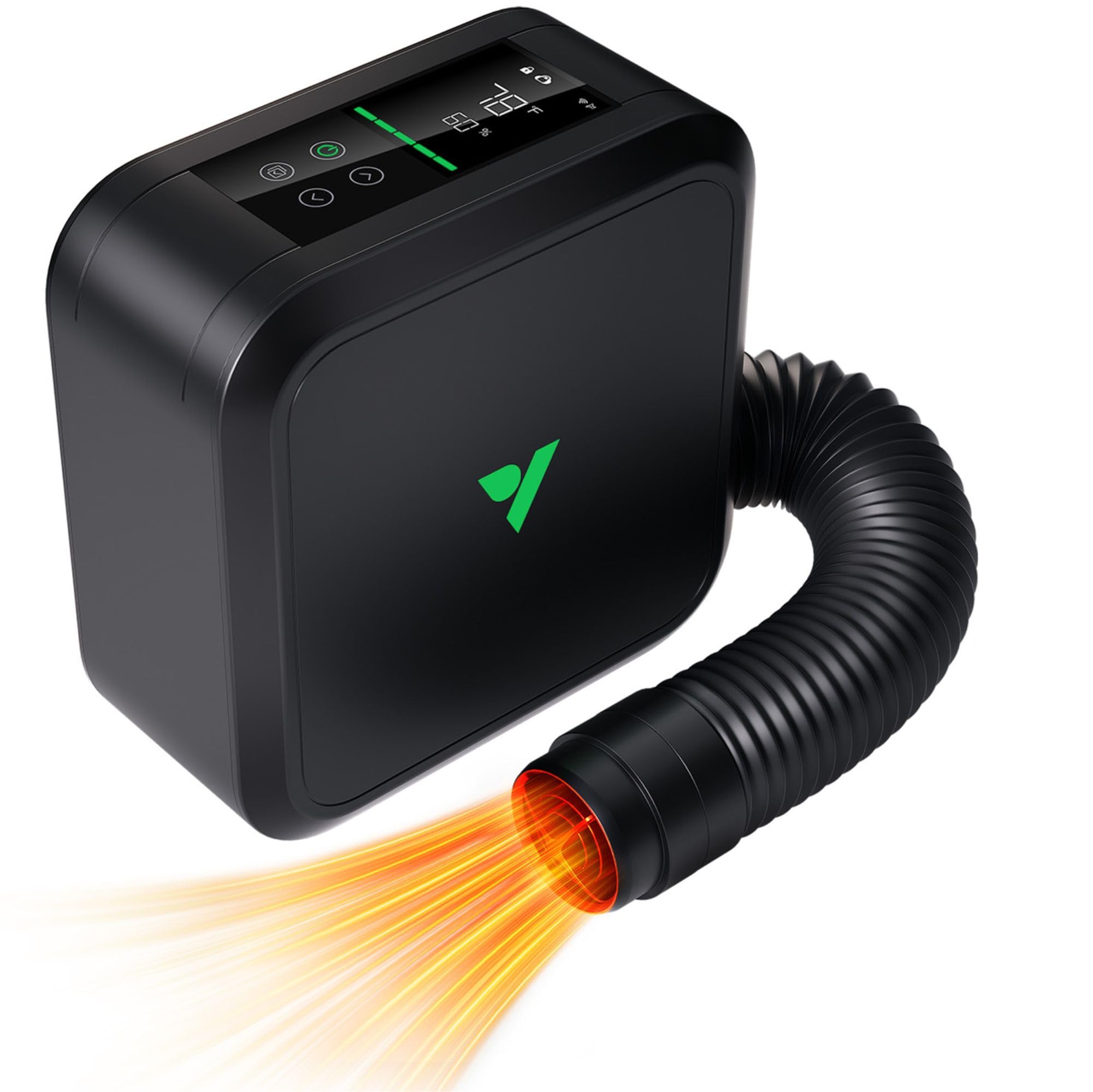
6. VIVOSUN AeroFlux 700W PTC Grow Tent Heater with Thermostat, APP & VPD
The app-controlled, VPD-savvy heater that brings your grow tent into the smart home era.
The VIVOSUN AeroFlux is a 700W PTC heater that claims to be “40% stronger than standard models” — a claim supported by its effective performance in 4×4 tents. It uses an integrated fan to circulate air, and a high-precision sensor to track both temperature and VPD in real time. You can program Day/Night Mode using the “Recipe” feature in the app, making it a set-and-forget solution for maintaining an ideal growing climate.
What wins people over is its precise temperature control and how it integrates into an automated grow system. It maintains stable temperatures within a very tight range; in a 4×4 tent in a 63°F basement, owners mention it holds a steady 67.9-69.1°F. The compact size (9.45″ x 4.72″ x 9.45″) saves valuable floor space. Safety features include V0 flame-retardant materials, tip-over protection, and overheat shutoff.
The unit is notably quiet for its power, though some consider it noisy compared to other options. The value for money and WiFi connectivity receive mixed feedback — some find the app essential, others think it’s overpriced. For a 4×4 tent, it’s a top-tier choice; for larger spaces, its 700W output may not be enough. One owner put it well: “Didn’t change my electric bill at all,” highlighting its efficiency.
The trade-off: You are paying a premium for the VIVOSUN name and smart features. The heater works great, but budget-minded buyers may find similar PTC performance for less without the app connectivity.
Ideal for: Tech-savvy growers who want app-based automation, VPD tracking, and a compact, safe heater for a 4×4 tent.
Not ideal for: Those on a budget, or anyone who needs to heat a space larger than a 4×4 tent.
7. AC Infinity THERMOFORGE T7, Environmental Heater 1000W
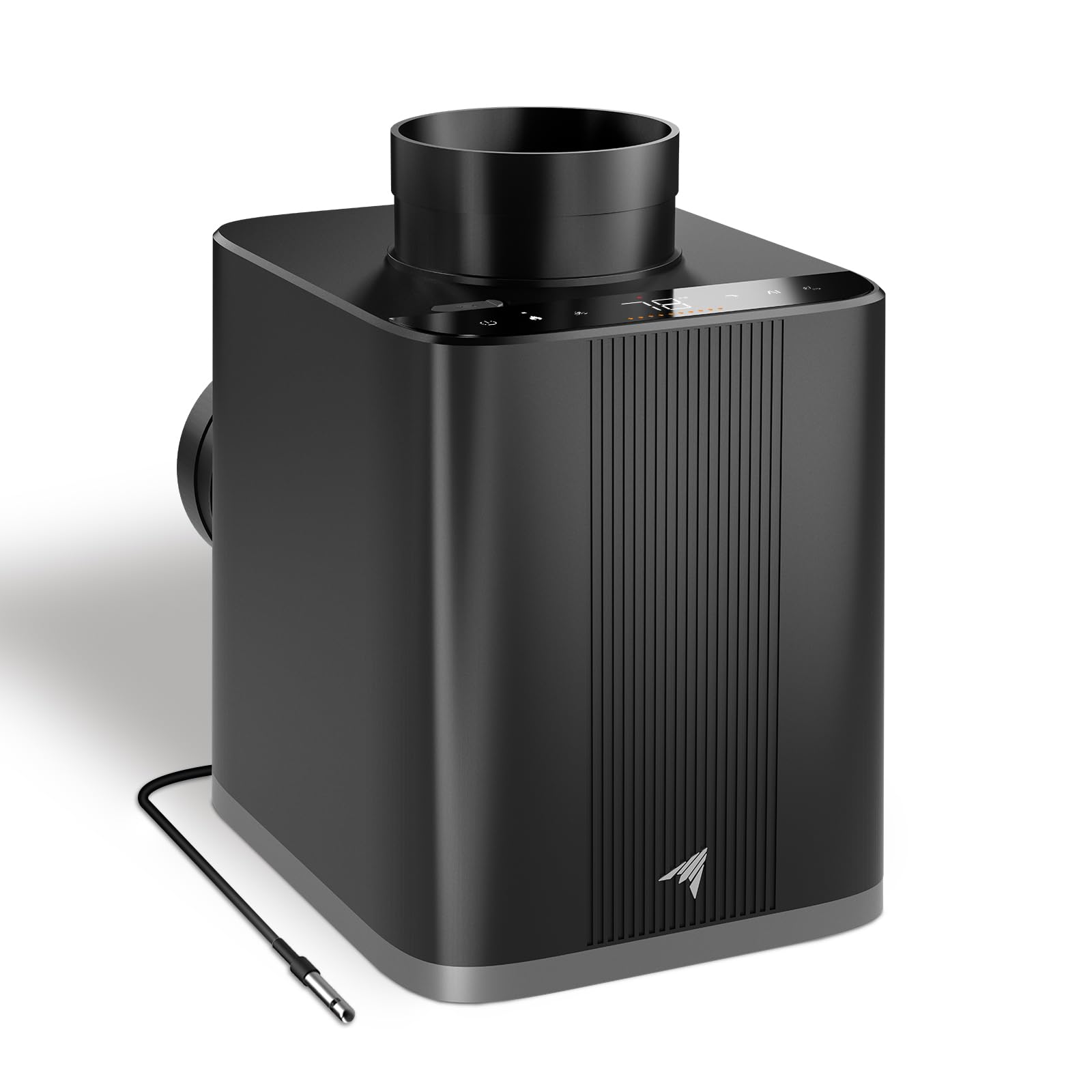
Don’t let the size fool you — this 1000W heater packs serious punch for a 4×4 tent.
The AC Infinity T7 is the bigger brother to the T3, stepping up the heat output to a substantial 1000W while keeping a compact footprint (8.66″ x 7″ x 10″). It uses the same advanced PTC technology with 10 heat levels and PWM control. Its defining feature is the dual-port design, which allows you to duct heated air directly into your grow space or create a closed-loop setup for optimal efficiency. It also has a fresh air intake function.
Owners are impressed by its power-to-size ratio. “Don’t be fooled by its size. This item can easily heat a 4×4 tent no problem,” one buyer reports. The “Adaptive AI” is a sophisticated PWM controller that reduces temperature swings by adjusting heat output, avoiding the on-off cycling that stresses plants. It connects with UIS controllers for WiFi app connectivity, open up data tracking, alerts, and advanced automations.
Note that the T7 draws 5 amps at 1000W, while the Spider Farmer heater draws 3 amps. Make sure your circuit can handle it alongside other equipment. The max temperature setting is 100°F, so it’s not for extreme frost protection but for maintaining a stable growing climate. It’s an excellent choice for a serious hobbyist who wants the best climate control for a 4×4 tent.
Why it’s a powerhouse
- 1000W output in a very compact, space-saving chassis
- Dual duct ports for closed-loop or directed heating
- True PWM control for stable, non-cycling temperatures
The small print
- Draws 5 amps — be mindful of circuit capacity
- Max temp of 100°F is adequate for growing but not for extreme frost rescue
Best suited for: Dedicated indoor growers who need a powerful, compact heater with intelligent control for a 4×4 or 5×5 tent.
Not for: Budget builders or those with limited electrical capacity on a single circuit.
8. Bio Green PAL 2.0/US Palma BioGreen Basic Electric Fan Heater
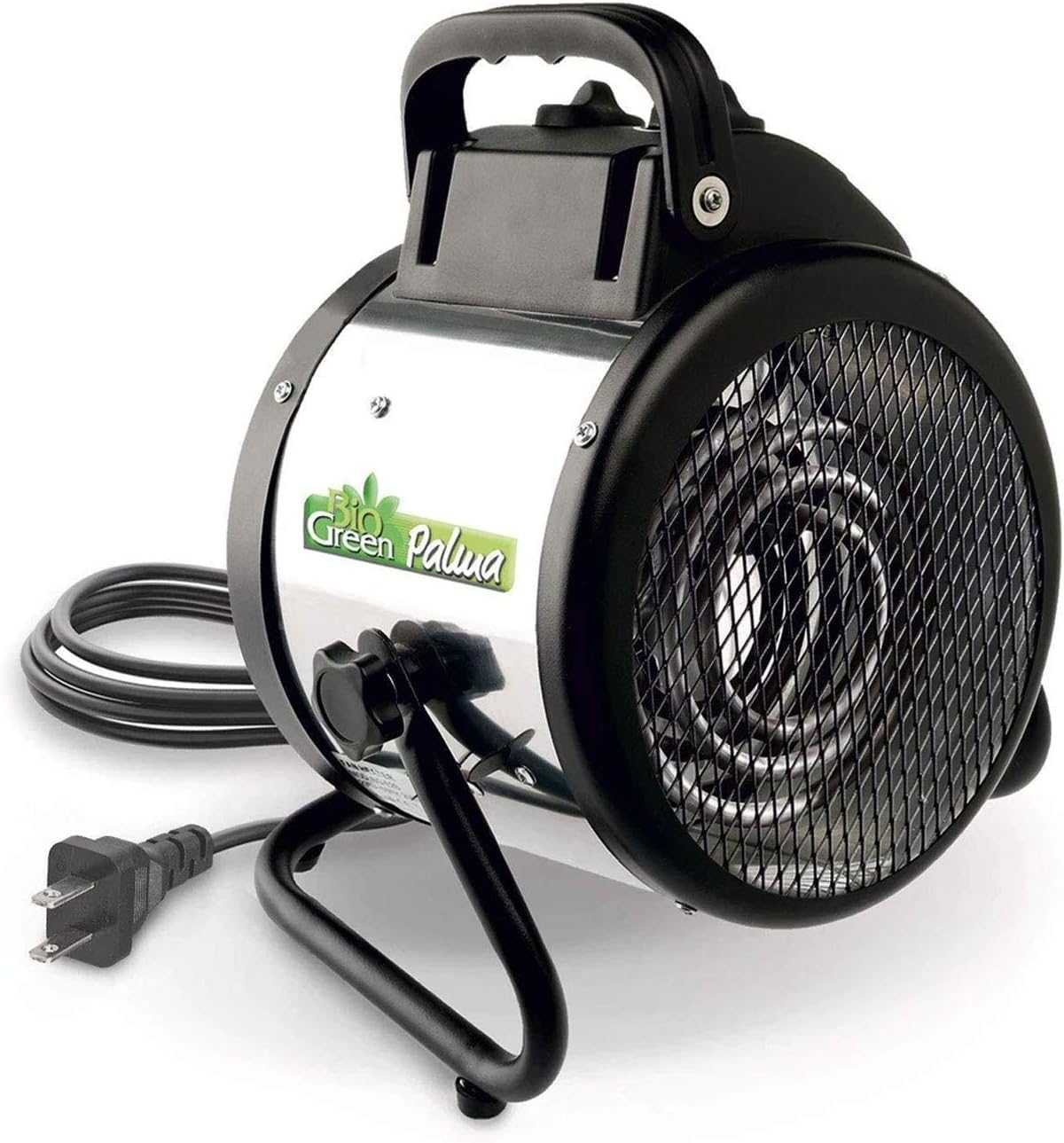
A proven, reliable fan heater that European greenhouse owners have trusted for years.
The Bio Green PAL 2.0 is a fan heater built specifically for greenhouses. It offers two separately adjustable heating elements: a low setting of 2560 BTU (about 750W) and a high setting of 5120 BTU (about 1500W), giving you flexibility. It also has an air circulation mode that turns the heater into a fan, preventing heat buildup around plants in summer. The steplessly adjustable thermostat covers a massive range from 32°F to 185°F.
It is designed for rooms up to 120 square feet and can circulate up to 4317 cubic feet of air per hour. The splash-proof IPX4 rating means it handles the damp, humid environment of a greenhouse without issue. It’s a reliable workhorse; one owner reports their first unit lasted over 5 years, using it for orchids and vanilla plants. The manual thermostat is simple and effective.
The most-discussed issue is reliability. While some units last for years, others fail quickly — one buyer mentioned it “stopped working after 5 minutes” in a new greenhouse. The heat output is also described by some as weak, requiring a supplemental heater in very cold weather. The built-in thermostat is known to be uncalibrated, so using an external digital thermostat is a common recommendation among owners. It’s a good, basic heater if you get a well-made one, but quality control is a concern.
The honest take: This is a legacy product that performs well when it works, but mixed reliability means you should buy from a seller with a good return policy. The fan mode is a unique bonus for summer use.
Good for: Small to medium greenhouses where the fan/circulation mode is as important as the heating, and where you’re comfortable pairing it with an external thermostat.
Be cautious if: You need guaranteed reliability from the start; the quality control is inconsistent, and early failure is a known risk.
9. Bio Green PHX 2.8/US Phoenix Greenhouse Heater – 220-240V – 9553 BTU

A premium, high-voltage beast built to keep large greenhouses warm through the coldest winters.
The Bio Green PHX 2.8 is not a plug-and-play residential unit. It requires a 220-240V power supply and delivers a massive 2800 watts (9553 BTU) of forced-air heat. It has two separately adjustable heating elements (1000W or 1800W), giving you control over power consumption. It’s designed for rooms up to 215 square feet and can circulate an impressive 16,000 cubic feet of air per hour, eliminating cold spots. The stainless steel housing is rugged and can be floor-mounted or hung.
Owners praise its build quality and performance. One buyer with 27 years of experience called it the “best quality among many greenhouse heaters” they’ve used. It kept a 10’x20′ greenhouse at a steady 65°F when outside temps plummeted to 12°F. The thermostat is accurate and the fan is quiet. The ability to run the fan without the heater is a bonus for summer ventilation.
The catch is the electrical requirement. It needs a dedicated 220-240V outlet, which is not standard in most US residential greenhouses. Installation can be costly. The analog controls (no digital settings) mean you’re adjusting by trial and error, which some find frustrating. Reliability is mixed — some units fail after a couple of years. It’s a premium, high-performance tool for a specific type of grower with the right electrical setup.
The pro-level features
- 2800W of power can cover up to 215 sq ft and handle extreme cold
- Circulates 16,000 cu ft of air per hour for even temperatures
- Rugged stainless steel housing that can be hung or floor-mounted
The barriers to entry
- Requires a 220-240V electrical supply — major installation cost
- Analog thermostat with no digital readout; adjustment is by feel
- Mixed long-term reliability; some units fail after a couple of years
Best for: Serious greenhouse owners with a dedicated 220-240V circuit who need a powerful, durable heater for a space up to 215 sq ft.
Not for: Anyone without existing 240V wiring or who prefers simple, digital controls. The cost of installation may exceed the heater’s price.
Understanding the Specs
PTC Heating vs. Standard Coils
PTC (Positive Temperature Coefficient) heating elements are ceramic and self-regulate. As they get hotter, their electrical resistance increases, which naturally limits the temperature without needing complex electronics. This makes PTC heaters safer, more energy-efficient, and longer-lasting than standard wire coil heaters. The trade-off is that they can be more expensive upfront.
IPX4 Water Resistance
IPX4 is an industry standard rating that means the heater is protected against water splashing from any direction. This is critical for a greenhouse heater because condensation, mist from irrigation, and rain can all create a damp environment. A heater without this rating could short out or become a safety hazard in humid conditions.
FAQ
What size heater do I need for my greenhouse?
Can I use a regular space heater in my greenhouse?
What is VPD and do I need it?
Is PTC heating better than standard coil heating for plants?
How much does it cost to run a greenhouse heater?
What safety features should I look for?
Do I need a 240V outlet for a greenhouse heater?
Can I connect a greenhouse heater to a smart home system?
Final Thoughts: The Verdict
If you want one dependable pick, the best heated greenhouse kit winner is the AC Infinity THERMOFORGE T3 because it offers the best balance of precision, build quality, and safety for a small to medium grow space. If you want a simple, powerful, and affordable 1500W solution for a larger greenhouse, grab the Greenhouse Heater with Digital Thermostat (Red). And for a tech-forward, app-controlled option perfect for a 4×4 tent, the VIVOSUN AeroFlux 700W is the one to reach for.
How We Picked
We do not accept paid placement. Every pick is matched to a real buyer and a real use-case; we do not hands-on test units.
Sources & Methodology
Specifications: manufacturer listings and product documentation. Review insights: verified customer reviews, as of July 2026. Pricing: not shown on this page (it changes often); check the current price via the retailer link.
As an Amazon Associate, Lawn Gear Lab earns from qualifying purchases. This does not affect which products we feature.