
Specs are compiled from manufacturer listings and verified buyer reviews and can change over time — please confirm the key details on the product page before buying.
If your hostas look more like sad yellow lettuce than the lush green mounds they should be, the answer almost always depends on a few granules in the soil. Hostas are heavy feeders — they need a steady diet of the right nitrogen, phosphorus, and potassium (NPK, the three main plant nutrients) to push out those big, bold leaves you want. The trick is picking a fertilizer that delivers the goods without burning the roots or forcing flimsy growth.
I’m Rikta — the founder and writer behind Lawn Gear Lab. This guide is built by comparing the manufacturers’ published specifications and the patterns across verified customer reviews, so you get each pick’s real strengths and trade-offs instead of marketing spin.
Here are the choices that actually earned a spot in the dirt this season, covering everything from quick-acting water-soluble blends to slow-feed organic granules in this roundup of the best fertilizer for hostas.
Our Picks at a Glance

How To Choose The Best Fertilizer For Hostas
Hostas are simple plants to keep alive, but they are demanding eaters. Without the right food, the leaves stay small, the edges brown, and the whole plant looks weak. Focus on three things: the NPK ratio (the three numbers on the bag), the release speed (how fast the food enters the soil), and if you want a synthetic or organic base. A balanced formulation — roughly equal parts nitrogen, phosphorus, and potassium — keeps foliage full while supporting root strength. A slow-release granular option (pellets that dissolve over weeks) is often the most forgiving for busy gardeners, while a water-soluble feed (a powder you mix into water) is better for a quick mid-season pick-me-up. Stick to something proven and you will see the difference within a couple of weeks.
NPK Ratios: What Each Number Means for Your Hosta
The three numbers on the bag (like 10-10-10 or 5-3-3) stand for nitrogen (N), phosphorus (P), and potassium (K). Nitrogen drives leaf growth — the most important for a shade plant like a hosta. Phosphorus supports root development, which helps the plant establish after you split or transplant. Potassium boosts overall plant health and disease resistance. For hostas, a balanced or slightly nitrogen-leaning ratio (like 10-10-10 or a 5-3-3 organic) works beautifully. Avoid anything too heavy on nitrogen alone, as it can push soft growth that pests will target.
Release Speed: Slow Granules vs. Water-Soluble Food
Granular slow-release fertilizers (pellets with a coating) meter out nutrients over weeks or months, which means you can apply once in early spring and once in midsummer and be done. Water-soluble fertilizers (crystals or powder) are mixed into a watering can and get absorbed immediately, so the plant perks up fast — but you have to reapply every 1-2 weeks. If you want the least-fuss feeding schedule, go with a controlled-release granule. If you enjoy tending your plants and want to see rapid results, a water-soluble option is your match.
Quick Comparison
| Model | Best For | NPK Ratio | Weight | Release Type | Amazon |
|---|---|---|---|---|---|
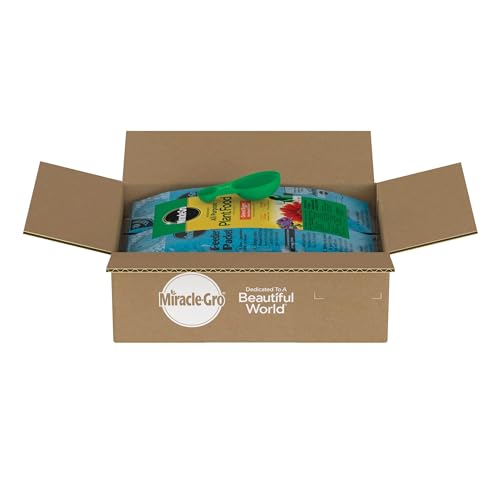
| Miracle-Gro All Purpose 6.25 lb★ Best Overall | Fast leaf growth | 24-8-16 | 6.25 lb | Water-soluble | Amazon |
| Espoma Organic Plant-Tone 4 lb (Pack of 2)Garden Favorite | Organic, long-term health | 5-3-3 | 4 lb each | Slow-release granule | Amazon |
| FoxFarm Happy Frog 4 lb | Rich soil biology | — | 4 lb | Slow-release granule | Amazon |
| Southern Ag Osmocote 5 lb | Set-and-forget feeding | 14-14-14 | 5 lb | Controlled-release (4 months) | Amazon |
| Jobe’s Organics Granular 16 lb | Large beds & big gardens | 4-4-4 | 16 lb | Slow-release granule | Amazon |
| GreenView Multi-Purpose 33 lb | Big coverage at low cost | 10-10-10 | 33 lb | Granular | Amazon |
| Organic Plant Magic 4 lb | Full-spectrum organic boost | — | 4 lb | Slow-release granule | Amazon |
In‑Depth Reviews
1. Miracle-Gro Water Soluble All Purpose Plant Food (6.25 lb)
Our pick — over 4.5★ from 30,500+ verified ratings; the strongest balance of quality and price.
The crowd-favorite fuel that turns hostas into leafy giants in a single week.
If you want the fastest, most visible leaf expansion on your hostas, this is the product that gardeners have trusted for decades. The water-soluble blue crystals (a powder you mix into water) dissolve almost instantly — buyers report plants that “nearly doubled in size” with “greener leaves in 1 week.” That speed comes from its high-nitrogen formulation (24-8-16 NPK), which is precisely what a hungry shade plant needs to push out broad, healthy foliage.
It is safe to use on virtually everything: flowers, vegetables, trees, shrubs, and houseplants. The maker guarantees it will not burn when you follow the directions — ½ teaspoon per gallon for indoors or 1½ tablespoons per 1.5 gallons outdoors. With a stellar reputation across over 30,000 ratings, this is the safest bet you can make for a dramatic season-long transformation.
The granules do blow in a breeze and can stain clothing or hands, so mix in a sheltered spot. And steer clear of using it on orchids or Venus flytraps, which it was not designed for. But for your hosta beds, nothing else in this lineup delivers this kind of explosive, reliable greening on the first feeding — much faster than the Espoma Organic Plant-Tone’s gradual release.
What Wins People Over
- Plants visibly bigger and greener within 7 days — fast enough for mid-season rescue
- Easy to mix and apply with any watering can or the Garden Feeder; no smell
- Covers every plant you own from hostas to tomatoes, making one bag a whole-yard solution
- Overwhelming crowd approval across tens of thousands of reviews
The Honest Trade-Offs
- Fine blue powder can drift in wind and stain hands or clothes if you are careless
- Not recommended for orchids or Venus flytraps — not a true universal feed
- Requires reapplication every 1-2 weeks, not a low-maintenance granular
Reach for this if: you want the fastest, most dramatic hosta leaf growth and you enjoy a quick weekly feeding routine.
Look elsewhere if: you prefer an organic, no-mix granular you can apply twice and forget for the season.
2. Espoma Organic Plant-Tone 5-3-3 (4 lb, Pack of 2)
The organic two-pack you sprinkle in spring and fall, then watch the magic happen.
For hosta lovers who want to avoid synthetic chemicals, this is the gold standard. The 5-3-3 NPK (5% nitrogen for leaves, 3% phosphorus for roots, 3% potassium for health) delivers a gentle but steady supply of nutrients — owners mention that using it “twice a year works like a champ.” The formula includes 5% calcium and a proprietary Bio-tone blend that feeds the soil microbes (tiny organisms that break down organic matter), not just the plant. It is OMRI-listed (a certification for approved organic gardening products) and approved for organic gardening, so you can feel good about what is going into your shade beds.
The big advantage here is the pack of two bags — you get 8 lb total, which covers a surprising amount of ground. Apply it around the drip line (the circle under the outermost leaves) of each hosta in early spring and again in fall, water it in, and the granules break down slowly. Buyers praise the “quick growth response in Spring” and call it “very good and effective fertilizer.” Effectiveness leads the positive mentions, with plant growth closely following — exactly what you want for deep, wide hosta leaves.
The honest catch is the smell. The organic ingredients come from natural sources like chicken manure, so the odor is, in one owner’s words, “foul smelling as chicken poop.” Standing upwind when applying solves it, and the scent fades after a day or two. If you can handle the brief aroma, the season-long results are tough to top without reaching for a synthetic product like the Miracle-Gro.
The Organic Edge
- Feed just twice per year — spring and fall — and the slow-release granules keep working
- Pack of 2 gives you 8 lb total, plenty for a large hosta bed without buying again soon
- Approved for organic gardening; no sludges, toxic ingredients, or synthetic chemicals
- Includes calcium and Bio-tone for stronger cell walls and root development
The Real Trade-Off
- Strong manure-like smell during and right after application — brief, but real
- Granular feed works slower than water-soluble, so no instant leaf flash
Grab this pack if: you garden organically and want a twice-a-year feed that builds soil health for the long haul.
Pass if: you cannot stand the smell of natural fertilizer, or you need an immediate visual result on struggling plants.
3. FoxFarm Happy Frog All Purpose Fertilizer (4 lb)

The slow-release granule that packs live soil biology for hostas that feed themselves.
What sets Happy Frog apart from the others is that it comes loaded with beneficial soil microbes and mycorrhizal fungi (tiny organisms that live on roots and help them absorb water and nutrients). These micro-organisms help the hosta roots absorb water and nutrients more efficiently, which means you get stronger plants even if your soil is less than perfect. The all-purpose formula is OMRI listed for organic use, and it works on everything from vegetables to ornamentals. Customers note it “revived yellow tomato and zucchini plants within a week” and delivered the “most successful garden ever” with monthly application.
It is a granular, slow-release blend, so you simply sprinkle it on the soil around your hostas and water it in. The gentle feeding action means you do not have to worry about burning the roots, even if you get a little generous with the scoop. The crowd feedback ranks quality and effectiveness as the top two aspects — exactly the foundation you want for leaves that stay deep green all summer.
The drawback: this stuff has a serious manure smell that can linger in the air for days after watering. One buyer called it “strong, lingering manure smell for days after watering.” If your hosta bed is right next to your patio or dining area, that might be a deal-breaker during summer gatherings. But if you can handle the odor in exchange for sturdy soil biology, the results speak for themselves.
Unique Strengths
- Packed with active soil microbes and mycorrhizal fungi that improve nutrient and water uptake long-term
- Gentle, slow-release formula that is hard to overdo — forgiving for beginners
- OMRI listed for organic gardening; trusted for vegetables and ornamentals alike
- Half a bag per season goes a long way in an average hosta bed
The Honest Catch
- Strong manure-like odor that sticks around for a couple of days after watering
- Slow-release means you wait longer than water-soluble to see leaves expand
Choose this when: you want to rebuild your soil’s living biology while feeding hostas a steady, safe diet.
Skip if: a lingering barnyard smell near your patio will ruin your summer evenings.
4. Southern Ag Osmocote Controlled Release Fertilizer 14-14-14 (5 lb)

A single application meters out food for four months — the definition of hands-off hosta care.
If you want to feed your hostas once and not think about them again until fall cleanup, this is your match. The 14-14-14 controlled-release granules (pellets with a special coating that dissolves slowly) deliver a perfectly balanced dose of nitrogen, phosphorus, and potassium for up to four months continuously. You just work ¼ to ½ cup per cubic foot of soil into the planting area or top-dress around established clumps, and the coating on each granule slowly dissolves. One buyer called it “surprisingly great” and said plants have been “thriving” since switching to this as their main fertilizer.
It works on potted hostas, hanging baskets, flower beds, and vegetable gardens equally well. The controlled-release technology means you do not get the leaf growth spike of a water-soluble feed like the Miracle-Gro, but you also never run the risk of forgetting a feeding and watching your plants stall. Quality and value for money are the two most-mentioned aspects in the reviews, which makes sense — you are paying for the convenience of a season-long feeding schedule from a single bag.
The trade-off is that the 14-14-14 ratio is fixed. Hostas respond well to it because it is balanced, but if your soil test shows a specific deficiency, you would need to supplement separately. That is a minor concern for most shade-garden situations, but something to keep in mind if you are dealing with particularly poor soil.
Why It Works
- Feed once and the controlled-release granules keep working for a full 4 months
- Balanced 14-14-14 ratio supports leaves, roots, and overall plant health in one pour
- Works equally well in containers, beds, and hanging baskets — wherever hostas grow
- Reviewers point out it performs as well as more expensive name-brand alternatives
The Limitation
- Fixed NPK cannot be adjusted if your soil needs a specific nutrient boost
- Not organic — synthetic coating enables the controlled-release mechanism
Best for: the gardener who wants to apply fertilizer once in early spring and forget about feeding until fall.
Not ideal for: organic growers or anyone who needs to target a specific nutrient deficiency in their soil.
5. Jobe’s Organics Granular All Purpose Fertilizer (16 lb)

The 16 lb organic bag that keeps an entire shade garden fed for the whole season.
When you have a large hosta collection — or several beds across a big yard — a small bag runs out fast. The 16 lb size of Jobe’s Organics covers serious ground without needing to reorder halfway through summer. The 4-4-4 NPK is a balanced organic formulation that provides a steady diet without forcing fast, weak growth. Buyers who used it on squash and cucumbers reported a “massive harvest” and flowers that “opened 48h after feeding.” Mix it into the soil at planting, top-dress around established clumps, or even steep it in water to create a liquid feed for a quicker boost.
The OMRI listing means it meets USDA organic standards, and the maker says it helps plants resist disease, insects, and drought during the growing season — a serious bonus for hostas that tend to suffer in dry shade. Effectiveness and quality lead the positive mentions, and buyers love that the granules break down into humus (decomposed organic matter that enriches soil) in about a week, feeding the soil structure itself. The resealable bag is a practical touch for a 16 lb sack you will dip into over several months.
The honest downside is the smell again. Several buyers describe the odor as “pungent” — one says it “smells like chicken house for days” after top-dressing. The scent is milder than raw manure, but it is definitely present. If your hosta bed is close to the house or sitting area, that is a consideration.
The Big-Bag Advantage
- 16 lb bag covers large beds all season without needing to buy more
- Balanced 4-4-4 organic formula supports hosta leaves without burning roots
- Can be used dry as a top-dress or steeped in water for a fast liquid feed
- OMRI listed; helps plants resist disease, insects, and drought stress
The Real Cost
- Pungent organic smell that can linger in the air for a couple of days
- Granules are friable and small, so careful distribution is needed to avoid clumps
Buy this for: a large hosta bed where a 16 lb organic bag means one-and-done feeding for the season.
Pass if: your hostas are right outside a frequently used door or window where the smell would be intrusive.
6. GreenView Multi-Purpose Fertilizer 10-10-10 (33 lb)

A 33 lb bag that greens up your hostas, lawn, and vegetables while staying affordable.
This is the pure-value play. The GreenView 10-10-10 is a no-frills granular feed that covers up to 3300 square feet — enough for an entire suburban yard including hosta beds, flower borders, trees, and a vegetable garden. The balanced NPK ratio is exactly what hostas thrive on, delivering equal parts nitrogen for leaf growth, phosphorus for roots, and potassium for overall stamina. One buyer who uses it across the Midwest growing season on “trees, hostas, vegetables, perennials” reported “very good results.”
The granules are well-formed and non-clumping, which makes them easy to spread with a hand spreader or by gloved hand around your hosta crowns. Buyers appreciate that it is non-dusty, so you are not breathing particulates while you work. For the sheer volume-to-price ratio, nothing else in this list comes close — you are getting a 33 lb bag that will last most gardeners multiple seasons. Effectiveness and value for money lead the customer feedback by a wide margin, with 36 mentions for effectiveness alone.
The catch is that the 10-10-10 ratio is a general-purpose synthetic formulation. It works brilliantly on hostas, but it is not organic, and it does not contain the soil microbes or organic matter that the Espoma or FoxFarm options provide. For a gardener who just wants healthy green leaves without worrying about soil biology, that trade-off is easy to accept.
The Value Case
- 33 lb bag covers 3300 sq ft — enough for a large yard plus hosta beds for multiple seasons
- Balanced 10-10-10 NPK delivers reliable hosta leaf growth without fancy additives
- Well-formed, non-clumping, non-dusty granules are easy to spread by hand or spreader
- Overwhelmingly positive on effectiveness and value for the money
The Limits
- Synthetic base — not suitable for organic gardening or building long-term soil biology
- No added microbes or organic matter; feeds the plant, not the soil ecosystem
Choose this when: you have a large property and want a single, inexpensive bag that feeds hostas and everything else.
Look elsewhere if: organic certification or soil microbiology is a priority for your garden philosophy.
7. Organic Plant Magic Slow Release Granular Fertilizer (4 lb)

The premium granular that delivers trace minerals and GroBiotics for hostas at their genetic peak.
This is the most nutrient-dense organic option in the lineup. The 4 lb bag packs over 55 trace minerals (tiny amounts of nutrients like iron, zinc, and copper), amino acids (building blocks for plant proteins), humic acids (compounds that improve nutrient absorption), kelp, and beneficial mycorrhizae (what the brand calls GroBiotics). That means it is not just feeding the hosta leaves — it is feeding the entire soil food web around the roots. The label says one 4 lb bag covers 1000 square feet, and you only need ¼ cup per gallon of soil. Shoppers say it “revived languishing raised bed veggies overnight” and that “beefsteak tomatoes thriving” after application.
The smell situation is mixed: some buyers find it mild — “it doesn’t have a terrible odor” — while others found the scent persistent if used indoors on potted plants. For outdoor hosta beds, the odor dissipates quickly in the open air. It is also forgiving in application amounts, which makes this a good choice for beginners nervous about over-fertilizing. Plant performance and plant benefits lead the customer feedback, confirming that this rich formula lives up to its claims.
The trade-off is the price — this is the most expensive per-pound option here, reflecting the 55+ mineral additives and mycorrhizal inoculants. If you have a modest hosta bed and want to go all-in on soil health, the cost is justified. For larger beds, the Espoma two-pack or Jobe’s 16 lb bag will stretch further per dollar.
The Premium Package
- Infused with 55+ trace minerals, amino acids, kelp, and beneficial mycorrhizae for complete nutrition
- Very forgiving on application amount — hard to overdo, great for cautious gardeners
- One 4 lb bag covers 1000 sq ft, and a little goes a long way with ¼ cup per gallon of soil
- Buyers report overnight revival of struggling plants and thriving vegetables
The Cost of Quality
- Premium per-pound price compared to simpler organic or synthetic alternatives
- Mixed reviews on the smell — can be off-putting in enclosed or indoor spaces
- Mixed feedback on overall plant health impact, with some buyers less impressed than others
Best for: the hosta enthusiast who wants to go deep into soil biology with trace minerals and mycorrhizae.
Skip if: you need to feed a very large bed on a budget, or you are sensitive to fertilizer odor near the house.
Understanding the Specs
NPK Ratio (Nitrogen, Phosphorus, Potassium)
The three numbers on every fertilizer bag. For hostas, nitrogen (the first number) is the most important — it drives the leaf growth that makes hostas look full and lush. A balanced ratio like 10-10-10 or a slightly nitrogen-heavy organic like 5-3-3 gives you strong green leaves without forcing soft growth that attracts slugs. Higher numbers (like 24-8-16) mean faster leaf expansion but need more frequent application.
Slow-Release vs. Water-Soluble
Slow-release granules (like Osmocote or Espoma) have a coating that dissolves slowly over weeks or months, so you apply once or twice per season. Water-soluble feeds (like Miracle-Gro) dissolve instantly in water and get absorbed within hours, so you see results faster but have to reapply every 1-2 weeks. Hostas do well with either, but slow-release is easier for most gardeners while water-soluble is better for a quick rescue of struggling plants.
FAQ
When should I fertilize hostas in the spring?
Can I use a lawn fertilizer on hostas?
How often should I feed my hostas during the growing season?
What NPK ratio is best for hosta leaf size?
Is it better to use a liquid or granular fertilizer on hostas?
Can I fertilize hostas in the fall?
Do hostas need different fertilizer in shade vs. sun?
Will fertilizer help prevent slug damage on hostas?
How much fertilizer should I give a single hosta plant?
Can I mix different fertilizers for better hosta growth?
Final Thoughts: The Verdict
For the majority of shoppers, the fertilizer for hostas winner is the Miracle-Gro All Purpose 6.25 lb because it delivers visible results faster than anything else here and is backed by tens of thousands of owners. If you prefer organic gardening and a twice-a-year schedule, the Espoma Organic Plant-Tone 2-pack is the soil-building choice. And for the biggest hosta bed on the smallest budget, the GreenView 10-10-10 33 lb bag is the one to reach for when you need to feed the whole yard without spending again.
How We Picked
We do not accept paid placement. Every pick is matched to a real buyer and a real use-case; we do not hands-on test units.
Sources & Methodology
Specifications: manufacturer listings and product documentation. Review insights: verified customer reviews, as of July 2026. Pricing: not shown on this page (it changes often); check the current price via the retailer link.
As an Amazon Associate, Lawn Gear Lab earns from qualifying purchases. This does not affect which products we feature.