
Specs are compiled from manufacturer listings and verified buyer reviews and can change over time — please confirm the key details on the product page before buying.
Elephant ears (the Alocasia and Colocasia crew) drink water like it is going out of style, but they absolutely refuse to sit in a soggy, airless bog. Get the mix wrong — too dense, too much peat, not enough grit — and those massive, dramatic leaves will yellow, wilt, or simply rot at the root. The trick is to find a soil that holds enough moisture to fuel that explosive tropical growth while draining aggressively so the roots can still breathe.
I’m Rikta — the founder and writer behind Lawn Gear Lab. This guide is built by comparing the manufacturers’ published specifications and the patterns across verified customer reviews, so you get each pick’s real strengths and trade-offs instead of marketing spin.
Elephant ear plants have a reputation for being thirsty, but thirst and drowning are two different things. A quality blend needs to balance water retention with sharp drainage, and that is exactly what the reviews here reveal. Whether you are tending a single potted Alocasia on a windowsill or a whole collection of Colocasia in outdoor containers, choosing the right soil for elephant ear plants is the single most important decision you make for their health.
Our Picks at a Glance
How To Choose The Best Soil For Elephant Ear Plants
Elephant ears grow from thick corms or tubers that are surprisingly fragile for sitting in wet, compacted dirt. A good mix does not just feed the plant — it gives the roots room to stretch and a way to shed excess water.
Drainage and Aeration Are Non-Negotiable
The number one cause of a failing elephant ear is root rot from soil that stays wet for days. Look for ingredients like perlite, pumice, pine bark fines, or coco coir. These create air pockets so water moves through instead of pooling around the corm.
Organic Matter Provides the Fuel
These are heavy feeders. A blend with worm castings, compost, or aged forest products gives them the steady supply of nutrients they need to push out those giant leaves. A sterile, lifeless mix will leave them hungry.
Texture Matters — Chunky Beats Dusty
Powdery, fine soil compacts quickly and suffocates roots. A chunky, loose structure with visible pieces of bark or coco chips stays open for months and makes it easy for new roots to spread. If the bag feels like a brick of flour, leave it behind.
Quick Comparison
| Model | Best For | Volume | Key Ingredient | Texture | Amazon |
|---|---|---|---|---|---|
| FoxFarm Ocean Forest★ Best Overall | Container Plants | 1.5 cu ft | Aged Forest Products | Loamy & Aerated | Amazon |
| Soil Sunrise Elephant Ear MixBest Value | Alocasia & Colocasia | 8 Quarts | Peat Moss + Sand | Balanced | Amazon |
| Rosy Soil Aroid MixPremium Pick | Aroids & Tropicals | 4 Quarts | Biochar + Pumice | Chunky | Amazon |
| Craft Houseplant Potting Mix | Indoor Houseplants | 4 Quarts | Worm Castings | Chunky | Amazon |
| DUSPRO 5in1 Tropical Mix | Monstera & Pothos | 8 Quarts | Pine Bark + Coco Coir | Loose | Amazon |
| Soil Sunrise Banana Tree Mix | Banana Plants | 12 Quarts | Peat Moss + Pine Bark | Well-Draining | Amazon |
| DUSPRO 8in1 Aroid Mix | Aroids & Citrus | 8 Quarts | LECA + Zeolite | Chunky & Open | Amazon |
| Forbidden Cereal Aroid Mix | Monstera & Hoyas | 6.5 Quarts | Douglas Fir Bark | Super Chunky | Amazon |
| Mother Earth Coco + Perlite | Container Gardening | 50 Liters | Coconut Coir | Light & Fluffy | Amazon |
In‑Depth Reviews
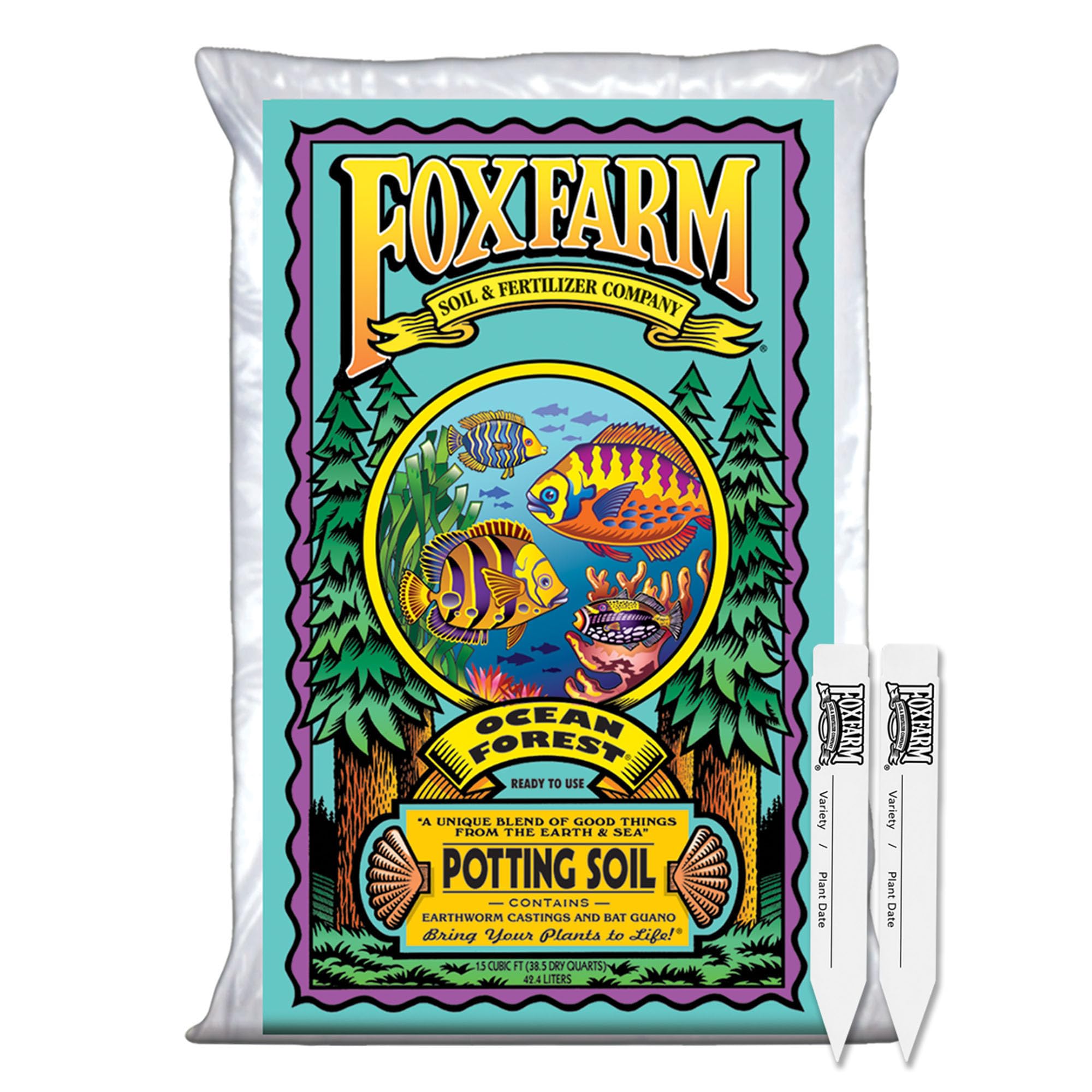
1. FoxFarm Ocean Forest Potting Soil with 2 Plant Tags
Our pick — over 4.5★ from 10,000+ verified ratings; the strongest balance of quality and price.
The crowd-favorite workhorse that fuels explosive growth in every container.
This is the soil that gets recommended again and again by serious plant owners for a simple reason — it works. The blend of aged forest products, sphagnum peat moss, perlite, and sandy loam creates a structure that drains well but still holds moisture around the roots where elephant ears need it most. The sandy loam is the key, providing sharp drainage that helps prevent root rot, which is the common killer when corms sit in stagnant water.
Buyers report that in a side-by-side test using same-size seeds and identical watering, FoxFarm soil “outperformed Miracle-Gro,” showing a significant growth difference. The bag is enormous — a full 1.5 cubic feet — so you can fill several large pots or a whole outdoor container garden with one purchase. It comes ready to use straight out of the bag, and the included plant tags are a small but useful bonus for labeling varieties or planting dates.
The only recurring topic owners bring up is the cost. This is a premium mix, and some find it expensive compared to basic potting soils. A few also mention encountering gnats in occasional bags, which is a risk with any rich organic blend. The consistency of results, however, keeps nearly everyone coming back — the growth is steady, the nutrients last, and the texture holds up far longer than standard garden dirt.
What Wins People Over
- Drains fast while holding moisture — a perfect balance for elephant ears
- Packed with nutrients from fish emulsion, crab meal, and kelp meal
- Huge bag (1.5 cu ft) that handles multiple large containers
The Honest Trade-Offs
- Pricier than standard potting mixes
- Occasional reports of gnats in the bag
- Rich blend may need lightening with perlite for sensitive aroids
Reach for it if: you want a proven, nutrient-dense all-around soil that works for elephant ears, vegetables, and houseplants alike — the crowd favorite for a reason.
Think twice if: you need a super chunky, bark-heavy aroid mix for small pots — this is richer and finer than a typical orchid-style blend.
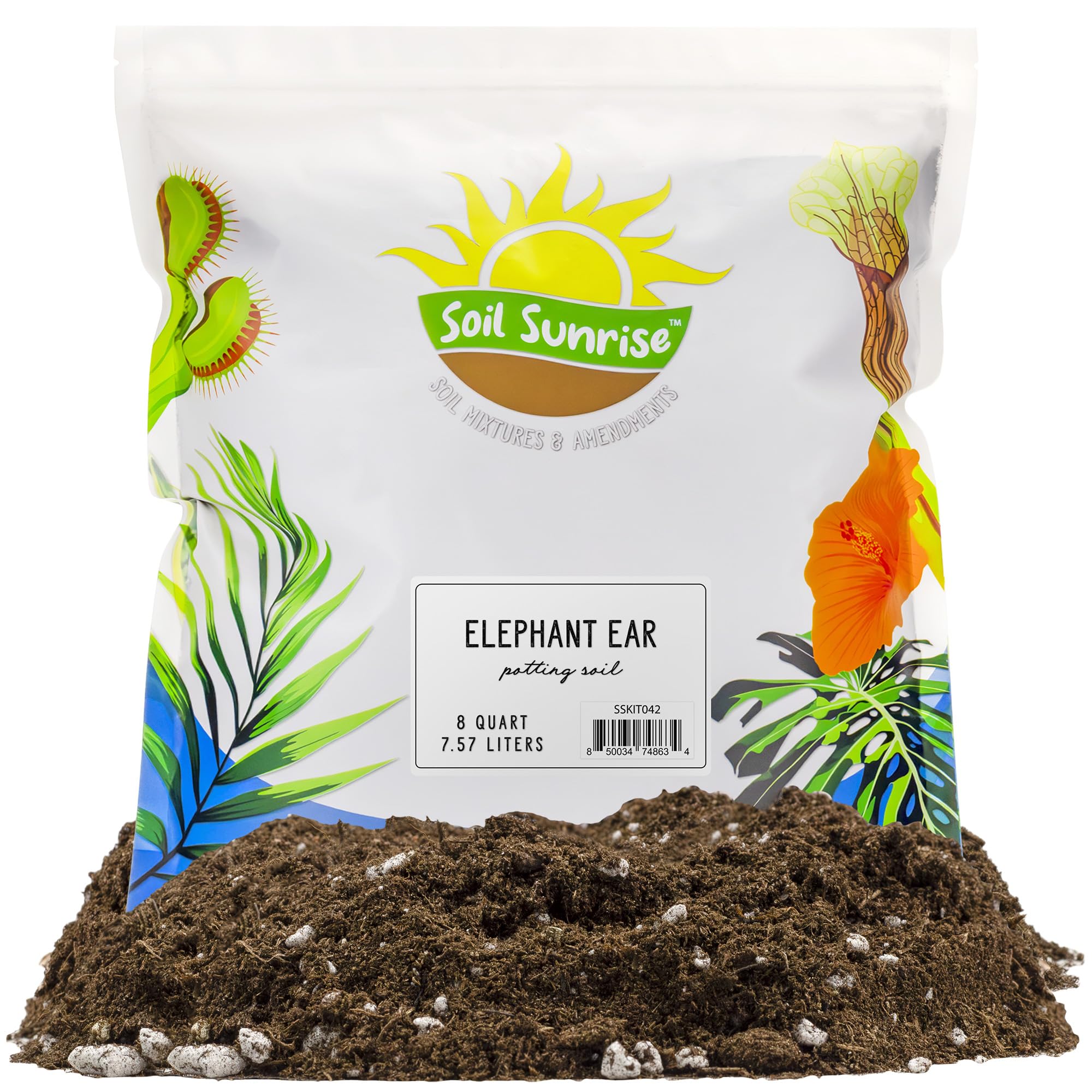
2. Soil Sunrise Elephant Ear Potting Soil Mix (8 Quarts)
A hand-blended mix built from the ground up for Alocasia and Colocasia.
Unlike a general-purpose bag, this Soil Sunrise blend was created specifically for elephant ear plants from the Colocasia and Alocasia families. The ingredients — peat moss, sand, worm castings, horticultural perlite, and lime — are chosen to match what these plants experience in their native tropical environments: organic humus for feeding, sand for drainage, and perlite for airflow. The result is a mix that plants respond to almost immediately, with buyers reporting that their elephant ears pushed new leaves right after repotting.
What owners praise most is the moisture retention paired with enough drainage to avoid muddy soil. The blend holds water well enough that you do not need to water every day, but it does not turn into a swamp. One buyer was able to bring a bulb back from the brink of death — the soil gave it the structure and nutrients to recover. The 8-quart bag is a good size for a few medium pots, and at this price point, it is among the most affordable options tailored specifically to this plant type.
A fair number of reviews flag the packaging as a weak point — bags occasionally arrive torn or with holes, spilling soil in transit. The consistency also draws some mixed feedback: a few owners expected a chunkier texture and found this mix to hold water a bit too long for their liking. If you tend to overwater, you may want to mix in extra perlite or pumice to loosen it up.
Why It Stands Out
- Formulated specifically for Alocasia and Colocasia varieties
- Excellent moisture retention that fuels fast new leaf growth
- Includes worm castings and lime for natural nutrient support
What to Watch
- Packaging can be fragile — bags sometimes arrive damaged
- Texture is on the denser side; may need extra aeration for heavy-handed waterers
- Volume is smaller than it looks; check your pot sizes
Grab it for: a budget-friendly, plant-specific blend that elephant ears take to immediately without extra amendments.
skip it if: you need a super chunky, fast-draining aroid mix for pots that dry out fast — this retains more moisture than the bark-heavy blends.
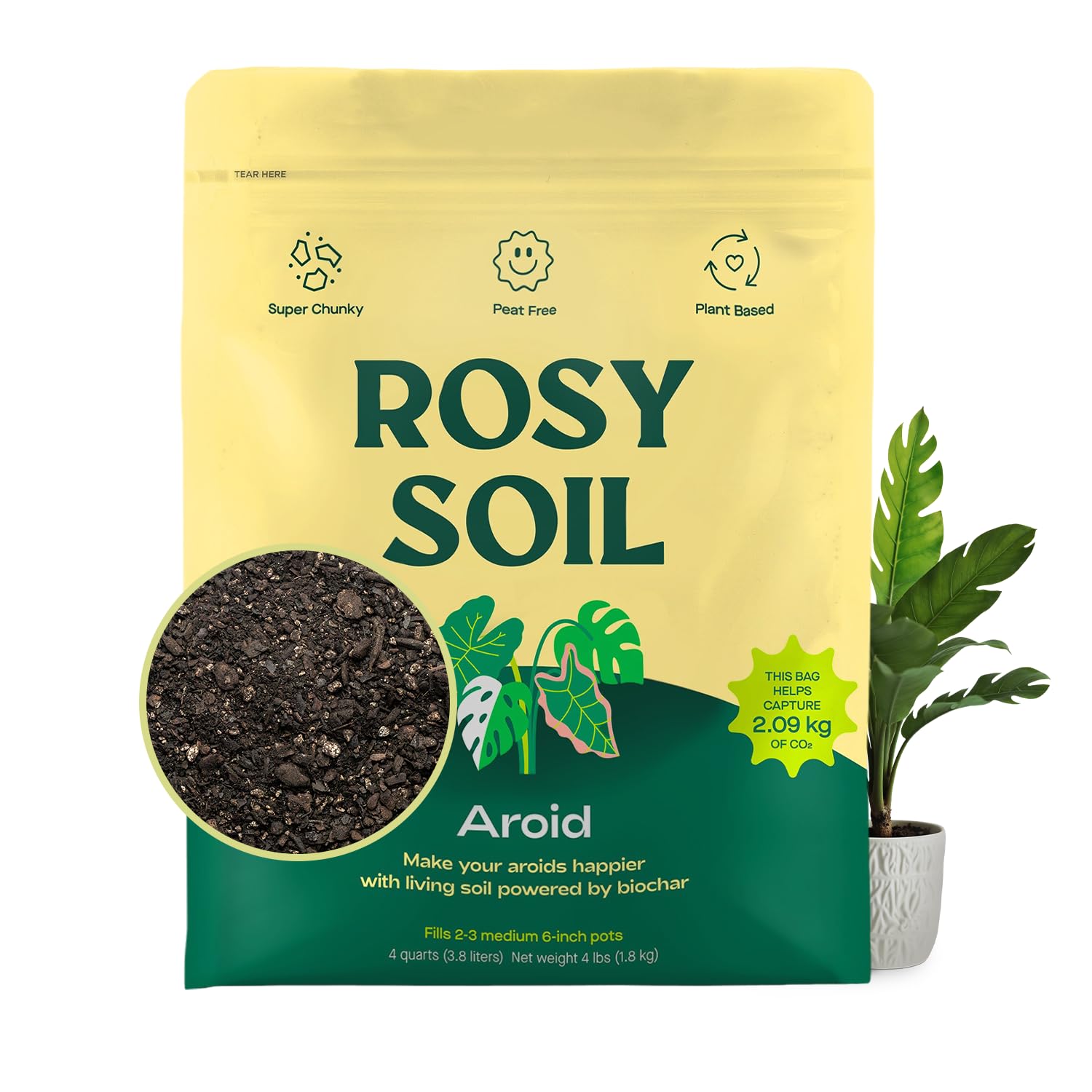
3. Rosy Soil Aroid Soil Mix (4 Quarts)
A living soil powered by biochar that drains fast and stays airy for root health.
If you have ever opened a bag of soil to find a dry, dusty brick that repels water, Rosy Soil is the opposite experience. This mix is chunky — pine bark fines, pumice, and biochar create real structure so water flows through freely and roots never sit in a puddle. It is crafted for aroids like Alocasia and Monstera, which crave airflow around their roots and will rot in dense soil. The texture alone makes it a top contender for elephant ears.
The real magic here is the biochar. It holds nutrients and moisture inside its porous structure, releasing them slowly to the roots while keeping the overall mix light and open. The soil is also enriched with worm castings, mycorrhizae, and compost, creating a microbially active environment that strengthens roots over time. Buyers who switched from other brands found that all their plants showed new growth within two weeks, with no gnats and no odor. Many noted this is the best soil they have tried for bottom watering and consistent growth.
The trade-off is volume. At 4 quarts (128.0 ounces), this bag is roughly half the size of the Soil Sunrise blend — the data shows a 2.0x gap in volume. It costs about the same, so you are paying for the premium ingredients and the peat-free, carbon-negative formulation rather than bulk. A few buyers expected an even chunkier texture; the mix is definitely chunky but not as coarse as some bark-only blends.
what separates it
- Biochar and pumice create permanent air pockets that prevent compaction
- Peat-free and carbon-negative — better for the environment
- Living soil with mycorrhizae and worm castings for long-term root health
Fair Caveats
- Small bag (4 quarts) is pricey per quart compared to bulk options
- Texture is chunky but not the chunkiest — some expected coarser bark
- Not the best choice if you need to fill many large pots at once
Reach for it if: you care about soil biology and want a peat-free, microbially active mix that makes roots thrive without overwatering risk.
Think twice if: you need to fill several large containers on a budget — the small bag goes fast for big elephant ear pots.
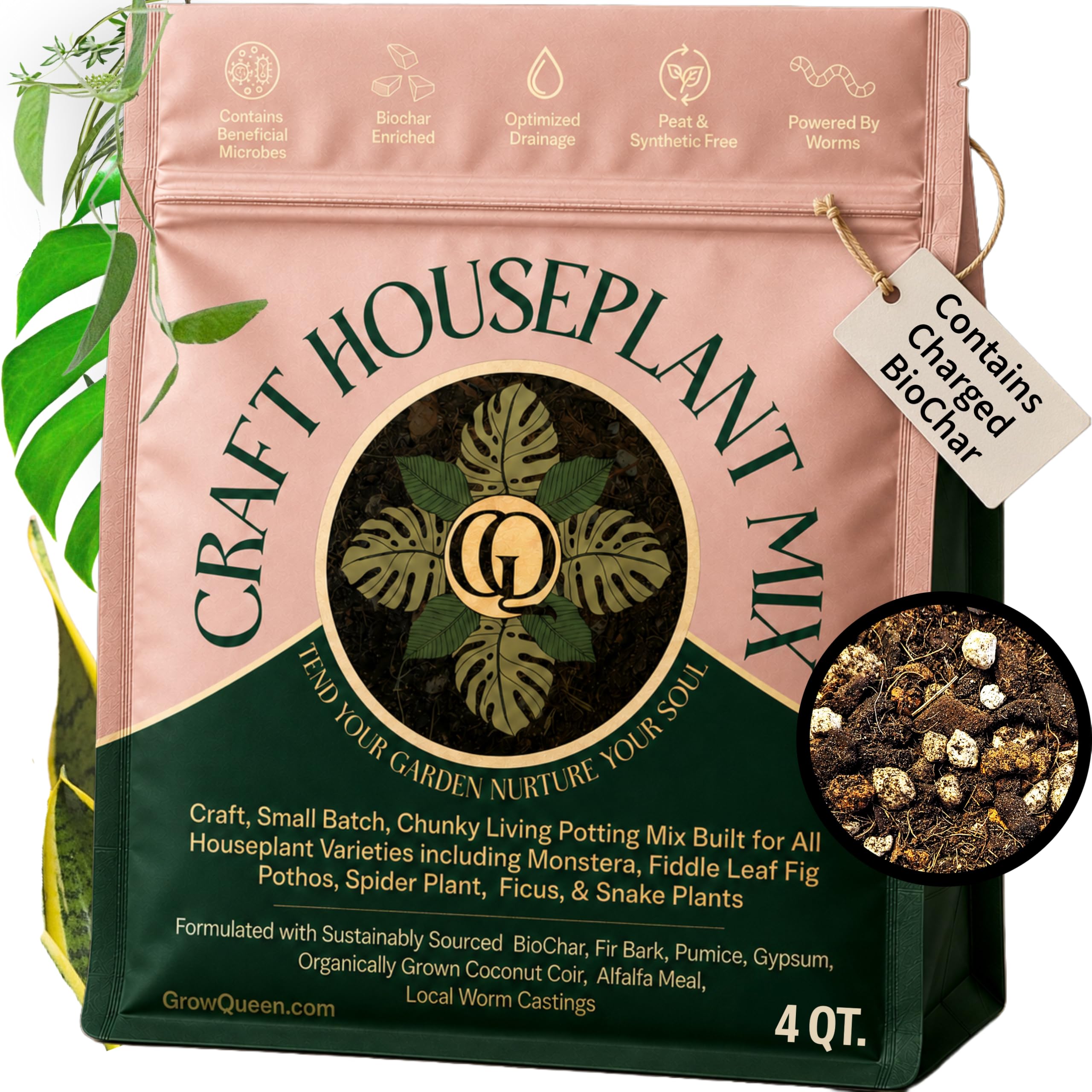
4. Craft Houseplant Potting Mix by Grow Queen (4 Quarts)
A pre-moistened, chunky blend that cuts transplant shock and fuels root expansion.
among the most thoughtful features of this mix is that it arrives slightly pre-moistened. Dry, hydrophobic soil is a common problem with bagged mixes — water just runs off the top. This blend skips that frustration entirely, settling roots quickly and reducing the stress that elephant ears experience after repotting. The generous layer of pre-moistened bioactive ingredients means you get active growth from day one rather than a week of sulking.
Beyond the moisture, the texture is what owners rave about. Large Douglas fir bark fines, lava rock, and pumice create a truly chunky structure that drains immediately but holds enough moisture for thirsty tropicals. The mix is packed with premium organic worm castings (not compost filler) that provide a steady supply of natural micronutrients. Owners mention that their Alocasia increased in size and pushed new growth with roots that looked fantastic, all without any soggy soil issues.
The main concern here is the bag size. At 4 quarts, this is a relatively small volume, and several buyers mention they wish it came in a larger bag for the price. If you have a big collection of elephant ears, you will need multiple bags. A smaller number of owners also note that the texture can vary slightly from batch to batch, though the overall quality remains high.
Perfect for: anyone who wants a bioactive, ready-to-use mix that eliminates transplant shock — especially good for sensitive elephant ear corms that take time to adjust.
Not ideal if: you are repotting multiple very large containers and need bulk value; the 4-quart size adds up fast.
5. DUSPRO Pre-Mixed 5in1 Tropical Potting Mix (8 Quarts)
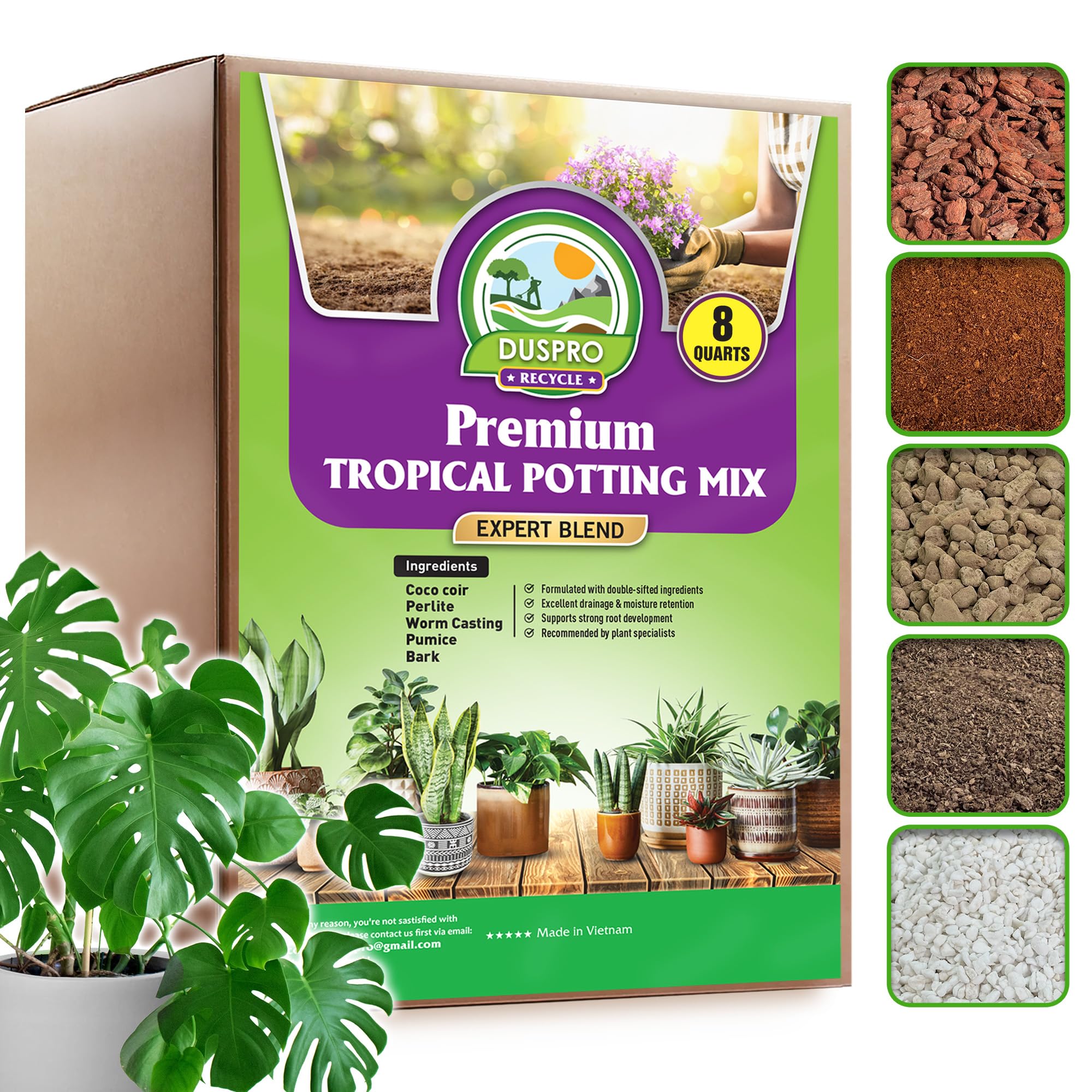
Five simple ingredients combine for a balanced mix that tropical plants adore.
DUSPRO keeps this blend clean and straightforward — pine bark, coco coir, perlite, worm castings, and pumice. No filler, no mystery ingredients. The coco coir handles moisture retention without getting heavy, while the perlite and pumice ensure excess water drains quickly, creating a loose, open structure that elephant ear roots can spread through easily. The worm castings provide a natural nutrient boost that keeps leaves green and growth steady.
This mix is a favorite among owners of Monstera and Philodendron, but it works just as well for elephant ears. One buyer repotted a caladium (a close relative) and saw visible improvement in just three days. Another reported that their Monstera shot out a huge leaf after being switched to this soil. The 8-quart bag is a practical size, capable of filling about two 8-inch pots, and the quality control is consistent across batches.
The main criticism comes from a smaller group of buyers who found the texture to be finer and dustier than expected. Rather than a chunky, bark-heavy mix, the consistency can lean toward a more powdery feel that clings to roots when dry. It still drains well once watered, but if you want a visibly chunky blend that looks like bark chips, this may not satisfy. A few also note the price feels a bit steep for what is in the bag.
Choose it if: you want a well-balanced, simple blend with quality ingredients that your elephant ears will thrive in without needing to mix your own amendments.
Look elsewhere if: you prefer a super chunky, bark-dominant texture — this mix has a finer, slightly dusty consistency when dry.
6. Soil Sunrise Banana Tree Potting Soil Mix (12 Quarts)

A larger bag tailored for heavy feeders, with drainage built for vigorous root systems.
At 12 quarts (3 gallons), this is one of the more generous volumes in the lineup, making it a practical choice if you have several large elephant ear pots or a growing collection of tropical plants. The blend uses peat moss, perlite, worm castings, sand, pine bark, and lime — the sand adds a gritty texture that helps water move through quickly, while the worm castings and peat moss provide the rich organic matter that elephant ears and banana plants crave. The lime helps buffer pH, keeping the mix in a neutral balance.
Owners of banana trees — which have similar soil needs to elephant ears — report that this mix leads to healthier leaves, stronger stems, and faster growth within weeks. One buyer shared that their banana plant grew from 4 inches to 1.5 feet tall in three months using this soil with a grow light. The texture strikes a solid balance: it holds enough moisture for thirsty tropicals but drains well enough to avoid stagnant roots.
The downside is that the sand content can make the mix feel heavy, and a few buyers mention initial water runoff, which suggests the bag may have been slightly compacted during shipping. It is also note that while this blend is formulated for banana plants, it is not specifically designed for Alocasia or Colocasia, so it may be slightly denser than a pure aroid mix.
Great for: large banana plants or outsize elephant ears in deep pots that need a substantial volume of well-draining organic soil.
Consider carefully if: you are working with small, shallow pots — the sand and bark make this a heavier mix than a fluffy aroid blend.
7. DUSPRO 8in1 Aroid Potting Mix (8 Quarts)
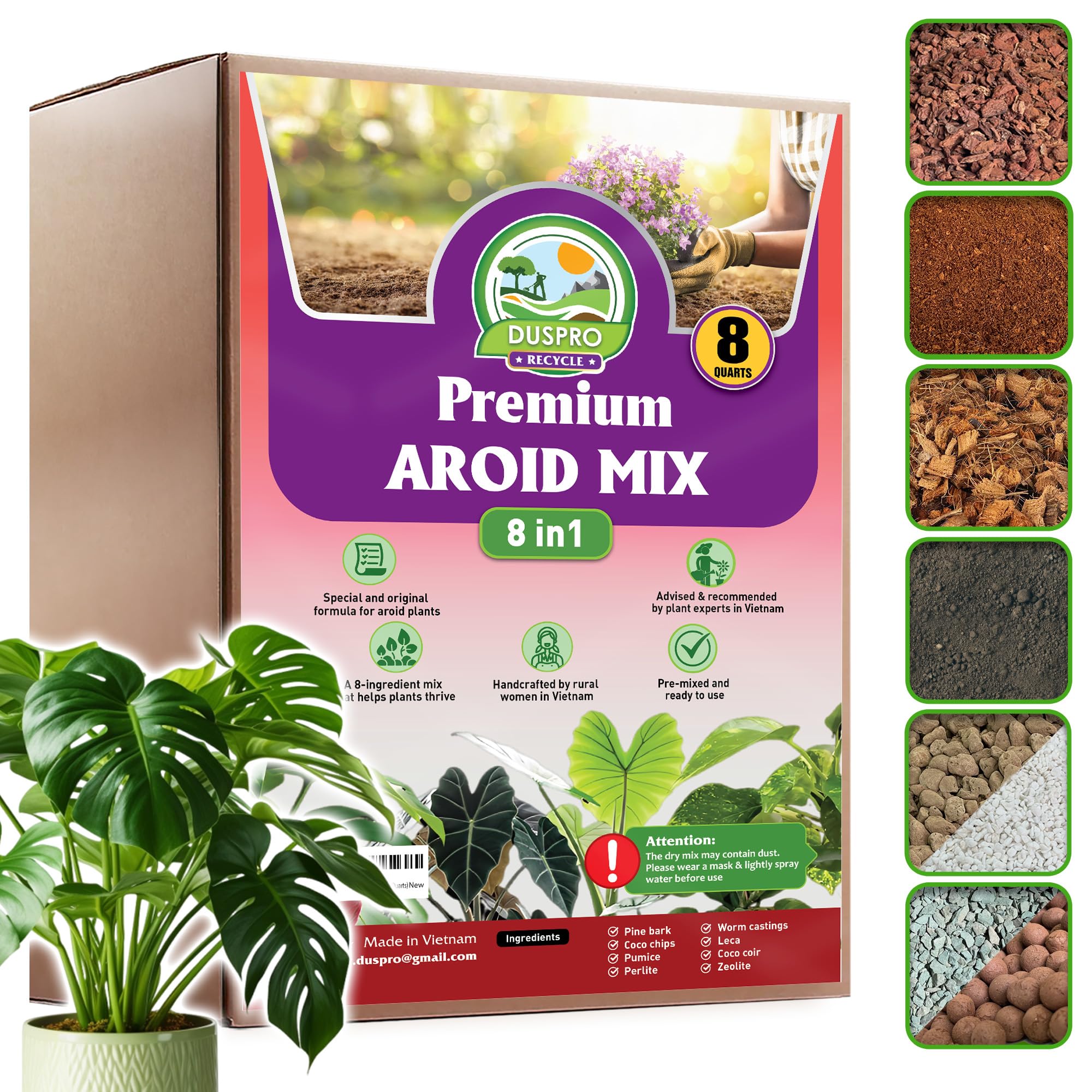
An eight-ingredient powerhouse built for aroids with aerial and spreading root systems.
If the 5in1 mix from DUSPRO feels too simple, this is the step up. The 8in1 blend incorporates pine bark, coco chips, pumice, LECA clay pebbles, fine perlite, coir, zeolite, and worm castings — a complete toolkit for creating the airy, open structure that aroids like elephant ears thrive in. The LECA and coco chips add permanent air pockets that keep the mix from compacting over time, while zeolite helps manage moisture by absorbing and releasing water as needed. This is a mix designed for the long haul.
Owners of money trees, citrus, and Monstera report strong results. One buyer repotted a miniature Meyer lemon tree and watched it bloom and fill out new branches after overwintering indoors. Another found this mix perfect for repotting multiple plants, noting that their plants were pushing new leaves within 3-4 weeks. The structure is chunky and open, making it difficult to overwater even for beginners. The 8-quart size is reasonable for several medium pots, and the resealable bag helps keep the blend fresh between uses.
Several reviews mention that the bag is smaller than expected for the price, and the value-for-money rating is mixed among buyers. The mix can also get dusty toward the bottom of the bag as finer particles settle during shipping. If you are repotting a very large elephant ear, you might need more than one bag.
Best for: the plant collector who wants a chunky, well-aerated mix with moisture management for aroids that demand open roots and balanced wetness.
Consider passing if: you are on a tight budget — the premium ingredients come with a premium price per quart.
8. Forbidden Cereal Aroid Potting Mix (6.5 Quarts)
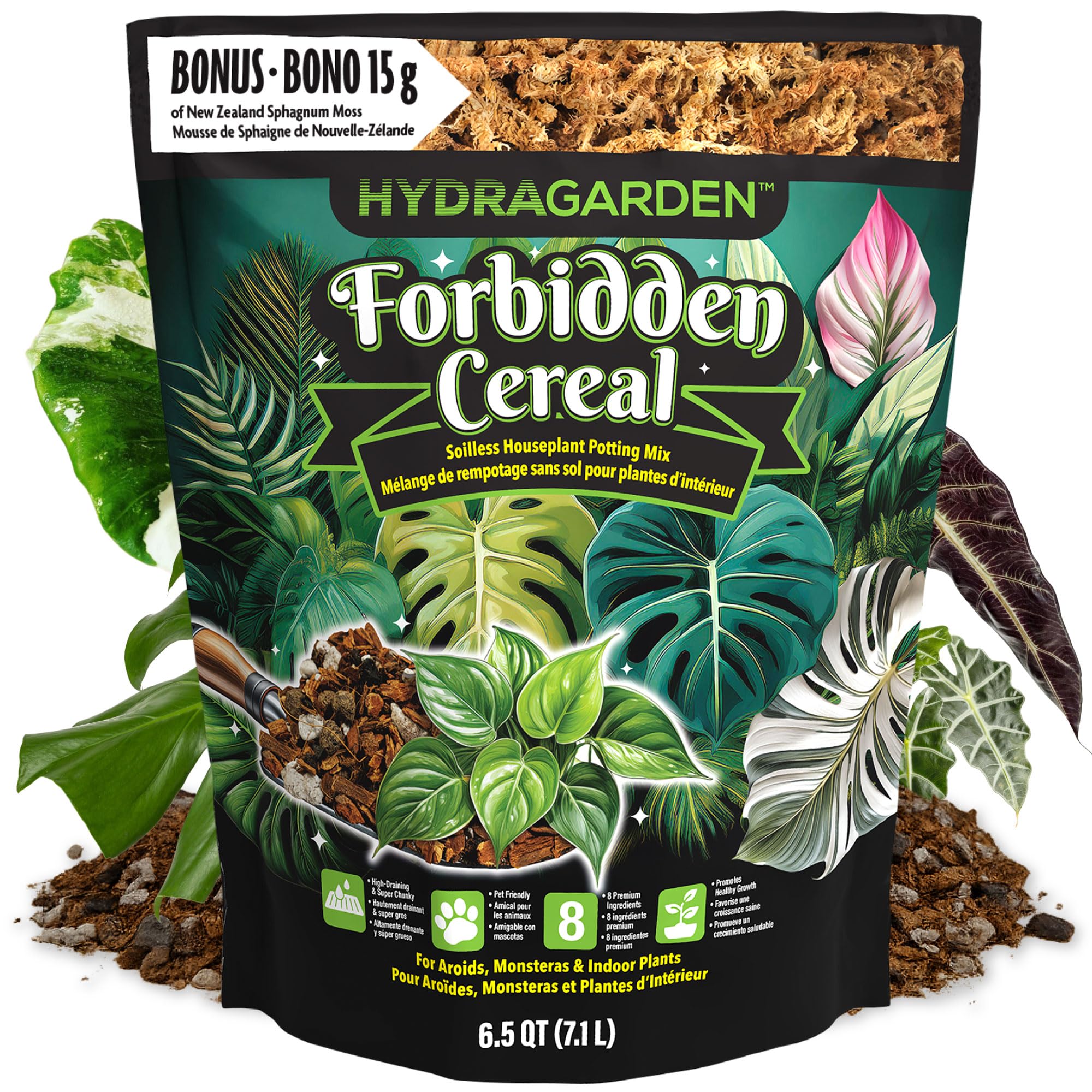
A bowl-of-cereal chunky mix that lets roots breathe and water flow right through.
Forbidden Cereal lives up to its name — this mix is genuinely chunky. Hand-sorted, heat-treated Douglas fir bark (orchid bark), coarse perlite, triple-washed coco coir, coconut fiber and chips, horticultural charcoal (biochar), worm castings, LECA balls, and New Zealand sphagnum moss. The bark pieces are large enough that you can see them clearly, creating wide air channels that prevent any water from pooling around roots. This is as close as a bagged mix gets to a custom orchid-style aroid blend.
The design philosophy here is simple: overwatering is forbidden. The super chunky structure forces water to flow freely through the pot, reducing the risk of root rot, yellow leaves, and stunted growth. A thoughtful extra is that the sphagnum moss is layered on top rather than mixed in, so you can use it as a moisture-retaining top layer, a propagation aid, or simply remove it if you prefer a drier soil surface. Customers note that after 6 months, their Monstera tripled in size with thick, healthy roots and bouncy leaves.
The clear downside is the cost. This is one of the priciest mixes per quart, and a number of buyers find it simply too expensive for regular repotting. The 6.5-quart bag goes fast if you have large pots. A smaller concern is that the moss content can feel inconsistent — some bags have more moss on top than others. If you are a heavy waterer who tends to over-love your plants, this mix is forgiving, but the price means you will want to make every bag count.
Perfect for: the dedicated plant parent who has killed a few aroids with overwatering and wants a mix that practically prevents root rot on its own.
Not the one if: you need bulk value or prefer a finer, more traditional soil texture — this is chunky enough to feel like bark chips with some moss on the side.
9. Mother Earth Coco + Perlite Mix (1.8 cu. ft.)

A massive bag of clean coir and perlite that gives you total control over your own mix.
If you like being in charge of your own soil blend, this is the foundation. Mother Earth Coco + Perlite is 70% coconut coir and 30% perlite — a simple, two-ingredient growing medium that resists compaction and lasts longer in containers than traditional soil. The coir holds water like a sponge, releasing it slowly to roots, while the perlite ensures there is always enough oxygen in the root zone. Coir also naturally resists fungus gnats, and buyers confirm that this product stays clean and gnat-free.
This mix is not a complete pre-fertilized soil — it is a base. Elephant ears will need regular feeding if you use it straight, but that is exactly why many experienced growers love it: you control the nutrients. The volume is enormous at 50 liters (about 1.8 cubic feet), easily the biggest bag here. It is perfect for filling raised beds, large outdoor containers, or multiple indoor pots, and buyers who switched from Ocean Forest and Happy Frog report great results with this simpler, cleaner approach.
The main thing to know is that this is not a nutrient-rich potting soil. It is a soilless growing medium. If you want something you can open and use without adding fertilizer, this is not it. A few buyers also note that the bag can be dusty when first opened, and the price, while fair for the volume, is not as cheap as generic topsoil.
Choose it if: you want the most bang for your buck in terms of volume and prefer to mix your own nutrient blends for your elephant ears.
pass on it if: you want a ready-to-use, pre-fertilized potting soil — this is a blank canvas that needs your own plant food to thrive.
Understanding the Specs
Drainage & Aeration
Drainage is not just about holes in the pot — it is about the soil’s physical structure. Chunky ingredients like perlite, pumice, pine bark, and coco chips create air pockets that let water flow through and allow roots to breathe. Soil that stays wet for days suffocates the corm, leading to rot. A mix that feels light and coarse is almost always better than one that feels dense and sticky.
Organic Matter & Nutrients
Elephant ears are heavy feeders that need a steady supply of nutrients to produce their oversized leaves. Worm castings, compost, aged forest products, and kelp meal are all signs of a rich, living soil. A sterile, bark-only mix will drain well but will not sustain growth without regular fertilizing. The best blends have both structure and food.
Texture & Consistency
Texture is the difference between a mix that stays open for months and one that collapses into mud. Bark fines, pumice, and LECA create permanent air spaces, while peat and coir hold moisture. Avoid mixes that look like uniform dust or flour — they compact quickly and trap water. A good elephant ear soil should look like a bowl of granola, not a bag of sand.
pH Balance
Most elephant ears prefer a slightly acidic to neutral pH, roughly between 5.5 and 7.0. Some mixes include lime or dolomite to buffer pH, preventing the soil from becoming too acidic over time. If your water is already alkaline or you use chemical fertilizers, a buffered mix helps keep nutrient uptake steady.
FAQ
Can I use regular potting soil for elephant ears?
How often should I repot elephant ears with fresh soil?
What is the best soil mix for Alocasia vs Colocasia?
Should I add extra perlite to my elephant ear soil?
Is coco coir good for elephant ear plants?
Why is my elephant ear soil staying wet for too long?
Can I use orchid bark in my elephant ear soil mix?
Does elephant ear soil need to be acidic?
Final Thoughts: The Verdict
Across the board, the best soil for elephant ear plants is the FoxFarm Ocean Forest Potting Soil because it combines proven nutrient density with reliable drainage at a volume that actually covers a whole potting session. Its crowd-winning performance across thousands of owners is hard to argue with. If you want a chunky, peat-free, microbially active soil that supports the most sensitive roots, grab the Rosy Soil Aroid Mix. And for the budget-friendly option that elephant ears take to immediately without extra work, the Soil Sunrise Elephant Ear Mix is the one to reach for.
How We Picked
We do not accept paid placement. Every pick is matched to a real buyer and a real use-case; we do not hands-on test units.
Sources & Methodology
Specifications: manufacturer listings and product documentation. Review insights: verified customer reviews, as of July 2026. Pricing: not shown on this page (it changes often); check the current price via the retailer link.
As an Amazon Associate, Lawn Gear Lab earns from qualifying purchases. This does not affect which products we feature.