
Specs are compiled from manufacturer listings and verified buyer reviews and can change over time — please confirm the key details on the product page before buying.
You mix, you pour, you wait, and you pop out a thick-walled pot that costs a fraction of what a boutique nursery charges — that is the promise of a large cement planter mold. But the reality for most first-timers involves a stuck insert, a cracked side, or a surface full of pinholes that ruins the whole “handmade artisan” look. The right mold releases cleanly, holds its shape under wet concrete, and survives multiple pours.
This guide compares manufacturer specs and verified customer reviews to highlight each pick’s real strengths and trade-offs.
Whether you are casting a single statement piece for your porch or planning to sell a dozen pots at a weekend market, finding the right large cement planter molds determines whether you end up with a crisp, professional result or a cracked disappointment.
Our Picks at a Glance

How To Choose The Best Large Cement Planter Molds
Choosing a mold for a large planter differs from selecting one for a small succulent pot. The weight of wet concrete — several pounds per pour — stresses mold walls and complicates clean release.
Construction Material: Rigid Plastic vs. Flexible Silicone
For large planters, a purely silicone mold can bulge or sag under the weight of the concrete. The stronger option is a rigid plastic shell (often ABS plastic, a tough thermoplastic) that holds the outer shape, sometimes with a silicone liner inside for easy release. If you see a product that uses a plastic outer frame with a silicone inner tank, that is a sign it can handle big pours without warping.
Mold Release and Ease of Demolding
Concrete will stick to any mold without a release agent. Successful buyers use a simple spray — common cooking spray works — before every pour. Even a “smooth” or “non-stick” mold needs release, but it will demold far more easily than a rough-textured one.
Wall Thickness and Durability
The thin, flimsy edges of some molds crack after only a few uses, especially when you start prying the concrete out. A mold with thick enough walls to flex without snapping is worth the extra money if you plan to cast more than a couple of pots. Look for reviews that mention surviving “over a dozen” or “over 40” pours — that is the real sign of durability for repeated use.
Quick Comparison
| Model | Best For | Material | Finished Size | Shape | Amazon |
|---|---|---|---|---|---|
| AUTUMN Large Concrete Heart Mold★ Best Overall | Statement garden art | Plastic | 17″ x 16″ x 2″ | Heart | Amazon |
| Large Round Silicone Planter MoldAlso Great | First-timers & repeat use | Silicone + ABS Shell | 5.9″ x 4.7″ | Round | Amazon |
| Planter Molds, Large Concrete Planter Molds (25) | Budget batch casting | ABS Plastic | 9″ x 7″ x 4″ | Rectangular | Amazon |
| SvitMolds DIY Set 2 pc Ball Sphere Mold | Garden spheres & orbs | ABS Plastic | 11.8″ diameter | Half-sphere | Amazon |
| UMXOSM Rectangle Planter Mold | High-volume rectangular pots | Silicone + Plastic Frame | 7.48″ x 3.94″ x 3.54″ | Rectangle | Amazon |
In‑Depth Reviews
1. AUTUMN Large Concrete Heart Mold – DIY Garden Statue Planter
Our pick — over 4.5★ from 100+ verified ratings; the strongest balance of quality and price.
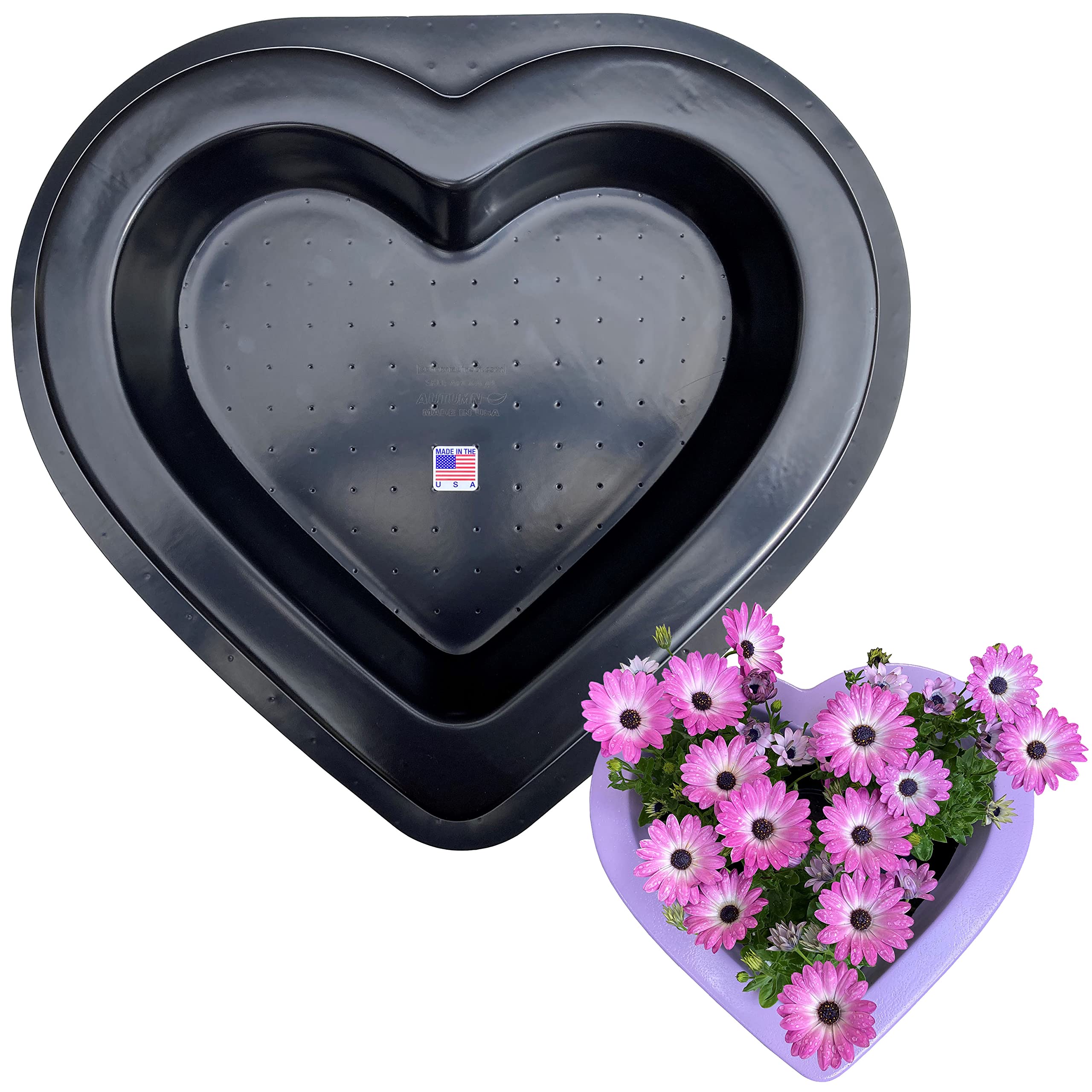
You can make a massive heart planter that turns a driveway into a garden monument, thanks to the 17-inch width.
At 17 inches across and 16 inches tall, this is the biggest planter in the lineup by a wide margin — the finished piece is a hefty 2 inches thick. The mold is made of durable plastic rather than silicone, which is what allows it to hold that much concrete without collapsing. It is designed to be reusable, and the manufacturer recommends oiling the interior before each pour to help the concrete release. Buyers report that following a simple spray-and-tap routine yields a great result even on the first try, though a few note that air bubbles can form if you pour too much at once. One owner who made a heart planter as a vacation keepsake shared that it “popped out great after 24 hours” despite some air bubbles.
This mold is made in the USA by AUTUMN, an American manufacturing company that focuses on local production. The plastic is sturdy enough that the mold stays balanced when you flip it upside down to cure. It is a single-piece mold, so there is no assembly — just fill, tap, and wait. For anyone looking to create a garden focal point or a personalized gift, the scale of this heart is tough to top. The crowd rates it a solid 4.6 stars, and the most common praise is that the mold is strong and easy to remove from the cement.
The catch is the weight. A finished concrete heart of this size is extremely heavy — plan where you want it to live before you pour, because you will not want to move it after it cures. The plastic mold itself also requires careful handling: skip the release oil and you risk a stuck piece.
Why owners love it
- Massive 17″ x 16″ finished size — the largest planter on this list
- Durable plastic holds shape under heavy concrete pours
- Made in the USA with a focus on local manufacturing
What to watch for
- Finished piece is extremely heavy — place it before pouring
- Requires release oil to avoid sticking and bubbles
Best for: making a single, show-stopping garden sculpture or personalized gift that will last for years.
skip it if: you need a lightweight or easily movable planter — this one stays put once set.
2. Large Round Silicone Planter Mold, Reusable Round Shape Concrete Clay Plaster Moulds
You get a double-layer design that stops bulging and pops out every cast cleanly — that is why this is the top pick.
This mold solves the two biggest headaches of large concrete pours at once. The outer shell is a sturdy ABS plastic frame (the same rigid thermoplastic used in auto parts) that keeps the walls from bowing outward when you fill it with heavy wet concrete. The inner lining is silicone, which is what makes demolding feel easy — the concrete slides out without sticking or tearing the mold. The finished planter measures 5.9 inches in diameter and 4.7 inches tall, a medium-large size that suits succulents and small houseplants without being enormous.
What wins people over here is the ease of use — it is the most-praised feature by far. Owners describe it as one of the best molds they have purchased, noting that it releases every time and does not lose its shape even when completely full. One buyer who owns over twenty different molds calls this one of the best for intuitive demolding. The solid construction makes it a reliable choice for beginners who want their first few pours to come out looking professional. The crowd favorite — a strong 4.5 stars across more than 200 owners — reflects how consistently this mold delivers.
The only trade-off is the size: at roughly 6 inches tall, it is more of a medium planter than a truly large one. If your project calls for a massive statement pot like the AUTUMN heart, you may want something bigger. But for everyday garden planters that you can make in batches, this is the one buyers reach for again and again.
What the reviews rave about
- Double-layer ABS shell prevents bulging under wet concrete weight
- Silicone inner liner releases casts cleanly every time without sticking
- Durable enough for repeated use — one owner has used it over a dozen times
One thing to note
- Finished planter is a medium 5.9″ x 4.7″ — not suitable for very large pots
Reach for this if: you want the most forgiving, well-engineered mold for consistently good results on medium-sized round planters.
Think twice if: you need a truly oversized planter — the finished size here tops out at about 6 inches tall.
3. Planter Molds, Large Concrete Planter Molds for Home and Garden Decoration (25)
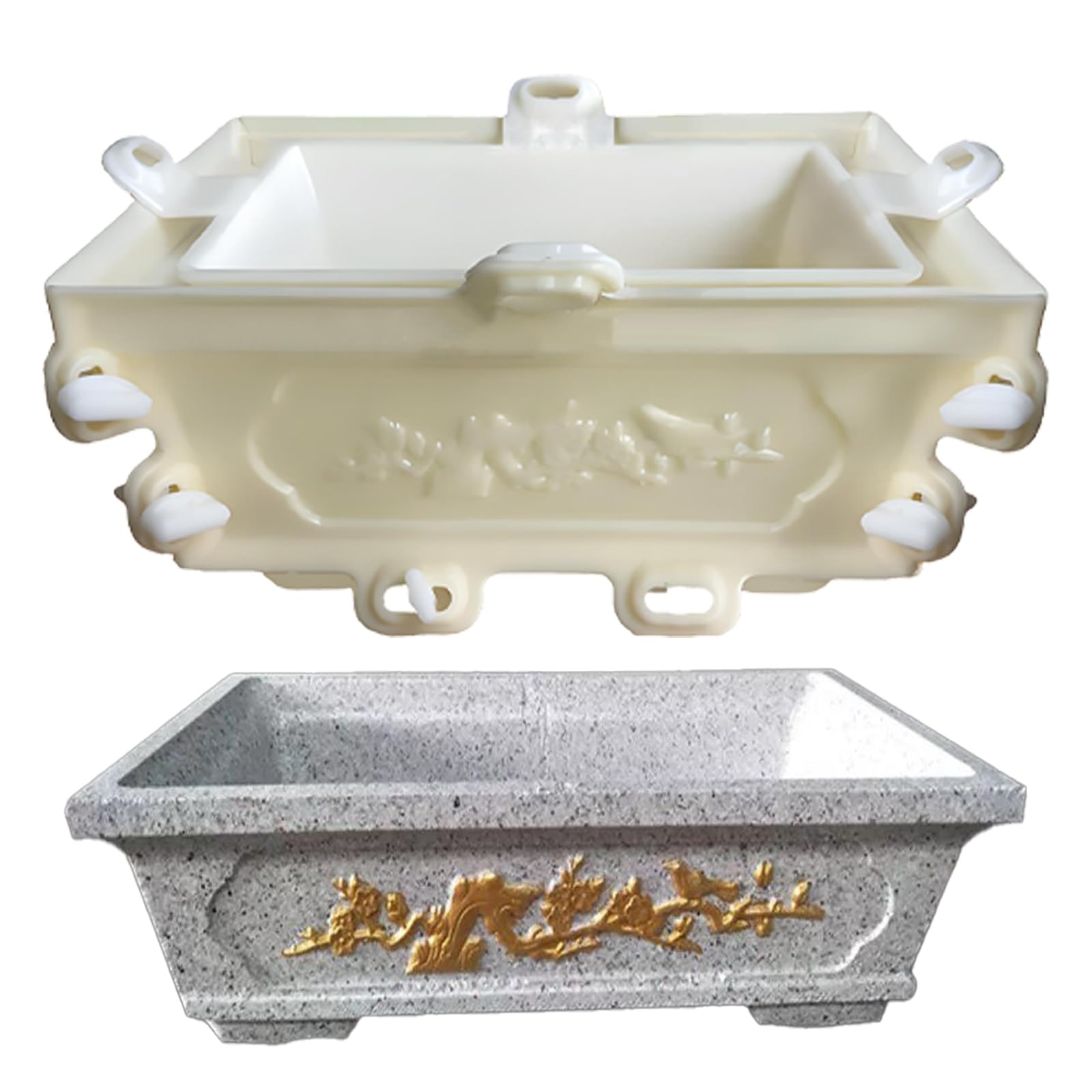
This ABS plastic mold cranks out pot after pot without leaking — it is built for volume.
For sheer output, this mold is tough to top. It is made from high-quality ABS plastic (acrylonitrile butadiene styrene, a rigid thermoplastic), the same material used in many commercial molds, which means it can handle the repeated stress of pouring and demolding without cracking. The finished planter measures 9 inches by 7 inches by 4 inches — a generous rectangular shape that works for both indoor and outdoor planters. One owner reports making 12 cement pots so far with zero issues, using a simple cooking spray as a release agent (a common household oil spray that prevents sticking). The mold setup and release is straightforward: spray, pour, tap to remove air bubbles, let cure, and pop out.
The manufacturer, EAIVENY, backs this with a 90-day warranty, which is rare for a mold at this price point. The ABS material is thick enough that it does not leak or bow during the pour. Reviewers who use it for resin planter molds note that it requires a vibrating table (a flat surface that shakes the mold) to settle the concrete properly, but for standard cement mixes, a few firm taps on the workbench are enough. A few buyers have reported trouble with the center insert sticking or the planter cracking on demolding, which may happen if the concrete mix is too dry or if release is skipped.
The honest limitation is that the design is basic — it produces a straightforward rectangular planter with no ornamentation. If you want a decorative shape like the AUTUMN heart or a tapered silhouette, this is not it. But for cranking out uniform, functional planters at a low cost per unit, this mold delivers.
Batch-friendly tool: The rigid ABS plastic and simple design make this ideal for anyone who wants to produce a dozen identical planters without fuss.
Reach for this if: you plan to make multiple planters and want a durable, affordable mold that produces clean rectangular shapes.
Look elsewhere if: you want a decorative or tapered pot — this is strictly a basic rectangular shape.
4. SvitMolds DIY Set: 2 pc Ball Sphere Molds for Concrete Cement Orbs – 11.8” Dia

You get two half-sphere molds that let you cast a full 11.8-inch concrete orb — a project for a patient craftsman.
This set comes with two ABS plastic half-sphere molds, each with a diameter of 11.8 inches and a depth of 5.9 inches. You pour each half separately, let them cure, and then glue or mortar the two halves together to create a full round ball. The result is a professional-looking garden sphere that would cost a lot to buy ready-made. The plastic is 0.078 inches thick — sturdy enough for concrete and plaster, though some owners note that the edges are thin and require careful handling when flipping the mold out. One reviewer who has used the mold successfully describes it as a way to “create your own cement spheres at a fraction of the retail price.” The crowd rates it a strong 4.6 stars, and the most common praise is that the molds are good quality and arrive in great condition.
The process takes patience: you need enough mortar for a single uninterrupted pour in each half, and you must handle the thin edges gently to avoid breaking the mold. Some owners mention that the plastic feels flimsy at the rim and worry it will only last a few pours before cracking. For best results, use a vibrating table or tap thoroughly to eliminate air pockets, and be prepared to sand the seam where the two halves meet.
Compared to the round planter mold from the top pick, this one requires more skill and produces a different shape entirely — a sphere rather than a pot. It is a project for the DIY enthusiast who wants a decorative garden feature, not a functional planter.
Skill-level note: This is a two-step pour with seam finishing — ideal for someone who enjoys the craft as much as the result.
Best for: DIYers who want to create garden spheres or atlas stones for a fraction of the retail price.
pass on it if: you want a simple one-pour planter or are not comfortable handling thin plastic edges.
5. Silicone Molds for Concrete Flower Pot, 10x5x3.8inch Rectangle Planter Mold Large

You get a silicone inner mold with a removable plastic frame that has survived over 40 pours — that is durability for the long haul.
This mold takes the double-layer concept and adds a twist: the plastic outer frame is removable, giving you access to the silicone liner (a flexible, rubber-like layer) for cleaning and storage. The finished planter measures 7.48 inches by 3.94 inches by 3.54 inches — a clean rectangular shape that works perfectly for succulents, bonsai, or as a small container. The silicone is smooth and non-stick, and the manufacturer suggests that no release agent is needed (it can actually cause bubbles). One owner who has cast over 40 pots with this mold reports it has “held up beyond my expectation.”
The mold is designed for cement, concrete, clay, and plaster, but not for resin (resin will leave a cloudy haze finish). The plastic frame prevents the silicone from bulging outward during the pour, though a few customers note that the inside of the frame can still bow inward slightly. The silicone liner is flexible enough to demold easily, but it can tear at the top edge if you pull too aggressively — one owner reported a rip on the first use.
At its price point, this is a premium option. The high per-unit cost makes it best for someone who values a specific rectangular shape and plans to use it many times rather than for one-off projects. If you are just starting out, a cheaper ABS mold like the budget workhorse might be a better first purchase.
Long-term investment: The reported 40+ pours per mold makes the per-cast cost drop dramatically, but it demands careful handling of the silicone edges.
Reach for this if: you need a rectangular planter mold that can handle high-volume production without degrading.
it’s not for you if: you are on a tight budget for a single project — the upfront cost is higher than basic ABS molds.
Understanding the Specs
ABS Plastic vs. Silicone
The material of the mold determines how much concrete it can hold without bending. ABS plastic (acrylonitrile butadiene styrene, a tough thermoplastic) is rigid — it keeps its shape under the heavy weight of wet concrete, which is why it is common in large molds. Silicone is flexible and non-stick, making demolding easy, but it can bulge or sag without a rigid outer frame. The best large molds use both: a tough plastic shell on the outside for structure and a silicone liner on the inside for easy release.
Finished Size vs. Mold Size
The mold itself is larger than the final planter because the concrete takes up space inside the walls. Always look for the “finished product size” in the specifications, not just the outer dimensions of the mold. A mold that is listed as 10 inches across may produce a planter that is only 7 inches across once you account for the thickness of the concrete walls and base.
FAQ
What is the best material for large cement planter molds?
Do I really need to use a mold release agent?
How do I prevent air bubbles in my cement planter?
How many times can I reuse a cement planter mold?
What is the best concrete mix for planter molds?
Can I use these molds for resin instead of concrete?
How do I make a drain hole in my cement planter?
Will the mold bulge or deform under heavy concrete?
What size planter mold should a beginner start with?
How long does concrete need to cure in a planter mold?
Final Thoughts: The Verdict
Across the board, the large cement planter molds winner is the Large Round Silicone Planter Mold because its double-layer ABS-and-silicone construction prevents bulging and makes demolding easy, even for first-timers. If you want a statement piece for your garden that feels sculptural, grab the AUTUMN Large Concrete Heart Mold — at 17 inches across it is the biggest in the lineup. And for high-volume rectangular pots on a budget, the Planter Molds, Large Concrete Planter Molds (25) is the one to reach for, with a proven track record of 12-plus pours from a single mold.
How We Picked
We do not accept paid placement. Every pick is matched to a real buyer and a real use-case; we do not hands-on test units.
Sources & Methodology
Specifications: manufacturer listings and product documentation. Review insights: verified customer reviews, as of July 2026. Pricing: not shown on this page (it changes often); check the current price via the retailer link.
As an Amazon Associate, Lawn Gear Lab earns from qualifying purchases. This does not affect which products we feature.